
科研服务

Search documents
解开“细绳子” 积蓄新动能
Shan Xi Ri Bao· 2025-12-22 23:04
Core Viewpoint - The article highlights the successful development and commercialization of the "Xuanji" 675 directional rotary steering drilling system by Xi'an Petroleum University and CNOOC, which has completed over 36 offshore operations and achieved a total drilling depth of 12,583 meters, breaking foreign technological monopolies and being recognized as a major technological equipment in the energy sector by the National Energy Administration [1][2]. Group 1: Technological Development - The "Xuanji" system was developed in just five years, significantly shorter than the nearly eight years typically required by international oil service companies for similar technologies [1]. - The technology has been recognized as a key achievement in oil and gas drilling technology, often referred to as the "crown jewel" of the sector [1]. Group 2: Policy and Reform Impact - The article discusses the "three reforms" initiative in Shaanxi, aimed at promoting the transformation of scientific research achievements into industrial applications, which has been crucial for integrating technology and industry [2][3]. - The reforms have included measures such as "use first, pay later" to lower barriers for enterprises, and "duty-free" policies to alleviate the burdens on researchers, thus facilitating the commercialization of scientific achievements [2][3]. Group 3: Results and Achievements - As a result of these reforms, Shaanxi has seen 11,000 scientific achievements managed as separate assets, with 46,000 achievements transferred and converted into practical applications, and 2,972 new technology transfer companies established [3][4]. - The province's comprehensive technological innovation level index reached 72.20%, ranking fourth nationally, with a significant number of high-tech enterprises and a total output value of 2.25 trillion yuan across 34 key industrial chains [4].
范波吴庆文会见哈尔滨工业大学校长韩杰才一行
Su Zhou Ri Bao· 2025-12-21 22:48
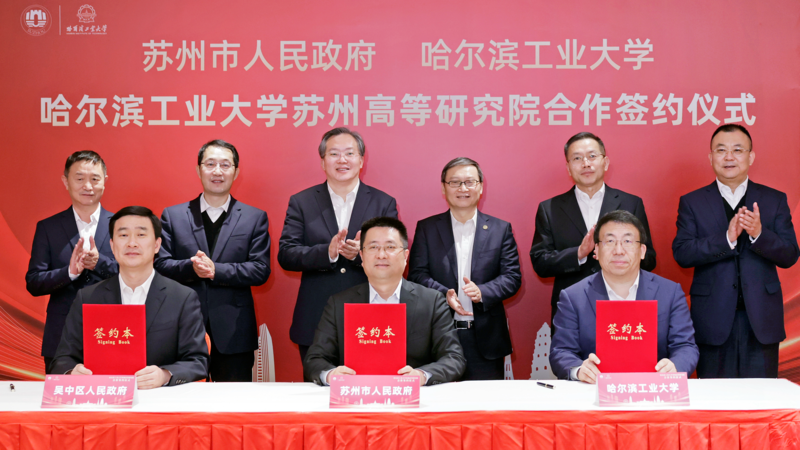
倪黎祥 摄 哈尔滨工业大学苏州高等研究院由哈尔滨工业大学、苏州市政府、吴中区政府合作共建,将在哈尔滨工业大 学苏州研究院基础上,升级打造机器人及装备制造、人工智能、先进材料、航空航天等领域科研平台,建设集科 技创新、人才培养、产业孵化、国际交流于一体的新型研发机构。 会见中,范波、吴庆文感谢哈工大给予苏州发展的关心支持。范波说,当前,苏州正认真学习贯彻党的二十 届四中全会精神和习近平总书记对江苏、苏州工作重要讲话重要指示精神,大力实施创新引领工程,坚持教育发 展、科技创新、人才培养一体化推进,因地制宜发展新质生产力。哈工大是蜚声中外的知名高校,在航空航天、 智能制造、新材料等领域取得了诸多成就,为国家现代化建设提供了重要支撑。希望哈工大继续把苏州作为战略 布局的重点,导入更多创新资源、优秀人才,优化学科布局、创新科研范式,共同推动科技创新与产业创新深度 融合,为实现高水平科技自立自强多作贡献。苏州将全力做好服务保障,携手哈工大谱写校地合作新篇章。 12月21日,哈尔滨工业大学苏州高等研究院合作签约仪式举行。市委书记范波、市长吴庆文会见了哈尔滨工 业大学校长韩杰才一行,共同见证签约。 哈尔滨工业大学副校长刘挺、 ...

高校科技成果转化的“通关攻略”
Xin Lang Cai Jing· 2025-12-21 20:41
Core Insights - The 2025 Higher Education Technology Achievement Fair in Guangzhou attracted over 600 universities and collected more than 3,000 technology achievements and over 260 student entrepreneurship projects, emphasizing the importance of universities in driving technological innovation and commercialization [1] - The Chinese government has issued several policies to enhance patent conversion and utilization, indicating a shift from a management-focused to a service-oriented research system in universities [2] - Universities are increasingly restructuring their research management to improve collaboration and efficiency in technology transfer, as seen in institutions like Tongji University and Anhui University of Technology [2] Group 1: Policy and Institutional Changes - The Ministry of Education emphasizes the role of universities as key players in basic research and technological breakthroughs, aligning with national policies to promote innovation [1] - Recent reforms in research management at universities aim to break down barriers and enhance the entire chain from basic research to technology commercialization [2] - The establishment of specialized technology transfer offices, such as at Tsinghua University, has proven effective in increasing technology commercialization success [3] Group 2: Talent Development and Innovation - Universities are focusing on cultivating entrepreneurial talent capable of bridging the gap between scientific research and market needs, with initiatives like the "Innovation and Entrepreneurship Postdoctoral Program" at Hong Kong Polytechnic University [7] - Institutions like Beihang University and Guangdong University of Technology are implementing comprehensive support systems for student entrepreneurship, leading to successful startups [6] - The emphasis on practical applications of research is evident in the projects showcased at the 2025 Fair, highlighting the potential of student-led innovations [6] Group 3: Collaboration and Ecosystem Building - The integration of Hong Kong and Macau universities into the innovation ecosystem enhances international collaboration and industrial integration, as demonstrated by their participation in the 2025 Fair [10] - The establishment of regional technology transfer centers and collaborative agreements among universities aims to create a more dynamic innovation ecosystem [9] - The 2025 Fair facilitated significant transactions, with 1,361 deals and a total transaction value of 7.244 billion yuan, showcasing the effectiveness of such collaborative efforts [9] Group 4: Role of Technology Managers - Technology managers are crucial in facilitating the transfer of scientific achievements to the market, acting as intermediaries between researchers and industry [8] - Their role includes evaluating patents, designing market strategies, and assisting in the establishment of startups, significantly lowering the barriers for scientists entering the commercial space [7] - The development of a robust technology manager workforce is highlighted as essential for enhancing the conversion of research outcomes into economic value [8]
行业周报:推荐CXO+科研服务板块的估值切换机会-20251221
KAIYUAN SECURITIES· 2025-12-21 09:14
Investment Rating - The industry investment rating is "Overweight" [1] Core Views - The biopharmaceutical investment and financing environment has shown significant recovery since the second half of 2025, with a total financing amount of USD 30.32 billion from July to November 2025, representing a year-on-year increase of 30.90% [4] - The number of new drug IND applications stabilized in 2025, with approximately 1,897 applications from January to November, reflecting a year-on-year growth of about 7.91% [4] - The demand for CRO services has shown a clear turning point, and the report continues to recommend opportunities in the innovative drug industry chain (CXO + research services) for 2026 [4] Summary by Sections Industry Performance - The biopharmaceutical sector experienced a decline of 0.14% in the third week of December 2025, outperforming the CSI 300 index by 0.14 percentage points, ranking 22nd among 31 sub-industries [7][14] - The offline pharmacy sector saw the highest increase, rising by 5.59%, while the chemical preparation sector had the largest decline at 2.1% [18][22] Investment Opportunities - The report highlights the strong performance of leading CXO and research service companies, with many exceeding earnings expectations. Companies like WuXi AppTec and Tigermed have raised their earnings guidance for 2025 [5] - The report recommends a valuation switch opportunity for leading CXO and research service companies, given the continuous improvement in demand [5] Clinical Research Organizations (CRO) - There has been a notable improvement in orders for preclinical and clinical CROs, with expectations for significant improvements in financial statements for 2026 [6] - The report anticipates that the market demand will continue to focus on leading companies as the capacity of clinical CROs is expected to be streamlined [6] Monthly and Weekly Recommendations - The report recommends a monthly investment portfolio including companies such as Sanofi, Innovent Biologics, and others, focusing on innovative drug opportunities and valuation switch [8]


中国地质大学(北京)科技成果转化雄安专场路演举办
Xin Lang Cai Jing· 2025-12-20 23:09
Core Viewpoint - The event "Geoscience Innovation: Xiong'an Set Sail" organized by China University of Geosciences (Beijing) aims to bridge the gap between cutting-edge scientific achievements and the development needs of Xiong'an New Area, fostering an innovation-driven development engine for the region [1][2]. Group 1 - The event serves as a key part of a series of organized roadshows by Xiong'an National Innovation Center to facilitate the transformation of university projects [2]. - Xiong'an National Innovation Center has established a dual support system of "policy empowerment + ecological cultivation" to promote the application of advanced technologies [1][2]. - Various technological achievements were showcased, including intelligent inspection for subway pipeline projects and green low-carbon composite materials, covering multiple cutting-edge fields [2][3]. Group 2 - The event is a demonstration of Xiong'an New Area's proactive engagement with university resources to promote the integration of industry, academia, and research [3]. - Both parties aim to expand cooperation and deepen collaborative mechanisms, setting a new benchmark for university-local government partnerships [3]. - The event highlights the commitment of China University of Geosciences (Beijing) to leverage its leadership in geosciences to contribute to the construction of Xiong'an New Area [2][3].
科技创新与产业创新融合迈入新阶段,南京大学苏州校区全面启用
Yang Zi Wan Bao Wang· 2025-12-19 14:40
Group 1 - The conference focused on three main directions: school construction, integration with local industries, and "innovation and entrepreneurship integration" [1] - Nanjing University established several new colleges aimed at cultivating high-level engineering talent and strategically positioning itself in key future fields [1] - The "Ring Nanda Innovation Circle" construction plan was launched, promoting collaboration between Nanjing University and local enterprises, with 8 colleges forming innovation alliances with 44 key companies [1] Group 2 - A total of 219 achievements from 147 teams were showcased at the innovation and industry exhibition, highlighting the innovation ecosystem from basic research to technology transfer and industrial application [2] - The university aims to enhance its foundational research capabilities and accelerate the technology transfer process to better serve national and regional development [2]
前三十名,全是中国:一份榜单引发的全球科学界震动
Guan Cha Zhe Wang· 2025-12-15 01:12
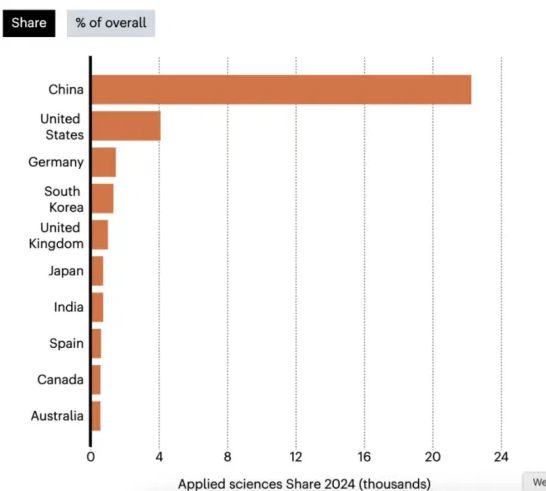
Core Viewpoint - The recent application science ranking by the Nature Index reveals that all top thirty institutions are from China, marking a significant shift in global scientific competitiveness, with China contributing 56% of global application science output compared to the USA's 10% [1][4]. Group 1: Application Science Ranking - The Nature Index's application science ranking is based on articles published in 25 application science journals and conferences, covering fields such as engineering, computer science, and food science [3]. - The Chinese Academy of Sciences ranks first, followed by Zhejiang University, Tsinghua University, Shanghai Jiao Tong University, and Peking University, indicating a concentration of top institutions in China [3][4]. - China's application science output exceeds the combined total of the next six countries (USA, Germany, South Korea, UK, Japan, and India), showcasing a dominant advantage [4]. Group 2: Research Focus and Strategic Choices - There is a notable discrepancy between the application science ranking and the traditional comprehensive research ranking, highlighting different national research priorities [4]. - France ranks sixth in comprehensive research but falls to twelfth in application science, indicating a focus on basic research over practical application [4][5]. - South Korea, while ranked seventh in comprehensive research, excels in application science, with over 50% of its research output focused on practical applications [5]. Group 3: Implications of Research Strategies - The data suggests that countries overly focused on basic research may struggle to maintain competitiveness in a rapidly evolving global landscape [5][6]. - Asian countries, particularly China and South Korea, emphasize research that leads to practical innovations, supported by government policies [6][8]. - The USA's shift towards prioritizing basic research has created a gap in application research, leading to challenges in translating research into practical outcomes [7][8]. Group 4: Future Prospects for China - China's leading position in application science is expected to strengthen due to factors such as scale effects, a robust talent pool, strong industrial demand, and ongoing institutional reforms [11][12][13]. - The country has become a global leader in electric vehicle production, accounting for 70% of global output, driven by extensive application science research [10][12]. - China's focus on practical applications in fields like artificial intelligence has resulted in a significant number of patents, indicating a depth of research and innovation [10][11]. Group 5: Challenges for the West - The West faces challenges in maintaining its scientific leadership, with calls for a reevaluation of research funding priorities and a balance between basic and applied research [14][15]. - The aging population in Western countries may limit funding for research, necessitating a more efficient allocation of resources [14]. - The Western scientific community is urged to adopt a more pragmatic approach to research, aligning scientific endeavors with national and societal needs [16][17].
2025年香港理工大学科技成果转化大会在福建晋江举行
Xin Hua Wang· 2025-12-13 11:11
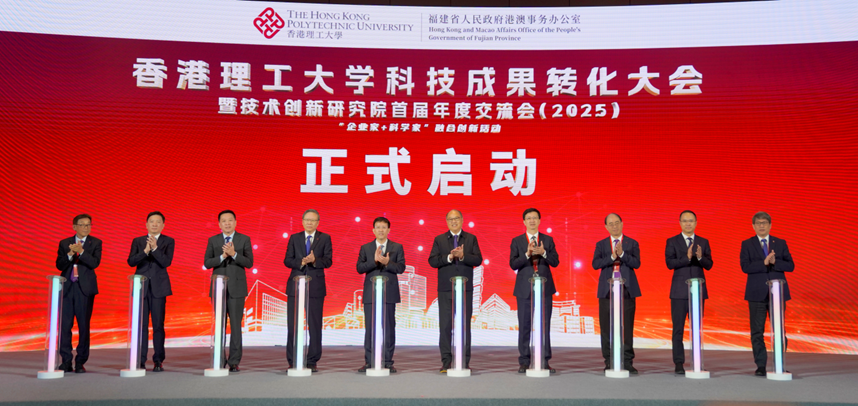
大会启动仪式。新华网发(晋江市委宣传部供图) 12月13日至14日,2025年香港理工大学科技成果转化大会暨技术创新研究院首届年度交流会在福建省晋江市举办。大 会汇聚超100家技术团队与初创企业,展出近250个卓越科研成果,超1000名业界精英莅临观展、洽谈合作。 现场体验。新华网发(晋江市委宣传部供图) 晋江市作为本次大会的举办地,通过政策引导与平台搭建,积极衔接香港理工大学的前沿科技资源与本地产业需求。 大会期间特设的洽谈区,为技术合作、投融资对接与政企学研沟通创造了高效便捷的环境,进一步强化了晋江在区域创新 网络中的节点功能。此外,现场举办香港理工大学研究生及本科生招生宣讲会及港理大科技创业硕士(MTE)课程,也为 晋江及周边地区创新人才培养和储备打开了新的窗口。 香港理工大学校长、中国科学院院士滕锦光发言。新华网发(晋江市委宣传部供图) 香港理工大学科技成果和创业成果展览。新华网发(晋江市委宣传部供图) 展商洽谈。新华网发(晋江市委宣传部供图) 成果展示。新华网发(晋江市委宣传部供图) 签约仪式。新华网发(晋江市委宣传部供图) 本次大会同步举办香港理工大学科技成果和创业成果展示,集中呈现了香港理工大学 ...
我国科研人员突破海水制氢提镁联产技术
Xin Hua She· 2025-12-13 10:32
(文章来源:新华社) 人民财讯12月13日电,针对电解水制氢成本高的挑战,海南大学联合中国科学院宁波材料技术与工程研 究所,突破直接电解天然海水制氢提镁技术,实现氢气和氢氧化镁联产,大幅降低氢气生产成本。北京 时间12月12日,相关研究成果在国际学术期刊《自然·通讯》发表。 ...
在创新驱动引领高质量发展上取得更大突破
Shan Xi Ri Bao· 2025-12-12 00:57
"十四五"收官之际,陕西交出了一份亮眼的创新答卷—— 综合科技创新水平指数提升7.12个百分点,达到75.51%,其中创新产出水平指数87.59%,居全国 第四。 全省研发经费投入926.2亿元,较2020年增长46.47%,研发投入强度居西部首位。 科技型中小企业、高新技术企业数量年均增长超过30%;科创板上市企业数量翻两番…… 数据勾勒出科教大省迈向科教强省的坚实足迹。 成就铺展开三秦大地创新驱动发展的壮丽画卷。 从"三项改革"破除体制机制壁垒,到"秦创原"平台构筑创新驱动"总引擎",让科技创新"关键变 量"加速转化为高质量发展"最大增量"的背后,是陕西对创新驱动发展战略的深刻践行,也是创新体系 实现系统重塑的必然回响,更是体制机制改革与高能级平台建设同频共振的生动实践。 当前,全球科技创新进入密集活跃期,特别是人工智能作为引领新一轮科技革命和产业变革的战略 性技术,正在迅速广泛渗透经济社会各领域,重塑科研范式、产业形态和经济格局。 如何顺应潮流,变革创新组织模式,加强科技和产业协同布局,更加主动服务国家高水平科技自立 自强,开辟新领域新赛道,因地制宜加快发展新质生产力? 省委十四届九次全会审议通过的《中 ...