零食零售

Search documents
零食零售商鸣鸣很忙拟在香港IPO融资高达33.4亿港元
Jin Rong Jie· 2026-01-19 23:37
本文源自:金融界AI电报 据在香港交易所的公告,中国食品饮料零售商湖南鸣鸣很忙商业连锁股份有限公司计划在香港上市中发 行1410万股股份,发行价区间为每股229.60至236.60港元。预计将筹集至多33.4亿港元。基石投资者包 括:腾讯;淡马锡;贝莱德;富达基金;将于1月28日挂牌交易。高盛和华泰国际为联席保荐人。 ...
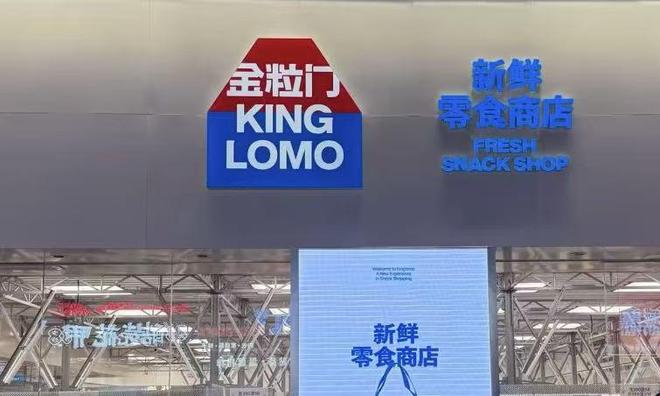
凤爪代工厂违规的金粒门:称正积极处理,宣传多款产品自研
Nan Fang Du Shi Bao· 2026-01-16 01:23
Core Viewpoint - The snack brand "Jinlimen" is facing public backlash due to food safety violations at its contracted factory during the production of "Lemon Spicy Boneless Chicken Feet," leading to an apology and a compensation plan from the company [1][3]. Group 1: Incident Overview - The company conducted an internal investigation and confirmed that the contracted factory, Changsha Yonghong Food Co., Ltd., violated food safety regulations by improperly managing production and repackaging sealed products [3]. - The company reported selling 64,031 boxes of the affected product since November 1, 2025, generating total sales of 1.267813 million yuan, and has allocated 12 million yuan for compensation, offering a "tenfold" reimbursement to affected consumers [3][4]. Group 2: Hygiene and Safety Measures - An investigation revealed hygiene issues at the production facility, including inadequate cleanliness, improper placement of utensils, and non-compliant operational practices, prompting immediate suspension of production for rectification [4]. - The company plans to engage a third-party professional agency for comprehensive disinfection and process optimization before resuming production, along with reassessing all contracted factory qualifications and implementing a "flying inspection" system [4]. Group 3: Consumer Response and Company Operations - Consumers who purchased the affected product reported successfully applying for compensation, although some have yet to receive their payments [6]. - The brand emphasizes its identity as a "fresh snack store" and promotes its products as being sourced from its own factory with fresh ingredients and self-developed recipes [6].

量贩零食头部企业齐谋上市
Di Yi Cai Jing Zi Xun· 2026-01-08 02:53
Core Insights - The article discusses the rapid transformation of the snack retail ecosystem in China, highlighting the competitive landscape and the upcoming IPO of Hunan Mingming Hen Mang Commercial Chain Co., Ltd., which aims to become the first listed company in the bulk snack sector on the Hong Kong Stock Exchange [2] Company Performance - Mingming Hen Mang reported a retail sales (GMV) of 66.1 billion RMB for the nine months ending September 30, 2025, reflecting a year-on-year growth of 74.5% [2] - For the first three quarters of 2025, Mingming Hen Mang achieved a revenue of 46.371 billion RMB, a 75.2% increase year-on-year, and a net profit of 1.559 billion RMB, up 218% [3] - In comparison, Wanchen Group, the parent company of another leading brand, achieved a revenue of 36.562 billion RMB, a 77% increase, and a net profit of 855 million RMB, up 917% during the same period [3] Gross Margin Analysis - Mingming Hen Mang's gross margin for the first nine months of 2025 was 9.7%, up from 7.5% in 2023 and 7.6% in 2024 [4] - Wanchen Group's gross margin increased from 9.3% in 2023 to 10.7% in 2024, reaching 11.7% in the first three quarters of 2025 [4] Industry Trends - The bulk snack industry is expected to grow significantly, with estimates suggesting over 30% growth in the number of stores to 56,000 by 2025, and a projected industry sales scale of 220 billion RMB [5] - The competitive landscape is intensifying, with leading companies increasing store openings and engaging in price wars to capture market share [5] - Despite the growth potential, the bulk snack model faces limitations and risks, as it relies heavily on low prices and a wide variety of products, which may lead to price wars and imitation by competitors [5]
量贩零食头部企业齐谋上市
第一财经· 2026-01-08 02:39
Core Viewpoint - The article discusses the rapid transformation of the snack retail ecosystem in China, highlighting the competitive landscape and the upcoming IPO of "Mingming Hen Mang," which aims to become the first listed company in the bulk snack sector on the Hong Kong Stock Exchange [3][4]. Group 1: Industry Overview - The bulk snack industry has seen significant growth, with "Mingming Hen Mang" reporting a retail sales (GMV) of 66.1 billion RMB for the nine months ending September 30, 2025, representing a year-on-year increase of 74.5% [4]. - The competitive landscape is intensifying, with another leading company, "Wancheng Group," also filing for an IPO. As of June 2025, "Wancheng Group" had over 15,000 stores, while "Mingming Hen Mang" had 19,517 stores by September 2025 [5]. - The overall revenue for "Mingming Hen Mang" for the first three quarters of 2025 reached 46.371 billion RMB, a 75.2% increase year-on-year, while net profit surged by 218% to 1.559 billion RMB [6]. Group 2: Financial Performance - "Wancheng Group" reported a revenue of 36.562 billion RMB for the same period, with a year-on-year growth of 77%, and a net profit of 855 million RMB, reflecting a staggering 917% increase [6]. - The gross margin for "Mingming Hen Mang" improved from 7.5% in 2023 to 9.7% in the first nine months of 2025, while "Wancheng Group" saw its gross margin rise from 9.3% in 2023 to 11.7% in the same period [6]. Group 3: Market Dynamics - The bulk snack store model is gaining traction in various urban and rural areas, becoming a common retail format alongside tea shops. This model's low prices and streamlined supply chains are capturing increasing market share, prompting traditional snack companies to adjust their pricing strategies [6]. - According to a report by CITIC Securities, the number of bulk snack stores is expected to grow over 30% year-on-year to 56,000 by 2025, with the industry sales scale projected to reach 220 billion RMB [7]. Group 4: Competitive Challenges - Despite the industry's growth potential, there are inherent limitations and risks in the bulk snack model. Analysts suggest that the reliance on low prices and a wide variety of products may lead to vulnerability against imitation and price wars [8]. - Future competitive advantages in the industry will likely hinge on innovation in taste and product variety, as well as technological advancements to maintain differentiation [8].
万辰集团20260107
2026-01-08 02:07
Summary of the Conference Call for Wancheng Group Industry Overview - The hard discount supermarket sector has experienced a compound annual growth rate (CAGR) exceeding 90% over the past few years, indicating it is a high-growth area within the consumer sector [2][5] - The snack industry is a trillion-dollar market with low penetration rates, where the two leading companies hold approximately 10% market share, and the largest company has less than 2% [4][15] Company Expansion Plans - Wancheng Group plans to open 10,000 stores in 2024, while Mingming Henbang aims to open 8,000 stores by 2026, showcasing strong expansion capabilities [2][5] - The company primarily targets county and town markets, which account for 60% of its store openings, addressing unmet market demand and demonstrating high net profit potential and long operating cycles [2][5][6] Market Dynamics - The demand for snacks and beverages in county and town markets remains strong, with limited e-commerce competition, resulting in lower rent and operational costs [10] - The logistics network has improved significantly, with over 60 warehouses established nationwide, enabling next-day delivery in most regions [9] Profitability and Valuation - The snack industry is expected to maintain a net profit margin of around 5% through 2026 and likely into 2027 [4][17] - A specific brand is projected to achieve a net profit of at least 2 billion yuan by 2026, with a potential market capitalization of approximately 400 billion yuan at a 20x PE ratio, indicating significant growth potential [4][22] Competitive Landscape - The hard discount model in China is still in its infancy, with only about 4% market penetration compared to 20-30% in developed markets like Europe and the U.S., suggesting substantial growth opportunities [3] - The competition in the snack sector is characterized by high margins and strong bargaining power among major companies, supported by digital management that enhances efficiency and reduces costs [17][20] Future Trends - The retail landscape is expected to evolve towards a "snack+" model, where maintaining a combination of products can sustain high net profit margins [23] - The overall industry is projected to have a store ceiling of 80,000 to 100,000 locations, with major brands likely to reach 30,000 stores by 2026 [11][24] Challenges and Risks - Expanding into new product categories may introduce competitive pressures, particularly in lower-margin areas like fresh produce [12] - The presence of private labels poses a challenge to traditional brands, but they can coexist by offering different price points and value propositions [19] Conclusion - The hard discount supermarket and snack sectors present significant investment opportunities due to their growth potential, strong demand in underserved markets, and the ability to maintain profitability through effective management and expansion strategies [2][4][22]
量贩零食头部企业齐谋上市,行业体量仍在扩大但模式天花板已现
Di Yi Cai Jing· 2026-01-08 01:33
Core Insights - The snack retail industry, particularly the bulk snack store model, has rapidly transformed the domestic snack retail ecosystem in China, with leading companies preparing for IPOs on the Hong Kong Stock Exchange [1][2] Group 1: Industry Overview - The bulk snack store model has become one of the most common retail formats in commercial areas, alongside milk tea shops [1] - The industry is experiencing intense competition, with innovation in business models and supply chain capabilities being crucial for future success [2] - The bulk snack industry is projected to grow significantly, with estimates suggesting over 56,000 stores by 2025 and a sales scale reaching 220 billion RMB [4] Group 2: Company Performance - Hunan Mingming Hen Mang Commercial Chain Co., Ltd. (Mingming Hen Mang) is set to become the first bulk snack stock on the Hong Kong Stock Exchange, reporting a GMV of 66.1 billion RMB for the nine months ending September 30, 2025, a 74.5% year-on-year increase [2] - Mingming Hen Mang's revenue for the first three quarters of 2025 reached 46.371 billion RMB, up 75.2% year-on-year, with a net profit of 1.559 billion RMB, reflecting a 218% increase [3] - Wanchen Group, the parent company of another leading brand, Hao Xiang Lai, reported a revenue of 36.562 billion RMB for the same period, a 77% increase, with a net profit of 855 million RMB, up 917% [3] Group 3: Market Dynamics - The bulk snack model is characterized by low prices and streamlined supply chains, allowing it to capture increasing market share, prompting traditional snack companies to adjust their pricing strategies [3] - The competition is expected to intensify in 2024, with leading companies increasing store openings and engaging in price wars to accelerate expansion [4] - There is a significant opportunity for further store openings, with over 50% potential growth remaining for leading bulk snack companies [4] Group 4: Challenges and Limitations - Despite the industry's growth potential, the bulk snack model faces limitations, including a lack of technological depth and vulnerability to imitation, which could lead to price wars [5] - Future competitive advantages will depend on innovation in flavors and product categories, as well as technological advancements [5]
赵一鸣零食母公司,2年营收翻8倍,冲刺港股量贩零食第一股
21世纪经济报道· 2026-01-07 10:10
Core Viewpoint - The article highlights the significant milestone of Hunan Mingming Hen Mang Commercial Chain Co., Ltd. (referred to as "Mingming Hen Mang") as it approaches its listing on the Hong Kong Stock Exchange, marking a pivotal moment in the snack retail sector in China. The company is set to become the first public snack retail brand in Hong Kong, with a projected GMV of 55.5 billion yuan in 2024, positioning it as a leader in the industry [1][4]. Group 1: Company Overview - Mingming Hen Mang has integrated two brands, "Snacks Are Busy" and "Zhao Yiming Snacks," creating a vast retail network with over 19,000 stores across 28 provinces in China [1][6]. - The company achieved a remarkable revenue growth from 4.286 billion yuan in 2022 to 39.344 billion yuan in 2024, representing an 860% increase, with a compound annual growth rate (CAGR) of 203% from 2022 to 2024 [7]. - By September 30, 2025, the total number of stores reached 19,517, with 59% located in county towns and rural areas, achieving a market penetration rate of 66% in these regions [6][7]. Group 2: Market Dynamics - The snack retail sector is experiencing explosive growth, driven by the demand for high-quality and diverse snacks in lower-tier markets, which Mingming Hen Mang effectively addresses with its competitive pricing strategy [4][6]. - The company plans to utilize the funds raised from its IPO to enhance supply chain capabilities, product development, store network upgrades, and digital transformation, which are crucial for maintaining its competitive edge in a rapidly evolving market [8]. - The industry is shifting from rapid expansion to refined operations, with increased competition from both traditional brands and regional players, leading to intensified price wars and homogenization [8][9]. Group 3: Future Outlook - The Chinese retail market for leisure food and beverages is projected to grow from 3.7 trillion yuan in 2024 to 4.9 trillion yuan by 2029, with a CAGR of 5.8%, indicating a robust growth trajectory for the sector [9]. - As a leading player, Mingming Hen Mang's capital market entry is expected to not only fuel its growth but also set a benchmark for the standardized and high-quality development of the snack retail industry [9].
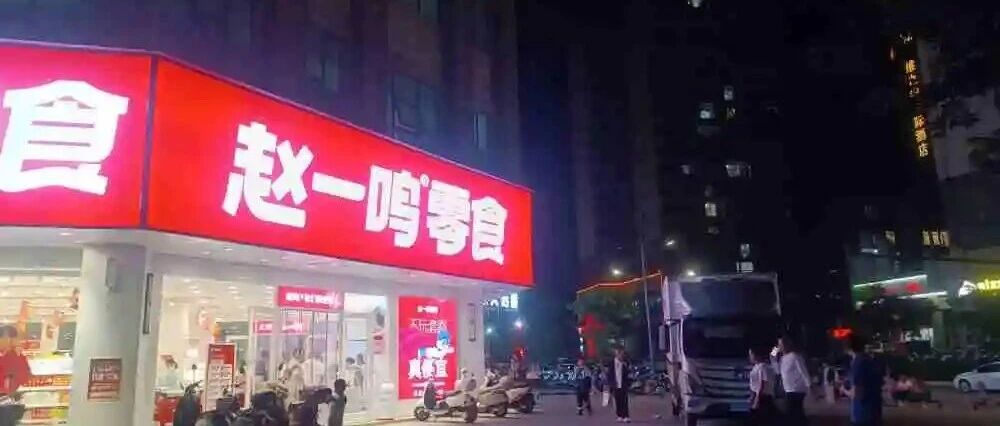
港股“量贩零食第一股”要来了?鸣鸣很忙通过聆讯
Xin Jing Bao· 2026-01-07 03:04
Group 1 - The core viewpoint of the article is that Hunan Mingming Hen Mang Commercial Chain Co., Ltd. is set to become the first "bulk snack stock" in Hong Kong after passing the listing hearing at the Hong Kong Stock Exchange [1] - The company was formed by the merger of "Snacks Hen Mang," established in March 2017, and "Zhao Yiming Snacks," founded in January 2019, which completed their merger in November 2023 [1] - Mingming Hen Mang aims to address pain points in China's leisure food and beverage retail industry by implementing a bulk sales model that enhances user product demand and improves supply chain efficiency [1] Group 2 - The company has accumulated deep insights into consumer demand through its bulk sales model, allowing for product selection and customization [2] - As of the first three quarters of 2025, the company achieved a retail sales volume (GMV) of 66.1 billion yuan, a year-on-year increase of 74.5%, surpassing the total for 2024 [2] - By September 30, 2025, the company operated 19,517 stores across 28 provinces, with a revenue of 46.371 billion yuan, reflecting a 75.2% year-on-year growth, and an adjusted net profit of 1.81 billion yuan, up 240.8% [2]
千店巨头被传多地闭店,曾拿下5轮融资,品控频遭吐槽
2 1 Shi Ji Jing Ji Bao Dao· 2025-12-28 23:17
Core Insights - The discount snack market is experiencing explosive growth, with a market size increase from 40.8 billion to 1045.9 billion from 2019 to 2024, driven by young consumers [4][12] - The competitive landscape is intensifying, with major players like Meituan, JD, and Hema entering the market, putting pressure on traditional discount brands like Haote Mai [2][10] - Haote Mai, once a leading brand with nearly 1,000 stores, is now facing store closures and strategic contraction due to fierce competition and market challenges [1][2] Market Dynamics - The number of discount snack stores in China has surpassed 45,000, reflecting a growth of over 460% since 2022, indicating a rapidly expanding market driven by young consumers [12] - The demographic of consumers purchasing near-expiry products is predominantly young adults aged 19-35, who make up 65.5% of this market segment [13] - The market is projected to exceed 1500 billion by 2027, highlighting the potential for continued growth in the discount snack sector [13] Pricing and Product Quality - Many products in discount stores like Haote Mai are not significantly cheaper than those in regular supermarkets, with some items priced higher than their non-expired counterparts [3][4] - Consumer complaints regarding product quality, including issues with expired or moldy snacks, have been prevalent, indicating potential risks to brand reputation [6] - The low pricing strategy of discount snacks is largely based on selling near-expiry products and reducing supply chain costs, allowing for prices that are 20%-30% lower than traditional supermarkets [10] Competitive Landscape - The rapid expansion of brands like Zhao Yi Ming and Huan Huan has led to a significant increase in store numbers, with Zhao Yi Ming and other brands growing from 1,902 stores in 2022 to over 15,000 by mid-2025 [13] - The intense competition has resulted in some brands, including Haote Mai, closing stores and halting new franchise agreements to manage crisis situations [12][13] - The reliance on low prices and rapid expansion may not be sustainable, suggesting a need for brands to focus on product quality and supply chain optimization to build consumer trust [12]
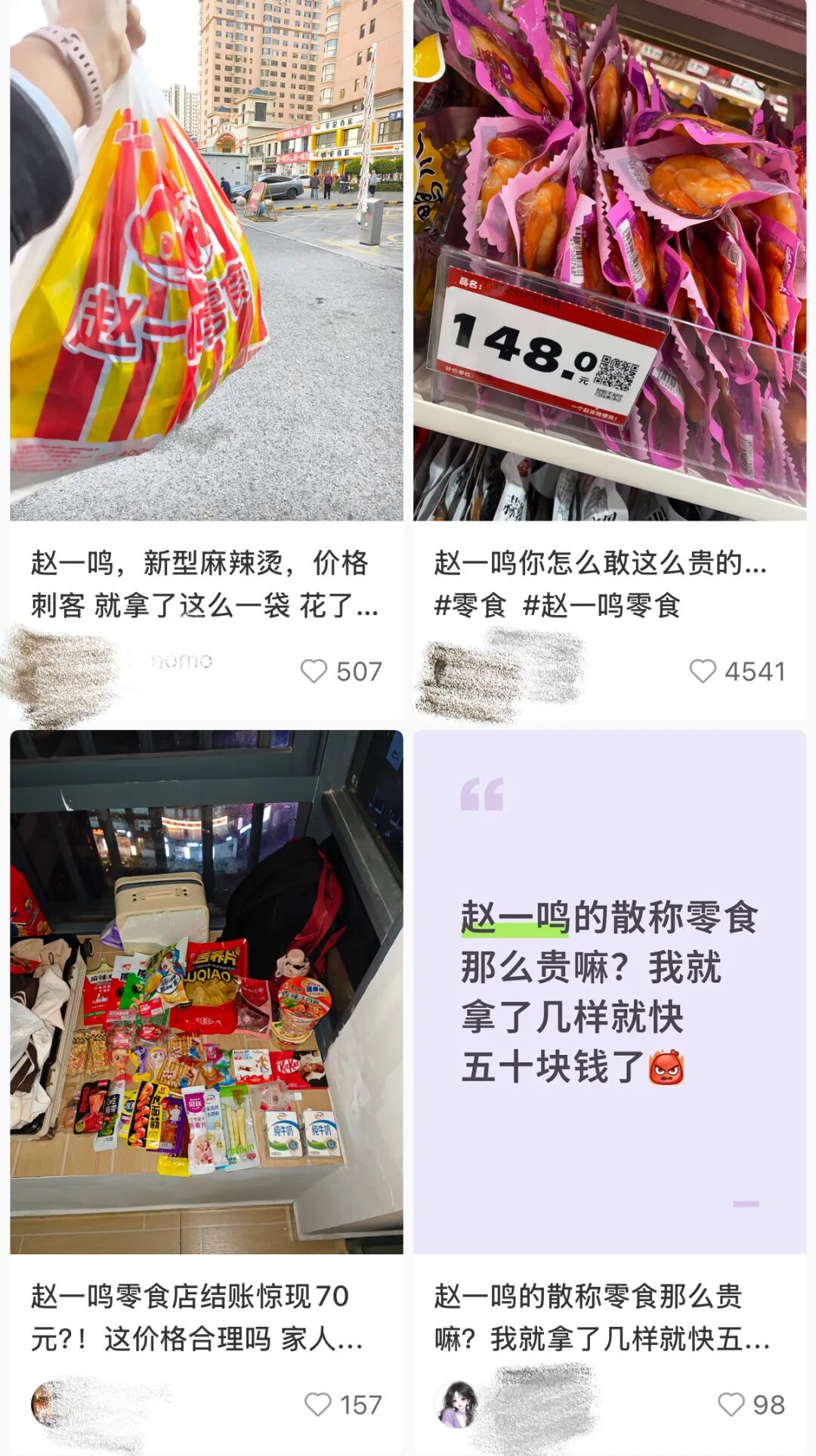
千店巨头被传多地闭店,曾拿下5轮融资,品控频遭吐槽
21世纪经济报道· 2025-12-28 07:34
Core Viewpoint - The discount snack market is experiencing explosive growth, but competition is intensifying, leading to store closures among brands like Haotemai, which is struggling to maintain its position amidst fierce competition from both internet giants and traditional retailers [4][20]. Group 1: Market Dynamics - The discount snack market in China has seen its scale grow from 40.8 billion yuan in 2019 to 1,045.9 billion yuan in 2024 [10]. - The number of discount snack stores nationwide has surpassed 45,000, representing a growth of over 460% since 2022, driven primarily by young consumers [24]. - Young consumers aged 19-35 account for 65.5% of the consumption of near-expiry food products, making them the dominant demographic in this market [27]. Group 2: Competitive Landscape - Major players like Meituan, JD.com, and Hema are entering the discount snack sector, increasing competition for brands like Haotemai, which is now facing significant pressure to adapt [4]. - Haotemai, once a leader with nearly 1,000 stores, is now reportedly closing locations in key cities and has paused new franchise sign-ups [4][20]. - The rapid expansion of competitors such as Zhao Yiming Snacks and Wantian Group has led to a significant increase in store numbers, with Zhao Yiming reaching 9,189 stores and Wantian's brand "Haoxianglai" reaching 14,334 stores by mid-2025 [27]. Group 3: Pricing and Product Quality - Many products in discount snack stores, including Haotemai, are priced similarly to or even higher than regular supermarkets, raising questions about the actual value proposition of these stores [6][11]. - Complaints regarding product quality, including issues with expired or moldy snacks, have been prevalent among consumers, indicating potential risks to brand reputation [16]. - The low prices of discount snacks are primarily due to the sale of near-expiry products and a simplified supply chain that reduces costs by 20%-30% compared to traditional supermarkets [20].