
国际贸易

Search documents
中国经济信心说丨高水平双向开放的精彩从何而来?
Sou Hu Cai Jing· 2025-09-05 03:16
Core Viewpoint - China has achieved significant milestones in international trade and investment during the "14th Five-Year Plan" period, maintaining its position as a global leader despite challenging external conditions [3][6]. Group 1: Trade Performance - China's goods trade scale has crossed the milestones of $5 trillion and $6 trillion, reaching $6.16 trillion in 2024, a 32.4% increase from the end of the "13th Five-Year Plan" in 2020 [3]. - China has maintained its status as the world's largest goods trader for eight consecutive years [3]. - By the end of 2024, China's foreign investment stock is expected to exceed $3 trillion, ranking among the top three globally and accounting for 7.2% of total global foreign investment [3]. Group 2: System Integration and Innovation - The concept of "buy globally, sell globally" requires systematic integration and collaboration across the entire supply chain, including R&D, production, logistics, and marketing [3]. - The "single window" for international trade has become a digital portal connecting China with global trade, facilitating streamlined logistics through a multi-modal transport regulatory model [3]. - High-tech product exports are projected to account for 18.2% of China's total goods trade by 2024, with a 9.2% year-on-year growth in the first half of 2025 [5]. Group 3: Cooperation and Trade Agreements - China has been optimizing and innovating its open trade models, with the Regional Comprehensive Economic Partnership (RCEP) coming into effect and the launch of the upgraded China-ASEAN Free Trade Area 3.0 [5]. - Trade with countries involved in the Belt and Road Initiative has increased from $2.7 trillion in 2021 to $3.1 trillion in 2024, with an average annual growth rate of 4.7% [5].

德黑兰时报编译版:伊朗对非洲出口激增
Shang Wu Bu Wang Zhan· 2025-09-04 16:51
Core Insights - Iran's exports to Africa have surged by 2.2 times in the first four months of the Iranian calendar year, indicating a significant increase in trade activity with the continent [1] - The number of African countries importing from Iran has expanded from 29 to 34, showcasing a broader market reach [1] - A contributing factor to this export growth is attributed to the Iran-Africa Economic Cooperation Summit, which has likely facilitated stronger economic ties [1] Export Growth - Exports to Africa increased by 2.2 times during the period from March 21 to July 22, 2025 [1] - The expansion of the export market includes an increase in the number of countries from which Iran is exporting, rising from 29 to 34 [1] Import Trends - There has been a decline in imports from Africa during the same period, suggesting a shift in trade dynamics [1]
相差3票!最新表决结果出炉,特朗普通告全球:美国将被彻底摧毁
Sou Hu Cai Jing· 2025-09-04 11:02
美国上诉法院裁定特朗普的关税政策非法,这会对美国带来哪些影响?对特朗普本人又将如何呢? 近日,美国联邦巡回上诉法院的一纸最新裁决结果出炉,直接打在了美国总统特朗普的脸上,该法院以7比4相差3票的投票结果裁定特朗普之前发起的多项 关税措施缺乏国会明确授权,属于越权行为。换句话说,就是特朗普的一些关税政策违法。今年4月初,特朗普援引《国际紧急经济权力法》对几乎所有美 国贸易伙伴征收所谓"对等关税",把基准税率定在10%。在这之前,他还以"芬太尼进口"为由,对中国、加拿大等国挥出"关税大棒"。但现在美国法院就是 在明确告诉特朗普政府,没有国会点头,总统不能随便对全球加征关税。 而这已经不是美国法院第一次做出这样的裁决了,就在今年5月,美国国际贸易法院裁定特朗普部分关税政策非法,"超出了紧急状态法赋予总统的任何权 力"。在美国法院看来,尽管《国际紧急经济权力法》规定,总统可以动用多种经济手段,"以应对任何主要来自美国境外的、对国家安全、外交政策或经济 构成不同寻常且重大威胁的情况",但这些行动都没有明确包括征收关税、赋税或实行类似措施的权力,因为征收关税并不属于总统的职权范围,财政权只 属于国会。 对于美国联邦巡回上 ...
山东神光投顾上海分公司:外汇市场与国际贸易联动
Sou Hu Cai Jing· 2025-09-04 04:40
Core Insights - The interconnection between international trade and the foreign exchange market has significant implications for the global economy [1][4] - Exchange rate fluctuations directly impact the prices of imported and exported goods, influencing trade balances and national competitiveness [1][3] Group 1: International Trade - International trade involves the exchange of goods and services between countries, with increasing complexity and interdependence due to globalization [1] - The scale of international trade has grown, reflecting deeper economic integration among nations [1] Group 2: Foreign Exchange Market - The foreign exchange market is the largest financial market globally, with daily trading volumes reaching trillions of dollars [1] - It allows investors to buy and sell currencies, aiming to profit from exchange rate movements [1] Group 3: Impact of Exchange Rate Fluctuations - Currency depreciation can lower the international price of a country's exports, potentially increasing export volumes and competitiveness [3] - Conversely, currency appreciation may reduce exports and increase imports, affecting trade deficits [3] - The linkage between exchange rates and trade flows operates through price mechanisms, income effects, and expectation effects [3] Group 4: Trade Strategy Optimization - Companies and policymakers should monitor foreign exchange market dynamics and implement risk management strategies, such as using financial derivatives [3] - Diversifying markets and products can help mitigate risks associated with exchange rate fluctuations [3] - Adjusting pricing strategies and optimizing supply chain management are also essential for adapting to currency volatility [3] Group 5: Role of Governments - Governments play a crucial role by formulating sound monetary and fiscal policies to stabilize national currencies and reduce negative impacts of exchange rate volatility on trade [3] - Participation in international cooperation and trade agreements can promote trade liberalization and enhance economic resilience [3][4] Group 6: Conclusion - Understanding the interlinked effects of international trade and the foreign exchange market is vital for effective trade strategies and sound economic policies [4] - Analyzing exchange rate impacts and implementing risk management measures can help maintain competitiveness and achieve sustainable development in the global economy [4]
一月至七月,外贸进出口总额、增速均位列全省前列 内江外贸拓展有“秘诀”
Si Chuan Ri Bao· 2025-09-04 03:39
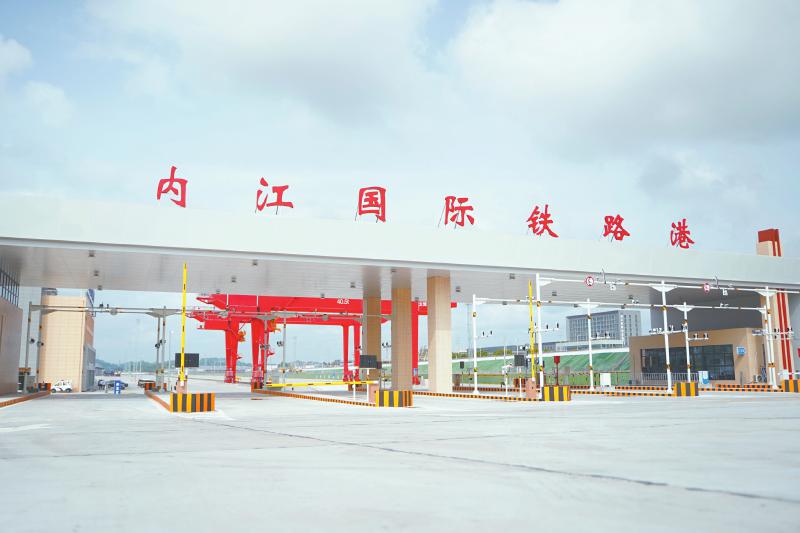
Core Insights - The operation of the Neijiang International Logistics Port railway dedicated line enhances the logistics capabilities and trade efficiency of the region, attracting significant interest from businesses [5][6] - Neijiang has established trade partnerships with 178 countries and regions, and the foreign trade performance has shown substantial growth, particularly with countries involved in the Belt and Road Initiative [4][9] - The local government has implemented various supportive policies to boost economic activity and facilitate international trade [10][11] Group 1: Logistics and Infrastructure - The Neijiang International Logistics Port railway dedicated line, operational since August 7, connects major railways and integrates resources for efficient cargo transport [5][6] - The logistics port enables goods to reach important RCEP member ports within 50 hours, enhancing the region's connectivity and trade potential [6] - The establishment of the first international freight train assembly center and the first air logistics city cargo station in the western region further strengthens Neijiang's logistics capabilities [6] Group 2: Foreign Trade Performance - From January to July, Neijiang's foreign trade import and export total reached 7.759 billion yuan, marking a year-on-year increase of 61.4%, with exports alone amounting to 6.508 billion yuan, up 62.5% [5] - Local enterprises have significantly increased their export volumes, with a reported 20% growth in exports from January to August [8][9] - The proportion of local enterprises in foreign trade has risen, with a total import and export value of 1.656 billion yuan from January to June, an increase of 11.7 percentage points compared to the previous year [9] Group 3: Policy Support and Economic Measures - The local government has introduced measures to support economic operations, including financial incentives for enterprises participating in international trade exhibitions [10][11] - Policies have been enacted to reduce risks for exporting companies, including substantial subsidies for export credit insurance [11] - The government is actively facilitating trade by organizing international business promotion activities and signing significant import agreements [10][11]
巴西欲拉金砖国家“群聊”,共商应对美国关税“大棒”
Di Yi Cai Jing· 2025-09-03 09:48
上海国际问题研究院外交政策研究所所长牛海彬向第一财经记者表示,在金砖峰会后,特朗普就径直对 巴西发出了关税威胁,时间点十分微妙。特朗普政府反复利用关税作为武器,不仅仅是要满足各种经济 利益的诉求,还有包括政治安全等非经济因素的考虑,已成为美国外交和对外战略的重要工具。 特别峰会 大部分巴西输美产品面临的关税税率高达50%。 巴西欲联合金砖国家共同应对美国的不合理关税。 据报道,多位消息人士透露,巴西总统卢拉计划在9月8日召集金砖国家领导人以视频方式举行特别峰 会,共同讨论美国的贸易政策。 在今年7月巴西里约热内卢举行的金砖国家领导人第十七次会晤上,卢拉就呼吁南方国家加强合作,表 示每个国家"都是自己命运的主人",此外他还表示"如果美国对其他国家加征关税,那么其他国家也可 以对等地对美国加征关税"。 卢拉这一说法惹怒了特朗普。据新华社报道,特朗普6日在社交媒体上宣称金砖国家推行所谓"反美政 策",并威胁对所有与金砖国家"反美政策"保持一致的国家额外征收10%的关税。 巴西学界也对金砖机制寄予厚望。巴西圣保罗大学国际法教授、金砖国家研究小组协调人卡塞利亚 (Paulo Borba Casella)日前表示,美国关 ...
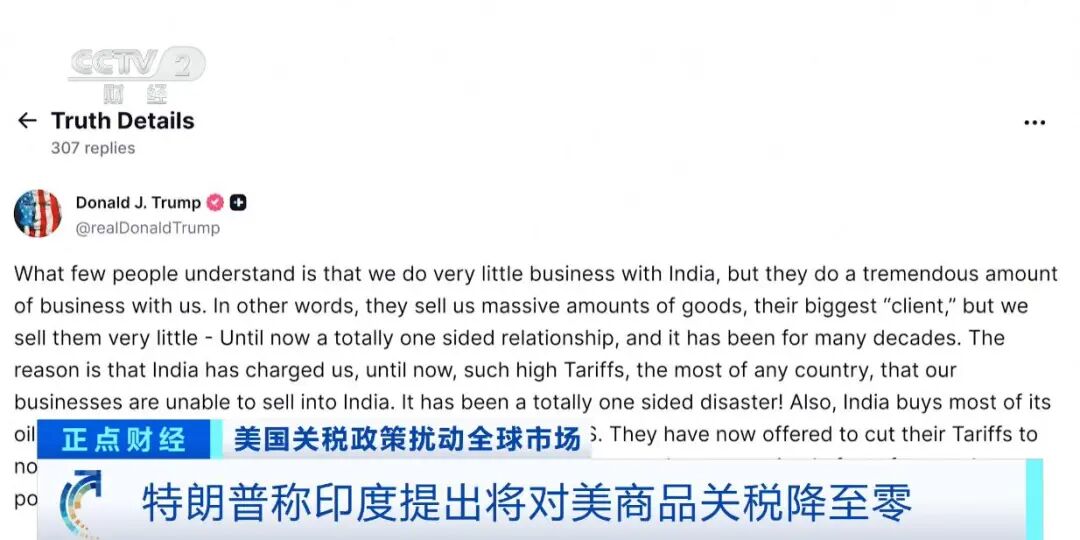
特朗普:印度提出将对美关税降至零,但为时已晚
Mei Ri Jing Ji Xin Wen· 2025-09-03 01:14
Core Viewpoint - Trump criticized India's high tariffs on U.S. goods, claiming it has led to a one-sided trade disaster, and suggested that India's recent proposal to reduce tariffs to zero is too late [2] Group 1: Trade Relations - Trump signed an executive order on July 31, imposing a 25% tariff on Indian goods starting August 7, which was later increased to an additional 25% due to India's import of Russian oil, resulting in a total tariff rate of 50% on Indian products [4] - The U.S.-India trade negotiations have been suspended amid these tariff increases [4] Group 2: Trade Data - In 2024, the total trade volume between the U.S. and India is projected to be approximately $129.2 billion, with a trade deficit of $45.7 billion for the U.S., reflecting a 5.4% increase from 2023 [4]
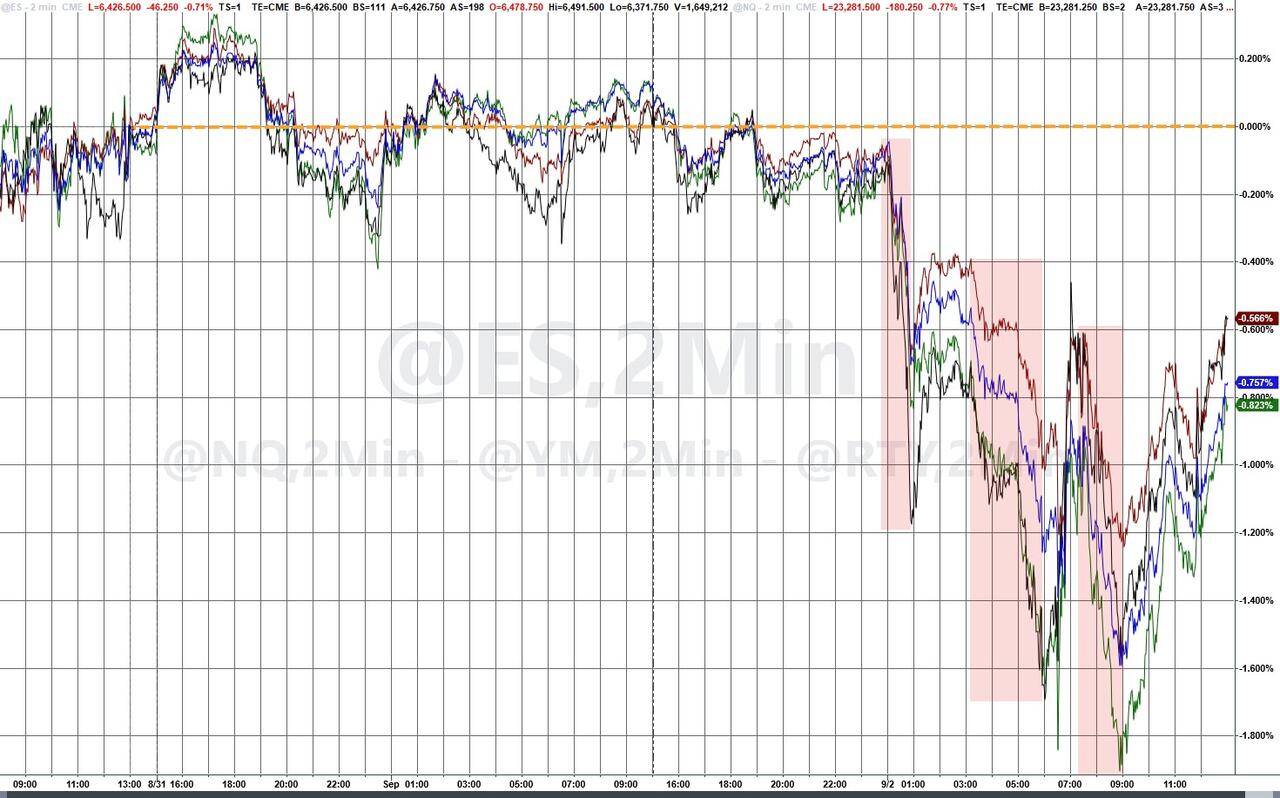
特朗普:将请求最高法院“快速裁决”全球关税案,若胜诉股市会大涨,否则巨震
Sou Hu Cai Jing· 2025-09-02 23:36
Core Viewpoint - The article discusses the implications of a U.S. appellate court ruling that deemed most of the global tariffs imposed by the Trump administration illegal, and Trump's intention to appeal to the Supreme Court to overturn this decision [1][4][10]. Group 1: Legal and Economic Implications - Trump plans to appeal the appellate court's ruling to the Supreme Court, emphasizing the urgency of a quick resolution due to the tariffs' impact on the nation's financial structure [3][4]. - The appellate court's decision indicates that the International Emergency Economic Powers Act (IEEPA) does not grant the President the authority to impose tariffs, which could significantly affect U.S. trade policy [4][10]. - If the Supreme Court upholds the lower court's ruling, it would severely limit Trump's ability to impose tariffs, undermining his economic strategy to compel companies to invest in the U.S. [10][11]. Group 2: Market Reactions - Following the announcement of the appellate court's ruling, U.S. stock markets experienced declines, with the S&P 500 down approximately 1% and the Dow Jones Industrial Average dropping over 380 points [1][4]. - Trump attributes the market downturn to uncertainty surrounding the tariff situation, suggesting that a favorable ruling could lead to a significant market rally [1][4]. Group 3: Alternative Legal Strategies - The U.S. Treasury Secretary expressed confidence that the Supreme Court would support Trump's use of IEEPA for imposing tariffs but is also preparing alternative legal strategies in case of a loss [9][10]. - If the Supreme Court rules against Trump, the administration may resort to other legal frameworks, such as the Smoot-Hawley Tariff Act, to impose tariffs, albeit with less efficiency [9][10]. Group 4: Potential Consequences of Ruling - Legal experts warn that a Supreme Court ruling against the tariffs could lead to significant economic repercussions, including potential financial collapse due to the loss of tariff revenue, which totaled $159 billion as of July [10][11]. - The ruling could also set a precedent affecting the balance of power between the executive branch and Congress regarding trade policy [10][11].
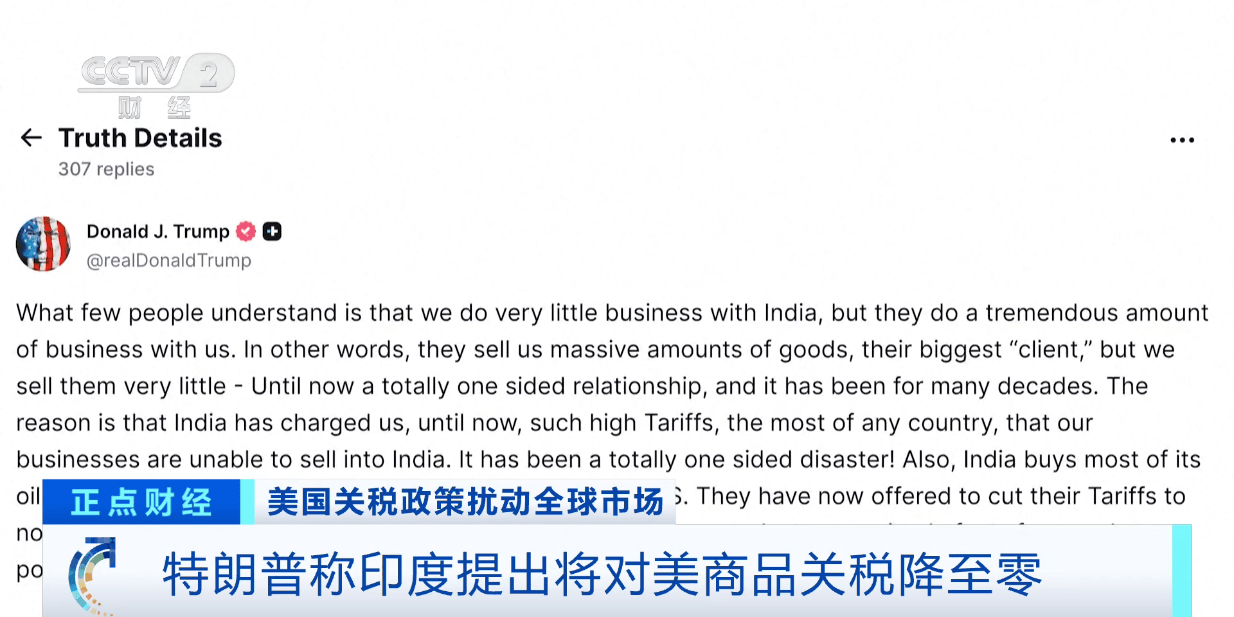
特朗普称印度提出将对美商品关税降至零
Sou Hu Cai Jing· 2025-09-02 08:59
Core Viewpoint - The U.S. President Trump criticized India's late proposal to reduce tariffs on U.S. goods to zero after the U.S. imposed a 50% tariff on Indian imports, indicating that India should have made such moves years ago [1][2]. Trade Relations - On July 31, Trump signed an executive order imposing a 25% tariff on Indian goods starting August 7, which was later increased to an additional 25% due to India's importation of Russian oil, resulting in a total tariff rate of 50% on Indian imports [4]. - The U.S. and India had previously engaged in trade negotiations, which have now been suspended following the tariff increases [4]. Trade Data - In 2024, the total trade volume between the U.S. and India is projected to be approximately $129.2 billion, with a trade deficit of $45.7 billion for the U.S., reflecting a 5.4% increase compared to 2023 [4].
前7月江苏对上合组织成员国进出口增6.8%
Xin Hua Ri Bao· 2025-09-01 21:58
Core Viewpoint - Jiangsu's trade with other member countries of the Shanghai Cooperation Organization (SCO) has shown a positive growth trend, with imports and exports reaching 198.84 billion yuan in the first seven months of the year, marking a year-on-year increase of 6.8% [1] Group 1: Trade and Logistics Development - The first international freight train of the China-Kyrgyzstan-Uzbekistan (CKU) rail intermodal transport was launched on October 13, 2022, enhancing trade connectivity between the SCO (Lianyungang) International Logistics Park and Uzbekistan's Tashkent logistics hub [1] - In the first seven months of this year, the CKU freight train service has dispatched a total of 473 trains, representing a year-on-year growth of 32.87% [1] - The SCO (Lianyungang) Logistics Park has established a multimodal transport logistics system integrating road, rail, river, and sea, significantly improving international logistics service capabilities [1] Group 2: Economic Impact and Infrastructure - The logistics park has set up six overseas warehouses in Central Asia and Southeast Asia, contributing to high growth in various logistics indicators [1] - Over ten years, the SCO (Lianyungang) International Logistics Park has achieved a cumulative logistics volume of 371 million tons and generated main business revenue of 22.824 billion yuan [1]