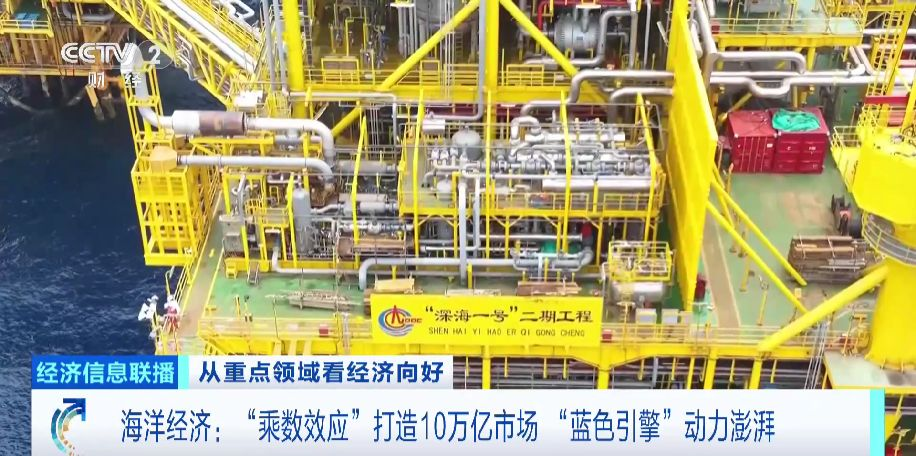
海上风电

Search documents
大连庄河市:构建人才与城市双向赋能的新格局
Zhong Guo Jing Ji Wang· 2025-07-25 03:04
Group 1 - The core initiative of Zhuanghe City is to attract young talent through a university student social practice program starting from July 2024, aiming to engage 841 local and university students in internships and practical experiences [1][2] - The program includes three main strategies: financial incentives, emotional engagement, and practical implementation, which have led to the creation of nearly 1,000 practice positions across various sectors [1][3] - Over 3,000 students have applied for the program in 2024, demonstrating a strong interest, with 263 new positions released this summer focusing on grassroots governance, industrial services, and rural revitalization [1][2] Group 2 - The "Perceiving Zhuanghe" project allows students to visit key local projects, enhancing their connection to the region and fostering a desire to contribute to local development [2][3] - Zhuanghe City is optimizing a dual-selection mechanism and exploring a three-tier talent cultivation network, which includes a "Practice Advisory Council" to encourage students to provide feedback based on their observations [3] - The initiative aims to transform students from mere observers to active contributors in rural revitalization efforts, promoting a reciprocal relationship between local talent and regional development [3]
深圳能源79亿建海上风电粤多地规模化错位发展
2 1 Shi Ji Jing Ji Bao Dao· 2025-07-25 02:24
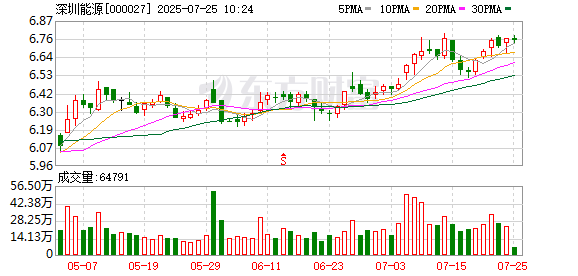
Core Viewpoint - Guangdong's offshore wind power projects are accelerating, with the total installed capacity ranking first in the country, and new projects continuously being launched [2][8]. Company Summary - Shenzhen Energy Group plans to invest 7.897 billion yuan in the construction of the Shenergy Shanwei Honghaiwan VI offshore wind power project, with a planned capacity of 500 megawatts and the installation of 36 units of 14-megawatt wind turbines [4][6]. - The project will enhance the company's energy business diversity and increase the proportion of green and clean energy installations, contributing to Shenzhen's goal of building a world-class green low-carbon industrial cluster [4][6]. - As of July 24, Shenzhen Energy's stock price is 6.75 yuan per share, with a total market capitalization of 32.112 billion yuan [3]. Industry Summary - Guangdong has abundant offshore wind energy resources, with the installed capacity of offshore wind power exceeding 12.51 million kilowatts and an annual power generation of over 36 billion kilowatt-hours as of June this year [3][8]. - The province aims to increase its offshore wind power capacity to 15 million kilowatts by 2025, supported by recent regulations promoting the development of offshore wind power [3][8]. - As of June, 27 offshore wind power projects in Guangdong have achieved full capacity grid connection, with a total installed capacity exceeding 7 million kilowatts [9].


深挖111.52公里海岸线潜力 广东惠来以“蓝色引擎”激活海洋经济澎湃动能
Yang Shi Wang· 2025-07-24 09:00
Core Insights - The construction of a strong marine nation is a significant strategic task for the rejuvenation of the Chinese nation, with the national marine production value reaching 10,543.8 billion yuan in 2024, a 5.9% increase from the previous year [1] Group 1: Marine Economy Development - Guangdong is focusing on activating the marine economy as a "blue engine" to create a "new maritime Guangdong" [1] - The coastal city of Jieyang is developing a modern marine industry system and aims to provide a replicable model for marine economic development in county areas [1][2] - Jieyang's marine ranching and deep-sea aquaculture are leveraging its 111.52 km coastline and 1,328.6 square kilometers of marine resources, with a projected output of 1,000 tons and a value of 100 million yuan per cultivation cycle [1] Group 2: Industrial Upgrades and Innovations - The successful trial production of the world's first 200,000 tons/year mixed waste plastic deep cracking industrial facility in Jieyang is expected to drive an industry chain worth over 100 billion yuan [2] - The establishment of a comprehensive energy development and new materials extension in the coastal industrial park is creating a new regional economic development model [2] - The marine economy in Huizhou is being enhanced through the transformation of traditional fisheries and the development of emerging industries [2] Group 3: Aquaculture and Seafood Industry - The abalone industry in Huizhou is thriving, with an annual output value of 2.3 billion yuan, significantly contributing to fishermen's income [4] - Huizhou is advancing deep-sea aquaculture projects and establishing a complete industrial chain for abalone production, processing, logistics, and services [3][4] - The construction of several processing plants is underway, with one expected to achieve an annual output value of 70 million yuan [3] Group 4: Infrastructure and Logistics - The Huizhou coastal industrial park is becoming a core area for offshore wind power equipment manufacturing, with an annual output value exceeding 12 billion yuan [6] - The park has attracted over 40 enterprises, including three Fortune Global 500 companies, and is developing a modern industrial system [6][7] - The opening of the Qianzhang General Terminal has improved logistics and transportation efficiency for enterprises [7] Group 5: Policy and Business Environment - Huizhou is implementing a systematic approach to develop key industries such as offshore wind power, marine ranching, and new energy storage [8] - The local government is providing a "green channel" for project approvals, significantly reducing processing times and facilitating rapid project development [8][9] - The "nanny-style" service model has proven effective in expediting project timelines, achieving a record of rapid project completion from signing to production [9][10]
三个关键词,看海洋经济新活力
Ren Min Ri Bao Hai Wai Ban· 2025-07-23 22:22
Core Insights - The marine economy in China is projected to exceed 10 trillion yuan in 2024, marking a 5.9% increase from the previous year, and accounting for 7.8% of the national GDP [7] - The shipbuilding industry has achieved over 50% market share in new ship orders, completed ships, and hand-held orders internationally for the first time [10] - The marine aquaculture sector is evolving into a modern "grain warehouse," with a 4.0% increase in marine fishery value added in 2024 [12] - The offshore wind power industry is experiencing significant growth, with a nearly 30% increase in electricity generation in 2024 [15] Shipbuilding Industry - The Jiangnan Shipyard is set to deliver over 10 LNG ships this year, with a total of approximately 60 LNG ship orders valued at around 150 billion yuan [9] - The shipbuilding industry is focusing on green technology, with a carbon capture system achieving over 80% CO2 capture rate [9] - The marine engineering equipment manufacturing sector has seen new orders increase by 57.1% and delivery orders by 114.3% year-on-year [10] Marine Aquaculture - The "Yenghai 1" marine ranch in Shandong has doubled its yield through integrated seaweed and oyster farming [11] - The development of modern marine ranches is expanding into deeper waters, with average offshore distances increasing from 10 km to 18 km since 2018 [12] - The marine fishery sector's output is expected to reach 4,880 billion yuan in 2024, reflecting a 4.0% growth [12] Offshore Wind Power - The offshore wind power sector is entering a new phase of large-scale development, with significant advancements in technology and capacity [15] - The total electricity generation from offshore wind power is expected to grow by nearly 30% in 2024 [15] - The establishment of a complete industrial chain for offshore wind power equipment is underway, with 35 projects covering various components [14] Emerging Marine Industries - The marine new industries are projected to grow by 7.2% in 2024, with significant advancements in marine pharmaceuticals and bioproducts [15] - The establishment of innovation platforms in marine engineering, offshore wind power, and marine pharmaceuticals is being actively pursued [15] - The marine economy is transitioning from quantitative growth to qualitative improvements, enhancing resource supply and sustainable development capabilities [13][16]
7月23日晚间公告 | 深圳能源拟逾78亿投建海上风电项目;启迪设计中标逾8亿元智算中心项目
Xuan Gu Bao· 2025-07-23 12:12
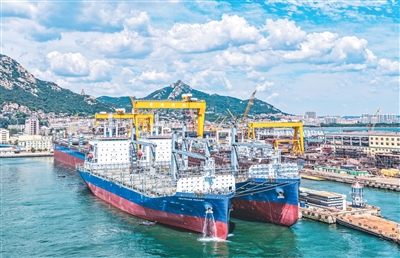
Buybacks and Increases - Jinzhai Food plans to repurchase shares worth between 50 million to 100 million yuan [1] - Everbright Bank sees CITIC Financial Assets increase its shareholding ratio to 1% [1] External Investments and Daily Operations - Shenzhen Energy intends to invest 7.897 billion yuan in the construction of the Shantou Honghai Bay offshore wind power project [2] - Qidi Design has won a bid for an 860 million yuan intelligent computing center project [2] - Beixin Road and Bridge has secured a bid for the G217 Aral to Tumxuk highway project, totaling 1.629 billion yuan [3] - Saiyi Information plans to increase investment in Douhao Technology to enhance enterprise-level AI technology connectivity [4] - Luxshare Precision intends to issue H-shares and list on the main board of the Hong Kong Stock Exchange [4] - Jinlong Co. plans to acquire approximately 29.32% of the shares of intelligent computing service company Shenzhen Benmao [5] - Titan Technology plans to use self-owned or raised funds of 5.7564 million pounds to acquire 100% of Apollo Scientific Ltd. from Central Glass Co., Ltd. [5] - East China Pharmaceutical's wholly-owned subsidiary HDM1002 has received FDA approval for clinical trials in the U.S. for weight management in overweight or obese populations [5] - Jiadu Technology plans to transfer 10% of its partnership interest in Anhui New Infrastructure Fund for 40 million yuan [6] - Zhongyuan Tong intends to jointly invest 10 million yuan with Zhengfang Technology to establish a joint venture [7] Performance Changes - Rongzhi Rixin expects a net profit of 14 million to 15 million yuan for the first half of the year, representing a year-on-year increase of 2027.62% to 2179.59%, driven by significant revenue growth in the wind power and petrochemical industries [8] - Weiguang Co. reports a net profit of 172 million yuan for the first half of the year, an increase of 11.32% year-on-year [9]
挪威国家石油公司首席财务官:美国未来推出更多海上风电项目的可能性非常小。
news flash· 2025-07-23 05:46
Core Viewpoint - The CFO of Norway's national oil company stated that the likelihood of the United States launching more offshore wind projects in the future is very low [1] Group 1 - The statement reflects a cautious outlook on the expansion of offshore wind energy in the U.S. market [1] - The comment may indicate potential challenges or barriers that could hinder the growth of offshore wind projects in the U.S. [1]
证券代码:002487 证券简称:大金重工 公告编号:2025-049
Zhong Guo Zheng Quan Bao - Zhong Zheng Wang· 2025-07-21 22:44
Group 1 - The company signed a contract with a European energy company for the supply of offshore wind turbine monopile foundations, with a total contract value of approximately 430 million RMB, accounting for about 11.38% of the company's audited revenue for 2024 [2][7] - The project is located in Europe, and the delivery of the monopile products is scheduled for completion by 2026 [3] - The counterparty is a leading global energy company, with whom the company has engaged in similar transactions over the past three years [4][5] Group 2 - The contract stipulates that the company will construct the monopile products and provide shipping services to deliver them to the designated location of the counterparty [6] - Payment will be made in installments, including a prepayment, progress payments, and a final payment [8] - The contract becomes effective immediately upon signing by both parties [9] Group 3 - The execution of this contract is expected to have a positive impact on the company's operating performance in 2026, with revenue recognition based on the agreement and accounting principles [11]

大金重工:签署4.3亿元欧洲海上风电单桩基础供应合同
news flash· 2025-07-21 09:19
Group 1 - The company announced that its wholly-owned subsidiary, Penglai Dajin Ocean Engineering Co., Ltd., has signed a contract for the supply of offshore wind power monopile foundations with a European energy company, with a total contract value of approximately 430 million RMB [1] - The contract represents about 11.38% of the company's audited revenue for the fiscal year 2024 [1] - The project is located in Europe, and the company is expected to deliver the monopile products by 2026, which is anticipated to have a positive impact on the company's operating performance in 2026 [1]
周三签到!中能建/中电建/中海油/华能/国电投/三峡上海院/龙源振华/海油工程/明阳智能/运达股份/天科院/国网/南网……
DT新材料· 2025-07-20 14:12
Core Viewpoint - The 2025 Marine Clean Energy Technology and Equipment Summit Forum will be held from July 23-25 in Nantong, focusing on innovative technologies needed for integrated development, rapid scaling of successful demonstration projects, and solutions to deep-sea construction cost challenges [1]. Group 1: Forum Overview - The forum will include discussions on key topics such as innovative technology drivers for integrated development and strategies for scaling successful demonstration projects [1]. - Various activities will take place, including the Youth Scientist 10² Forum, an industry development and innovation technology conference, and specialized forums [1]. Group 2: Organizing Institutions - The forum is jointly organized by the Yangtze River Delta Shipbuilding and Offshore Equipment Technology Innovation Center, the Yangtze River Delta Offshore Wind Power Intelligent Operation and Maintenance Innovation Alliance, and the Jiangsu University of Science and Technology [4]. - Notable co-organizers include Southeast University, Harbin Engineering University, and Ningbo University [4]. Group 3: Keynote Speakers and Topics - The forum will feature prominent speakers such as Torgeir Moan, a foreign academician of the Chinese Academy of Engineering, and Xu Lixin, director of the Yangtze River Delta Shipbuilding and Offshore Equipment Technology Innovation Center [4]. - The Youth Scientist 10² Forum will present various research topics, including studies on floating wind turbines and wave energy devices [5][6]. Group 4: Industry Development Focus - The forum will address the trends in the marine clean energy industry, focusing on the "14th Five-Year Plan" policies and the integration and collaboration within the industry [12]. - Discussions will include the balance between increasing development difficulty and cost reduction in deep-sea clean energy projects [12]. Group 5: Technical Innovations - The forum will explore technological innovations in construction equipment, power generation devices, support structures, mooring, and transmission and consumption in the marine clean energy sector [13]. - Specific sessions will cover advancements in wave energy and tidal energy device array development [13]. Group 6: Registration and Participation - Registration for the forum is open, with fees set at ¥3200 for corporate representatives and ¥2800 for research representatives if paid in advance [47]. - Participants are required to register and can submit their information via a QR code [46].
“乘数效应”打造10万亿市场 海洋经济成中国经济增长“蓝色引擎”
Yang Shi Wang· 2025-07-20 00:50
Core Viewpoint - The marine economy in China is emerging as a significant driver of economic growth, with a GDP exceeding 2.5 trillion yuan in the first quarter of this year, marking a year-on-year growth of 5.7% [1] Group 1: Marine Economy Development - The marine economy is becoming a "blue engine" for China's economic growth, as highlighted in the government work report and the recent Central Financial Committee meeting [1] - China's marine economy has surpassed 10 trillion yuan, growing by 75.9% over the past decade, indicating a shift from quantitative to qualitative changes in economic development [28] Group 2: Deep Sea Energy Resources - The "Deep Sea No. 1" gas field is producing over 4.5 billion cubic meters of natural gas annually, reaching its maximum design capacity, and is crucial for energy supply in the Guangdong-Hong Kong-Macao Greater Bay Area [3] - Deep water and ultra-deep water regions contribute 70% to 80% of major global oil and gas discoveries in the past decade, establishing deep sea as a core battlefield for oil and gas reserves [7] Group 3: Offshore Wind Power - The construction of the ±500 kV offshore converter station in Yangjiang is part of China's first offshore integrated flexible direct current project, expected to deliver 6 billion kilowatt-hours of offshore wind power annually by 2026 [9] - China's offshore wind power is transitioning from a follower to a leader, with advancements in core technologies such as large megawatt units and floating wind power [11] Group 4: Marine Aquaculture - The "Suhai No. 1," the world's first self-propelled closed salmon farming vessel, is set to produce 8,000 tons of salmon annually, with an investment of 600 million yuan [14] - Plans to promote five such vessels could lead to an annual production capacity of 40,000 tons, generating a market scale of 28 billion yuan [16] Group 5: Undersea Data Centers - The first commercial underwater intelligent computing center cluster in China has been launched, significantly reducing cooling energy consumption compared to land-based data centers [18] - Each underwater data module can save approximately 120 million kilowatt-hours of electricity annually compared to similar-sized land data centers [20] Group 6: Technological Innovations - The "Nanjiao No. 1" underwater cable-laying robot has achieved a speed of 1,000 meters per hour, doubling the efficiency of traditional operations [22] - This technology supports the establishment of underwater data centers and transoceanic communication systems, extending marine development capabilities [24] Group 7: Integrated Marine Development - The integration of offshore wind power, oil and gas development, marine aquaculture, and digital infrastructure is forming a comprehensive marine development strategy [26] - The marine economy's unique characteristics enable deep integration across primary, secondary, and tertiary industries, enhancing the utilization of marine resources [28]