工业机器人

Search documents
微亿智造申请港交所主板上市 冲刺工业具身智能机器人第一股
Zheng Quan Shi Bao Wang· 2025-09-29 07:14
Core Viewpoint - Weiyi Intelligent Manufacturing Technology Co., Ltd. has submitted an application for listing on the Hong Kong Stock Exchange, aiming to become the first publicly listed company in the industrial embodied intelligence robotics sector in Hong Kong [1] Company Overview - Established in 2018, Weiyi Intelligent Manufacturing is a leading company in the domestic industrial embodied intelligence robotics market, developing products that can autonomously perceive, learn, make decisions, and execute complex tasks through a self-developed full-stack software and hardware system [1] - The company has achieved rapid growth and commercial scale, serving over 25 Fortune 500 companies and initiating overseas expansion into markets such as Portugal, the United States, and Germany, with plans to enter Japan, Singapore, and Malaysia by June 30, 2025 [1] Financial Performance - Total revenue increased from 221 million yuan in 2022 to 600 million yuan in 2024, representing a compound annual growth rate (CAGR) of 64.7%, with flagship product "industrial embodied intelligence robots" driving a CAGR of 183.4% [2] - The company has achieved profitability in 2024 and the first half of 2025, benefiting from a high gross margin exceeding 50% and low deployment costs associated with its industrial embodied intelligence robot product line [2] Industry Context - The industrial automation sector has faced significant bottlenecks, including high deployment costs, long debugging cycles, and a lack of flexibility, which have limited its penetration in the manufacturing industry [2] - The introduction of embodied intelligence into robotics allows for the integration of artificial intelligence, enabling robots to understand dynamic environments and adapt to complex tasks, thus opening up new market opportunities [2] Technological Innovation - Weiyi Intelligent Manufacturing has developed a comprehensive intellectual property portfolio with over 700 proprietary rights and has been recognized as a national key specialized "little giant" enterprise [3] - The company has received multiple prestigious awards for technological innovation and has been certified as "internationally leading" by the Ministry of Industry and Information Technology and the Ministry of Science and Technology in 2024 [3] Market Position - According to a report by ZhiShi Consulting, Weiyi Intelligent Manufacturing is the largest supplier of industrial embodied intelligence robots in China based on 2024 revenue [3] - The company has been included in Forbes' list of China's top 50 AI technology companies and ranked first in IDC's 2024 report on the market share of AI visual industrial robots in China [3] Funding and Future Plans - Weiyi Intelligent Manufacturing has completed multiple rounds of financing, with shareholders including various national funds and well-known investment institutions [3] - The net proceeds from the IPO will be used for core technology research and development, establishing localized overseas sales and service networks, strategic investments and acquisitions, expanding production capacity, and general corporate purposes [3]

超千项新技术新展品首展首发 第二十五届工博会展现全球工业科技前沿成果
Zheng Quan Shi Bao Wang· 2025-09-29 03:20
Core Insights - The 25th China International Industry Fair showcased over 3,000 exhibitors from 28 countries, highlighting trends in high-end, intelligent, and green industrial development [1] - The fair featured significant achievements in China's industrial sector, including the C919 aircraft and high-speed maglev trains, supported by 1,500 foundational projects [2] - The event served as a platform for companies to enhance collaboration and innovation within the industrial ecosystem, with substantial interest from international buyers [3] Historical Context - China's industrial landscape has been reshaped by a complete industrial chain and continuous innovation, establishing a strong presence in the global market [2] - The exhibition included historical industrial artifacts, showcasing the evolution of China's manufacturing capabilities [2] Current Trends - The fair emphasized the transformation of industrial robots into intelligent collaborators capable of environmental perception and autonomous decision-making [3] - The event facilitated the release of the "Shanghai Industrial Mother Machine Industry Capability Handbook," promoting over 80 cooperative projects with a total contract value exceeding 3 billion yuan [3] Future Outlook - The exhibition highlighted emerging technologies such as controllable nuclear fusion and AI-driven manufacturing systems, indicating a shift towards zero-carbon futures [4] - Innovations like advanced packaging technology and heavy-load robots were showcased, reflecting China's role as a key player in global industrial innovation [5] - The fair underscored China's transition from a technology follower to a significant contributor and leader in global industrial development [5]
优艾智合递表港交所 中金公司为独家保荐人
Zheng Quan Shi Bao Wang· 2025-09-29 00:42
公司战略聚焦于工业具身智能中最具增长潜力和场景适应性的移动操作机器人,并于2024年按收入计在 工业移动操作机器人公司中排名全球第一。在半导体产业,优艾智合2024年在中国市场排名第一;在能 源及化工产业排名第二。 优艾智合是一家工业具身智能科技公司,致力于为全球工业客户提供稳定、柔性、高效的生产解决方 案。公司提供"一脑多态"具身智能机器人解决方案,包括高泛化智能模型及具备感知、移动、操作能力 的多形态机器人。 截至2025年9月22日,其解决方案已在中国、日本、韩国、德国等30余个国家及地区销售,客户涵盖半 导体晶圆代工厂、电网集团和能源集团等知名企业。优艾智合早在2017年即实现具身智能产品的销售, 并在半导体和能源化工领域率先实现规模销售。 优艾智合已向港交所提交上市申请,中金公司(601995)为独家保荐人。 ...

连续9年全国第一,广东凭什么稳坐创新王座
21世纪经济报道· 2025-09-29 00:01
Core Viewpoint - Guangdong continues to rank first in the national innovation capability evaluation for nine consecutive years, showcasing its strong enterprise innovation and innovation environment, but faces challenges in maintaining its leading position as other provinces catch up [1][3][5]. Group 1: Innovation Performance - Guangdong ranks first in enterprise innovation and innovation environment, second in knowledge creation, fourth in knowledge acquisition, and second in innovation performance [3][5]. - The province's research and development (R&D) expenditure reached 342.664 billion yuan, accounting for 16.34% of the national total, indicating a strong commitment to innovation [5][10]. - Guangdong has a high conversion efficiency from patents to products, with 143,141 invention patents granted and 164,853 invention patent applications, both ranking first in the country [5][10]. Group 2: Economic and Industrial Growth - The advanced manufacturing and high-tech manufacturing sectors in Guangdong are projected to increase their value-added shares to 56.7% and 31.6% respectively by 2024, with significant growth in new energy vehicles and industrial robots [6][10]. - Approximately 77,000 high-tech enterprises form a robust support system for innovation, with private enterprises contributing over 60% of invention patents and 80% of new products [6][10]. Group 3: Strategic Initiatives - Guangdong is focusing on enhancing its innovation ecosystem by investing in high-level technology innovation platforms and improving the research system to support sustainable economic growth [7][10]. - The province aims to solidify its position as a long-term leader by addressing challenges in efficiency and potential, particularly in the context of international trade and technological decoupling [10][12]. Group 4: Talent and Investment - Guangdong has attracted over 1 million college graduates to work in the province, exceeding its initial target, and plans to conduct recruitment events across major universities [11]. - The provincial government has committed to increasing R&D funding, with a focus on basic research, ensuring that at least one-third of provincial financial technology funds are allocated to this area [11]. Group 5: Global Innovation Standing - The "Shenzhen-Hong Kong-Guangzhou" innovation cluster has surpassed the "Tokyo-Yokohama" cluster to become the top global innovation cluster, excelling in PCT patent applications, scientific publications, and venture capital [12]. - The province's advancements in basic research and scientific publications indicate a significant leap in its global innovation capabilities [12].

深化改革,经开区活力迸发
Ren Min Ri Bao· 2025-09-28 21:55
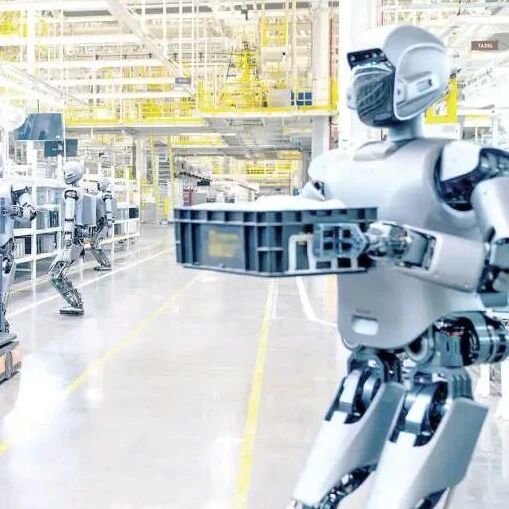
Core Insights - The news highlights the innovative developments in Shenyang High-tech Industrial Development Zone, showcasing advancements in technology and manufacturing, driven by institutional reforms and service upgrades [1][2] - The economic development zones in Liaoning province are undergoing significant reforms aimed at enhancing efficiency and clarity in management, contributing to high-quality economic growth [2] Group 1: Innovations and Achievements - Chip manufacturer ChipSource has developed a single-wafer cleaning machine for integrated circuit front-end chip processing, breaking foreign technology barriers [1] - New松 Industrial Robots have gained national attention by appearing in major televised events, demonstrating China's manufacturing capabilities [1] - Neusoft's Aurora Smart Radiotherapy System has surpassed international monopolies, achieving advanced global performance [1] Group 2: Economic Development Zones - Liaoning province has 96 economic development zones, including 11 national-level zones, which are pivotal for the province's economic revitalization [2] - In the first half of the year, these economic zones generated a GDP of 5,874 billion, accounting for 37.4% of the province's total [2] - The total import and export volume of these zones reached 2,624 billion, representing 70.9% of the province's total [2] - National-level economic zones contributed significantly, with their GDP, industrial output, and fixed asset investment accounting for 49.3%, 43.8%, and 39.5% of the total for all economic zones, respectively [2] Group 3: Policy and Reform Initiatives - The Liaoning Provincial Department of Commerce initiated a comprehensive reform survey for economic development zones, leading to the issuance of reform opinions aimed at enhancing operational efficiency [2] - The reforms focus on clarifying responsibilities, improving management efficiency, and fostering vitality within the economic zones [2] - The implementation of tailored strategies for each zone is expected to address systemic issues and promote sustainable growth [2]
连续9年全国第一,广东凭什么稳坐“创新王座”?
2 1 Shi Ji Jing Ji Bao Dao· 2025-09-28 12:56
Core Insights - Guangdong continues to rank first in the national innovation capability for nine consecutive years, showcasing strong performance in enterprise innovation and innovation environment [2][5] - The report indicates a marginal convergence in Guangdong's leading advantage, with a decline in innovation efficiency and growth potential rankings, necessitating a reassessment of its innovation leadership [2][5] Innovation Performance - Guangdong ranks first in enterprise innovation and innovation environment, second in knowledge creation, fourth in knowledge acquisition, and second in innovation performance [2][3] - The province's R&D investment from large-scale industrial enterprises reached 342.66 billion yuan, accounting for 16.34% of the national total, maintaining the top position [3][6] Patent and Product Development - Guangdong leads the nation with 143,141 invention patents granted and 164,853 invention patent applications from large-scale industrial enterprises [3][4] - New product sales revenue in Guangdong reached 5.19 trillion yuan, also the highest in the country, with new products accounting for the third-largest share of operating income [3][4] Manufacturing and Technology - The advanced manufacturing and high-tech manufacturing sectors in Guangdong are projected to increase their value-added shares to 56.7% and 31.6% respectively by 2024 [4] - The province produces 43% of the nation's new energy vehicles, 44% of industrial robots, over 40% of smartphones, and 18% of integrated circuits, indicating a strong industrial cluster [4] Talent and Investment - Guangdong aims to attract over 1 million college graduates by July 2025, with recruitment events planned across major cities [6] - The province's R&D expenditure has reached 510 billion yuan, with a research intensity of 3.6%, leading the nation in several key technology indicators [6] Global Innovation Standing - The "Shenzhen-Hong Kong-Guangzhou" cluster has surpassed the "Tokyo-Yokohama" cluster to become the top global innovation cluster according to the Global Innovation Index [7][8] - This cluster excels in PCT patent applications, scientific publications, and venture capital, indicating a balanced strength across key innovation dimensions [8]
科技创新为辽宁高质量发展注入强劲动能 广东激活三大动力 扎实推进高质量发展
Yang Shi Wang· 2025-09-28 12:13
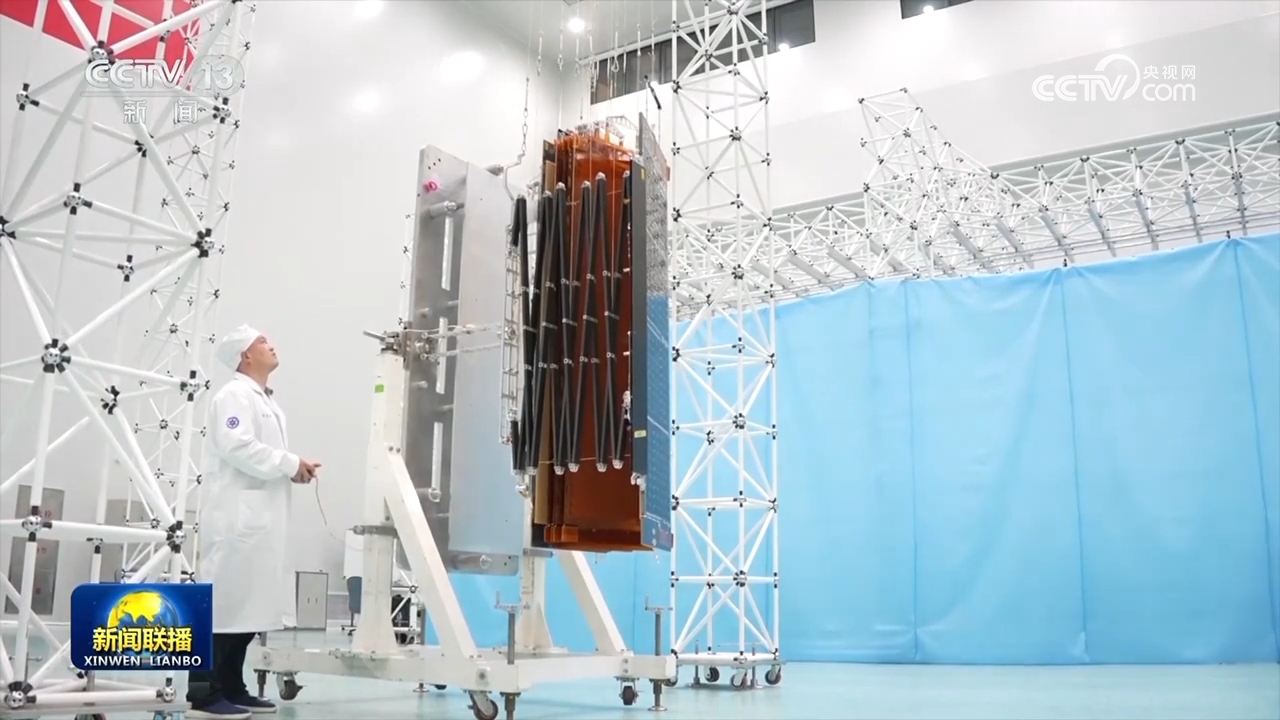
Group 1 - Liaoning has increased R&D investment and established high-level innovation platforms, achieving breakthroughs in key core technologies such as the world's largest shuttle oil tanker and the first medium-speed high-power ammonia fuel engine in the country [1] - The proportion of basic research investment in Liaoning's R&D expenditure reached 6.9%, with an annual growth rate of 24.3% in technology contract transaction volume, significantly enhancing regional innovation levels [1] - Researchers at the Shenyang Institute of Automation of the Chinese Academy of Sciences have overcome challenges in stacked flexible solar wing mechanisms, which were first applied in the major "Thousand-Sail Constellation" project [1] Group 2 - Liaoning has established 20 key laboratory clusters focusing on priority industrial clusters, promoting the aggregation of high-quality resources from universities, research institutions, leading enterprises, and financial institutions [3] - In 2024, the construction of four trillion-yuan industrial bases, including advanced equipment manufacturing and new metallurgical materials, will fully accelerate, with four clusters recognized as national advanced manufacturing clusters [3] - The revenue share of strategic emerging industries in 22 key industrial clusters has exceeded one-third for the first time [3] Group 3 - Guangdong is accelerating comprehensive deepening reforms and achieving new results in open cooperation, leading the nation in foreign investment scale since the "14th Five-Year Plan" [4] - Guangdong Free Trade Zone has over 300 reform and innovation experiences replicated nationwide, and Hengqin has implemented cross-border business registration with over 100 Australian-funded enterprises established [4] - In Shenzhen, the comprehensive reform pilot has further expanded, resulting in 48 innovative measures [4] Group 4 - During the "14th Five-Year Plan" period, Guangdong has added two trillion-yuan industrial clusters in the automotive and new energy sectors, with eight national-level advanced manufacturing clusters generating nearly 10 trillion yuan in output [6] - Artificial intelligence has empowered 78 application scenarios across 13 fields, including manufacturing, education, and healthcare [6] - Guangdong's regional innovation comprehensive capability has ranked first in the country for nine consecutive years [6]
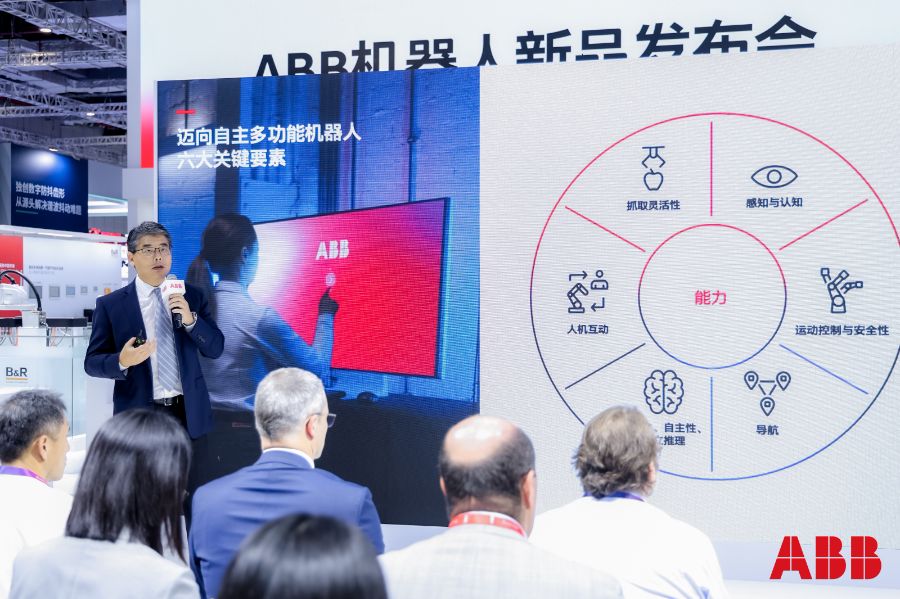
ABB集团韩晨:竞合共生 是中国机器人行业发展驱动力
2 1 Shi Ji Jing Ji Bao Dao· 2025-09-28 11:51
Group 1: Core Insights - ABB Group launched new products at the 25th China International Industry Fair, focusing on advancements in capitalizing and localizing supply chains [1] - The new products feature enhanced machine vision compatibility, flexible mobility, and dynamic planning capabilities, aiming to lead in autonomous multifunctional robot technology (AVR) in the AI era [1][2] - ABB's Vice President, Han Chen, discussed the company's future strategy, the current state of the Chinese market, and the role of AI in driving transformation in the robotics industry [1][4] Group 2: AI Integration in Robotics - Over 30% of robots now incorporate visual capabilities, but integration challenges exist due to varying camera and processor standards, leading to increased complexity and time consumption for users [2][3] - ABB introduced the OmniCore EyeMotion vision system and online automatic path planning technology, which utilizes any third-party camera or sensor for environmental recognition and AI-driven path planning [2] - AI has significantly improved precision in tasks such as screw fastening, with success rates approaching 100% after implementing deep learning algorithms [3] Group 3: Market Dynamics in China - The Chinese robotics industry is highly competitive, with international companies benefiting from the growth of Chinese manufacturing while facing pressure from domestic competitors [4][5] - ABB has been operating in China since 1994 and plans to enhance its local R&D capabilities, with nearly 300 R&D personnel in Shanghai and Zhuhai [5] - To navigate the competitive landscape, ABB aims to lower costs while adding value throughout the product lifecycle, focusing on customer needs [5][6] Group 4: Future Plans and Independence - ABB announced plans for the independent listing of its robotics business, aiming for completion by Q2 2026, to enhance autonomy and focus on projects that meet domestic customer demands [6]

ABB集团韩晨:竞合共生,是中国机器人行业发展驱动力
2 1 Shi Ji Jing Ji Bao Dao· 2025-09-28 11:38
Core Insights - ABB Group is focusing on new strategies and advancements in the Chinese market, particularly in the field of robotics and artificial intelligence [1][6] - The company aims to enhance its product offerings with AI-driven technologies to improve the capabilities of industrial robots [3][4] Group 1: AI Integration in Robotics - Over 30% of robots now incorporate visual capabilities, but integration challenges exist due to varying camera and processor technologies [3] - ABB launched the OmniCore EyeMotion vision system, which utilizes AI for online automatic path planning, enhancing robot efficiency [3][4] - AI has significantly improved operational precision, with success rates nearing 100% in tasks previously limited to 20% accuracy using traditional methods [4][5] Group 2: Market Dynamics in China - The Chinese robotics industry is highly competitive, with both international and domestic players vying for market share [6] - ABB has localized its operations in China since 1994, focusing on R&D and manufacturing to better serve the market [6][8] - The company plans to enhance its R&D capabilities in China, employing nearly 300 specialists to meet local demands [6] Group 3: Business Strategy and Future Plans - ABB is considering a spin-off of its robotics business to enhance autonomy and focus on market-specific needs, aiming for an independent listing by Q2 2026 [8] - The company emphasizes the importance of cost reduction and value addition in maintaining profitability while pursuing growth in the competitive landscape [8]
江苏占据六席!工信部新一批“国字号”产业集群公示
Yang Zi Wan Bao Wang· 2025-09-28 06:47
Core Insights - Jiangsu Province has successfully included six industrial clusters in the Ministry of Industry and Information Technology's 2025 list of characteristic industrial clusters for small and medium-sized enterprises (SMEs) [1][3] Group 1: Industrial Clusters Overview - The selected industrial clusters include: 1. CNC machine tool functional components in Lishui District, Nanjing 2. Industrial collaborative robots in Wujin District, Changzhou 3. Simulation fiber materials in Wujiang District, Suzhou 4. Offshore wind power equipment in Rudong County 5. Flue gas treatment environmental protection equipment in Tinghu District, Yancheng 6. Low-carbon olefin extended functional materials in Taixing City [3][4] - Characteristic industrial clusters are defined as those located within county-level jurisdictions, led by SMEs, focusing on dominant industries, showcasing distinctive advantages, gathering resource elements, maintaining efficient collaborative networks, and having well-developed governance and services [3][4] Group 2: Economic Impact and Development - SMEs play a crucial role in driving innovation, promoting employment, and improving livelihoods, making them an essential part of regional economies [4] - Since 2022, the Ministry of Industry and Information Technology has conducted annual evaluations for recognizing characteristic industrial clusters, with Jiangsu having 19 national-level clusters recognized in previous lists [4] Group 3: Specific Cluster Highlights - The CNC machine tool functional components cluster in Lishui District focuses on the upstream and downstream industries of CNC machine tools, establishing a high-end machine tool industrial park that has attracted 180 enterprises, forming a complete industrial ecosystem [5][6] - The Wujiang simulation fiber materials cluster integrates the entire chain from fiber research and production to end applications, achieving a total output value of 27.499 billion yuan and housing two manufacturing champions [5] - Rudong County is a major hub for wind power equipment, with 32 wind farms and a total installed capacity exceeding 5.62 million kilowatts, accounting for nearly 25% of Jiangsu's total, and 4.83 million kilowatts of offshore wind capacity, representing about 40% of the province's total [5] - The Lishui CNC machine tool cluster has 21 provincial innovation platforms and has participated in the formulation of seven national standards, with 70% of its products achieving import substitution [6] - Wujin District is a core area for the robotics industry, producing over 40,000 robots annually and having a robotics industry chain scale exceeding 20 billion yuan [7]