
银行理财

Search documents
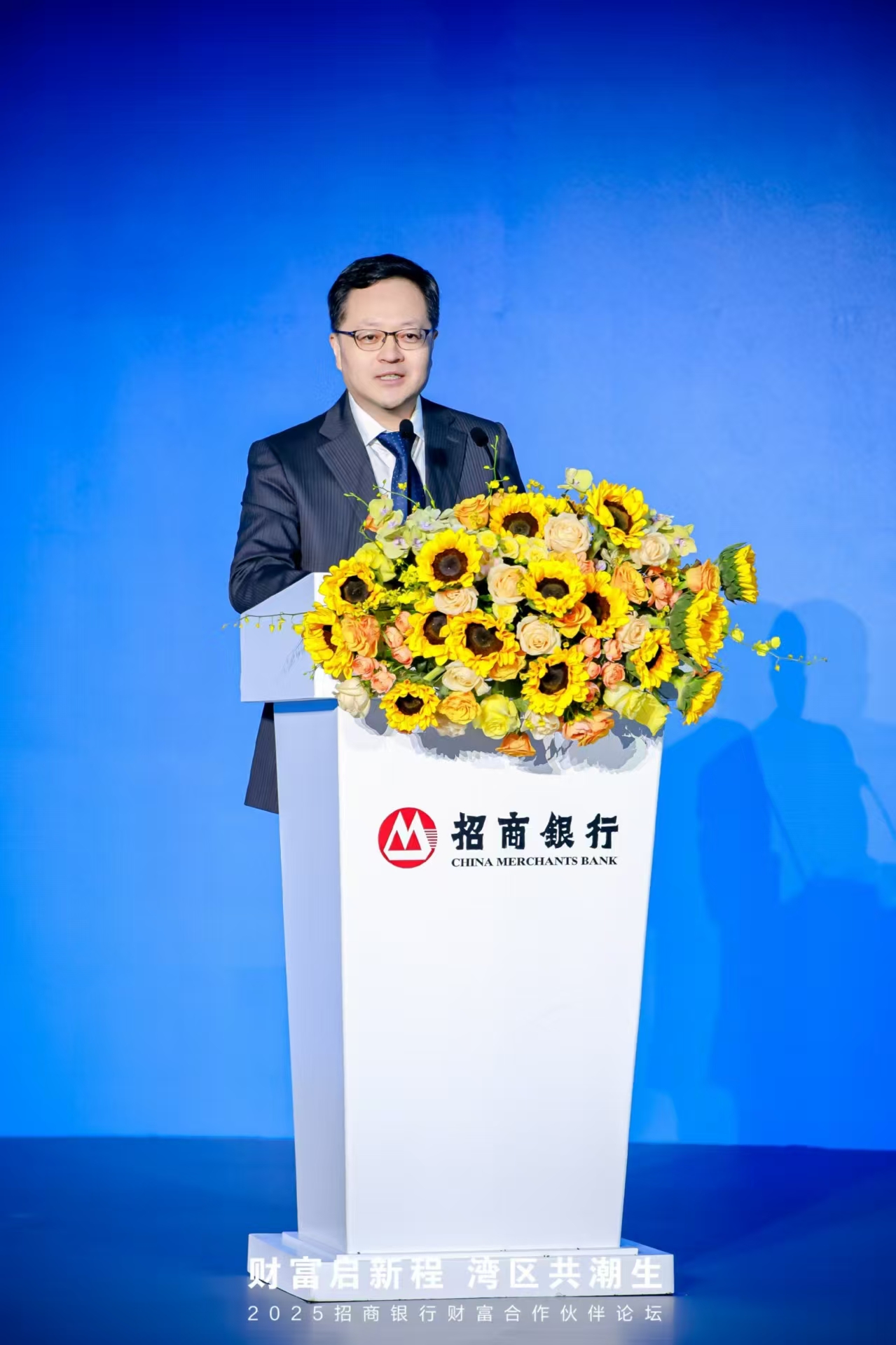
建信理财董事长齐建功:净值化趋势下,银行理财面临挑战和机遇并存
Xin Lang Cai Jing· 2025-08-08 02:23
Core Viewpoint - The forum hosted by China Merchants Bank focuses on the high-quality development of wealth management in the Guangdong-Hong Kong-Macao Greater Bay Area, highlighting both challenges and opportunities in the banking wealth management sector as it transitions to a net worth-based model [1][4]. Group 1: Current Market Situation - The wealth management industry is experiencing a dual challenge of opportunities and risks due to the deepening low-interest rate environment and the transition to net worth-based products [6]. - The shift to a fully net worth-based model is expected to reshape the industry ecosystem significantly, with the need for wealth management companies to align their investment capabilities with client expectations for sustainable returns [5][6]. - The current market shows a trend where most individual investors hold wealth management products for less than one year, indicating a preference for short-term, low-risk products [7]. Group 2: Demand and Client Expectations - There is a growing understanding among clients regarding net worth-based products, but many still hold strong expectations for capital preservation and stable returns, which may not align with the new market realities [7]. - The traditional client base is slow to adapt to the underlying logic of net worth-based products, creating a dependency that could limit future growth for wealth management companies [7]. Group 3: Asset Management and Investment Strategies - The wealth management industry is heavily reliant on fixed-income products, which constitute 97% of the product offerings, but the attractiveness of high-grade bonds is diminishing as yields decline [8][9]. - There is a pressing need for wealth management firms to enhance their research and asset allocation capabilities, particularly in equity assets, to meet the rising demand for stable returns in a volatile market [9]. Group 4: Future Development and Strategic Focus - Wealth management companies, such as Jianxin Wealth Management, are encouraged to adopt a client-centric approach, focusing on understanding and meeting diverse client needs through tailored product offerings [10][11]. - The strategy includes expanding product lines to include multi-asset and multi-strategy offerings, particularly targeting clients in the Greater Bay Area with innovative products like "fixed income plus" strategies [12]. - Emphasis is placed on enhancing IT capabilities and implementing digital transformation to improve client experience and operational efficiency [13]. Group 5: Regional Economic Support and Collaboration - Jianxin Wealth Management aims to leverage its unique position as the only major wealth management firm registered in the Greater Bay Area to support regional economic development and meet local financial needs [14]. - The company plans to explore investment opportunities in innovative industries and green finance, while also facilitating cross-border financial services to meet client demands for international asset allocation [14].

徽银理财锚定金融为民,助力金融强国建设 ——破局同质化竞争,努力走出差异化发展之路
Zhong Guo Zheng Quan Bao· 2025-08-08 02:20
Core Insights - The launch of the "Xinghui+" multi-asset multi-strategy product system and the "Huibin Wealth Management Macro Allocation Index" marks a significant step for Huibin Wealth Management in responding to the national financial strategy and enhancing public financial services [1][2] Group 1: Product System Overview - The "Xinghui+" product system aims to address the structural contradictions in the banking wealth management industry, particularly the shortage of quality assets in a low-interest-rate environment while meeting high return demands from cautious investors [2] - This system is built on stable fixed-income assets, with careful allocations to equities, commodities, and global assets, aiming for a better balance between risk and return through diversified investments and quantitative timing [2][3] Group 2: Research and Development Framework - The strategy index is a crucial technical support for the implementation of "Xinghui+", positioned as Huibin Wealth Management's "Research and Development No. 1 Project" for 2025, focusing on cross-market and multi-asset investment risk diversification [3][4] - The company plans to develop an open index matrix, launching several important indices and related products, enhancing the efficiency of research outcomes and promoting standardized, transparent, and regulated wealth management product supply [3][4] Group 3: Product Labeling and Market Strategy - Huibin Wealth Management has restructured its product offerings into a "five types, eight brands" framework, implementing product labeling to clarify asset attributes, risk levels, and strategy characteristics, catering to diverse investor needs [5] - The company aims to enhance its service capabilities in the wealth management industry and safeguard public wealth by focusing on four key areas: solid returns, diversified offerings, detailed strategies, and index construction by 2025 [5][6] Group 4: Future Outlook - The company will continue to innovate and deepen the practice of the "Xinghui+" system, guided by its corporate culture of integrity, professionalism, long-term vision, and altruism, while aligning with national strategies and protecting residents' wealth [6]
银行理财“打新”再下一城,未来布局节奏加快?
Guo Ji Jin Rong Bao· 2025-08-08 01:50
Core Viewpoint - The participation of bank wealth management subsidiaries in A-share IPO subscriptions marks a significant development in China's capital market, indicating a shift towards direct financing and a potential restructuring of market dynamics and valuation systems [4][5][8]. Group 1: Recent Developments - Ningyin Wealth Management has directly participated in offline IPO subscriptions as an A-class investor, with seven of its products successfully entering the effective bidding lists for three companies: Hansan Technology, Tianfulong, and Guangdong Jianke [1][2]. - As of August 7, 2023, Tianfulong and Guangdong Jianke are set to list on the Shanghai Stock Exchange, while Hansan Technology has already listed on the Shenzhen Stock Exchange [2]. - Ningyin Wealth Management's products have collectively secured allocations of 4,263 shares of Tianfulong, 13,114 shares of Guangdong Jianke, and 4,886 shares of Hansan Technology, with total investment amounts of approximately 10.06 million yuan, 8.6 million yuan, and 14.13 million yuan respectively [2]. Group 2: Market Implications - The involvement of bank wealth management subsidiaries in IPOs is seen as a key step in the reform of China's capital market, which could lead to a more stable investment environment and a more rational pricing mechanism for new stocks [4][5]. - Experts believe that the stable funding characteristics of bank wealth management can help mitigate market volatility and improve the investor structure in the A-share market [4]. Group 3: Future Outlook - The participation of bank wealth management in A-share IPOs is expected to accelerate as regulatory policies evolve and as firms enhance their research capabilities [8]. - The successful experiences of companies like Guangda Wealth Management and Ningyin Wealth Management are likely to serve as models for other institutions, encouraging them to adopt similar strategies in capital market participation [8].
平安理财首席固收投资官王阳:在“净值2.0时代”锻造理财“韧性收益力”
Zhong Guo Zheng Quan Bao· 2025-08-08 01:13
Core Viewpoint - The core viewpoint emphasizes that the definition of stability in bank wealth management should shift from "zero volatility" to achieving higher long-term performance while strictly controlling drawdowns in the context of the "Net Value 2.0 Era" [3][4][9] Group 1: Market Environment and Challenges - The reduction in coupon yields has led to increased volatility in wealth management product returns, as the protective "buffer" provided by higher yields has diminished significantly [4][5] - Regulatory policies are accelerating the transition to net value management in the banking wealth management industry, resulting in larger fluctuations in product net values compared to the past [4][6] Group 2: Investment Strategy and Performance - The company aims to create products with a high Calmar ratio, focusing on maximizing long-term performance while controlling drawdowns [5][6] - The investment strategy is driven by trading capabilities rather than asset-driven models, allowing the company to maintain yield levels despite market fluctuations [6][7] - The firm has been proactive in developing multi-asset and multi-strategy investment approaches to adapt to the low-interest-rate environment [6][7] Group 3: Client Adaptation and Trust Building - The company has categorized its product lines into low, medium-low, and medium volatility products to match client risk preferences accurately [8][9] - Building long-term trust with clients is crucial, and the company has implemented mechanisms such as weekly product reports and regular client education activities to foster this trust [8][9]
上半年理财规模增长两极分化 部分城商行理财子增速超20%
2 1 Shi Ji Jing Ji Bao Dao· 2025-08-08 00:35
Core Insights - The growth of wealth management subsidiaries of city commercial banks has been significant, with some achieving over 20% growth compared to the beginning of the year, while others are facing pressure due to slower growth rates [1][3] Group 1: City Commercial Banks' Performance - Ningyin Wealth Management leads with over 600 billion yuan in scale, growing by over 25% [1] - Suyin Wealth Management remains the largest among city commercial banks at nearly 750 billion yuan, with a growth of nearly 20% [1] - Other notable growth includes Hangyin Wealth Management at around 17% and Nanyin Wealth Management at nearly 15% [1] - The top five city commercial banks in terms of scale are all from the Yangtze River Delta region [1] Group 2: Performance of Joint-Stock Banks - Joint-stock banks have shown stable growth, with notable increases from Huaxia Wealth Management at around 19% [3] - However, some joint-stock banks like Zhaoyin Wealth Management have seen a decline in scale [3] - The overall wealth management market has seen a total scale of 27.48 trillion yuan, an increase of 4.44% from the beginning of the year [2] Group 3: Market Trends and Investment Strategies - The growth in wealth management scale is driven by a recovery in equity markets, with significant increases in indices such as the Shanghai Composite Index [5][6] - City commercial banks have shifted towards equity investments, with a notable increase in the number of equity and mixed products [6][7] - The performance of wealth management products is influenced by market conditions, with increased equity exposure leading to higher volatility in returns [9][10] Group 4: Distribution Channels - Successful wealth management subsidiaries have high proportions of external distribution channels, with some exceeding 50% [8] - The expansion of distribution channels is crucial for growth, particularly in large joint-stock banks and city commercial banks [10]
在“净值2.0时代”锻造理财“韧性收益力”
Zhong Guo Zheng Quan Bao· 2025-08-07 21:11
Core Viewpoint - The banking wealth management industry is redefining its concept of stability in the context of a transition to net value and a low interest rate environment, emphasizing the importance of controlling drawdowns while pursuing higher long-term performance targets [1][2][6] Group 1: Market Environment and Challenges - The reduction in interest rates has led to thinner "cushions" for investors, resulting in increased volatility in wealth management product returns [1][2] - The transition to the "Net Value 2.0 Era" has amplified the net value fluctuations of wealth management products, but banks still maintain a lower overall volatility compared to public funds and other asset management products [2][6] Group 2: Investment Strategy and Approach - The company focuses on creating products with a high Calmar ratio, which balances drawdown control with maximizing long-term performance [2][3] - The investment strategy is driven by market dynamics rather than reliance on single asset classes, allowing for resilience in yield even as the company expands its product scale [3][4] Group 3: Client Adaptation and Trust Building - The company has segmented its product line into categories based on volatility to better match client risk preferences, ensuring that products align with customer needs [5] - Building long-term trust with clients is crucial, and the company implements regular product reporting, client education activities, and training for sales personnel to foster understanding of product logic over mere yield chasing [5][6]
理财档案|债市走弱 银行理财、债基等收益下滑!如何应对?
Guang Zhou Ri Bao· 2025-08-07 16:30
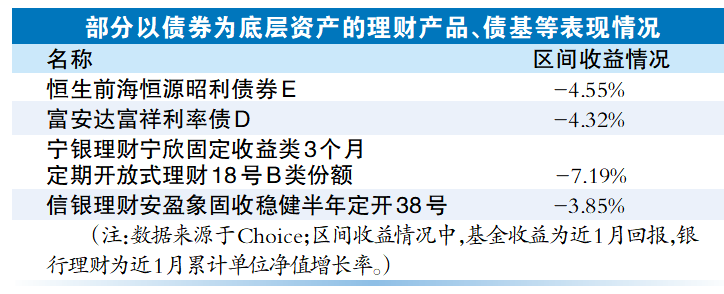
近期,债券市场出现了一轮调整,债市价格走弱,以债券为底层资产的理财产品、债基等,收益也出现 了下滑。近期,部分固收类理财产品近1个月年化收益率的平均水平环比下跌35BP,多只债基近1个月 以来收益跌超4%。对此,业内人士建议,在债市调整之际,投资者可采取"固收打底+权益增强+另类分 散"的方式,合理配置"固收+"产品,适度提升权益资产。 多只债基近1个月以来收益跌超4% 近期,债市走弱,8月6日,10年期国债收益率走高至1.71%附近,较此前1.64%的低点,上行了约7BP, 由于债券收益率和价格成反比,这也意味着债券价格走低,债市走弱。 债市的调整,令底层资产投资债券的理财产品、基金产品的收益走低。普益标准监测数据显示,截至8 月3日,存续开放式固收类理财产品(不含现金管理类产品)的近1个月年化收益率的平均水平为 2.46%,环比下跌0.35个百分点。Choice数据显示,近一个月以来,恒生前海恒源昭利债券E、富安达富 祥利率债D、光大保德信永利债券D等债基,收益跌超4%。 "债市调整背后,受多重因素共同影响。"苏商银行特约研究员薛洪言分析,股市及商品市场反弹吸引资 金转向高风险资产,导致债市面临资金分流, ...
从稳健到创收:银行理财的"分红时代"悄然开启
点拾投资· 2025-08-07 11:00
Core Viewpoint - The continuous decline in risk-free interest rates poses new challenges for bank wealth management, prompting companies like Xingyin Wealth Management to innovate in their investment strategies to meet public demand for returns [1][2]. Group 1: Investment Strategy and Performance - Xingyin Wealth Management has launched the "Alpha 2" product, which has achieved an absolute return of 18.9% since its inception on March 27, 2023, with a cash dividend of 0.03 yuan per unit, representing a distribution ratio of approximately 2.54% [1]. - The "Alpha 1" product managed by investment manager Li Feng has delivered an impressive absolute return of 22.189% from June 14, 2024, to July 30, 2025, showcasing the effectiveness of its unique low-valuation value investment strategy [2]. - Xingyin Wealth Management has established a proactive equity investment team, differentiating itself from traditional bank wealth management practices that often rely on fund-of-funds (FOF) and outsourcing [2][6]. Group 2: Team and Research Development - The proactive equity investment team at Xingyin Wealth Management was built over five years, focusing on creating a self-reliant research and investment system, which includes a diverse product matrix covering various risk levels [6][7]. - The team is led by experienced professionals, including Li Feng, who has a strong background in finance and investment, and is supported by analysts with diverse academic backgrounds [7][8]. - The investment team employs advanced technologies such as quantitative analysis and artificial intelligence to enhance decision-making processes [7]. Group 3: Investment Framework and Methodology - Li Feng has developed a comprehensive PB-ROE investment framework that integrates value, cycle, and growth, aiming to provide a more nuanced approach to equity valuation [13]. - The framework emphasizes the importance of low valuation to mitigate human biases in investment decisions, reflecting a more rational investment attitude [13]. - The investment strategy also incorporates a lifecycle approach to pricing, allowing for a more dynamic assessment of companies' operational cycles and growth potential [13][14]. Group 4: Long-term Value Creation - Xingyin Wealth Management is committed to creating long-term value for clients, aligning its investment strategies with the evolving regulatory landscape and market conditions [18][19]. - The recent cash dividend from the Alpha 2 product exemplifies the company's focus on enhancing client experience and meeting their liquidity needs while delivering strong investment performance [18]. - The company believes that sustainable growth in bank wealth management can only be achieved by integrating the underlying operational chain and focusing on long-term client value [19].

21独家|上半年苏银、宁银理财规模增千亿,建信降两千亿
2 1 Shi Ji Jing Ji Bao Dao· 2025-08-07 10:16
Core Insights - The report highlights significant growth in the asset management scale of city commercial banks' wealth management subsidiaries in the first half of the year, with some achieving over 20% growth compared to the beginning of the year [1][2][3] - The growth is primarily driven by leading city commercial banks and some joint-stock banks, while major state-owned banks have seen a decline in their asset management scales [3][4] Group 1: Growth Metrics - Ningyin Wealth Management reported the highest growth, reaching 601.09 billion yuan, a 26.94% increase from the start of the year [1] - Suyin Wealth Management remains the largest among city commercial banks at 745.38 billion yuan, with a growth of 17.72% [1] - Other notable growth includes Hangyin Wealth Management at 514.39 billion yuan (17.28% increase), Nanyin Wealth Management at 543.26 billion yuan (14.75% increase), and Beiyin Wealth Management at 417.49 billion yuan (11.79% increase) [1] Group 2: Market Dynamics - The top four city commercial banks in terms of scale are all from the Yangtze River Delta region, indicating a regional concentration of growth [2] - The overall wealth management market saw a total of 27.48 trillion yuan in assets under management, reflecting a 4.44% increase from the beginning of the year [2] - The report indicates a stark contrast in growth, with leading city commercial banks thriving while major state-owned banks like ICBC and ABC experienced significant declines in their asset management scales [3][4] Group 3: Investment Strategies - The growth in asset management scale is attributed to a favorable performance in equity markets, with significant returns from investments in stocks, gold, and U.S. markets [5][6] - The report notes that city commercial banks have shifted towards more aggressive equity investments, which were previously conservative, in response to changing client demands [6][7] - The number of equity and mixed-asset products has increased significantly among the top-performing city commercial banks, with Suyin Wealth Management offering 51 such products [7] Group 4: Distribution Channels - High external distribution channel ratios have been identified as a common factor among wealth management subsidiaries with significant growth, with some exceeding 50% [8] - The expansion of distribution channels is crucial for driving sales, particularly in large joint-stock banks and regional rural banks [9][10] - However, the increased equity exposure poses risks, as it can lead to greater volatility in product returns, which may not align with the conservative preferences of some clients [9]
又见银行理财子公司参与IPO网下打新 业内人士认为:投研能力建设仍是关键
Zheng Quan Ri Bao· 2025-08-07 00:07
Group 1 - The core viewpoint of the articles highlights the increasing participation of bank wealth management subsidiaries in the IPO offline subscription market, with Ningyin Wealth Management becoming the second bank to engage in this area after Everbright Wealth Management [1][2] - Ningyin Wealth Management has successfully participated in three IPO projects in July, with effective bids from multiple mixed wealth management products, indicating a growing trend among bank wealth management subsidiaries to enter the equity market [2][3] - The participation of bank wealth management subsidiaries in IPO offline subscriptions is expected to provide long-term capital support to the capital market, diversify funding sources, and promote sustainable market development [2][3] Group 2 - The revision of the "Securities Issuance and Underwriting Management Measures" by the China Securities Regulatory Commission in March has allowed bank wealth management products to be included as priority allocation objects for IPOs, enabling direct participation in offline new stock subscriptions [3][4] - Despite the regulatory changes, the actual participation of bank wealth management subsidiaries in IPO offline subscriptions remains limited due to compliance and operational challenges, which increase the costs associated with their involvement [3][4] - Experts suggest that bank wealth management subsidiaries need to enhance their research and investment capabilities, develop comprehensive strategies, and improve customer education to effectively compete in the IPO offline subscription market [4][5]