净值化

Search documents
净值波动变大、业绩比较基准修改 银行理财的“安稳日子”结束了吗?
Di Yi Cai Jing· 2026-02-26 14:06
Core Viewpoint - The recent trend in the banking wealth management sector shows a significant decline in the performance benchmarks of various financial products, reflecting a broader decrease in yields and increased regulatory scrutiny [1][2][3]. Group 1: Performance Benchmark Adjustments - Since the beginning of 2026, nearly 10 financial institutions have announced reductions in the performance benchmarks of hundreds of their products, with many now capped below 3.2% [2][3]. - For instance, Minsheng Wealth Management's product benchmark was drastically lowered from 4%-6% to 2.6%-3.1%, nearly halving the upper limit [2]. - Additionally, several institutions have shifted their benchmarks from numerical or range-based to index or market interest rate-based, aligning with regulatory requirements [3]. Group 2: Market and Regulatory Influences - The average yield of wealth management products fell to 1.98% in the second half of 2025, down from 2.12% in the first half, indicating a downward trend in returns [4]. - Regulatory changes, including the upcoming "Information Disclosure Management Measures for Asset Management Products," are prompting firms to stabilize their benchmarks to comply with new rules [3][6]. - The shift towards index-based benchmarks is also a response to the need for more stable performance metrics amid market volatility [3]. Group 3: Investor Sentiment and Market Dynamics - Investors are increasingly concerned about the volatility of net asset values, leading to a decline in the attractiveness of wealth management products despite their yields [8][10]. - In January 2026, the total scale of bank wealth management products decreased by 114.2 billion yuan, contrary to expectations of a market rebound [8]. - The gap between bank wealth management and public funds is widening, with public fund assets reaching 37.71 trillion yuan by the end of 2025, surpassing bank wealth management assets [9]. Group 4: Strategic Responses from Financial Institutions - To address the challenges posed by declining yields and regulatory pressures, banks are focusing on product innovation and extending the duration of their offerings to secure stable funding [11][12]. - The introduction of medium to long-term wealth management products has surged, now accounting for 34.81% of new offerings, as institutions seek to lock in higher yields [11]. - Financial institutions are increasingly relying on public funds and alternative investment strategies to enhance returns, reflecting a shift in asset allocation towards equities and other low-liquidity assets [12].
净值波动变大、业绩比较基准修改,银行理财的“安稳日子”结束了吗?
Di Yi Cai Jing· 2026-02-26 12:41
Core Viewpoint - The recent adjustments in the performance benchmarks of bank wealth management products indicate a significant decline in expected yields, reflecting a broader trend of decreasing returns and increased volatility in the market [1][4][6]. Group 1: Adjustments in Performance Benchmarks - Since the beginning of 2026, nearly 10 financial institutions, including Agricultural Bank Wealth Management and Minsheng Wealth Management, have announced reductions in the performance benchmarks of hundreds of products, with many now capped below 3.2% [2][3]. - For instance, Minsheng Wealth Management's product benchmark was drastically lowered from 4%-6% to 2.6%-3.1%, nearly halving the upper limit [2]. - Additionally, several institutions have shifted their benchmarks to index or market interest rate types, such as changing the benchmark to the People's Bank of China’s 7-day notice deposit rate [2][3]. Group 2: Market Trends and Investor Sentiment - The average yield of wealth management products fell to 1.98% in the second half of 2025, down from 2.12% in the first half, indicating a downward trend in returns [4]. - Investors have reported significant volatility in the net values of R2-rated products, with some experiencing fluctuations comparable to R3-rated products, leading to unexpected negative returns [5][6]. - The overall market for bank wealth management has not rebounded as expected, with a reported decrease of 114.2 billion yuan in total scale in January 2026 [8]. Group 3: Regulatory Impact and Industry Response - Recent regulatory changes have prompted wealth management companies to reassess their performance benchmarks, aligning with new disclosure requirements aimed at stabilizing benchmarks and reducing frequent adjustments [3][6]. - The shift towards index or market interest rate benchmarks is a strategic response to regulatory pressures, aiming to maintain stability in performance disclosures [3]. - Analysts suggest that the industry is focusing on product innovation and long-term funding strategies to navigate the current challenges, including the introduction of more medium to long-term products [11][12]. Group 4: Comparative Analysis with Public Funds - The gap between bank wealth management and public funds is widening, with public fund assets reaching 37.71 trillion yuan by the end of 2025, surpassing bank wealth management assets [9][10]. - The number of new fund accounts has surged, indicating a structural shift in investor preferences towards public funds over traditional bank wealth management products [9][10]. - This trend reflects a changing landscape where investors are increasingly favoring the stability and potential returns offered by public funds amid declining yields in bank wealth management [10].
国投瑞银捡起了刚性兑付的剧本:潜在上限或达数亿的赔付总额
Xin Lang Cai Jing· 2026-02-25 05:38
Core Viewpoint - The article discusses the emergence of a compensation scheme by Guotou Ruijin for its Baiyin LOF fund, marking a significant event in the public fund industry, reminiscent of the rigid redemption culture that has persisted in China's asset management sector since the Jin Xin Trust incident over 20 years ago [6][40]. Group 1: Historical Context - The story begins with the Jin Xin Trust incident in 2005, which led to a significant redemption crisis affecting nearly 10,000 investors and billions in trust products [3][5]. - The resolution of that crisis involved a special risk disposal plan that prioritized the repurchase of individual investors' principal, while institutional creditors faced lengthy bankruptcy proceedings [5][6]. - This incident has had a lasting impact on the development of China's asset management market, leading to the establishment of a culture of rigid redemption, which has become a tacit industry norm despite the absence of regulatory obligations [6][14]. Group 2: Recent Developments - On January 30, 2026, the Baiyin LOF fund faced a valuation adjustment of -31.5% due to a sharp drop in international silver prices, leading to significant customer complaints [7][41]. - In response to the pressure from customer complaints and potential reputational risks, Guotou Ruijin announced a compensation plan on February 15, which would fully compensate individual investors for losses of 1,000 yuan or less, and provide proportional compensation for losses exceeding that amount [8][41]. - This compensation scheme is expected to cost the fund potentially billions, making it the largest proactive cash compensation event in the public fund industry [6][40]. Group 3: Implications for the Industry - The compensation plan reflects a departure from the principle of "buyer beware," raising questions about the potential for similar obligations to be expected from fund managers in the future [12][26]. - The incident highlights a mismatch between the risk levels of complex derivative products and the actual risk tolerance of the retail investor base, which has been exacerbated by the distribution model of fund sales [20][53]. - If such compensation practices become standard, they could lead to significant financial strain on smaller asset management firms, which may not have the capital reserves to absorb such losses [28][60]. Group 4: Future Considerations - The reliance on management to absorb losses could reshape the expectations within the public fund industry, potentially stifling innovation and leading to higher barriers for entry into the market [61][64]. - The article suggests that the recent events should not set a precedent for future practices, emphasizing the need for a return to the principle of "buyer beware" to foster a mature asset management industry [63][64].


2026年展望系列五:理财风光仍在,债基格局重塑
China Post Securities· 2025-12-11 08:28
1. Report Industry Investment Rating There is no information provided regarding the report's industry investment rating in the given content. 2. Core Views of the Report - Residents' investment preference is rising, but there is still a demand for safe assets. They show a contradiction of "declining risk preference but still having a desire for returns" [3]. - The scale of wealth management products is expected to continue growing, but their yields still face challenges. In the context of deposit disintermediation, there is still room for growth in the scale of wealth management in 2026 [4]. - Public - offering bond funds and wealth management are interacting more deeply. Attention should be paid to the changing trends in product structure. The public - offering bond fund market is undergoing a pattern reshaping [5]. 3. Summary According to the Directory 3.1 Liability Side: Residents' Investment Preference Rises, and the Demand for Safe Assets Remains - **Limited Asset Allocation Options and Sustained Demand for Safe Assets**: Residents' asset allocation shows a contradiction between balancing safety and returns. They have a reduced risk - bearing capacity on the asset side and a demand for "elastic returns" in low - risk assets [11][13]. - **Strengthened Deposit Disintermediation and Changed Investment Will**: Deposit rate cuts have strengthened the deposit disintermediation trend. The improvement of the equity market has made residents more willing to invest, and they prefer fund trusts over stocks [16][18]. 3.2 Wealth Management Products: Scale Expected to Continue Growing, Yields Still Facing Challenges - **Wealth Management Scale: Returned Above 30 Trillion, Investment Returns Under Pressure**: In Q3 2025, the bank wealth management scale reached 32.13 trillion yuan. The number of products increased steadily, with fixed - income products dominating. The number of participants also continued to grow. However, the yields of underlying assets of wealth management products have declined [19][24]. - **Wealth Management Behavior: Strategies for Stable Scale and Reduced Volatility**: To achieve stable scale and reduced volatility, wealth management has adjusted its asset allocation. It has increased the proportion of cash and deposits and changed its bond investment preferences, such as increasing the preference for inter - bank certificates of deposit and avoiding corporate bonds [26][29]. - **Regulatory Environment: Systemic Tightening Continues, a Major Source of Risk**: The regulatory environment for wealth management is tightening. Net - value reform and regulatory policies such as the "Asset Management Trust New Regulations" may affect the underlying assets of wealth management products. In the future, wealth management will focus more on high - liquidity assets [32][34]. 3.3 Public - Offering Bond Funds: Deep Interaction with Wealth Management, Focus on Product Structure Changes - **Public - Offering Scale Keeps Growing, Bond Fund Redemption Pressure Emerges**: As of the end of November 2025, the total scale of public - offering funds exceeded 36 trillion yuan. The combined proportion of bond funds and money market funds decreased compared to the end of 2024. The scale of bond funds fluctuated upward, but they faced redemption pressure [38]. - **During the Concentrated Opening Period of Fixed - Open Funds, Wealth Management Takes Over as the Main Allocator**: From December 2025 to May 2026, fixed - open bond funds will have a concentrated opening period. Wealth management is likely to increase its allocation of credit - type coupon assets through these funds and reduce the allocation of interest - rate products such as policy - financial bonds [42][45]. - **Expansion of ETF Bond Funds, Growing Interest from Wealth Management**: In 2025, the scale of bond ETFs expanded significantly. Wealth management products may become an important force in bond ETF allocation. In the future, the public - offering bond fund market will undergo a pattern reshaping [46][52].
西南财经大学教授蔡栋梁:“产品透明度”是大众对财富管理市场的第一需求
Xin Lang Cai Jing· 2025-10-21 07:41
Core Insights - The central viewpoint emphasizes the importance of wealth management in supporting the real economy and achieving high-quality financial development in China, as outlined in the recent Central Financial Work Conference [1]. Wealth Management Market Development - The Chinese wealth management market is transitioning from a phase of rapid growth to one focused on high-quality development, with competition shifting from product quantity to long-term customer value realization [3][4]. - The market has seen significant changes, including a decline in interest rates and a diversification of residents' financial asset demands, indicating a shift from "incremental drive" to "stock optimization" [3][4]. Customer Demands and Transparency - There is a growing demand for product transparency among customers, who now seek detailed information about investment logic, underlying assets, risk distribution, and fee structures [2][3][4]. - Wealth management institutions are encouraged to enhance their disclosure methods from static to dynamic, focusing on process transparency rather than just results [2][5]. Technological Integration and Future Trends - The integration of AI and data capabilities is seen as crucial for the future of wealth management, shifting the focus from product-centric to customer goal-centric approaches [6][9]. - Institutions are expected to develop comprehensive research and investment capabilities, along with a deep understanding of customer needs through data-driven insights [6][9]. Green Finance and Risk Management - The concept of "green finance" is highlighted, with a focus on using financial technology to create quantifiable and verifiable systems for assessing green investments, thereby mitigating "greenwashing" risks [9][10]. - A dual scoring system for evaluating green projects is proposed, combining commercial viability and emission reduction effectiveness [10][12]. Investment Opportunities and Strategies - The wealth management market is projected to evolve towards net value-based products, with opportunities arising from lower interest rates and new themes in green and technology investments [14][15]. - Investment strategies should focus on stable cash flow and long-term growth, utilizing a "core + satellite" approach to asset allocation [16].
建信理财董事长齐建功:净值化趋势下,银行理财面临挑战和机遇并存
Xin Lang Cai Jing· 2025-08-08 02:23
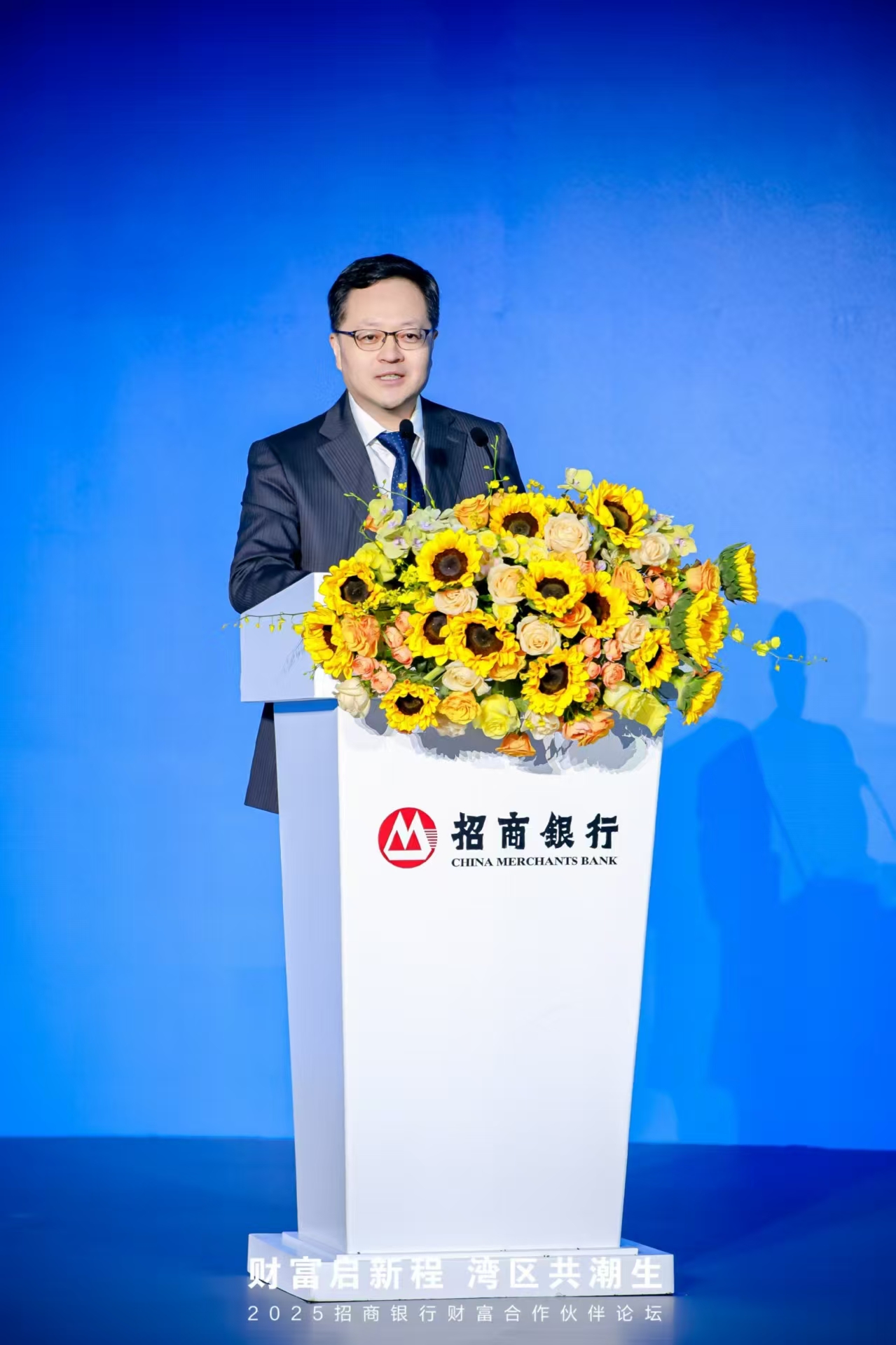
Core Viewpoint - The forum hosted by China Merchants Bank focuses on the high-quality development of wealth management in the Guangdong-Hong Kong-Macao Greater Bay Area, highlighting both challenges and opportunities in the banking wealth management sector as it transitions to a net worth-based model [1][4]. Group 1: Current Market Situation - The wealth management industry is experiencing a dual challenge of opportunities and risks due to the deepening low-interest rate environment and the transition to net worth-based products [6]. - The shift to a fully net worth-based model is expected to reshape the industry ecosystem significantly, with the need for wealth management companies to align their investment capabilities with client expectations for sustainable returns [5][6]. - The current market shows a trend where most individual investors hold wealth management products for less than one year, indicating a preference for short-term, low-risk products [7]. Group 2: Demand and Client Expectations - There is a growing understanding among clients regarding net worth-based products, but many still hold strong expectations for capital preservation and stable returns, which may not align with the new market realities [7]. - The traditional client base is slow to adapt to the underlying logic of net worth-based products, creating a dependency that could limit future growth for wealth management companies [7]. Group 3: Asset Management and Investment Strategies - The wealth management industry is heavily reliant on fixed-income products, which constitute 97% of the product offerings, but the attractiveness of high-grade bonds is diminishing as yields decline [8][9]. - There is a pressing need for wealth management firms to enhance their research and asset allocation capabilities, particularly in equity assets, to meet the rising demand for stable returns in a volatile market [9]. Group 4: Future Development and Strategic Focus - Wealth management companies, such as Jianxin Wealth Management, are encouraged to adopt a client-centric approach, focusing on understanding and meeting diverse client needs through tailored product offerings [10][11]. - The strategy includes expanding product lines to include multi-asset and multi-strategy offerings, particularly targeting clients in the Greater Bay Area with innovative products like "fixed income plus" strategies [12]. - Emphasis is placed on enhancing IT capabilities and implementing digital transformation to improve client experience and operational efficiency [13]. Group 5: Regional Economic Support and Collaboration - Jianxin Wealth Management aims to leverage its unique position as the only major wealth management firm registered in the Greater Bay Area to support regional economic development and meet local financial needs [14]. - The company plans to explore investment opportunities in innovative industries and green finance, while also facilitating cross-border financial services to meet client demands for international asset allocation [14].
华金证券华一:从加资产到加收益,“固收+”如何满足市场高收益需求?丨对话资管30人
2 1 Shi Ji Jing Ji Bao Dao· 2025-06-05 11:05
Group 1 - The asset management market is entering a new era characterized by low interest rates and high volatility, necessitating a reliance on technological management for investments and products [1][2] - The current environment shows a significant decline in high-yield assets as many have matured, leading to a scarcity of investment managers capable of meeting investors' demand for flexible returns [2][4] - The market is experiencing a shift where traditional fixed-income assets are under pressure, and the focus is now on generating excess returns beyond fixed income [4][5] Group 2 - The main challenges in the asset management industry include product classification and customer segmentation, with a need to provide suitable products for different client needs [5][6] - The investment strategy involves a diversified approach with three core teams: fixed income, innovation (REITs), and multi-strategy, focusing on various asset classes [6][9] - The company aims to differentiate itself from banks and public funds by seeking absolute returns rather than relative performance, utilizing derivatives and other strategies [7][10] Group 3 - The company is focusing on macro allocation and aims to become a specialized asset manager in this field, seeking excess returns through strategic asset allocation [10][12] - Current investment opportunities include precious metals like gold, agricultural products, and certain overproduced commodities, reflecting a cautious yet opportunistic approach [13][14] - The strategy emphasizes finding arbitrage opportunities across different asset classes, with a focus on macroeconomic conditions and market volatility [15]