
多资产多策略投资

Search documents
2025年银行理财成绩单:规模突破33万亿元,平均收益率跌破2%
Zhong Guo Zheng Quan Bao· 2026-01-24 09:50
Core Insights - The Chinese banking wealth management market reached a record scale of 33.29 trillion yuan by the end of 2025, marking a year-on-year increase of 3.34 trillion yuan, or 11.15% [1] - The average yield of wealth management products dropped to 1.98% in 2025, down from 2.65% in 2024, reflecting a continuous decline over three years [2] Group 1: Market Size and Growth - The wealth management market's total size reached 33.29 trillion yuan by the end of 2025, with a year-on-year growth of 3.34 trillion yuan, representing an 11.15% increase [1] - The total yield generated for investors from wealth management products in 2025 was 730.3 billion yuan [1] Group 2: Yield Trends - The average yield of wealth management products was 1.98% in 2025, a decrease of 0.67 percentage points from 2.65% in 2024 and 0.96 percentage points from 2.94% in 2023 [2] - The decline in yields is attributed to the continuous downward trend in bond market yields, with 51.93% of wealth management funds allocated to fixed-income assets by the end of 2025 [2] Group 3: Asset Allocation and Product Types - By the end of 2025, the proportion of bond investments in wealth management products decreased from 57.89% in 2024 to 51.93%, while the allocation to public funds increased from 2.9% to 5.1% [2] - The share of fixed-income products slightly decreased by 0.24 percentage points, while the share of mixed products increased by 0.17 percentage points to 2.61% [2] Group 4: Risk Levels and Product Structure - As of the end of 2025, wealth management products with a risk level of two (medium-low) and below accounted for 95.73% of the total market, with only 0.24% classified as risk level four (medium-high) and above [2] - The proportion of closed-end products with a term of over one year increased to 70.87%, providing a more stable long-term funding source [3] Group 5: Market Optimization and Support for the Real Economy - The wealth management market structure improved, with a significant increase in the market share of wealth management companies reaching 92.25% [3] - Wealth management products supported the real economy with approximately 21 trillion yuan invested in bonds, non-standard debt, and equity assets, and over 3.8 billion yuan directed towards green bonds [3] - ESG-themed wealth management products saw a rapid growth, with a balance of 311 billion yuan by the end of 2025, reflecting a year-on-year increase of 29.96% [3]
银行理财 2025 年回顾与 2026 年展望:9个热点问题看理财新叙事
EBSCN· 2026-01-13 13:03
Investment Rating - The report maintains a "Buy" rating for the banking sector [5] Core Insights - In 2025, the total market wealth management scale is expected to grow by approximately 3.5 trillion to reach 33-34 trillion, driven by factors such as deposit disintermediation, the release of valuation adjustments, and the expansion of products with embedded rights [1][14][15] - For 2026, the growth of wealth management is projected to continue, albeit with potential fluctuations in the growth pace due to various market dynamics [21] Summary by Sections Wealth Management Scale - Deposit disintermediation remains a crucial support for wealth management scale growth, with a neutral estimate of an increase of around 3 trillion for 2026, leading to an expected year-end scale of 36-37 trillion [1][21] - The maturity of deposits over 2 years for listed banks is estimated at approximately 41 trillion, with a year-on-year increase of about 9 trillion, which may intensify the competition between deposits and wealth management products [24][21] Product Layout - The report highlights a focus on maintaining a stable base with low volatility while actively expanding products with embedded rights, predicting that wealth management could bring in 150-300 billion in equity market allocations in 2026 [2][61] - The "fixed income plus" wealth management products are expected to grow by 1.5 trillion in 2025, with a year-end scale increase of nearly 16% [2][52] Asset Allocation - There is a rigid allocation towards deposit-type assets, with a shift towards multi-asset strategies to enhance returns, while the potential for a shift in allocation from deposits to bond-type assets is being monitored [3][60] - The report anticipates a strong demand for short-term bond allocations, while the capacity for mid to long-term allocations may decrease, leading to a steepening yield curve [3][60] Wealth Management Operations - The performance benchmarks for wealth management are expected to face downward pressure, with potential liquidity concerns being minimal due to ample liquidity reserves and regulatory support [4][32] - The competitive landscape is evolving, with wealth management companies increasing their market share, driven by channel factors and the need for enhanced customer reach [4][5] Competitive Landscape - The report notes that the market share of wealth management companies is likely to continue rising, with distribution channels expanding into rural areas and non-licensed institutions gradually exiting the market [4][5]
展望2026年,这类策略的表现依然值得期待
雪球· 2026-01-08 08:09
Core Viewpoint - The article emphasizes the importance of multi-asset and multi-strategy investment approaches for achieving stable returns in the private equity sector, especially in the context of market fluctuations and varying performance across different strategies [10][12]. Market Performance - In 2025, the A-share market showed a notable performance with index increases of approximately 30% for both the 500 and 1000 indices, alongside high trading volumes, benefiting both subjective long positions and quantitative strategies [3]. - The commodity market also exhibited strengths, particularly in precious metals and non-ferrous metals, while energy and chemical sectors remained weak. The trend in lithium carbonate, driven by "anti-involution," provided trading opportunities for CTA strategies [3]. Strategy Performance - Despite the overall positive market conditions, not all strategies performed consistently well throughout the year. For instance, quantitative stock strategies faced challenges after August due to concentrated investments in AI technology stocks, leading to a situation where indices rose but individual stocks did not [6]. - Subjective long strategies experienced significant volatility, with extreme reversals in early and April causing many products to miss subsequent rebounds. The frequent rotation of structural market conditions resulted in notable performance differentiation among products [6]. - CTA strategies also displayed considerable performance variance, with many products enduring prolonged periods of low performance during the first half of the year [6]. Investment Outlook for 2026 - The article suggests that for 2026, investors should focus on multi-asset and multi-strategy approaches, which have gained popularity due to their ability to provide diversified income sources and risk mitigation [10][12]. - The demand for such products is evidenced by the rapid sell-out of strategies from leading institutions, such as Bridgewater's all-weather strategy and Man Group's macro strategy, indicating strong market interest [14][12]. Types of Multi-Asset Strategies - Three main types of multi-asset multi-strategy investment approaches are highlighted: 1. **Macro Strategies**: These strategies consider various macroeconomic factors to flexibly allocate across stocks, commodities, and bonds, aiming for stable absolute returns [15]. 2. **CTA Strategies**: These involve using multiple CTA strategies to trade indices, government bonds, and commodity futures, allowing for diversified asset allocation and profit from futures trading [15]. 3. **Multi-Strategy Combinations**: These strategies leverage low correlations between different strategies to achieve diversified returns and smooth overall volatility, exemplified by products like Blackwing's "quantitative + CTA + convertible bonds" combination [17][18]. Conclusion - The article concludes that despite favorable market conditions, volatility is inevitable, which can impact the holding experience and lead to missed long-term compounding returns. Therefore, a focus on multi-asset and multi-strategy private equity is recommended for better investment experiences and more predictable returns [20][21].


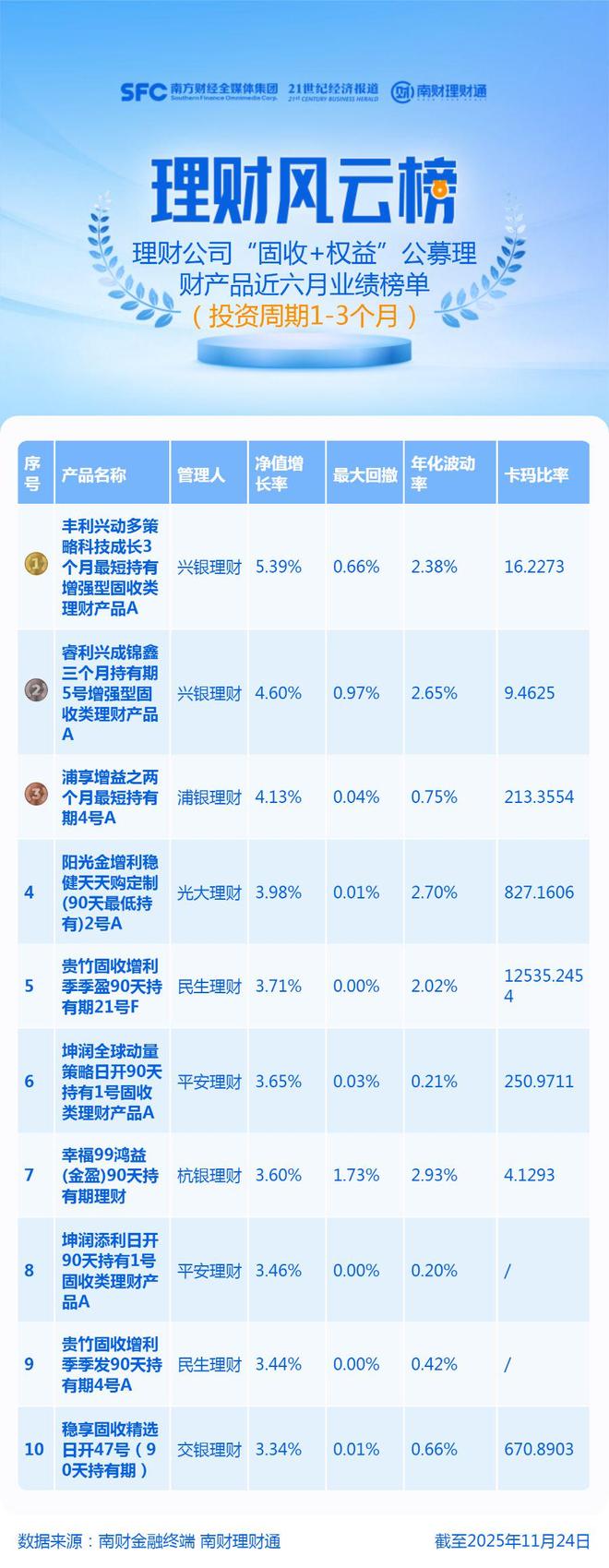
182倍规模跃迁!兴银丰利兴动多策略获“固收+权益”榜单冠军
2 1 Shi Ji Jing Ji Bao Dao· 2025-11-28 12:30
Core Insights - The article discusses the performance of public mixed-asset financial products with investment cycles of 1-3 months, highlighting the top-performing products over the past six months [5][6]. Group 1: Performance Overview - As of November 24, 2025, there are a total of 1,853 public "fixed income + equity" products with 1-3 month investment periods, with an average net value increase of 1.25% over the last six months [5]. - The top two products are from Xingyin Wealth Management, with the champion product "Fengli Xindong Multi-Strategy Technology Growth 3-Month Shortest Holding Enhanced Fixed Income Product A" achieving a net value growth rate exceeding 5% [6][7]. - The runner-up product "Ruili Xincheng Jinxin 3-Month Holding Period 5th Enhanced Fixed Income Product A" also performed well, with a return of 4.60% over the same period [6]. Group 2: Product Details - The champion product is characterized by a high proportion of equity, with an equity center ranging from 10% to 30%, focusing on multi-asset and multi-strategy investments [6][7]. - The product was established on February 7, 2025, and has a risk level classified as medium (三级风险), with a performance benchmark based on a combination of bond and equity indices [7][9]. - Since its inception, the product has shown a steady increase in net value, with a year-to-date annualized return of 9.335% and a maximum drawdown of only 0.66% over the last six months [7][9]. Group 3: Asset Management Strategy - The initial fundraising for the champion product was 0.24 billion, which has grown to a net asset value of 4.381 billion by the end of the third quarter of 2025, marking a significant increase of 182.54 times [9]. - The investment strategy focuses on technology and includes other cyclical assets to diversify risk, with top holdings in technology companies and various funds [9]. - The management team anticipates maintaining a neutral portfolio duration while seeking opportunities in the equity market to generate stable returns amid economic uncertainties [9].
青银理财总裁杜杰:三方面推进银行理财发展转型
Zhong Guo Zheng Quan Bao· 2025-11-25 23:51
Core Viewpoint - The domestic wealth management institutions, represented by wealth management companies, should adapt to the trends in the international wealth management market by focusing on three key areas to promote high-quality development and transformation [1] Group 1: Multi-Asset and Multi-Strategy Expansion - The low interest rate environment poses significant challenges for the asset management industry, particularly for institutions primarily focused on fixed income assets [2] - The bond market's investment paradigm has fundamentally changed, shifting from a focus on earning interest differentials to a strategy centered on capital gains and fair value changes due to declining bond yields [2] - Wealth management companies should leverage their qualifications and diverse investment capabilities to gradually increase the proportion of equity and alternative investments, thereby reducing product volatility and enhancing overall return elasticity [2][3] Group 2: Cultivating Patient Capital - There is a need to address the short-term nature of wealth management products and promote a shift towards more patient, long-term capital [5] - The majority of open-ended wealth management products have a short duration, leading to low risk tolerance among investors and frequent market-driven trading behaviors [5] - Wealth management companies should optimize product design and enhance investor education to foster a long-term wealth management mindset [5][6] Group 3: Customer-Centric Transformation - The wealth management market is evolving to meet the growing demand for wealth preservation and appreciation among residents, necessitating a shift from product-centric to customer-centric service models [7] - The number of individual investors in the wealth management market reached 134 million, accounting for 98.66% of the total, indicating a significant opportunity for tailored investment strategies [7] - Wealth management companies should deepen interactions with clients and develop investment strategies that align closely with their financial planning needs [7][8] Group 4: Comprehensive Service Offering - The transition from selling products to selling investment philosophies is essential, as performance is a result of asset allocation and execution of investment strategies [8] - Wealth management companies should aim to provide comprehensive services, including personalized asset management and estate planning, to better meet investor needs [8] - Continuous product innovation, particularly in areas like retirement and family trust products, is a priority for future development [8]
恒立私募总经理潘焕焕:以多资产多策略为盾 追求有韧性的绝对收益
Zhong Guo Zheng Quan Bao· 2025-11-10 01:49
Core Viewpoint - The article highlights the journey of Pan Huanhuan, who transitioned from various roles in the finance industry to founding a private equity firm, emphasizing a multi-asset, multi-strategy investment approach aimed at achieving resilient absolute returns [1][5]. Investment Philosophy - The multi-asset, multi-strategy investment philosophy was developed during Pan's tenure at a brokerage, where he observed the limitations of single-asset investment structures, particularly during market downturns [3][4]. - This approach allows for capturing investment opportunities across various asset classes while controlling overall risk through diversification, especially when asset correlations are low [4]. Main Strategies - The company has established four primary strategies: multi-asset strategy, fixed increase combination strategy, convertible bond combination strategy, and cross-market arbitrage strategy [5]. - The multi-asset strategy combines top-down macro analysis with bottom-up asset valuation to achieve diversified allocation [5]. - The fixed increase strategy focuses on discounted fixed increases and bulk trading to balance returns and liquidity risks [5]. - The convertible bond strategy employs financial engineering tools to create a multi-factor driven investment strategy [5][6]. - The arbitrage strategy encompasses various elements, including convertible bonds, stocks, commodities, and overseas markets [5]. Future Outlook - The company is optimistic about the investment value of convertible bonds, particularly in a low-interest-rate environment, where they can provide a balance of equity and debt characteristics [7][8]. - The firm has developed seven sub-strategies for convertible bond investments, focusing on diversification and specific market conditions [8]. - The expectation is that as market volatility increases, convertible bonds will offer better risk-adjusted returns due to their unique attributes [8].

恒立私募总经理潘焕焕: 以多资产多策略为盾 追求有韧性的绝对收益
Zhong Guo Zheng Quan Bao· 2025-11-09 20:08
Core Viewpoint - The article highlights the investment philosophy of Pan Huanhuan, emphasizing a multi-asset, multi-strategy approach to achieve absolute returns while maintaining defensive measures against significant drawdowns [1][3]. Group 1: Investment Philosophy - The multi-asset, multi-strategy investment concept was developed during Pan's tenure at a brokerage, where traditional single-asset teams often faced risks during market downturns [2]. - This approach allows for capturing various asset trends and controlling overall risk through hedging mechanisms, leading to more stable investment returns [2][3]. - The philosophy is likened to fishing in multiple ponds, where understanding diverse asset classes is crucial for successful investment [2]. Group 2: Main Strategies - The company has established four primary strategies: multi-asset strategy, fixed increase combination strategy, convertible bond combination strategy, and cross-market arbitrage strategy [4]. - The multi-asset strategy combines top-down macro analysis with bottom-up asset valuation to achieve diversified allocation [4]. - The fixed increase strategy focuses on discounted offerings and large transactions to balance returns and liquidity risks [4]. - The convertible bond strategy employs financial engineering tools to create a multi-factor driven investment strategy [4][5]. - The cross-market arbitrage strategy encompasses various elements, including convertible bonds, stocks, commodities, and overseas markets [4]. Group 3: Future Outlook - The company is optimistic about the investment value of convertible bonds, particularly in a volatile market, as they offer a balance of equity and debt characteristics [6][7]. - The investment strategy includes a diversified approach where no single convertible bond exceeds 5% of the portfolio, and no single industry exceeds 15% [7]. - The changing supply-demand dynamics in the convertible bond market are expected to enhance their investment value [7].
徽银理财锚定金融为民,助力金融强国建设 ——破局同质化竞争,努力走出差异化发展之路
Zhong Guo Zheng Quan Bao· 2025-08-08 02:20
Core Insights - The launch of the "Xinghui+" multi-asset multi-strategy product system and the "Huibin Wealth Management Macro Allocation Index" marks a significant step for Huibin Wealth Management in responding to the national financial strategy and enhancing public financial services [1][2] Group 1: Product System Overview - The "Xinghui+" product system aims to address the structural contradictions in the banking wealth management industry, particularly the shortage of quality assets in a low-interest-rate environment while meeting high return demands from cautious investors [2] - This system is built on stable fixed-income assets, with careful allocations to equities, commodities, and global assets, aiming for a better balance between risk and return through diversified investments and quantitative timing [2][3] Group 2: Research and Development Framework - The strategy index is a crucial technical support for the implementation of "Xinghui+", positioned as Huibin Wealth Management's "Research and Development No. 1 Project" for 2025, focusing on cross-market and multi-asset investment risk diversification [3][4] - The company plans to develop an open index matrix, launching several important indices and related products, enhancing the efficiency of research outcomes and promoting standardized, transparent, and regulated wealth management product supply [3][4] Group 3: Product Labeling and Market Strategy - Huibin Wealth Management has restructured its product offerings into a "five types, eight brands" framework, implementing product labeling to clarify asset attributes, risk levels, and strategy characteristics, catering to diverse investor needs [5] - The company aims to enhance its service capabilities in the wealth management industry and safeguard public wealth by focusing on four key areas: solid returns, diversified offerings, detailed strategies, and index construction by 2025 [5][6] Group 4: Future Outlook - The company will continue to innovate and deepen the practice of the "Xinghui+" system, guided by its corporate culture of integrity, professionalism, long-term vision, and altruism, while aligning with national strategies and protecting residents' wealth [6]
资管行业重磅报告发布,专家解读破解低利率时代挑战
Huan Qiu Wang· 2025-06-11 07:10
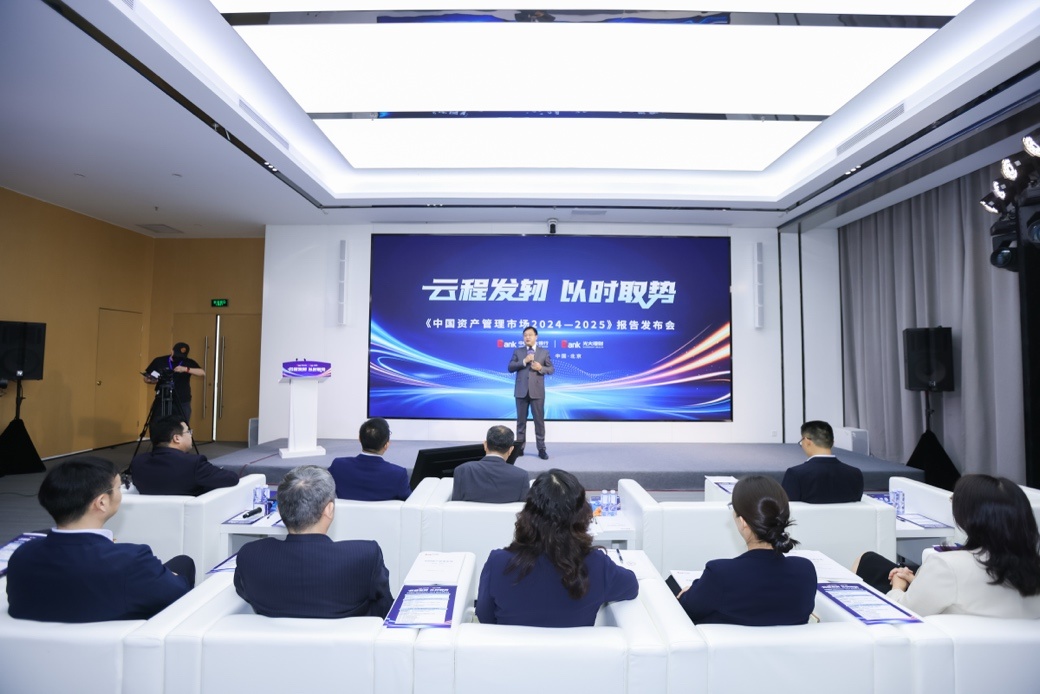
Core Viewpoint - The asset management industry in China is poised for significant growth and transformation, driven by macroeconomic recovery and evolving investor preferences, as highlighted in the recent report on the asset management market for 2024-2025 [1][8]. Group 1: Economic Context - The Chinese economy has shown a strong recovery, with a GDP growth rate of 5.4% in Q4 of the previous year and maintaining the same growth rate in Q1 of this year, surpassing both last year's performance and the government's target of around 5% for the year [4][6]. - The government is implementing proactive fiscal policies and moderate monetary policies to stimulate internal demand and address external challenges, focusing on urban renewal and structural reforms [6]. Group 2: Asset Management Industry Insights - The asset management market in China is expected to reach a scale of 154 trillion yuan by the end of 2024, marking a 10% increase from the beginning of the year, with various segments such as bank wealth management, public funds, and insurance asset management all showing significant growth [8][10]. - The report indicates that bank wealth management products are shifting towards more stable, fixed-income products, with a 73% allocation in this category, while public funds are increasingly favoring index products, which have seen a growth rate exceeding 70% [8][10]. Group 3: Strategic Recommendations for Asset Management Firms - Asset management firms should leverage their strong asset allocation capabilities and diverse investment strategies to navigate the low-interest-rate environment and market volatility [7]. - Emphasis on technological innovation is crucial, as advancements in fintech are transforming the asset management landscape, enhancing client interaction, research analysis, and risk management [7][14]. - Firms are encouraged to develop comprehensive platforms that offer diversified investment options and enhance their ability to meet the evolving wealth management needs of investors [10][11]. Group 4: Brand Development and Client Engagement - 光大理财 has introduced a new brand slogan, emphasizing its commitment to understanding and meeting client needs, while also enhancing its product offerings to cater to diverse investor preferences [16][17]. - The company has established a systematic investment architecture and a comprehensive client service system to ensure effective management of products and investor relations [16][17].

继续走低!4只新发行理财产品业绩基准跌破2%丨机警理财周报
2 1 Shi Ji Jing Ji Bao Dao· 2025-05-20 10:47
Market Overview - The bond market is experiencing a tightening of funds, with short-term yields declining and slight adjustments in long-term yields. As of May 16, the weighted average of DR007 was 1.64%, and the yield on 10-year government bonds closed at 1.68% [2] - In the stock market, the Hang Seng Index, Hang Seng Tech, and ChiNext Index saw weekly increases of 2.09%, 1.95%, and 1.38% respectively, with the beauty care, non-bank financials, and automotive sectors leading the gains [2] Break-even Situation - The number of underperforming wealth management products continues to decrease. As of May 18, 2025, there were 23,379 active public wealth management products, with 149 having a cumulative net value below 1, resulting in a comprehensive break-even rate of 0.64% [3] - The break-even rates for various investment categories remained relatively stable, with equity and mixed products at 52.63% and 6.93% respectively, while fixed income products had a break-even rate of 0.19% [3] New Product Issuance - A total of 356 wealth management products were issued by 31 companies from May 12 to May 16, with joint-stock banks leading in issuance. Huaxia Wealth and Xingyin Wealth each issued 32 products [4] - The newly issued products primarily consisted of R2 (medium-low risk), closed-end net value type, and fixed income public products, with mixed products totaling 8. Notably, the "Jinghua Huiying Qiu Series Ruiying 13M" from Beiyin Wealth is highlighted for its investment strategy [4] Product Pricing - The performance benchmark for newly issued products with a duration of over one year continues to decline, with an average benchmark of 2.69% for newly issued fixed income products, and several products having benchmarks below 2% [5] - The "ESG Preferred Stable Direct Train" from Bank of China has a benchmark of only 1.85%, focusing on fixed income assets and utilizing ESG investment principles [5] Yield Situation - All categories of RMB public wealth management products reported positive average yields last week, with fixed income products showing an average net value growth rate of 0.0879% [6] - The average weekly yield for cash management products in RMB, USD, and AUD was 1.495%, 3.945%, and 3.08% respectively [7] Industry Trends - The Shanghai Stock Exchange held a special training session for wealth management companies to promote equity fund entry, aiming to enhance the role of ETFs in attracting long-term funds [8] - The scale of bank wealth management has rebounded, surpassing 31 trillion yuan, driven by rising yields in the bond market and a shift in deposit strategies [9]