
职业教育

Search documents
中国东方教育(00667.HK):维持新招生人数恢复正常节奏 课程结构优化显效
Ge Long Hui· 2025-08-31 19:58
Core Viewpoint - China Oriental Education reported a slight beat on market expectations for adjusted net profit in 1H2025, driven by effective cost and expense management [1][2] Financial Performance - Revenue for 1H2025 reached 2.19 billion yuan, a year-on-year increase of 10.2%, in line with market expectations [1] - Adjusted net profit grew by 49.5% year-on-year to 416 million yuan, slightly above market expectations [1] - Overall gross margin improved to 57.3%, up 4.3 percentage points year-on-year, with all five business segments showing improvement [2] - Adjusted net profit margin reached 19.0%, an increase of 5.0 percentage points year-on-year, attributed to effective cost control [2] Enrollment Trends - New student enrollment increased by 7.1% year-on-year in 1H2025, with average training sessions up by 5.5% [1] - The number of schools increased by one compared to the end of the previous year [1] - Specific segment performance included: - Culinary Arts: Revenue up 11.4%, new enrollment up 5.2% - Western Pastry and Cuisine: Revenue up 14.3%, new enrollment up 0.7% - Information Technology: Revenue down 3.0%, new enrollment up 6.4% - Automotive Services: Revenue up 9.6%, new enrollment up 9.3% - Fashion Beauty: Revenue up 90.2%, new enrollment up 34.1% [1] Strategic Outlook - The company plans to increase the number of beauty industry schools to 13 by the end of 2026, targeting over 50% revenue growth [1] - Management expects a 10% revenue growth and over 20% net profit growth for 2026 [1] Profitability Forecast and Valuation - Revenue forecasts for 2025 and 2026 have been raised by 2.4% and 6.4% to 4.5 billion yuan and 5 billion yuan, respectively [2] - Adjusted net profit forecasts for 2025 and 2026 have been increased by 16.8% and 28.0% to 756 million yuan and 974 million yuan, respectively [2] - The target price has been raised by 58% to 9.5 HKD, based on a 9.8x 2025e adjusted EV/EBITDA [2]
“速度”“广度”“试验田”“新引擎”……多维视角解码天津看上合
Yang Shi Wang· 2025-08-31 05:25
Group 1 - The Shanghai Cooperation Organization (SCO) summit in 2025 is highlighted as a significant event for Tianjin, showcasing its openness and inclusivity [1] - Tianjin Port is described as a major hub with a capacity to accommodate the world's largest container ships, featuring a 200,000-ton container terminal [3][6] - The port maintains trade relations with over 180 countries and regions, ranking among the top ten ports globally for several years [8] Group 2 - In the first seven months of 2025, Tianjin's imports and exports with SCO countries reached 53.37 billion yuan, a year-on-year increase of 5.2%, accounting for 11.3% of Tianjin's total foreign trade [12] - The establishment of the Tianjin Free Trade Zone (FTZ) ten years ago has led to significant institutional innovations, with 686 measures introduced, 49 of which have been replicated nationwide [15] - Tianjin has developed into a "new engine" for open innovation, enhancing its high-level openness and economic dynamism [15] Group 3 - Cultural exchanges are emphasized, with Tianjin being a pioneer in establishing international friendship city relations, having formed 20 pairs of friendly city relationships with SCO countries [23] - The creation of "Luban Workshops" in SCO countries aims to share vocational education achievements and address local skills shortages, benefiting youth development [25] - Advanced technologies from Tianjin, such as smart irrigation systems, are being implemented in SCO countries, significantly improving agricultural efficiency [27]

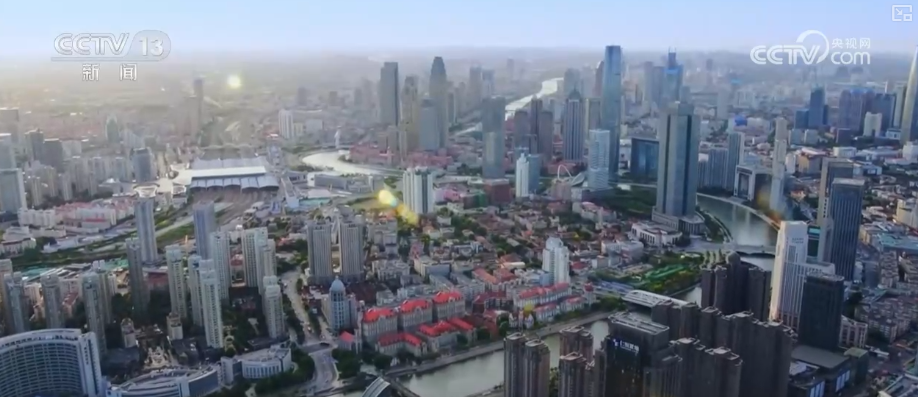
世界职校技能大赛康复护理总决赛苏州收官
Su Zhou Ri Bao· 2025-08-30 23:24
Core Viewpoint - The 2025 World Vocational College Skills Competition concluded its rehabilitation therapy and nursing track for higher vocational colleges, showcasing the skills of participants from across China [1] Group 1: Event Overview - The competition was co-hosted by the Ministry of Education and the National Development and Reform Commission, involving 33 departments [1] - A total of 137 higher vocational colleges from 30 provinces, autonomous regions, and municipalities participated, with 170 teams and 645 contestants [1] - The event lasted for five days, allowing participants to demonstrate their professional skills and vocational demeanor [1] Group 2: Competition Structure - The World Vocational College Skills Competition is an upgraded version of the National Vocational College Skills Competition, organized as a public and international vocational skills competition [1] - The competition features 42 tracks and is structured into three phases: contest, ranking, and championship finals, enhancing both competitiveness and spectator appeal [1] - The event provides a platform for global vocational college students to showcase their skills, exchange cutting-edge technologies, and promote multicultural understanding [1]
21现场|走进“鲁班工坊”,见证全球职教“新顶流”
2 1 Shi Ji Jing Ji Bao Dao· 2025-08-30 13:31
Group 1 - The 2025 Shanghai Cooperation Organization (SCO) Summit will be held in Tianjin from August 31 to September 1, marking China's fifth hosting of the SCO Summit and the largest in its 24-year history, viewed as a significant diplomatic event for China this year [1] - Since the establishment of the first Luban Workshop in 2016, China has built 34 Luban Workshops in 30 countries across Asia, Africa, and Europe, focusing on important regions and multilateral mechanisms such as Africa, Central Asia, SCO, and ASEAN [1] - Tianjin has established 24 Luban Workshops in 23 countries, including 10 in 8 SCO member states, contributing to international cooperation in vocational education [1] Group 2 - Tianjin Light Industry Vocational Technical College has been a pioneer in vocational education for over 60 years, adhering to the philosophy of "integration of industry and education, school-enterprise cooperation," and has developed key national professional groups [2] - The upgraded Luban Workshop Experience Hall in Tianjin covers 1,700 square meters, showcasing the history and achievements of the Luban Workshop, transitioning from static exhibitions to interactive experiences [2]
粉笔2025年中报出炉:研发持续投入,领跑行业AI变革
Zhong Guo Zheng Quan Bao· 2025-08-30 10:11
Core Insights - The company reported a revenue of 1.492 billion yuan and a net profit of 227 million yuan for the first half of 2025, with adjusted net profit reaching 271 million yuan [1] - The company is deepening its "AI + vocational education" strategy, focusing on enhancing teaching efficiency and service quality through increased investment in artificial intelligence [1] Financial Performance - In the first half of 2025, the company's R&D expenditure reached 108 million yuan, maintaining a steady investment trend [2] - As of June 30, the company had cash and cash equivalents of 974 million yuan, supporting its ongoing technological advancements [3] AI Product Development - The company launched several innovative AI teaching products, including an AI question-answering system and AI smart speakers, maintaining a leading position in the industry [2] - The AI question-answering system has sold approximately 50,000 units, generating around 20 million yuan in revenue [2] - The company plans to invest 12 million Hong Kong dollars in AI vertical models and technology R&D, and 48.8 million Hong Kong dollars in high-end talent and infrastructure [2] User Engagement and Market Position - The average monthly active users increased to 9.3 million, with over 72.74 million registered users by the end of 2024, indicating sustainable growth potential [4] - The company is leveraging its large user base to create a data barrier that differentiates it from competitors [4] Competitive Strategy - The company is expanding its AI product line, including AI interview evaluation tools, to capture market share in the traditional interview training market [5] - The CEO emphasized the importance of rapid commercialization of technology to create a positive feedback loop for product development [6] - The growth strategy is shifting from online training to AI-driven applications, with future products expected to incorporate AI features [6]
粉笔发布2025年中期业绩:实现净利润2.27亿元 持续深化“AI+职业教育”战略
Zhong Zheng Wang· 2025-08-30 01:04
Group 1 - The core viewpoint of the article highlights the strong performance and strategic direction of the company, focusing on the integration of AI in vocational education to enhance teaching efficiency and service quality [1][2]. - In the first half of 2025, the company achieved revenue of RMB 1.492 billion and a net profit of RMB 227 million, with adjusted net profit reaching RMB 271 million [1]. - The company plans to deepen its "AI + vocational education" strategy by increasing investments in AI technology to innovate and iterate its vocational education model [1]. Group 2 - The company maintained a steady R&D expenditure of RMB 108 million in the first half of 2025, with a focus on AI education and advanced technology development [2]. - The company announced a reallocation of its unused IPO funds amounting to HKD 60.8 million, with HKD 12 million dedicated to AI vertical models and product commercialization [2]. - As of the end of the reporting period, the company had cash and cash equivalents of RMB 974 million, supporting its ongoing technological advancements [2]. Group 3 - The company has expanded its AI product line, including the launch of AI interview evaluation features and AI exam preparation systems, aiming to capture market share with competitive pricing [3]. - The CEO emphasized the importance of rapid commercialization of technology, using market feedback to refine products and enhance user experience [3]. - The average monthly active users increased to 9.3 million, with over 72.74 million registered users by the end of 2024, indicating sustainable growth potential [2].
中公教育2025年中报简析:净利润同比下降46.69%,短期债务压力上升
Zheng Quan Zhi Xing· 2025-08-29 22:42
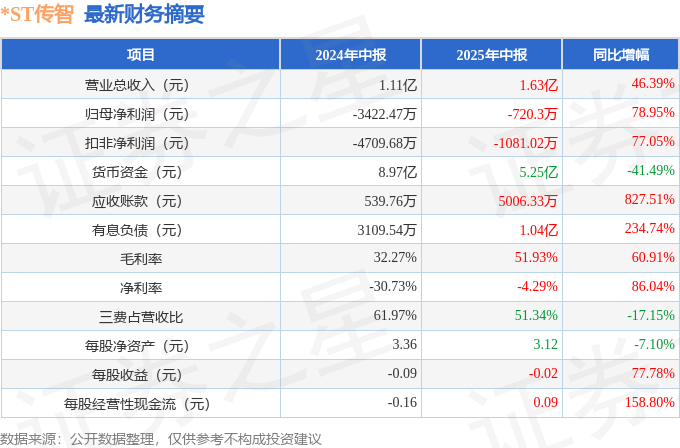
Core Insights - The company reported a significant decline in revenue and net profit for the first half of 2025, with total revenue at 1.155 billion yuan, down 20.21% year-on-year, and net profit at 61.7843 million yuan, down 46.69% [1] - The company's short-term debt pressure has increased, with a current ratio of 0.1, indicating potential liquidity issues [1] - Despite the decline in net profit, the gross margin improved to 59.61%, up 2.92% year-on-year, while the net margin decreased to 5.35%, down 33.19% [1] Financial Performance - Total revenue for 2025 was 1.155 billion yuan, compared to 1.448 billion yuan in 2024, reflecting a decrease of 20.21% [1] - Net profit for 2025 was 61.7843 million yuan, down from 116 million yuan in 2024, a decline of 46.69% [1] - The company’s operating cash flow per share decreased to 0.04 yuan, down 39.37% year-on-year [1] Cost Structure - Total expenses (selling, administrative, and financial) amounted to 517 million yuan, accounting for 44.72% of revenue, an increase of 13.89% year-on-year [1] - The company’s financial health is concerning, with a debt-to-asset ratio of 27.91% and a current ratio of only 0.1, indicating potential liquidity challenges [3] Business Model and Strategy - The company relies heavily on research and marketing for its business performance, which requires careful analysis of the underlying drivers [3] - Recent internal reforms have shown positive results, with management team adjustments aimed at revitalizing operations and improving business performance [5] - The company aims to maintain operational cost control while striving for positive growth in a competitive market [5] Investment Insights - The company has a historical median ROIC of 7.38%, indicating weak investment returns, with a particularly poor performance in 2021 [3] - The largest fund holding the company’s shares is the Bosera Global China Education (QDII-ETF), which has seen a 36.98% increase in the past year [4]

*ST传智2025年中报简析:营收上升亏损收窄,盈利能力上升
Zheng Quan Zhi Xing· 2025-08-29 22:41
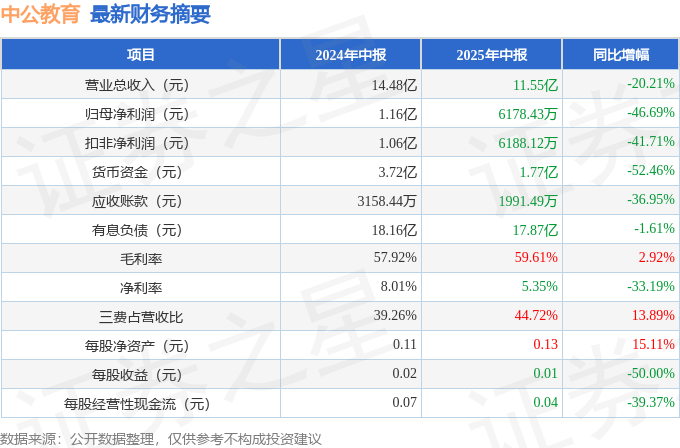
Group 1 - The core viewpoint of the articles indicates that *ST ChuanZhi (003032) has shown significant improvement in its financial performance for the first half of 2025, with total revenue reaching 163 million yuan, a year-on-year increase of 46.39% [1] - The net profit attributable to shareholders was -7.203 million yuan, reflecting a year-on-year increase of 78.95% [1] - In Q2 2025, total revenue was 90.6295 million yuan, up 49.97% year-on-year, while the net profit attributable to shareholders was -1.8399 million yuan, an increase of 89.9% year-on-year [1] Group 2 - The gross margin for the reporting period was 51.93%, with a year-on-year increase of 60.91%, while the net margin was -4.29%, reflecting an 86.04% year-on-year increase [1] - Total selling, administrative, and financial expenses amounted to 83.6973 million yuan, accounting for 51.34% of revenue, which is a decrease of 17.15% year-on-year [1] - The earnings per share was -0.02 yuan, showing a year-on-year increase of 77.78% [1] Group 3 - The company's historical financial performance indicates a median ROIC of 25.76%, with the worst year being 2024, which had a ROIC of -9.83% [2] - The business model relies heavily on capital expenditure and marketing, necessitating careful evaluation of the effectiveness of capital projects and potential funding pressures [2] - The accounts receivable situation should be closely monitored, especially given the negative net profit in the annual report [3]
中公教育: 2025年半年度报告
Zheng Quan Zhi Xing· 2025-08-29 17:47
Core Viewpoint - The report highlights a significant decline in the company's financial performance for the first half of 2025, with a 20.21% decrease in revenue and a 46.69% drop in net profit compared to the same period last year, indicating challenges in the employment training sector amid increasing competition and changing market dynamics [2][16]. Company Overview and Financial Indicators - Company Name: Offcn Education Technology Co., Ltd. - Stock Code: 002607 - Total Assets: 6,130.19 million RMB, down 5.84% from the previous year [2][16]. - Net Profit Attributable to Shareholders: 61.78 million RMB, down 46.69% year-on-year [2][16]. - Basic Earnings Per Share: 0.01 RMB, a 50% decrease from the previous year [2][16]. Business Operations - The company focuses on providing employment and re-employment services, targeting university students and professionals seeking career advancement [2][3]. - The main business segments include public service recruitment training, educational advancement, and vocational qualification training, with over 100 types of employment training services offered [2][3]. - The company aims to leverage AI technology to enhance traditional education services and provide personalized employment solutions [3][4]. Industry Environment - The employment service industry is experiencing a policy-driven growth phase, with the government emphasizing job creation and quality employment as key priorities [3][6]. - The number of university graduates is expected to reach a record high of 1.22 million in 2025, increasing demand for employment services [3][7]. - The market for employment training is characterized by low concentration in various segments, presenting opportunities for leading firms to expand their service offerings [3][4]. Financial Performance Analysis - Revenue for the reporting period was 1,155.24 million RMB, a decrease of 20.21% compared to 1,447.88 million RMB in the previous year [2][16]. - The company has implemented cost control measures, resulting in a 23.42% reduction in operating costs [16]. - The gross profit margin improved to 59.61%, up nearly 3 percentage points from the previous year, indicating effective management strategies [11][16]. Strategic Initiatives - The company is focusing on digital transformation and AI integration in its services, launching the "Offcn AI Employment" sub-brand to enhance its offerings [11][12]. - New teaching service centers have been established to improve market penetration and service delivery [10][12]. - The management team is undergoing a transformation to enhance youth engagement and professional development within the organization [11][12]. Competitive Landscape - The employment training market is becoming increasingly competitive, with smaller institutions adopting low-price strategies, leading to market polarization [3][4]. - The company is positioned to leverage its research and development capabilities to maintain a competitive edge against smaller players [4][5]. - The rise of digital media and AI technology is reshaping the competitive dynamics, with a focus on content creation and delivery becoming crucial for success [5][6].
中公教育: 2025年半年度报告摘要
Zheng Quan Zhi Xing· 2025-08-29 17:47
Core Viewpoint - The semi-annual report of Zhonggong Education Technology Co., Ltd. for 2025 indicates a significant decline in both revenue and net profit compared to the same period last year, highlighting challenges in the company's financial performance [1][4]. Financial Performance - The company's operating revenue for the reporting period was approximately 1.155 billion yuan, a decrease of 20.21% from 1.448 billion yuan in the same period last year [1]. - The net profit attributable to shareholders was approximately 61.78 million yuan, down 46.69% from 115.90 million yuan year-on-year [1]. - The net profit after deducting non-recurring gains and losses was not specified, but the overall financial health appears to be under pressure [1]. - The net cash flow from operating activities was approximately 272.74 million yuan, a decline of 39.37% from 449.86 million yuan in the previous year [1]. - Basic earnings per share were 0.01 yuan, a reduction of 50% compared to 0.02 yuan in the previous year [1]. - The diluted earnings per share were also 0.01 yuan, reflecting the same 50% decrease [1]. - The weighted average return on equity was 8.18%, down 10.36% from 18.54% in the previous year [1]. Asset and Equity Position - Total assets at the end of the reporting period were approximately 6.13 billion yuan, a decrease of 5.84% from 6.51 billion yuan at the end of the previous year [3]. - The net assets attributable to shareholders were approximately 786.18 million yuan, an increase of 8.53% from 724.40 million yuan at the end of the previous year [3]. Shareholder Information - The total number of ordinary shareholders at the end of the reporting period was 297,359 [3]. - The largest shareholder, Li Yongxin, holds 14.38% of the shares, amounting to approximately 886.91 million shares, with a significant portion being pledged [3][4]. - The second-largest shareholder, Wang Zhendong, holds 6.67% of the shares, totaling approximately 411.44 million shares, which are also pledged [3][4].