产业园区运营

Search documents
承接长三角产业协同势能 轻资产运营商抢滩新蓝海赛道
Zhong Guo Jing Ying Bao· 2025-08-18 15:44
Core Insights - The industry is transitioning from a "growth era" to a "stock era," focusing on revitalizing existing assets and improving operational efficiency [1][2] - The current real estate sector is in a de-inventory cycle, with a significant amount of unsold commercial and office space [2] - New players, including specialized service providers and light-asset operators, are emerging to address high vacancy rates and low returns in industrial parks [1][2] Industry Trends - The Central Urban Work Conference emphasized the need for urban development to shift towards quality improvement and urban renewal [1] - Policies have been introduced to promote the revitalization of existing assets, including various government documents aimed at effective investment [2] - The market is experiencing a "quantity and price decline" trend, with increasing vacancy rates despite price reductions [4] Company Developments - BEEPLUS, founded by Jia Fan, has established 40 high-quality industrial parks in nine trillion GDP cities, serving 3,546 enterprises [5] - The company focuses on a "national enterprise + private enterprise" cooperation model to leverage state-owned resources and market agility [2][3] - BEEPLUS aims to provide tailored services and high-quality management to enhance asset value and operational efficiency [5][6] Competitive Advantages - BEEPLUS maintains a high occupancy rate of around 95% in mature projects, with rental income constituting 80%-90% of revenue [5] - The company emphasizes its ability to provide customized solutions and five-star management services, which are key to its operational success [5][6] - BEEPLUS aims to excel in light-asset operations, which are challenging but crucial for sustainable growth in the current market [6]
越来越多的园区,开始“0租金”了
Hu Xiu· 2025-08-18 07:40
Group 1 - The "0 rent" industrial park trend has swept across the country, with local state-owned assets offering high-quality properties to specific tech companies with rent-free periods ranging from two to five years [1][4][5] - Major cities like Guangzhou, Shenzhen, and Hangzhou are leading this initiative, with Guangzhou offering the largest single supply of 150,000 square meters of state-owned industrial space rent-free until July 2025 [1][11] - The emergence of "0 rent" parks is driven by macroeconomic pressures, policy shifts, and regional competition, aiming to stimulate innovation and attract new industries [9][10][19] Group 2 - The "0 rent" policy serves as a strong stimulus to reduce survival costs for startups, particularly in the wake of economic recovery challenges post-pandemic [10][41] - Local governments are seeking new compliant support tools as traditional incentives like land discounts and tax rebates are being regulated [12][13] - The competition among cities for high-quality projects and top talent has intensified, leading to longer rent-free periods and larger areas being offered [16][18] Group 3 - The operational model of industrial parks is evolving, with state-owned enterprises transitioning from mere landlords to partners that share risks and rewards with tenant companies [20][25] - This new model emphasizes a dual approach of providing space and capital, with state-owned parks often backing venture capital funds to support tenant companies [24][26] - The relationship between parks and companies is shifting towards a partnership model, where the success of the company directly benefits the park [28] Group 4 - The "0 rent" initiative is highly selective, targeting strategic emerging industries while excluding traditional low-value sectors [35][36] - The selection process for tenant companies is rigorous, focusing on high-potential and high-growth firms to ensure that resources are allocated effectively [38][39] - The ultimate goal is to strengthen local industrial chains and enhance competitiveness through the clustering of high-quality projects [40] Group 5 - The short-term benefits of the "0 rent" policy include immediate cost savings for companies, which can redirect funds towards hiring and market promotion [41][42] - Long-term, the government aims to foster a robust ecosystem of high-tech and innovative companies, drawing on successful precedents from past initiatives [45][46] - The "0 rent" model represents a significant evolution in industrial policy, moving towards a more precise and supportive approach that combines space, capital, and services [50][51]


电子城:新业务暂未对公司营收及利润产生规模贡献
Zhi Tong Cai Jing· 2025-08-14 12:25
Core Viewpoint - The company, Electronic City (600658.SH), has issued a risk warning announcement stating that its production and operational activities are currently normal, with no significant changes in the internal and external operating environment or main business [1] Group 1: Business Operations - The company’s main business remains focused on the operation of technology industrial parks, which are expected to continue facing significant pressure in sales and leasing activities due to market conditions [1] - The industrial park market is anticipated to remain in a deep adjustment phase until 2025, with commercial and office products facing challenges such as high inventory levels, long de-stocking cycles, and downward price pressures [1] Group 2: Business Transition - The company is in the process of transitioning towards technology urban renewal services, technology industrial services, and information and digital services, but these new business areas have not yet made a significant contribution to revenue and profit [1]

电子城(600658.SH):新业务暂未对公司营收及利润产生规模贡献
智通财经网· 2025-08-14 12:05
智通财经APP讯,电子城(600658.SH)发布公风险提示公告称,经公司自查,公司目前生产经营活动正 常,内外部经营环境和主营业务未发生重大变化,公司经营占比较大的园区销售去化和出租业务仍存在 很大压力,不存在影响公司股票交易价格异常波动的重大事项。目前,公司主营业务仍然以科技产业园 区运营为主,2025年,产业园区市场依然处于深度调整阶段,商业、办公类产品面临市场存量大、去化 周期长、价格下行的多重压力。同时公司业务尚处于向科技城市更新服务、科技产业服务、信息与数字 化服务转型阶段,新业务暂未对公司营收及利润产生规模贡献。 ...
3连板电子城:公司业务尚处于向科技城市更新服务转型阶段 新业务暂未对营收及利润产生规模贡献
Mei Ri Jing Ji Xin Wen· 2025-08-14 10:11
Core Viewpoint - The company, Electronic City (600658.SH), has issued a stock trading risk warning, indicating that its production and operational activities are normal, with no significant changes in the internal and external business environment or main operations [1] Group 1: Business Operations - The company is primarily focused on technology industrial park operations, which are currently under significant pressure due to the ongoing deep adjustment phase in the industrial park market expected to continue until 2025 [1] - The company faces multiple pressures in its commercial and office product lines, including a large market inventory, long de-stocking cycles, and declining prices [1] Group 2: Business Transition - The company is in the process of transitioning towards technology urban renewal services, technology industry services, and information and digital services, but these new business areas have not yet made a significant contribution to revenue and profit [1]
多地国资产业园宣布:0租金
21世纪经济报道· 2025-08-13 12:22
Core Viewpoint - The article discusses the emergence of "zero rent" industrial parks across various cities in China, highlighting the government's push to attract and nurture technology enterprises by offering free or significantly reduced rental spaces [1][2][3]. Group 1: Zero Rent Industrial Parks - Multiple cities, including Guangzhou, Shenzhen, and Suzhou, have initiated "zero rent" industrial park policies to attract technology startups, with slogans like "only collect dreams, not rent" [1][2]. - Shenzhen was the first to implement this initiative, offering up to two years of rent-free space for qualifying small tech enterprises [2]. - Guangzhou has the largest supply of zero-rent properties, with a total of 15,000 square meters allocated for this purpose [2][3]. Group 2: Financial Support and Services - The zero-rent initiative is complemented by financial support, with some cities providing additional funding for startups, such as up to 3 million yuan in financing and service fees [2][4]. - The article notes that while the zero-rent offer is attractive, it is not entirely free, as it often involves phased rent reductions based on the length of the lease [4]. - Cities are focusing on attracting high-quality projects and enterprises, particularly in strategic emerging industries, to enhance local economic development [4][5]. Group 3: Role of State-Owned Enterprises - State-owned enterprises (SOEs) are playing a crucial role in the development and operation of these industrial parks, leveraging their resources to support small and micro enterprises [1][6]. - SOEs are increasingly adopting a model of "investment-driven" recruitment, where they provide not only space but also financial backing and services to startups [6][7]. - The article highlights that SOEs are exploring diverse rental models, including equity participation and revenue sharing, to enhance their service offerings [6][8]. Group 4: Market Dynamics and Future Outlook - The article emphasizes that the current market environment is challenging, and the zero-rent policies are not merely for attracting tenants but aim to foster high-quality projects that can stimulate new industries [4][9]. - The involvement of leading enterprises in creating and managing these parks is seen as a key factor for success, as they can attract other businesses and enhance the overall ecosystem [8][9]. - Guangzhou's efforts in building over 150 industrial parks and attracting more than 4,000 enterprises illustrate the significant role of local state-owned assets in shaping the city's technological innovation landscape [9].

只收梦想不收租金:“0租金”的风吹到了国资产业园
2 1 Shi Ji Jing Ji Bao Dao· 2025-08-13 10:49
Core Viewpoint - The emergence of "zero rent" industrial parks across various cities in China reflects a strong desire from local governments to attract and nurture technology enterprises, emphasizing a shift towards strategic emerging industries [1][2][5] Group 1: Policy Initiatives - Multiple cities, including Shenzhen, Suzhou, Guangzhou, Beijing, Chengdu, and Hangzhou, have announced "zero rent" initiatives for industrial parks, aiming to provide low-cost, high-quality spaces for small and micro technology enterprises [2][3] - Shenzhen initiated the first move in March, offering up to two years of rent-free space for qualifying tech companies [2] - Guangzhou has the largest supply of zero-rent properties, with a total of 15,000 square meters allocated for the initiative [2][3] Group 2: Financial Support and Investment - The zero-rent policy is often accompanied by financial support, such as funding for startups, with Suzhou offering up to 3 million yuan in financing for qualifying companies [2][3] - The trend indicates a shift towards "investment-driven" strategies, where state-owned enterprises (SOEs) are encouraged to engage in venture capital and provide financial backing to startups [6][7] Group 3: Industry Focus and Targeting - The initiatives are primarily focused on attracting high-quality projects in strategic emerging industries, with specific criteria for eligibility, including awards and qualifications [5][8] - The policies aim to stimulate the growth of new industries by leveraging the strengths of leading enterprises to create a supportive ecosystem [8][9] Group 4: Operational Models and Services - The industrial parks are not just about rent-free space; they also emphasize comprehensive support services, including financial capital, industry matching, and operational assistance [1][6] - SOEs are exploring diverse operational models, such as equity participation and revenue sharing, to enhance their service offerings and align with market pricing [6][7] Group 5: Ecosystem Development - The success of these industrial parks often hinges on the presence of leading enterprises that can attract talent and resources, thereby fostering a robust industrial ecosystem [8][9] - In Guangzhou, over 150 industrial parks have been established, attracting more than 4,000 enterprises, indicating a significant commitment to building a vibrant innovation landscape [8][9]
无锡经开持有型不动产ABS成功发行 打造地方国企资产盘活新标杆
Zheng Quan Shi Bao Wang· 2025-08-08 11:25
Core Viewpoint - The successful issuance of the Wuxi Economic Development Zone National Sensor Information Industry Park asset-backed securities (ABS) project marks a significant milestone as the first industrial park holding-type ABS in China, with a scale of 660 million yuan [1][2]. Group 1: Project Overview - The underlying asset of the project is located in the Wuxi Economic Development Zone, focusing on industries such as intelligent connected vehicles, sensors, and the Internet of Things, with a good overall occupancy rate [2][3]. - The project includes a diverse tenant base, comprising one listed company and over 60 large-scale enterprises, demonstrating significant industrial clustering effects [2]. Group 2: Market Impact - The successful launch of the Wuxi project expands the asset categories within the holding-type real estate ABS market, providing diverse and high-quality investment targets for the capital market [2][3]. - The project serves as a new benchmark for revitalizing existing assets in quality industrial parks and establishes a new path for the securitization of similar projects nationwide [2][3]. Group 3: Financial and Strategic Value - The project enhances the asset structure of the issuing entity, improves funding operation capabilities, and provides new equity financing options for local state-owned enterprises [3]. - Financially, the securitization allows for the off-balance-sheet treatment of existing assets, effectively reducing the asset-liability ratio [3]. - Strategically, the issuance injects new momentum into the creation of a professional asset operation platform, facilitating a virtuous cycle of investment, financing, construction, and management [3]. Group 4: Investor Participation - The issuance attracted a wide range of medium- to long-term capital from various market participants, with total subscriptions exceeding five times the offering, laying a solid foundation for future liquidity in the secondary market [4]. - The project enriches the investment choices within the holding-type real estate ABS market and promotes the diversification of market participants [4]. Group 5: Future Developments - The Shanghai Stock Exchange plans to continue supporting the development of the holding-type real estate ABS market, focusing on high-quality development of central enterprises and revitalization of local state-owned assets [4][5]. - There will be an emphasis on enhancing asset quality and innovating operational models, aiming to create benchmark holding-type real estate ABS projects that effectively revitalize existing assets and expand effective investments [5].
既做“房东”又做“股东” 工投发展:从物理空间升级为“大孵化器”
Mei Ri Shang Bao· 2025-08-05 23:04
Core Insights - The article highlights the successful transformation and development of LOFT49, a creative landmark in Hangzhou, which has evolved from an abandoned factory into a cultural and creative industry park, with ongoing projects like the Hangzhou Shichuang Center and the Renhe Li Hangshi Intelligent Manufacturing Center [1][2] Group 1: Company Development - The company, Hangzhou Industrial Investment Development Co., Ltd. (工投发展), has shifted from a single focus on land development to a diversified model that includes industrial park development, achieving a stable occupancy rate of around 90% for its projects [2] - The company has developed a unique "fund + base + service" strategy that maximizes the value of each park by aligning with local government industrial plans and market research [2][4] - As of 2023, the company has approximately 500,000 square meters of industrial park projects under construction and operation, indicating significant growth and expansion [2] Group 2: Project Highlights - The LOFT49 project has successfully attracted various art institutions and is set to officially open its second phase by the end of the year, focusing on industrial design and cultural creativity [1] - The Renhe Li Hangshi Intelligent Manufacturing Center, which spans about 210,000 square meters, aims to create an "industrial upstairs" model, with a current occupancy rate of about 31% for its first phase [1][2] - The company has also facilitated the relocation of innovative companies like Kuntai Magnetic Suspension, providing both funding and space to meet their needs, thus enhancing the park's ecosystem [3] Group 3: Strategic Approach - The company emphasizes a long-term strategic planning approach, particularly in its collaboration with state-owned enterprises, which helps in creating a sustainable industrial space [4] - The operational model promotes a positive cycle of "park investment - project discovery - post-investment empowerment - industrial aggregation - park development," which enhances the overall industrial ecosystem in Hangzhou [4] - The dual role of the company as both landlord and investor is expected to accelerate the gathering of technology companies and investment institutions, fostering a more dynamic innovation environment [3]
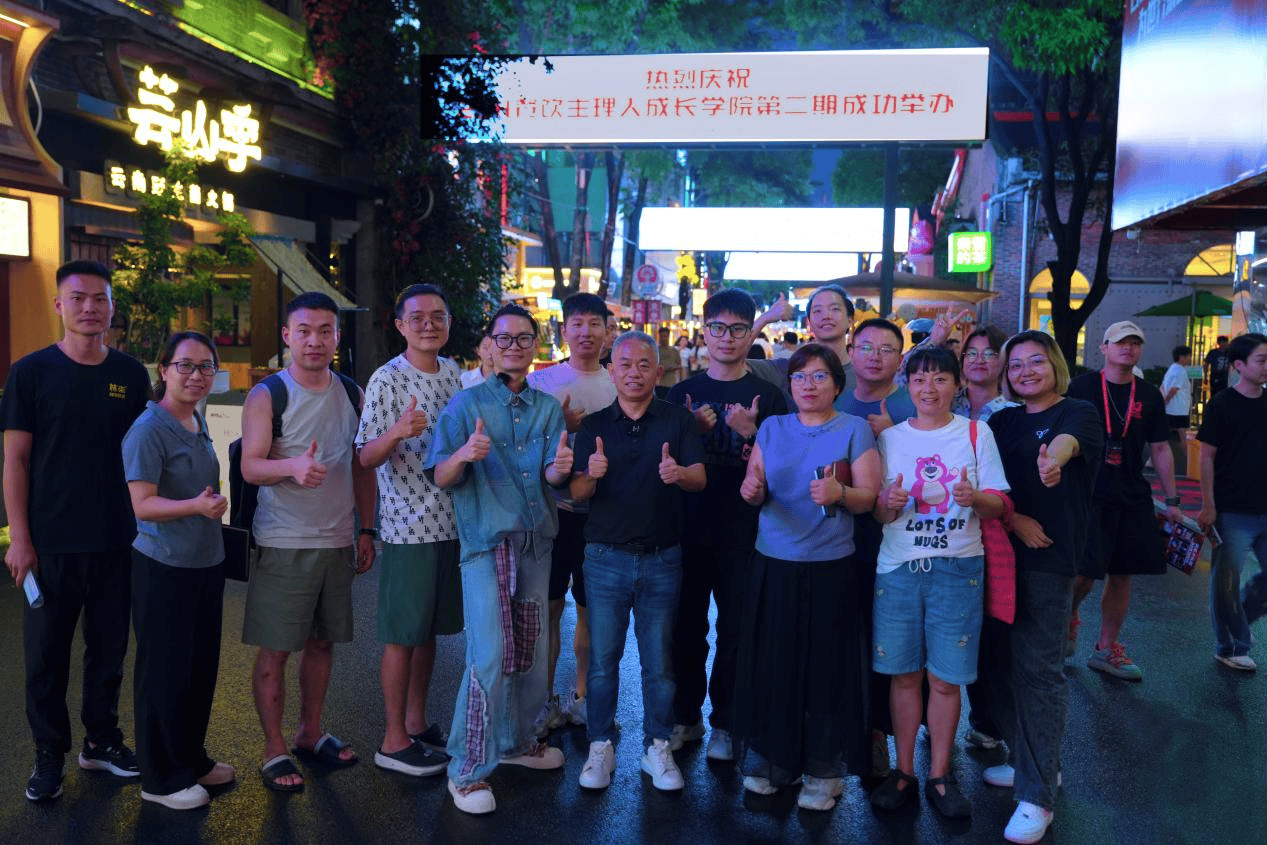
深耕主理人经济,佛山创意产业园25H餐饮主理人成长学院第二期开讲
Sou Hu Cai Jing· 2025-07-21 14:32
Core Insights - The 25H Restaurant Principal Growth Academy has officially launched its second phase, marking the beginning of the principalization process for the Foshan Creative Industry Park, where founders and principals from ten major brands gather to share experiences in product development and brand operation [1][3] - The academy aims to create a platform for knowledge transfer and practical integration, focusing on nurturing a diverse range of modern service industry brands and injecting new vitality into urban commercial development [3][5] Group 1: Industry Development - The 25H Restaurant Principal Growth Academy serves as a platform for restaurant principals to collaborate and address industry growth challenges, emphasizing the importance of mutual support over competition [5][7] - The academy's approach differs from traditional chain brands by leveraging unique personal styles and cultural nuances to meet increasingly personalized consumer demands [5][8] - The introduction of teams like Chongqing Dain Huashi aims to enhance the urban aesthetic of Chancheng and promote the development of a new consumption center in the Greater Bay Area [5][8] Group 2: Business Ecosystem - The Foshan Creative Industry Park is committed to empowering businesses through a robust operational system, focusing on three dimensions: traffic, retention, and principal growth [7][9] - The park attracts over 70,000 visitors daily, creating a competitive product environment that benefits businesses through increased foot traffic [7] - Initiatives like the "25H Happy Passport" and the 25H Principal Incubator are designed to enhance consumer engagement and facilitate brand upgrades through collaborative learning and resource integration [7][9] Group 3: Cultural Integration - The park's strategy includes a "1+3+6" growth plan aimed at enhancing urban aesthetics through local cultural exploration and brand development [8][9] - Principals are seen as cultural excavators, integrating local traditions and unique culinary experiences into their brands, thus transforming retail spaces into cultural hubs [8][9] - The goal is to transition 80% of the park's businesses into principal brands within three years, reflecting a trend towards originality and differentiation in the commercial landscape [8][9]