
农机制造

Search documents
潍坊多举措促农业发展,乡村振兴项目最高补贴一千万元
Qi Lu Wan Bao Wang· 2025-09-23 01:47
Group 1: Policy and Investment - The Weifang Agricultural and Rural Bureau announced a financial subsidy policy for rural revitalization projects with actual new investments exceeding 100 million yuan, providing a subsidy of 1% of the investment amount, capped at 10 million yuan [1] - The policy aims to attract social capital into the agricultural sector, expand effective investment, and promote agricultural modernization, emphasizing the importance of "forming physical workload" in addition to investment scale [1] Group 2: Agricultural Performance - In the first half of 2025, Weifang reported a total agricultural output value of 70.64 billion yuan, leading the province, with significant increases in various sectors including a 3.23% growth in vegetable production [2] - The city achieved a total agricultural product export value of 11.26 billion yuan from January to August 2025, marking a 6.6% year-on-year increase, and maintaining a hundred billion-level export scale for seven consecutive years [2] Group 3: Technological Advancements - Weifang has made significant strides in agricultural technology, including the construction of a complete hexaploid wheat genome map and the successful approval of the "Weimai 13" wheat variety [3] - The city’s corn industry cluster was selected for a national agricultural integration development project, showcasing its potential for full industry chain development with a mechanization rate of 96.5% [3] Group 4: International Cooperation - Weifang is actively expanding its international market presence, exporting agricultural products worth 2.77 billion yuan to Japan and 2.21 billion yuan to ASEAN countries, with a combined total accounting for 53.1% of the city's agricultural exports [4][5] - The city has initiated various international cooperation projects, including agricultural partnerships in Pakistan and Ghana, and has successfully signed mutual recognition agreements for agricultural product inspections with Japan [5] Group 5: Smart Agriculture Initiatives - Weifang is focusing on smart agriculture as a core strategy for agricultural transformation, implementing various policies to support digital agriculture and smart rural development [6] - The city has launched pilot projects integrating blockchain technology in agriculture, establishing a comprehensive scheme for agricultural product quality and safety supervision, which has been recognized as a national model [7]
鑫源智造拟建设农通机越南生产基地 满足海外市场需要
Zhi Tong Cai Jing· 2025-09-22 09:23
Group 1 - The company plans to establish a new subsidiary in Vietnam through its controlling subsidiary, Chongqing Xinyuan Agricultural Machinery Co., Ltd., to build an agricultural machinery production base to meet the needs of overseas market expansion [1] - The construction of the Vietnam production base will be implemented in phases based on market demand and business development [1] - The total investment for the first phase is approximately 6.9444 million USD, primarily for factory renovation, equipment procurement, and working capital [1]

鑫源智造(600615.SH)拟建设农通机越南生产基地 满足海外市场需要
智通财经网· 2025-09-22 09:20
Group 1 - The company plans to establish a new subsidiary in Vietnam through its controlling subsidiary, Chongqing Xinyuan Agricultural Machinery Co., Ltd., to build a production base for agricultural machinery to meet the needs of overseas market expansion [1] - The construction of the Vietnam production base will be implemented in phases based on market demand and business development [1] - The total investment for the first phase is approximately 6.9444 million USD, which will be primarily used for factory renovation, equipment procurement, and working capital [1]
钵施然终止沪市主板IPO 原拟募11.9亿元国投证券保荐
Sou Hu Cai Jing· 2025-09-20 07:09
Core Viewpoint - The Shanghai Stock Exchange has decided to terminate the review of the initial public offering (IPO) application for Xinjiang Boshi Ran Intelligent Agricultural Machinery Co., Ltd. (referred to as "Boshi Ran") on the Shanghai Main Board [1][3]. Group 1: Company Overview - Boshi Ran is a modern high-end intelligent agricultural machinery manufacturing enterprise that integrates research and development, production, sales, and services [3]. - The company's product line focuses on cotton harvesting machines and includes hydraulic turning plows, combined tillage machines, precision film laying seeders, spray rod sprayers, and residual film recovery machines, covering the entire cotton planting industry chain from tillage, sowing, management, to harvesting [3]. Group 2: IPO Details - The company originally planned to publicly issue up to 37.43 million shares, accounting for no less than 25% of the total share capital after issuance [5]. - The intended fundraising amount was 1.186 billion yuan, aimed at projects including high-end agricultural machinery R&D and production base construction, agricultural machinery sales and after-sales service center construction, intelligent agricultural machinery R&D center and agricultural machinery cloud platform construction, and supplementing working capital [5]. - The lead underwriter for this issuance was Guotou Securities Co., Ltd., with representatives Wei Wei and Xiao Jiangbo [6].

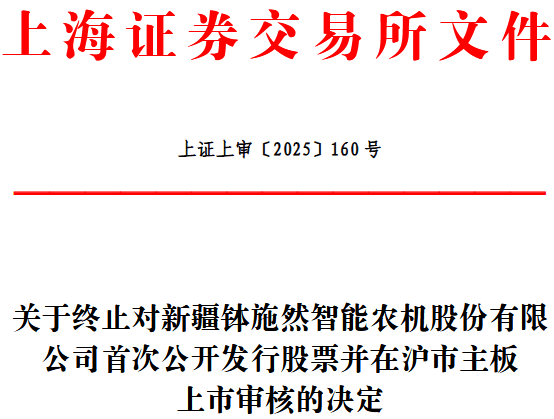
钵施然上交所主板IPO“终止”
Zhi Tong Cai Jing· 2025-09-19 11:47
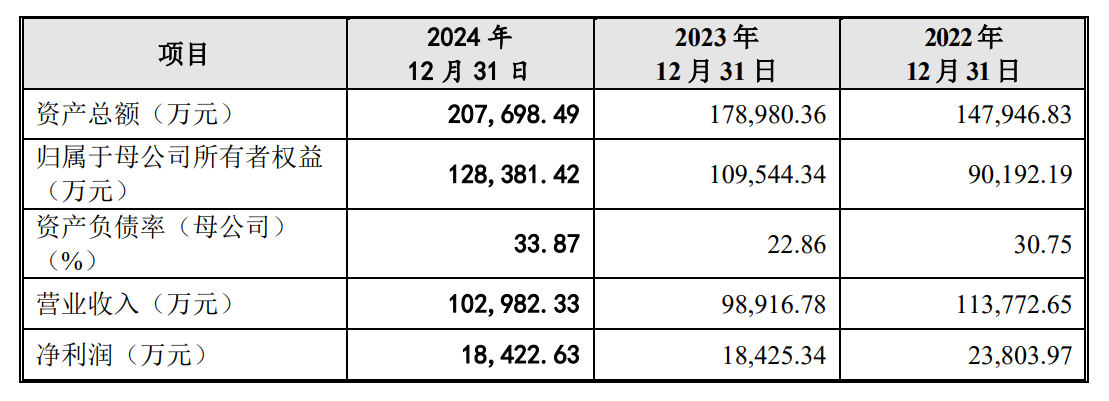
Core Viewpoint - The IPO application of Xinjiang Bosiran Intelligent Agricultural Machinery Co., Ltd. has been terminated due to the withdrawal of the application by the company and its sponsor, as per the regulations of the Shanghai Stock Exchange [1] Company Overview - Bosiran is a modern high-end intelligent agricultural machinery manufacturer that integrates research and development, production, sales, and service [1] - The company's core product is the cotton harvester, along with other agricultural machinery such as hydraulic turning plows, combined tillage machines, precision film laying seeders, spray rod sprayers, and residual film recovery machines, covering the entire cotton planting industry chain [1] Product Development - The company has focused on innovation and has continuously upgraded its six-row box-type machines, leading to the production of high-end models that meet diverse customer needs [1] - Bosiran has developed various agricultural machinery products to address weak links in China's agricultural mechanization process, resulting in a rich and diversified product structure [1] Financial Performance - In 2022, 2023, and 2024, Bosiran achieved operating revenues of approximately 1.138 billion, 989 million, and 1.030 billion RMB, respectively, with net profits of approximately 238 million, 184 million, and 184 million RMB [2] - The total assets of the company as of December 31 for 2022, 2023, and 2024 were 1.479 billion, 1.789 billion, and 2.077 billion RMB, respectively [3] - The equity attributable to the parent company increased from approximately 901 million RMB in 2022 to approximately 1.284 billion RMB in 2024 [3] - The company's asset-liability ratio increased from 30.75% in 2022 to 33.87% in 2024 [3]
牢记嘱托奋力谱写中国式现代化龙江新篇章|佳木斯市郊区“四梁八柱”撑起产业新天地
Xin Lang Cai Jing· 2025-09-18 21:11
Core Viewpoint - The article highlights the industrial development momentum in Jiamusi's suburban area, focusing on the implementation of the "4567" modern industrial system and the "3510" work layout to promote four leading industries and eight industrial chains [15][20]. Group A: Innovation Mechanism and Industrial Development - Jiamusi's suburban area has established a "three-chain" promotion mechanism involving leadership, service teams, and responsible personnel to ensure effective implementation of industrial policies [15][16]. - Specific development plans and support policies have been created for the four leading industries: food processing, intelligent agricultural machinery, modern trade, and rural cultural tourism [15][16]. - A monthly scheduling, quarterly summary, and annual assessment mechanism has been implemented to ensure the effectiveness of industrial policies [15][16]. Group B: Food Processing Industry - The winter plum soybean food company is a key player in the food processing industry, focusing on soybean, meat, and functional food processing, with 62 food enterprises cultivated in the region [16][18]. - The company has invested 55 million yuan in technological upgrades, aiming to complete production line testing by the end of October [16][18]. Group C: Intelligent Agricultural Machinery Industry - Jicheng Tractor Manufacturing Co., a pioneer in intelligent agricultural machinery, invests over 5% of its revenue in R&D and has established a provincial-level R&D center [17]. - The agricultural machinery industry chain includes 17 enterprises, with 4 national high-tech enterprises and 4 large-scale enterprises [17]. - The region's agricultural machinery enterprises achieved a total output value of approximately 166 million yuan by July this year [17]. Group D: Modern Trade Industry - The Jiamusi International Logistics Port's second phase features a sorting center capable of processing 2,200 packages per hour with a 99% accuracy rate, handling over 20 million packages monthly [18][19]. - The modern trade industry includes 167 key enterprises across logistics, food wholesale, and automotive sales, forming a comprehensive industrial system [18][19]. Group E: Rural Cultural Tourism Industry - The region has developed several tourist attractions, including a national AAAA-level scenic area and multiple AAA-level sites, enhancing the local tourism experience [19][20]. - New camping sites and experiences have been introduced to attract visitors, contributing to the growth of related industries such as dining and accommodation [19][20]. Group F: Eight Industrial Chains - The suburban area is leveraging eight industrial chains to drive economic growth, integrating resources and innovating models to build a modern industrial system [20].

广征良策绘就广东农业新图景,这场专题会干货满满
Nan Fang Nong Cun Bao· 2025-08-26 14:32
Core Insights - The Guangdong Province is advancing its modern agricultural system, focusing on the development of Lingnan特色现代农业 (Lingnan characteristic modern agriculture) through a series of specialized meetings aimed at discussing strategies and solutions for high-quality agricultural development [4][5]. Group 1: Agricultural Development Initiatives - The meeting highlighted the achievements in marine ranching across 11 cities, the development of特色农业 (specialty agriculture) in 10 cities, and innovations from 8 universities and research institutions [2]. - The "粤强种芯" (Yue Strong Seed Core) and "粤强农装" (Yue Strong Agricultural Equipment) initiatives are set to lead industry upgrades through seed innovation and the establishment of an intelligent agricultural machinery innovation system [8][9]. - The province aims to double the number of large-scale marine ranching platforms, enhancing the modern marine ranching framework [10][11]. Group 2: Research and Development - Guangdong has collected and preserved 368,000 agricultural germplasm resources, ranking among the top in the nation, and has developed 36 super rice varieties, accounting for 28% of the national total [26][27]. - The province's agricultural machinery mechanization rate for rice production is projected to reach 81.3% by 2024, with significant market shares held by local drone manufacturers [46][47]. Group 3: Challenges and Recommendations - Despite progress, challenges remain, including small-scale特色产业 (specialty industries), weak biological seed industry strength, and issues with agricultural brand management and product homogeneity [24][25]. - Experts suggest establishing a market-oriented technology service mechanism and enhancing support for leading enterprises to foster innovation in the seed industry [33][35]. - The need for a comprehensive insurance system for marine ranching is emphasized, with recommendations for a multi-layered risk-sharing mechanism to support the industry [104][107].

吉峰科技:本次计提信用减值准备、资产减值准备,将减少公司2025年半年度利润总额约638万元
Mei Ri Jing Ji Xin Wen· 2025-08-26 13:54
Company Summary - Jifeng Technology (SZ 300022) announced on August 26 that the provision for credit impairment and asset impairment will reduce the company's total profit for the first half of 2025 by approximately 6.38 million yuan, and the net profit attributable to the listed company by about 5.15 million yuan, which will significantly impact the net profit attributable to the parent company's shareholders in the consolidated financial statements for the first half of 2025, but will not have a major impact on the company's normal operations [1][1][1] - As of the report date, Jifeng Technology has a market capitalization of 4.5 billion yuan [1][1][1] Industry Overview - In 2024, the revenue composition of Jifeng Technology is as follows: agricultural machinery circulation accounts for 92.33%, agricultural machinery manufacturing accounts for 5.88%, and cargo vehicles account for 1.8% [1][1][1] - The pet industry is experiencing a significant boom, with a market size of 300 billion yuan, leading to a surge in stock prices for industry-listed companies [1][1][1]

第二十四届长春农博会闭幕:新科技涌现 经贸成果丰硕
Zhong Guo Xin Wen Wang· 2025-08-24 12:45
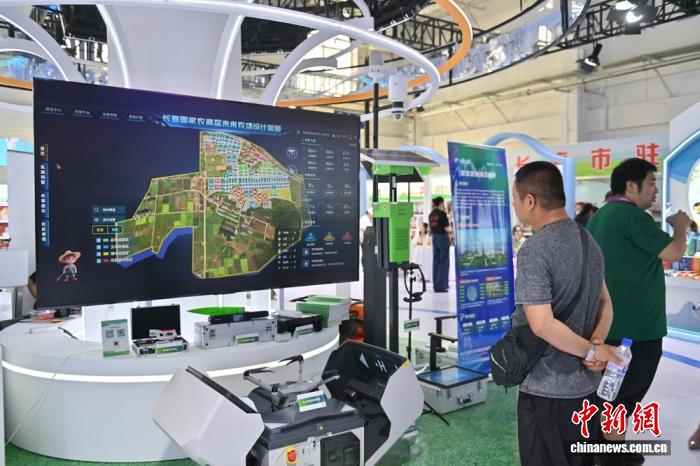
Core Insights - The 24th China Changchun International Agricultural and Food Expo concluded, attracting over 1,500 enterprises and more than 800 buyers, with a total attendance of 850,000 people over 10 days [1][3] - The expo serves as a significant platform for showcasing agricultural modernization achievements and facilitating international agricultural cooperation [3] Industry Highlights - The event emphasized the demonstration and promotion of advanced agricultural technologies, featuring over 30 technology models including AI greenhouses and smart mushroom cabins [3] - Major agricultural machinery companies showcased over 2,000 units of advanced intelligent farming equipment, including the first hydrogen-powered autonomous tractor and laser weeding machines, with on-site transactions reaching nearly 60 million yuan [3][4] Economic Impact - The expo facilitated extensive cooperation, resulting in 25 agreements with a total signing amount of approximately 4.2 billion yuan [4] - The total transaction volume during the event reached 440 million yuan, with online sales exceeding 100 million yuan through promotional activities involving MCN organizations and key influencers [4]
鑫源智造:更名焕新 聚焦“轻量化+智能化”
Zheng Quan Shi Bao Wang· 2025-08-23 05:16
Core Viewpoint - The company has rebranded to "Xinyuan Intelligent Manufacturing" and unveiled a new strategy focused on becoming a leading brand in lightweight intelligent equipment for outdoor operations, emphasizing a dual focus on "lightweight + intelligence" [1][2] Group 1: Business Strategy - The company aims to transform its agricultural machinery business towards deep "intelligent" upgrades and enhance its magnesium-aluminum business by reinforcing "lightweight" technological advantages [1][2] - The strategic direction includes a comprehensive upgrade of business structure and development momentum, with a reported revenue growth of 388% and a net profit increase of 284% in the first half of the year [2] Group 2: Corporate Development - Xinyuan Group became the controlling shareholder of Xinyuan Intelligent Manufacturing in August 2024, transferring 51% of Chongqing Xinyuan Agricultural Machinery Co., Ltd. to the listed company [2] - The company is expanding its main business from magnesium-aluminum alloy automotive parts to include research, production, and sales of agricultural machinery, general machinery, and garden machinery products [2] Group 3: Collaborative Efforts - The company is forming a vertical supply chain system that integrates "complete vehicles + components," enhancing synergy with Xinyuan Group's operations [2] - The collaboration with institutions like the Chinese Academy of Sciences and companies such as CATL and Tencent aims to establish a cross-disciplinary R&D team covering materials science, artificial intelligence, and robotics [3] Group 4: Future Outlook - The company plans to focus on outdoor operational scenarios, developing intelligent equipment products and building a three-in-one industrial ecosystem [3] - Future innovations will target smart agricultural machinery, lightweight intelligent equipment, and data intelligence processing, with the goal of becoming a leading brand in lightweight intelligent equipment for outdoor operations [3]