
智能网联新能源汽车

Search documents
青岛构建新质生产力发展新格局
Qi Lu Wan Bao· 2026-01-21 10:35
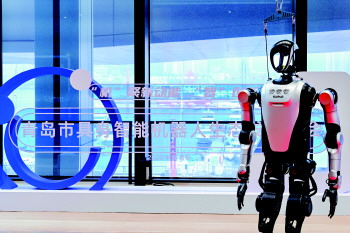
Core Insights - Qingdao is prioritizing technological innovation to enhance new quality productivity, focusing on embodied intelligent robots as a key strategy for future industrial development [2][3] - The city has established a "10+1" innovative industrial system to strengthen its development foundation and activate digital potential through AI computing power [2][7] Group 1: Technological Innovation and Robotics - Embodied intelligent robots are seen as a crucial element for Qingdao to seize future industrial opportunities, with numerous "Qingdao-made" robots transitioning from labs to real-world applications [3] - Qingdao ranks sixth among China's top 100 advanced manufacturing cities, supported by six trillion-level industrial clusters and over 500 AI companies, creating a comprehensive ecosystem [3][4] - The "Kua Fu" robot, developed by Leju Zhijia, showcases advanced AI capabilities, including multilingual communication and understanding, marking a significant achievement in the field [3] Group 2: Medical Innovations - The world's first AI percutaneous puncture surgery navigation robot, developed by Shandong Zhuoye Medical Technology, has received national certification, enhancing precision in medical procedures [5] - The lower limb exoskeleton rehabilitation robot from Kangdao (Qingdao) Medical Technology utilizes AI to assist patients with mobility impairments, indicating a strong focus on healthcare applications [5] Group 3: Industrial Development and Policy Support - By 2025, Qingdao plans to release 559 AI application scenarios and cultivate 40 vertical model products, establishing itself as a hub for embodied intelligent robots [5][6] - The city aims to reward humanoid robot companies with up to 8 million yuan for achieving annual sales exceeding 50 million yuan, fostering a supportive entrepreneurial environment [5] Group 4: Industrial System and Economic Growth - Qingdao's "10+1" innovative industrial system includes two leading industries, five emerging industries, and three advantageous industries, focusing on 40 niche markets to drive new quality productivity [7][8] - The new generation of information technology and AI industries are expected to generate significant revenue, with projections of 220 billion yuan in 2024 for the AI industry alone [7] Group 5: Digital Economy and Infrastructure - Qingdao is enhancing its digital economy by building a comprehensive "policy + network + computing power" system, aiming to integrate the digital and real economies [10][11] - The city has established itself as a "dual-gigabit city" with extensive 5G infrastructure, planning to further develop smart computing and explore green energy collaborations [10][11] Group 6: Innovation and Global Ranking - Qingdao has significantly improved its global innovation index ranking, moving from 69th in 2020 to 34th in 2025, reflecting its growing competitiveness in advanced manufacturing [12]



人均GDP超16万元!青岛“十四五”答卷亮点纷呈
Qi Lu Wan Bao· 2026-01-20 14:33
Economic Growth - Qingdao's GDP has achieved an average annual growth of 5.9% over the past five years, with a total GDP expected to exceed 1.7 trillion yuan by 2025 [2][4] - The number of enterprises in Qingdao has increased by 23.2% over five years, reaching 852,000 [2] - The city's per capita GDP has surpassed 160,000 yuan, indicating a level comparable to that of moderately developed economies [2] Industrial Development - The annual growth rate of R&D expenditure in Qingdao is 11.6%, with the number of technology enterprises increasing by 80% over five years [2][5] - Qingdao ranks 6th among China's top manufacturing cities, with four national advanced manufacturing clusters [2] - The service sector's added value has surpassed 1 trillion yuan, and the marine economy ranks 3rd among Chinese cities [2][5] Infrastructure and Urban Development - Significant urban renewal projects have been implemented, including the operation of Jiaodong International Airport and the completion of major infrastructure projects [3][8] - The urbanization rate of the permanent population has reached 79%, an increase of 2.5 percentage points over five years [3] Environmental Improvements - Qingdao has seen a 12.1% reduction in energy consumption per unit of GDP and a 15.9% decrease in carbon intensity [3] - The city has been recognized as a national pilot for carbon peak construction, with significant improvements in air quality [3][9] Social Welfare and Employment - The average disposable income of residents is projected to exceed 60,000 yuan by 2025, with an annual growth rate of around 6% [4][10] - Employment initiatives have led to the creation of 373,000 new urban jobs, with a focus on supporting entrepreneurship [10]
赛迪顾问预测:2027年中国智能网联新能源汽车市场规模有望突破1500万辆
Zhong Guo Jin Rong Xin Xi Wang· 2026-01-20 14:16
Core Insights - China is actively expanding automotive consumption and accelerating the technological breakthroughs and industrialization of smart connected new energy vehicles, leading to sustained growth in the market size of smart connected new energy vehicles [1] - The market for plug-in hybrid smart connected vehicles is rapidly increasing due to factors such as limited charging infrastructure, diverse refueling methods, and stronger overall endurance, with a projected market share of 37.9% in 2024 [1] - By 2027, the market size for smart connected new energy vehicles in China is expected to exceed 15 million units, with plug-in hybrid smart connected vehicles projected to account for 48.0% of total sales [1] Market Trends - The integration of artificial intelligence, efficient infrastructure expansion, deepening consumer encouragement policies, and increasing consumer acceptance are driving the growth of the smart connected new energy vehicle market [1] - The challenges of charging difficulties and slow charging for pure electric smart connected vehicles remain prominent in the short term, which supports the continued growth of the plug-in hybrid segment [1]
上海未来5年这么干
21世纪经济报道· 2026-01-20 08:25
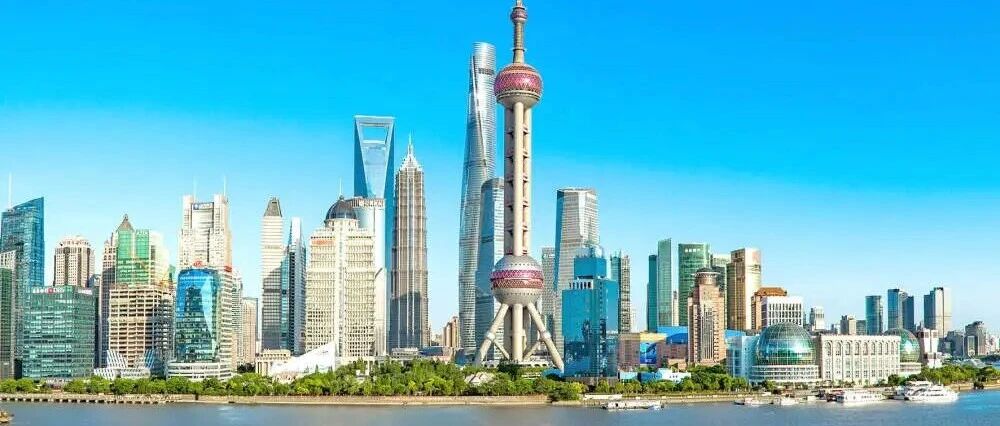
Core Viewpoint - Shanghai aims to establish itself as a world-class high-end industrial cluster and achieve significant high-quality development over the next five years, with a target of doubling its per capita GDP by 2035 compared to 2020 levels [1][2]. Group 1: High-Quality Development Goals - The "15th Five-Year Plan" emphasizes high-quality development, maintaining economic growth within a reasonable range, and improving total factor productivity while ensuring a reasonable proportion of manufacturing [1][2]. - Shanghai's development strategy includes transitioning from scale expansion to high-quality development and structural optimization, impacting both economic sectors and personal income levels [2][5]. Group 2: Five Centers Construction - Shanghai is tasked with building five centers: international economy, finance, trade, shipping, and technological innovation, with a focus on enhancing its international economic center status [2][5]. - The plan includes accelerating the development of three leading industries and strengthening the capabilities in integrated circuit equipment, manufacturing, and design [2][6]. Group 3: Focus on Emerging Industries - Shanghai aims to tackle key technologies and create a sustainable technological ecosystem to maintain or enhance its global leadership [3][6]. - The city plans to develop six emerging pillar industry clusters, including smart terminals, intelligent connected vehicles, advanced materials, and green low-carbon industries [10][11]. Group 4: Financial Support and Innovation - The plan outlines the need for a robust financial support system to match the world-class high-end industrial cluster, including the establishment of an international financial asset trading platform and promoting technology finance [12]. - Shanghai will support venture capital investments in hard technology and enhance the market for technology credit and insurance [12]. Group 5: National and Global Implications - Shanghai's development trajectory reflects the broader direction of China's top cities in the global competitive landscape, emphasizing innovation-driven high-quality development [13].
许晓雄:肇庆连续四年制造业引资超千亿 构建现代产业体系
Nan Fang Du Shi Bao· 2026-01-14 13:04
Core Viewpoint - Zhaoqing is focusing on building a modern industrial system centered on the real economy and manufacturing, with significant investments in emerging industries such as new energy vehicles, new energy storage, new materials, and electronic information [1][2] Group 1: Investment and Economic Development - Zhaoqing has introduced manufacturing projects with planned investments exceeding 100 billion yuan for four consecutive years [1] - The "Three New and One Electric" projects account for one-third of the total investment, with over 100 large-scale component enterprises in the new energy vehicle sector [1] - A total of nearly 50 billion yuan has been allocated to an industrial fund to enhance the quality of investment attraction [1] Group 2: Industrial Park Development - Zhaoqing has established a new development pattern with 13 provincial industrial parks and special parks, led by Zhaoqing High-tech Zone and Zhaoqing New District [1] - The large industrial cluster area has over 40,000 acres of land available for development, with more than 300 projects introduced and a total planned investment exceeding 90 billion yuan [1] - Nearly 30% of the projects have already been put into production, indicating the initial formation of a "ten-thousand-acre, hundred-billion" platform [1] Group 3: Business Environment and Growth - Zhaoqing adheres to the "enterprise first" philosophy, continuously optimizing the "All Zhaoqing Office" service system for enterprises, maintaining a top position in the provincial business environment evaluation for five consecutive years [2] - The number of business entities in the city has surpassed 400,000, representing a 1.5 times increase compared to the end of the 13th Five-Year Plan [2] - Zhaoqing is becoming an important advanced manufacturing base in the Guangdong-Hong Kong-Macao Greater Bay Area, injecting strong momentum into high-quality development [2]
节能与新能源汽车产业发展部际联席会议2026年度工作会议召开
Zheng Quan Ri Bao Wang· 2026-01-14 11:12
Core Viewpoint - The meeting emphasizes the importance of the year 2026 as the starting point of the "14th Five-Year Plan" and highlights the significant opportunities for the development of the intelligent connected new energy vehicle industry [2] Group 1: Development Planning - The meeting calls for the preparation of the "14th Five-Year Plan for the Development of Intelligent Connected New Energy Vehicles," which should align with related plans in energy and infrastructure, clarify development goals, and deploy key tasks to guide industry innovation [2] Group 2: Supply Chain and Technology - There is a focus on enhancing the self-controllable capabilities of the industrial chain and supply chain, implementing a new round of high-quality development actions for key industries, and accelerating breakthroughs in technologies such as all-solid-state batteries and advanced autonomous driving [2] Group 3: Market Expansion - The meeting aims to further expand automobile consumption, promote vehicle trade-in programs, scale up the application of new energy heavy trucks, and deepen reforms in new energy vehicle insurance to stimulate diverse consumer potential [2] Group 4: Industry Regulation - It is essential to standardize industry competition order, strengthen cost investigations and price monitoring, and enhance supervision of product consistency and quality checks, while also guiding industry self-discipline [2] Group 5: International Cooperation - The meeting stresses the importance of strengthening international cooperation in trade, investment, and technology, promoting integrated development of trade and investment, and guiding enterprises in a reasonable and orderly overseas layout to foster a new landscape of global industrial cooperation [2]
重庆智能网联新能源汽车向“新”追“智”逐“绿”
Zhong Guo Xin Wen Wang· 2026-01-14 06:46
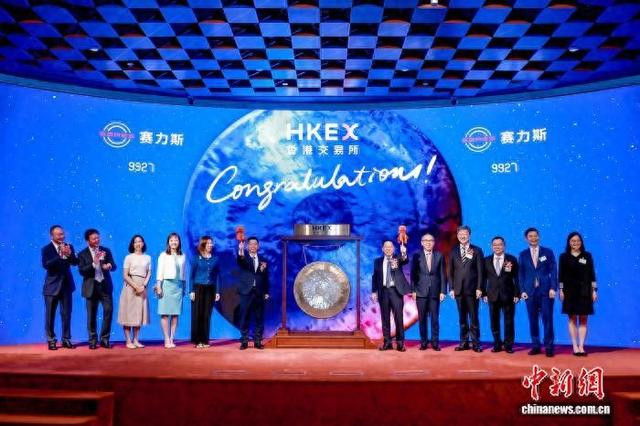
Core Insights - The Chongqing smart connected new energy vehicle market is gaining significant attention as companies report impressive sales figures for 2025, indicating a strong growth trajectory in the industry [1][2][3] Group 1: Company Performance - Changan Automobile reported a total sales volume of 2.913 million units in 2025, marking an 8.5% year-on-year increase, achieving the highest sales in nearly nine years [1] - Seres announced a total sales volume of 472,269 units for the year, reflecting a 10.63% year-on-year growth [1] - The AITO brand, under Seres, delivered over 420,000 vehicles in 2025, leading the high-end new energy vehicle market [1][3] Group 2: Technological Advancements - Changan has made significant technological strides with its self-developed "Golden Shield" battery and the industry’s first multi-in-one electric drive technology, which have entered mass production [4] - The company has also launched the "Tianshu Intelligent" brand, leveraging its technological advantages to enhance market competitiveness [4] - Seres is focusing on a "software-defined vehicle" approach, introducing several industry-leading technologies to strengthen its market position [4] Group 3: Global Expansion - Changan's overseas sales reached 637,000 units in 2025, up 18.9% year-on-year, with plans to establish 20 factories in countries like Brazil and Indonesia [6] - Seres successfully listed on the Hong Kong Stock Exchange, becoming the first luxury new energy vehicle company to achieve an "A+H" listing, facilitating global resource integration and technological collaboration [6] Group 4: Autonomous Driving Development - Chongqing has introduced L3-level autonomous driving vehicles, with Changan receiving the first official license plate for such vehicles in China [8][9] - The city’s complex geographical environment serves as a testing ground for autonomous driving technologies, enhancing their development and validation [10] Group 5: Industry Ecosystem - Chongqing has developed a robust automotive industry ecosystem, led by Changan, Seres, and Qianli Technology, with over a thousand supporting parts manufacturers [11] - The region has established a cluster advantage in software and system capabilities necessary for intelligent driving, with numerous digital workshops and smart factories [12] Group 6: Green Initiatives - In 2025, Chongqing produced nearly 1.3 million new energy vehicles, supported by intelligent manufacturing and carbon reduction initiatives [12] - Financial innovations, such as the establishment of a 1 billion yuan fund, are driving the green transformation of the new energy vehicle industry [14]


智能汽车ETF(159889)盘中涨超2%,政策与技术双轮驱动行业前景
Mei Ri Jing Ji Xin Wen· 2026-01-14 06:39
Core Viewpoint - The Shanghai Municipal Government has issued a three-year action plan (2026-2028) to support the transformation and upgrading of advanced manufacturing, emphasizing the development of the intelligent connected new energy vehicle industry, indicating ongoing policy support for the sector [1] Industry Dynamics - Geely Auto Group has obtained a full-area L3 autonomous driving road test license in Hangzhou, while BAIC Blue Valley's L3 vehicles are officially on the road and plan to gradually open to individuals, showcasing the acceleration of autonomous driving technology implementation [1] - The vehicle replacement policy from 2024 to 2025 is expected to drive the proportion of new energy vehicles to nearly 60%, indicating a sustained growth in industry demand [1] - In the humanoid robot sector, Chinese company Zhiyuan Robotics leads with a 39% global market share, reflecting the expansion of intelligent technology applications [1] - Despite the recent underperformance of the automotive sector, policy support and technological breakthroughs provide long-term development momentum for the smart automotive industry [1] Investment Vehicle - The Smart Automotive ETF (159889) tracks the CS Smart Automotive Index (930721), which selects listed companies involved in smart driving and vehicle networking from the A-share market, covering the entire smart automotive industry chain from hardware to software [1] - The index's industry allocation is primarily focused on information technology and consumer discretionary, aiming to reflect the overall performance of listed companies related to smart automotive [1]


后年建成全智能工厂
Xin Lang Cai Jing· 2026-01-13 07:26
Core Insights - The Shanghai Municipal Government has released the "Three-Year Action Plan to Support the Transformation and Upgrading of Advanced Manufacturing (2026-2028)", aiming to build a modern industrial system centered on advanced manufacturing [1] - The plan targets the addition of 100 manufacturing enterprises with an annual output value exceeding 1 billion yuan by 2028, bringing the total to over 600 [1] - The initiative aims to drive the addition of 500 industrial enterprises above designated size in the supply chain and significantly increase the proportion of R&D expenses in revenue for manufacturing enterprises [1] Group 1: Structural Upgrading - The plan emphasizes a multi-dimensional industrial upgrade matrix, accelerating iterations in traditional advantageous industries [1] - Specific strategies include petrochemical companies shifting towards new functional materials, steel companies enhancing specialty steel production, and light industry companies creating trendy domestic products [1] - Leading industries will focus on breakthroughs in the integrated circuit industry chain, biomedicine innovation, and intelligent computing chip development, fostering international leading enterprises [1] Group 2: Emerging Industries - The plan promotes simultaneous development of key and emerging industries, including the growth of six major sectors such as next-generation electronic information and smart connected new energy vehicles [1] - New fields like low-altitude economy and commercial aerospace will be explored, with a focus on scaling products like eVTOL and humanoid robots [1] Group 3: Innovation and Incentives - The plan introduces significant incentive policies for core technology breakthroughs, focusing on frontier technologies such as laser manufacturing and quantum technology [2] - Key links in the industrial chain, including integrated circuits and large aircraft, will be prioritized for technological advancements [2] Group 4: Digital and Green Transformation - The "Action for Upgrading Capability and Quality" outlines a transformation path, implementing "AI + Manufacturing" initiatives for digital transformation [2] - By 2027, large enterprises are expected to achieve full coverage of digital applications, with the goal of establishing fully intelligent factories by 2028, achieving a robot density of 600 units per 10,000 people [2] - In terms of green transformation, the plan aims to add over 100 national-level green factories [2]
上海发布先进制造业转型升级方案
Zhong Guo Hua Gong Bao· 2026-01-13 02:51
Core Viewpoint - The Shanghai Municipal Government has released a three-year action plan (2026-2028) to support the transformation and upgrading of advanced manufacturing, aiming to add 100 manufacturing enterprises with an annual output value exceeding 1 billion yuan by 2028, totaling over 600, and to drive the addition of 500 industrial enterprises above designated size in the industrial chain [1][2]. Group 1: Action Plans - The action plan includes four major actions: structural optimization and upgrading, innovation-driven foundational support, quality and efficiency enhancement, and resource and factor support [1][2]. Group 2: Structural Optimization and Upgrading - The first action focuses on optimizing and enhancing traditional advantageous industries, promoting the petrochemical sector to shift from oil to chemical products, and accelerating the strategic leadership of pilot industries [1]. - It supports integrated circuit companies to target equipment, advanced processes, photoresist materials, and 3D packaging to achieve breakthroughs across the entire industrial chain [1]. Group 3: Innovation-Driven Foundational Support - The second action encourages enterprises to focus on foundational research in cutting-edge technologies such as laser manufacturing, quantum, photonics, new functional materials, and new energy [2]. - It emphasizes support for key industrial chains and critical links in industries like integrated circuits, large aircraft, high-end equipment, instrumentation, and industrial software [2]. Group 4: Quality and Efficiency Enhancement - The third action supports existing chemical enterprises in chemical parks to undertake project construction without increasing environmental risks, while promoting digital transformation to achieve full coverage of smart factories by 2028 [2]. - It also encourages the development of green low-carbon products and supports energy-saving upgrades and equipment modifications [2]. Group 5: Resource and Factor Support - The fourth action aims to enhance logistics support and improve transportation infrastructure in areas like Lingang, Jinshan, and chemical zones [2]. - It includes increasing specialized logistics and warehousing resources and innovating hazardous materials storage supervision methods [2].