
有机硅

Search documents
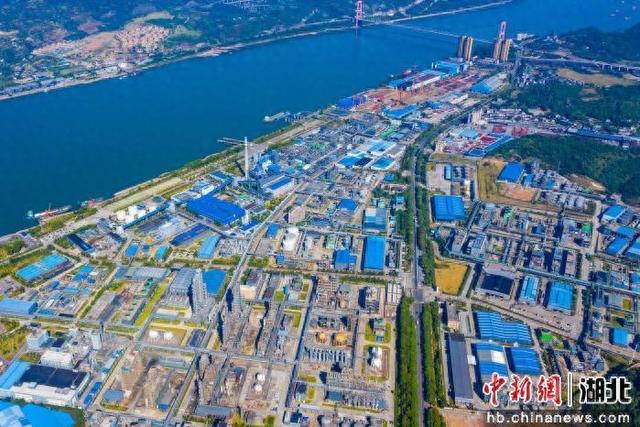
宜昌市猇亭区:“绿色智造”锻造现代化工新名片
Zhong Guo Xin Wen Wang· 2026-01-27 10:01
Core Viewpoint - Yichang's Xiaoting District is focusing on ecological priority and green development, aiming for high-end, green, and intelligent growth in the modern chemical new materials industry, with significant contributions from leading enterprises like Xingfa Group [1] Group 1: Organic Silicon Industry Development - Xiaoting District has established a complete organic silicon industry chain, attracting over 10 quality enterprises, and has become the largest integrated organic silicon industry cluster in Central China [3] - Xingfa Group has built a 600,000 tons/year organic silicon monomer facility, filling a gap in Hubei and achieving international advanced levels in several key process indicators [3] - The district was awarded the title of "China Organic Silicon Innovation City," marking its entry into the top tier of the national organic silicon industry, with expected production capacity exceeding 1 million tons by 2026 [3] Group 2: Electronic Chemicals Sector - The electronic chemicals sector in Xiaoting District has become a national leader, producing over 400,000 tons of various electronic-grade chemicals, breaking foreign monopolies [5] - The district's electronic-grade phosphoric acid and sulfuric acid hold approximately 80% and 35% of the domestic market share, respectively [5] - Future developments will focus on products like photoresist initiators and electronic-grade plating solutions, aiming for an annual production capacity of 550,000 tons by 2026 [6] Group 3: Green and Intelligent Transformation - Xiaoting District is leveraging green and intelligent strategies to upgrade the modern chemical new materials industry, focusing on both product and technological advancements [8] - The establishment of an intelligent online inspection platform by Taisheng Chemical and Dongtu Technology enhances safety management through IoT and AI technologies [8] - Xingfa Group is investing 310 million yuan in a smart management center to monitor production and resource consumption, achieving a comprehensive utilization rate of over 95% for waste [8]


工业硅数据日报-20260127
Guo Mao Qi Huo· 2026-01-27 04:09
投资咨询业务资格:证监许可【2012】31号 □业硅数据日报 贵金属与新能源研究中心 2 国贸期货研究院 从业资格号:F03123927 投资咨询号:Z0023460 2026/01/27 陈宇森 数据来源: SMM. 百川盈孚,Wind,广期所,公开新闻整理 涨跌幅(%) 持仓量 合约 收盘价 421#-通氧553价差 - 不通氧553#硅(华东)-平均价 江西新纺高科永修年产137500吨有机硅新材料项目备案。11月14日、江西省投资项目在线审批监管平台公布了江西新纺高科永修年产 137500吨有机硅新材料项目的备案信息。 | F 分 | | | --- | --- | | H 발 | 供给端,西北大厂有传闻因寒流问题矿石运输受制计划停炉。需求端,多晶硅、有机硅需求收缩趋势明显。整体看,供给端的短期祝 动与需求端的趋势性收缩。或增加库存的去化,但短期内难以扭转供给过剩的格局,价格预计震荡运行 | | 双 点 | | | | 本报告中的信息均源于公开可获得的资料,国贸期货力灾准确可靠。但不对上达信息的准确性及完整性做任何保证。本报告不构成个 人投资建议,也未针对个别投资者特殊的投资目标、财务状况或需要,投资 ...
基础化工行业周报:五部门出台零碳工厂建设意见,美国拟敲定年度生物燃料配额
Huaan Securities· 2026-01-26 00:24
Investment Rating - The industry investment rating is "Overweight" [2] Core Insights - The chemical industry is experiencing a dual drive of cyclical recovery and growth, with a focus on organic silicon, PTA, polyester filament, caprolactam, spandex, vitamins, sweeteners, refrigerants, and phosphorus chemicals [5][6] - The organic silicon industry is entering a recovery phase, driven by new applications in sectors like new energy vehicles and photovoltaics, with significant improvements in supply-demand dynamics expected [5][6] - The PTA/polyester filament industry is seeing a reduction in capacity expansion, leading to a new cycle of prosperity due to improved domestic and external demand [6] - The refrigerant market is entering a high prosperity cycle due to quota policies and stable demand growth from sectors like heat pumps and cold chain logistics [7] - The synthetic biology sector is poised for explosive growth as fossil-based materials face disruptive challenges, with a focus on energy efficiency and carbon tax costs [8] - OLED technology is rapidly penetrating various markets, supported by government policies aimed at fostering the new display industry [9] - The demand for high-frequency and low-loss electronic resins is increasing due to the rise of AI infrastructure and low-orbit satellite communications [10] - The electronic chemicals sector is benefiting from the expansion of wafer production capacity, with increasing demand for key materials in the semiconductor industry [11] Summary by Sections Industry Performance - The chemical sector ranked 4th in overall performance with a weekly increase of 7.29%, outperforming the Shanghai Composite Index by 6.45 percentage points [20][21] Key Industry Dynamics - The Ministry of Industry and Information Technology has issued guidelines for zero-carbon factory construction, aiming to establish a benchmark by 2027 across various industries [35] - The U.S. government plans to finalize the annual biofuel blending quota, maintaining high growth targets for the biofuel industry [35]
五部门出台零碳工厂建设意见,美国拟敲定年度生物燃料配额
Huaan Securities· 2026-01-25 13:33
Investment Rating - Industry Rating: Overweight [2] Core Insights - The chemical industry is experiencing a dual drive of cyclical recovery and growth, with a recommendation to focus on sectors such as organic silicon, PTA, polyester filament, caprolactam, spandex, vitamins, sweeteners, refrigerants, and phosphorus chemicals [5][6] - The organic silicon industry is entering a recovery phase, with new applications becoming key growth drivers. From 2019 to 2024, domestic DMC capacity is expected to expand rapidly, leading to a temporary oversupply and price decline. However, by 2025, no new capacity is anticipated, and demand from emerging sectors like new energy vehicles and photovoltaics is expected to maintain high growth [5][6] - The PTA/polyester filament industry is approaching a turning point, with capacity expansion cycles nearing their end. The demand side is expected to continue growing, supported by improved external demand due to easing trade tensions [6] - Refrigerants are entering a high prosperity cycle due to quota policies that will reduce supply while demand remains stable, driven by market expansion in Southeast Asia and the development of heat pumps and cold chain markets [7] - The synthetic biology sector is poised for significant growth as fossil-based materials face disruptive challenges, with a focus on energy-efficient products and the potential for bio-based materials to see explosive demand [8] - OLED technology is rapidly penetrating various markets, with government policies supporting the development of new display industries and accelerating the localization of key materials and equipment [9] - The demand for electronic chemicals is increasing due to the rapid growth of the semiconductor industry, particularly in China, where the market is heavily reliant on imports [11] Summary by Sections Industry Performance - The chemical sector ranked 4th in overall performance for the week of January 19-23, 2026, with a gain of 7.29%, outperforming the Shanghai Composite Index by 6.45 percentage points [5][20] - The top-performing sub-sectors included textile chemical products (13.10%), nitrogen fertilizers (10.58%), and other chemical raw materials (10.09%) [21] Key Company Dynamics - The top three gaining companies for the week were Jianghua Micro (46.41%), Jiuding New Materials (28.47%), and Hongbaoli (26.73%) [26] - The companies in focus for potential investment include KaiSai Biological, Huaheng Biological, and other leading firms in synthetic biology and electronic chemicals [8][11][32] Industry Developments - The Ministry of Industry and Information Technology has issued guidelines for the construction of zero-carbon factories, aiming to establish a benchmark by 2027 across various sectors [35] - The U.S. government plans to finalize the 2026 biofuel blending quotas, maintaining high growth targets while addressing industry concerns [35]



江瀚新材董事长等8名高管承诺一年内不减持 对未来发展充满信心
Zheng Quan Ri Bao Wang· 2026-01-25 10:41
Group 1 - Jianghan New Materials announced that eight executives, including the chairman and general manager, have voluntarily committed not to reduce their shareholdings for 12 months after the lock-up period ends on January 30, 2026, collectively holding 30.70% of the company's total shares [1] - The company plans to repurchase shares with a total investment of 200 million to 400 million RMB, with a maximum repurchase price of 30 RMB per share, and has already repurchased 8.0346 million shares, accounting for 2.15% of the total share capital by the end of December 2025 [1] - The repurchase is aimed at maintaining investor interests and achieving value sharing among the company, shareholders, and employees [1] Group 2 - Jianghan New Materials specializes in the research, production, and sales of functional organic silanes and other silicon-based new materials, recognized as a national manufacturing champion and a leading enterprise in the fluorosilicon industry [2] - The company is accelerating capacity expansion with a new 60,000 tons/year trichlorosilane project planned in its green circular industry park, which will increase total trichlorosilane capacity to 120,000 tons/year [2] - The company has initiated construction on a functional new materials silicon-based precursor project, which will produce 10,000 tons of optical fiber-grade silicon tetrachloride and 5,000 tons of 9N-grade ethyl silicate annually, with total silane capacity expected to reach 182,000 tons/year by 2026 [2] - Jianghan New Materials is deepening its global layout with over ten overseas warehouses in Southeast Asia, Europe, and the United States, and plans to establish overseas factories to address local service challenges [2] Group 3 - The core strategy of Jianghan New Materials is to deepen the development of silicon-based new materials, focusing on semiconductor and high-end new energy materials, which are essential for the company's high-quality growth and alignment with national strategic needs [3]

有机硅价格回暖,合盛硅业乘“反内卷”东风迎行业反转
Zheng Quan Shi Bao Wang· 2026-01-20 12:25
Core Viewpoint - The organic silicon DMC market is experiencing a significant price increase due to tightening supply and rising demand from high-end sectors such as new energy and electronics, with prices reaching approximately 13,700 to 14,000 yuan per ton as of January 15 [1] Group 1: Market Dynamics - The organic silicon DMC price has risen from about 11,300 yuan per ton at the end of October 2025 to around 13,200 yuan per ton by mid-November, marking a monthly increase of approximately 20% [2] - The average operating rate in the organic silicon industry is currently around 66%, with no significant inventory pressure, and supply is expected to tighten further in January [3] - The organic silicon industry is projected to face supply-demand gaps of -1.9 million tons, -29.4 million tons, and -18.4 million tons from 2025 to 2027, respectively, due to mismatches caused by expansion cycles [4] Group 2: Policy and Industry Changes - The "anti-involution" policy initiated in November 2025 aims to reduce industry overcapacity, with a consensus among industry leaders to lower operating rates by 30% [2] - The adjustment of export tax policies for primary polysiloxane products starting April 1, 2026, is expected to guide the industry towards higher-end product development and production [5] - The implementation of strict policies regarding "double carbon" and environmental safety is accelerating the exit of outdated production capacities, benefiting leading companies like Hoshine Silicon Industry [7] Group 3: Company Performance and Outlook - Hoshine Silicon Industry is identified as a leading player in the organic silicon sector, with a significant recovery in profitability, reporting a net profit of 262 million yuan in the third quarter, marking a turnaround from previous losses [6][8] - Forecasts suggest that Hoshine's net profits will increase to 2.651 billion yuan, 4.381 billion yuan, and 5.132 billion yuan from 2026 to 2028, reflecting the company's strong market position and operational advantages [8]
兴发集团董事长李国璋:锚定新材料板块 夯实第二增长曲线丨e公司访谈
Sou Hu Cai Jing· 2026-01-20 06:35
Core Viewpoint - Xingfa Group aims to transform from a resource-dependent cyclical enterprise to an innovation-driven, diversified technology materials platform, targeting over 100 billion yuan in revenue during the 14th Five-Year Plan period [3][19]. Resource Foundation - The company's resource base, particularly its phosphate rock reserves of approximately 800 million tons, is crucial for its growth, with plans to double phosphate production capacity in the next 3 to 5 years [6][7]. - The supply-demand balance for phosphate rock remains tight, with prices expected to stay high due to limited new capacity and increasing demand from the lithium iron phosphate sector [6][7]. Traditional Business Strength - Xingfa Group has established significant scale and integration advantages in traditional chemical sectors such as glyphosate and organic silicon, which provide performance elasticity and cash flow stability [9][10]. - The company leads in glyphosate production with an annual capacity of 230,000 tons, maintaining a strong market position despite price fluctuations [10]. Emerging Business Growth - The company is focusing on new energy materials and specialty chemicals as core growth engines, with expectations for the new energy materials segment to exceed 30 billion yuan in revenue by 2026 [12][15]. - A recent contract with BYD for 80,000 tons/year of lithium iron phosphate processing is expected to enhance profitability and secure a place in the core supply chain of leading battery manufacturers [13][15]. Advanced Material Development - The company is entering the commercialization phase for black phosphorus, with stable production capabilities and expanding applications in various sectors, including aerospace [17][18]. - Significant advancements in specialty chemicals, such as high-end phosphating agents and sodium hypophosphite, have positioned the company as a key player in high-margin markets [18]. Future Outlook - The company is committed to achieving its ambitious revenue target through collaborative development across multiple dimensions, aiming to become a high-tech, comprehensive new materials enterprise [19].

再再推大化工-最大预期差在于流动性
2026-01-20 01:50
Summary of Conference Call Records Industry Overview: Chemical Sector - The chemical sector is benefiting from liquidity spillover effects, with market risk appetite increasing, leading to potential capital flow from tech growth stocks to the chemical sector, which is at the bottom of the cycle and showing fundamental improvements [1][4] - The dual carbon policy is a key driver for supply-side reform, making high-energy and high-emission industries more scarce, with a higher probability of upward fundamental changes in the medium term [1][4] Key Company Insights: Wanhua Chemical - Wanhua Chemical has significantly increased its production capacity, with petrochemical units rising from 2 to 4 and polyurethane capacity increasing by 1.5 times. Expected net profit for 2025 is projected at 12-12.5 billion yuan, and for 2026 at 15-16 billion yuan. If MDI/TDI prices increase by 1,000 yuan/ton, net profit could reach 19-20 billion yuan, corresponding to a market value of approximately 300 billion yuan [1][5][6] - The company’s fixed assets have grown sevenfold over the past decade, with a nearly threefold increase compared to the last cycle (2020-2021) [2] - The valuation of Wanhua Chemical has historically ranged from 13x to 18x, with optimistic scenarios suggesting a market value could reach 400 billion yuan [7] Industry Trends and Opportunities - The potassium fertilizer industry is characterized by limited supply and strong price stabilization intentions, with companies like Yara, Salt Lake, and Zangge Holdings showing growth potential across multiple sectors including potassium, lithium, and copper [1][10] - The organic silicon industry is experiencing significant fundamental improvements, with strong domestic demand and new applications driving growth. No new domestic capacity is expected, and overseas companies are shutting down or selling parts of their capacity, leading to a stable product price around 14,000 yuan, with potential for price increases post-New Year [1][13] - The tire industry is driven by explosive downstream demand and a favorable competitive landscape, with major foreign companies dominating the market. Domestic companies like Hai'an and Sailun are performing well [2][14][15] Market Expectations and Risks - The chemical sector has several key expectation gaps, primarily related to liquidity impacts on the basic chemical sector. Current market liquidity is abundant, and there is no need to wait for fundamental changes to increase positions [4] - The PVC and titanium dioxide markets are at the bottom of the chemical cycle, facing pressure from real estate completion impacts. Companies like Longbai Group, Zhongtai Chemical, and Xinjiang Tianye are recommended for attention [2][17] - The spandex market is at a cyclical bottom, with prices at historical lows. Supply-side clearing is expected due to long-term losses, while demand is showing signs of improvement [18][19] Notable Companies in New Materials - In the new materials sector, companies like Dongcai Technology and Lite Optoelectronics are noteworthy. Dongcai focuses on high-frequency and high-speed resins, while Lite specializes in OLED materials, with demand expected to rise due to the production of BOE's 8.6 generation line [8] Conclusion - The chemical sector presents various investment opportunities, particularly in traditional cyclical and growth areas. Wanhua Chemical stands out due to its significant capacity expansion and expected profit growth, while other sectors like potassium fertilizers and organic silicon also show promising potential for investors [2][9]

兴发集团董事长李国璋:锚定新材料板块 夯实第二增长曲线
Zheng Quan Shi Bao· 2026-01-19 18:12
Core Viewpoint - Xingfa Group is transforming from a resource-dependent cyclical enterprise to an innovation-driven, diversified technology materials platform, aiming to exceed 100 billion yuan in revenue during the 14th Five-Year Plan period [2][3]. Resource Base - The company has approximately 800 million tons of phosphate rock reserves, making it one of the few phosphate chemical leaders with high self-sufficiency in resources [3]. - Plans to double phosphate mining capacity in the next 3 to 5 years, focusing on regions like Hubei and Sichuan, while also exploring overseas markets such as Egypt [3]. Demand Dynamics - The rapid development of the lithium iron phosphate industry is reshaping phosphate demand, with an estimated annual increase of over 6 million tons in phosphate demand due to lithium iron phosphate production [4]. - Overall, conservative estimates suggest an annual increase in phosphate demand of about 8 million tons, which aligns with the expected supply growth [4]. Traditional Business Strengths - The company has established significant scale and integration advantages in traditional chemical sectors such as glyphosate, phosphate fertilizers, and organosilicon [6]. - Glyphosate production capacity stands at 230,000 tons per year, ranking first in China and second globally, providing resilience against price fluctuations [7]. Emerging Business Segments - The company is focusing on cultivating new energy materials and specialty chemicals as core engines for industrial upgrading and value growth [9]. - A recent contract with BYD for 80,000 tons per year of lithium iron phosphate processing is expected to enhance profitability and secure a place in the core supply chain of leading battery manufacturers [9]. Innovation and R&D - The company invests over 1 billion yuan annually in R&D, with a team of 800, leading to advancements in new materials and a focus on black phosphorus, which is nearing commercialization [12]. - The company is also expanding its production capacity for lithium-related products, with plans to increase lithium dihydrogen phosphate capacity from 100,000 tons to 150,000 tons by mid-2026 [10]. Market Position and Future Outlook - The specialty chemicals segment achieved a revenue share of 17% in the first three quarters of 2025, with a gross margin exceeding 25% [11]. - The company aims for the new energy materials segment to exceed 30 billion yuan in revenue during the 14th Five-Year Plan, driven by integrated supply chain advantages [11].
基础化工行业周报:发改委多举措支持循环经济,英威达再次宣布关闭旗下工厂-20260119
Huaan Securities· 2026-01-19 10:47
Investment Rating - The industry investment rating is "Overweight" [3] Core Insights - The chemical industry is experiencing a dual drive of cyclical recovery and growth, with a focus on organic silicon, PTA, polyester filament, caprolactam, spandex, vitamins, sweeteners, refrigerants, and phosphorus chemicals [6] - The organic silicon industry is entering a recovery phase, with new applications becoming the core growth engine. From 2019 to 2024, domestic DMC capacity expanded rapidly, leading to temporary oversupply and declining prices. However, by 2025, no new capacity is expected, and demand from emerging sectors like new energy vehicles and photovoltaics is growing, improving the supply-demand balance [6] - The PTA/polyester filament industry is seeing a reduction in capacity expansion, with future growth concentrated among leading companies. Domestic demand continues to grow, and external demand is improving due to easing trade tensions [7] - The refrigerant market is entering a high prosperity cycle, driven by quota policies and stable demand growth from markets like Southeast Asia [8] - Synthetic biology is at a pivotal moment, with low-energy products expected to gain a longer growth window as traditional chemical companies adapt to energy costs and carbon taxes [9] - OLED technology is accelerating its penetration into larger displays, supported by government policies promoting the new display industry [10] - The demand for high-frequency and low-loss resins is increasing due to the rise of AI infrastructure and new applications like low-orbit satellite communication [11] - Electronic chemicals are benefiting from the expansion of wafer production capacity, with increasing demand driven by the growth of the semiconductor industry [12] Summary by Sections Industry Performance - The chemical sector ranked 8th in overall performance for the week of January 12-16, 2026, with a gain of 0.90% [21] - The top-performing sub-sectors included coal chemicals and carbon black, while modified plastics and titanium dioxide saw declines [22] Company Performance - The top three gaining companies for the week were Qicai Chemical (27.94%), Aladdin (20.24%), and Xinjin Road (15.50%) [26] - The top three losing companies were Zaiseng Technology (-26.65%), ST Jiaao (-18.42%), and Pulite (-17.28%) [29] Industry Dynamics - The National Development and Reform Commission is implementing measures to support the circular economy, emphasizing the importance of solid waste management and resource recycling [35]