
粮食产业

Search documents
让每一亩“无形良田”颗粒归仓
Zhong Guo Jing Ji Wang· 2025-10-19 08:12
Core Insights - The theme for this year's National Food Security Awareness Week is "Food Conservation is Everyone's Responsibility," emphasizing the importance of reducing food waste in the context of food security [1][4] - Despite achieving a grain production of over 1.4 trillion jin in 2024, there remains a significant gap of nearly 200 billion jin between grain production and consumption needs, highlighting the necessity for food conservation [2][3] - The government has implemented various laws and action plans to promote food conservation and reduce waste across the entire food supply chain, indicating a strong institutional commitment to this cause [3][4] Group 1: Food Security Context - China has maintained a grain production of over 1.3 trillion jin for ten consecutive years, with a projected production of over 1.4 trillion jin in 2024 [1] - The average grain consumption in China is estimated at 1.66 trillion jin, leading to a shortfall of approximately 200 billion jin, which poses a challenge to food security [2] - The increasing demand for nutritious food due to societal development further complicates the food security landscape [2] Group 2: Food Waste and Conservation Efforts - An estimated 22.7% of food is lost or wasted annually, equating to about 920 billion jin, and recovering half of this loss could feed 190 million people for a year [3] - The government has established a legal framework for food conservation, including the Anti-Food Waste Law and the Food Security Law, which set clear guidelines for reducing waste across all stages of the food supply chain [3][4] - The reduction in loss rates for major grains like wheat, rice, and corn has been observed, with losses decreasing by 1 to 2 percentage points since 2021, resulting in a total reduction of over 500 billion jin in food loss [4]
学习新语丨总书记引领推动乡村振兴迈出坚实步伐
Xin Hua She· 2025-10-19 04:21
Core Points - The article emphasizes the importance of industry in rural revitalization, highlighting that each region should develop its own unique path for revitalization [2][10][22] Group 1: Agricultural Development - Xi Jinping stresses the need for high-standard farmland construction and moderate-scale operations to enhance grain yield and quality, thereby attracting more farmers to participate in modern agriculture [13][29] - The article mentions the significance of developing the entire industrial chain in sectors like flower cultivation and pomegranate production to benefit local communities [5][19] Group 2: Tourism and Cultural Heritage - Rural tourism is identified as a significant industry, with a focus on preserving local characteristics and cultural heritage to enhance the tourism experience [7][30] - The integration of traditional village aesthetics with modern elements is encouraged to improve rural living conditions and promote happiness among residents [16][17] Group 3: Technological and Market Integration - The article highlights the necessity of modern agricultural technology promotion and training to improve productivity and sustainability in rural areas [27][34] - Emphasis is placed on the importance of market demand in guiding the development of local industries, ensuring that rural revitalization aligns with consumer needs [22][39]

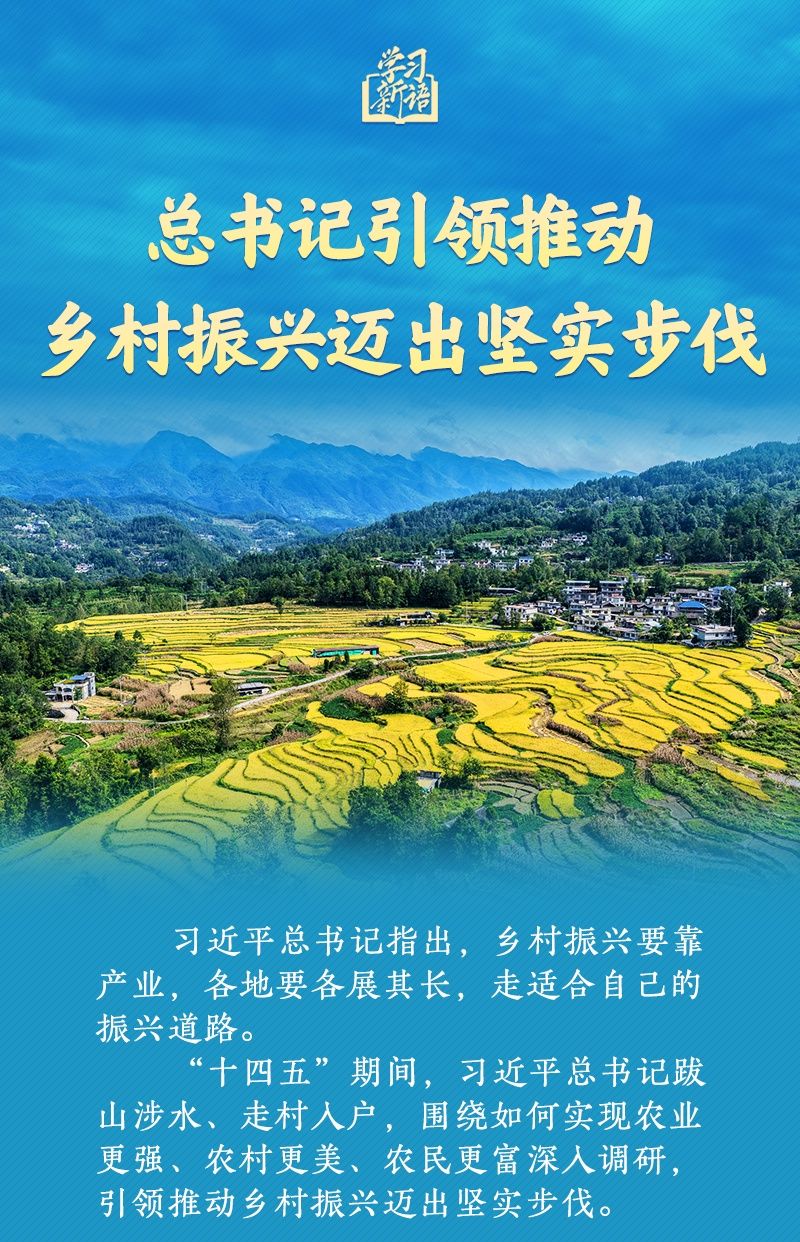
学习新语|总书记引领推动乡村振兴迈出坚实步伐
Xin Hua She· 2025-10-19 01:39
Group 1 - The core viewpoint emphasizes that rural revitalization relies on industry, with regions encouraged to develop their unique paths for revitalization [2][11][24] - Xi Jinping highlighted the importance of modern agriculture and the need for comprehensive development of the agricultural industry chain, including seed, planting, and market aspects [5][6][21] - The focus on tourism as a significant industry, with an emphasis on preserving local characteristics and cultural heritage to enhance rural tourism [8][9][34] Group 2 - The necessity for high-standard farmland construction and the promotion of moderate-scale operations to improve grain yield and quality [15][16] - The integration of ecological considerations into agricultural modernization, promoting organic products, rural tourism, and leisure agriculture [32][34] - The importance of developing characteristic industries as a vital approach to achieving rural revitalization, with a focus on local specialties and market demands [24][36][40]
中国粮食安全得到有效保障
Ren Min Ri Bao Hai Wai Ban· 2025-10-17 04:35
Core Insights - The article emphasizes the effective measures taken by Shandong Province and the National Development and Reform Commission to ensure the safe storage and efficient circulation of autumn grain during the critical harvest period [2][3][5]. Group 1: Grain Production and Supply - China's grain production has remained stable at over 1.3 trillion jin annually, with a projected increase to 1.4 trillion jin in 2024, resulting in a per capita grain availability of 500 kg, surpassing the international safety line of 400 kg [3][4]. - The average annual grain purchase volume exceeds 400 million tons, ensuring a robust supply chain and market stability [3][4]. Group 2: Grain Storage and Logistics - The total capacity of grain storage facilities has increased to over 730 million tons, with high-standard storage facilities growing annually, including a low-temperature storage capacity of 220 million tons [3][4]. - The efficiency of grain logistics has improved significantly, with the establishment of core logistics hubs and key nodes [3][4]. Group 3: Market and Policy Measures - Market-oriented grain purchases account for over 90% of total grain acquisitions, enhancing market fluidity and vitality [5][6]. - Policy measures are in place to protect farmers' interests, including the implementation of minimum purchase prices for certain crops and optimizing the grain purchasing process [5][6]. Group 4: Waste Reduction and Storage Improvement - Grain loss during storage, processing, and transportation has been reduced to approximately 2% of annual production, with specific loss rates for farmers and grain warehouses significantly lowered [7][8]. - The establishment of grain post-harvest service centers and the promotion of advanced storage technologies have contributed to more effective grain storage management [8].
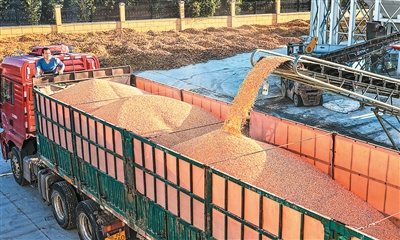
粮食安全宣传周活动启动
Liao Ning Ri Bao· 2025-10-17 01:05
Core Viewpoint - The theme of this year's provincial food security publicity week is "Food Conservation is Everyone's Responsibility," emphasizing the importance of food security amidst global supply chain challenges [1] Group 1: Food Security Initiatives - The event highlights the need for society to adopt the mindset that reducing waste is equivalent to increasing production, promoting a long-term mechanism for food conservation [1] - The province aims to showcase its active practices in maintaining national food security during the publicity week [1] Group 2: Public Awareness and Education - The activities are designed to deepen public understanding of the province's achievements in food production, food products, and food security assurance [1] - The initiative encourages individuals to consciously value and conserve food in their daily lives [1]
锐财经丨中国粮食安全得到有效保障
Ren Min Ri Bao Hai Wai Ban· 2025-10-17 00:46
Core Insights - The "14th Five-Year Plan" period has seen significant progress in grain circulation reform and development, effectively ensuring national food security and supporting high-quality economic and social development [1] Grain Production and Supply - National grain production has remained stable at over 1.3 trillion jin annually, with a projected increase to 1.4 trillion jin in 2024, resulting in a per capita grain availability of 500 kg, surpassing the international safety line of 400 kg [2] - The average annual grain procurement volume has exceeded 400 million tons, with grain stocks remaining ample and market prices stable [2] Infrastructure and Logistics - The construction of grain storage and logistics facilities has significantly improved, with national grain standard storage capacity exceeding 730 million tons, an increase of 58 million tons from the end of the 13th Five-Year Plan [2] - High-standard grain storage capacity has also increased, with low-temperature storage capacity reaching 220 million tons, up by 70 million tons [2] Industry Development - The total industrial output value of national grain enterprises is expected to exceed 4 trillion yuan in 2024, driven by the implementation of quality grain projects and technological innovation [3] - The grain emergency guarantee system has been strengthened, effectively responding to major emergencies [3] Market Dynamics - Market-oriented procurement has become the dominant method, accounting for over 90% of total grain procurement, enhancing market vitality [4] - Policy-based storage measures are being implemented to protect the interests of grain farmers, with timely execution of minimum purchase price policies [4] Efficiency and Loss Reduction - Grain loss during storage, processing, and transportation has been reduced to approximately 2% of annual production, with significant improvements in storage loss rates for both farmers and grain depots [7][8] - The introduction of comprehensive grain-saving policies and guidelines has further enhanced efficiency in the grain supply chain [7][8]
五年来,粮食年产量稳定在一点三万亿斤以上——中国粮食安全得到有效保障
Ren Min Ri Bao Hai Wai Ban· 2025-10-17 00:11
Core Insights - The "14th Five-Year Plan" period has seen significant progress in grain circulation reform and development, effectively ensuring national food security and supporting high-quality economic and social development [1] Group 1: Grain Production and Supply - National grain production has remained stable at over 1.3 trillion jin annually, with a projected increase to 1.4 trillion jin in 2024, resulting in a per capita grain availability of 500 kg, surpassing the international safety line of 400 kg [2] - The average annual grain procurement volume has exceeded 400 million tons, with grain stocks remaining ample and market prices stable [2] Group 2: Infrastructure and Logistics - The construction of grain storage and logistics facilities has significantly improved, with national grain standard storage capacity exceeding 730 million tons, an increase of 58 million tons from the end of the 13th Five-Year Plan [2] - High-standard grain storage capacity has also increased, with low-temperature storage capacity reaching 220 million tons, up by 70 million tons [2] Group 3: Industry Development - The total industrial output value of national grain enterprises is expected to exceed 4 trillion yuan in 2024, driven by the implementation of quality grain projects and technological innovation [3] - The grain emergency guarantee system has been further improved, demonstrating resilience in responding to major emergencies [3] Group 4: Market Dynamics - Market-oriented grain procurement has become the dominant method, accounting for over 90% of total procurement, enhancing market fluidity and vitality [4] - Policy-driven grain storage measures are in place to protect farmers' interests, with timely implementation of minimum purchase price policies for late rice [4] Group 5: Loss Reduction and Efficiency - Grain loss rates have significantly decreased, with average annual losses in storage, processing, and transportation around 2% of annual production [6][7] - The loss rate for household grain storage has dropped to 3%, a reduction of 5 percentage points from a decade ago, while warehouse loss rates are maintained below 1% [7] Group 6: Technological Advancements - The introduction of advanced storage technologies and services has improved grain storage management, transitioning towards high-quality development focused on preservation and quality assurance [8]
中国粮食安全得到有效保障(锐财经)
Ren Min Ri Bao Hai Wai Ban· 2025-10-16 23:02
Core Insights - The article emphasizes the effective measures taken by Shandong Province and the National Development and Reform Commission to ensure grain storage and supply during the autumn harvest season, highlighting the importance of modern drying and storage technologies [2][3]. Grain Production and Supply - China's grain production has remained stable at over 1.3 trillion jin annually, with a projected increase to 1.4 trillion jin in 2024, resulting in a per capita grain availability of 500 kg, surpassing the international safety line of 400 kg [3]. - The average annual grain purchase volume exceeds 400 million tons, ensuring a robust supply chain and stable market prices [3]. Infrastructure and Logistics - The total capacity of national grain storage facilities has increased to over 730 million tons, with high-standard storage facilities capable of low-temperature storage reaching 220 million tons [3][4]. - The efficiency of grain logistics has improved significantly, with the establishment of core hubs and key nodes in the grain circulation system [3][4]. Market Dynamics - Market-oriented grain purchases account for over 90% of total grain acquisitions, indicating a shift towards a more dynamic and responsive market environment [5]. - The government is focusing on enhancing market access for farmers and ensuring timely and efficient grain collection processes [5][6]. Loss Reduction and Efficiency - Recent efforts have led to a significant reduction in grain loss during storage, processing, and transportation, with annual losses averaging around 2% of total production [7]. - The loss rate for household grain storage has decreased to 3%, while warehouse storage loss rates are maintained below 1% [7][8]. Technological Advancements - The implementation of advanced storage technologies, such as airtight and thermal insulation improvements, is enhancing the quality and safety of grain storage [8]. - The establishment of grain post-harvest service centers is providing farmers with essential services, including drying and cleaning, to minimize losses [8].
强社会治理、守粮食安全,河南准备这么做
Zheng Zhou Ri Bao· 2025-10-16 01:03
Core Viewpoint - The implementation of the "Henan Provincial Social Governance Regulations" and the "Henan Provincial Food Security Guarantee Regulations" on December 1 aims to enhance governance efficiency and ensure food security in the province [1] Group 1: Social Governance Regulations - The "Henan Provincial Social Governance Regulations" consists of 9 chapters and 75 articles, covering public service guarantees, grassroots infrastructure, conflict resolution, and social security prevention, aiming to improve governance effectiveness at the grassroots level [2] - A dedicated chapter on "Basic Public Service Guarantee" outlines specific provisions for enhancing social service systems, social security systems, and public legal service systems, ensuring a more substantial sense of gain, happiness, and security for the populace [2] - The regulations emphasize grassroots governance, proposing a "Party Building + Grid + Big Data" governance model to strengthen grassroots party organizations and governance mechanisms [3] - The regulations detail measures for conflict resolution, social security prevention, and risk management, establishing a comprehensive social security prevention system [3] - A chapter on "Integrity Construction" focuses on building a social credit system and establishing mechanisms for joint incentives and penalties for trustworthiness [4] Group 2: Food Security Regulations - The "Henan Provincial Food Security Guarantee Regulations" consists of 10 chapters and 65 articles, establishing a comprehensive food security guarantee system covering production, storage, circulation, and industry development [5] - The regulations emphasize the importance of high-standard farmland construction and seed resource protection, including a compensation mechanism for major grain-producing counties to enhance their production motivation [5] - The regulations outline the management of food reserves, requiring the separation of reserve operations from commercial activities to improve management levels [6] - The regulations highlight Henan's role as a key grain production area, focusing on enhancing grain circulation through the establishment of trading platforms and logistics systems [7] - Specific provisions for food market stabilization and emergency response mechanisms are included to ensure effective management during crises [7]
中经评论:自觉行动实现“粮食节约人人有责”
Jing Ji Ri Bao· 2025-10-16 00:09
Core Viewpoint - The importance of food waste reduction is emphasized as a social responsibility, with a call for collective action to ensure food security and sustainability in China [1][3]. Group 1: Food Waste Issues - Food loss occurs at every stage from production to consumption, with significant waste observed in social events where excessive ordering and reluctance to take leftovers lead to food being discarded [2]. - Household food waste is often due to poor planning and over-purchasing, resulting in expired or spoiled food being thrown away [2]. Group 2: Food Security and Environmental Impact - China's grain production has reached over 1.4 trillion jin in 2024, achieving basic self-sufficiency, but the supply-demand balance remains tight, necessitating imports [3]. - Reducing food waste is crucial for sustainable resource management, as it alleviates pressure on land and water resources and contributes to ecological restoration [3][4]. Group 3: Agricultural Modernization and Technological Advancements - The "14th Five-Year Plan" focuses on modernizing agriculture and reducing food loss, with recent data indicating that annual losses in storage, processing, and transportation account for about 2% of total grain production [4]. - Technological advancements and improved practices in harvesting, storage, and logistics are essential for enhancing food resource utilization and building a sustainable food industry [4]. Group 4: Changing Consumption Habits - Promoting balanced and scientifically informed dietary habits is vital, encouraging consumers to plan purchases, store food properly, and manage portion sizes effectively [5]. - Restaurants are urged to take social responsibility by offering smaller portion options and encouraging customers to order appropriately, while regulatory bodies should strengthen laws and oversight to combat food waste [5].