
酒店业

Search documents
深度融合传统年味、非遗文化与时尚体验 中外游客共度海派中国年
Jie Fang Ri Bao· 2026-02-19 01:04
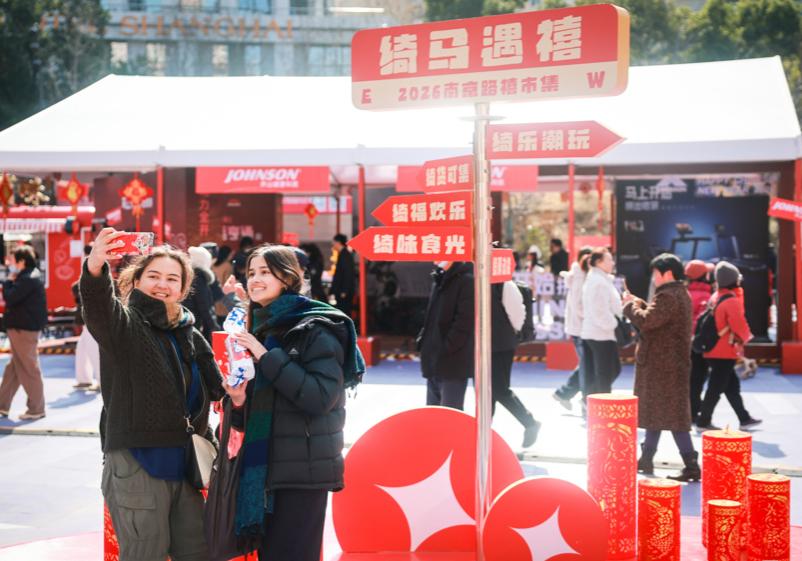
新春期间,和平饭店匠心推出"金鞍映福""银骏呈祥"两款马年主题套餐;浦东香格里拉大酒店将本地风味与 吉祥寓意巧妙结合;上海中心J酒店、凯宾斯基大酒店等则推出多档精致套餐,搭配川剧变脸、写福字等,营造热 闹的节日氛围。 为让节日更具文化底蕴与互动乐趣,非遗体验成为众多酒店新春活动的亮点,形式也愈发新颖,并与酒店自 身特色深度结合。东方滨江大酒店在大堂打造"一路生花、马到成功"艺术装置,还有非遗舞狮精彩亮相;西郊宾 馆、东郊宾馆推出财神送福、全家福拍摄、醒狮欢舞等年味活动。 记者 李宝花 农历马年正月初一,紧邻南京路步行街的扬子饭店大堂内年味正浓。大红的中国结、寓意金玉满堂的新春挂 件,以及随处可见的骏马造型装饰,将这座中西合璧的历史保护建筑装点得喜庆又温馨。今年春节,扬子饭店成 为连接国际游客与中国传统年俗的温馨驿站,春节假期海外住客占比高达35%。 南京路步行街世纪广场举办的"绮马遇禧2026南京路新春禧市集"热闹非凡。记者 海沙尔 摄 来自意大利的萨比诺·桑托列洛和妻子比阿特丽斯,正对着大堂内精美的骏马装饰拍照留念。"我们两个月前 刚结婚,特意选择来中国度蜜月。"酒店里的新春布置与街头浓浓的年味,给了比阿特 ...

多地接待游客人次同比两位数增长,部分机票价格跳水游客临时“捡漏”出行
Feng Huang Wang· 2026-02-18 01:13
Core Insights - The Spring Festival holiday has seen a significant increase in tourist traffic across multiple regions, with many areas reporting double-digit year-on-year growth in visitor numbers during the first two days of the holiday [1][2][4]. Group 1: Tourist Traffic Data - Hunan Province received 21.39 million visitors on the first day of the Spring Festival, with 6.68 million from outside the province, accounting for 31.24% of total visitors [2]. - On the second day, Hunan's visitor count rose to 22.71 million, with transaction volume reaching 37.23 million, a year-on-year increase of 16.98%, and transaction value at 8.80 billion, up 37.75% [2]. - In Hubei Province, A-level tourist attractions welcomed 1.26 million visitors on the first day, a 17.08% increase compared to 2025, with hotel occupancy rates averaging 48.22% [4]. - Hangzhou reported 1.32 million visitors on the first day and 1.16 million on the second day, marking a 12.86% increase year-on-year [4]. Group 2: Booking Trends and Visitor Behavior - Data from Nanjing indicated a 31.4% increase in visitor numbers on the first day compared to the previous year, with external visitors making up 53.8% of the total [6]. - The demand for tickets at popular destinations like Jiuzhaigou has surged, with tickets for February 18 and 19 already sold out as of February 17 [6]. - The trend of families traveling together has intensified, with many opting for second trips shortly after the New Year celebrations, leading to a 54% increase in hotel bookings on February 17 compared to the previous day [10][11]. - The price of flights has dropped significantly compared to pre-holiday peaks, making air travel more attractive, with some routes seeing prices cut by more than half [11]. Group 3: Seasonal Trends and Consumer Preferences - The search volume for "lantern festivals" has surged by 40%, indicating a strong interest in traditional celebrations during the holiday [12]. - Family-oriented travel remains a dominant trend, with over 50% of bookings attributed to parent-child trips [12]. - The unique timing of the holiday this year, with an early start, has led to a shift in travel patterns, with peak travel occurring earlier than in previous years [12].

洲际酒店集团三季度全球客房收入微增,股东回报计划超11亿美元
Jing Ji Guan Cha Wang· 2026-02-17 16:45
Core Insights - The InterContinental Hotels Group reported a 0.1% year-on-year increase in revenue per available room (RevPAR) for Q3 2025, with a total system size surpassing 1.011 million rooms, marking a historical high. The company anticipates that its annual profits and revenues will meet market expectations and plans to return over $1.1 billion to shareholders through share buybacks and dividends [1][5]. Performance Overview - Global RevPAR showed a slight increase of 0.1% in Q3, with a cumulative growth of 1.4% for the first three quarters. The EMEAA markets performed strongly with a RevPAR growth of 2.8% in Q3 and 3.8% for the first three quarters. The Americas market saw a decline of 0.9% in Q3 but still achieved a 0.8% growth for the first three quarters. The Greater China market experienced a 1.8% decline in Q3, an improvement from the 3.2% decline in the first half of the year [2]. Demand Structure Changes - Business travel demand increased by 4%, while leisure and group travel declined by 2% and 4% respectively, indicating a shift in short-term travel preferences [3]. Project Development - The company accelerated its system expansion, opening 14,500 new rooms (99 hotels) in Q3, a 17% year-on-year increase. The total number of rooms in the global system reached 1.011 million, covering 6,845 hotels. The company signed contracts for 22,600 new rooms (170 hotels), reflecting an 18% year-on-year growth. There are currently 342,000 rooms (2,316 hotels) under construction, representing 34% of the existing scale. The company plans to launch new high-end brands in the coming months to further enrich its product matrix [4]. Financial Movements - As of 2025, the company completed $700 million of its $900 million share buyback plan, reducing the number of shares by approximately 3.9%. It expects to return over $1.1 billion to shareholders through buybacks and dividends for the year [5]. Operational Status - For the first half of 2025, total revenue reached $2.519 billion, a year-on-year increase of 8%, while operating profit was $623 million, up 19% [6]. The adjusted free cash flow for the first half was $302 million, with net cash flow from operating activities at $312 million. In the Greater China region, the total number of opened and under-construction hotels exceeded 1,400, with the voco brand achieving its 100th hotel opening globally [7]. Strategic Outlook - CEO Keith Barr stated that the company's diversified global business model demonstrates resilience, with strong performance in the EMEAA markets and a clear improvement trend in the Greater China region. 2025 is expected to be one of the largest years for hotel openings and signings, and the company is confident in achieving its annual performance targets [8].

爱泼斯坦关联文件曝光,凯悦集团董事长退休
Xin Lang Cai Jing· 2026-02-17 15:57
Group 1 - The core point of the article is the resignation of Tom Pritzker as Executive Chairman of Hyatt Hotels Corporation following revelations of his ongoing contact with Jeffrey Epstein, and the appointment of Mark Hoplamazian as the new Chairman [1] - Hyatt Hotels Corporation's stock experienced a slight decline of 0.1% following the announcement [1]

纳指期货下跌 受AI支出焦虑及竞争担忧拖累
Xin Lang Cai Jing· 2026-02-17 10:19
Market Overview - US stock index futures declined amid light trading as investors returned from the Presidents' Day holiday, entering a week with reduced trading hours [1][7] - Concerns over ongoing AI spending and competitive pressures continue to weigh on the tech-heavy Nasdaq index, which saw futures drop by 0.7% [1][9] - European markets opened quietly, with most blue-chip indices rising, including the FTSE 100, which increased by 0.4% [2][8] Currency and Commodities - The US dollar rose to an 11-day high against a basket of currencies, supported by risk-averse capital flows as traders returned from the holiday [3][9] - Gold prices fell below $5,000 per ounce, with New York gold futures down by 2.2% to $4,937.40 [6][12] - Oil prices declined ahead of direct talks between the US and Iran, with Brent crude down by 0.9% to $68 per barrel [5][11] Economic Data and Expectations - Investors are awaiting key economic indicators, including the ADP employment data and inflation figures from the US and Japan, to be released later in the week [1][5] - The market anticipates the release of the Federal Reserve's meeting minutes and fourth-quarter economic growth data, which may provide insights into future interest rate cuts [3][9] Stock Performance - The Nasdaq index futures fell by 0.6% in pre-market trading, with most of the "Magnificent 7" tech stocks declining, except for Amazon, which rose by 0.2% [1][7] - The Nikkei index closed down 0.2%, marking its fourth consecutive day of decline, with SoftBank shares dropping by 5.1% [2][7]

花费上万元入住却遭服务人员无礼对待?上海浦东文华东方酒店回应
Xin Lang Cai Jing· 2026-02-17 01:51
Core Viewpoint - A recent incident involving a guest at the Mandarin Oriental Hotel in Shanghai highlights issues with customer service and management response, raising concerns about the hotel's commitment to guest satisfaction [1][2][3][4]. Group 1: Incident Details - A guest reported receiving rude treatment from a hotel manager during check-in, where the manager remained seated while the guest and their elderly mother stood waiting [1][3]. - The guest, who had just completed a long flight, requested the manager to stand, but the manager claimed to be in training and could not interrupt the session [1][3]. - After lodging a complaint, the guest was upgraded to a suite but faced further issues when the same manager argued with them during a meal without offering an apology [1][3]. Group 2: Compensation and Response - The hotel later offered an apology and a complimentary meal, but the guest was dissatisfied with the limit of 500 yuan per person on the meal, which they felt was not a genuine gesture of goodwill [1][2][4]. - The guest discovered that the meal's actual cost was significantly higher than the compensation offered, leading to further frustration [1][2]. - The hotel management's response to the complaint was perceived as unprofessional, with the guest expressing disbelief at the quality of the communication from the hotel’s senior management [2][4]. Group 3: Hotel's Market Position - The Mandarin Oriental Hotel in Shanghai ranks 19th among luxury hotels in the city, with room prices ranging from 1,745 yuan to 8,455 yuan [5].
希尔顿酒店发布2025年财报,营收利润超预期但2026年指引谨慎
Xin Lang Cai Jing· 2026-02-14 20:53
Core Viewpoint - Hilton Hotels reported a strong Q4 2025 performance with revenue growth of 11% year-over-year, reaching $3.09 billion, and an adjusted EPS of $2.08, exceeding market expectations. However, the company provided cautious guidance for 2026, anticipating adjusted EPS between $8.65 and $8.77, below the market forecast of $9.13, primarily due to a slowdown in U.S. travel demand [1][2]. Financial Performance - Q4 2025 revenue was $3.09 billion, an 11% increase year-over-year [1] - Full-year revenue for 2025 reached $12.039 billion, a 7.74% increase [1] - Net profit attributable to shareholders for 2025 was $1.457 billion [1] - RevPAR showed a slight increase of 0.5% in Q4, reversing a previous downward trend [1] Stock Performance - As of February 13, 2026, Hilton's stock closed at $314.62, down 2.34% on that day [1] - The stock had a cumulative increase of 0.08% over the past five trading days, with a price fluctuation of 7.19% [1] - Year-to-date, the stock price has risen by 9.53%, with a total market capitalization of approximately $72.14 billion [1] Analyst Ratings - In January 2026, multiple institutions updated their ratings, with Morgan Stanley raising its target price to $306 and Wells Fargo to $338, while the average target price among institutions is around $299 [2] - 46% of the ratings are "overweight," indicating a positive outlook for the stock [2] - Industry analysis suggests a slowdown in hotel supply growth in 2026, with potential recovery in occupancy rates in high-end cities, which may support RevPAR growth [2]
【米兰冬奥会】冰雪连心,华侨华人与冬奥“双向奔赴”
Zhong Guo Xin Wen Wang· 2026-02-14 08:51
Group 1 - The core focus of the article is on the significance of the Parma Hotel in Milan during the Winter Olympics, highlighting its popularity among media reporters due to its proximity to the main media center [2] - The article describes the vibrant Chinese community in Milan, showcasing a mix of traditional and modern businesses, including Chinese medicine shops, supermarkets, nail salons, and bubble tea shops [2] - The presence of a Chinese ambulance donated by the Meiqi Foundation during the Winter Olympics is emphasized as a symbol of the Chinese community's integration and social responsibility in Italy [2] Group 2 - The article mentions the historical significance of the Peace Gate, a landmark in Milan, which serves as a backdrop for the Olympic torch during the Winter Games [2] - The narrative illustrates the emotional connection of the Chinese community to the Winter Olympics, portraying their participation as a blend of cultural heritage and contemporary events [2]

新酒店 | 在松赞昆明林卡,走进喜马拉雅文化的会客厅
Xin Lang Cai Jing· 2026-02-14 07:23
智通财经记者 | 张瑶 智通财经编辑 | 汤威 2月10日,松赞昆明林卡正式开启试营业,一座承载喜马拉雅文化精神的城市会客空间,在春城昆明徐 徐启幕。 不久前,松赞凭借其深耕茶马古道沿线构建的酒店与旅行体系,与云南共同入选《纽约时报》2026年度 全球推荐旅行目的地。作为茶马古道历史上重要的交通与商贸枢纽,昆明曾是南来北往马帮汇聚、休整 与交易的重要节点,也见证着多元文化的交流与融合。 正因为昆明在茶马古道的历史中肩负着联结与汇聚的使命,松赞早已将松赞昆明林卡视为版图上至关重 要的一块拼图。松赞期待以此为新的文化窗口,让旅人在城市中驻足,深入感知喜马拉雅文明的流动与 交融。 喜马拉雅文化会客厅 松赞昆明林卡,总体建筑面积约2.2万平方米,是松赞目前规模最大的一家酒店及综合体,集酒店、餐 饮、文化、展览与疗愈等空间于一体,也拥有会务设施和商业空间。 区别于松赞过往多隐匿于群山褶皱之间的山居形态,昆明林卡以城市为语境进行一次空间革新。设计团 队通过堆叠、错落的建筑结构语言,在城市中重新构建自然意境,探索人与自然关系在当代都市中的再 表达。酒店整体规划源自中国传统山水哲学,以"山水相依"为理念,内部以象征"山"的建 ...

“史上最长春节假期”催生旅游需求增长,酒店如何接住这波流量?
Guan Cha Zhe Wang· 2026-02-14 06:24
Group 1: Tourism Demand and Growth - The upcoming "longest Spring Festival holiday" is expected to trigger a surge in tourism demand, with daily inbound and outbound travelers projected to exceed 2.05 million, a year-on-year increase of 14.1% [1] - Popular warm destinations like Sanya and Xishuangbanna have seen a 56% increase in inquiries compared to last year, while northern snow cities have experienced a 21% increase [1] - As of February 13, 2026, there are 2.3598 million existing tourism-related enterprises in China, with 320,000 new registrations in 2025, and 30,300 new registrations in the first two months of this year [1] Group 2: Cultural Tourism and Non-Material Heritage - There is a growing interest in traditional tourism features with local cultural significance, such as Fujian's Bench Dragon and Chaozhou's Yingge Dance, leading to increased registrations of non-material heritage-related enterprises [1] - By February 12, 2026, there are 185,400 existing non-material heritage-related enterprises, with 48,000 new registrations in 2025, marking a 21.1% year-on-year increase and the highest registration volume in nearly a decade [2] Group 3: Hotel Industry Adaptations - Established hotel companies are enhancing their products, services, and digital capabilities to attract more travelers during the holiday [2] - The Andaz Hotel in Shanghai integrates local cultural features with modern design, while the Shangri-La Hotel in Kunming combines luxury with Yunnan tea culture [2] - Atour Hotel launched a new brand line "Jianye" that incorporates natural elements into the hotel environment, aiming to blend business and vacation needs [2] Group 4: AI Integration in Hospitality - The hotel industry is increasingly adopting AI technology to improve operational efficiency, with 54.3% of industry professionals using AI tools in their daily work [2] - Wyndham Hotels has implemented smart systems in its operations in China, enabling self-check-in and reducing front desk labor, while also lowering energy consumption and operational costs [3] - Wyndham's Chief Commercial Officer emphasized the use of scalable technology platforms to assist owners in implementing AI, translating innovation into revenue growth and efficient operations [3]
