
核能

Search documents
坚持和平利用核能——俄罗斯隆重纪念核工业成立80周年
Ke Ji Ri Bao· 2025-09-27 23:29
Core Insights - The event "World Nuclear Week" coincides with the 80th anniversary of Russia's nuclear industry and the annual Nuclear Industry Workers' Day on September 28 [1] - The forum's theme is "From New Technological Order to New Worldview," highlighting the evolution and future of nuclear technology [1] Group 1: Historical Context and Achievements - The Russian nuclear industry originated during World War II, with the Soviet Union deciding to develop nuclear energy on September 28, 1942, amidst the Stalingrad battle [2] - The establishment of the "Special Committee for the Utilization of Atomic Energy" on August 20, 1945, marks the beginning of Russia's nuclear industry [2] - Significant milestones include the world's first nuclear power plant, the Obninsk Nuclear Power Plant (1954), and the first nuclear-powered icebreaker, Lenin (1957) [2] Group 2: Current Developments and Innovations - The President of the Russian State Atomic Energy Corporation, Likhachev, presented advancements in small nuclear power generation and closed-loop nuclear systems at the forum [2] - The corporation is also involved in various sectors, including medicine, aerospace, quantum computing, and non-energy applications of nuclear technology in agriculture [2] Group 3: Nuclear Safety and Global Cooperation - President Putin emphasized the importance of nuclear safety and the physical protection of nuclear facilities, advocating for enhanced security measures across all stages of the nuclear cycle [3] - The public perception of nuclear energy is shifting towards viewing it as an environmentally friendly technology with significant opportunities [3] Group 4: Future Outlook and Global Trends - According to the International Atomic Energy Agency, global nuclear power capacity could increase by over 2.5 times to nearly 1000 gigawatts by mid-century [4] - The demand for peaceful nuclear energy is expected to be driven primarily by countries in the "Global South" and Eastern nations [4] - Russia aims to maintain its leadership in the nuclear sector by adhering to contract obligations and promoting the development of independent national nuclear industries among its partners [4]
250亿美元核电大单,俄伊签了
Zhong Guo Ji Jin Bao· 2025-09-27 01:39
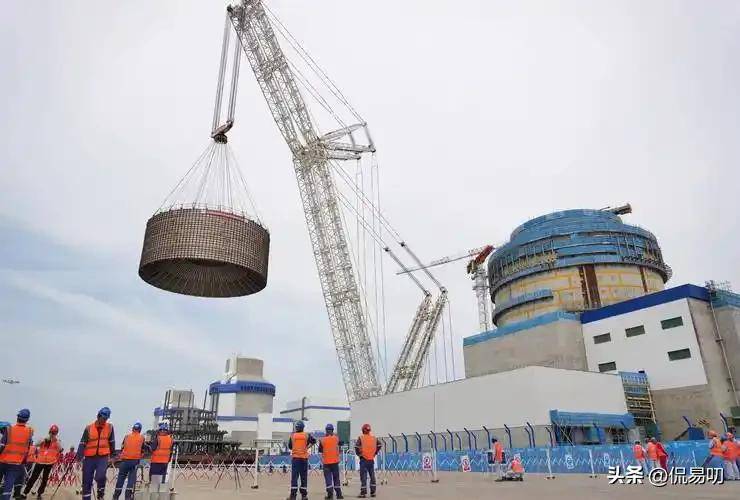
签约仪式在莫斯科"世界原子能周"伊朗展馆举行,伊朗霍尔木兹公司代表伊朗原子能组织与俄罗斯国家 原子能公司签署协议。 据报道,协议金额约250亿美元,该项目是伊朗规模最大的核能工程之一,占地面积约500公顷,4个机 组总装机容量约5020兆瓦。目前已完成选址,工程设计、环境评估及前期场地准备工作正在推进。 伊朗副总统兼伊朗原子能组织主席伊斯拉米22日率团抵达莫斯科,与俄方官员会晤并出席25日至28日在 莫斯科举行的"世界原子能周"国际论坛。 大消息!超级赛道,利好来了 (原标题:250亿美元核电大单,俄伊签了) 来源:新华社 伊朗与俄罗斯签署大型核电合作协议 据伊朗官方通讯社26日报道,伊朗与俄罗斯当天在莫斯科签署一项大型核电合作协议,双方将在伊朗霍 尔木兹甘省锡里克地区合作建设第三代核电站。 ...
What's Driving NuScale Stock 250% Rally?
Forbes· 2025-09-26 10:40
Core Insights - NuScale Power Corporation has experienced a stock price surge of approximately 200% over the past year, significantly outperforming the S&P 500's 16% increase, indicating growing investor confidence in the company within the nuclear energy sector driven by rising electricity demands and global electrification trends [2][3] Company Overview - NuScale is a leader in small modular reactors (SMRs), offering factory-manufactured, safer alternatives to traditional nuclear power plants, and holds the only U.S. Nuclear Regulatory Commission (NRC)-certified SMR design, benefiting from strategic support from its majority owner, Fluor Corporation [3] - The company's stock momentum is supported by regulatory achievements, project advancements, and favorable macroeconomic conditions [3] Market Dynamics - Electricity demand in the U.S. is increasing due to data centers and electric vehicles, with nuclear energy being recognized as a reliable, carbon-free alternative to fossil fuels [5] - NuScale is set to deliver six SMRs to Romania's RoPower, establishing a 462-megawatt nuclear facility, with significant regulatory progress marked by obtaining NRC Standard Design Approval for its upgraded SMR design in Q2 2025 [5] Strategic Developments - A historic agreement with the Tennessee Valley Authority (TVA) in August 2025 marks the largest SMR power commitment in U.S. history, positioning NuScale as a key supplier for domestic nuclear infrastructure [6] - Bipartisan support for nuclear energy and executive orders aimed at revitalizing the sector have further solidified NuScale's position, especially as energy needs grow to support AI and advanced technologies [6] Financial Performance - In Q2 2025, NuScale reported revenue of $8.1 million, a significant increase from $1.0 million the previous year, reflecting progress in early-stage commercialization efforts [7] - The company recorded a net loss of $0.13 per share, slightly larger than the $0.12 predicted by analysts, while maintaining strong cash reserves of $489.9 million as of June 30, 2025, providing a buffer for operations and strategic initiatives [8]


美国对俄铀禁令失效?能源部长承认:核电站还得靠俄燃料
Sou Hu Cai Jing· 2025-09-26 06:56
Group 1 - The U.S. government issued a ban on the use of Russian enriched uranium by 2028, revealing a significant dependency on Russian supplies, with about 25% of U.S. nuclear fuel sourced from Russia [1] - Russia holds a dominant position in the global uranium enrichment market, controlling 80%-90% of the market share, and 22 out of 25 nuclear power plants under construction worldwide utilize Russian technology [1] - The U.S. faces a potential 5% power supply disruption if the ban is enforced, as establishing alternative supply chains would require billions of dollars in investment [1][3] Group 2 - The U.S. has only two commercial uranium enrichment facilities, with one meeting only 15% of domestic demand, highlighting the challenges in increasing domestic production [1][3] - The U.S. strategic uranium reserve, initiated in 2020, is projected to last only 14 months, compared to the EU's 2.5 years and China's 12 years [3] - Efforts to collaborate with allies like Canada and Australia to restructure the supply chain face local resistance and resource shortages [5] Group 3 - China has made significant advancements in uranium resources, with a major discovery in the Tarim Basin expected to increase self-sufficiency from 30% to 70% within three years [7] - Russia employs a strategy of bundling technology and resources, exporting nuclear power plants with fuel supply agreements, which enhances its competitive edge [8] - The energy landscape is shifting towards multipolarity, with China's resource breakthroughs and the U.S.-Russia technological rivalry indicating a departure from energy hegemony [8]
土耳其与美国签了!
中国能源报· 2025-09-26 03:48
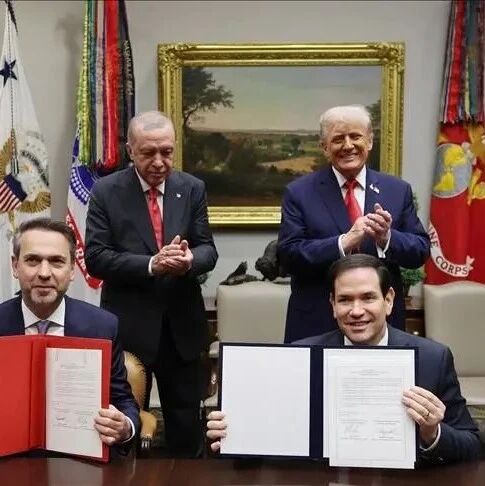
欢迎分享给你的朋友! 出品 | 中国能源报(c n e n e rg y) 编辑丨闫志强 框架下的合作为两国带来长期互利成果。 深化多层次合作,土美签署战略民用核能合作备忘录。 当地时间9月25日,土耳其能源与自然资源部长拜拉克塔尔表示,土耳其与美国已签署 《战略民用核能合作谅解备忘录》,以深化两国在核能领域的多层次合作。 拜拉克塔尔在社交平台发文称,备忘录由他与美国国务卿鲁比奥在总统埃尔多安访问白宫 期间代表双方签署,内容涉及科研、投资、技术交流等多个方面。他表示,期待双方在此 来源:央视新闻客户端 End ...
深化多层次合作 土美签署战略民用核能合作备忘录
Yang Shi Xin Wen Ke Hu Duan· 2025-09-25 23:09
责编:张青津、卢思宇 拜拉克塔尔在社交平台发文称,备忘录由他与美国国务卿鲁比奥在总统埃尔多安访问白宫期间代表双方 签署,内容涉及科研、投资、技术交流等多个方面。他表示,期待双方在此框架下的合作为两国带来长 期互利成果。(总台记者 陈慧慧) 当地时间9月25日,土耳其能源与自然资源部长拜拉克塔尔表示,土耳其与美国已签署《战略民用核能 合作谅解备忘录》,以深化两国在核能领域的多层次合作。 ...
伊朗副总统:伊方没有放弃核计划的打算
Yang Shi Xin Wen· 2025-09-25 16:36
Core Points - Iran's nuclear program is described as completely transparent, with no intention of abandoning it [1] - Iran and Russia are set to jointly construct new large and small nuclear power plants as per existing agreements [1] - Russia's state atomic energy corporation is expanding cooperation with Iran in the peaceful use of nuclear energy, continuing the construction of the Bushehr nuclear power plant's second and third units [1]
美国对俄罗斯下禁令,自己却先犯了难!能源部长一句话道出了关键
Sou Hu Cai Jing· 2025-09-25 09:23
Core Viewpoint - The United States faces a paradoxical situation where, despite imposing sanctions on Russia, it remains dependent on Russian uranium for its nuclear power generation, highlighting the complexities of energy security and supply chains in the context of geopolitical tensions [1][3][10]. Group 1: U.S. Energy Policy and Dependency - The U.S. Energy Secretary acknowledged the difficulty of completely eliminating reliance on Russian uranium, stating that efforts are ongoing but not yet successful [12][16]. - Approximately 25% of the total electricity generated by U.S. nuclear power plants relies on enriched uranium imported from Russia [10]. - The U.S. has mandated that public utility companies cease using Russian uranium by 2028, but this has led to retaliatory export restrictions from Russia, complicating the transition [10][19]. Group 2: Global Uranium Market Dynamics - Russia dominates the uranium enrichment market, controlling 85% to 90% of the global supply, making it a critical player in the nuclear energy sector [7][8]. - There are currently 25 nuclear reactors under construction worldwide, with 22 utilizing Russian technology, indicating a significant reliance on Russian expertise [7]. - The global demand for uranium is projected to increase by 28% from 2023 to 2030, driven by the rise of electric vehicles, data centers, and the renewed focus on nuclear energy as a stable and clean power source [14]. Group 3: Implications for Energy Security - The situation underscores the importance of resource control and technological capability in the energy sector, where geopolitical maneuvers may not easily alter existing dependencies [17][19]. - The U.S. is caught in a dilemma where its sanctions against Russia conflict with its immediate energy needs, raising questions about the feasibility of achieving energy independence from Russian uranium [16][19].
铀:正在形成的核能瓶颈与地缘政治压力点?
Hua Er Jie Jian Wen· 2025-09-25 02:53
全球铀市场正经历一个关键转折点,供应削减、需求飙升和地缘政治紧张共同作用,可能使其成为核能 发展的瓶颈和地缘政治压力点。 据追风交易台消息,摩根大通9月23日的最新报告揭示了一个日益紧张的市场现实:一边是核能复兴和 AI革命带来的爆炸性需求,另一边却是主要生产商的减产和地缘政治引发的供应瓶颈。 今年以来,铀的现货和期货价格已上涨约5%。价格上涨的背后,是全球主要生产商如Kazatomprom和 Cameco纷纷削减产量,而中国迅猛的核电建设与AI数据中心带来的巨大电力需求,正推动需求强劲增 长。 深层次的风险潜藏在核燃料供应链和地缘政治的风险中。报告强调,西方国家在铀浓缩服务方面严重依 赖俄罗斯,而美国旨在摆脱这种依赖的法案可能在2028年后造成严重的供应短缺。 供应缺口扩大,价格获强力支撑 此外,一个全新的需求驱动因素正在出现:人工智能和数据中心。这些高耗能产业正推动科技巨头转向 核能。报告提到,Meta已与星座能源公司(Constellation)签订了一份为期20年的虚拟电力购买协议 (PPA),而亚马逊则从Talon Energy锁定了近2吉瓦的核电供应,为其AWS数据中心供电。 "去俄化"与地缘政治 ...
核聚变指数盘中涨超2%,成分股表现活跃
Mei Ri Jing Ji Xin Wen· 2025-09-25 01:46
Group 1 - The nuclear fusion index rose over 2% during intraday trading, indicating strong market interest in the sector [1] - Notable performers among the constituent stocks included Hezhong Intelligent, which hit the daily limit, and Hahai Huaton, which increased by 9.65% [1] - Other significant gainers included Baili Electric, up 7.26%, Zhongzhou Special Materials, up 7.00%, and Tianli Composite, which rose by 4.17% [1]

