
小型模块化反应堆(SMRs)

Search documents
特朗普的“核电梦”,很多人不看好
Hua Er Jie Jian Wen· 2026-01-08 06:53
Core Viewpoint - The Trump administration is pursuing an aggressive nuclear energy expansion plan to ensure the U.S. maintains a competitive edge in the artificial intelligence (AI) race, despite facing skepticism regarding the feasibility of its ambitious goals [1] Group 1: Nuclear Energy Expansion Plans - The administration aims to quadruple the nation's nuclear power capacity by 2050, but faces challenges such as high construction costs, regulatory hurdles, and financial risks perceived by the private sector [1] - A partnership worth $80 billion has been signed with Brookfield and Westinghouse to build eight large nuclear power plants, alongside efforts to restart several decommissioned plants with billions in loans [1][2] Group 2: Market Response and Economic Viability - Major tech companies like Microsoft, Google, and Amazon have shown initial support by signing long-term power purchase agreements or investing in small modular reactors (SMRs) [2] - However, experts warn that the fundamental economic logic of nuclear power remains unchanged, with costs still higher than other energy sources, leading to concerns about the sustainability of the nuclear revival [2] Group 3: Historical Context and Cost Concerns - Historical data indicates that achieving the proposed capacity increase would require an annual addition of 15 gigawatts (GW) starting in 2030, surpassing previous records [3] - The Vogtle plant's construction delays and cost overruns serve as a cautionary tale, with costs reaching $15,000 per kilowatt, significantly higher than international benchmarks [3] Group 4: Financing and Government Involvement - To address financing challenges, the government is introducing new partnership models, including a deal with Brookfield that involves significant investment from the Japanese government [4] - Analysts question whether data center operators will be willing to underwrite these costly investments without government guarantees, especially amid rising public concern over electricity affordability [4] Group 5: Small Modular Reactors (SMRs) and Regulatory Challenges - The administration is also focusing on SMRs to lower initial capital requirements, with several startups receiving substantial venture capital [5] - However, no SMR has yet received operational approval from the U.S. Nuclear Regulatory Commission (NRC), complicating the rollout of this technology [5] Group 6: Regulatory Environment and Future Outlook - The push to relax regulations has sparked internal backlash within regulatory bodies, with former NRC officials expressing concerns about increased accident risks [6] - Despite ongoing skepticism, some experts believe that current government subsidies and rising energy demands create a unique financing environment for nuclear energy, differing from past attempts at nuclear revival [6]
特朗普要砸800亿美元,重启成本飙升的“AP1000”大型核电项目,日本“买单”
Hua Er Jie Jian Wen· 2025-11-25 00:26
Core Insights - The U.S. government plans to invest $80 billion to revive the domestic nuclear power industry in response to the surging electricity demand driven by the artificial intelligence (AI) sector [1] - The initiative will focus on constructing eight AP1000 reactors in collaboration with Westinghouse Electric and its owners, Brookfield Asset Management and Cameco, marking a significant shift in U.S. nuclear policy [1][3] - Japan is backing this investment with a commitment of up to $550 billion for critical infrastructure, allowing the U.S. government to profit from the project [2] Investment and Financial Structure - The U.S. government will share in the profits from Westinghouse Electric, receiving 20% of any earnings exceeding $17.5 billion [2] - The investment structure aims to leverage external capital for domestic infrastructure, benefiting both U.S. industries and Japanese manufacturing [4] Market Dynamics and Demand - The increasing electricity demand due to AI has made power shortages a critical bottleneck for development, prompting a renewed focus on large-scale reactors [3] - Analysts suggest that large reactors are more suitable for current market needs compared to small modular reactors (SMRs) [3] Challenges and Execution Risks - The plan faces significant execution risks, as evidenced by the costly and delayed Vogtle nuclear project, which exceeded its budget by over $30 billion [2][6] - The goal is to keep the overnight cost of each reactor below $10 billion, addressing the industry's historical issues of cost overruns and delays [6] Technical and Operational Considerations - Westinghouse Electric claims that the AP1000 technology is now free from technical, licensing, fuel supply, or regulatory risks, with the primary concern being project execution [6] - The strategy involves standardization and simplification to minimize risks, focusing on repetitive processes [6] Future Outlook and Uncertainties - While the vision is ambitious, there are uncertainties regarding site selection, participating companies, timelines, and workforce availability [7] - The U.S. government aims to signal strong demand for orders, which is crucial for building confidence and reducing costs in the nuclear sector [7]
OKLO Stock To $75?
Forbes· 2025-10-14 11:05
Core Insights - Oklo Inc. has seen its stock price surge over seven times in 2025, currently trading at approximately $168, driven by investor speculation on nuclear energy's role in powering AI data centers and the transition to clean energy [2][3] - The company is still pre-revenue, with potential revenue generation projected at $5 billion annually by 2028 based on 14 GW of customer interest, but this is contingent on successful project execution [4][5] Valuation Concerns - Oklo's market capitalization stands at about $25 billion despite not having produced or sold any reactors, a valuation typically associated with established companies [5] - The current share price implies a valuation nearly five times the potential sales for 2028, raising concerns about overvaluation if execution falters [6][10] Industry Challenges - The nuclear energy sector, particularly for small modular reactors (SMRs), is characterized by complex and lengthy processes, including regulatory approvals and capital-intensive construction [8][9] - Oklo's reactor design is pending full approval from the U.S. Nuclear Regulatory Commission, which could delay commercialization significantly [7][10] Execution Risks - Transitioning from engineering concepts to commercial deployment involves significant technical and operational challenges, including potential cost overruns and supply chain issues [13] - The company faces substantial capital requirements for development and construction, which may necessitate share dilution [7][10] Investment Perspective - Oklo represents a high-risk, high-reward investment opportunity in clean energy, appealing to long-term investors with a tolerance for volatility [11] - The current valuation may reflect excessive optimism, suggesting that a price correction could occur if timelines extend or investor enthusiasm diminishes [10][11]



从微弱信号到系统变革:2025年十大新兴技术
机器人圈· 2025-09-30 09:36
Group 1 - The report emphasizes the importance of emerging technologies in addressing global challenges and shaping a sustainable future, highlighting the need for a comprehensive ecosystem for their maturity and application [1][3][36] - The report identifies ten emerging technologies for 2025, which are expected to drive significant transformations across various sectors [2][5][36] - The selection process for the emerging technologies involved expert recommendations, AI analysis, evaluation of technological maturity, and macro-strategic considerations [4] Group 2 - Structural battery composites (SBCs) integrate energy storage and structural functions, potentially revolutionizing applications in electric vehicles and aerospace [5][6][7] - Osmotic power systems utilize salinity differences to generate energy, offering a stable and low-impact renewable energy source [8][9][10] - Advanced nuclear technologies are evolving to meet increasing energy demands while supporting decarbonization efforts, with significant investments in small modular reactors (SMRs) [11][12][13] Group 3 - Engineered living therapeutics aim to produce therapeutic substances within the body, potentially overcoming traditional drug production challenges [14][15] - GLP-1 receptor agonists, initially developed for diabetes, are being explored for their neuroprotective properties in treating neurodegenerative diseases [16][17] - Autonomous biochemical sensors enable real-time monitoring of biochemical parameters, enhancing health management and environmental monitoring [18][19][20] Group 4 - Green nitrogen fixation technologies aim to reduce the carbon footprint of ammonia production, crucial for global food supply [22][23][24] - Nanozymes, synthetic materials with enzyme-like properties, are gaining attention for their potential applications in healthcare and environmental solutions [25][26][27] - Collaborative sensing technologies enhance decision-making in connected systems, with applications in urban traffic management and environmental monitoring [28][29][30] Group 5 - Generative watermarking technologies are being developed to verify the authenticity of AI-generated content, addressing concerns over misinformation and intellectual property [31][32][33] - The report highlights the need for robust governance and guidelines to ensure the effective implementation of emerging technologies [34][35]

What's Driving NuScale Stock 250% Rally?
Forbes· 2025-09-26 10:40
Core Insights - NuScale Power Corporation has experienced a stock price surge of approximately 200% over the past year, significantly outperforming the S&P 500's 16% increase, indicating growing investor confidence in the company within the nuclear energy sector driven by rising electricity demands and global electrification trends [2][3] Company Overview - NuScale is a leader in small modular reactors (SMRs), offering factory-manufactured, safer alternatives to traditional nuclear power plants, and holds the only U.S. Nuclear Regulatory Commission (NRC)-certified SMR design, benefiting from strategic support from its majority owner, Fluor Corporation [3] - The company's stock momentum is supported by regulatory achievements, project advancements, and favorable macroeconomic conditions [3] Market Dynamics - Electricity demand in the U.S. is increasing due to data centers and electric vehicles, with nuclear energy being recognized as a reliable, carbon-free alternative to fossil fuels [5] - NuScale is set to deliver six SMRs to Romania's RoPower, establishing a 462-megawatt nuclear facility, with significant regulatory progress marked by obtaining NRC Standard Design Approval for its upgraded SMR design in Q2 2025 [5] Strategic Developments - A historic agreement with the Tennessee Valley Authority (TVA) in August 2025 marks the largest SMR power commitment in U.S. history, positioning NuScale as a key supplier for domestic nuclear infrastructure [6] - Bipartisan support for nuclear energy and executive orders aimed at revitalizing the sector have further solidified NuScale's position, especially as energy needs grow to support AI and advanced technologies [6] Financial Performance - In Q2 2025, NuScale reported revenue of $8.1 million, a significant increase from $1.0 million the previous year, reflecting progress in early-stage commercialization efforts [7] - The company recorded a net loss of $0.13 per share, slightly larger than the $0.12 predicted by analysts, while maintaining strong cash reserves of $489.9 million as of June 30, 2025, providing a buffer for operations and strategic initiatives [8]


Here's What Separates Oklo From the Rest of the Nuclear Startups
MarketBeat· 2025-09-05 12:02
Core Viewpoint - The energy sector has faced challenges this year, but nuclear energy has emerged as a strong performer, driven by increasing energy demand from AI data centers and bipartisan support for nuclear power [1] Group 1: Company Performance - Cameco, the largest publicly traded uranium miner, has seen its stock rise nearly 45% this year [1] - NuScale, a producer of small modular reactors (SMRs), has experienced over a 110% increase in stock value [1] - Oklo, a newcomer in the nuclear sector, has had an impressive stock appreciation of 237% since the beginning of the year [2] Group 2: Regulatory and Operational Aspects - Oklo is expected to remain pre-revenue until late 2027 or early 2028 when its commercial Aurora reactor is projected to go online [2][3] - The company faces potential delays due to the combined license application and Nuclear Regulatory Commission review process [3] Group 3: Key Personnel and Institutional Support - Sam Altman, known for his role as CEO of OpenAI, is a significant figure associated with Oklo, having been involved since his time at Y Combinator [4][6] - Oklo has 85.03% institutional ownership, with institutional buyers significantly outnumbering sellers over the past year, resulting in $840.54 million in inflows [8] Group 4: Business Model and Client Agreements - Oklo plans to enter long-term Power Purchase Agreements (PPAs) rather than selling its SMRs directly to clients [9] - The company has secured a PPA with Switch for 12 GW of Aurora energy through 2044, marking one of the largest corporate clean energy deals [10] - Additional agreements include a non-binding agreement with Equinix for 500 MW and a letter of intent from Wyoming Hyperscale for 11 MW [11] Group 5: Strategic Partnerships and Future Prospects - Oklo has launched a partnership with Liberty Energy to accelerate integrated power solutions for high-demand customers [12] - The company has agreements in its pipeline for 14 GW of energy, sufficient to power between 10.5 million and 14 million homes [12]
大摩:美国核能复兴已经到来,接下来会发生什么?
美股IPO· 2025-08-18 15:15
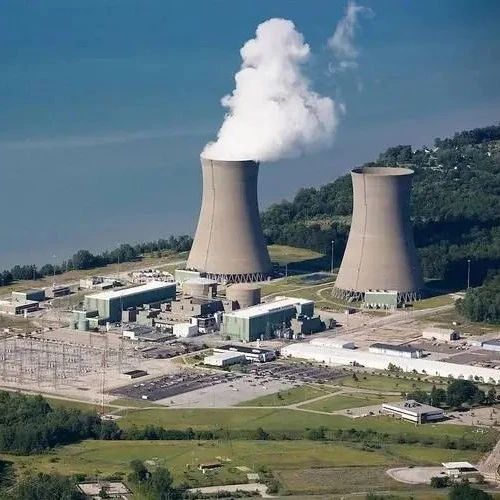
Core Viewpoint - The revival of nuclear energy in the U.S. is driven by both policy support and market demand, indicating a significant shift in the energy landscape [4][5]. Group 1: Challenges and Opportunities in Nuclear Energy - Large new nuclear projects face challenges such as long construction periods and cost overruns, which have hindered capacity growth in the past [3][6]. - The rapid advancement of nuclear unit life extension and restart projects, along with the promising development of Small Modular Reactors (SMRs), is seen as a key direction to overcome growth bottlenecks [3][6][7]. - SMRs offer advantages like shorter construction times and lower initial costs, making them suitable for diverse and decentralized power needs [6][7]. Group 2: Policy and Market Drivers - U.S. federal and state governments are increasing support for nuclear energy through tax incentives, subsidies, and streamlined approval processes, providing certainty for the industry [5][6]. - The growing demand for stable, efficient, and low-carbon power from data centers, driven by the rise of AI and cloud computing, is creating new growth opportunities for nuclear energy [5][6]. Group 3: Capacity Expansion and Technological Innovation - By 2050, U.S. nuclear capacity is projected to reach 150 GW, significantly higher than current levels, driven by new projects, life extensions, and the scaling of SMRs [7]. - The U.S. is exploring diverse nuclear energy pathways, including the commercialization of SMRs and advancements in fourth-generation nuclear technology and nuclear fusion [7]. - The entry of major tech companies into nuclear fusion research indicates strong capital expectations for breakthroughs in nuclear technology, which could accelerate growth in the sector [7]. Group 4: Cost Advantages of Nuclear Energy - While natural gas plants have shorter construction times and lower initial costs, they are heavily impacted by fuel price volatility and have higher carbon emissions compared to nuclear energy [8]. - Once initial investments are recouped, nuclear energy has low marginal generation costs and stable fuel costs, highlighting its cost advantages and low-carbon attributes over the lifecycle [8].
美国核能复兴已经到来,接下来会发生什么?
Hua Er Jie Jian Wen· 2025-08-18 13:09
Core Insights - The revival of nuclear energy in the U.S. is becoming clearer, reshaping the energy structure and potentially restructuring the global nuclear industry chain [1][2] - The growth in nuclear capacity is expected to reach 150 GW by 2050, driven by policy support, market demand, and technological advancements [4] Group 1: Policy and Market Drivers - The revival of U.S. nuclear energy is supported by federal and state government policies, including tax incentives, subsidies, and streamlined approval processes [2] - The increasing demand for stable, efficient, and low-carbon energy from data centers, driven by the growth of AI and cloud computing, is creating new opportunities for nuclear energy [2] Group 2: Challenges in Large Projects - Large nuclear projects face challenges such as long construction periods and cost overruns, often taking over 10 years to complete [3] - Despite these challenges, there is rapid progress in extending the life of existing nuclear units and restarting projects, with small modular reactors (SMRs) seen as a key solution to growth bottlenecks [3] Group 3: Capacity Expansion and Technological Innovation - The projected increase in nuclear capacity to 150 GW by 2050 will rely on the longevity of existing units, the scaling of SMRs, and efficiency improvements from technological advancements [4] - The exploration of diverse nuclear energy paths, including fourth-generation nuclear technology and nuclear fusion, indicates a strong interest in technological breakthroughs [4] Group 4: Cost Comparison with Natural Gas - Nuclear energy has a low marginal cost of electricity generation once initial investments are recovered, with fuel costs being a small portion of total operating costs [5] - In contrast, natural gas plants have shorter construction cycles and lower initial costs but are heavily impacted by fuel price volatility and have higher carbon emissions [5]
世行将解除核能项目融资禁令,有何玄机
Di Yi Cai Jing· 2025-06-12 00:26
Core Viewpoint - The World Bank is lifting its decades-long ban on nuclear energy financing to accelerate the development of low-emission technologies in response to rising electricity demands in developing countries [1][3]. Group 1: World Bank's Policy Shift - The World Bank will collaborate with the International Atomic Energy Agency to "re-enter the nuclear energy field" and support efforts to extend the lifespan of existing nuclear reactors and upgrade related infrastructure [1][3]. - The World Bank's President, Ajay Banga, has requested the board to change the long-standing policy prohibiting funding for nuclear energy projects, viewing this technology as a green energy option for impoverished nations [3]. - The World Bank's energy investment in nuclear energy is currently non-existent, and Banga emphasizes the need for significant investment increases to meet the doubling electricity demand, from $280 billion to $630 billion annually [3][4]. Group 2: Global Trends in Nuclear Energy - The shift in the U.S. and European attitudes towards nuclear energy is influencing the World Bank's decision, with the U.S. government under Trump advocating for nuclear power development [5][6]. - Germany's new government has indicated a willingness to support nuclear energy, marking a significant policy shift from previous administrations [5][6]. - A recent poll in Germany shows that 55% of the population supports nuclear energy, reflecting a growing acceptance of nuclear power amid energy crises [6][7]. Group 3: Investment and Future Outlook - The private sector's investment is deemed crucial, and the World Bank will support various energy projects, including solar, wind, geothermal, hydro, and natural gas, as long as they do not restrict renewable energy [4]. - The European Investment Bank has also opened financing for nuclear projects, indicating a broader trend among multilateral lending institutions to reconsider nuclear energy [7]. - Despite the renewed interest, projections suggest that decommissioning plans may offset new capacity additions in Europe, with an expected 5% decrease in nuclear capacity by 2040 compared to 2010 [7].
航空航天巨头罗罗将建造英国首批小型模块化核反应堆
news flash· 2025-06-10 14:05
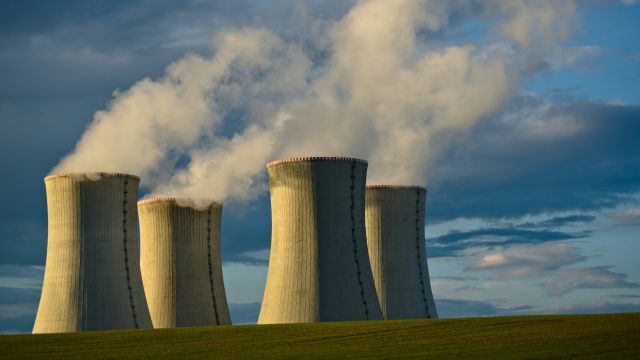
Core Insights - Rolls-Royce will construct the UK's first small modular reactors (SMRs) with support from the UK government, highlighting the country's commitment to nuclear energy [1] - This announcement follows a two-year selection process and coincides with the UK's pledge to invest £14.2 billion (approximately $19.2 billion) in the construction of the large Sizewell C nuclear power station in eastern England [1]