
电池制造

Search documents
美联新材:公司正在配合下游客户积极推进普鲁士蓝钠离子动力电池示范应用项目,争取尽快实现批量化销售
Mei Ri Jing Ji Xin Wen· 2025-12-22 08:48
美联新材(300586.SZ)12月22日在投资者互动平台表示, 1、经了解,前述研究成果尚处于实验阶 段。公司将密切关注国际钠电池技术前沿动态,积极拓宽技术提升渠道。 2、截至目前,公司正在配合 下游客户积极推进普鲁士蓝钠离子动力电池示范应用项目,争取尽快实现批量化销售。 (文章来源:每日经济新闻) 每经AI快讯,有投资者在投资者互动平台提问:东京理科大学昨天发布的对钠离子充电速度可超越锂 电池的文章,对贵公司有帮助吗?贵公司现在钠离子电池普鲁士蓝正极材料的进展如何? ...


山东肥城:抢滩新型电池电极材料产业赛道
Zhong Guo Jing Ji Wang· 2025-12-22 07:57
Core Insights - The collaboration between Shandong Tai'an Feicheng, Pengcheng Infinite New Energy Co., Ltd., and Ruineng Power Co., Ltd. involves a 27GWh battery cell production project with a total investment of 5.5 billion yuan [1] - The project aims to establish a comprehensive industrial chain from raw materials to battery cell manufacturing and recycling, enhancing Feicheng's position in the new energy sector [1][2] - The project will leverage advanced technologies such as IoT, big data, and artificial intelligence to create a highly automated and digitalized "dark factory," achieving top-tier production efficiency and energy utilization [1] Investment and Economic Impact - Upon reaching full production, the project is expected to generate an annual output value exceeding 8 billion yuan [2] - The project is anticipated to create a significant siphoning effect, attracting upstream and downstream battery materials and core component enterprises, forming a new hundred-billion-level industrial cluster [2] - Feicheng aims to expand its new battery electrode industry scale and accelerate its green and low-carbon transformation through this initiative [2] Strategic Development - Feicheng has established a systematic and chain-oriented approach, focusing on strategic emerging industries such as new battery electrode materials [2] - The city has implemented several major projects, including a 10GWh Prussian blue-based sodium-ion battery and a 20,000-ton waste lithium battery recycling project, integrating technological and industrial innovation [2] - This initiative has led to the formation of a complete industrial chain centered around lithium and sodium batteries, contributing to the transition from a traditional resource-based economy to an innovation-driven model [2]
博力威拟不超6.5亿定增 实控人方上月完成套现9838万
Zhong Guo Jing Ji Wang· 2025-12-22 05:49
Core Viewpoint - The company, Boliview (688345.SH), plans to raise up to 650 million yuan through a private placement of A-shares, with the funds allocated for various projects including advanced battery manufacturing and AI-driven battery reliability analysis [1][2]. Group 1: Fundraising Details - The total amount to be raised is capped at 650 million yuan, which will be used for three main projects: 1. Full-tab cylindrical lightweight power battery smart manufacturing project (519.30 million yuan) 2. AI-driven new energy battery reliability analysis and R&D capability enhancement project (52.07 million yuan) 3. Working capital supplementation (140 million yuan) [1][2]. - The pricing benchmark for the issuance will be set at no less than 80% of the average trading price of the company's shares over the 20 trading days prior to the pricing date [2]. - The number of shares to be issued will not exceed 30,344,850, which is 30% of the company's total share capital prior to the issuance [2][3]. Group 2: Issuance Process and Regulations - The issuance will target no more than 35 specific investors, including qualified institutional investors such as securities investment funds, securities companies, and insurance institutions [3]. - The final list of investors will be determined by the company's board and authorized personnel after approval from the shareholders' meeting and regulatory bodies [3][4]. - The issuance plan has been approved by the company's board and is pending approval from the shareholders' meeting and the Shanghai Stock Exchange [4]. Group 3: Shareholder Activity - Recent announcements indicate that major shareholders, including the actual controller Zhang Zhiping, have reduced their holdings, with a total of 3,034,440 shares sold, amounting to approximately 98.38 million yuan [5]. - The share reduction occurred between October 13 and November 14, 2025, with prices ranging from 27.80 yuan to 40.00 yuan per share [5]. Group 4: Company Background - Boliview was listed on the Shanghai Stock Exchange's Sci-Tech Innovation Board on June 11, 2021, with an initial public offering of 25 million shares at a price of 25.91 yuan per share [6]. - The company raised a total of 648 million yuan during its IPO, with a net amount of 580 million yuan after deducting issuance costs [7]. - In 2023 and 2024, Boliview reported revenues of 2.235 billion yuan and 1.844 billion yuan, respectively, with net losses of 337.80 million yuan and 966.08 million yuan [7].

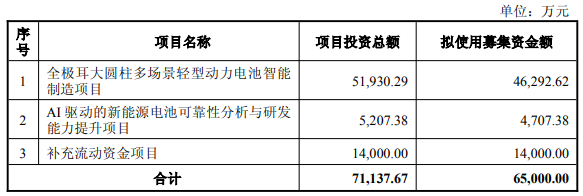
博力威:拟定增6.5亿加码全极耳大圆柱电池产能建设 前次IPO项目效益未达预期
2 1 Shi Ji Jing Ji Bao Dao· 2025-12-22 02:29
Core Viewpoint - The company, Boliwei (688345.SH), has announced a plan to issue A-shares to raise no more than 650 million yuan for three main projects, indicating a strategic focus on enhancing its manufacturing capabilities and R&D in the battery sector [1] Group 1: Fundraising and Project Allocation - The company plans to invest 463 million yuan in a smart manufacturing project for lightweight power batteries with full-tab cylindrical designs [1] - An additional 47.0738 million yuan will be allocated to an AI-driven project aimed at improving the reliability analysis and R&D capabilities of new energy batteries [1] - The remaining 140 million yuan is designated for supplementing working capital [1] Group 2: Financial Performance and Previous Fund Utilization - As of September 30, 2025, the company's debt-to-asset ratio stands at 63.23%, with accounts receivable valued at 629.6026 million yuan, constituting 34.59% of current assets [1] - The company has not declared cash dividends for 2023 and 2024 due to negative net profits [1] - The net proceeds from the company's IPO, amounting to 580 million yuan, have been fully utilized, with 517 million yuan invested and a remaining balance of 77.8976 million yuan permanently allocated to working capital [1] Group 3: Previous Project Outcomes - The lithium-ion battery production line project has generated cumulative benefits of 386.0799 million yuan, although it fell short of expectations due to long market promotion cycles and industry fluctuations [1] - The lightweight lithium-ion battery project is expected to reach operational status by April 2025, with projected revenues of 301.8998 million yuan from January to September 2025 [1]
我科学家破译锌溴液流电池长寿命“密码”
Ke Ji Ri Bao· 2025-12-22 01:02
Core Insights - The research team at Dalian Institute of Chemical Physics has made significant progress in developing a new bromine-based flow battery system, achieving proof of concept for long-life zinc-bromine flow batteries [1][2] Group 1: Research Developments - The team successfully developed a novel bromine two-electron transfer reaction system, which addresses the corrosion issues associated with traditional bromine flow batteries [2] - The new system utilizes amine compounds as bromine scavengers, converting generated Br2 into brominated amine compounds, effectively reducing Br2 concentration in the electrolyte [2] Group 2: Performance Metrics - The zinc-bromine flow battery demonstrated stable operation for over 700 cycles under 40 mA cm-2 conditions, with a total lifespan exceeding 1400 hours and an energy efficiency of over 78% [2]
20亿元!欣旺达拟在江西高安建设移动储能车整车生产线等项目
鑫椤锂电· 2025-12-22 00:43
Group 1 - The core viewpoint of the article highlights the collaboration between the government of Gao'an City, Jiangxi Province, and XINWANDA, which involves an investment of 2 billion yuan to establish various projects related to mobile energy storage vehicles, heavy trucks, and zero-carbon city construction [1] - XINWANDA, founded in 1997 and listed on the Shenzhen Stock Exchange in 2011, is a leading global lithium-ion battery manufacturer with nearly 30 years of experience in the fields of 3C consumer batteries, power batteries, energy technology, and smart hardware [1] - The company has established eleven manufacturing bases globally, located in various regions including Guangdong, Jiangsu, Shandong, Sichuan, Hubei, Zhejiang, Hungary, Morocco, and Thailand [1] Group 2 - The article mentions the availability of various research reports on the energy storage battery industry, including trends and competitive strategies for the global energy storage market from 2025 to 2029 [1]
10GWh锂电池研发制造基地二期项目开工
起点锂电· 2025-12-21 06:15
Group 1 - The core viewpoint of the article highlights the significant expansion of Pylon Technologies with the groundbreaking of its 10GWh lithium battery R&D and manufacturing base in Hefei, Anhui Province, which is a crucial part of its global manufacturing strategy [3] - The first phase of the project has successfully established a production team of over 1,000 people, steadily increasing capacity and validating the company's product technology and manufacturing strength [3] - The second phase of the project is a comprehensive upgrade aimed at expanding advanced capacity and strengthening industrial layout to better meet market demand, alongside a new 2GWh energy storage battery and integration project that has been officially signed [3] Group 2 - The article also mentions advancements in the energy storage sector, including next-generation energy storage cell technologies from companies like Rongjie Energy, which focuses on large capacity, high efficiency, and long cycle life [4] - Leading Intelligent is redefining mass production standards for all-solid-state batteries, indicating a shift towards more innovative battery technologies [4] - Desay Battery is introducing proactive safety measures that redefine energy safety paradigms through real-time perception and intelligent response technologies [4]
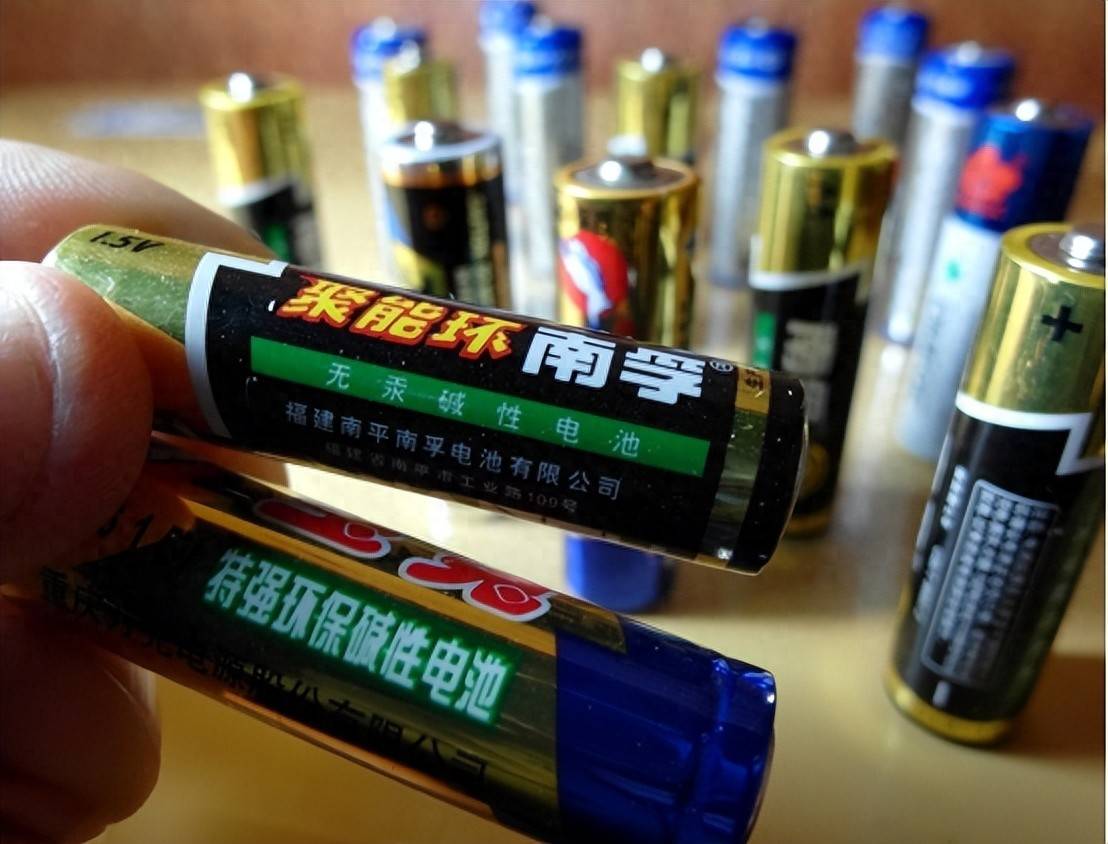
利润、渠道、专利全给美国!电池霸主南孚是怎么被榨干的?
Sou Hu Cai Jing· 2025-12-20 11:47
Core Viewpoint - The story of Nanfu Battery illustrates the rise and fall of a once-dominant Chinese brand, highlighting the risks of foreign investment and the complexities of capital structure in maintaining control over a company [1][21]. Company History - Nanfu Battery, originally founded as Nanping Battery in 1954, started as a small workshop struggling for survival [3][5]. - In the 1970s, Chen Laimao joined the company, leading it to expand from rural markets to urban areas through partnerships with well-known battery manufacturers [5][6]. - The company capitalized on the rising demand for alkaline batteries in the 1980s, becoming a market leader [6]. Capital Structure and Foreign Investment - In 1988, Nanfu Battery became the first joint venture battery company in China, partnering with foreign capital, which later complicated its ownership structure [8][10]. - By 1999, foreign investors held significant control over Nanfu, culminating in a sale to Gillette in 2003, which marked the end of its status as a national brand [10][12]. - Gillette's acquisition led to a focus on its own brand, Eveready, at the expense of Nanfu, which saw its production capabilities and resources significantly reduced [12][14]. Corporate Changes and Challenges - After Gillette was acquired by Procter & Gamble in 2005, Nanfu continued to be used primarily to support the sales of Eveready, further limiting its growth [15][17]. - In 2014, Nanfu was sold to Dinghui Capital, which aimed to diversify its product line and reduce reliance on battery sales [17][19]. - By 2017, Nanfu's revenue reached 2.32 billion yuan, showing signs of recovery under new management [19]. Recent Developments - In 2022, Anhui Andeli announced plans to acquire Nanfu's controlling company, aiming to leverage its brand strength in the battery industry [21]. - Despite this potential opportunity, Nanfu faces significant competition and technological challenges in the evolving market [21][23]. Lessons Learned - The narrative of Nanfu Battery serves as a cautionary tale for companies regarding the importance of maintaining control over their core operations when engaging with foreign investors [23].
韩国三大电池企业加速磷酸铁锂储能布局
Shang Wu Bu Wang Zhan· 2025-12-19 15:49
Core Viewpoint - The three major South Korean battery companies are shifting their focus from electric vehicles to energy storage systems (ESS) due to a slowdown in demand for power batteries, aiming to diversify their business portfolios and respond to both domestic and overseas demand [1] Group 1: Business Strategy - SK On plans to convert its production line at the Ruisan factory in South Chungcheong Province to produce lithium iron phosphate batteries for ESS [1] - LG Energy Solution has initiated the construction of a domestic lithium iron phosphate battery production line, with plans to commence production in 2027 [1] - Samsung SDI is also exploring the possibility of transitioning its domestic factory to produce lithium iron phosphate batteries [1] Group 2: Market Context - The shift towards ESS is driven by the South Korean government's push for renewable energy expansion and the construction of data centers, which accelerates the adoption of ESS [1] - ESS batteries are increasingly viewed by South Korean battery companies as a new growth engine in the current market environment [1]
拉普拉斯:目前公司已有布局的钙钛矿电池相关设备包括PVD、ALD、涂布等核心工艺设备
Zheng Quan Ri Bao Wang· 2025-12-19 12:15
Core Viewpoint - The company is a provider of core process equipment solutions and is actively developing various high-efficiency technology routes including TOPCon, XBC, HJT, perovskite, and tandem batteries [1] Group 1: Company Developments - The company has laid out core process equipment for perovskite batteries, including PVD (Physical Vapor Deposition), ALD (Atomic Layer Deposition), and coating technologies, which meet the core process needs of various technical routes for perovskite batteries [1] - The company is leveraging its technological expertise and customer resources to assist leading industry clients in advancing the research and validation of cutting-edge perovskite battery technologies [1] Group 2: Industry Trends - The perovskite technology is currently in a rapid development phase, with advancements in size, segmented process routes, and equipment configurations occurring swiftly [1] - Companies within the industry are continuously focusing on technological iteration and application breakthroughs, and the company aims to enhance and diversify its technology and products to provide more cost-effective core process solutions for downstream clients [1]