
通信运营

Search documents
5G-A通感技术赋能阜沙通用机场启航
Nan Fang Du Shi Bao· 2025-06-26 23:12
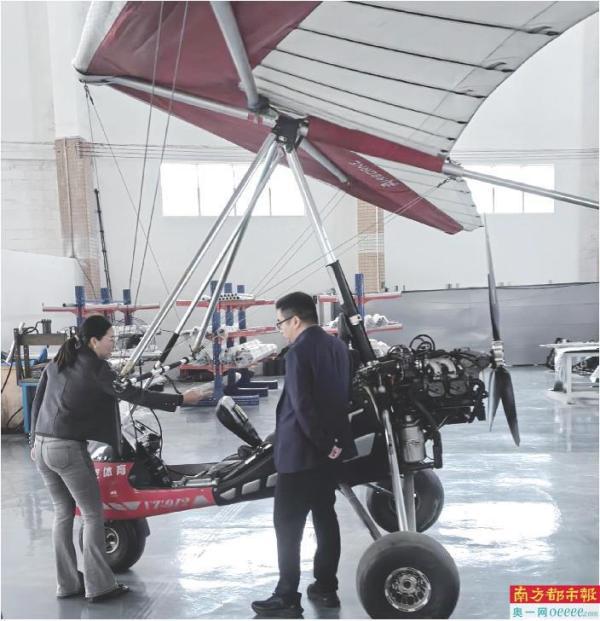
Group 1 - The General Airport in Fusha Town, Zhongshan, has officially received an operating license from the Civil Aviation Administration of China, marking a new phase in the development of the low-altitude economy in Zhongshan and highlighting the leading advantages of the Guangdong-Hong Kong-Macao Greater Bay Area in new infrastructure construction [2] - Zhongshan Mobile has played a significant role in the construction of the airport's communication network, accelerating the deployment of 5G-A integrated sensing base stations to provide core support for building an intelligent low-altitude traffic management system [2] - The Fusha General Airport will become the first general aviation airport hub in the Guangdong-Hong Kong-Macao Greater Bay Area with dual runway operational capabilities, significantly enhancing the service capacity and operational efficiency of the regional low-altitude industry [2] Group 2 - Zhongshan Mobile has completed the deployment of two sets of 5G-A integrated sensing base stations in the first and second phases of the low-altitude economic industrial base in Zhongshan, creating an intelligent sensing network covering an airspace of 1048m x 406m [3] - The advanced communication and sensing integration technology enables real-time monitoring of the airspace around the airport and precise tracking of aircraft trajectories, providing a digital and intelligent innovative solution for low-altitude safety management [3] - With the completion of the second phase of the Fusha Airport and the supporting 5G-A network, Zhongshan Mobile aims to enhance the "ground-air integration" digital service system and promote the low-altitude economy in the Greater Bay Area towards scale and intelligence [3]

国网兰州新区供电公司“五进” 宣传护安全 电力知识润心间
Zhong Guo Neng Yuan Wang· 2025-06-26 09:46
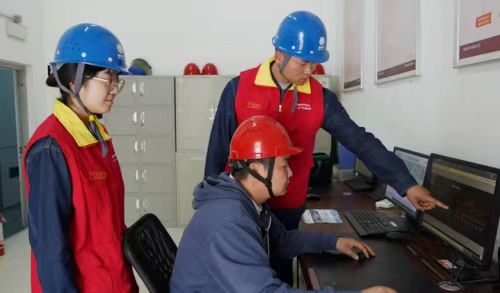
Core Viewpoint - The company emphasizes the importance of electrical safety and proactive measures to identify and mitigate potential hazards in collaboration with local enterprises [1][2] Group 1: Safety Awareness and Education - The company conducted an event focused on electrical safety knowledge and hazard identification at China Mobile's Gansu branch, utilizing real case studies to enhance understanding [1] - Over 800 promotional materials covering safety knowledge, facility protection, hazard identification, and emergency response skills were distributed [1] - The company has organized six specialized activities since the launch of "Safety Production Month" to instill safety concepts within the community [1] Group 2: Future Initiatives - The company plans to deepen the "Five Advances" initiative and expand the breadth and depth of electrical safety knowledge dissemination [2] - There will be a focus on strengthening collaboration between government and enterprises to explore sustainable safety education mechanisms [2] - The company aims to ensure the stable operation of the power grid and reliable electricity supply to support high-quality development and community well-being [2]

数据为翼,智能化服务体系如何展翅高飞?
Sou Hu Cai Jing· 2025-06-23 22:25
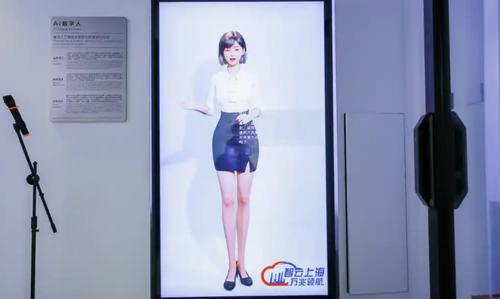
Core Insights - The article emphasizes the critical role of data in enhancing intelligent service systems across various industries, showcasing how major companies leverage vast amounts of data to optimize service experiences [1][2][8] Data Collection and Utilization - Companies need to establish comprehensive data collection systems, utilizing multi-channel data capture networks to gather customer interaction data in real-time [1][2] - For instance, China Mobile collects voice data from phone services and chat records from online services to create extensive interaction datasets [1] - Data standardization is essential, with companies like JD.com categorizing customer inquiries into detailed tags for efficient data insights [2] Intelligent Service Framework - The construction of an intelligent service system relies on building a data middle platform that ensures data consistency and supports rapid business scenario applications [3] - Companies implement dynamic updating mechanisms for knowledge bases to maintain accuracy and timeliness, as seen with JD.com's knowledge aging alerts [3] Human-AI Collaboration - Effective division of labor between AI handling standard tasks and humans focusing on high-value needs is crucial, with China Mobile automating 68% of simple inquiries [5] - Companies like JD.com identify high-value scenarios requiring human intervention, such as luxury goods returns, to enhance customer service effectiveness [5] Continuous Improvement Mechanisms - A PDCA (Plan-Do-Check-Act) cycle is established for ongoing optimization of intelligent service systems, allowing companies to monitor key metrics and validate improvement strategies [5][8] - JD.com utilizes customer sentiment analysis to reduce complaint rates by mapping emotional keywords to solutions [5] Data Governance and Integration - Deep data governance capabilities are vital, including data cleaning rules and privacy-preserving technologies to ensure data quality and compliance [8] - Cross-departmental collaboration fosters a data-driven culture, as seen in JD.com's establishment of a specialized team for intelligent customer service [8] Algorithm and Business Integration - Successful intelligent services require deep integration of algorithms with business knowledge, enhancing capabilities like financial risk control and sales conversion rates [8] - The advancement of generative AI technologies is pushing intelligent service systems to new heights, enabling automated insights and service strategy predictions [8]


万兆光网落地家庭与园区商业化提速 5G-A与AI融合步入“深水区”
Zheng Quan Ri Bao Wang· 2025-06-22 13:30
Core Insights - The global deployment of F5G-A all-optical networks is accelerating, with over 70 operators launching 10G packages, indicating a significant shift in the optical access sector [1] - Shanghai is leading the development and application of 10G optical networks, supported by major companies like China Telecom and Huawei, as part of the "Global Dual 10G City" strategy [1][2] - The integration of F5G-A and 5G-A technologies is driving innovation in smart homes, digital offices, and enterprise-level transformations [2][3] Group 1: F5G-A Innovations - The F5G-A Innovation Center in Shanghai is redefining digital life with applications like cloud 8K home theaters and AI robots, enhancing user experiences through FTTR technology [2] - The center has achieved national leadership in key metrics such as the number of 50G-PON ports, facilitating a comprehensive ecosystem for AI applications in households [3] - Shanghai Telecom and Huawei have established the first "10G Cloud Broadband Demonstration Community" based on 50G-PON technology, catering to the growing demand for high-speed networks in enterprise parks [3] Group 2: 5G-A Applications - 5G-A is expanding its reach from smart factories to transportation, exemplified by the "Junzi Lan" cruise ship, which has become a benchmark for 5G-A network coverage [4][8] - The integration of 5G-A technology in public transport, such as buses, has improved service efficiency, reducing passenger wait times significantly [8] - The collaboration between China Telecom and Huawei in developing "Smart Aggregation for Uplink" technology is enhancing network services, transitioning from connectivity to intelligent services [8][9] Group 3: Strategic Insights - The emphasis on high-demand services like HD video and IoT connectivity is crucial for operators, as highlighted by Huawei's leadership [9] - The synergy between F5G-A and 5G-A, along with AI integration, is positioned as a new engine for the digital economy, paving the way for innovative communication industry developments [9]

通信行业周报(20250616-20250622):MWC大会顺利落幕,聚焦6G、AI、卫星通信等核心方向-20250622
Huachuang Securities· 2025-06-22 10:11
Investment Rating - The report maintains a "Recommended" investment rating for the communication industry [1] Core Insights - The 2025 World Mobile Communication Conference (MWC) focused on key themes such as 5G integration, AI, and satellite communication, highlighting significant advancements in the industry [15][49] - The communication sector has shown resilience, outperforming major indices like the CSI 300 and the ChiNext Index in both weekly and year-to-date performance [8][9] - Key companies to watch include China Mobile, China Telecom, and China Unicom, with specific recommendations for various segments such as AI applications, satellite communication, and optical components [49][51] Summary by Sections Industry Overview - The communication industry consists of 124 listed companies with a total market capitalization of approximately 484.33 billion [3] - The sector's performance has been robust, with a 1.58% increase in the past week, outperforming the CSI 300 by 2.04 percentage points [8][9] MWC Highlights - Major announcements included the release of the "Agentic AI for Telco" white paper by China Mobile and several partners, outlining a framework for AI collaboration in telecommunications [15][16] - China Mobile introduced a series of AIoT products, emphasizing the integration of AI with IoT and satellite communications [21][22] - China Telecom showcased its cloud-network integration strategy, focusing on AI-driven applications across various sectors [25][27] Investment Recommendations - Recommended companies include: - Telecom Operators: China Mobile, China Telecom, China Unicom [51] - Optical Components: New Yisheng, Tianfu Communication, Zhongji Xuchuang [51] - Satellite Communication: Haige Communication, Shanghai Hanhua, Qiyi Er [51] - Equipment Manufacturers: Gongjin Co., Unisoc, ZTE, Ruijie Networks [51] - IoT Modules: Guanghetong, with a focus on AI applications [51]

四大证券报精华摘要:6月20日
Xin Hua Cai Jing· 2025-06-19 23:54
Group 1 - The Shanghai Stock Exchange has developed a special action plan to enhance the ESG rating of listed companies in the Shanghai market, aiming to improve governance and investment quality [1] - The capital market plays a crucial role in the reform of state-owned enterprises, helping to raise funds, improve corporate governance, and promote mixed ownership reform [2] - Asset management institutions are seeking new asset allocation strategies to adapt to the challenges posed by a low-interest-rate environment, emphasizing diversification and innovation [3] Group 2 - The 2025 Shanghai World Mobile Communication Conference highlighted the integration of 5G, AI, and IoT technologies, with the smart economy expected to drive new growth [4] - The first low-altitude drone perception base station was unveiled at the conference, showcasing advancements in low-altitude economic applications supported by 5G technology [5] - The phosphoric iron lithium market is witnessing a surge in large long-term orders, indicating expanding market demand and potential industry consolidation [6] Group 3 - Nineteen companies have seen their ratings upgraded by institutions for three consecutive months, with significant increases in their stock prices, particularly in the semiconductor sector [7] - The short drama market is experiencing explosive growth, with Chinese platforms making significant inroads into international markets, particularly in Southeast Asia and the U.S. [8] - The solid-state battery sector is gaining momentum, with numerous conferences and a notable increase in stock prices for related companies [9] Group 4 - New equity funds are accelerating their investment strategies, with 47 new funds established in June, reflecting a favorable market environment for structural investment opportunities [10] - Wolong Electric Drive Group plans to list its H-shares in Hong Kong, part of a growing trend of A-share companies pursuing dual listings to enhance global competitiveness [11] - Companies are increasingly engaging in equity mergers and acquisitions to enhance their market presence and enter high-growth sectors, with significant transaction amounts reported [12][13]
专访GSMA首席执行官: MWC上海向全球展示创新突破
Di Yi Cai Jing· 2025-06-19 13:16
Core Insights - Shanghai is progressively achieving its goal of becoming an international technology and innovation center, with MWC Shanghai playing a crucial role in this transformation [1][9] - China has emerged as the largest mobile connectivity nation globally, leading in 5G user scale and technology development [1][10] - The mobile industry is projected to contribute over $2 trillion to China's economy by 2030, with growth rates expected to surpass the global average due to accelerated 5G application [3] Group 1: MWC Shanghai's Role and Significance - MWC Shanghai has been established for twelve years and is now a platform for showcasing China's mobile industry creativity, innovation, and leadership [4] - The event is expected to attract participation from approximately 150 countries and regions, focusing on regional market characteristics while accommodating international business needs [4] - The GSMA Innovation Hub at MWC Shanghai will feature cutting-edge technologies from leading Chinese companies, emphasizing the region's advancements in mobile technology [6] Group 2: Technological Advancements and Industry Development - Shanghai has built over 843,000 outdoor 5G base stations and 442,600 indoor small stations, establishing a leading advantage in 5G-A, optical networks, and industry-specific networks [4] - The city is promoting the development of a new generation of communication industry chains, focusing on satellite internet and 5G-A network applications [5] - MWC Shanghai will showcase key scenarios and pathways for "communication technology+" innovations, including AI, autonomous driving, and satellite communication [6] Group 3: Policy and Standardization - The Policy Leaders Forum (PLF) at MWC Shanghai will gather global policymakers and industry leaders to discuss the impact of AI, bridging the digital divide, and the future potential of mobile connectivity in the 6G era [9] - The forum will address the need for unified global communication technology standards to avoid fragmentation, which was a challenge before the advent of 4G technology [9][10] - MWC Shanghai is positioned not only as a technology showcase but also as a vital engine for promoting international cooperation and economic development [9]

5G发牌六周年:技术持续演进 赋能千行百业
Xin Hua She· 2025-06-19 13:02
Group 1 - The 2025 World Mobile Communication Conference in Shanghai focuses on the development trends of 5G integration, AI+, and industry interconnectivity, showcasing the advancements in technology and application scenarios since the issuance of 5G licenses six years ago [1] - China Mobile demonstrated various applications of 5G, 5G-A, and AI, highlighting improvements in remote control at ports, autonomous vehicles in industrial parks, and enhanced production efficiency in smart factories [1][2] - China Telecom showcased the empowerment of the low-altitude economy through 5G technology, including a "5G lake patrol system" for intelligent inspections and a "5G+ drone medical route" for efficient medical transport [1][2] Group 2 - As of this year, there are 1.081 billion 5G mobile phone users in China, with a total of 4.439 million 5G base stations, achieving "5G coverage in every town" [2] - 5G applications have been integrated into 86 out of 97 categories of the national economy, with over 138,000 cases reported, and more than 18,500 national construction projects related to "5G+ industrial internet" [2] - The deployment of 5G-A networks has begun in over 300 cities, indicating a significant upgrade in network capabilities [2] Group 3 - Shanghai's subway achieved full 5G public signal coverage this spring, with over 80% of lines utilizing advanced 5G-A technology, providing an average download speed exceeding 600 Mbps [3] - China Tower has implemented a "5G+ Beidou+ indoor distribution system" in Xiong'an New Area, enabling precise underground navigation and covering 1.5 million square meters of underground space [3] Group 4 - The CEO of the Global Mobile Communications System Association stated that China's 5G technology innovation and industrial development can serve as a model for other countries, with significant advancements in infrastructure, investment, and innovation [4] - It is projected that by 2030, the number of 5G connections in China will reach 1.6 billion, accounting for nearly one-third of the global total [4]
5G-A引领移动AI时代,将带来哪些变化?
Zhong Guo Xin Wen Wang· 2025-06-19 10:08
Core Viewpoint - The integration of 5G-A and AI technologies is leading to the emergence of intelligent products and services, marking a significant shift towards an "AI+" era in various industries, as highlighted during the 2025 MWC [1][2]. Group 1: 5G-A and AI Integration - 5G-A is becoming a pivotal technology that enhances user experiences and enables smart upgrades across various sectors, including transportation and logistics [1][2]. - The combination of 5G-A and AI is expected to improve logistics efficiency and reduce costs through advanced path planning for drone deliveries [1]. Group 2: Intelligent Products and Services - New intelligent products, such as voice-controlled devices and companion robots, are being developed to enhance home automation and provide personalized care for the elderly [2]. - The introduction of intelligent robots in production and daily life is shifting the focus from stable connections to intelligent connections, emphasizing collaborative decision-making [2]. Group 3: Market Adoption and Coverage - Over 300 cities in China have achieved 5G-A network coverage, with more than 10 million users adopting 5G-A services [2].
运营商变革加剧:从联接到智能体,AI如何重构产业价值链
Nan Fang Du Shi Bao· 2025-06-19 04:46
Core Insights - The telecommunications industry is transitioning from a "connectivity-driven" model to an "intelligent-driven" model, with 5G-A and AI technologies playing pivotal roles in this transformation [1][5]. Group 1: 5G-A Development - 5G-A is moving from vision to reality, with over 300 cities in China achieving 5G-A network coverage and more than 10 million users [2]. - The technology offers enhanced symmetrical capabilities and supports AI interactions, IoT connections, and multimodal intelligent services [2]. - The rapid growth of "internet-native professions" such as delivery riders and live streamers is reshaping the user structure, with delivery riders expected to reach 160 million globally by 2030 [2][3]. Group 2: User Behavior and Content Consumption - The live streaming community is projected to grow from 10 million in 2022 to 50 million in 2024, with expectations of reaching 130 million by 2030 [3]. - Video content consumption is shifting, with high-definition content supply not fully activated; only 22% of content in major Chinese cities is 1080P or higher [3]. - There is significant potential for growth in video consumption, as users currently consume an average of 18.2GB monthly, while 1080P content could lead to a consumption of 31.5GB [3]. Group 3: Broadband Network Innovations - FTTR (Fiber To The Room) is expanding from high-end homes to small and medium enterprises, supporting up to 128 access points and catering to diverse connectivity needs [4]. - The demand for high-quality broadband is increasing among approximately 500 million individual businesses globally, presenting a significant opportunity for operators to enhance ARPU and user retention [4]. Group 4: AI Integration in Telecommunications - AI is becoming the core driver of network intelligence upgrades, with new architectures like "Agentic RAN" and "AI-Centric Network" being introduced [5]. - AI can optimize key processes such as spectrum scheduling and energy efficiency, transitioning networks from static configurations to self-learning and self-evolving systems [5][6]. - In the context of smart vehicles, the separation of cabin and vehicle communication is expected to align with different business models and user needs [6]. Group 5: Future Directions - The telecommunications industry is gradually constructing a new value chain centered around AI, supported by 5G-A and focused on user experience [6]. - Operators are evolving from merely providing connectivity to offering comprehensive services that integrate AI capabilities, thus gaining a more dominant position in the industry ecosystem [6].
