高等教育

Search documents
南极寒风里的“中文热”
Ren Min Ri Bao Hai Wai Ban· 2025-12-01 22:11
Core Points - The establishment of the Confucius Institute at Magallanes University marks the southernmost Confucius Institute in the world and the fourth in Chile, reflecting a growing interest in Chinese language and culture in the region [1] - The initial classes began on November 19, with high demand leading to full enrollment of 60 students, prompting considerations for additional classes to meet local interest [1][2] - The collaboration between Beijing Language University and Magallanes University aims to integrate unique courses that combine Chinese language with polar research and marine science, fostering academic cooperation [3] Group 1 - The Confucius Institute is located in Punta Arenas, a key port city and gateway to Antarctica, enhancing cultural exchange and educational opportunities in the region [1][2] - Local students and faculty express a strong interest in learning Chinese, viewing it as a valuable skill for future career opportunities and cultural understanding [2] - The initiative is seen as a significant cultural milestone, promoting better service in the tourism sector, particularly for Chinese tourists visiting Antarctica [2] Group 2 - The partnership between the two universities aims to leverage their strengths, creating distinctive programs that facilitate research collaboration in cutting-edge fields [3]
在浩瀚星河中找到青春坐标(校馆弦歌)
Ren Min Ri Bao· 2025-12-01 22:11
Core Insights - The Harbin Institute of Technology (HIT) showcases its achievements in aerospace through its Aerospace Museum, featuring models like the "Dongfanghong-1" satellite and the Tianhe experimental module of the Chinese space station, which inspire students and visitors alike [1][2]. Group 1: Student Engagement and Inspiration - Students like Lin Chenyu are deeply inspired by the aerospace exhibits, particularly the "Dongfanghong-1" satellite, which motivates them to pursue studies in aerospace engineering [1][2]. - The "Two Bombs and One Satellite" spirit is emphasized in educational courses, highlighting the dedication of past scientists and their contributions to China's aerospace achievements, which resonate with current students [2]. Group 2: Research and Development - The "Astro Friendship" microsatellite, weighing less than 16 kilograms, is developed by a team of nearly 50 students at HIT, showcasing new technologies in microsatellites and amateur radio [3]. - During the launch of the "Astro Friendship," the team faced challenges with the solar panels, which were resolved through innovative problem-solving, demonstrating the practical application of engineering skills and teamwork [3].
北京信息科技大学:加快建设信息特色鲜明的高水平应用型大学
Xin Jing Bao· 2025-12-01 13:14
"十四五"期间,北京信息科技大学以习近平新时代中国特色社会主义思想为指导,坚定"外树形象、内 聚力量、服务师生、加快发展"的总体思路,守正创新、笃行实干、攻坚克难,加快建设信息特色鲜明 的高水平应用型大学,交出了一份高质量发展的精彩答卷。 人才培养呈现新亮点,学科建设实现新突破 打造"三融三通"人才培养模式,成立勤信荣誉学院、天枢书院、未来数智产业学院。专业与课程建设扎 实推进,新增4个新兴本科专业,14个专业入选国家级一流专业建设点,17个入选北京市一流专业建设 点,9个专业通过工程教育认证,获评国家级一流课程15门、北京市课程思政先行校。创新实践教育质 量跃升,新增国家级虚拟仿真项目1项,获批教育部首批国家级创新创业教育实践基地,自"全国高校机 器人竞赛指数"设立以来持续位列全国TOP1%,斩获"挑战杯"国赛金奖。生源质量稳步提升,京内外录 取分数线和位次明显提升。毕业生就业竞争力持续增强,薪酬连续多年稳居全国高校前40位。 学科建设实现新突破。学科内涵建设成效显著,学校获批成为博士学位授予单位,仪器科学与技术学科 成为首个博士学位授权点,新增电子信息专业博士学位授权点,工程学科、计算机学科进入ESI全球 ...
“十四五”首都高校答卷|中国传媒大学:持续培养拔尖创新人才
Xin Jing Bao· 2025-12-01 13:14
Core Viewpoint - The "14th Five-Year Plan" period is a milestone for the development of Communication University of China, with significant achievements in education and research, guided by Xi Jinping's thoughts and directives [1][2]. Group 1: Educational Development - The university aims to become a "world-class media university with Chinese characteristics," achieving breakthroughs in various areas and enhancing the overall appearance and quality of faculty and students [1]. - A high-quality talent cultivation system has been established, integrating general education, AI, and professional education to meet the challenges of the intelligent era [4]. - The university has implemented a comprehensive evaluation system focusing on "five educations" and has seen an increase in the number of students admitted to master's programs [4]. Group 2: Research and Innovation - The university has optimized its academic structure, with seven disciplines entering the A-class ranking in domestic mainstream disciplines, and has established new doctoral programs [5]. - A high-quality research innovation system has been developed, significantly enhancing the university's ability to meet national strategic needs, with a notable increase in national-level research projects and publications [6]. - The university has formed a multidimensional "big communication" academic ecosystem, covering various fields such as journalism, international communication, and cultural communication [6]. Group 3: Strategic Planning - The university's leadership has outlined a strategic plan for the "15th Five-Year Plan" period, focusing on addressing AI challenges and establishing a digital campus [7]. - The core mission is to transform the university's development from traditional media to a strong emphasis on AI, contributing to national modernization and rejuvenation efforts [7].
北京化工大学:为首都经济社会发展提供智力和技术支撑
Xin Jing Bao· 2025-12-01 13:14
Core Viewpoint - During the "14th Five-Year Plan" period, Beijing University of Chemical Technology emphasizes high-quality party building to drive the school's development and contribute to national strategies and the capital's "four center" functions [1] Group 1: Party Building and Political Work - The school implements the "Red Engine" project for young scholars to deepen their understanding of the Party's innovative theories, receiving coverage from the People's Daily [2] - A comprehensive theoretical learning system is established, achieving a 100% satisfaction rate in political training for mid-level cadres [2] - The school has revised its charter and developed a new "Double First-Class" construction plan to align with national education goals [2] Group 2: Strengthening Grassroots Organizations - The school maintains a 100% rate of "dual leader" appointments for teacher party branch secretaries, with numerous projects recognized at the national and local levels [3] - The school has achieved a 100% rectification rate in internal inspections, enhancing its political ecology [3] Group 3: Research and Innovation - The school has made significant advancements in its "Double First-Class" initiative, with three disciplines entering A-level status and increasing international influence [4] - The school has successfully addressed multiple critical technology challenges, contributing to national technological self-reliance and winning prestigious awards [4] - Since the "14th Five-Year Plan," the school has added one member to the Chinese Academy of Engineering and nearly 20 national-level high-level talents [4] Group 4: Talent Development - The school has implemented a new framework for talent cultivation, enhancing the quality of education and integrating ideological education into the curriculum [5][6] - The "Hongde Chemistry Elite Student Training Base" has been recognized under the Ministry of Education's elite program [6] Group 5: Supporting Local Development - The school actively contributes to Beijing's development by establishing high-level research platforms and addressing local needs, such as supporting the Beijing Winter Olympics [7] - The school has been recognized as an advanced institution for party building and political work in Beijing [7] Group 6: Community and Social Engagement - The school's "Heart Bridge Project" has been selected as a model for united front work in Beijing, receiving awards for promoting ethnic unity [8]
多所高校宣布,调整外语专业
Zhong Guo Xin Wen Wang· 2025-12-01 11:27
Core Viewpoint - The recent trend in higher education involves the restructuring of traditional foreign language colleges into new interdisciplinary institutions, combining foreign language studies with other fields such as communication and education [1][2][3]. Group 1: Institutional Changes - Jingdezhen Ceramic University has established the School of Cultural Communication by integrating resources from its former Foreign Language College, focusing on cultural studies, journalism, and Chinese education [1]. - Several universities, including Jilin University and Hunan University of Technology, have also merged their foreign language departments with other disciplines to create new colleges, such as the School of Foreign Language and Culture at Jilin University and the Language and Culture College at Hunan University of Technology [2][3]. Group 2: Program Offerings - The School of Cultural Communication at Jingdezhen Ceramic University offers various programs, including English, Japanese, and International Chinese Education, along with unique master's programs in translation focused on ceramic culture [4]. - Wuchang Shouyi University’s Foreign Language and Education College combines foreign language studies with education, offering programs in English, translation, and a new elementary education program approved for enrollment in April 2025 [5][6]. - Hunan University of Technology's Language and Culture College, originally the Foreign Language College, now offers English, Japanese, and translation programs, emphasizing a comprehensive educational approach [7].
8564万元!广东工业大学大批仪器采购意向
仪器信息网· 2025-12-01 09:07
Core Insights - Guangdong University of Technology has announced multiple government procurement intentions for laboratory instruments, with a total budget of 85.64 million yuan [3][4]. Instrument Procurement Summary - The procurement includes 12 types of instruments, such as gas chromatography-mass spectrometry, multi-angle particle size and high-sensitivity Zeta potential analyzer, X-ray diffractometer, fiber strength and elongation density testing equipment (integrated machine), scanning electron microscope, and thermal analysis mass spectrometer. The procurement period is set for January to December 2025 [4][8]. Instrument Descriptions - **Multi-Angle Particle Size and High-Sensitivity Zeta Potential Analyzer**: This precision instrument integrates dynamic light scattering and laser multi-angle detection technology, enabling particle size analysis in the range of 0.3 nm to 10 μm. It also measures Zeta potential with a resolution of ±0.1 mV, applicable in nanomaterials research, biomedicine, environmental monitoring, and industrial quality control [6]. - **Thermal Analysis Mass Spectrometer (TGA-MS)**: This combined instrument monitors mass changes and gas composition during heating, widely used in materials science, chemistry, and environmental analysis. It provides insights into thermal decomposition kinetics and product information, crucial for material research, drug development, and energy sector applications [7]. Additional Procurement Details - The procurement intentions also include high-throughput microbial screening systems, N2O/H2O trace gas analyzers, and various other advanced laboratory instruments aimed at enhancing research capabilities and efficiency [9][10].


学费与通胀挂钩 英国拟对国际留学生征收6%附加费
Yang Shi Xin Wen· 2025-12-01 08:55
英国政府近日宣布,将永久性地把英格兰地区本科生学费与通胀挂钩,并拟对国际留学生学费征收6% 的附加费,用于资助本国学生。 这是十多年来英国首次对高等教育经费体系进行重大调整,此举引发英国高校和在英留学生团体的强烈 反对。业内人士认为,将学费与通胀挂钩虽有助于缓解成本压力,但无法解决英国高校"钱荒"背后的财 政结构性问题。 数据显示,2024年英国高校共有73.2万名国际学生,占全国大学生总数的近四分之一。英国高校联盟分 析表示,即使考虑学费上调,英国高校在2025年至2027年间仍将面临约22亿英镑的资金缺口。 (文章来源:央视新闻) ...
“中国人口增减分化与区域均衡发展”学术研讨会在上海举行
Zhong Guo Jing Ji Wang· 2025-12-01 06:07
Core Viewpoint - The conference commemorating the 90th anniversary of the discovery of the "Huhuan Line" highlighted the importance of geographical and demographic studies in China's regional development and the need for innovative approaches to address current population trends and challenges [1][2]. Group 1: Conference Overview - The conference featured various formats including opening and closing ceremonies, keynote speeches, sub-forum discussions, results presentations, and a doctoral student forum, showcasing the latest advancements and future directions in "Huhuan Line" research [1]. - The event was held at East China Normal University, emphasizing the institution's significant role in geography and population studies in China [1]. Group 2: Academic Contributions - Academics emphasized the "Huhuan Line" as a foundational work transitioning Chinese geography from qualitative to quantitative analysis, maintaining its relevance in guiding regional economic development amidst modern challenges [2]. - The conference underscored the need for geography and population studies to adapt to new demographic, resource, and environmental dynamics to achieve high-quality development [2]. Group 3: Research Achievements - The conference achieved significant breakthroughs in academic results, notably the introduction of "Huhuan Digital Human," which represents a new height in the integration of digital technology with humanities and social sciences [3]. - This achievement utilized extensive resources from the university's library and advanced digital technologies to create a dynamic representation of Huhuan's academic legacy, transcending traditional static archives [3].
校馆弦歌丨一山一海,共证文明根脉 一北一南,同守文化薪火
Yang Shi Xin Wen Ke Hu Duan· 2025-12-01 05:45
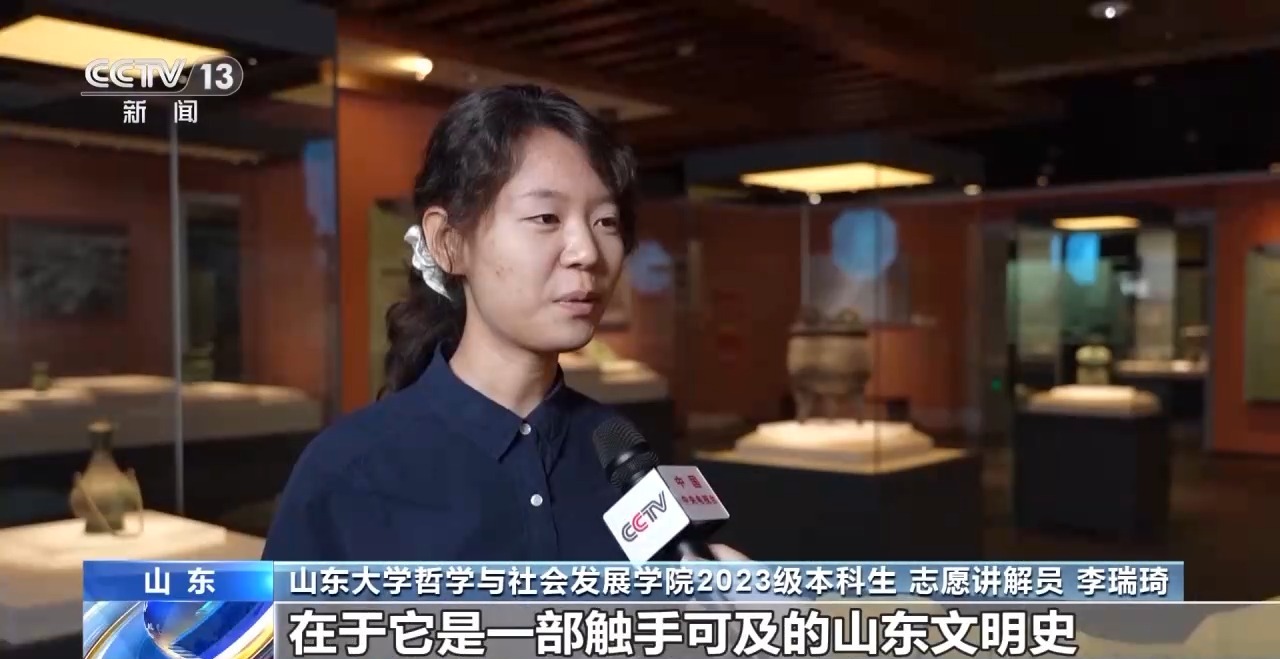
Group 1: Shandong University Museum - Shandong University Museum is a national first-class museum with exhibition areas exceeding 14,000 square meters and a collection of over 40,000 artifacts, primarily excavated by the university's archaeology department [2][13] - The museum focuses on the archaeological cultural development sequence of the Haidai region, showcasing significant prehistoric cultures such as the Longshan culture and the Dawangkou culture [6][8] - The museum's treasure, the Dinggong pottery inscription, is considered one of the earliest discovered written texts in China, predating oracle bone script by 800 years, sparking significant academic discussions [9] - The museum is free to the public and is expected to receive approximately 250,000 visitors in 2024, serving as a vibrant classroom for cultural education [13] Group 2: Xiamen University Museum - Xiamen University Museum is the first university museum established after the founding of New China and holds the largest collection of artifacts from Taiwan's indigenous peoples and Southeast Asia [19] - The museum provides evidence of the cultural connection between the southeastern coast of China and Taiwan, showcasing artifacts that trace the migration of the Austronesian language family [21] - The museum's founder, Lin Huixiang, was a prominent anthropologist and archaeologist, and his collection includes the treasured bead clothing of the Tayal people, symbolizing the cultural responsibility of preserving heritage [25] - The museum encourages students to embrace their role as cultural transmitters, emphasizing the importance of understanding and protecting cultural heritage [27][29]