
证券交易所

Search documents
大行评级|花旗:维持港交所“买入”评级 上调2025至27财年日均交易额预测
Ge Long Hui· 2025-09-03 02:24
Group 1 - Citi has raised the average daily trading volume forecast for the Hong Kong stock market for the fiscal years 2025 to 2027 by 2% to 3%, reaching HKD 238 billion, HKD 224 billion, and HKD 247 billion respectively [1] - The bank has increased its earnings per share estimate for Hong Kong Exchanges and Clearing (0388.HK) for the fiscal year 2025 by 2%, but has lowered the earnings per share estimates for 2026 and 2027 by 1% each [1] - Despite the adjustments, Citi maintains a "Buy" rating and a target price of HKD 500 for the stock [1] Group 2 - Hong Kong Exchanges and Clearing (0388.HK) is benefiting from improved liquidity in the Hong Kong stock market, leading to record high earnings [1] - The average daily trading (ADT) continues to show high growth, contributing to the company's record performance [1]
北交所:截至上半年末合格投资者866.13万户 较上年末增加67.56万户
Zheng Quan Shi Bao Wang· 2025-09-02 14:34
Group 1 - The core viewpoint of the article highlights the increasing attention and investment in companies listed on the Beijing Stock Exchange (北交所) due to the steady improvement in the quality of listed companies [1] Group 2 - As of the end of the first half of the year, there were 8.6613 million qualified investors in the Beijing Stock Exchange, an increase of 675,600 from the end of the previous year [1] - The average daily participation of investors in trading reached 343,700 [1] - The proportion of trading amount by professional institutional investors exceeded 10%, which is an increase of over 4 percentage points year-on-year [1]
专业解读—港股IPO发售机制、初始公众持股量和自由流通量之新规
Sou Hu Cai Jing· 2025-09-02 09:21
Core Points - The Hong Kong Stock Exchange (HKEX) has introduced new regulations to optimize the pricing and public offering rules for initial public offerings (IPOs), marking the most comprehensive adjustment in 27 years [2][3] - The new rules aim to rebalance the interests of institutional and retail investors, providing greater flexibility for issuers in selecting their investor base [2][3] Summary of Key Changes 1. Adjustments to Initial Public Holding and Free Float Requirements - The new regulations introduce a tiered mechanism for initial public holding based on market capitalization, allowing companies with a market value of HKD 3 billion or more to meet either a 10% public holding requirement or a corresponding market value requirement, reducing compliance difficulty [5][6] - The free float requirement mandates that at least 10% of shares must be freely tradable, with a minimum market value of HKD 50 million, or a total expected market value of HKD 600 million at the time of listing [7] 2. Revisions to IPO Offering Mechanisms - The minimum allocation for the bookbuilding placing portion has been set at 40%, ensuring a significant share of the IPO is allocated to institutional investors [10][11] - Two mechanisms for public offering have been introduced: Mechanism A and Mechanism B, allowing issuers to choose their preferred allocation strategy based on market conditions [12][13] 3. Ongoing Public Float Consultation - HKEX is seeking market feedback on the establishment of appropriate ongoing public float requirements, with a consultation period ending on October 1, 2025 [14] Impacts of the New Regulations 1. Benefits for Institutional Investors - The new rules are expected to enhance the robustness of the IPO pricing mechanism, making it more attractive for institutional investors and improving market stability [16][18] 2. Effects on Retail Investors - Retail investors may face a lower allocation in new IPOs due to the adjustments in the offering mechanisms, potentially leading to a decrease in the success rate of applications for new shares [17][18] 3. Implications for IPO Issuers - Issuers may find it more challenging to secure cornerstone investments, necessitating a broader marketing approach to attract high-quality anchor orders [19][20]


北交所四周年总市值超9000亿
第一财经· 2025-09-02 06:19
Core Viewpoint - The Beijing Stock Exchange (BSE) has shown steady development over its four years, successfully serving as a platform for innovative small and medium-sized enterprises (SMEs) and contributing to the construction of a multi-tiered capital market system [3][6]. Market Performance - As of September 1, 2025, the BSE has 274 listed companies with a total market capitalization exceeding 900 billion yuan, representing an increase of over three times since its inception [4][5]. - The average revenue of BSE companies in the first half of the year was 336 million yuan, with a year-on-year growth of 6.01%. Approximately 82.12% of these companies reported profits [5][6]. - The number of qualified investors has grown by about 5 million since the exchange opened, reaching over 9 million [5][6]. IPO and New Listings - In the first half of the year, the BSE led the A-share market in IPO applications, with 115 out of 177 applications directed to the BSE, marking a 453% increase from the previous year [8][9]. - New stock offerings have attracted significant investor interest, with the recent listing of Hongyuan Co. drawing 678,100 investors and freezing a record 74.08 billion yuan in funds [10][11]. Market Liquidity and Index Performance - The North Index 50 has seen a nearly 40% increase, outperforming other major indices in the A-share market [11][12]. - The liquidity of the BSE has improved significantly, with increased trading volume and turnover rates, attracting long-term institutional investors [11][12]. Future Expectations and Reforms - There are high expectations for further reforms, particularly the implementation of the "Deep Reform 19 Measures" and the acceleration of the 920 code transition [12][13]. - Experts suggest enhancing the listing system, reducing implicit costs, and improving the efficiency of the review process to attract more quality SMEs [14][15].
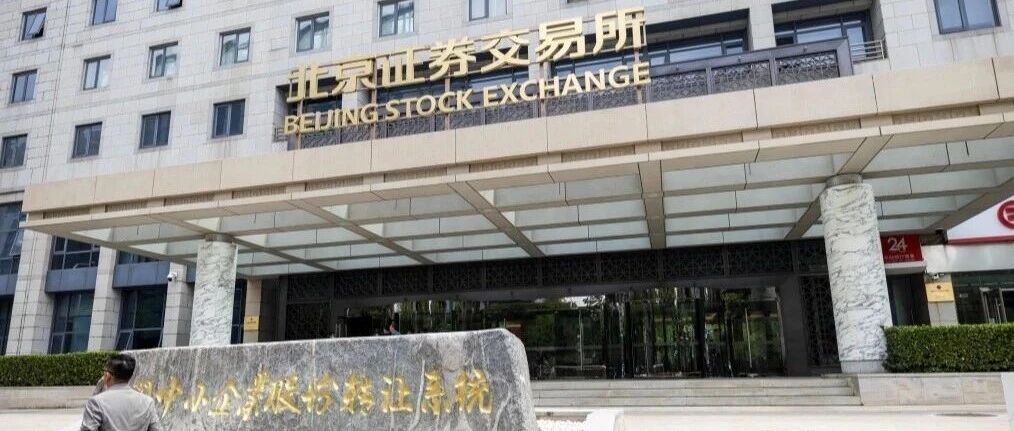
下调!港交所宣布!
券商中国· 2025-09-02 04:07
Core Viewpoint - Hong Kong Stock Exchange (HKEX) announced an optimization of its securities and derivatives clearing house margin collateral arrangements to enhance market efficiency and reduce costs for market participants [1] Group 1: New Margin Collateral Arrangements - The new arrangement includes a calculation method for cash collateral interest payments based on the overnight reference rate minus fees, applicable to all accepted currencies including RMB, HKD, and USD [2][3] - Cash collateral fees will be reduced from 0.8% to 0.5% over three years, with a 10 basis points reduction each year starting from October 2025 [4] - Non-cash collateral financing fees will be lowered from 0.5% to 0.25% [5] Group 2: Efficiency and Cost Reduction - HKEX previously introduced measures to increase stock options and index derivatives position limits, enhancing the capital efficiency of settled positions [6] - The Chief Operating Officer of HKEX emphasized the commitment to enhancing the vitality, resilience, and competitiveness of the Hong Kong market through these new arrangements [6]


四载筑基启新程 北交所构建中小企业成长新生态
Zhong Guo Zheng Quan Bao· 2025-09-02 00:16
Core Points - The Beijing Stock Exchange (BSE) has established a unique system tailored for innovative small and medium-sized enterprises (SMEs) over its four years of operation, with a total of 274 listed companies and a market capitalization exceeding 900 billion yuan [1][2][3] - The BSE aims to enhance its role as a platform for innovative SMEs, focusing on high-quality development and supporting specialized and innovative enterprises [1][5] Market Overview - The BSE has seen a steady increase in market size, with nearly 80% of listed companies being SMEs and over half classified as national-level specialized and innovative "little giant" enterprises [1][2] - The average daily trading volume in 2023 reached 29.151 billion yuan, indicating significant market liquidity [1] Company Performance - In 2024, BSE-listed companies collectively achieved a revenue of 104.78 billion yuan, reflecting a year-on-year growth of 6.76%, with 20 companies doubling their revenue or profit since listing [3][4] - By mid-2025, the average revenue for BSE companies was 336 million yuan, with 82.12% of companies reporting profitability [4] Innovation and Development - The BSE has implemented a differentiated evaluation system for innovative enterprises, which includes three dimensions of quantitative thresholds and four positive innovation types [3] - Companies listed on the BSE are actively engaging in research and development, with total R&D expenditures exceeding 9.1 billion yuan in 2024 [4] Capital Market Engagement - The BSE is facilitating mergers and acquisitions to help SMEs build a "second growth curve," with notable examples of companies successfully expanding through acquisitions [6] - The introduction of the BSE Specialized and Innovative Index has increased market attention and investor participation, with over 9 million qualified investors now involved [7][8] Investor Relations - BSE-listed companies are adopting measures to enhance investor returns, including cash dividends and share buybacks, with a total proposed cash dividend of approximately 532 million yuan for the 2025 mid-year [8] - Analysts predict that the BSE's trading activity and market focus will remain high due to ongoing reforms and the introduction of new indices [8]
北交所四周年:9000亿市值、超900万户投资者,逾八成公司实现盈利
Xin Lang Cai Jing· 2025-09-01 23:22
Group 1 - The Beijing Stock Exchange (BSE) has achieved a steady increase in market scale and quality since its establishment four years ago, with 274 listed companies and a total market value exceeding 900 billion yuan [1][2] - The average operating income of BSE companies reached 336 million yuan in the first half of 2025, reflecting a year-on-year growth of 6.01%, with 82.12% of companies reporting profits [2][3] - The BSE has successfully created a differentiated institutional system tailored to the characteristics of innovative small and medium-sized enterprises (SMEs), facilitating their access to capital [3][5] Group 2 - The BSE has established a multi-tiered support system in collaboration with the New Third Board, providing a clear pathway for growth-oriented enterprises to access capital markets [4][5] - The average single refinancing amount for BSE-listed companies is approximately 120 million yuan, significantly lower than that of the Shanghai and Shenzhen markets, but with a refinancing frequency 2.3 times higher [3][5] - Future efforts for the BSE include enhancing institutional frameworks, improving market efficiency, and attracting more long-term capital and institutional investors to stabilize the market [6]
北交所宣布设立四周年:聚“新”成势 再启新程
Zheng Quan Ri Bao· 2025-09-01 16:05
Group 1 - The Beijing Stock Exchange (BSE) has achieved significant milestones in its four years, with 274 companies listed and a total market capitalization exceeding 900 billion yuan, with over 900 million qualified investors [1][2] - The BSE focuses on serving innovative small and medium-sized enterprises (SMEs), with a notable proportion of listed companies being national-level specialized and innovative "little giant" enterprises [1][2] - The BSE has established a multi-tiered capital market system, enhancing its appeal and facilitating the growth of SMEs through various listing standards, including provisions for unprofitable companies [2][3] Group 2 - The BSE has implemented a comprehensive service action plan to support specialized and innovative SMEs, aiming to enhance their quality and access to financial resources [3] - The average time for the BSE to complete the review process from acceptance to registration has significantly improved, with an average of 140 days and a minimum of 37 days [3] - The BSE has developed a dual-wheel development model, providing a financing platform for technology enterprises, with a total of 127 billion yuan in corporate bonds issued this year [3] Group 3 - The BSE has improved information disclosure quality and introduced a sustainable development report guideline to support green development among listed companies [4] - Over 80% of BSE-listed companies have implemented dividend distributions, totaling 5.967 billion yuan, indicating a commitment to investor returns [4] - The average daily trading volume on the BSE has increased nearly fourfold compared to the previous year, reaching approximately 29.151 billion yuan [4] Group 4 - The BSE has attracted various institutional investors, including public funds and insurance capital, optimizing the investor structure [5] - The North Certificate 50 Index has surpassed 100 billion yuan in scale, reflecting increased market recognition and demand for BSE-listed companies [6] - The introduction of the North Certificate Specialized and Innovative Index marks the BSE's entry into a dual-index investment era, with both indices reaching historical highs in August [6] Group 5 - The BSE is transitioning into a new phase of high-quality expansion, focusing on enhancing its attractiveness and competitiveness through further reforms [8] - Recommendations include the introduction of public convertible bonds and related ETFs to improve market liquidity and provide diverse financing options for listed companies [8] - The BSE aims to create a virtuous cycle of quality enterprise supply, improved market liquidity, and steady valuation increases through innovative institutional measures [9]
新力量NewForce总第4849期
First Shanghai Securities· 2025-09-01 11:46
Group 1: Hong Kong Stock Exchange (388) - Hong Kong Stock Exchange reported revenue of HKD 14.1 billion in H1 2025, a year-on-year increase of 33%[6] - Net profit for H1 2025 reached HKD 8.5 billion, up 39% year-on-year[6] - Daily average trading amount in the cash market reached HKD 222.8 billion, a 122% increase year-on-year[7] - The exchange's EBITDA for H1 2025 was HKD 10.9 billion, with an EBITDA margin of 79%, up 6 percentage points year-on-year[6][10] Group 2: Yili Group (600887) - Yili Group achieved total revenue of RMB 61.93 billion in H1 2025, a year-on-year increase of 3.4%[15] - Net profit for H1 2025 was RMB 7.2 billion, down 4.4% year-on-year, but showed a significant recovery in Q2 with a 44.6% increase[15] - The company’s liquid milk revenue was RMB 36.13 billion, a slight decline of 2.1% year-on-year, while milk powder revenue grew by 14.3%[16] Group 3: Futu Holdings (FUTU) - Futu Holdings reported total revenue of HKD 5.311 billion in Q2 2025, a 69.7% increase year-on-year[23] - The company achieved a net profit of HKD 2.57 billion in Q2 2025, reflecting a 112.7% year-on-year growth[24] - Customer assets reached HKD 973.9 billion, a 68.1% increase year-on-year[26] Group 4: BYD Electronics (0285) - BYD Electronics reported revenue of RMB 80.6 billion in H1 2025, a year-on-year increase of 2.58%[35] - Net profit for H1 2025 was RMB 1.73 billion, up 14% year-on-year[35] - The company’s revenue from the new energy vehicle business grew by 60%, accounting for over 15% of total revenue[35] Group 5: Meili Tianyuan (2373.HK) - Meili Tianyuan achieved revenue of HKD 1.46 billion in H1 2025, a year-on-year increase of 28.2%[42] - The company’s net profit rose by 35.5% to HKD 170 million in H1 2025[42] - Active membership increased significantly, with a 47.8% rise in foot traffic to 920,000 visits in the first half of 2025[43]



港交所优化按金抵押品安排 非现金抵押品融通费用将降至0.25%
Zhi Tong Cai Jing· 2025-09-01 10:38
Group 1 - Hong Kong Stock Exchange (HKEX) announced optimization of collateral arrangements for its securities and derivatives clearing houses to enhance market efficiency and reduce costs for participants [1] - The interest calculation method for cash collateral will be adjusted to align with international market standards, calculated daily as the overnight reference rate minus a fee [1] - The financing cost for non-cash collateral will be reduced from 0.5% per annum to 0.25% [1] Group 2 - The new interest payment and fee policies will be uniformly adopted by the Central Clearing and Settlement System, Hong Kong Futures Clearing Company, and Hong Kong Options Clearing Company [1] - The fee for the period from October 2025 to December 2026 will be set at 0.8%, decreasing by 10 basis points annually until it reaches 0.5% by the end of 2028 [1] - HKEX aims to enhance the efficiency of collateral usage, facilitating market participants in executing various trading strategies and managing investment risks [2]