
教育

Search documents
豆神教育:关于聘任2025年度会计师事务所的公告
Zheng Quan Ri Bao· 2025-11-25 13:42
(文章来源:证券日报) 证券日报网讯 11月25日晚间,豆神教育发布公告称,公司拟聘任大华会计师事务所(特殊普通合伙) 为2025年度财务报表和内部控制审计机构。 ...


科德教育11月25日龙虎榜数据
Zheng Quan Shi Bao Wang· 2025-11-25 10:06
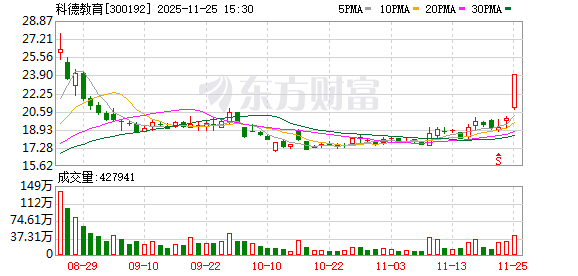
Core Viewpoint - Kede Education's stock reached the daily limit increase of 20.00%, with a trading volume of 9.87 billion yuan and a turnover rate of 13.18% [2] Trading Activity - The stock experienced a significant trading activity with a fluctuation of 15.87% throughout the day [2] - Institutional investors net sold 34.46 million yuan, while the Shenzhen Stock Connect saw a net purchase of 27.98 million yuan [2] - The total net buying from various trading desks amounted to 101 million yuan [2] Fund Flow - The stock had a net inflow of 249 million yuan from major funds, with a large single order inflow of 341 million yuan, while large orders saw a net outflow of 91.76 million yuan [2] - Over the past five days, the net inflow of major funds reached 324 million yuan [2] Top Trading Desks - The top five trading desks accounted for a total transaction volume of 265 million yuan, with a net buying of approximately 94.89 million yuan [2] - The leading buying desk was the Shenzhen Stock Connect, with a buying amount of 49.34 million yuan and a selling amount of 21.35 million yuan [2]

A股周二延续涨势 教育板块走强
Zhong Guo Xin Wen Wang· 2025-11-25 10:01
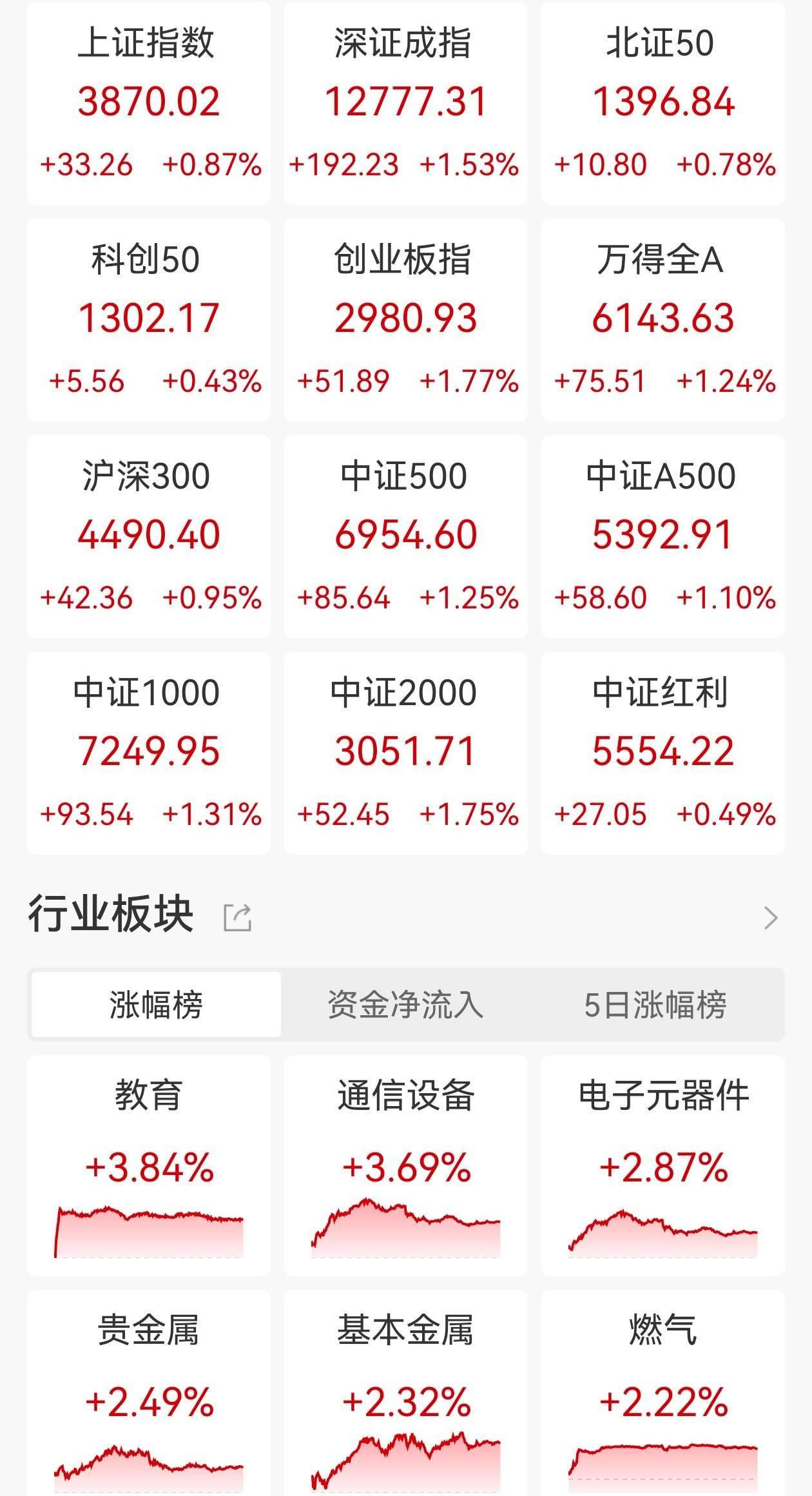
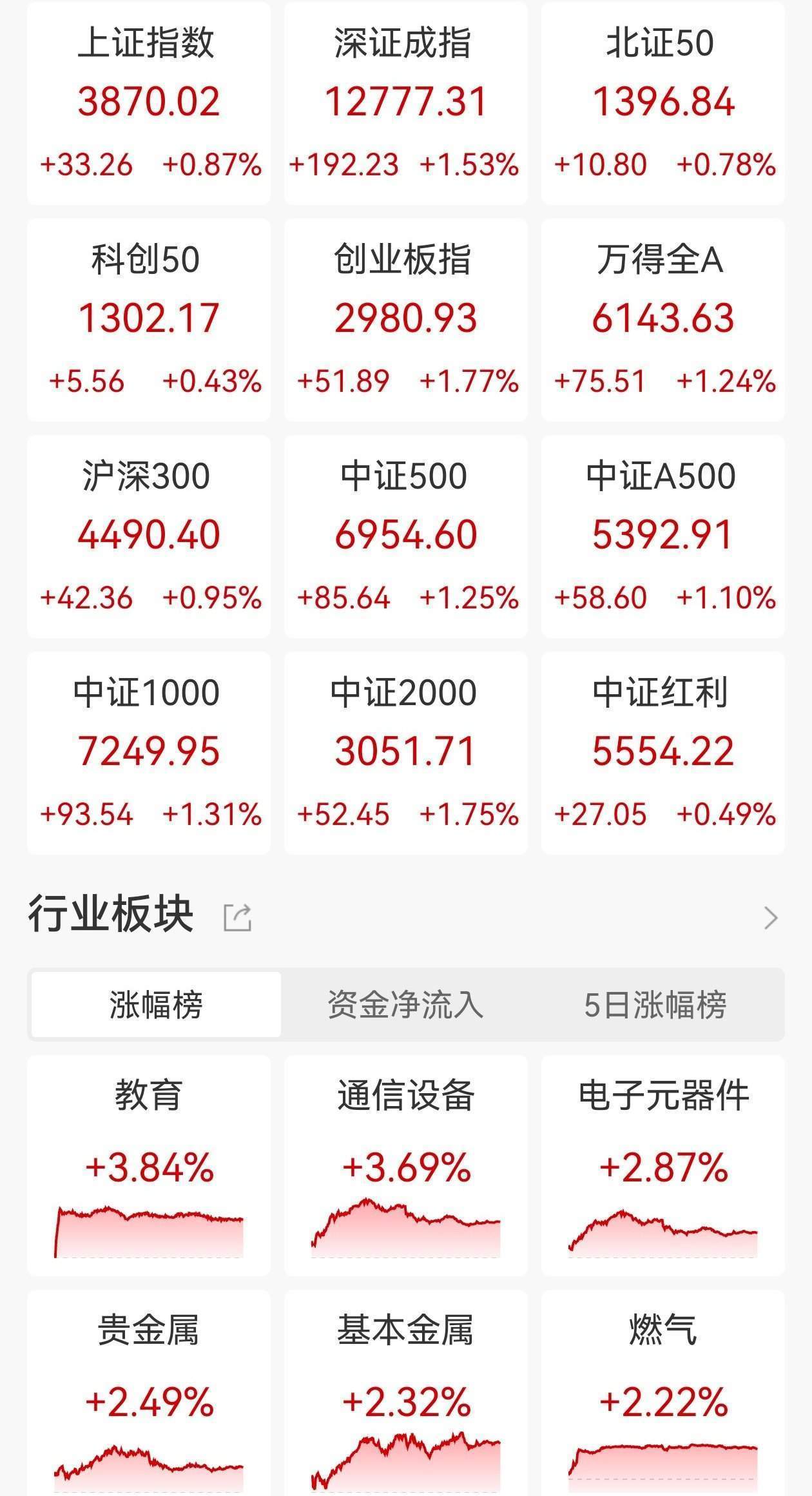
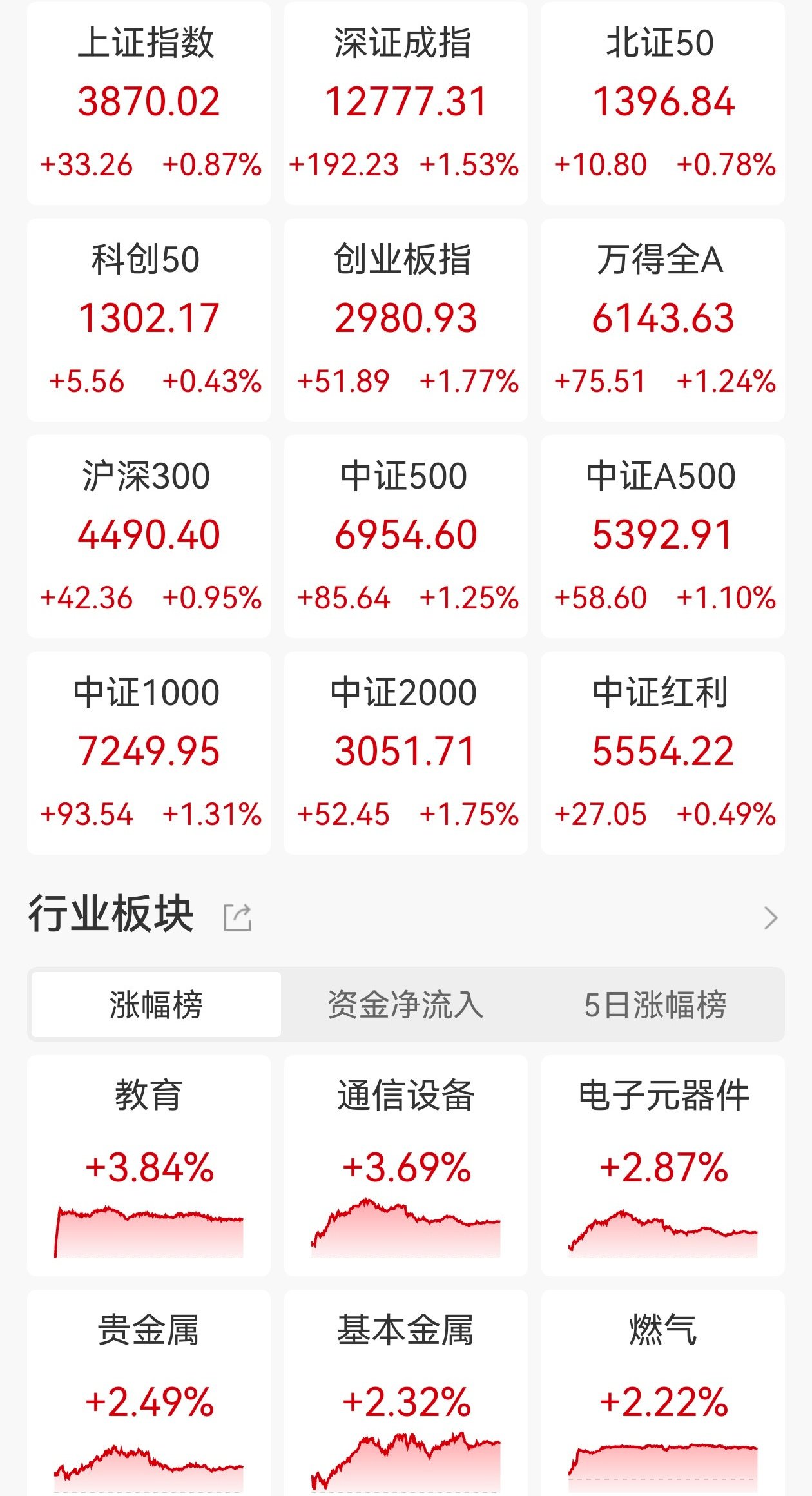
Core Viewpoint - The Chinese A-shares continued to rise on November 25, with major indices showing positive growth, driven by investor enthusiasm in the education sector and AI applications [1] Market Performance - The Shanghai Composite Index closed at 3870 points, up 0.87% - The Shenzhen Component Index closed at 12777 points, up 1.53% - The ChiNext Index closed at 2980 points, up 1.77% - The total trading volume in the Shanghai and Shenzhen markets was approximately 181.21 billion yuan, an increase of about 84.4 billion yuan from the previous trading day [1][1][1] Monetary Policy - The People's Bank of China conducted a 1-year Medium-term Lending Facility (MLF) operation of 1 trillion yuan on November 25 - With 900 billion yuan of MLF maturing this month, the net injection of MLF is 100 billion yuan, marking the ninth consecutive month of increased liquidity [1][1][1] Sector Performance - Most A-share industry sectors experienced gains, with the education sector leading with a rise of 3.66% - The education sector has seen consecutive gains over two trading days, accumulating over 6% this week, significantly outperforming the Shanghai Composite Index [1][1][1] Individual Stocks - Stocks such as Kede Education and Kevin Education hit the daily limit up, with Kede Education recording an approximate 20% increase [1][1][1] Analyst Insights - Analysts attribute the recent strength in the A-share education sector to investor enthusiasm for AI applications, recognizing the commercial potential of AI in the education field [1][1][1]

教育板块11月25日涨3.65%,科德教育领涨,主力资金净流出2409.25万元
Zheng Xing Xing Ye Ri Bao· 2025-11-25 09:09
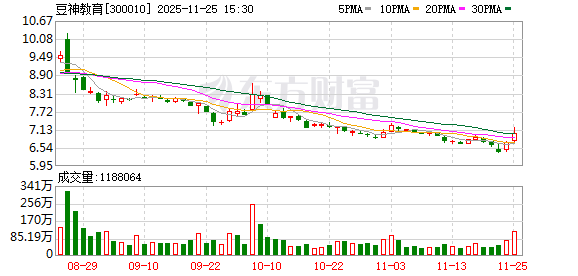
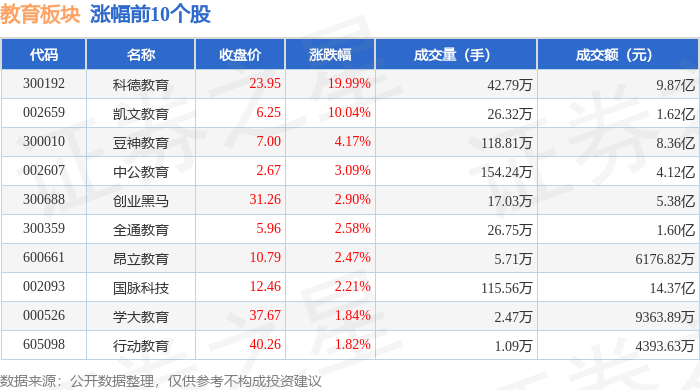
Core Insights - The education sector experienced a significant increase of 3.65% on November 25, with Kede Education leading the gains [1] - The Shanghai Composite Index closed at 3870.02, up 0.87%, while the Shenzhen Component Index closed at 12777.31, up 1.53% [1] Education Sector Performance - Kede Education (300192) saw a closing price of 23.95, with a remarkable increase of 19.99% and a trading volume of 427,900 shares, amounting to 987 million yuan [1] - Kevin Education (002659) closed at 6.25, up 10.04%, with a trading volume of 263,200 shares and a transaction value of 162 million yuan [1] - Dou Shen Education (300010) closed at 7.00, up 4.17%, with a trading volume of 1,188,100 shares and a transaction value of 836 million yuan [1] - Other notable performers include Zhong Gong Education (002607) with a 3.09% increase, and Chuangye Tihua (300688) with a 2.90% increase [1] Capital Flow Analysis - The education sector saw a net outflow of 24.09 million yuan from institutional investors and 47.95 million yuan from retail investors, while individual investors contributed a net inflow of 72.04 million yuan [2] - Kede Education had a net inflow of 243 million yuan from institutional investors, while Kevin Education experienced a net inflow of 71.27 million yuan [3] - Dou Shen Education and Zhong Gong Education had smaller net inflows of 16.33 million yuan and 11.98 million yuan, respectively [3]


A股三大指数:11.25涨势佳,成交额增858亿
Sou Hu Cai Jing· 2025-11-25 07:55
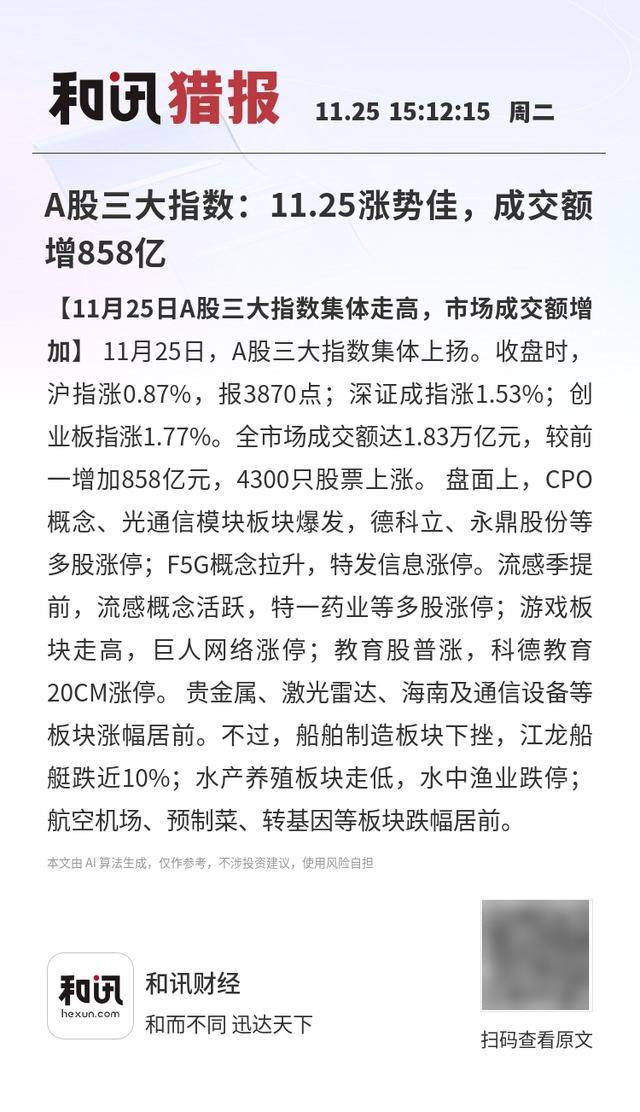
Market Performance - On November 25, the three major A-share indices collectively rose, with the Shanghai Composite Index increasing by 0.87% to close at 3870 points, the Shenzhen Component Index rising by 1.53%, and the ChiNext Index up by 1.77% [1] - The total market turnover reached 1.83 trillion yuan, an increase of 85.8 billion yuan compared to the previous day, with 4300 stocks rising [1] Sector Highlights - The CPO concept and optical communication module sectors experienced significant gains, with stocks like Dekeli and Yongding shares hitting the daily limit [1] - The F5G concept also surged, with Tefa Information reaching the daily limit [1] - The flu season arrived early, leading to active trading in flu-related stocks, with companies like Te Yi Pharmaceutical hitting the daily limit [1] - The gaming sector saw an uptick, with Giant Network reaching the daily limit, while education stocks generally rose, with Kede Education hitting a 20% limit up [1] - Precious metals, laser radar, Hainan, and communication equipment sectors were among the top gainers [1] Underperforming Sectors - The shipbuilding sector declined, with Jianglong Shipbuilding dropping nearly 10% [1] - The aquaculture sector fell, with Zhongzhong Fishery hitting the daily limit down [1] - The aviation, prepared dishes, and genetically modified sectors were among those with the largest declines [1]
收评:沪指涨0.87% 游戏板块涨幅居前
Zhong Guo Jing Ji Wang· 2025-11-25 07:23
Market Overview - The A-share market saw all three major indices rise, with the Shanghai Composite Index closing at 3870.02 points, up by 0.87%, and a total trading volume of 722.79 billion yuan [1] - The Shenzhen Component Index closed at 12777.31 points, up by 1.53%, with a trading volume of 1089.36 billion yuan [1] - The ChiNext Index closed at 2980.93 points, up by 1.77%, with a trading volume of 522.45 billion yuan [1] Sector Performance Top Performing Sectors - The gaming sector led the gains with an increase of 3.89%, totaling a trading volume of 205.98 million hands and a net inflow of 31.15 billion yuan [1] - The communication equipment sector rose by 3.66%, with a trading volume of 196.87 million hands and a net inflow of 3.65 billion yuan [1] - The education sector increased by 3.10%, with a trading volume of 54.45 million hands and a net inflow of -0.69 billion yuan [1] Underperforming Sectors - The airport and shipping sector declined by 0.98%, with a trading volume of 108.54 million hands and a net outflow of -0.35 billion yuan [1] - The military equipment sector fell by 0.53%, with a trading volume of 242.96 million hands and a net outflow of -3.76 billion yuan [1] - The aquaculture sector decreased by 0.48%, with a trading volume of 150.85 million hands and a net outflow of -0.16 billion yuan [1]

A股收评:三大指数集体上涨,沪指涨0.87%创指涨超1%,CPO、流感、游戏走高!超4300股上涨,成交1.83万亿放量858亿
Sou Hu Cai Jing· 2025-11-25 07:16
| 涨幅榜 | 资金净流入 | 5日 涨幅を | | --- | --- | --- | | 教育 | 通信设备 | 电子元器 | | +3.84% | +3.69% | +2.879 | | 贵金属 | 基本金属 | 燃气 | | +2.49% | +2.32% And Van and | +2.229 | 盘面上,CPO概念、光通信模块板块爆发,德科立、永鼎股份等多股涨停;F5G概念拉升,特发信息涨停;流感季提前到来,流感概念活跃,特一药业等多 股涨停;游戏板块走高,巨人网络涨停;教育股普涨,科德教育20CM涨停;贵金属、激光雷达、海南及通信设备等板块涨幅居前。另外,船舶制造板块下 挫,江龙船艇跌近10%;水产养殖板块走低,水中渔业跌停;航空机场、预制菜、转基因等板块跌幅居前。(格隆汇) 格隆汇11月25日|A股三大指数今日集体走高,截至收盘,沪指涨0.87%报3870点,深证成指涨1.53%,创业板指涨1.77%。全市场成交额1.83万亿元,较前 一交易日增量858亿元,4300股上涨。 | 上证指数 | 深证成指 | 北证5C | | --- | --- | --- | | 3870.02 | 127 ...
A股收评:三大指数集体上涨,沪指涨0.87%创指涨超1%深证成指涨1.53%,CPO、流感、游戏走高!超4300股上涨,成交1.83万亿放量858亿
Sou Hu Cai Jing· 2025-11-25 07:16
Market Performance - The three major A-share indices collectively rose, with the Shanghai Composite Index increasing by 0.87% to close at 3870 points, and the Shenzhen Component Index rising by 1.53% [1][2] - The total market turnover reached 1.83 trillion yuan, an increase of 85.8 billion yuan compared to the previous trading day, with 4300 stocks advancing [1] Index Details - Shanghai Composite Index: 3870.02 (+33.26, +0.87%) [2] - Shenzhen Component Index: 12777.31 (+192.23, +1.53%) [2] - ChiNext Index: 2980.93 (+51.89, +1.77%) [2] - CSI 300 Index: 4490.40 (+42.36, +0.95%) [2] - CSI 500 Index: 6954.60 (+85.64, +1.25%) [2] Sector Performance - The education sector saw a significant increase of 3.84%, while communication equipment and electronic components also performed well with increases of 3.69% and 2.879% respectively [3] - The CPO concept and optical module sectors experienced explosive growth, with multiple stocks hitting the daily limit [3] - The gaming sector also saw gains, with several stocks reaching the daily limit [3] - Conversely, the shipbuilding sector declined by nearly 10%, and the aquaculture sector faced losses, with some stocks hitting the daily limit down [3]
A股收评:深成指、创业板指涨超1%,CPO、流感、游戏板块走高
Ge Long Hui· 2025-11-25 07:09
| 上证指数 | 深证成指 | 北证5( | | --- | --- | --- | | 3870.02 | 12777.31 | 1396.8 | | +33.26 +0.87% +192.23 +1.53% +10.80 +0 | | | | 科创20 | 创业板指 | 万得全/ | | 1302.17 | 2980.93 | 6143.6 | | +5.56 +0.43% +51.89 +1.77% +75.51 +1 | | | | 沪深300 | 中证500 | 中证A5( | | 4490.40 | 6954.60 | 5392.9 | | +42.36 +0.95% +85.64 +1.25% +58.60 +1 | | | | 中证1000 | 中证2000 | 中证红和 | | 7249.95 | 3051.71 | 5554.2 | | +93.54 +1.31% +52.45 +1.75% +27.05 +0 | | | | 涨幅榜 | 资金净流入 | 5日涨幅* | | --- | --- | --- | | 教育 | 通信设备 | 电子元器 | | +3.84% | +3.69% | ...

北京同仁堂与北京工商大学举办“党建联建”活动 共同参观中国第一历史档案馆
Bei Jing Wan Bao· 2025-11-25 02:23
Core Points - The collaboration between Beijing Tongrentang Century Advertising Co., Ltd. and Beijing Technology and Business University aims to enhance industry innovation through a joint mechanism established by the signing of the "Party Building Leading Industry Innovation Joint Construction Intent Agreement" [1][2] - The initiative focuses on organizational collaboration, talent cultivation, and the integration of industry, academia, and research [1][2] Group 1 - The first "Party Building Joint Construction" activity was held following the signing of the agreement, emphasizing the importance of enhancing the sense of responsibility and mission among party members [1] - The event included a visit to the China First Historical Archives, where participants engaged with the exhibition "Narrating the Community - Interactions and Integration of Various Ethnic Groups in the History of Beijing" [2] Group 2 - The partnership will provide internship opportunities in advertising media, exhibition display, and big data analysis for students at Beijing Technology and Business University, enhancing their professional experience [2] - Both parties plan to hold seminars on innovation and design of cultural products and advertising strategies, leveraging the expertise of university faculty to support the professional development of company employees [2] Group 3 - The university will invite industry experts to serve as external mentors, integrating real-world case studies into the curriculum and providing students with practical training and employment opportunities [2] - The collaboration aims to transition from activity-based cooperation to platform and ecological cooperation, establishing a model for school-enterprise collaboration in revitalizing time-honored brands in Beijing [2]
