黄金珠宝

Search documents
周大福大跌
Xin Lang Cai Jing· 2025-11-26 05:25
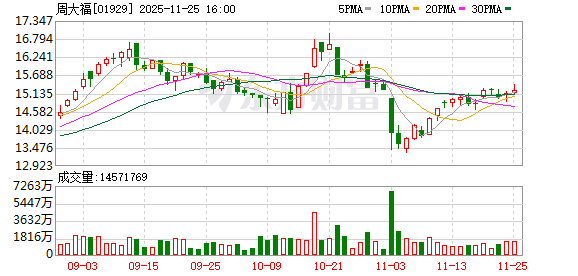
值得注意的是,与黄金珠宝行业息息相关的国际金价近期仍呈现高位震荡格局。伦敦金价格10月突破 4300美元/盎司后回落,10月下旬一度回到4000美元/盎司以下,但此后有所回升。截至11月26日中午 12:16,伦敦金报4160.77美元/盎司。 在国际金价居高不下的背景下,国内品牌黄金珠宝店的金饰克价也水涨船高,日前已普遍超过1300元/ 克。11月26日,智通财经查阅周大福今日金价,报于1312元/克。 这对周大福的业绩造成直接的影响。据公司的中期业绩报告,在高毛利定价首饰贡献提升及黄金价格上 涨的支持下,集团毛利率维持于30%以上,处于历史较高水平;期内经营溢利保持韧性,达到68.23亿 港元,同比增长0.7%;公司股东应占溢利同比小幅增长0.1%。 来源:智通财经 11月26日,周大福珠宝集团有限公司(01929.HK)公布半年报业绩后,股价低开低走,一度跌超 7.8%。截至午间收盘,公司股价收跌7.48%,报收14.1港元/股,总市值约1391亿港元。 11月25日晚,周大福发布截至2025年9月30日止的中期业绩。根据公告,2026财年上半年共实现营收 389.9亿港元,同比下降约1.1%,低于市场 ...



「深度」黄金交易被瞄准,水贝商户频繁中招“涉诈”遭冻卡
Sou Hu Cai Jing· 2025-11-26 04:38
Core Viewpoint - The article highlights the increasing concerns of merchants in the Shui Bei gold and jewelry market regarding account freezes due to fraud-related activities, exacerbated by the rise in money laundering through gold transactions and the enforcement of anti-fraud measures [6][10][12]. Group 1: Fraud and Account Freezes - Merchants in Shui Bei have faced numerous account freezes due to suspected involvement in fraud, with cases reported frequently in recent years [6][9]. - A specific case involved a merchant named Feng Feng, whose account was frozen after a transaction with a buyer who turned out to be involved in a fraud scheme [5][12]. - The phenomenon of account freezes is attributed to the "断卡行动" (Card Cutting Action) initiated in 2020, which increased scrutiny on financial transactions, particularly in high-value gold trading [9][10]. Group 2: Legal and Regulatory Context - The article discusses the legal framework surrounding account freezes, emphasizing that banks and payment institutions are required to take preventive measures against suspicious transactions [23]. - Legal experts note that the current anti-fraud measures may lack precision, often leading to the freezing of multiple accounts associated with a single suspected transaction [25][26]. - The need for stricter identification and verification processes for transactions over a certain amount is highlighted as a necessary step to mitigate risks [26]. Group 3: Merchant Experiences and Challenges - Merchants like Chen Chen have shared experiences of multiple account freezes, indicating a widespread issue within the Shui Bei market [7][9]. - The article notes that many merchants rely on experience to identify potential fraud, but this approach is often insufficient [22]. - The challenges faced by merchants include not only the operational impact of frozen accounts but also the lengthy process required to resolve these issues and restore account access [24][26]. Group 4: Recommendations for Prevention - Experts recommend implementing comprehensive risk management strategies, including strict adherence to real-name transactions and thorough verification of transaction parties [26]. - Merchants are advised to maintain detailed records of transactions and communications to facilitate the resolution of any disputes arising from account freezes [26]. - The importance of using corporate accounts for transactions to separate business and personal financial risks is emphasized [26].

中国黄金11月25日获融资买入1034.78万元,融资余额3.46亿元
Xin Lang Cai Jing· 2025-11-26 01:24
Group 1 - The core viewpoint of the news highlights the trading performance of China Gold on November 25, with a slight increase of 0.12% and a transaction volume of 116 million yuan [1] - On the same day, the financing buy amount for China Gold was 10.35 million yuan, while the financing repayment was 14.40 million yuan, resulting in a net financing outflow of 4.05 million yuan [1] - As of November 25, the total financing and securities lending balance for China Gold was 348 million yuan, with the financing balance at 346 million yuan, accounting for 2.56% of the circulating market value, indicating a low level compared to the past year [1] Group 2 - China Gold Group Gold Jewelry Co., Ltd. is a major enterprise engaged in the research, design, production, sales, and brand operation of gold jewelry products in China, with its main business revenue composition being 98.83% from gold products [2] - As of September 30, the company reported a revenue of 45.76 billion yuan for the first nine months of 2025, a year-on-year decrease of 1.74%, and a net profit attributable to shareholders of 335 million yuan, down 55.08% year-on-year [2] - The company has distributed a total of 2.52 billion yuan in dividends since its A-share listing, with 1.85 billion yuan distributed over the past three years [3]

水贝商户频繁“涉诈”遭冻卡
Xin Lang Cai Jing· 2025-11-26 00:42
Core Viewpoint - The article highlights the increasing concerns of merchants in the Shui Bei gold and jewelry market regarding account freezes due to fraud-related activities, exacerbated by the rise in money laundering through gold transactions and the enforcement of anti-fraud measures [4][9][18]. Group 1: Fraud and Account Freezes - Merchants in Shui Bei are facing account freezes due to suspected involvement in fraud, with many reporting similar experiences of having their bank accounts and payment platforms restricted [2][4][9]. - The phenomenon of account freezes is linked to the "断卡行动" (Card Cutting Action) initiated in 2020, which aims to combat telecom and online fraud, leading to increased scrutiny of large transactions in the gold market [5][6][10]. - Legal experts note that the combination of gold and virtual currencies has made it easier for criminals to launder money, complicating the tracking of illicit activities [7][10][18]. Group 2: Impact on Merchants - The freezing of accounts significantly disrupts business operations for merchants, as they rely on large transactions for buying and selling gold [9][10][11]. - Merchants report that the freezing of accounts can extend to multiple payment methods, severely impacting their daily operations and personal finances [2][4][9]. - The article mentions specific cases of merchants, such as冯丰 and 陈晨, who experienced account freezes due to transactions that were later linked to fraudulent activities [3][4][9]. Group 3: Regulatory and Preventive Measures - The article discusses the need for stricter regulations in the gold trading market, including mandatory real-name registration for transactions exceeding a certain amount [15][20]. - Industry associations and law enforcement are collaborating to enhance security measures and provide training to merchants on fraud prevention [14][15][20]. - Experts suggest that merchants should implement comprehensive risk management strategies, including thorough identity verification and transaction monitoring, to mitigate the risk of account freezes [20][21][22].
【深度】黄金交易被瞄准,水贝商户频繁中招“涉诈”遭冻卡
Xin Lang Cai Jing· 2025-11-25 23:28
Core Viewpoint - The article highlights the increasing concerns of merchants in the Shui Bei gold and jewelry market regarding account freezes due to fraudulent activities, emphasizing the challenges posed by money laundering and the need for enhanced anti-fraud measures in the industry [6][11][21]. Group 1: Account Freezing Incidents - Merchants in Shui Bei are facing account freezes due to suspected involvement in fraud, with cases reported where funds were frozen for transactions linked to fraudulent activities [4][12][21]. - The phenomenon of account freezing has become common among Shui Bei merchants, with many experiencing multiple incidents over the past few years [7][8][11]. - The "断卡行动" (Card Cutting Action) initiated in 2020 has intensified scrutiny on large transactions, leading to increased freezing of accounts involved in gold trading [8][11][12]. Group 2: Legal and Regulatory Context - The legal framework allows for the freezing of accounts suspected of fraud, with banks and payment institutions required to take preventive measures against suspicious transactions [21][23]. - Legal experts note that the current anti-fraud measures may lack precision, often leading to the freezing of legitimate accounts alongside fraudulent ones [23][24]. - The need for stricter regulations and better enforcement of identity verification in gold transactions has been emphasized to mitigate risks [17][25]. Group 3: Merchant Experiences and Challenges - Merchants report significant operational disruptions due to account freezes, affecting both business transactions and personal finances [11][22]. - Many merchants lack adequate risk management practices, often relying on experience rather than formal procedures to identify potential fraud [20][24]. - The prevalence of cash transactions and informal payment methods in the Shui Bei market increases vulnerability to money laundering activities [19][20]. Group 4: Recommendations for Improvement - Experts recommend implementing strict identity verification and transaction monitoring for high-value trades to prevent account freezes [24][25]. - Merchants are advised to maintain comprehensive records of transactions and communications to facilitate the unfreezing process if their accounts are mistakenly frozen [25]. - The establishment of a more robust risk management framework within the industry is crucial to protect merchants from the adverse effects of fraudulent activities [24][25].
优化策略显成效 周大福同店销售重拾增长
Zheng Quan Shi Bao· 2025-11-25 18:28
Core Insights - Chow Tai Fook's financial performance for the first half of the fiscal year 2026 shows resilience, driven by improved consumer sentiment and a recovery in jewelry consumption in key markets [1][2] - The company's revenue reached HKD 38.986 billion, with a gross profit margin maintained above 30%, supported by high-margin pricing jewelry and rising gold prices [1] - The company reported a slight increase in operating profit to HKD 6.823 billion, and a marginal rise in profit attributable to shareholders to HKD 2.534 billion [1] Group Performance - Same-store sales in mainland China and Hong Kong-Macau regions showed positive growth, indicating the effectiveness of the company's focus on optimizing store productivity [1][2] - Same-store sales in mainland China increased by 2.6%, while franchise retail points saw a growth of 4.8%. In Hong Kong and Macau, same-store sales rose by 4.4%, driven by improved retail consumer sentiment [2] Product Highlights - The company's signature pricing product series achieved strong sales, totaling HKD 3.4 billion, with its contribution to retail value in mainland China rising from 27.4% to 31.8% [1] E-commerce and Marketing Strategy - Chow Tai Fook leveraged e-commerce to enhance customer interaction, contributing approximately 18% to online sales retail value, with a significant boost from live streaming and collaborations with popular IPs [2] - The company reported over 30% growth in e-commerce retail value during the recent Double Eleven shopping festival [2] Stock Performance - Chow Tai Fook's stock has performed strongly this year, doubling in value with a cumulative increase of over 120%, bringing its market capitalization to around HKD 150 billion [2] Gold Price Trends - The gold jewelry industry is influenced by high gold prices, with international gold prices fluctuating above USD 4,000 per ounce and domestic prices exceeding CNY 1,300 per gram [3]

周大福同店销售重拾增长 年内股价已翻倍
Zheng Quan Shi Bao· 2025-11-25 15:41
Core Viewpoint - Chow Tai Fook's performance shows resilience with a recovery in same-store sales driven by improved consumer sentiment and jewelry consumption in key markets [1][2][3] Group 1: Financial Performance - The group's revenue for the period reached HKD 38.986 billion, maintaining stability [2] - Gross profit margin remained above 30%, supported by high-margin pricing jewelry and rising gold prices [2] - Operating profit was HKD 6.823 billion, a year-on-year increase of 0.7% [2] - Profit attributable to shareholders was HKD 2.534 billion, a slight increase of 0.1% year-on-year [2] Group 2: Same-Store Sales Growth - Same-store sales in mainland China increased by 2.6%, while franchise retail points saw a growth of 4.8% [3] - Hong Kong and Macau same-store sales rose by 4.4%, driven by improved retail consumption and increased foot traffic [3] - In Hong Kong, same-store sales increased by 1.8%, while Macau experienced a growth of 13.7% [3] Group 3: E-commerce and Marketing Strategies - E-commerce contributed approximately 18% to the online sales retail value, driven by enhanced customer interaction through live streaming and social media [3] - The company reported over 30% growth in e-commerce retail value during the recent Double Eleven shopping festival [3] Group 4: Gold Price Trends - International gold prices have shown a high-level fluctuation, with prices exceeding USD 4,300 per ounce before retreating to below USD 4,000, but have since stabilized above this level [4] - Domestic gold prices also experienced fluctuations, with prices surpassing CNY 1,000 per gram before returning to above CNY 900, reflecting a year-to-date increase of over 50% [4] - The price of gold jewelry in domestic stores has risen, with prices generally exceeding CNY 1,300 per gram [4]
港美股看台|周大福同店销售重拾增长 年内股价已翻倍
Zheng Quan Shi Bao· 2025-11-25 15:39
Core Viewpoint - Chow Tai Fook's performance shows resilience with a recovery in same-store sales driven by improved consumer sentiment and jewelry consumption in key markets [2][3] Group 1: Financial Performance - The group's revenue for the period reached HKD 38.986 billion, maintaining stability [3] - Gross profit margin remained above 30%, supported by high-margin jewelry pricing and rising gold prices [3] - Operating profit was HKD 6.823 billion, a year-on-year increase of 0.7% [3] - Profit attributable to shareholders was HKD 2.534 billion, a slight increase of 0.1% year-on-year [3] Group 2: Same-Store Sales Growth - Same-store sales in mainland China increased by 2.6%, while franchise retail points saw a growth of 4.8% [4] - Hong Kong and Macau same-store sales rose by 4.4%, driven by improved retail sentiment and increased foot traffic [4] - Hong Kong's same-store sales increased by 1.8%, while Macau experienced a growth of 13.7% [4] Group 3: E-commerce and Marketing Strategies - E-commerce has enhanced customer interaction, contributing approximately 18% to online sales revenue [4] - The company has invested in live-streaming channels and marketing strategies targeting younger consumers [4] - During the recent Double Eleven shopping festival, e-commerce retail value grew by over 30% [4] Group 4: Market Conditions - Gold prices have shown high volatility, with international gold prices fluctuating above USD 4,000 per ounce [5][6] - Domestic gold prices also experienced significant increases, with prices surpassing CNY 1,300 per gram [6] - The overall gold price has risen over 50% year-to-date, impacting the pricing of gold jewelry in retail [6] Group 5: Stock Performance - Chow Tai Fook's stock has performed strongly this year, with a cumulative increase of over 120% [4] - The company's latest market capitalization is approximately HKD 150 billion [4]
港美股看台|周大福同店销售重拾增长 年内股价已翻倍
证券时报· 2025-11-25 15:36
Core Viewpoint - Chow Tai Fook's performance shows resilience with a recovery in same-store sales driven by improved consumer sentiment and a rebound in jewelry consumption in key markets [2][4]. Financial Performance - The group's revenue remained stable at HKD 38.986 billion, with a gross margin maintained above 30%, supported by high-margin jewelry pricing and rising gold prices [4]. - Operating profit reached HKD 6.823 billion, a year-on-year increase of 0.7%, while profit attributable to shareholders was HKD 2.534 billion, a slight increase of 0.1% [4]. Same-Store Sales Growth - Same-store sales in mainland China and Hong Kong & Macau showed positive growth, with mainland direct retail points increasing by 2.6% and franchise retail points growing by 4.8% [4]. - Hong Kong same-store sales rose by 1.8%, while Macau experienced a significant increase of 13.7% [4]. Product Highlights - The pricing strategy for signature products was a key highlight, with total sales of HKD 3.4 billion, and the contribution of priced jewelry to retail value in mainland China rising from 27.4% to 31.8% [4]. E-commerce Growth - E-commerce played a significant role in driving sales, contributing approximately 18% to online retail value, with a notable growth of over 30% during the Double Eleven shopping festival [5]. Stock Performance - Chow Tai Fook's stock has performed strongly this year, doubling in value with a cumulative increase of over 120%, bringing the company's market capitalization to around HKD 150 billion [6]. Gold Price Trends - Gold prices have shown high volatility, with international gold prices fluctuating above USD 4,000 per ounce, and domestic gold prices also maintaining levels above CNY 900 per gram, both reflecting over 50% year-to-date increases [9][10].

中国进入低欲望时代,没人愿意花钱了?5条赛道正闷声发大财!
Sou Hu Cai Jing· 2025-11-24 15:45
Group 1: Marriage and Family Trends - The number of marriage registrations in 2024 is 6.106 million pairs, a decrease of 1.574 million pairs or 20.5% from the previous year, marking the lowest level since 1980 [2] - The marriage rate has dropped to 4.3‰, with over 240 million single adults, indicating a trend of young people delaying marriage due to economic pressures and high living costs [2][5] - The demand for wedding-related services has decreased significantly, with wedding orders down by 40% compared to five years ago, leading to the closure of many wedding-related businesses [2] Group 2: Consumer Spending and Economic Sentiment - Overall consumer spending is declining, with the 618 shopping festival experiencing its first negative growth, and a significant drop in the consumption confidence index to 88.5 points, the lowest in ten years [4][5] - 62% of individuals aged 25 to 35 are only purchasing necessities, with discretionary spending dropping from 28% to 19% [4] - The average monthly savings rate is 35%, and there is a notable decrease in the use of credit card installments by 10% [4] Group 3: Emerging Consumption Trends - Five new consumption sectors are thriving despite the overall decline in traditional consumption: pet economy (300.2 billion), outdoor sports (over 400 billion), aromatherapy (12 billion), health and wellness (80 billion), and emotional economy (1200 billion) [9][11][13] - The pet economy is growing at 7.5%, with 80 million pet-owning households, while the outdoor sports sector has seen a rise in new participants, reaching 520 million [9][11] - The emotional economy, driven by trends in collectibles and toys, is projected to grow significantly, with blind box sales expected to reach 58 billion by 2025 [13][15] Group 4: Market Dynamics and Future Outlook - The shift in consumer spending from traditional family-oriented purchases to individual experiences is evident, with a focus on emotional and experiential value [7][15] - The total market size of the five emerging sectors exceeds one trillion, indicating a robust potential for growth in these areas [15][17] - The trend of low desire for traditional consumption is not indicative of a lack of spending power but rather a shift towards more meaningful and emotionally resonant purchases [17]