
科研

Search documents
韩政府强化研发预算协商机制
Ke Ji Ri Bao· 2026-01-19 00:54
其中,最重要举措是新设"研发预算协商机制",将以往依赖实务层非正式沟通的模式,升级为以局长级 为主、每月定期召开的常设协商会议。会议将围绕政府研发重点投资方向、支出效率化方案、新项目审 查等议题,按照预算不同阶段进行系统性讨论。 此外,双方将显著扩大预算编制过程中的相互参与度。在科学技术创新本部制定主要研发预算分配调整 方案时,企划预算处将提前介入共同审议;反之,在企划预算处进行最终预算编制阶段,也将建立机制 充分反映科学技术创新本部的专业意见。 (文章来源:科技日报) 为提升研发投资效率与政策一致性,韩国科学技术信息通信部协同企划预算处决定建立常设协商机制, 并在预算编制全过程大幅强化事前协商与合作。 2026年韩国政府整体研发预算规模达35.5万亿韩元,其中85.3%的主要研发预算(约30.5万亿韩元), 将由科学技术信息通信部科学技术创新本部负责制定分配与调整方案,再由企划预算处据此编制最终预 算案。这一分工旨在同时反映研发项目的技术专业性审查与财政健全性分析。 长期以来,对韩国政府部门间研发预算各自为政、沟通不畅的批评始终存在。为彻底改善这一问题,上 述两部门决定从预算编制初期阶段起就展开深度合作与联 ...
北京市自然科学基金今年首批申请启动
Xin Lang Cai Jing· 2026-01-15 19:28
本报讯(记者 雷嘉)北京市自然科学基金委昨日发布通知,启动2026年度北京市自然科学基金第一批 项目申请工作。本次申报项目类型包括北京市青年科学基金重点项目和交叉融合重点项目,有转化潜力 的优秀项目成果将优先对接在北京转化落地。 市基金项目经费实行"包干制+负面清单"管理。按规定对记入科研诚信严重失信行为数据库的相关被处 理人实施联合惩戒。申请人自1月15日起可登录依托单位工作系统,按相关要求与提示撰写申请书,并 于2月26日16时前通过该系统将电子申请书提交依托单位审核。 若项目获得资助,承担或参与市基金项目的单位纳统时应当据实填报相关基础研究经费数据;获资助的 项目负责人优先推荐参与市基金"青菁π对"等系列活动;鼓励项目产生的优秀成果优先在国内科技期刊 上发表(建议比例不低于20%);有转化潜力的优秀项目成果优先对接在北京转化落地;鼓励项目团队 依托重大科技设施平台、国产科学仪器开展研究。 北京青年报记者了解到,2026年度青年重点项目计划资助40项左右,旨在支持已有较好国际合作基础, 在基础研究或应用基础研究方面已取得突出成绩的青年科学技术人员,形成研究团队,合作开展创新研 究。申报领域应当聚焦北京市基 ...
工信部高校,新增国家级人才759人
Xin Lang Cai Jing· 2026-01-15 14:15
Core Insights - The Ministry of Industry and Information Technology (MIIT) highlights the achievements of seven universities under its jurisdiction, including Beijing University of Aeronautics and Astronautics and Harbin Institute of Technology, emphasizing their contributions to high-quality development and talent cultivation by 2025 [2][43]. Group 1: Development Achievements - By 2025, the seven universities are expected to add 7 academicians from the Chinese Academy of Sciences, 2 from the Chinese Academy of Engineering, and 759 national-level talents [2][43]. - The universities have published 21 papers in CNS journals, showcasing their research output [2][43]. Group 2: Educational Quality and Talent Cultivation - The universities have optimized their academic disciplines, rapidly developing programs in artificial intelligence, integrated circuits, and low-altitude technologies, while strengthening traditional fields such as mechanical engineering and materials science, resulting in 28 first-class disciplines [2][43]. - The quality of talent cultivation has significantly improved, with a steady increase in enrollment and the establishment of 7 National Excellent Engineer Colleges, 6 specialized software colleges, and 4 first-class cybersecurity colleges [2][43]. Group 3: Technological Innovation - The universities have made breakthroughs in key core technologies and frontier technologies, with several achievements applied to national projects such as Chang'e 5, Tianwen 1, and the BeiDou system [2][43]. - There is a focus on enhancing basic research and original innovation capabilities, with the establishment of national key laboratories and participation in multiple national manufacturing innovation centers [2][43]. Group 4: Strategic Development Initiatives - The MIIT is planning to summarize the achievements of the "14th Five-Year Plan" period and strategize for the "15th Five-Year Plan" period, focusing on the development of these universities [6][46]. - The universities are actively engaging in initiatives that align with national strategic needs, enhancing their contributions to major national projects and technological advancements [24][67].


推动深港科创协同 河套科研货物“一线”进口免税
2 1 Shi Ji Jing Ji Bao Dao· 2026-01-15 10:43
Core Viewpoint - The new tax policy for the Shenzhen-Hong Kong Innovation and Technology Cooperation Zone aims to reduce cross-border costs for scientific research goods, promoting collaboration and innovation between Shenzhen and Hong Kong [2][3]. Group 1: Tax Policy Implementation - The policy, effective from February 10, 2026, establishes a dual management tax system for cross-border goods between the Shenzhen-Hong Kong Innovation and Technology Cooperation Zone and Hong Kong [2]. - Registered entities in the customs supervision area can import self-used research goods tax-free, including import duties, VAT, and consumption tax [3]. Group 2: Scope of Tax Exemptions - The first batch of tax-exempt goods includes 509 items across six categories, covering the entire research chain [3]. - Specific rules for the circulation of tax-exempt goods are outlined, including conditions for tax payment upon transfer and entry into mainland China [3]. Group 3: Broader Economic Impact - The policy supports Hong Kong's integration into national development and aims to establish it as a global innovation hub, contributing to the high-quality development of the Guangdong-Hong Kong-Macao Greater Bay Area [4]. - Additional tax incentives for individuals and enterprises participating in the cooperation zone will be implemented in April 2024, offering a 15% tax reduction [4]. - The Shenzhen-Hong Kong Innovation and Technology Cooperation Zone has attracted significant talent and institutions, including 18 academicians and over 15,000 research personnel [4].
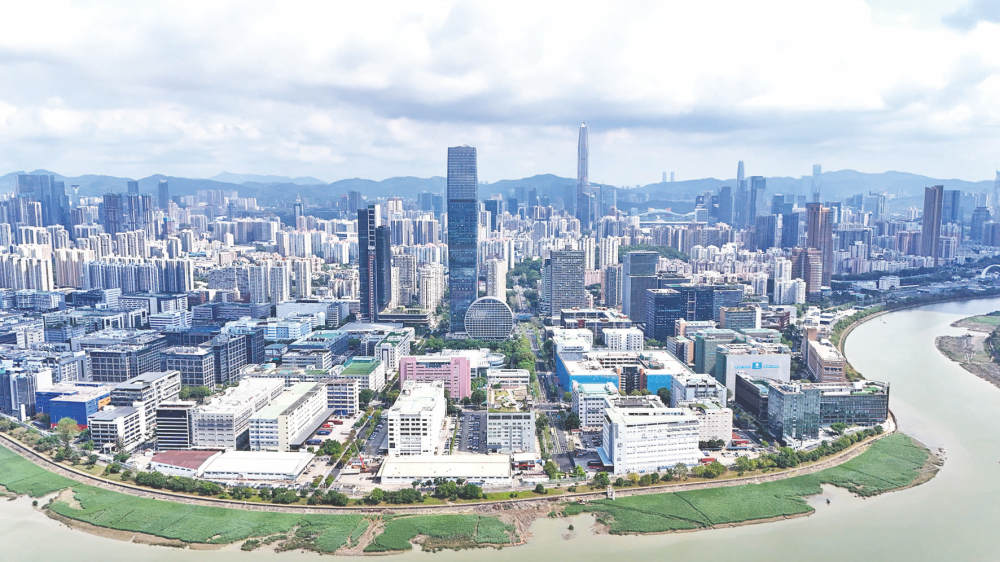
三部门联合发文,明确河套深圳园区货物进出口有关税收政策
证券时报· 2026-01-15 07:56
相关税收政策明确了。 为支持河套深港科技创新合作区深圳园区(以下称"河套深圳园区")联合香港园区打造国际科技创新高地,财政部、海关总署、税务总局日前联合印发 《关于河套深港科技创新合作区深圳园区货物进出口有关税收政策的通知》,自2026年2月10日起实施。 证券时报各平台所有原创内容,未经书面授权,任何单位及个人不得转载。我社保留追 究相关 行 为主体法律责任的权利。 转载与合作可联系证券时报小助理,微信ID:SecuritiesTimes END 此外,免税科研货物及其研发成品在海关监管区域内流通时,参照通知相关规定,补缴进口税收。从海关监管区域经"一线"离境的货物,涉及出口关税应 税商品的征收出口关税。出口货物增值税、消费税政策按现行规定执行。据悉,该税收政策所附第一批货物清单涵盖"设备及零配件、器具、耗材、文 献、标本、动物及其产品"等6类509项货物,有利于创新主体降低成本,成为河套深圳园区衔接国际科研政策的重大突破和优势,将推动深港双方互利合 作、协同推进科技创新和产业发展,支持香港融入国家发展大局,打造国际科技创新高地,推动粤港澳大湾区高质量发展。 河套深港科技创新合作区是粤港澳大湾区内唯一一个以 ...
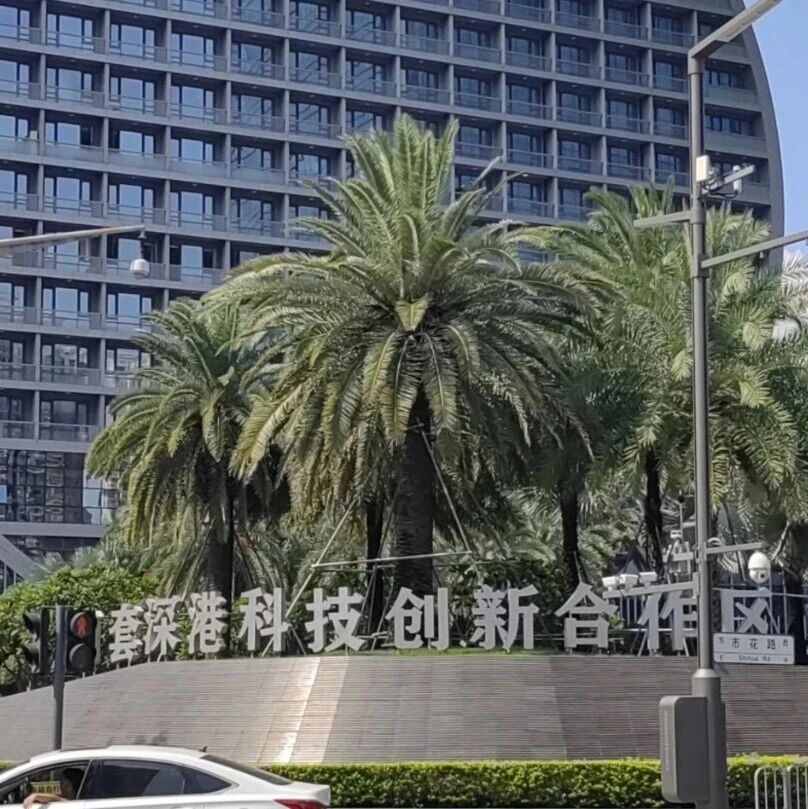
从全球榜单看中国创新(人民日报)
Ren Min Ri Bao· 2026-01-15 07:53
Group 1 - The core viewpoint of the articles highlights China's significant rise in global innovation, as evidenced by its strong presence in various international scientific rankings and increasing leadership roles in international collaborations [1][2]. - China occupies six out of the top ten cities in the "Nature Index - Research Cities," reflecting its robust research output and technological development capabilities [1]. - In 2024, China's R&D expenditure is projected to exceed 3.6 trillion yuan, with R&D spending as a percentage of GDP surpassing that of some developed countries, indicating a strong commitment to innovation [1]. Group 2 - The enhancement of China's innovation capabilities is closely linked to a systematic approach to its technology framework, including strategic investments in key sectors like integrated circuits and commercial aerospace [2]. - The establishment of three major international science and technology centers in China is expected to further promote clustered innovation development and enhance the role of leading cities [2]. - China's market size and diverse application scenarios provide a fertile ground for rapid technological iteration and commercialization, exemplified by the projected growth of generative AI users to 515 million by June 2025 [2]. Group 3 - While China excels in applied innovation and scaling, there remains a need for deeper breakthroughs in foundational scientific research, emphasizing the importance of bridging the innovation and industrial chains [3]. - The focus on emerging scientific questions and new research areas is crucial for sustaining long-term innovation efforts, despite the current emphasis on trending disciplines [3]. - China's technological advancements are achieved under challenging conditions, and the country aims to continue its path toward becoming a technology powerhouse while fostering global cooperation [3].
又一位!95后青年学者自美回国
Guan Cha Zhe Wang· 2026-01-15 04:04
Core Viewpoint - The article highlights the return of Chinese scholar Zheng Yu from the United States to join Peking University, emphasizing her significant academic achievements and the growing trend of top scientists returning to China due to improved academic opportunities and concerns about the Western research environment [1][4]. Group 1: Academic Background and Achievements - Zheng Yu, a young scholar focused on wearable devices, has transitioned from MIT to Peking University as a researcher and doctoral advisor [1]. - She graduated from Nankai University in 2017 and pursued her PhD at Stanford University under a renowned scholar in flexible electronics [1]. - After completing her PhD in 2022, she conducted postdoctoral research at MIT and received the "Young Chemist Award" from IUPAC and Solvay Group for her doctoral thesis [1]. Group 2: Research Focus and Applications - Zheng Yu's research areas include organic functional materials, polymer physics, and bioelectronic devices, with a focus on developing precise medical devices and efficient smart computing systems [3]. - Her research group aims to construct multifunctional integrated dynamic polymer networks at the molecular level, exploring the relationship between polymer network structures and the macroscopic performance of materials and devices [4]. - The research is divided into three main areas: transport mechanisms of organic mixed ionic-electronic conductors, molecular mechanisms of conductive polymer network mechanics, and the design of new flexible and stretchable packaging materials [4]. Group 3: Trends in Scientific Community - There is a noticeable trend of overseas scientists returning to China, driven by various factors including a lack of belonging in the West and concerns about the political environment in the U.S. [4]. - The increasing academic strength and talent pool in China are cited as major attractions for these researchers [4].

河套深港科技创新合作区深圳园区货物进出口有关税收政策公布
Zhong Guo Xin Wen Wang· 2026-01-14 17:27
Core Viewpoint - The Chinese Ministry of Finance, General Administration of Customs, and State Taxation Administration have jointly issued a notification to clarify tax policies for the import and export of goods in the He Tao Shenzhen-Hong Kong Science and Technology Innovation Cooperation Zone, effective from February 10, 2026, to support the creation of an international highland for technological innovation in collaboration with Hong Kong [1][2]. Group 1: Tax Policies - The notification establishes a customs supervision area in the He Tao Shenzhen-Hong Kong Science and Technology Innovation Cooperation Zone, which is divided into a "first line" with Hong Kong and a "second line" with other regions of the People's Republic of China [1]. - Enterprises registered in the customs supervision area with independent legal status, research institutions, and certain non-enterprise units can import self-used scientific research goods from Hong Kong without paying import taxes, including customs duties, value-added tax, and consumption tax [1]. - When tax-exempt research goods and their R&D products circulate within the customs supervision area, any applicable import taxes must be paid if the goods are transferred to eligible entities due to reasons such as bankruptcy or deregistration [1]. Group 2: Impact on Cooperation and Development - The implementation of these policies is expected to reduce the cross-border flow costs of research goods between Shenzhen and Hong Kong, promoting mutual cooperation and collaborative technological innovation and industrial development [2]. - The policies support Hong Kong's integration into the national development framework, aiming to establish an international technological innovation hub and contribute to the high-quality development of the Guangdong-Hong Kong-Macao Greater Bay Area [2].
财政部等三部门发布《关于河套深港科技创新合作区深圳园区货物进出口有关税收政策的通知》
智通财经网· 2026-01-14 13:20
Core Viewpoint - The announcement by the Ministry of Finance, General Administration of Customs, and State Taxation Administration outlines tax policies for the He Tao Shenzhen-Hong Kong Technology Innovation Cooperation Zone, allowing certain entities to import research goods tax-free under specific conditions [1][3]. Group 1: Tax Exemption Policies - The He Tao Shenzhen Zone will implement a customs supervision area with a "one line" designation for imports from Hong Kong, allowing eligible entities to import self-used research goods without paying import duties, VAT, or consumption tax [1][3]. - Eligible entities include independent legal entities registered in the customs supervision area, research institutions, and certain private non-enterprise units [3][4]. - Goods that are prohibited from importation or listed in the "Major Technological Equipment and Products Not Exempt from Import Tax" catalog are excluded from this exemption [1][3]. Group 2: Management and Compliance - A customs electronic ledger will be established for managing tax-exempt research goods, utilizing information technology for oversight and potential audits [4]. - Entities can voluntarily choose to pay import taxes on exempt goods, but if they waive their tax exemption status, they cannot reapply for the same goods within 36 months [4][5]. - The Shenzhen Municipal Government will define the criteria and management requirements for recognizing eligible entities [5][6]. Group 3: Regulations on Goods Flow - Tax-exempt research goods entering the mainland from the customs supervision area must comply with existing import regulations and may require tax payments [5][6]. - Goods that are exported from the customs supervision area may be subject to export duties, with VAT and consumption tax policies following current regulations [6][8]. - The announcement will take effect on February 10, 2026, and will apply to the specified customs supervision area [8][10].
三部门明确河套深港科技创新合作区深圳园区货物进出口有关税收政策,自2月10日起执行
Sou Hu Cai Jing· 2026-01-14 13:04
Core Viewpoint - The Ministry of Finance, General Administration of Customs, and State Taxation Administration announced new tax policies for the He Tao Shenzhen-Hong Kong Science and Technology Innovation Cooperation Zone, effective from February 10, 2026, aimed at facilitating the import of research goods for eligible entities within a specific customs supervision area [1] Group 1: Tax Policies - The customs supervision area in the He Tao Shenzhen Park will operate under a "first line" arrangement with the Hong Kong Special Administrative Region, allowing eligible enterprises and research institutions to import self-used research goods exempt from import duties, VAT, and consumption tax [1] - Goods entering the mainland from the customs supervision area will follow a "second line" protocol, where tax-exempt research goods and their R&D products must comply with customs procedures, and any applicable import taxes must be paid by the benefiting entities [1] - If import taxes have already been paid or supplemented in the "first line" or within the customs supervision area, no additional import taxes will be required at this stage [1]