虚拟货币

Search documents
月薪可观!反洗钱师为何成企业抢手资源?
Sou Hu Cai Jing· 2025-12-10 04:18
Core Insights - The recent meeting involving thirteen core departments has classified virtual currency-related activities, including stablecoins, as illegal financial activities due to their inability to meet customer identification and anti-money laundering requirements [1][2] - The regulatory shift marks a new phase in virtual currency oversight, particularly emphasizing the risks associated with stablecoins, which have a circulation scale exceeding $184 billion [2][4] Regulatory Changes - The meeting highlighted the core flaws of stablecoins, particularly their failure to comply with basic regulatory requirements such as customer identification and anti-money laundering [2] - The regulatory tightening is a continuation of China's stance on virtual currencies since 2013, when Bitcoin was defined as a "specific virtual commodity" [2] Risk Identification - The regulatory upgrade targets three main risks: the extreme volatility of the virtual currency market, the rapid expansion of the stablecoin market with questionable issuance mechanisms and reserve transparency, and the use of stablecoins in illegal activities [4] - From January to October 2025, 47 cases of fraud related to stablecoins were reported, involving a total of 5.6 billion yuan [4] Impact on Business Activities - The new regulations will strictly prohibit any business activities related to stablecoins within the country, exposing individuals and institutions to legal risks if they engage in issuance, trading, or related services [4] Compliance Obligations - Financial institutions face increased compliance pressure, as they are prohibited from providing any services related to virtual currency activities and must enhance customer due diligence [5] - The development of the digital yuan, a state-issued legal digital currency, contrasts sharply with the anonymity and regulatory challenges posed by stablecoins [5] Professional Opportunities - The demand for professionals in the anti-money laundering field is expected to rise significantly, especially with the implementation of the new Anti-Money Laundering Law on January 1, 2025 [6][9] - The introduction of the Anti-Money Laundering Specialist certification exam will cater to various levels of professionals, with the exam scheduled for March 21, 2026 [6] Certification and Recognition - The Anti-Money Laundering Specialist certificate will be issued by the China Enterprise Financial Management Association, ensuring its authority and industry recognition [7] - Professionals holding this certification can expect a significant salary increase compared to non-certified individuals, making it a valuable asset in the increasingly stringent compliance landscape [9]

多部门联手持续打击“炒币”
Sou Hu Cai Jing· 2025-12-09 21:26
Core Viewpoint - The recent surge in virtual currency investment is accompanied by significant risks, prompting regulatory bodies in China to issue warnings against the use of virtual currencies as legal tender and to highlight the dangers of speculative trading [1][3]. Group 1: Regulatory Actions - A joint risk warning was issued by seven associations, including the China Internet Finance Association, emphasizing that virtual currencies cannot circulate as money within China and that no tokenization of real-world assets has been approved [1][3]. - The People's Bank of China, along with other governmental departments, reiterated that virtual currency-related activities are illegal financial activities, specifically naming stablecoins and their inherent risks [3][4]. Group 2: Market Dynamics - The virtual currency market has seen increased speculative activities, with social media platforms like Xiaohongshu and Weibo promoting "coin trading" through posts from anonymous users claiming substantial profits [1][2]. - Bitcoin's price has experienced significant volatility, with a notable drop of 30% in mid-November and a further decline to below $89,000 in early December, leading to substantial losses for many investors [2][1]. Group 3: Investor Guidance - Investors are advised to avoid speculative trading in virtual currencies and to choose legitimate investment channels, such as licensed financial institutions, to safeguard their assets [5]. - The public is encouraged to report any suspicious virtual currency activities to regulatory authorities and to be vigilant against potential scams and illegal fundraising activities [5].
这一行业在境内彻底歇菜
第一财经· 2025-12-07 15:53
Core Viewpoint - The article discusses the recent joint efforts by seven associations in China to issue a risk warning against illegal activities related to virtual currencies and real-world asset tokens, emphasizing that these currencies are not recognized as legal tender and pose significant risks [3][4][5]. Group 1: Regulatory Actions - Seven associations, including the China Internet Finance Association and the China Banking Association, have issued a risk warning prohibiting their members from participating in virtual currency and real-world asset token activities within China [3][4]. - The People's Bank of China and 13 other departments have defined stablecoins as a form of virtual currency and are committed to combating illegal financial activities related to virtual currencies [3][4]. Group 2: Risks Associated with Virtual Currencies - The warning highlights that virtual currencies, such as π coins, lack substantial technological innovation and clear commercial applications, making them susceptible to fraud and market manipulation [5][6]. - The article notes that the volatility of virtual currencies, exemplified by Bitcoin's price fluctuations, can lead to speculative trading and illegal activities, including Ponzi schemes [7]. Group 3: Prohibitions for Financial Institutions - Financial institutions, including banks and payment service providers, are prohibited from offering services related to the issuance and trading of virtual currencies and real-world asset tokens [6]. - Internet platform companies are also barred from providing marketing or technical services for virtual currency activities, ensuring compliance with regulatory requirements [6].

7家协会联合提示 警惕虚拟货币领域无序创新
Bei Jing Shang Bao· 2025-12-07 15:28
Core Viewpoint - The People's Bank of China emphasizes the need to combat virtual currency trading and related speculative activities, highlighting the risks associated with various forms of virtual currencies and tokenization of real-world assets [1][2]. Group 1: Risk Warnings - Seven associations, including the China Internet Finance Association and the China Banking Association, jointly issued a risk warning regarding illegal activities related to virtual currencies, including false asset risks and speculative trading risks [1][2]. - The warning specifically includes risks associated with stablecoins and real-world asset tokens, which have gained popularity in 2025, with domestic companies participating in related activities in Hong Kong [2]. Group 2: Regulatory Actions - Financial management authorities in China have not approved any activities related to the tokenization of real-world assets, and engaging in such activities may lead to illegal financial operations [2][4]. - Institutions are prohibited from conducting any business related to virtual currencies and real-world asset tokens, and must not provide financial services or credit support to virtual currency mining projects [4]. Group 3: Public Awareness - The public is urged to remain vigilant against various forms of virtual currency and real-world asset token activities, as these are often associated with speculative trading and fraudulent schemes [4][5]. - Despite the prohibition of virtual currency trading, there are still reports of individuals attempting to recruit new users for virtual currency speculation through online platforms [4][5].
亲历币圈杀猪盘,我是如何一步步脱困的
虎嗅APP· 2025-12-07 13:06
Core Viewpoint - The article highlights the increasing risks associated with virtual currencies, particularly focusing on scams disguised as legitimate investment opportunities, emphasizing the need for heightened vigilance among investors [4][5][6]. Regulatory Environment - Recent regulatory actions in China target not just virtual currencies but also the fraudulent schemes that exploit these concepts, indicating a growing concern over illegal fundraising and scams [4][5]. - The People's Bank of China reiterated that virtual currencies do not hold the same legal status as fiat currencies and should not be circulated in the market [4]. Scam Mechanisms - Scammers are utilizing sophisticated tactics to lure investors, often presenting themselves as knowledgeable individuals in investment groups, which creates a false sense of security [5][10]. - The article describes a specific case where an individual was gradually manipulated into investing in virtual currencies through a series of seemingly legitimate interactions and small initial profits [10][13][14]. Investor Experience - The narrative illustrates how trust is built over time through consistent communication and small wins, leading to larger investments in high-risk schemes [14][22]. - The individual in the story experienced a gradual escalation from traditional stock options to cryptocurrency options, showcasing how scammers pivot their strategies to maintain engagement and investment [16][18][25]. Warning Signs - Key indicators of potential scams include the requirement to share personal investment information, the use of multiple accounts by the same scammer, and the sudden urgency to invest more during market downturns [32][34][35]. - The article emphasizes the importance of recognizing these red flags and maintaining skepticism, especially when dealing with unfamiliar investment platforms [6][40]. Conclusion - The article concludes with a cautionary note about the dangers of succumbing to greed and the importance of being aware of the risks associated with virtual currencies and investment schemes [40][41].

七家协会联合颁布禁令 这一行业在境内彻底歇菜
Di Yi Cai Jing· 2025-12-07 04:42
Core Viewpoint - The joint announcement by seven associations emphasizes the prohibition of participation in illegal virtual currency activities within China, highlighting the risks associated with virtual currencies and related tokens [1][2]. Group 1: Regulatory Actions - Seven associations, including the China Internet Finance Association and the China Banking Association, issued a risk warning against illegal activities related to virtual currencies and real-world asset tokens, mandating that member units refrain from engaging in such activities domestically [1][2]. - The People's Bank of China and 13 other departments convened to establish a coordination mechanism to combat virtual currency trading, defining stablecoins as a form of virtual currency and stressing the need for ongoing efforts to curb illegal financial activities related to virtual currencies [1][2]. Group 2: Risks Associated with Virtual Currencies - The associations reiterated that virtual currencies are not issued by monetary authorities and do not hold the same legal status as fiat currencies, thus cannot be circulated as currency within China [2]. - Stablecoins currently fail to meet customer identification and anti-money laundering requirements, posing risks of being used for money laundering, fundraising fraud, and illegal cross-border fund transfers [2]. - Tokens like π coin lack substantial technological innovation and clear commercial applications, leading to significant fraud and market manipulation issues, with many scams operating under their guise [2]. Group 3: Prohibitions on Financial Services - Member units of banks and payment institutions are prohibited from providing services related to the issuance and trading of virtual currencies and real-world asset tokens, as well as from supporting virtual currency mining projects [3]. - Securities, fund, and futures institutions are also barred from offering services for the issuance and trading of virtual currencies and related financial products [3]. - Internet platform companies must not provide marketing or technical services for the issuance and trading of virtual currencies and real-world asset tokens, ensuring compliance in information dissemination [3]. Group 4: Public Awareness and Market Volatility - The risk warning highlights the extreme price volatility of virtual currencies, which are often used for speculative trading and fraudulent activities [4]. - Recent Bitcoin price fluctuations illustrate this volatility, with significant daily price changes reported, emphasizing the need for public awareness and caution against engaging in virtual currency activities [4].
七家协会联合颁布禁令,这一行业在境内彻底歇菜
Di Yi Cai Jing· 2025-12-07 04:18
Core Viewpoint - The seven associations in China have issued a risk warning prohibiting their member units from participating in virtual currency and real-world asset token issuance and trading activities within the country, following a crackdown by 13 government departments on cryptocurrency speculation [1][2]. Group 1: Regulatory Actions - Member units are explicitly forbidden from engaging in any activities related to the issuance and trading of virtual currencies and real-world asset tokens within China [1][2]. - The associations emphasize that virtual currencies are not issued by monetary authorities and do not hold the same legal status as legal tender in China [2]. - Institutions and individuals conducting exchanges between legal currency and virtual currencies, or engaging in the issuance and financing of real-world asset tokens, are deemed to be involved in illegal financial activities [2][3]. Group 2: Risks Associated with Virtual Currencies - The risk warning highlights that virtual currencies are often used for speculative trading and illegal activities such as Ponzi schemes and fraud [4]. - Specific examples of risks include the volatility of virtual currency prices, with Bitcoin experiencing significant fluctuations, such as dropping below $85,000 and then rebounding above $90,000 within a few days [4]. - The warning also identifies "air coins" like π coin as lacking substantial technological innovation and clear commercial applications, making them susceptible to fraud and market manipulation [2]. Group 3: Compliance Requirements - Financial institutions, including banks and payment service providers, must not offer any services related to the issuance and trading of virtual currencies or real-world asset tokens [3]. - Member units are required to conduct thorough customer due diligence to identify any involvement in virtual currency transactions or money laundering risks [3]. - Internet platform companies must ensure compliance by not providing marketing or technical services for virtual currency-related activities [3].
七协会联合提示虚拟货币风险 空气币、稳定币、RWA均被点名
Zhong Guo Jing Ying Bao· 2025-12-07 02:52
Core Viewpoint - The recent joint announcement by seven industry associations in China highlights the illegal nature of virtual currencies and related activities, aiming to strengthen financial security and protect public assets [1][2]. Group 1: Regulatory Actions - The "Risk Warning" issued on December 5, 2025, targets illegal activities associated with virtual currencies, including Ponzi schemes and money laundering, emphasizing the need for public awareness [1][2]. - The warning identifies specific new types of virtual currencies, such as air coins, stablecoins, and real-world asset (RWA) tokens, which are linked to illegal fundraising and fraud [2][3]. - The document clarifies that virtual currencies are not issued by monetary authorities and do not have the same legal status as fiat currencies, prohibiting their circulation in China [2][3]. Group 2: Emerging Trends in Illegal Activities - There is a noted trend of criminals using new technologies and concepts to disguise illegal activities, such as presenting air coins as innovative projects [3]. - Virtual currencies are increasingly being used in diverse roles within criminal activities, serving as tools for illegal operations, means of settlement, or mere facades for scams [3]. - Criminals often operate from abroad while targeting domestic residents through online platforms, complicating regulatory enforcement [3]. Group 3: Public and Institutional Responsibilities - Industry institutions are urged to adhere strictly to regulatory requirements by not engaging in any virtual currency-related services and to report suspicious activities [6]. - Public awareness is crucial; individuals are advised to remain vigilant against exaggerated claims of high returns and to avoid engaging with unverified foreign platforms [6]. - The associations recommend that the public report any suspicious activities related to virtual currencies to regulatory authorities or law enforcement [5][6].
比特币12月开门就迎“过山车”:虚拟资产狂潮渐退,监管重拳筑牢风险防线
Sou Hu Cai Jing· 2025-12-03 12:44
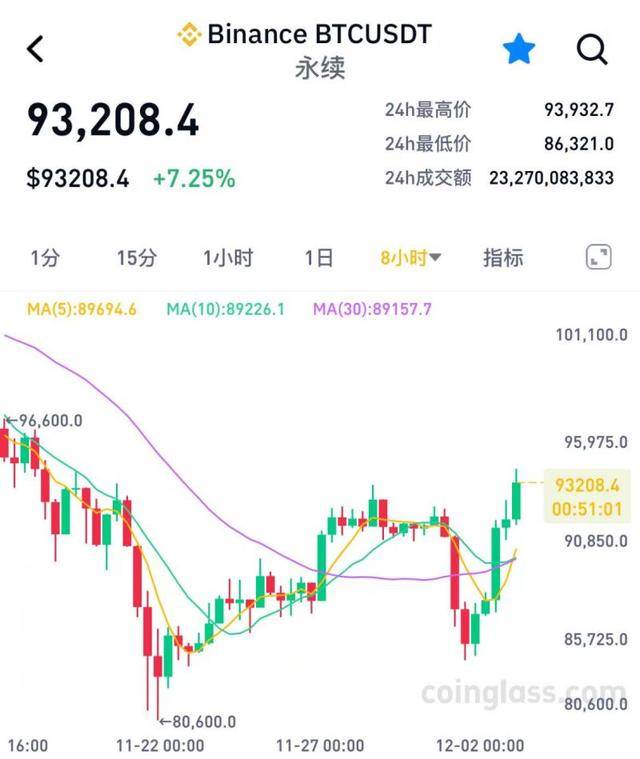
Market Overview - Bitcoin experienced significant volatility in early December, dropping below $85,000 on December 1 with a maximum daily decline exceeding 7%, before rebounding above $90,000 on December 2, closing at $93,208.4, a 7.25% increase within 24 hours [2][3] - Over 120,000 traders faced liquidation in the last 24 hours, with total liquidations amounting to approximately $500 million [2] Price Volatility Factors - The price of Bitcoin is heavily influenced by market sentiment, lacking backing from national credit or actual cash flow, leading to extreme price fluctuations due to policy changes, technical vulnerabilities, or market emotions [2] - The high leverage trading structure within the Bitcoin ecosystem can trigger a "death spiral" of price drops and liquidations from minor price changes [2] - Bitcoin's price has seen over 50 instances of declines exceeding 10% since 2010, with an average drop of 30% during these corrections [3] Market Dynamics - The cryptocurrency market is characterized by insufficient depth and weak liquidity, making it susceptible to significant price swings from large trades or sudden shifts in sentiment [4] - Factors contributing to the recent downturn include persistent outflows from Bitcoin ETFs, uncertainty surrounding Federal Reserve interest rate cuts, selling by large investors, and tightening domestic policies [4] - Data indicates that BlackRock's Bitcoin spot ETF saw a net outflow of $2.34 billion in November, with trading volumes on centralized exchanges dropping to $1.59 trillion, a 26.7% decline from October [4] Regulatory Environment - The Chinese government continues to enforce strict regulations against cryptocurrency trading, emphasizing that virtual currencies do not hold the same legal status as fiat currencies and are considered illegal financial activities [6] - Legal experts warn that engaging in cryptocurrency investments poses legal risks, as activities related to virtual currencies may be deemed invalid under civil law [6] Future Outlook - Experts express skepticism about Bitcoin's future, suggesting it cannot replace fiat currencies and lacks intrinsic value as an investment asset [5] - The ongoing tightening of regulations by major economies may signal the end of the "currency experiment" that Bitcoin represents, with the potential for significant market adjustments [5][9] - The future of stablecoins is contingent on the speed and rigor of regulatory compliance, with products relying heavily on high leverage facing increased scrutiny [9]
稳定币监管风暴来袭!中外政策大不同,创新与金融安全如何平衡
Sou Hu Cai Jing· 2025-12-03 11:41
Core Viewpoint - The recent high-level meeting convened by the People's Bank of China (PBOC) involving 14 departments marks a significant escalation in the regulatory oversight of virtual currencies, reflecting the increasing activity in the cryptocurrency market and the emergence of underground trading channels [2][4]. Group 1: Regulatory Coordination - The meeting's backdrop is the recent resurgence of the virtual currency market, with various underground trading methods becoming prevalent [4]. - The collaboration among 14 departments is not merely symbolic; it includes the PBOC for overall coordination, the Ministry of Public Security for crime prevention, the Cyberspace Administration for monitoring online platforms, and the State Administration of Foreign Exchange to prevent capital outflow [5]. - Enhanced efficiency in tackling virtual currency crimes is noted, with the introduction of specialized blockchain tracing systems that can track virtual currency flows with high precision [7]. Group 2: Regulatory Stance on Stablecoins - China has classified stablecoins as illegal financial activities, contrasting sharply with regulatory approaches in other regions like the EU and the US, which are exploring licensing frameworks [11][13]. - The decision to prohibit stablecoins stems from past experiences with financial losses, emphasizing a preventive approach to regulation [13]. - The rise of stablecoins like USDT and USDC, which claim to be pegged to the US dollar, poses significant risks, as highlighted by the collapse of TerraUSD [11]. Group 3: Global Regulatory Landscape - The global regulatory environment for virtual currencies is complex, with varying approaches across countries, leading to challenges in enforcement and compliance [19]. - The Financial Action Task Force (FATF) has struggled to implement its travel rule effectively, indicating a lack of uniformity in global standards [19]. - China's commitment to a risk-based approach in global governance reflects its focus on financial security amidst evolving technological challenges [17]. Group 4: Future Trends and Implications - The trend towards stricter regulation in China is expected to continue, with no signs of loosening oversight [21]. - Institutional investors are becoming more cautious about engaging with virtual currencies, while blockchain technology finds legitimate applications in areas like supply chain finance and cross-border payments [22]. - The emphasis on maintaining regulatory boundaries in financial innovation suggests a balanced approach to technological advancement and oversight [25][26].