
核电

Search documents
看好海风成长潜力,火水核价值回归可期:电力行业2026年度投资策略
Huachuang Securities· 2025-11-26 10:46
Group 1 - The report maintains a positive outlook on offshore wind growth potential, while the value recovery of thermal, hydropower, and nuclear power is expected [2][10] - The overall performance of the power sector in 2025 is projected to lag behind the Shanghai Composite Index, with thermal power showing some performance release due to lower coal prices [5][12] - The report emphasizes the changing positioning of offshore wind in the 14th and 15th Five-Year Plans, indicating a potential growth inflection point due to a low current base [10][20] Group 2 - The report highlights the favorable policy environment and potential for valuation recovery in traditional green energy, particularly offshore wind, which is still in its early stages of development [6][21] - The traditional green energy sector is under pressure, but there are expectations for a pricing rebound as subsidy payments accelerate and outstanding issues are resolved [25][29] - The report notes that the valuation framework for green energy may undergo reconstruction, with a shift towards favoring companies with higher return on equity (ROE) [27][29] Group 3 - Thermal power is expected to transition from a cyclical to a utility-like asset, with long-term contract prices stabilizing and potential increases in capacity prices in 2026 [39][46] - The report identifies several thermal power companies, such as Jianneng Power and Huadian International, as having strong relative performance and dividend yields exceeding 5% [47][48] - The report anticipates that the market may reassess the value of hydropower and nuclear power assets, which have underperformed recently but are expected to regain attention as market conditions change [51][56] Group 4 - Hydropower and nuclear power are viewed as having long-term value recovery potential, with hydropower expected to return to a defensive allocation logic if market conditions shift [51][52] - The report indicates that nuclear power is experiencing a valuation reset due to stable growth expectations and the approval of new units, which could attract more investment if market risk appetite declines [56]
战时现巨贪!乌克兰亿级能源黑钱曝光,泽连斯基昔日伙伴涉案
Sou Hu Cai Jing· 2025-11-26 06:29
Core Insights - A significant anti-corruption operation was launched by Ukraine's National Anti-Corruption Bureau (Nabu), targeting high-profile individuals in the political and business sectors amid ongoing challenges due to Russian military actions [1][2] Group 1: Anti-Corruption Operation - Nabu conducted searches at 70 locations across Ukraine, including the homes and offices of key officials such as the current Minister of Justice and former Minister of Energy [2] - The operation revealed extensive corruption involving the misappropriation of funds intended for energy infrastructure defense against Russian attacks, with evidence collected over 15 months [2][4] Group 2: Financial Implications - The total amount involved in the corruption case is estimated at $100 million, with large sums of cash found during the searches [6] - The misallocation of funds has raised concerns about the safety of nuclear facilities, as contracts meant for protective measures were diverted [8] Group 3: Political Reactions - President Zelensky supports the anti-corruption efforts, despite the implications for his close associates, reflecting a complex political landscape [10] - Public outrage has surged as citizens learn that funds meant for energy security were misused, exacerbating existing frustrations over power outages [12] Group 4: Broader Context - The corruption issue in Ukraine is longstanding, with high levels of corruption reported in sectors like energy and infrastructure, exacerbated by the ongoing war [17] - The current anti-corruption scandal may impact Western aid, as the U.S. and EU have emphasized the importance of anti-corruption measures in their support for Ukraine [16][20] Group 5: Future Outlook - The outcome of this anti-corruption initiative could either restore public trust and demonstrate a commitment to reform or lead to further political strife if perceived as a power struggle [22]


国家能源局党组第四轮巡视完成反馈
国家能源局· 2025-11-26 01:33
Group 1 - The National Energy Administration (NEA) has deployed four inspection teams to conduct routine inspections and special inspections on various departments, highlighting the importance of oversight in energy management [2][3] - The inspection feedback pointed out several issues within the inspected organizations, including insufficient implementation of major decisions from the central government and weaknesses in fulfilling responsibilities [3] - The NEA emphasized the need for organizations to enhance their internal motivation for rectification, with a focus on accountability and effective measures to address identified problems [4] Group 2 - The NEA called for a comprehensive understanding of President Xi Jinping's important discussions on inspection work and the implementation of the 20th Central Committee's requirements regarding energy [4] - There is a strong emphasis on integrating party building with business operations to enhance the political and organizational functions of party organizations [4] - The NEA highlighted the necessity of maintaining a strict approach to governance and improving the quality of rectification efforts, with serious consequences for superficial or false corrections [4]
秦山核电:绿色引擎驱动生态能源新范式
Zhong Guo Huan Jing Bao· 2025-11-26 00:43
Core Insights - Qinshan Nuclear Power Base represents over 40 years of China's nuclear power development, contributing significantly to clean energy supply in the Yangtze River Delta region [1] - The base has transitioned from relying on imported technology to achieving self-sufficiency and innovation in nuclear power technology, marking China as the seventh country capable of independently designing and constructing nuclear power plants [3] - The integration of nuclear power with solar energy has created a hybrid power generation model, enhancing land use efficiency and energy supply resilience [4] Innovation and Technology - The first concrete pour at Qinshan in 1985 marked the beginning of China's nuclear energy journey, with significant advancements in technology achieved through collaboration among over 100 research institutions and 600 manufacturing companies [3] - The successful commissioning of Qinshan Nuclear Power Station in 1991 ended China's lack of nuclear power and laid the groundwork for the development of the "Hualong One" third-generation nuclear technology [3] - Continuous improvements in equipment localization, digital control systems, and nuclear fuel self-research have been pivotal in advancing China's nuclear capabilities [3] Environmental Impact - By the end of 2024, Qinshan Nuclear Power is expected to have generated over 870 billion kilowatt-hours of electricity, resulting in a reduction of approximately 800 million tons of CO2 emissions, equivalent to planting around 550 West Lake-sized forests [5] - The surrounding environment has shown significant improvement, with decreasing PM2.5 levels and increasing days of good air quality, demonstrating the compatibility of nuclear energy development with ecological preservation [5] Community Engagement - The Qinshan Nuclear Power Base emphasizes public communication and education, with its science museum receiving over 110,500 visitors in 2024, fostering interest in clean energy and technology among youth [6] - Various outreach programs have been established to alleviate public concerns about nuclear energy, contributing to a positive social environment for the long-term development of nuclear power [6] Applications and Future Developments - Qinshan has pioneered nuclear heating in southern China, benefiting over 4,000 households and expanding to public and commercial buildings, thus enhancing living standards and reducing energy consumption [7] - The facility is also advancing in isotope research and production, with the launch of the "Hefei No. 1" brand for carbon-14 isotopes, marking a significant step towards self-sufficiency in this sector [7][8] - The establishment of a large-scale isotope industry park is projected to generate an annual output value exceeding 20 billion yuan, contributing to local economic growth and enhancing China's competitiveness in the isotope industry [8]

英国一核电站被批花7亿英镑只救了上百条鱼
Huan Qiu Shi Bao· 2025-11-25 22:57
【环球时报综合报道】耗资7亿英镑,到底能救下几条鱼? 英国《泰晤士报》25日披露了该国欣克利角 C核电工程的"环保账单"。 报道称,位于英国萨默塞特郡的欣克利角C核电工程号称拥有同类项目中"最完善的鱼类保护措施",除 去被媒体戏称为"鱼类迪斯科"的声学驱赶装置,还设有低流速进水罩以及一整套"鱼类遣返系统",通过 特别的管道设计让误入设施的鱼类返回安全水域、避免死亡,这些昂贵的"环保设施"造价总计超过7亿 英镑。 相关数据立刻引发了英国反对党方面的批评。英国改革党政策主管优素福称,他喜欢鱼类以及所有动 物,但是在欣克利角C核电站,相关环保措施正为每条鱼花费数十万英镑,"当有的退休老人连供暖费 都交不起的时候,英国的鱼类、蝾螈或蝙蝠得享的权益却比这个国家的很多居民都要高。" 据英国《卫报》报道,为重振核电行业,首相斯塔默于今年2月成立了政府核设施监管工作组。24日, 该工作组在调查报告中称英国已经成为全世界"建造核电设施最昂贵的地方",相关管理规章需要"彻底 重置",只有这样才能降低建造成本、扭转行业衰退。(刘皓然) 该核电站的承建方——法国电力集团(EDF)日前对保护设施的效用进行推演,结果让人大跌眼镜。数 据 ...
花旗上调Oklo目标价至95美元
Ge Long Hui A P P· 2025-11-25 11:32
Group 1 - Citigroup raised the target price for US nuclear power stock Oklo from $68 to $95 [1]
AI的尽头是核电
Ge Long Hui A P P· 2025-11-25 09:53
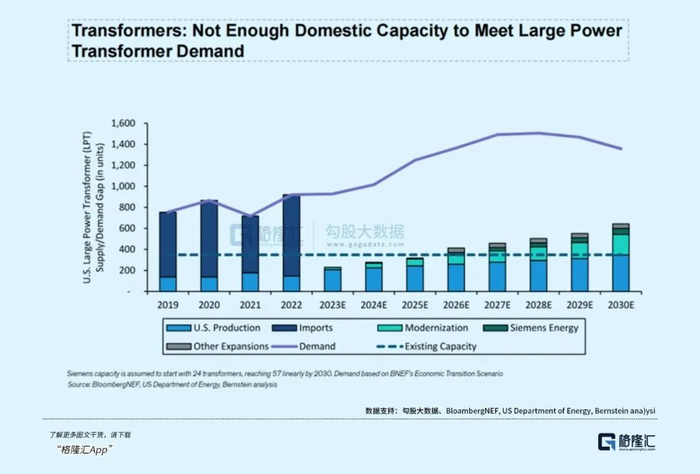
Core Insights - The main argument presented is that the bottleneck for AI development is not funding or algorithms, but rather the availability of electricity and the infrastructure to support it [1][22][27] Group 1: AI's Energy Consumption - AI systems, particularly large models, have significant energy demands, with training a model like GPT-5 consuming 100,000 MWh, enough to power a medium-sized city for a week [1][2] - Daily energy consumption for ChatGPT exceeds 500,000 kWh, which is 17,000 times the average daily usage of a U.S. household [2] - The energy consumption of data centers in the U.S. is projected to rise from 2.5% of total electricity usage to potentially 15% by 2028, with generative AI's energy demand increasing by 105% annually [3] Group 2: Renewable Energy Limitations - Wind and solar energy, while environmentally friendly, have low utilization rates of 36% and 25% respectively, making them unreliable for the continuous operation required by AI [5][10] - The cost of energy storage solutions to stabilize renewable energy supply is prohibitively high, potentially exceeding the costs of building data centers [5][11] - The existing power grid infrastructure struggles to keep pace with the rapid growth in AI energy demands, with significant delays in building new transmission lines [3][11] Group 3: Nuclear Energy's Resurgence - Nuclear power is gaining traction as a reliable energy source for AI, with a utilization rate of 92%, making it suitable for the continuous operation required by AI systems [13][19] - Major tech companies are investing in nuclear energy, with Microsoft signing a 20-year agreement for nuclear power supply and Google ordering small modular reactors (SMRs) [14][19] - The integration of AI into nuclear energy operations can enhance efficiency and reduce operational costs, creating a symbiotic relationship between the two [16][19] Group 4: Future Projections and Industry Dynamics - By 2030, global AI computing power is expected to increase 500 times compared to 2020, leading to a 3-5 times increase in nuclear energy demand [20][21] - The current U.S. legislation is providing subsidies for nuclear energy, positioning it for a significant growth phase [21] - The future landscape will likely see AI data centers co-located with nuclear power plants, facilitating a stable energy supply for AI operations [25][27]


AI的尽头是核电
格隆汇APP· 2025-11-25 09:24
Core Insights - The article emphasizes that the bottleneck for AI development is not funding or algorithms, but rather the availability of electricity and data centers to support AI operations [2] - Major tech companies are increasingly turning to nuclear power as a reliable energy source to meet the growing demands of AI [20][21] Group 1: AI's Energy Consumption - AI systems are consuming vast amounts of electricity, with a single training session for models like GPT-5 requiring 100,000 MWh, enough to power a medium-sized city for a week [3][6] - Daily operations of AI applications like ChatGPT consume over 500,000 kWh, which is 17,000 times the average daily electricity usage of a U.S. household [4] - The energy consumption for inference operations can exceed that of training, leading to a long-term energy demand that is unsustainable without reliable power sources [5] Group 2: Current Energy Landscape - Data centers in the U.S. currently account for 2.5% of total electricity consumption, projected to rise to 15% by 2028, with global data center energy demand expected to grow by 105% annually due to AI [6] - The existing energy infrastructure is struggling to keep pace with AI's rapid growth, with significant delays in building new power plants and transmission lines [6][11] - Renewable energy sources like wind and solar are not sufficient to meet AI's continuous power needs, as their utilization rates are low [7][9] Group 3: Nuclear Power's Resurgence - Nuclear power is gaining traction as a stable energy source for AI, with a utilization rate of 92%, making it a reliable option for continuous operation [14][18] - Major companies like Microsoft and Google are investing in nuclear energy, signing long-term agreements for nuclear power to support their AI data centers [20][21] - The integration of AI into nuclear operations can enhance efficiency and reduce operational costs, making nuclear power more attractive [23][24] Group 4: Future Outlook - The demand for nuclear energy is expected to increase significantly as AI capabilities expand, with projections indicating a 3-5 times rise in nuclear power needs by 2030 [29][30] - The collaboration between AI and nuclear power is seen as a mutually beneficial relationship, where AI can optimize nuclear operations while nuclear power provides the necessary energy for AI [33][37] - The article concludes that the future of AI is closely tied to nuclear energy, positioning it as a critical component for sustaining AI's growth [38]

普京“投其所好”?和平提案暗藏美俄商业大饼,只为“打窝”特朗普!
Jin Shi Shu Ju· 2025-11-25 08:59
AI播客:换个方式听新闻 下载mp3 音频由扣子空间生成 当外交官们正为俄乌冲突和平协议的核心条款争得不可开交时,草案中有一个细节却鲜有人注意:那就 是基于美俄商业关系未来可能"遍地开花"的设想而抛出的"甜头"。 这些提案主要由俄罗斯主权财富基金负责人德米特里耶夫(Kirill Dmitriev)与美国特使威特科夫 (Steve Witkoff)共同敲定,设想在两国间达成一项涵盖能源、稀土和数据中心的"长期经济合作协 议"。双方还计划设立一个用于联合项目的美俄投资基金,以此作为"不再重返冲突的强有力激励"。 这事儿还有另一种解读:这两位由商人转型为外交官的角色,正试图精心炮制一个让美国总统特朗普无 法拒绝的理由,好让他继续留在这个谈判局里。 将宏大的外交政策与商业机会捆绑在一起,已成为这位美国总统处理国际事务的一大特色。 在促成加沙停火之前,特朗普就曾勾勒过将该地区打造成"中东里维埃拉"度假胜地的蓝图。在他的第一 个任期内,在寻求与金正恩缓和关系时,他也曾高声畅想过朝鲜那"很棒的海滩"以及在那儿开发海景公 寓的潜力。 前中情局(CIA)中欧亚分部负责人Rob Dannenberg认为,和平提案中类似的论调背后 ...
中核集团:加快中核海南5、6号机组等重大项目建设
Zhong Guo Dian Li Bao· 2025-11-25 08:56
Core Points - The meeting between China National Nuclear Corporation (CNNC) and Hainan provincial leaders focused on enhancing cooperation in the context of Hainan's Free Trade Port initiative [1][2] - CNNC expressed gratitude for Hainan's support in its industrial development and outlined its commitment to align with Hainan's strategic framework for the Free Trade Port [1] - A strategic cooperation agreement was signed to deepen collaboration on major projects, including the construction of nuclear power units and the development of small reactors in Hainan [2] Group 1 - CNNC's Chairman, Shen Yanfeng, highlighted the importance of Hainan's Free Trade Port as a significant step towards China's high-level opening-up and global economic integration [1] - The meeting emphasized CNNC's full industrial chain advantages and its intention to contribute to Hainan's development through nuclear energy and diversified collaboration [1] - Hainan's provincial leaders acknowledged CNNC's contributions to energy supply and innovation in nuclear technology, setting a foundation for future international cooperation [2] Group 2 - The strategic cooperation agreement (2025 version) aims to accelerate the construction of CNNC's major projects in Hainan, including units 5 and 6 [2] - The agreement also focuses on establishing Hainan's small reactor as a demonstration base for applications, technological innovation, and international collaboration [2] - The meeting was attended by key officials from both CNNC and Hainan provincial government, indicating a strong commitment to ongoing partnership [2]