
机场运营

Search documents
“数据峰会2025”圆满举行 余伟文:香港金管局致力提升香港数据基建 推动实体经济发展
智通财经网· 2025-07-28 09:09
Core Insights - The Hong Kong Monetary Authority (HKMA) is committed to enhancing Hong Kong's data infrastructure and ecosystem to facilitate trade financing and support small and medium-sized enterprises (SMEs) [1][2][3] Group 1: Data Infrastructure and Trade Financing - The "Commercial Data Hub" aims to simplify trade financing processes and enhance innovation for SMEs, thereby driving economic growth [1][2] - The Cargox project is being developed to improve the digital ecosystem for trade financing, with pilot banks testing the verification of trade authenticity using logistics data [2][3] - The HKMA is collaborating with the Hong Kong government to connect the "Commercial Data Hub" with the upcoming "Single Trade Window" service, allowing users to share customs data with banks to expedite loan approvals [2][3] Group 2: Credit Data Analysis and Cross-Border Verification - The HKMA is working on a proof-of-concept for "Commercial Credit Database 2.0" to create a credit scoring model for SMEs, which is expected to simplify loan applications and reduce borrowing costs [2][3] - The "Commercial Data Hub" has successfully integrated with the Shenzhen-Hong Kong cross-border data verification platform, enabling banks to process personal and corporate loans more efficiently [3] Group 3: Industry Support and Future Directions - The Hong Kong International Airport is leveraging advanced technologies like blockchain to enhance cargo supply chain efficiency and support SMEs in financing processes [4] - The Hong Kong Banking Association is encouraging member banks to participate in projects related to the "Commercial Data Hub" to accelerate loan approvals and improve risk management for SMEs [5]
天津滨海机场精细化攻坚实现行李提取服务质效突破
Zhong Guo Min Hang Wang· 2025-07-28 09:03
Core Viewpoint - Tianjin Binhai Airport is implementing a comprehensive action plan to enhance luggage service efficiency by 2025, achieving significant improvements in baggage retrieval times, surpassing industry standards by over 20% [1][3]. Group 1: Efficiency Improvement Measures - The airport has set specific targets for luggage retrieval times, aiming for the first piece of luggage to be retrieved within 10 minutes and the last piece within 30 minutes, with an additional challenge to improve these times by at least 10% [3][5]. - A three-phase approach was adopted to optimize baggage handling processes, including timed departures for luggage, limiting the stacking of luggage to no more than four layers, and customizing services based on aircraft types [5][9]. Group 2: Continuous Monitoring and Analysis - A weekly review mechanism has been established to analyze key operational processes, particularly during peak hours, to monitor and optimize loading times, luggage quantity control, and vehicle scheduling [7][9]. - The airport has developed a dual-layer supervision response mechanism that utilizes data analysis to predict high-risk flights and ensure adequate resources are allocated to meet service standards [9]. Group 3: Future Outlook - Tianjin Binhai Airport aims to solidify the improvements in luggage retrieval times and extend successful practices across all flights, enhancing the overall travel experience for passengers [9].
哈尔滨机场停车费24小时收费标准
Sou Hu Cai Jing· 2025-07-28 05:21
Group 1: Harbin Airport Parking Information - The underground parking lot (P4) is located beneath the T2 terminal, with specific entry routes detailed for drivers [1] - The ground parking lot (P1) is situated on the south side of Yingbin Road, with a defined entry route from the highway [1] Group 2: Harbin Airport Parking Fees - Ground parking fees include a 30-minute grace period, with charges of 5 yuan for 30 minutes to 2 hours, and a maximum of 49 yuan for 24 hours [2] - Underground parking fees also include a 30-minute grace period, with charges of 5 yuan for 30 minutes to 2 hours, and a maximum of 97 yuan for 24 hours [2] - Nearby parking options are available through the "Stop Small Helper" app, charging 12 yuan per day for small cars [2] Group 3: Employee Public Welfare Film Screening - A public welfare film screening event commemorating the 80th anniversary of the victory in the Chinese People's Anti-Japanese War is organized by the Harbin Federation of Trade Unions [5] - The first screening features the patriotic film "The Eight Hundred," with outdoor screenings planned for summer and autumn, and indoor screenings for winter and spring [5]

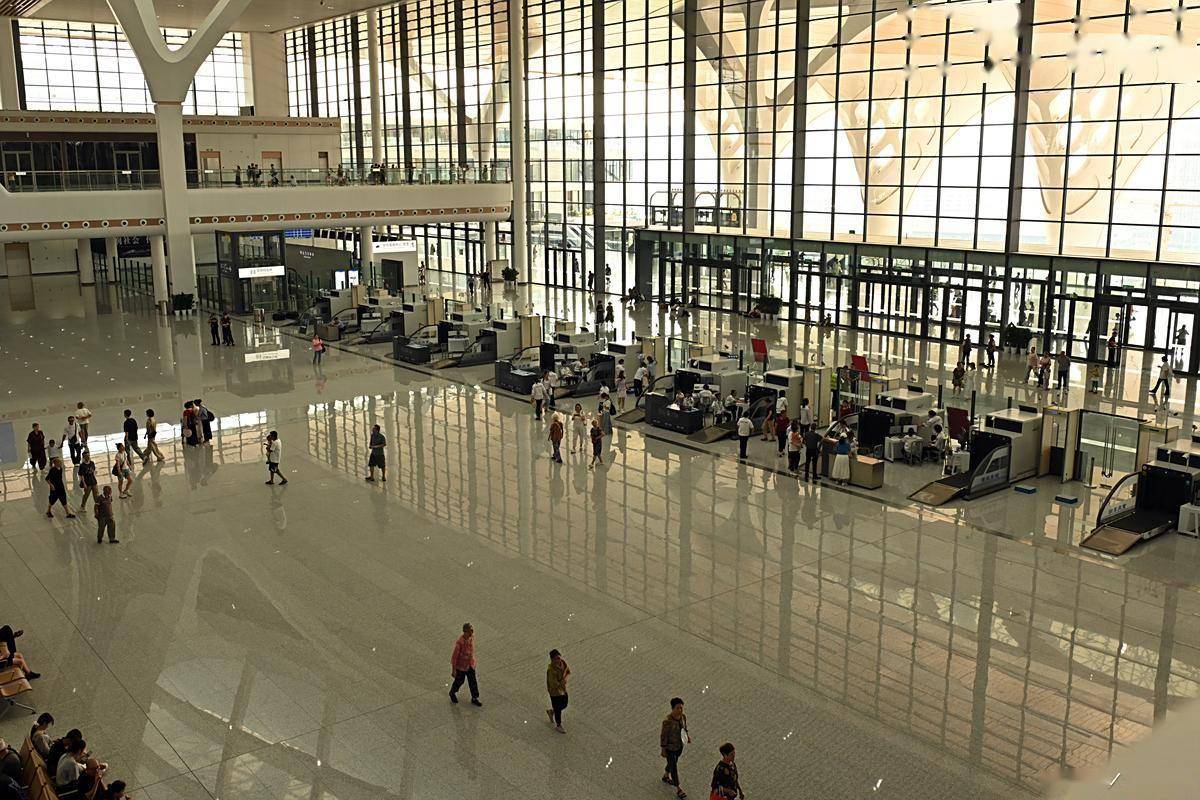
西安咸阳机场“星火体验官”服务提升开放日 监督视角看流程 沉浸体验促优化
Zhong Guo Min Hang Wang· 2025-07-28 02:54
Core Viewpoint - The Xi'an Xianyang Airport is implementing the "Spark Action" to enhance service quality through immersive experience activities involving social supervisors, aiming to gather valuable feedback for service optimization [1][3]. Group 1: Experience Activity Overview - The airport organized two virtual flights (GJ071T for departure and GJ072T for arrival) to allow experience officers to comprehensively engage in key travel processes [2]. - Experience officers participated in various stages including check-in, security check, waiting, boarding, and baggage claim, assessing the quality and supply process of complimentary meals for transfer passengers [2]. Group 2: Feedback and Improvement - Experience officers provided valuable suggestions based on their observations regarding clarity of signage, practicality of facilities, smoothness of service processes, and comfort of the environment [2]. - The airport plans to systematically categorize and incorporate the feedback into its service improvement initiatives, moving towards a more mechanized and regular service supervision approach [3]. Group 3: Service Philosophy - The airport maintains a service philosophy centered on passenger experience, transitioning service management from a system-driven to an experience-driven model [3]. - The airport aims to continuously optimize service processes, enhance facilities, and improve service levels to create a smoother and more comfortable travel environment for passengers [3].
辽宁省公共文化服务中心助力沈阳桃仙国际机场打造“人文机场”新地标
Xin Hua Wang· 2025-07-28 01:45
Core Viewpoint - The "Cultural Carnival" at Shenyang Taoxian International Airport aims to enhance the cultural soft power of Liaoning Province by integrating culture with transportation, creating a unique experience for travelers [1][2]. Group 1: Cultural Initiatives - The event "千里共辽宁 文润桃仙情" will feature cultural displays and performances, transforming the airport into a cultural and artistic showcase [1][2]. - Special shuttle buses named "National Treasure Liaoning" will be decorated with famous artifacts from the Liaoning Provincial Museum, providing travelers with stories behind these treasures during their transit [1]. - An "Impression Liaoning" art corridor will be established on the second floor of the airport, showcasing calligraphy, painting, photography, and intangible cultural heritage works [1]. Group 2: Entertainment and Engagement - Weekly performances by professional art troupes and non-heritage displays will take place during the summer travel season, with live streaming to share the cultural experience with a national audience [2]. - Travelers will have access to electronic book services provided by the Liaoning Provincial Library in the departure isolation area, allowing them to browse and download various electronic resources [2]. Group 3: Airport Experience - Shenyang Taoxian International Airport is positioned not just as a transportation hub but as a cultural landmark that offers visual, auditory, interactive, and shopping experiences [3].
从丽水到鹤岗,小城机场的账该怎么算?
经济观察报· 2025-07-25 11:34
Core Viewpoint - The construction of airports in small and medium-sized cities in China is driven by the desire to enhance local economic development and improve transportation accessibility, despite the financial challenges and operational losses faced by many of these airports [4][13][30]. Summary by Sections Airport Distribution and Characteristics - As of the end of 2024, there are 263 transport airports in China, with 81% located in third-tier and below small cities [4]. - Among the 213 small cities with airports, 84% have airports with passenger traffic below 2 million, and about 32% of these airports have seen a decline in passenger traffic [4][18]. Economic Impact of Airport Construction - Building airports can significantly boost local GDP and tax revenue, especially in economically underdeveloped regions. In 2024, cities with airports experienced GDP growth approximately 1% faster than the national average, and areas with small airports saw growth about 3% faster [13][14]. - Airports improve transportation conditions, allowing for greater connectivity and economic activity, which is particularly vital for regions with geographical constraints [14][29]. Financial Viability and Challenges - The initial investment for constructing a small to medium-sized airport in the western regions of China typically ranges from 1.2 billion to 1.5 billion yuan, with annual depreciation costs exceeding 50 million yuan [17]. - Many small airports rely heavily on government subsidies to maintain operations, with 78.7% of small airports reported to be operating at a loss [20][25]. Government Support and Subsidies - The Civil Aviation Administration of China has allocated a total of 10.6 billion yuan in subsidies for small airports from 2021 to 2025, with a projected 2.405 billion yuan in subsidies for 2025 [26]. - The subsidies are crucial for airports with annual passenger traffic below 2 million, as they often cannot cover operational costs through revenue alone [18][25]. Revenue Generation Strategies - Airports need to enhance their "self-sustaining" capabilities by diversifying revenue sources, particularly through non-aeronautical income, which has higher profit margins [27]. - Successful examples, such as Huizhou Airport, demonstrate the potential for profitability through effective commercial management and integration with broader transportation networks [28]. Future Considerations - The ongoing trend of airport construction in small cities reflects a broader contradiction in China's urbanization process, where infrastructure investments may not align with actual local demand [29][30]. - The focus should shift towards optimizing the operation of existing airports to better serve local development needs rather than merely pursuing new constructions [31].
首都机场安保公司:暑运服务提质升级 护航旅客顺畅出行
Zhong Guo Min Hang Wang· 2025-07-25 02:00
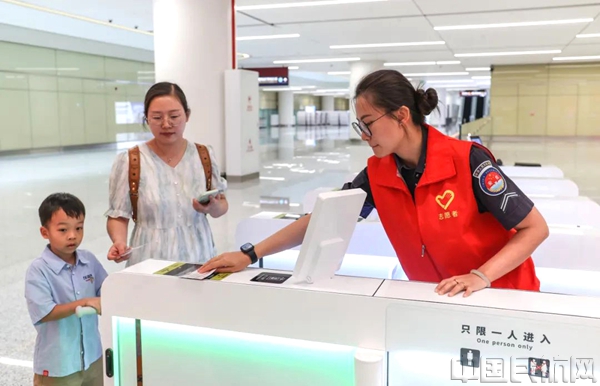
Group 1 - The core viewpoint of the articles highlights the proactive measures taken by the Capital Airport Security Company to ensure passenger safety and convenience during the peak summer travel season [1][2] - The company has launched a special service activity titled "Safety Talk for Summer Travel, Standardizing a Pleasant Journey," which includes various targeted initiatives to enhance passenger experience [1] - The introduction of new "summer orange vests" for security personnel serves as a warm identifier during the busy travel period, emphasizing the company's commitment to customer service [1] Group 2 - The security company has standardized inspection procedures and communication protocols to ensure clarity and efficiency during the security checks, particularly for passengers carrying numerous sunscreen products [1][2] - The "Family Passenger Service Zone" is operational to assist families traveling with children, providing additional support and guidance to ensure smoother travel experiences [1] - The company has implemented the "Security Priority Plan 2.0," which allows passengers who need to temporarily leave the security area for tasks like baggage handling to return quickly with minimal wait times [1][2] Group 3 - To enhance employee communication skills, the security company has conducted training sessions that focus on using more friendly language when interacting with passengers, transforming phrases to be more accommodating [2] - The "First Security Classroom" initiative includes both online and offline training to ensure that staff are well-prepared to provide a high level of service while maintaining safety standards [2] - The company emphasizes a balance between strict operational protocols and human-centered care, aiming to improve both the speed and warmth of the security experience for travelers [2]
山东威海机场迎战高温 为暑运保驾护航
Zhong Guo Min Hang Wang· 2025-07-25 01:50
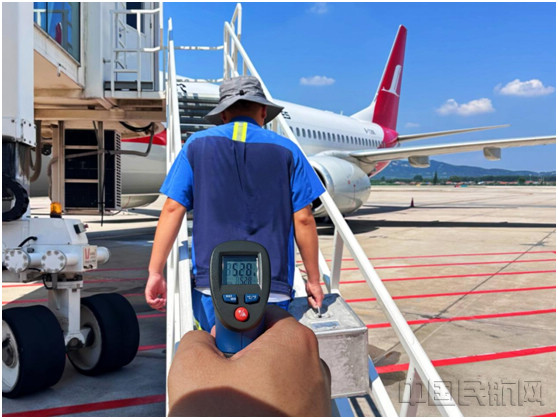
Core Points - The article highlights the measures taken by Weihai Airport in Shandong Province to ensure flight safety and passenger comfort during the peak summer travel season, amidst extreme heat conditions with ground temperatures reaching 52 degrees Celsius [1][4]. Group 1: Operational Measures - Weihai Airport has implemented various strategies to manage the dual pressures of high temperatures and increased passenger flow during the summer peak [1]. - The airport has increased the frequency of inspections for communication and navigation equipment, focusing on critical components to ensure stable signal transmission [7]. - To maintain food safety, the airport adheres to strict hygiene standards for in-flight meals, utilizing a full cold chain transport system and increasing the amount of ice used during delivery [7]. Group 2: Passenger Services - The airport has set up dedicated counters for student groups and late-arriving passengers, as well as providing full escort services for unaccompanied minors and first-time travelers [5]. - Enhanced temperature control and equipment maintenance have been prioritized within the terminal to ensure a comfortable waiting environment for passengers [5]. Group 3: Employee Welfare - To protect frontline employees from heat stress, the airport has distributed sun protection gear, established rest areas, and provided cooling supplies [10]. - Company leadership regularly conducts "cooling down" activities to support staff during high-temperature operations [10].
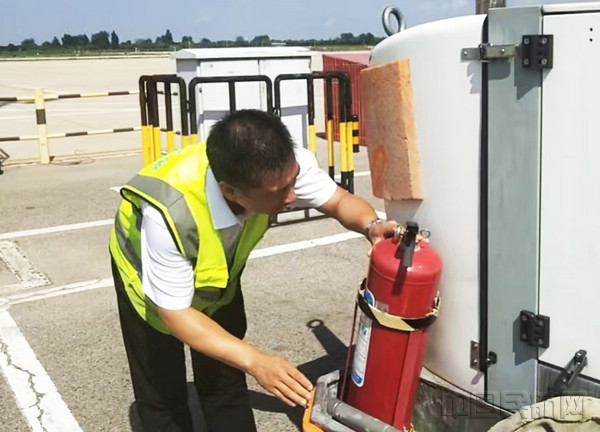
河北机场集团:提升消防保障能力 筑牢暑运安全屏障
Zhong Guo Min Hang Wang· 2025-07-24 05:18
Core Viewpoint - The Hebei Airport Group is enhancing fire safety management and capabilities at Shijiazhuang Zhengding International Airport through precise strategies, professional training, and collaborative efforts, resulting in improved safety measures and operational stability [1][3][5]. Group 1: Fire Safety Management Enhancements - Since July, the Hebei Airport Group has focused on improving fire safety through "precise measures, professional empowerment, and collaborative linkage," leading to a solid foundation for safe airport operations [1]. - The introduction of external professional expertise has shifted fire safety management from a "broad inspection" approach to "precise governance," enhancing the overall fire safety framework [3]. - A specialized review team, consisting of experts from the construction industry, has been established to conduct assessments in key areas such as terminals and cargo zones, ensuring a thorough evaluation of fire safety risks [3]. Group 2: Professional Training Initiatives - The Hebei Airport Group has implemented systematic training programs to enhance the capabilities of fire safety management personnel, transitioning from reactive to proactive fire prevention strategies [4]. - Training sessions have covered critical topics such as identifying major fire hazards and maintaining fire safety equipment, with over 90 fire safety management personnel participating [4]. - Participants reported improved clarity in identifying fire hazards, enabling quicker and more accurate responses to potential issues [4]. Group 3: Collaborative Emergency Response Mechanisms - The Hebei Airport Group has established a collaborative emergency response mechanism with local firefighting forces to ensure efficient handling of fire incidents [5]. - Recent discussions between the airport's firefighting team and local rescue units focused on the unique requirements for aircraft rescue, enhancing mutual understanding and operational coordination [5]. - The group aims to create a closed-loop system for fire safety management, emphasizing continuous improvement in hazard identification, capability transformation, and deepening collaboration with local fire agencies [6].
聚焦旺季出行 巴彦淖尔机场打出保障“组合拳”
Zhong Guo Min Hang Wang· 2025-07-24 05:06
Group 1 - The core viewpoint of the articles emphasizes the proactive measures taken by Bayannur Airport to ensure safe and efficient operations during the peak travel season, focusing on employee health, cargo operations, and facility management [1][2] Group 2 - In terms of employee health, the airport has implemented strict pre-shift health monitoring, requiring self-reporting from employees, with team leaders conducting follow-up checks. Medical departments regularly monitor blood pressure and blood sugar levels, creating health records for sensitive positions [1] - For cargo operations, the airport's cargo department has initiated a process optimization, focusing on visual and risk-prevention strategies. They have collected real-life images of 12 core operational scenarios to provide dynamic guidance and have marked risk points with warning indicators [1] - Facility management includes checking operational equipment and enhancing departmental collaboration. The airport has developed flight command plans in conjunction with meteorological teams and improved communication with flight crews to ensure timely updates on weather and operational information [1] Group 3 - In passenger service, the airport has increased the number of check-in and security personnel to accommodate the rise in first-time travelers and family trips during the peak season. They have also established a dedicated service team for group travelers, offering tailored services [2] - Additional amenities such as self-service mobile charging stations, self-service storage cabinets, and convenience service boxes containing emergency and heat-relief medications have been introduced to address travelers' needs [2] - The airport plans to continue optimizing measures and enhancing collaboration to ensure safe and orderly operations during the peak season, ultimately improving the travel experience for passengers [2]