保险

Search documents
中国人民保险集团(01339.HK):3月5日南向资金减持316.9万股
Sou Hu Cai Jing· 2026-03-05 19:23
Core Viewpoint - Southbound funds have significantly reduced their holdings in China People's Insurance Group, indicating a potential shift in investor sentiment towards the company [1] Group 1: Southbound Fund Activity - On March 5, southbound funds reduced their holdings by 3.169 million shares of China People's Insurance Group (01339.HK) [1] - Over the past 5 trading days, there have been reductions for 5 days, with a total net reduction of 42.8595 million shares [1] - In the last 20 trading days, there were reductions for 17 days, totaling a net reduction of 74.9018 million shares [1] - Currently, southbound funds hold 2.469 billion shares of China People's Insurance Group, accounting for 28.28% of the company's total issued ordinary shares [1] Group 2: Company Overview - China People's Insurance Group is a holding company primarily providing insurance products [1] - The company and its subsidiaries engage in various insurance sectors, including property insurance, health insurance, life insurance, reinsurance, Hong Kong insurance, and pension insurance [1] - Property insurance includes products for both corporate and individual clients, such as vehicle insurance, agricultural insurance, property insurance, and liability insurance [1] - Health insurance encompasses health and medical insurance products [1] - Life insurance includes various life insurance products, such as participating, whole life, annuity, and universal life insurance [1] - Hong Kong insurance pertains to property insurance operations in Hong Kong [1] - Pension insurance covers corporate annuities and occupational annuities [1]


全国人大代表周燕芳:建议构建国家级智驾数据共享标准及平台
经济观察报· 2026-03-05 14:07
Core Viewpoint - The article discusses the evolving risk characteristics and insurance needs of the electric vehicle (EV) market, highlighting the differences from traditional fuel vehicles and the challenges these pose for insurance products and risk management [2][3]. Group 1: Market Trends and Statistics - By the end of 2025, the number of electric vehicles in China is expected to reach 43.97 million, accounting for 12.01% of the total vehicle population, with 12.93 million new registrations in 2025, representing 49.38% of new vehicle registrations [2]. - The penetration rate of Level 2 (L2) and above intelligent driving is projected to exceed 65% by 2025 and reach 80% by 2026, while advanced driver assistance systems are expected to rise from over 15% to 25% in the same period [2]. Group 2: Risk Characteristics of Electric Vehicles - The core risk of electric vehicles lies in the "three electric" systems (battery, motor, and electronic control), which increases repair costs and deepens insurance companies' reliance on manufacturers during damage assessment and pricing [3]. - Some household electric vehicles are being used for ride-hailing services but are still insured at household vehicle rates, leading to a mismatch between risk and premium rates, complicating quality control in auto insurance [3]. Group 3: Legal and Regulatory Gaps - The rise of intelligent driving technology alters the logic of accident responsibility, shifting control from drivers to systems and manufacturers, which creates gaps in current legal frameworks and insurance product offerings [4]. - Current traffic laws focus on driver fault, which is inadequate for scenarios where accidents are caused by system failures, necessitating a reevaluation of liability and insurance coverage for drivers who may become victims due to system errors [4]. Group 4: Data and Insurance Product Development - Accident cause identification increasingly relies on vehicle operation data, but there is a lack of standardized protocols for data collection, storage, and retrieval, affecting liability determination and insurance claims efficiency [5]. - Insurance products specifically designed for intelligent driving risks are still in exploratory stages, with insufficient actuarial data leading to cautious product development and a lack of mature risk transfer tools in the market [5]. Group 5: Recommendations for Improvement - Establish a national-level intelligent driving data sharing standard and platform to enhance insurance operations and service capabilities, ensuring a reliable data loop covering the entire vehicle lifecycle [8]. - Accelerate the revision of relevant laws and regulations to clarify liability in intelligent driving scenarios and include drivers affected by system failures in insurance coverage [9]. - Develop a standard system for key technologies and services related to electric vehicles, including repair standards and environmental guidelines for battery disposal [10]. - Implement differentiated product innovation and pricing guidelines to address the complex risk characteristics of the electric vehicle market, promoting the development of insurance products for emerging technologies [10].

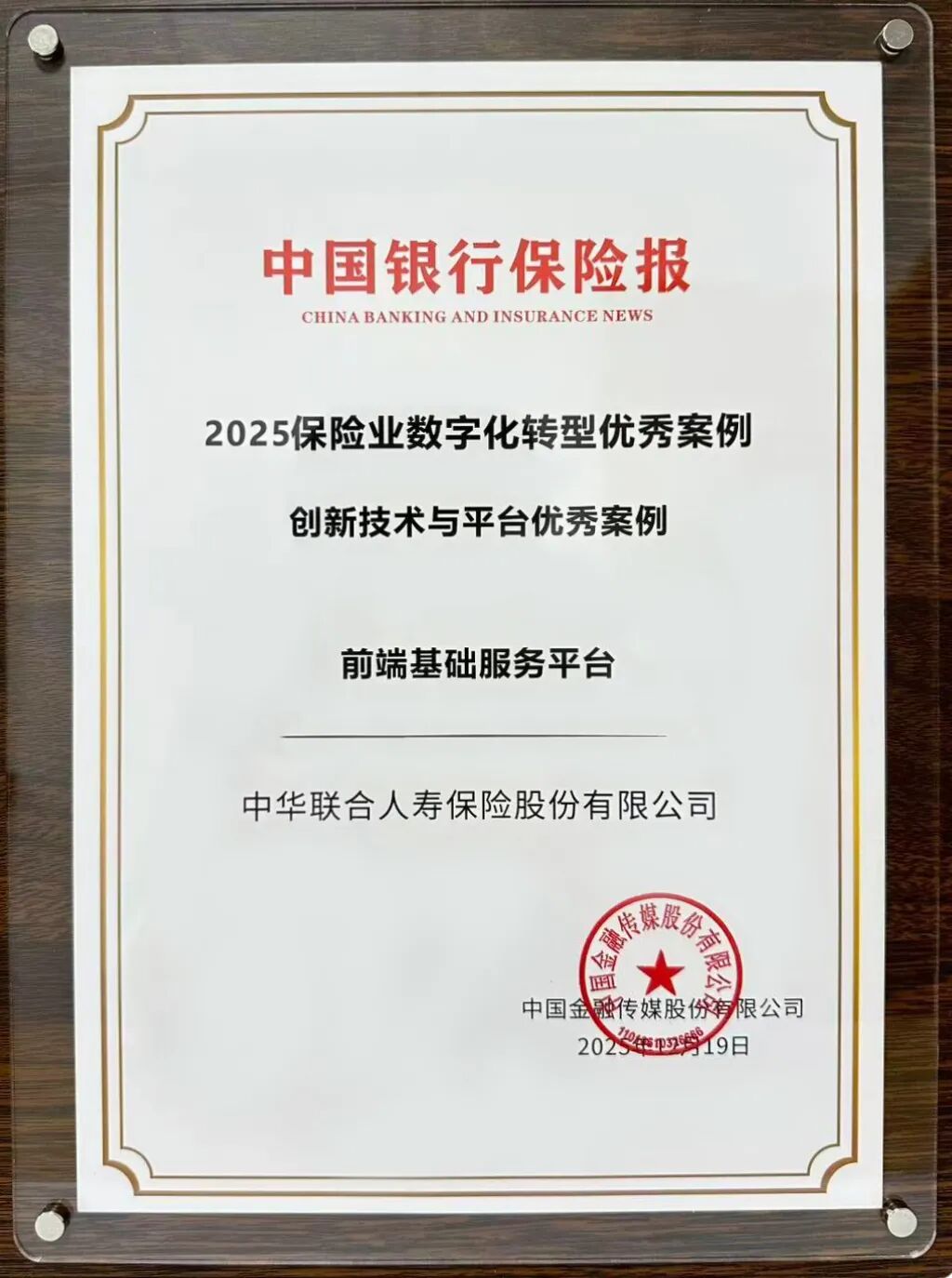
中国银行保险报 | 中国东方旗下中华人寿前端基础服务平台破局数字化转型
Xin Lang Cai Jing· 2026-03-05 12:23
Core Insights - The core achievement of China United Life Insurance Co., Ltd. is the successful development of its "Front-End Basic Service Platform," which has earned two industry awards for innovation in digital transformation [1][10]. Industry Context - The insurance industry is undergoing a deep transformation driven by data and technology, with AI, large models, and big data increasingly integrated into product design, marketing, underwriting, and claims management [3][12]. - Despite advancements, insurance companies face challenges in data governance, system integration, and customer experience optimization [3][12]. Challenges Faced - The motivation behind the development of the Front-End Basic Service Platform stems from the widespread issue of "digital debt" within the insurance sector, particularly for companies that have been established for some time [4][13]. - As business scales transition from startup to growth phases, the complexity of front-end services such as sales, underwriting, and claims increases significantly, while outdated systems hinder efficiency and data sharing [4][13]. - The existing "siloed" system architecture leads to high operational costs, prolonged development cycles, and difficulties in launching innovative products that require cross-system collaboration [4][13]. Strategic Response - In response to these challenges, the company opted to build a new, unified "Front-End Basic Service Platform" rather than patching existing systems, aiming to resolve core issues of system fragmentation and data inaccessibility [5][14]. - The platform's development began in 2023, focusing on upgrading front-end sales and service systems to enhance business support capabilities and eliminate service barriers [5][14]. Platform Architecture - The platform employs a three-layer design philosophy centered on "business decomposition and architectural layering," standardizing widely used capabilities across various business scenarios [6][15]. - It integrates 51 tool capabilities into 13 categories, providing standardized APIs and components, which significantly reduces development pressure across business lines [6][15]. - The platform utilizes a SpringCloud microservices architecture, establishing a unified technical stack and interface standards, which enhances overall efficiency and security [6][15]. Service Integration - The platform supports diverse service integration methods, facilitating smooth connections between new and legacy systems and easing collaboration with third-party channels [7][16]. - This flexibility reduces technical barriers and costs for channel expansion, transforming the technical foundation into a competitive advantage for business ecosystem growth [7][16]. Value Realization - The establishment of the Front-End Basic Service Platform signifies a successful transformation approach, emphasizing the importance of solidifying foundational capabilities before pursuing application innovations [8][17]. - The platform has led to reduced development costs and delivery cycles for various business systems, enabling rapid upgrades of critical systems such as online policy maintenance and unified underwriting platforms [8][17]. - The case of China United Life illustrates the challenge of transitioning from isolated technology applications to systematic capability building in the insurance industry's digital transformation [8][17]. Industry Recognition - The awards received by China United Life are seen as a validation of a pragmatic and rational transformation path within the insurance industry, highlighting the need for both innovative exploration and the dismantling of outdated systems [9][18].

大型保险央企注资跟踪:推迟至2027年后,配合新准则与偿二代三期实施结果
ZHONGTAI SECURITIES· 2026-03-05 11:26
Investment Rating - The industry investment rating is maintained at "Overweight" [2] Core Insights - The report indicates that the injection of capital into state-owned large insurance companies is expected to be postponed until after 2027, aligning with the implementation of new accounting standards and the third phase of solvency regulation [5][6] - The anticipated capital injection aims to alleviate the pressure on financial metrics caused by capital supplementation, particularly in the context of a low interest rate environment [5] - The report highlights a "triangle of impossibility" faced by insurance companies, particularly life insurers, which must navigate the need to improve solvency ratios while increasing equity allocations without external capital supplementation [5][6] Summary by Sections Industry Overview - The total market capitalization of the industry is approximately 32,974.79 billion [2] - The report notes that the capital injection for state-owned large commercial insurance companies is likely to be at least delayed until 2027, with a total expected capital injection of around 1 trillion, of which 180 billion remains for insurance companies [5][8] Financial Projections - The estimated capital injection for major state-owned insurance companies, including China Life, China Ping An, and China Taiping, is projected to be approximately 1,800 billion, which would enhance their solvency ratios significantly [5][6] - The report estimates that the capital injection will account for about 14.8% of the net assets of these companies by the end of 2026, boosting solvency ratios by approximately 20.7 percentage points [6][8] Market Dynamics - The report discusses the impact of the new accounting standards and solvency regulations on the industry, predicting increased volatility in net assets post-2026 as these changes are implemented [5][6] - It emphasizes the importance of monitoring potential solvency risks as the industry transitions to new regulatory frameworks [5][6]



华源晨会精粹20260305-20260305
Hua Yuan Zheng Quan· 2026-03-05 10:08
Group 1: Economic Overview - In February 2026, the manufacturing PMI decreased by 0.3 percentage points to 49.0%, primarily influenced by the Spring Festival [2][7] - The non-manufacturing business activity index was 49.5%, showing a slight increase of 0.1 percentage points, indicating overall improvement in non-manufacturing sectors [2][9] - The composite PMI output index was 49.5%, reflecting a slowdown in business activities compared to the previous month [2][7] Group 2: Credit Risk in the Bond Market - In 2025, the number of new bond defaults was 13, the second-lowest level since 2018, indicating a gradual alleviation of overall credit risk in the market [3][12] - The insurance industry faced its first bond default with Tianan Insurance and Tianan Life, highlighting significant structural risks within the sector [3][13] - Real estate companies, particularly private enterprises, were the most affected by credit defaults, with Guangdong, Beijing, and Shanghai leading in default cases [3][12] Group 3: Company-Specific Insights - Development Technology (920029.BJ) is expected to achieve a 20% increase in net profit for 2025, driven by its expansion in Brazil and investments in new energy [3][16] - Tiangong Co. (920068.BJ) anticipates a 143% increase in net profit in Q4 2025, benefiting from a resurgence in demand in the consumer electronics sector [3][20] - Kangnong Seed (920403.BJ) expects a 16% increase in net profit for 2025, supported by strong sales of its hybrid corn variety in key agricultural regions [3][25]
政府工作报告连续三年点名“创新药”
第一财经· 2026-03-05 09:53
Core Viewpoint - The article emphasizes the Chinese government's commitment to promoting the high-quality development of innovative drugs and medical devices, alongside the expansion of commercial health insurance, as part of its efforts to improve public health and meet diverse medical needs [3]. Group 1: Government Initiatives - The government work report for 2026 reiterates the focus on "innovative drugs" for the third consecutive year, highlighting the need for high-quality development in this sector [3]. - In 2025, China approved a record 76 innovative drugs for market entry, surpassing the 48 approved in 2024, indicating a significant increase in innovation [3]. - The total value of authorized transactions for innovative drugs exceeded $130 billion in 2025, with over 150 transactions, marking a historic high [3]. Group 2: Commercial Health Insurance Development - The average annual growth rate of commercial health insurance has exceeded 20% over the past decade, with over 11,000 medical insurance products currently available [4]. - In 2025, the premium for commercial health insurance reached 997.3 billion yuan, still falling short of the 1 trillion yuan milestone [4]. - The focus for 2026 will be on expanding the scale of commercial health insurance, particularly through the development of a multi-layered security mechanism [4]. Group 3: Key Focus Areas for 2026 - The potential for cross-departmental data sharing in medical expenses, health check-ups, and imaging tests is a key area of focus, contingent on the opening of medical insurance data [5]. - The effectiveness of the newly established commercial insurance catalog for innovative drugs in driving sales and facilitating one-stop settlement for hospital and insurance payments is under scrutiny [5]. - The impact of tax policies on corporate willingness to invest in employee benefits and the potential for local tax incentives to support the growth of commercial health insurance are critical considerations [5]. Group 4: Innovations in Insurance Products - Regions like Shanghai, Guangdong, and Beijing are encouraging innovation in group insurance products, with a focus on enhancing coverage for innovative drugs and medical devices [6]. - The introduction of long-term care insurance is gaining attention, with the government promoting a basic level of care that can be complemented by commercial long-term care insurance for diverse family needs [6].

好消息 | 谈股论金
水皮More· 2026-03-05 09:48
Market Overview - A-shares saw collective gains today, with the Shanghai Composite Index rising by 0.64% to close at 4108.57 points, the Shenzhen Component Index increasing by 1.23% to 14088.84 points, and the ChiNext Index up by 1.66% to 3216.94 points [3] - The total trading volume in the Shanghai and Shenzhen markets reached 24,128 billion, a slight increase of 246 billion compared to the previous day [3] Market Sentiment - Despite the overall gains, the market exhibited a "high open, low close" pattern, indicating a cautious sentiment among investors [4] - The A-share market's performance was relatively weak compared to other Asia-Pacific markets, with South Korea's stock market rebounding by 9.63% and Japan's by 1.90% [4] Key Events - A significant announcement from the Iranian military stated that the Strait of Hormuz is not blocked, allowing ships from countries like China and Russia to pass normally, which led to a decline in oil and gas stocks in the A-share market [4] - Major oil companies such as PetroChina, Sinopec, and CNOOC saw declines of approximately 4%-5% in their stock prices following this news [4] Sector Performance - The market saw a clear divergence in capital flow, with over 300 billion flowing into the market in the morning, but only a net inflow of 55 billion by the afternoon, reflecting the market's volatility [6] - Equipment sectors performed strongly, driven by policy signals from the ongoing Two Sessions, with emerging industries like integrated circuits and commercial aerospace being highlighted [6] - Conversely, oil service engineering and precious metals sectors underperformed, indicating a market correction for previously benefitting stocks [7] Financial Sector - The financial sector showed mixed results, with the banking sector up by 0.81% and the insurance sector by 0.37%, while the securities sector experienced a pullback [7] Hong Kong Market - The Hong Kong stock market experienced a record outflow of capital, with a net outflow of 27.7 billion, surpassing the previous high of 20.5 billion from last August [8] - Alibaba's stock declined by approximately 2.7% due to negative news regarding key personnel departures, reflecting market sentiment and trading behavior [8] Conclusion - Overall, the market sentiment can be summarized as "restless," with investors caught between the desire to rebound and the reluctance to cut losses [8]
险资现身!创投引导基金,大幅增资!
券商中国· 2026-03-05 08:53
Core Viewpoint - The article discusses the recent investment of insurance capital institutions in the National Venture Capital Guidance Fund, particularly focusing on the Beijing-Tianjin-Hebei regional fund, which has expanded its capital to over 50 billion yuan, marking a significant move towards enhancing support for technology and innovation sectors [2][3]. Group 1: Investment Details - The Beijing-Tianjin-Hebei regional fund's registered capital increased from 29.646 billion yuan to 50 billion yuan, with new investors including three insurance institutions: Xinhua Insurance, Zhonghui Life, and Zhongcai Life, all part of the China Investment Corporation ecosystem [2]. - The National Development and Reform Commission highlighted the importance of the Beijing-Tianjin-Hebei regional fund in mobilizing central financial enterprises to participate in "technology finance" [2]. Group 2: Strategic Focus of Insurance Institutions - Zhonghui Life stated its commitment to long-term stock investments and support for key industries such as semiconductors, aiming to stabilize the capital market and promote technological self-reliance [3]. - Xinhua Insurance expressed its intention to empower new productive forces by establishing venture capital funds focused on new infrastructure and strategic emerging industries, aligning with national strategic goals [3]. Group 3: Structure and Objectives of the National Venture Capital Guidance Fund - The National Venture Capital Guidance Fund operates under a three-tier structure: fund company, regional fund, and sub-fund, with a total government investment of 100 billion yuan expected to leverage over a trillion yuan in social capital [4]. - The regional funds will primarily invest in early-stage projects in sectors like integrated circuits, artificial intelligence, aerospace, and biotechnology, with a focus on supporting innovative and entrepreneurial activities [5].
河北金融监管局同意中国平安河北分公司藁城营销服务部变更营业场所
Jin Tou Wang· 2026-03-05 03:31
Core Viewpoint - The Hebei Financial Regulatory Bureau approved the relocation of the marketing service department of China Ping An Life Insurance Co., Ltd. in Gaocheng, Hebei Province [1] Group 1 - The marketing service department's new location is specified as: 2-101, Second Floor, Rongwei Zijing Commercial Building, South Station Street, Gaocheng District, Shijiazhuang City, Hebei Province [1] - China Ping An Life Insurance Co., Ltd. is required to handle the change and obtain the necessary permits in accordance with relevant regulations [1]

港股保险股止跌反弹 友邦保险涨超5%
Jin Rong Jie· 2026-03-05 03:27
Group 1 - The insurance stocks that had been declining have rebounded, with AIA Group rising over 5% [1] - China Reinsurance and Yunfeng Financial both increased by over 4% [1] - China Pacific Insurance rose by 3.7%, while China Life, New China Life, and ZhongAn Online gained over 2% [1] - China People's Insurance, China Property & Casualty Insurance, Sunshine Insurance, China Life Insurance, and Ping An Insurance all saw increases of over 1% [1]