铁路运输

Search documents
闽鄂铁路货运新通途 明溪方解石专列首发湖北
Xin Lang Cai Jing· 2026-02-10 06:37
Core Insights - The opening of the cargo station in Mingxi, Fujian, has led to a record single-batch shipment of over 2,000 tons of high-quality limestone to Hubei, marking a significant milestone for the local logistics capabilities [1][2]. Group 1: Transportation and Logistics - Mingxi has abundant and high-quality limestone resources, but transportation constraints have historically limited product distribution [2]. - The Mingxi cargo station opened in July 2022, allowing the local transportation bureau to act as a bridge, facilitating communication between railway departments and local enterprises to meet transportation needs effectively [2]. - The introduction of a "door-to-door" fixed-price service by the Fuzhou Railway Logistics Center in November 2025 has enabled local businesses to transition from single-point shipments to bulk exports, successfully opening a sales channel to Yangzhou, Jiangsu [2]. Group 2: Operational Efficiency - The recent shipment to Hubei is an upgraded practice based on the successful operation of the Yangzhou channel, addressing increased transportation demands during the Spring Festival [2]. - The Fuzhou Railway Logistics Center has optimized loading organization and reduced transfer times while ensuring passenger transport remains unaffected, thus maintaining cargo transport efficiency [2]. - Customized logistics solutions provided by the railway department have resulted in a 20% reduction in logistics costs, enhancing product price competitiveness and stabilizing customer partnerships [2].


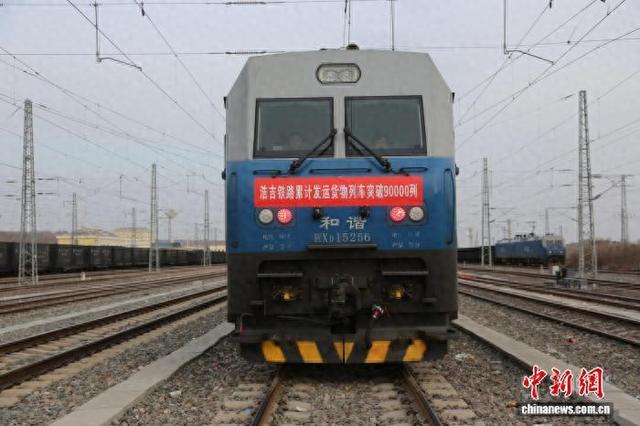
(新春走基层)浩吉铁路发运货物列车突破9万列
Xin Lang Cai Jing· 2026-02-10 06:37
Core Viewpoint - The Haoji Railway has become a crucial transportation channel for coal, marking a significant milestone with over 90,000 freight trains dispatched since its opening, thereby supporting regional economic development and energy supply systems [1][3]. Group 1: Operational Achievements - The Haoji Railway, spanning 1,813.5 kilometers, is the longest heavy-load railway in the world, facilitating coal transportation from Inner Mongolia to Jiangxi [3]. - Since its opening on September 28, 2019, the railway has achieved a cumulative freight volume of 490 million tons, demonstrating a consistent increase in cargo capacity [5]. - The railway's operational efficiency is highlighted by the average daily handling of over 14,000 trains at the Jingbian East Station, with plans for further enhancements through the construction of additional tracks [3][5]. Group 2: Transportation Efficiency - The integration of rail and water transport at the Jiangling Station allows for the transfer of 60,000 tons of coal daily, significantly improving transportation efficiency through the "iron-water combined transport" model [4]. - The optimization of transportation organization and processes has led to an average train dispatch interval of every 6 minutes at the Xiangzhou North Station during peak periods [3][4]. Group 3: Strategic Development - The West China Railway Bureau and Haoji Railway Company are focusing on enhancing the "public transport to rail" advantage, improving the freight service system, and addressing transportation bottlenecks [4][5]. - The company is actively engaging with enterprises to identify quality cargo sources and develop efficient cross-regional logistics channels, thereby expanding its service offerings beyond coal [5].
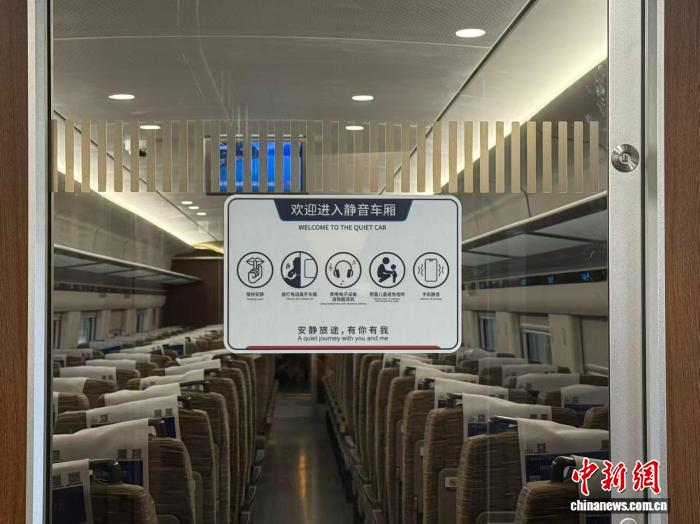
(新春走基层)国铁广州局逾千列列车提供静音车厢服务
Zhong Guo Xin Wen Wang· 2026-02-10 06:37
Core Points - The Guangzhou Railway Group has increased the number of trains offering quiet carriage services to 1,015 during the Spring Festival travel season, enhancing the travel experience for passengers [1][2]. Group 1: Quiet Carriage Service - The quiet carriage service aims to provide a peaceful environment for passengers, with staff actively reminding travelers to maintain low noise levels [1][4]. - The Guangzhou passenger segment has equipped quiet carriages with sleep aids such as earplugs and has implemented noise-reducing announcements to facilitate a quiet journey [2][4]. - Passengers can select seats in quiet carriages when purchasing tickets through the 12306 app, which indicates available trains with a "quiet" label [2][4]. Group 2: Passenger Experience - Staff members, such as train attendant Li Haibo, maintain a low volume while assisting passengers, ensuring that the quiet atmosphere is preserved [4][5]. - Passengers have reported positive experiences in quiet carriages, with one traveler mentioning that she was able to rest comfortably despite recent leg injuries [4].
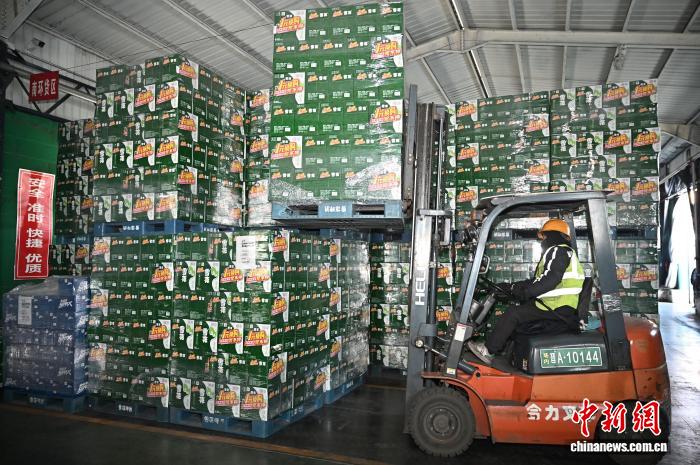
新春走基层|夕发朝至 山西太原“年货班列”装卸忙
Zhong Guo Xin Wen Wang· 2026-02-10 06:31
Core Insights - The article highlights the successful operation of the "New Year Goods Train" by China Railway Taiyuan Group, which has significantly improved logistics efficiency and reduced costs for transporting essential goods during the pre-Spring Festival period [1][2]. Group 1: Logistics and Operations - The "New Year Goods Train" has been launched to meet the increasing demand for seasonal goods such as vinegar, rice, flour, beverages, and alcohol as the Spring Festival approaches [2][3]. - The "Sanjin Tong" freight express train, part of the logistics services, operates with 10 cars, each with a capacity of 70 tons, and runs daily between Taiyuan and Yuncheng, achieving a travel time of under 6 hours, which is a reduction of approximately 30 hours compared to regular freight trains [2][3]. - During the Spring Festival period, the variety of goods transported by the express train has increased to over a dozen categories, providing essential support for people's livelihoods and promoting economic circulation [2][3]. Group 2: Performance Metrics - By the pre-Spring Festival period, a total of 475 trains carrying 18,950 tons of goods have been loaded, representing a year-on-year increase of 50.6% [3]. - In 2026, the train service plans to expand its cargo categories to include flour, paper products, furniture, daily necessities, plastic pellets, and glassware, further enhancing its logistics capabilities [3].
新春走基层 | 一张工单 全程守护
Yang Guang Wang· 2026-02-10 06:27
Core Viewpoint - The railway department has fully upgraded its services for elderly passengers during the Spring Festival travel season, ensuring comprehensive support for seniors aged 65 and above who are traveling alone and may have mobility issues [1]. Group 1: Service Upgrades - The railway department offers a dedicated service for elderly passengers, allowing them to apply for assistance when traveling alone [1]. - Passengers can make reservations through various channels, including the 12306 App, official website, phone, or in-person service desks [1]. - The service includes priority security checks, guided waiting areas, special boarding channels, and assistance at the destination station [1]. Group 2: Case Study of Elderly Passenger - A 76-year-old passenger, Ms. Sui, received personalized assistance due to her recent surgery, which limited her mobility [5]. - The staff member, Li Chen, confirmed Ms. Sui's needs multiple times and ensured she was comfortable and well taken care of during her journey [5][9]. - The process included using a wheelchair, priority boarding, and a seamless handover to the train staff [21][24]. Group 3: Communication and Coordination - The railway staff maintains a detailed system to track special needs passengers, ensuring they receive the necessary attention throughout their journey [22][24]. - Family members of elderly passengers are encouraged to assist in the reservation process, highlighting the importance of communication between the railway staff and the passengers' families [20][29]. - The staff's commitment to providing a high level of service is evident in their proactive approach to checking on passengers and ensuring their comfort [19][30]. Group 4: Booking Process - The booking process for the elderly service can be completed online via the 12306 App or website, or in person at service desks [40]. - Passengers can also call the 12306 customer service for quick registration of the special assistance service [40]. - Even if passengers do not pre-book the service, they can still request assistance from train staff upon boarding [43].
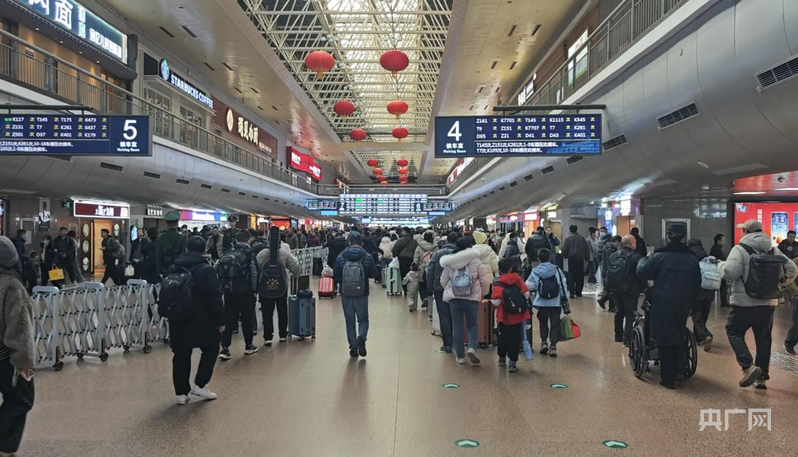
春运看发展 | 当春运遇上安检“黑科技” “火眼金睛”守护平安归途
Yang Shi Wang· 2026-02-10 06:27
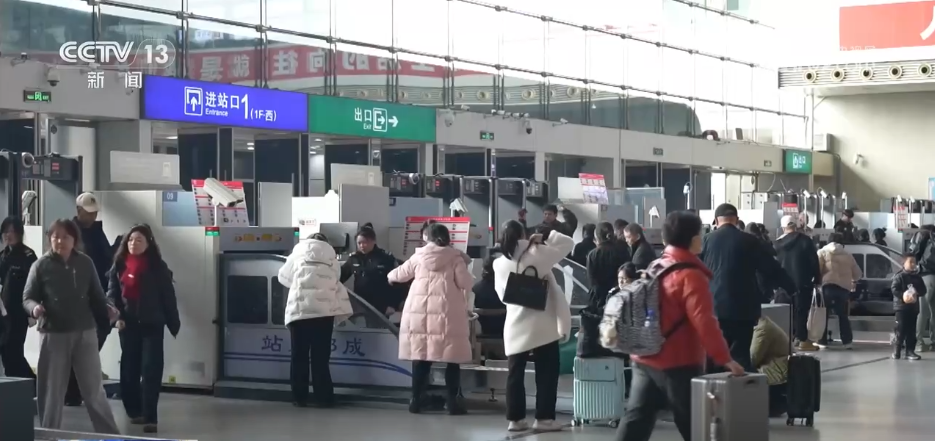
Group 1: Key Developments in Security Check Efficiency - During the Spring Festival travel season, Xi'an Station, a key railway hub in Northwest China, has improved its security check efficiency significantly, processing approximately 89,000 passengers daily [1] - The introduction of new intelligent "leg scanning" security equipment has led to a 30% increase in accuracy and a 40% improvement in overall security check efficiency [5] - The station now features 47 leg scanning devices that cover the entire security check process, allowing for a complete check in under 3 minutes from entry to security [7] Group 2: Innovations at Capital Airport - Capital Airport, a major transit hub during the Spring Festival, has implemented the "Easy Security Check" channel, which significantly reduces security check times for over 200,000 daily travelers [9] - The "Easy Security Check" channel utilizes CT scanning equipment and millimeter-wave body scanners, streamlining the security process and enhancing the accuracy of checks [11] - The newly introduced A3 millimeter-wave scanners can complete a person's check in about 3 seconds, generating holographic images and marking areas for further inspection, thus ensuring passenger privacy [15]
【交通】长三角铁路今日预计发送旅客296万人次,计划增开列车395列
Xin Lang Cai Jing· 2026-02-10 04:37
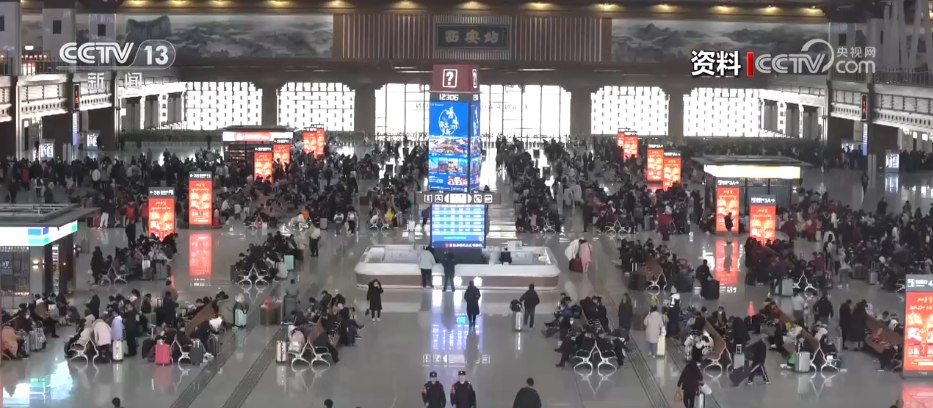
中国铁路上海局集团有限公司(以下简称上铁集团)介绍,长三角客流持续保持高位运行,2月9日发送旅客305.5万人次,今日预计发送旅客296万人次, 春运启动以来发送旅客已突破2100万人次。 今天,长三角铁路继续加大对重点时段和热门方向运力投放,积极迎战客流高峰,计划增开旅客列车395列,其中云贵、川渝、东北、西北、湖南、湖 北、河南等方向旅客列车255列,安徽、苏北等方向旅客列车140列,对331列动车组列车进行扩编。增开的列车中含夜间高铁列车列126,包括京沪、沪昆 等主要高铁干线通道高铁列车63列。 铁路部门提醒,春运期间,部分车站高峰时段客流较大,请广大旅客及时关注天气变化情况和出行服务信息,预留充足时间进站乘车,按照车票标注的车 次、日期、区间、座号有序乘车,共同维护良好出行环境;长三角许多城市有两个及以上火车站,出行前务必确认乘车信息,勿因跑错车站耽误行程。 资料:中国铁路上海局集团有限公司 编辑:赵婧扬 ...
三亚铁警:双语服务护航春运
Hai Nan Ri Bao· 2026-02-10 03:38
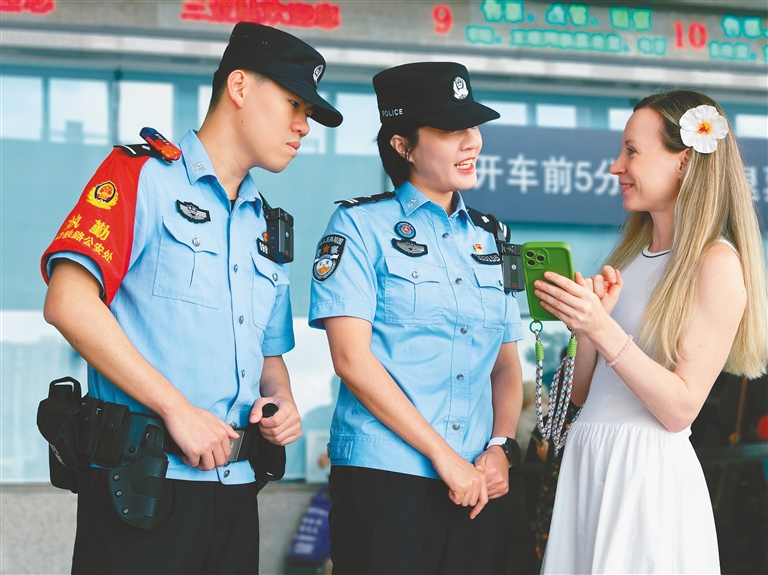
Group 1 - The core viewpoint of the article highlights the implementation of bilingual services at Sanya Railway Station to assist foreign travelers during the Spring Festival travel rush [3] - The Sanya entry tourism market is experiencing a significant increase in activity during this year's Spring Festival [3] Group 2 - The Haikou Railway Public Security Bureau has introduced warm service measures, including the establishment of "bilingual service posts" at ticket counters, security checks, and waiting areas [3] - Police officers proficient in English have been assigned to provide guidance on ticket purchasing, travel instructions, and answer inquiries for travelers [3]
春运服务台 | 一文详解铁路会员积分兑换车票→
Yang Shi Wang· 2026-02-10 03:29
有旅客担心,如果自己的积分不用,跨年后是否会被清零。除了确认"清零周期",使用积分兑换火车票还需要注意哪些问题?继续来了 解。 工作人员介绍,积分的有效期是自进入账户当日起连续12个月有效。比如旅客今年2月乘车累积的积分,有效期会到明年2月。学生旅客购 票时使用学生优惠票无法叠加青年会员10倍积分福利,积分统一按票面金额5倍计算;国际列车的车票,积分兑换的奖励车票以及补票、非实 名制车票、退票后的车票等均不能累积积分,而计次票、定期票、实名制儿童优惠票可正常累积。 央视网消息:去年,铁路"常旅客会员火车票积分"有不少调整,今年春运有些旅客想用积分兑换火车票,该如何操作?一起来了解。 想要使用铁路会员积分,首先需免费注册"铁路畅行"常旅客会员,年满12周岁即可通过铁路12306App注册激活,未注册会员的旅客乘车 无法累积积分。普通常旅客会员可获得票面金额5倍积分,60周岁及以上老年会员可获得票面金额15倍积分,14至28周岁青年会员可获得票面 金额10倍积分。国铁成都局成都车站售票车间值班主任梁琴介绍,积分不能转让,但可以给别人买票,每名会员最多可设置8名受让人,受让 人需通过身份信息核验,且添加成功60日( ...
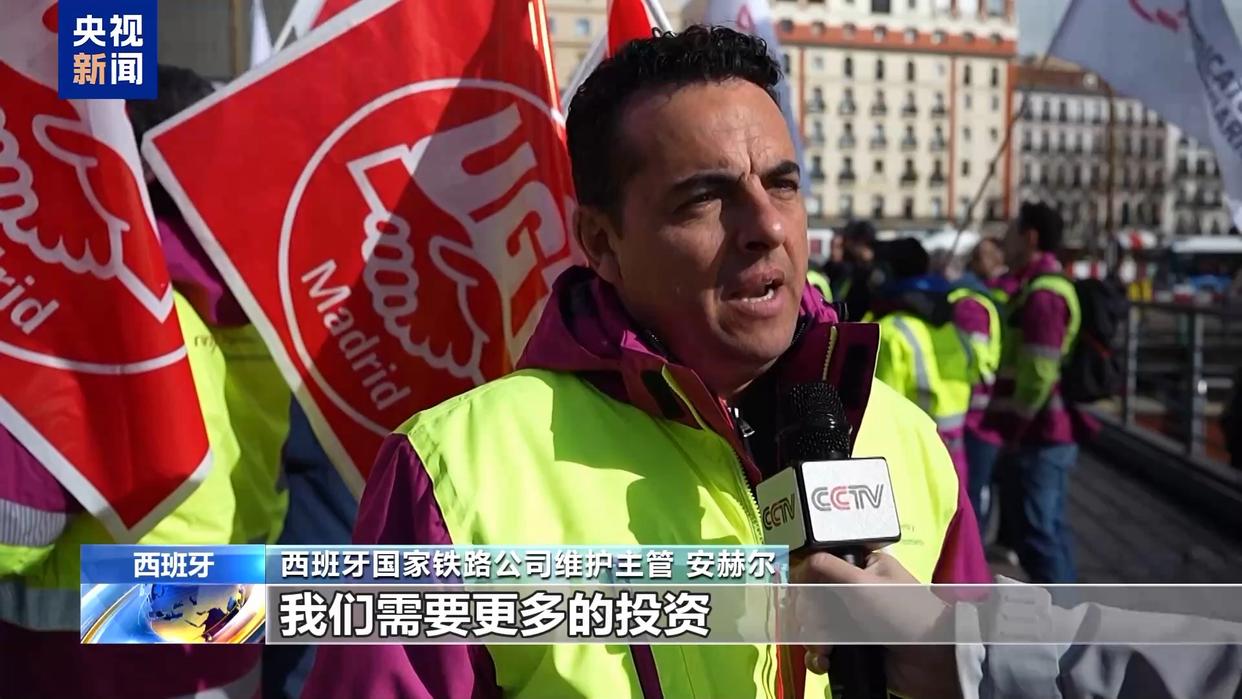
西班牙铁路工人举行罢工 要求改善铁路安全状况
Yang Shi Xin Wen Ke Hu Duan· 2026-02-10 02:57
Group 1 - The recent train derailment incidents in Spain have raised public concerns about railway safety, prompting unions to organize a nationwide strike to pressure the transportation department for improvements [1][3] - On September 9, several major unions announced the suspension of the strike after a fourth meeting with the transportation department, although the decisions of other unions that did not participate in the negotiations remain to be seen [1] - The strike led to the cancellation of approximately 350 high-speed train services and the suspension of 683 medium-distance train services, significantly impacting commuter rail services across Spain [5] Group 2 - Union representatives emphasized the need for the Spanish government and infrastructure management to take responsibility for the recent frequency of railway accidents and called for measures to ensure the safety of passengers and railway employees [3] - The maintenance supervisor of the Spanish National Railway Company stated that more investment is needed, particularly for infrastructure and the maintenance of train vehicles, which is one of the requests made to the transportation department [5]