
竹制品

Search documents
以高水平对外开放塑造外贸新优势丨“十四五”时期梧州市对外贸易提档进位
Xin Lang Cai Jing· 2026-02-26 04:14
Core Viewpoint - During the "14th Five-Year Plan" period, Wuzhou City has made significant strides in expanding high-level opening-up and optimizing foreign trade, achieving a total import and export value increase from 6.33 billion to 16.28 billion yuan, with an average annual growth rate of 20.8% [1]. Group 1: Trade Growth and Achievements - The total import and export value of Wuzhou City increased from 6.33 billion yuan to 16.28 billion yuan, surpassing the 10 billion and 15 billion yuan thresholds consecutively [1]. - The city has established three provincial-level foreign trade transformation and upgrading bases for Liubao tea, titanium dioxide, and renewable resources [5]. - The total import and export value of the Wuzhou Comprehensive Bonded Zone reached 9.95 billion yuan, with a year-on-year growth rate of 723% [7]. Group 2: Policy and Infrastructure Enhancements - Wuzhou City has implemented measures to optimize the business environment, including the establishment of a "green channel" for fresh agricultural products and a "remote inspection" model, reducing customs clearance time by nearly 30% [4]. - The customs inspection capacity at Wuzhou Port increased from 50 containers per batch to 450 containers per batch, significantly enhancing logistics efficiency [4]. - The city has opened nine foreign trade routes from Chishui Port, expanding its foreign trade market to over 110 countries and regions [5]. Group 3: Support for Enterprises and Market Expansion - Wuzhou City has focused on helping enterprises "go global" by organizing over 120 companies to participate in domestic and international trade events, achieving over 30 million USD in sales at the Canton Fair [6]. - The city has supported new processing trade enterprises and encouraged major commodity imports from companies like Chiji Steel and Jinsheng Copper [6]. - The establishment of the China (Wuzhou) Cross-Border E-Commerce Comprehensive Pilot Zone has further promoted the development of cross-border e-commerce, with export value reaching 440 million yuan, a year-on-year increase of 22 times [7].

“以竹代塑”仍需加把劲
Xin Lang Cai Jing· 2026-02-13 22:47
Core Viewpoint - Bamboo, as an eco-friendly and renewable resource, is gaining attention as a viable alternative to plastic products, supported by government policies aimed at promoting its use in various applications [1][2]. Group 1: Industry Development - Local enterprises in bamboo-rich regions of Yunnan are processing bamboo into furniture and daily necessities, contributing to income generation and local green development [1]. - The "Bamboo Replacing Plastic" initiative is a key focus of national policy, with a three-year action plan launched in 2023 to accelerate its development [1]. - The updated product catalog for "Bamboo Replacing Plastic" will expand from 17 to 25 categories by July 2025, including new product types such as bamboo sports equipment and biodegradable agricultural films [1]. Group 2: Challenges and Opportunities - Despite the benefits of bamboo products, the transition from plastic is gradual due to the established plastic industry and consumer habits [2]. - Current bamboo products primarily rely on traditional processing methods, with high-tech, high-value-added products still underrepresented [2]. - Bamboo product companies are generally small and face higher production costs compared to plastic, limiting their market competitiveness [2]. Group 3: Technological and Policy Support - Key technological breakthroughs are needed in resource cultivation, product development, and equipment manufacturing to enhance the value of bamboo products [2]. - Collaboration between enterprises and research institutions is encouraged to foster innovation and upgrade the bamboo industry towards high-end, intelligent, and green solutions [2]. - The revised catalog extends bamboo applications into various sectors, including agriculture and construction, promoting diverse market demand [3]. - Policy support is crucial for industry growth, with recommendations for integrating bamboo products into priority procurement lists for government and institutional buyers [3]. - Public awareness campaigns are suggested to promote the environmental benefits of bamboo products, aiming to increase consumer acceptance and usage [3].
红安林丰板材有限公司成立,注册资本10000万人民币
Sou Hu Cai Jing· 2026-02-10 02:23
Company Overview - Hong'an Linfeng Board Co., Ltd. has been established with a registered capital of 100 million RMB [1] - The legal representative of the company is Yuan Bo, and it is wholly owned by Hong'an Hongcheng Forestry Development Co., Ltd. [1] Business Scope - The company engages in various activities including the manufacturing of engineered wood products, wood processing, bamboo product manufacturing, and the sale of forestry products and wood materials [1] - Specific operations include the production of daily wooden products, wooden containers, and the processing of construction wood and wood components [1] Corporate Structure - Hong'an Linfeng Board Co., Ltd. is classified as a limited liability company, not controlled by a natural person [1] - The company is registered in Huanggang City, Hubei Province, with its business term set until February 9, 2026, with no fixed expiration [1]
新春走基层|闽山深处的拼车出海攒局人
Zhong Guo Jing Ying Bao· 2026-02-09 02:43
Core Viewpoint - The article highlights the transformation of the bamboo industry in Fujian's Nanping region, emphasizing the role of the Nanchang Railway Bureau in improving logistics and transportation for local bamboo product companies, thereby enhancing their market access and supporting rural revitalization efforts [1][2]. Group 1: Industry Development - Fujian Nanping, known as "China's Bamboo Town," has a unique environment that supports bamboo growth, but local small and medium enterprises (SMEs) faced sales challenges due to poor transportation and high logistics costs [1]. - The introduction of 225 technology specialists in the 1990s helped address pest issues, turning bamboo into a pillar industry for poverty alleviation in the region [1]. - The Nanchang Railway Bureau has optimized transportation logistics, connecting 174 SMEs and facilitating the export of bamboo products, thus contributing to the economic development of northern Fujian [1]. Group 2: Company Challenges and Solutions - Fujian Mingliang Food Co., Ltd. has seen a surge in overseas demand for its bamboo shoots and other specialty agricultural products, but faces high logistics costs due to complex order management and traditional road transport limitations [1][2]. - To address these challenges, the Nanchang Railway Bureau introduced a "carpooling" export solution, allowing SMEs to share transportation resources, thus reducing costs and improving efficiency [2]. - The marketing team led by Lin Huaying has shifted from a passive to an active approach, visiting companies to tailor logistics solutions that combine rail and water transport, significantly reducing costs and transit times for local businesses [3].
美之高2月5日获融资买入219.63万元,融资余额650.51万元
Xin Lang Cai Jing· 2026-02-06 04:12
Group 1 - The core viewpoint of the news is that Meizhi Gao's stock has shown a significant increase in trading activity, with a notable rise in financing buy-ins and a high financing balance relative to its market value [1] - On February 5, Meizhi Gao's stock price increased by 3.69%, with a trading volume of 61.58 million yuan. The financing buy-in amount for the day was 2.1963 million yuan, while there were no financing repayments, resulting in a net financing buy-in of 2.1963 million yuan [1] - As of February 5, the total financing and securities lending balance for Meizhi Gao was 6.5051 million yuan, which accounts for 0.39% of its circulating market value, indicating a high level compared to the past year [1] Group 2 - As of September 30, the number of shareholders for Meizhi Gao was 2,555, a decrease of 29.36% from the previous period. The average circulating shares per person increased by 39.53% to 21,745 shares [2] - For the period from January to September 2025, Meizhi Gao reported an operating income of 364 million yuan, a year-on-year decrease of 7.52%. The net profit attributable to the parent company was -4.3837 million yuan, representing a year-on-year decrease of 126.88% [2] Group 3 - Since its A-share listing, Meizhi Gao has distributed a total of 61.0658 million yuan in dividends, with 58.8382 million yuan distributed over the past three years [3]
校媒记者探访“世界最佳旅游乡村”——余村
Xin Lang Cai Jing· 2026-01-28 11:36
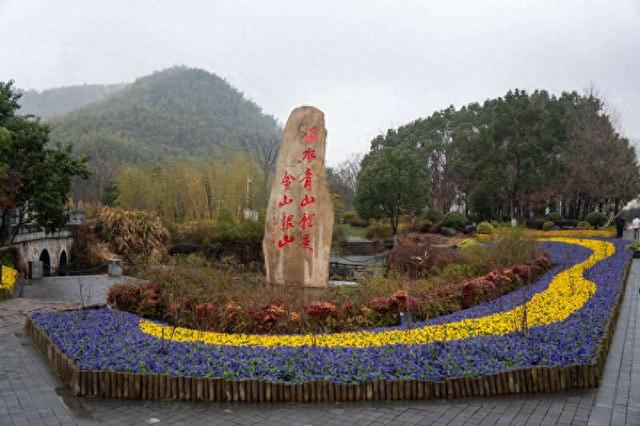
Group 1 - Anji Yucun has been recognized as the "World's Best Tourism Village" by the United Nations World Tourism Organization, showcasing its transformation from a traditional farming community to a modern hub for returning youth and digital nomads [1] - The village has developed a youth community called "Qinglai Ji," featuring over 1,000 shared workspaces, a cafeteria, a supermarket, and talent apartments to attract young entrepreneurs [2] - The village emphasizes ecological transformation, symbolized by a stone tablet inscribed with "Green mountains and clear waters are as valuable as mountains of gold and silver," reflecting its commitment to sustainable development [2] Group 2 - The "Qinglai Ji" community operates under a "scenic and social symbiosis" model, providing a peaceful and livable environment for its residents [3] - Anji is known as "China's First Bamboo Town," and Yucun promotes high-quality development of the bamboo industry by advocating for "bamboo instead of plastic" initiatives [5] - The village's cultural hall displays various handicrafts, including embroidery, weaving, and wood carving, highlighting the local craftsmanship [7]
江西南臻竹创生物能源有限公司成立,注册资本1001万人民币
Sou Hu Cai Jing· 2026-01-13 12:03
Core Viewpoint - Jiangxi Nanzhen Bamboo Creation Bioenergy Co., Ltd. has been established with a registered capital of 10.01 million RMB, focusing on bamboo products and biomass energy processing [1] Company Summary - The legal representative of Jiangxi Nanzhen Bamboo Creation Bioenergy Co., Ltd. is Zheng Yong [1] - The company is primarily engaged in the manufacturing and sales of bamboo products, flooring, daily wood products, charcoal, and biomass fuels [1] - Shareholding structure includes Jiangxi Zhongchang Technology Co., Ltd. with 68%, Jiangxi Tengda Bamboo and Wood Industry Co., Ltd. with 29%, and Wang Xiuping with 3% [1] - The company is classified under the manufacturing industry, specifically in the coal processing sector [1] - The business address is located in Yichun City, Wanzai County, Jiangxi Province [1] - The company is registered as an other limited liability company with an indefinite operating period [1] Industry Summary - The company operates within the biomass energy sector, focusing on the development and sale of biomass fuels and related technologies [1] - The operational scope includes research and development in the utilization of residual heat, pressure, and gas [1] - The company also engages in the manufacturing of specialized equipment and provides various technical services [1]
开局“十五五” 实干启新程
Xin Lang Cai Jing· 2026-01-12 16:57
Core Viewpoint - The article emphasizes the importance of expanding domestic demand and stabilizing growth as a fundamental strategy for China's economic development, highlighting the collaborative efforts of various provinces to enhance investment and consumption, thereby laying a solid foundation for the "14th Five-Year Plan" period [4][13]. Investment and Consumption - Domestic demand is identified as the primary driving force for economic growth, with a focus on expanding effective investment and releasing consumption potential [4]. - Provinces are actively pursuing major project construction, with Hunan Province planning 2,676 central investment and provincial key construction projects, achieving over 530 billion yuan in cumulative investment by 2025 [5]. - By 2026, various regions aim to stabilize and enhance investment quality, with Hunan proposing a "project planning" initiative to accelerate the construction of key infrastructure projects [5][6]. Consumer Market Development - The article discusses the optimization of consumption policies, with provinces like Jiangsu focusing on expanding service consumption and promoting new consumption hotspots such as the silver economy and AI-driven consumption [6]. - Hunan is set to implement policies to promote service consumption and enhance the effectiveness of consumption upgrade initiatives [6][7]. Private Investment - Private investment is highlighted as a crucial support for growth and employment, with provinces like Fujian and Zhejiang implementing reforms to create a favorable environment for private enterprises [7]. - By 2026, regions will enhance policy incentives to stimulate private investment, focusing on reducing entry barriers and operational costs for private enterprises [7][8]. Technological Innovation and Industry Upgrade - The cultivation of new productive forces through technological innovation is emphasized as a key support for high-quality development [8]. - Provinces are encouraged to balance traditional industry upgrades with the development of emerging industries, with initiatives in places like Hunan and Jiangsu focusing on AI and digital economy advancements [9][10]. Regional Coordination and Collaboration - The article underscores the importance of regional cooperation in driving industrial upgrades, with various regions collaborating on emerging industry chains [11]. - Efforts to facilitate the flow of resources and promote open cooperation are highlighted, with provinces like Fujian and Yunnan working on cross-regional resource optimization and trade partnerships [12]. Conclusion - The development blueprint outlined by various provinces aligns with national strategic deployments while showcasing regional strengths, aiming to contribute significantly to China's modernization efforts by 2026 [13].

美之高1月7日获融资买入269.23万元,融资余额949.46万元
Xin Lang Cai Jing· 2026-01-08 01:23
Group 1 - The core viewpoint of the news is that Meizhi Gao's stock experienced a decline of 2.15% on January 7, with a trading volume of 60.34 million yuan, indicating a potential concern among investors [1] - On January 7, Meizhi Gao had a financing buy-in amount of 2.69 million yuan, with no financing repayment, resulting in a net financing buy-in of 2.69 million yuan [1] - As of January 7, the total financing and securities lending balance for Meizhi Gao was 9.49 million yuan, which represents 0.52% of its market capitalization and is above the 90th percentile level over the past year, indicating a high level of financing [1] Group 2 - As of September 30, the number of shareholders for Meizhi Gao was 2,555, a decrease of 29.36% compared to the previous period, while the average circulating shares per person increased by 39.53% to 21,745 shares [2] - For the period from January to September 2025, Meizhi Gao reported an operating income of 364 million yuan, a year-on-year decrease of 7.52%, and a net profit attributable to the parent company of -4.38 million yuan, a year-on-year decrease of 126.88% [2] Group 3 - Since its A-share listing, Meizhi Gao has distributed a total of 61.07 million yuan in dividends, with 58.84 million yuan distributed over the past three years [3]
吃穿住行用 处处“绿意”浓
Xin Lang Cai Jing· 2026-01-05 22:50
Core Viewpoint - The Chinese government is promoting green consumption through a series of initiatives aimed at fostering sustainable production and lifestyle choices across various sectors, including food, housing, transportation, and recycling [1]. Group 1: Food Sector - The initiative emphasizes increasing the supply of green agricultural products and encourages businesses to procure high-quality items such as organic and geographical indication products [3]. - It aims to reduce food waste by promoting practices like "small portion meals" and the use of biodegradable packaging in the food service industry [3]. Group 2: Housing Sector - The promotion of green living includes encouraging the purchase of certified green appliances and eco-friendly building materials [5]. - The initiative also supports the development of green hotels that utilize non-toxic cleaning agents and provide refillable toiletries instead of single-use plastics [5][6]. Group 3: Transportation Sector - The initiative highlights the growth of the automotive industry, particularly the rise of new energy vehicles, which now account for nearly 60% of the market since the implementation of vehicle replacement policies [7]. - It encourages the exploration of the "aftermarket" potential in areas like used cars, rentals, and shared mobility services, while advocating for the integration of technology to enhance resource efficiency [7]. Group 4: Recycling and Second-hand Market - The initiative promotes a circular economy by encouraging retailers to offer reusable shopping bags and supporting the establishment of a three-tier recycling system [8]. - It also advocates for the development of second-hand markets and the establishment of stores that focus on the resale of used goods, aiming to maximize the value of idle items [8].