
半导体材料

Search documents
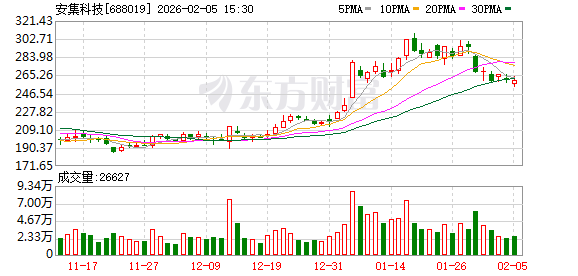
安集科技:公司关键磨料的总体国产化用量尚不高
Zheng Quan Ri Bao· 2026-02-05 13:38
证券日报网2月5日讯 ,安集科技在接受调研者提问时表示,目前,公司关键磨料的总体国产化用量尚 不高,在逐步提升中,因为这需要一个持续的过程。公司高度重视核心原材料的自主可控能力建设,目 前通过自研自建或合作等方式,已经解决了多款关键磨料从研发到生产的规模化,并顺利应用到公司部 分产品进入客户端使用。公司对于原材料自主可控的品类是有选择性的,重点在于强化核心原材料自主 可控的能力,提升自身产品的稳定性和竞争力,并确保战略供应。对毛利率的影响,这是一个逐步、长 期的过程。短期内,自研投入可能会增加研发费用;从长期来看,可能对产品毛利率的提升有正向影 响。 (文章来源:证券日报) ...


华海诚科:依托技术创新和产品结构调整 逐步扩大传统封装领域市场份额
Zheng Quan Ri Bao Zhi Sheng· 2026-02-05 13:06
Core Viewpoint - The storage industry is entering a super cycle driven by AI, leading to an increase in storage chip prices and positively impacting the packaging materials supply chain through advanced packaging technology [1] Group 1: Industry Insights - The current super cycle in the storage industry is primarily driven by AI advancements [1] - This cycle is not only increasing storage chip prices but also enhancing the volume and price of packaging materials [1] Group 2: Company Strategy - The company is leveraging technological innovation and product structure adjustments to gradually expand its market share in the traditional packaging sector [1] - The company is actively investing in the advanced packaging field to promote the industrialization of high-end products [1]

【山证新材料】新材料周报:SpaceX计划组建百万卫星太空算力集群,建议关注上游材料发展机遇
Xin Lang Cai Jing· 2026-02-05 12:27
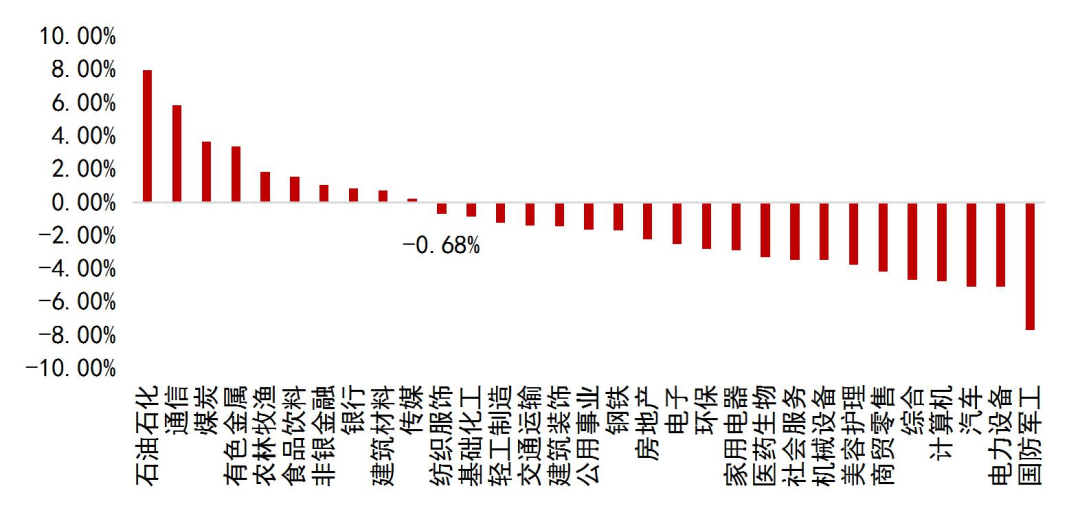
Market Performance - The new materials sector experienced a decline this week, with the new materials index falling by 5.29%, underperforming the ChiNext index which decreased by 5.19% [1][4] - Over the past five trading days, the synthetic biology index dropped by 3.13%, semiconductor materials by 3.60%, electronic chemicals by 3.77%, biodegradable plastics by 0.90%, industrial gases by 3.96%, and battery chemicals by 4.89% [1][9] Price Tracking - Amino acids prices showed the following changes: valine remained at 14,050 CNY/ton, arginine increased by 2.64% to 21,400 CNY/ton, tryptophan rose by 1.27% to 31,900 CNY/ton, and methionine increased by 2.82% to 18,200 CNY/ton [2] - Prices for biodegradable materials remained stable, with PLA (FY201 injection grade) at 17,800 CNY/ton and PBS at 17,000 CNY/ton [2] - Vitamin A decreased by 1.60% to 61,500 CNY/ton, while other vitamins remained unchanged [2] Investment Recommendations - SpaceX plans to establish a satellite constellation of up to 1 million satellites, significantly increasing demand for upstream raw materials, particularly lightweight and cable materials [3] - Companies to watch in lightweight materials include Times New Material, Jilin Chemical Fiber, Zhongfu Shenying, Guangwei Composites, and Heshun Technology; for cable materials, focus on Pulit and Panyam Micro透 [3]
薄膜铌酸锂:受益AR眼镜和光通信产业趋势
Huafu Securities· 2026-02-04 11:21
Investment Rating - The industry rating is "Outperform the Market" [8] Core Insights - The thin-film lithium niobate (TFLN/LNOI) is positioned as a foundational material platform for next-generation photonic chips, benefiting from advancements in AR glasses and optical communication [4][5] - The market for lithium niobate is expanding due to its superior piezoelectric, ferroelectric, and electro-optic properties, with China accounting for 42% of global production capacity [4][24] - The demand for TFLN is driven by the growth of AR glasses and the transition in optical communication towards high-speed data center interconnects [5][39] Summary by Sections 1. Introduction to Lithium Niobate and Thin-Film Lithium Niobate - Lithium niobate (LiNbO₃) is recognized for its multifunctional properties, making it a key material in integrated and guided optics [14] - Thin-film lithium niobate (TFLN) is produced as sub-micron films, enhancing device integration density and performance compared to traditional bulk lithium niobate [3][14] 2. Industry Trends & Competitive Landscape 2.1 Industry Trends - The rapid development in 5G/6G, AI, and data centers is driving the demand for lithium niobate, which is becoming a leading material in photonics [23] 2.2 Competitive Landscape - China is the largest producer of lithium niobate, with companies like TianTong and JiNan JingZheng leading in production capabilities [4][24] 3. Potential Growth Markets: AR Glasses and Optical Communication 3.1 AR Glasses - TFLN technology enables ultra-fast electro-optic response and significant improvements in color switching speed for AR glasses, with a projected global shipment of 1.06 million units by 2025 [5][35] 3.2 Optical Communication - The shift towards high-speed optical communication is creating a new growth cycle, with TFLN being crucial for supporting high data rates and low power consumption [5][39] 4. Material Characteristics of Thin-Film Lithium Niobate - TFLN offers advantages over silicon photonics and indium phosphide, including higher bandwidth and better linearity, making it suitable for high-density integration [45] 5. Key Industry Players - Key companies include: - **Sumitomo Metal Mining**: Leading in large-scale lithium niobate wafer production [49] - **TDK**: Innovating in the direct growth of lithium niobate films on standard semiconductor substrates [49] - **TianTong Co.**: Focused on the development of lithium niobate crystals for RF filters and optical devices [49] - **JiNan JingZheng**: A pioneer in the thin-film lithium niobate sector, breaking foreign monopolies [49] - **NanZhi Semiconductor**: Specializing in high-quality lithium niobate crystals for advanced applications [50]
鼎龙股份(300054):拟收购皓飞新材切入锂电功能辅材新赛道
Xin Lang Cai Jing· 2026-02-04 10:35
Group 1 - The company expects to achieve a net profit attributable to shareholders of 700-730 million yuan in 2025, representing a year-on-year growth of approximately 34.44%-40.20%, driven by strong growth in semiconductor and display materials business and effective cost control measures [1] - The company anticipates a non-deductible net profit attributable to shareholders of 661-691 million yuan in 2025, with a year-on-year increase of about 41.00%-47.40%, while non-recurring gains and losses are estimated at 39 million yuan for the current reporting period [1] Group 2 - The company plans to acquire 70% equity of Haofei New Materials for 630 million yuan, marking its entry into the lithium battery functional auxiliary materials sector, which is expected to benefit from the growing demand in the new energy vehicle and energy storage industries [2] - The domestic market size for lithium battery binders and dispersants is projected to exceed 20 billion yuan by 2030, with Haofei New Materials being a leading player in this segment, having established strong relationships with top clients in the power and energy storage battery sectors [2] - The company aims to leverage its existing materials business to enhance synergies with the lithium battery business, optimizing production and quality control through its mature management systems [2] Group 3 - Revenue projections for the company are estimated at 3.779 billion yuan, 4.648 billion yuan, and 5.611 billion yuan for the years 2025, 2026, and 2027 respectively, with net profits attributable to shareholders expected to be 720 million yuan, 950 million yuan, and 1.26 billion yuan for the same years [3]

研报掘金丨中邮证券:维持鼎龙股份“买入”评级,拟收购皓飞新材切入锂电功能辅材新赛道
Ge Long Hui A P P· 2026-02-04 06:54
Group 1 - The core viewpoint of the article is that Dinglong Co., Ltd. plans to acquire 70% of Haofei New Materials for 630 million yuan, marking its entry into the lithium battery functional materials sector [1] - The semiconductor and display materials business of the company is experiencing strong growth [1] - The company expects to achieve a net profit attributable to shareholders of 700-730 million yuan in 2025, representing a year-on-year growth of approximately 34.44%-40.20% [1] Group 2 - The acquisition will allow Haofei New Materials to become a subsidiary and be included in the consolidated financial statements of Dinglong [1] - The lithium battery materials market has seen robust growth due to demand from downstream industries such as new energy vehicles and energy storage [1] - The company maintains a "buy" rating following this strategic move [1]
上峰水泥(000672):新质生产力系列:水泥现金牛第二曲线拓展加速,有望迈向综合硅基材料企业
East Money Securities· 2026-02-03 13:12
Investment Rating - The report maintains a rating of "Buy" for the company [6] Core Insights - The company is positioned as a cash cow in the cement industry, with a strong focus on cost control and profitability, leading to a competitive edge in the market [4][48] - The company is expanding into the semiconductor sector, with financial investments expected to yield returns starting in 2026, enhancing overall profitability [59][60] - The company aims to develop a dual-driven business model combining construction materials and equity investments, targeting a new growth curve in silicon-based materials [32][59] Summary by Sections Company Overview - The company, established in 1978, has a mixed ownership structure that combines the flexibility of private enterprises with the resources of state-owned enterprises, enhancing its competitive position [14] - As of Q3 2025, the company has a market capitalization of approximately 14.49 billion yuan and a significant cash reserve of 3.1 billion yuan, supporting its investment strategies [4][25] Cement Industry Analysis - The cement industry is expected to see improvements in supply-demand dynamics due to capacity replacement policies and government support for infrastructure projects [33][41] - The company has successfully implemented a T-shaped strategy similar to that of Conch Cement, leading to industry-leading cost and profit margins [48][49] Financial Performance - Revenue projections for 2025-2027 are estimated at 5.43 billion, 5.57 billion, and 5.72 billion yuan, with net profits expected to grow significantly during this period [6][7] - The company has a high dividend payout ratio, with a projected dividend of 6 billion yuan for 2024, reflecting a strong commitment to shareholder returns [5][27] Investment Strategy - The company has invested in over 20 semiconductor firms since 2020, focusing on various sectors within the semiconductor industry, which is anticipated to contribute significantly to profits in the coming years [59][60] - The establishment of a partnership with Lanpu Venture Capital aims to further enhance the company's investment capabilities in the semiconductor space [32][59]

南大光电:产品广泛应用于集成电路、平板显示、LED、第三代半导体、光伏和半导体激光器的生产制造
Zheng Quan Ri Bao Zhi Sheng· 2026-02-03 09:41
Core Viewpoint - The company is focusing on advanced precursor materials, electronic specialty gases, and photoresists, aligning with national development strategies and targeting applications in various high-tech industries [1] Group 1: Company Focus - The company specializes in the research, production, and sales of three core electronic materials: advanced precursors (including MO sources), electronic specialty gases, and photoresists [1] - The products are widely used in the manufacturing of integrated circuits, flat panel displays, LEDs, third-generation semiconductors, photovoltaics, and semiconductor lasers [1]

TCL科技(000100):领先科技,和合共生
China Post Securities· 2026-02-03 09:37
Investment Rating - The investment rating for the company is "Buy" and it is maintained [1] Core Insights - The company demonstrates strong growth momentum with a revenue increase of 10.50% year-on-year, reaching 1360.65 billion yuan in the first three quarters of 2025. The net profit attributable to shareholders increased by 99.75% to 30.47 billion yuan, while the net profit excluding non-recurring items surged by 233.33% to 24.29 billion yuan [4] - The semiconductor display business shows multiple breakthroughs, with significant growth in both large and small-sized displays. The market share for large-sized displays increased by 5 percentage points to 25%, and the small-sized display segment has become a core growth engine for the company [5] - The company is effectively integrating its T11 production line and optimizing its product matrix and capacity configuration, while maintaining a steady operational rhythm in its OLED business, ranking fourth globally in flexible OLED smartphone shipments [5][6] Financial Performance - The company is expected to achieve revenues of 1903 billion yuan, 2236 billion yuan, and 2636 billion yuan for the years 2025, 2026, and 2027 respectively. The net profit attributable to shareholders is projected to be 43.2 billion yuan, 80.0 billion yuan, and 107.7 billion yuan for the same years [7] - The financial metrics indicate a significant recovery, with a projected EBITDA of 45105.49 million yuan in 2025, increasing to 60952.89 million yuan by 2027 [10]

2026年首例“A收A”:301亿电子靶材龙头跨界并购38亿石英新贵
Xin Lang Cai Jing· 2026-02-03 09:17
1月30日,全球溅射靶材龙头江丰电子、国产石英材料领军企业凯德石英同步公告,江丰电子拟以现金 收购凯德石英控制权,交易完成后后者将成为其控股子公司。 此次收购凯德石英,是其向半导体精密零部件领域延伸的关键一步。凯德石英是国内半导体石英制品核 心供应商,产品覆盖扩散、氧化、蚀刻等关键工艺环节,2025年上半年毛利率达44%,显著高于同期江 丰电子精密零部件业务23.65%的毛利率。分析认为,此次交易或有助于江丰电子强化非金属材料领域 的布局能力,通过产业链上下游对接、客户资源互补实现价值释放,实现营收增长与盈利优化。 从交易细节来看,江丰电子交易对手为凯德石英实控人张忠恕夫妇及其一致行动人,合计持股 40.41%。按当前股价计算,收购该部分股份约需要15.35亿元现金,但截至2025年三季度末,江丰电子 货币资金仅13.90亿元,同时背负4.95亿元短期借款和7.57亿元一年内到期非流动负债。 好在江丰电子目前正在推进一笔19.28亿元的定增计划。根据安排,其中30%(约5.74亿元)拟用于补充 流动资金或偿还借款,其余资金将投向年产5100个集成电路设备用静电吸盘产业化项目、年产1.23万个 超高纯金属溅射靶 ...