
闪存芯片

Search documents
用光纤充当缓存?芯片被颠覆了
半导体行业观察· 2026-02-13 01:09
Core Viewpoint - The article discusses the potential of using fiber optics instead of silicon to define how artificial intelligence stores and retrieves knowledge, as proposed by John Carmack, highlighting the advantages of fiber optics in data transmission and storage [2][3]. Group 1: Fiber Optics in AI - John Carmack suggests using fiber optic loops as high-speed data caches for AI models, which could revolutionize data storage and retrieval methods [2]. - Current single-mode fiber can transmit data at a speed of 256 terabits per second over 200 kilometers, allowing for approximately 32 GB of information to be stored at any given moment [2]. - The proposed method would function as a secondary cache, enabling model weights to be stored at light speed with minimal latency and significantly higher bandwidth compared to traditional memory [2][3]. Group 2: Advantages Over Traditional Memory - Fiber optics offer predictable performance, low power consumption, and substantial bandwidth potential compared to volatile DRAM, which requires constant refreshing of electrical signals [3]. - The efficiency advantages of fiber optics are appealing, especially as the miniaturization of components slows down, potentially making fiber optics a more favorable option than DRAM [3]. Group 3: Challenges and Future Directions - A significant challenge is the high cost of high-quality fiber optics over long distances, which may offset energy savings from reduced power consumption [3]. - Carmack's more practical next step involves tightly coupling flash memory chips with AI accelerators to facilitate rapid movement of model weights without relying on DRAM, requiring collaboration between semiconductor manufacturers and accelerator designers [4]. - Research teams are exploring architectures that utilize solid-state storage, indicating a trend towards blurring the lines between storage and memory [4].


高盛:全球存储器市场将经历史上最严重的供应短缺
Huan Qiu Wang· 2026-02-10 00:58
Group 1 - Goldman Sachs reports that the global memory market will experience one of the most severe supply shortages in history during 2026-2027, with significant supply-demand gaps in DRAM, NAND, and HBM categories [1] - The DRAM supply is expected to face its most severe shortage in 15 years in 2026, while the NAND market will encounter one of its largest shortages ever [1] - The shortage is driven by competition among AI and consumer electronics companies for increasingly scarce supplies, which is expected to support manufacturers' backlog orders for years [1] Group 2 - Memory chip manufacturers are benefiting from the supply shortage, with supply constraints projected to last until 2028 [2] - Contracts for flash memory chips between SanDisk and Kioxia have been extended until the end of 2034, leading analysts to generally raise their price targets for these companies [2]

去年陕西高新技术产品进出口值同比增长20.3%
Shan Xi Ri Bao· 2026-02-06 23:24
Group 1 - The core viewpoint is that Shaanxi's high-tech industry has become a pillar of foreign trade, with an import and export value of 324.75 billion yuan in 2025, representing a year-on-year growth of 20.3%, accounting for over 60% of the province's total import and export value [1] - The import and export of integrated circuits reached 220.34 billion yuan in 2025, with a year-on-year increase of 20% [1] - Xi'an Customs is supporting companies like Micron Semiconductor (Xi'an) to expand investments and upgrade production processes to meet the demands of AI and cloud computing, significantly enhancing their technological capabilities and competitive advantages [1] Group 2 - Xi'an Customs has helped 129 enterprises reduce tax payments by 1.32 billion yuan during the 14th Five-Year Plan period, covering sectors such as integrated circuits and new display devices [2] - The tax policy for "electronic-grade silicon wafers" has been implemented since January 1, expected to generate over 30 million yuan in additional export tax rebates annually for enterprises [2] - Xi'an Customs plans to continue optimizing the business environment at ports and support the new development of Shaanxi's foreign trade by addressing the personalized needs of enterprises [2]
兆易创新、紫光国芯...多家半导体存储厂商IPO新进展披露
Sou Hu Cai Jing· 2026-01-14 06:07
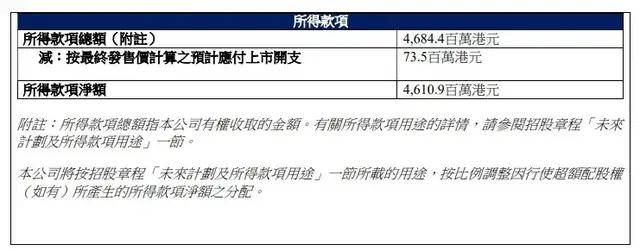
Group 1 - The Chinese storage chip industry is experiencing a surge in capital market activities, with companies like Zhaoyi Innovation successfully listing on the Hong Kong Stock Exchange, achieving an "A+H" dual capital layout [1][2] - Other companies such as Unisoc, Xincheng Technology, Hongxin Yu, and Dapu Micro are also pursuing listings through various capital markets, reflecting a broader trend of domestic storage manufacturers accelerating their technological breakthroughs and capitalizations [1][2] - The growth in the industry is driven by emerging demands from sectors like artificial intelligence (AI) and automotive electronics, indicating a high growth potential for the storage industry in China [1] Group 2 - Zhaoyi Innovation's market performance on its first day of trading showed a significant increase, with an opening price of 235 HKD per share, up 45.06% from the issue price, leading to a total market capitalization exceeding 310 billion RMB [2] - The company raised approximately 4.68 billion HKD through its global offering, with net proceeds of about 4.61 billion HKD, which will be used to enhance R&D capabilities, strategic investments, and global expansion [3][5] - Zhaoyi Innovation reported a revenue of 6.83 billion RMB for the first three quarters of 2025, marking a year-on-year increase of 20.92%, and a net profit of 1.08 billion RMB, up 29.59% [5] Group 3 - Unisoc has initiated its IPO preparation targeting the Beijing Stock Exchange, marking a strategic shift from the previous trend of semiconductor companies opting for the Sci-Tech Innovation Board [6][10] - The company has a history dating back to 2004 and has undergone several transformations, with its current focus on storage technology and integrated circuit design [12] - Unisoc's revenue has shown growth, with figures of 914 million RMB in 2023, 1.21 billion RMB in 2024, and 750 million RMB in the first half of 2025, indicating a recovery trajectory [12] Group 4 - Xincheng Technology, which previously attempted to list on the ChiNext board, is now pursuing an IPO on the Hong Kong Stock Exchange, reflecting a strategic pivot in its market approach [14][17] - The company specializes in general-purpose chips, with a focus on code-type flash memory chips and a diverse product line that includes analog chips and microcontrollers [17] - Xincheng Technology reported revenues of 663 million RMB in 2023, 442 million RMB in 2024, and 379 million RMB in the first three quarters of 2025, with a turnaround to profitability in 2025 [17] Group 5 - Hongxin Yu has submitted its listing application to the Hong Kong Stock Exchange, focusing on storage chip products with applications in consumer electronics and automotive electronics [19][22] - The company has established itself in the supply chains of major consumer electronics brands and is expanding into automotive electronics, with expectations for mass production of enterprise-level storage products by 2026 [22] - Hongxin Yu's revenue remained stable, with figures of 8.78 billion RMB in 2023, 8.72 billion RMB in 2024, and 7.74 billion RMB in the first three quarters of 2025, achieving profitability in 2024 [22] Group 6 - Dapu Micro has reached the "registration stage" for its IPO on the ChiNext board, focusing on enterprise-level SSD products for data centers [24][25] - The company has a strong market presence, with a reported compound annual growth rate of 57.66% in its main business revenue from 2022 to 2024, and a projected revenue of 961 million RMB in 2024 [26] - Dapu Micro plans to raise 1.878 billion RMB through its IPO to fund next-generation controller chip development and production testing facilities [26][27] Group 7 - The storage chip sector is seen as a cornerstone of the digital economy, with its domestic development closely tied to capital market dynamics, indicating a critical phase in China's semiconductor industry [28] - The ongoing integration of AI and IoT applications, coupled with support from capital markets, is expected to enhance the global influence of domestic storage manufacturers [28]

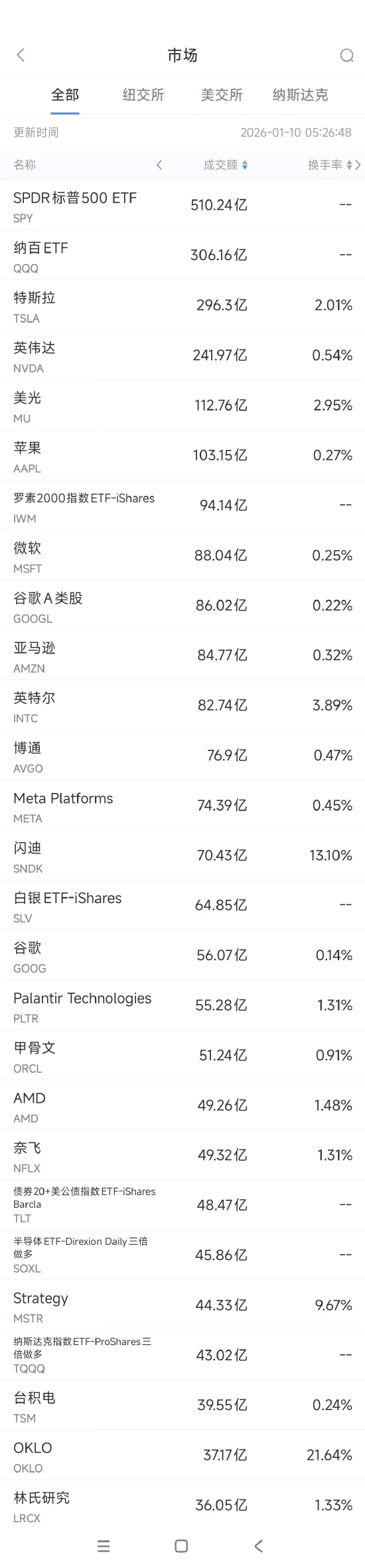
1月10日美股成交额前20:英特尔本周上涨逾15%
Xin Lang Cai Jing· 2026-01-09 21:54
Core Insights - Tesla has lost its position as the global leader in electric vehicle sales for 2025, facing significant challenges in key overseas markets, particularly in Europe [1][10] - Nvidia is appointing Alison Wagonfeld from Google Cloud as its Chief Marketing Officer, indicating a strategy to enhance brand influence [2][10] - Micron Technology is experiencing supply constraints, only meeting 50% to 66% of key customer mid-term demand, despite plans for a new wafer fab to begin production in mid-2027 [3][11] Tesla - Tesla's projected sales in Europe for 2025 are expected to drop from approximately 326,000 units in 2024 to over 235,000 units, representing a year-on-year decline of 27.8% [1][10] - In Germany, Tesla's sales are projected to fall nearly 50% to about 19,000 units, while in the UK, sales are expected to decrease by 10% to 50,300 units [1][10] Nvidia - Nvidia's stock decreased by 0.10%, with a trading volume of $24.197 billion [1][10] - The appointment of Alison Wagonfeld is seen as a move to initiate a new growth phase for Nvidia [2][10] Micron Technology - Micron's stock increased by 5.53%, with a trading volume of $11.276 billion [1][10] - The company has indicated that even with the new Idaho 1 wafer fab coming online in mid-2027, the supply-demand imbalance for DRAM and HBM will remain unresolved [3][11] - Mizuho Securities raised Micron's target stock price from $290 to $390 [3][12] Apple - Apple's stock rose by 0.13%, with a trading volume of $10.315 billion, after experiencing a decline over the previous seven trading days [1][10] Intel - Intel's stock increased by 10.80%, with a trading volume of $8.274 billion, marking a cumulative increase of 15.67% for the week [1][10] - Discussions between President Trump and Intel's CEO focused on the company's new processor developments, with the U.S. government having acquired approximately 5.5% of Intel's shares [1][10] SanDisk - SanDisk's stock surged by 12.81%, with a trading volume of $7.043 billion, and has seen a cumulative increase of over 37% for the week [1][10] - Analysts predict that SanDisk may double the prices of its enterprise-level SSD NAND flash in the upcoming quarter due to strong demand [1][14] Oracle - Oracle's stock rose by 4.95%, with a trading volume of $5.124 billion [1][10] - HSBC Global Research maintained a "buy" rating for Oracle, highlighting potential challenges and opportunities in the AI industry chain for 2026 [1][14]


今晚,涨疯了!
Zhong Guo Ji Jin Bao· 2026-01-06 16:24
Core Viewpoint - The storage chip market is experiencing significant price increases driven by surging demand for AI infrastructure, with major companies like SanDisk and Micron seeing substantial stock price gains [3][5][6]. Group 1: Market Performance - U.S. stock indices continued to rise, with the Dow Jones up by 0.27%, Nasdaq by 0.19%, and S&P 500 by 0.22% [2]. - The market remains largely unaffected by geopolitical tensions in Venezuela, with a three-year bull market continuing, primarily fueled by demand for AI-related stocks [2][3]. - Major storage chip stocks saw significant gains, with SanDisk rising over 20%, Micron up over 6%, Western Digital up over 12%, and Seagate Technology up over 10% [3][4]. Group 2: Supply and Demand Dynamics - Analysts indicate that the surge in AI infrastructure demand is leading to a global supply crunch, which may persist for months or even years [5]. - Samsung's co-CEO described the current shortage as "unprecedented," aligning with warnings from industry peers about ongoing supply constraints [5]. - Market research firm TrendForce reported that prices in certain segments have more than doubled since February of last year, attracting traders to bet on the continuation of this upward trend [5]. Group 3: Future Outlook - Micron's CEO anticipates that the tight storage market conditions will extend beyond 2026, with the company's stock having surged 240% in 2025, significantly outperforming the Philadelphia Semiconductor Index's 42% increase [6]. - Analysts from Morningstar and JPMorgan estimate that the current "super cycle" in the market could last until 2027 or even longer [8]. Group 4: Sector Reactions - While storage chip companies are thriving, cooling system manufacturers are facing significant stock declines due to concerns about reduced demand for their products following comments from Nvidia's CEO [10]. - Companies like Johnson Controls and Modine Manufacturing saw their stock prices drop significantly, with Johnson Controls experiencing an intraday decline of up to 11% [10][13].



今晚,涨疯了!
中国基金报· 2026-01-06 16:16
Core Viewpoint - The article highlights the significant surge in storage chip prices driven by increased demand for AI infrastructure, with major companies in the sector experiencing substantial stock price increases [6][7]. Group 1: Market Performance - U.S. stock markets continued to rise, largely driven by demand for AI-related stocks, despite geopolitical tensions in Venezuela [2]. - Major chip companies, including SanDisk, Micron Technology, Western Digital, and Seagate, saw stock price increases of over 20%, 6%, 12%, and 10% respectively [4][6]. Group 2: Supply and Demand Dynamics - Analysts indicate that the global supply constraints in storage chips are expected to persist for months or even years due to the surge in AI infrastructure demand [6]. - Samsung's co-CEO described the current chip shortage as "unprecedented," aligning with warnings from industry peers about ongoing supply constraints [6]. Group 3: Price Trends - Market research firm TrendForce reported that prices in certain segments have more than doubled since February of the previous year, attracting traders to bet on continued price increases [6]. - Micron's CEO projected that tight market conditions for storage will extend beyond 2026, with the company's stock rising 240% in 2025, significantly outperforming the Philadelphia Semiconductor Index [7]. Group 4: Impact on Related Sectors - Cooling system manufacturers experienced significant stock declines due to concerns about data center demand for their products, following comments from NVIDIA's CEO regarding new cooling technologies [8][12]. - Companies like Johnson Controls and Modine Manufacturing saw stock drops of up to 11% and over 10% respectively, marking their largest intraday declines since 2022 [8].

全球存储芯片供应短缺点燃投资者热情 相关厂商股价走高
Xin Lang Cai Jing· 2026-01-05 15:40
Core Viewpoint - The global supply shortage of storage chips, driven by surging demand for artificial intelligence infrastructure, is leading investors to bet on further price increases in storage chips, resulting in a collective rise in stock prices of major storage chip suppliers [1][3]. Group 1: Supply and Demand Dynamics - Samsung's co-CEO stated that the current supply shortage is "unprecedented," with other manufacturers echoing similar warnings about the tight supply situation potentially lasting for months [1][3]. - Manufacturers are shifting production capacity towards high-bandwidth memory chips for AI servers, causing a tightening of supply for flash memory chips used in devices like USB drives and smartphones [1][3]. - According to TrendForce, prices for some storage chip categories have doubled since February of last year, attracting many traders who believe there is still room for price increases [1][3]. Group 2: Stock Performance - Micron Technology's stock rose approximately 2% in early trading on Monday, while SK Hynix and Samsung Electronics saw their stock prices close up nearly 3% and 7.5%, respectively [1][3]. - Samsung Electronics' stock doubled last year, and SK Hynix's stock surged nearly threefold [4]. - Smaller competitors like Western Digital, Applied Digital, and Seagate also saw their stock prices rise over 3%, with SanDisk's stock increasing by about 1.5% [5]. Group 3: Market Outlook - Analysts from Morningstar and JPMorgan expect the current "super cycle" in the storage chip market to potentially last until 2027 [5]. - Micron's CEO indicated that the supply tightness in the storage chip market is expected to persist until after 2026, with the company's stock soaring 240% in 2025, significantly outperforming the industry benchmark index's 42% increase [1][3].
AI引爆存储芯片需求,铠侠股价领跑全球,中国长鑫IPO募资295亿
Sou Hu Cai Jing· 2025-12-31 03:48
Group 1 - The core driver of the storage chip industry's growth is the surge in data storage demand due to advancements in artificial intelligence technology [1][3] - Kioxia Holdings Corp, a Japanese storage chip manufacturer, is expected to record the highest stock price increase globally by 2025, indicating strong industry demand [1] - The demand for storage chips, particularly flash memory chips produced by Kioxia, is experiencing explosive growth as global tech companies accelerate the construction of AI infrastructure [3] Group 2 - Multiple tech companies have warned of a shortage in storage chip supply, leading to expectations of significant price increases for these products [3] - According to Amir Anvarzadeh, a strategist at Asymmetric Advisors Pte, the focus of the tech sector in 2026 will primarily be on the storage chip field, as demand currently far exceeds supply [3] - The Chinese storage chip industry is making progress in self-sufficiency, with Changxin Technology Group's IPO application accepted, aiming to raise 29.5 billion yuan, and reporting revenue of 32.084 billion yuan in the first nine months of 2025 [3]

美国丰田卖回日本,特朗普产业回流仍“病入膏肓”
汽车商业评论· 2025-12-19 23:05
Core Viewpoint - The article discusses the trend of manufacturing return to the U.S., particularly in the automotive and semiconductor industries, driven by government policies and foreign investments aimed at reducing trade deficits and enhancing domestic production capabilities [4][5][6][15][16]. Automotive Industry - Toyota plans to export three models produced in the U.S. back to Japan, symbolizing a positive gesture towards improving U.S.-Japan trade relations [4]. - Honda intends to shift production of key models like CR-V and Civic from Canada and Mexico back to the U.S., aiming for 90% local production within two to three years [8]. - General Motors announced a $4 billion investment in three U.S. plants to increase production capacity, aiming to exceed 2 million vehicles annually [10]. - Stellantis revealed a $13 billion investment plan in the U.S., which includes reopening a previously closed plant and creating approximately 3,300 jobs [12][13]. - Ford is adjusting its electric vehicle strategy, focusing on hybrid and gasoline models while hiring thousands of workers [10]. - The overall trend indicates a significant increase in domestic production and investment from both foreign and U.S. automakers, responding to government policies [10][14]. Semiconductor Industry - Under pressure from U.S. policies, major semiconductor companies like TSMC are expanding their operations in the U.S., with TSMC increasing its investment from $40 billion to $65 billion for new facilities [16][22]. - Intel has received approximately $11.1 billion in government subsidies and is building new fabs in Arizona and Ohio [20]. - Micron announced a $30 billion expansion plan in the U.S., with government support for its production facilities [22]. - The U.S. government is negotiating with Taiwan to facilitate the transfer of skilled labor to support domestic semiconductor manufacturing [23][24]. - Despite these investments, challenges remain in labor availability and supply chain issues, indicating that the return of manufacturing is still in progress and not yet fully realized [26][27]. Overall Manufacturing Trends - As of September 2025, U.S. manufacturing output was approximately $2.905 trillion, showing only slight growth compared to earlier in the year, with employment levels remaining stable [26]. - Trade deficits have widened, with a reported increase of $112.6 billion (17.2%) compared to the previous year, indicating that the intended reduction in trade imbalance has not yet materialized [26]. - The article highlights that while there are ambitious plans and investments, the actual outcomes in terms of production and job creation are still lagging behind expectations, necessitating further reforms and collaboration to achieve a true manufacturing revival in the U.S. [27][28].


