数据产业

Search documents
政策“组合拳”精准赋能 北京西城举办产业赋能招商推介会
Ren Min Wang· 2025-11-24 06:08
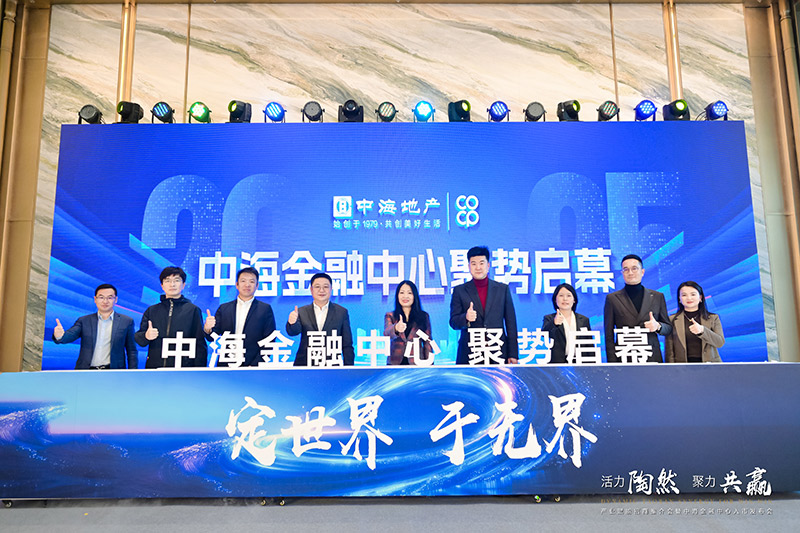
11月18日,"活力陶然,聚力共赢"产业赋能招商推介会暨中海金融中心入市发布会在西城区陶然亭街道中海金融 中心举行。 活动现场,西城区发改委、区委宣传部、中关村科技园区西城园管委会、区数据局四大核心部门联合进行了产业 政策宣讲。各部门负责人解读了西城区覆盖全域产业、文化产业、科技创新领域及数据产业的"高质量发展政策组合 拳",系统性地展示了在西城区投资兴业的独特优势、广阔前景与坚实政策保障,为在场企业提供了清晰的"政策导 航"。 动漫、游戏电竞也在西城区支持的产业范围内。对入选国家级重点项目的动漫作品,根据项目实际投入予以项目 主体资金支持,单个项目支持不超过100万元。支持文化出海,对动漫作品境外版权授权,按年度境外实际授权收入的 10%给予不超过500万元的资金支持。在游戏电竞产业,对申报运营满一年的专业电竞赛事场馆,举办电竞赛事达到50 场次且50%以上场次达到一定规模的(电竞赛事的总奖金达到100万元),给予场馆运营方每年一次性50万元资金支 持。 中关村科技园区西城园管理委员会(北京市西城区科学技术委员会)产业促进科科长曾庆艳介绍了《北京市西城 区促进科技创新及中关村科技园区西城园高质量发展若干措施 ...

改革图强,玄武激荡转型的力量
Xin Hua Ri Bao· 2025-11-24 02:53
Group 1: Economic Growth and Innovation - The GDP of Xuanwu is expected to exceed 140 billion yuan this year, marking a significant increase and positioning it among the top 100 innovative districts in the country [1] - Xuanwu has established a modern urban industrial system based on innovation, integrating data elements and artificial intelligence to enhance various industries [1][3] - The Jiangsu International Data Port is being developed to facilitate data trading and application, aiming to unlock the multiplier effect of data elements [3][4] Group 2: Consumer Market Development - Xuanwu has become a leading consumer district, contributing 14% of Nanjing's total retail sales with only 1% of the city's area [1] - The district has introduced over 400 first stores, including global and provincial-level brands, enhancing its commercial appeal [7] - The establishment of the first "immediate purchase and refund" tax refund pilot in the province at Deji Plaza has improved the shopping experience for international visitors [8] Group 3: Urban Renewal and Quality of Life - Xuanwu is focusing on urban renewal by addressing space optimization, interface innovation, and functional restructuring to create a "hexagonal urban area" [1][10] - The district has implemented various community improvement projects, enhancing living conditions and public services for residents [12][15] - The integration of green and low-carbon principles in urban renewal efforts is a priority, with projects aimed at creating sustainable living environments [11][12] Group 4: Governance and Community Engagement - Xuanwu has adopted a people-centered governance approach, leveraging party leadership to enhance community services and address residents' needs [2][13] - The district has established a comprehensive community service model, improving property management and increasing resident engagement [15][16] - Collaborative projects between local banks and community organizations have fostered a sense of shared responsibility and enhanced service delivery [16]
激活新动能,纵深推进数据要素统一大市场建设
Sou Hu Cai Jing· 2025-11-22 23:12
Core Insights - The construction of the data factor market has transitioned from the "policy ice-breaking period" to the "deep water zone of institutional implementation and market collaboration" [1][3] - Emphasis is placed on small and medium-sized enterprises (SMEs) and youth innovation and entrepreneurship groups as vital new drivers of the data factor market and direct participants in building a digital China [1][3] Group 1: Institutional Framework - The "Data Twenty Articles" established a top-level design for data property rights, covering aspects such as confirmation, circulation, distribution, and security [4] - The National Data Bureau is implementing the "Data Factor × Three-Year Action Plan (2024-2026)" and has initiated multiple national data factor comprehensive pilot zones [4] - The "Regulations on Promoting and Standardizing Cross-Border Data Flow" that took effect in March 2024 facilitate cross-border data flow, providing a "negative list + whitelist + standard contract" for enterprises [4] Group 2: Market Dynamics - The market mechanism is crucial for enhancing the value of data factors, with significant activity in twelve major sectors, including industrial manufacturing and financial services [6] - By the end of 2024, leading data exchanges in cities like Beijing and Shenzhen have recorded cumulative transaction volumes exceeding 10 billion [6] - The data factor market is still in an exploratory phase, requiring improvements in collaborative efficiency and the establishment of a nationwide mechanism for data transactions [6] Group 3: Role of Enterprises - Over 400,000 data enterprises are active in China as of 2024, with many SMEs and young entrepreneurs thriving in cutting-edge fields such as AI and fintech [8] - Policies like computing vouchers and data factor vouchers support the digital transformation of enterprises, although SMEs face challenges such as unclear responsibilities and high compliance costs [8][9] - Establishing a market-oriented revenue distribution mechanism is essential for enabling enterprises to share the value generated from data factors [9] Group 4: Future Vision - The unified data factor market construction is not only an institutional project but also a means to activate social innovation potential and shape digital civilization [10] - A collaborative governance system involving effective government, efficient markets, and dynamic enterprises is envisioned to drive the sustainable development of the data factor market [10] - The smooth flow of data and the empowerment of innovation will contribute to the larger national development cycle, reflecting the future landscape of the data factor market and the essence of Chinese modernization [10]
广东加快数字产业规模增长,年均复合增长率超15%
Huan Qiu Wang· 2025-11-21 00:59
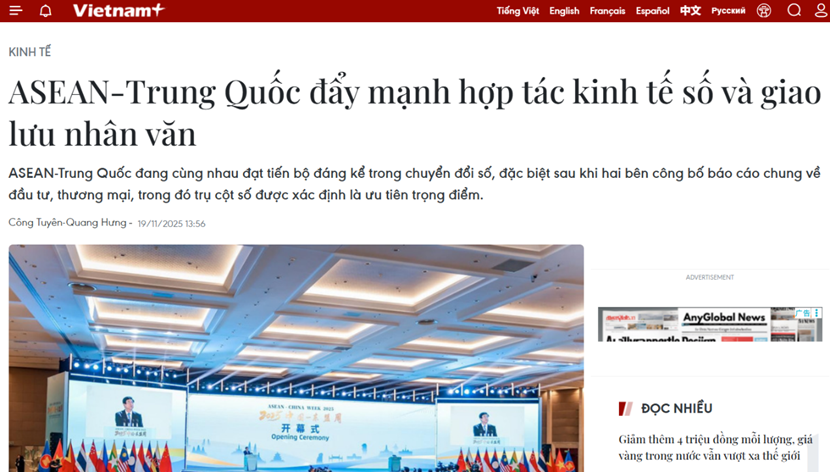
Group 1 - The core viewpoint is that Guangdong Province aims to accelerate the construction of a national digital economy innovation development pilot zone, targeting that by 2027, the core industry value of the digital economy will account for over 16% of GDP, with an annual compound growth rate of over 15% for the data industry, and the scale of the artificial intelligence core industry exceeding 440 billion yuan [1] - The Thai Foreign Ministry's official highlighted that digital transformation extends beyond trade and investment to include cross-border e-commerce, digital payment systems, artificial intelligence, smart healthcare, online education, multimedia communication, and high-tech in digital agriculture and agricultural production [1][4] Group 2 - The rapid development of the digital economy presents significant opportunities for the growth of small and medium-sized enterprises, enhancing productivity and building a regional digital ecosystem [4] - There is an urgent need for governance in artificial intelligence, cybersecurity, prevention of cybercrime, and online risk control due to the rapid growth of the digital economy, suggesting close cooperation between ASEAN and China to establish legal frameworks and unified standards [4]
利好来了!刚刚,重磅发布!
券商中国· 2025-11-20 12:17
Core Viewpoint - Guangdong Province aims to establish itself as a leading digital economy hub by 2027, with significant growth targets for the digital economy, artificial intelligence, and computing power [3][10]. Group 1: Digital Economy Development Goals - By 2027, Guangdong plans to maintain the highest level of digital economy development in China, with the core digital economy's added value accounting for over 16% of GDP [3]. - The province aims to create three internationally competitive trillion-level digital industry clusters and achieve an annual compound growth rate of over 15% in the data industry [3][5]. - The scale of the artificial intelligence core industry is expected to exceed 440 billion yuan, and the computing power scale is projected to surpass 60 EFLOPS [3][10]. Group 2: Infrastructure and Data Flow - The plan includes constructing a secure and controllable data flow framework and accelerating the development of data circulation infrastructure [4]. - A comprehensive data flow network will be established to ensure interconnectivity and coverage across the province [4]. - The initiative also emphasizes the development of a coordinated computing power infrastructure and the establishment of a national integrated computing power network [4]. Group 3: Industry Innovation and New Tracks - The government will promote high-quality development policies for the data industry and accelerate the establishment of data industry clusters [5]. - There will be a focus on developing data collection, storage, governance, and analysis technologies [5]. - The plan encourages the growth of innovative platform enterprises driven by technologies such as artificial intelligence and Web 3.0 [8]. Group 4: Artificial Intelligence Initiatives - The "Artificial Intelligence+" and "Robot+" initiatives aim to foster innovation in the AI and robotics sectors, promoting the development of consumer-grade smart terminal products [7]. - The plan includes the establishment of a regulatory framework for AI safety and the promotion of AI applications in government services and operations [9][10]. - Recent policies from various government departments support the integration of AI in transportation, healthcare, and urban commercial development [10][11]. Group 5: Chip Development and Software Industry - The plan emphasizes the development of a chip ecosystem suitable for high-performance, low-power applications, encouraging companies to innovate in various technology modules [6]. - There is a strong focus on enhancing the software and information technology service industry, particularly in cities like Guangzhou and Shenzhen [6].

广东,重磅方案落地!
Zheng Quan Shi Bao Wang· 2025-11-20 11:27
广东省数字经济创新发展试验区建设方案出炉。 11月20日,广东省人民政府正式印发《广东省国家数字经济创新发展试验区建设方案(2025—2027 年)》(下称《方案》)。 加快关键核心技术突破,打造国际一流数字产业集群。围绕"引领数字技术新突破""布局数据产业新赛 道""加强算力产业新供给""构建算法产业新生态""拓展终端产业新场景""锻造产业链韧性新体系"等六方 面提出工作任务,强调以数字技术突破带动数字产业"数据—算力—算法—终端"全链条创新发展,培育 具有国际竞争力的数字产业集群。 全面推进数字化转型,深化人工智能赋能千行百业。围绕"加速传统企业数智升级""深化重点产业智改 数转""推进数字城乡融合共进"等三方面提出工作任务,强调全面推进企业、产业、城乡三类主体的数 字化转型,并突出人工智能在转型中的赋能作用。 深化数字经济协同发展,构建高水平开放合作新格局。围绕"协同推动'数字湾区'建设""深化省际数字经 济交流合作""拓展国际数字经济开放空间"三个方面提出工作任务,强调通过粤港澳大湾区合作、省际 合作、国际合作三个层次,全面提升全省数字经济协同发展、对外开放水平。 158项改革举措 《方案》明确提出到 ...
广东打造国际一流数字经济发展高地,AI核心产业规模将超4400亿
Di Yi Cai Jing· 2025-11-20 11:20
Core Insights - The article discusses the establishment of national digital economy innovation development pilot zones in seven regions, including Guangdong, to promote high-quality development of the digital economy and its integration with the real economy [1] Group 1: Goals and Objectives - By 2027, Guangdong aims to maintain its leading position in digital economy development in China, with the core digital economy industries' added value accounting for over 16% of GDP [1] - The plan includes the creation of three internationally competitive trillion-level digital industry clusters and the cultivation of several high-value new digital industry tracks [1] - The data industry is expected to achieve an annual compound growth rate of over 15%, with the scale of the artificial intelligence core industry exceeding 440 billion yuan [1] Group 2: Key Tasks - The first task focuses on promoting market-oriented reform of data elements to strengthen the supply of core elements, emphasizing the need for effective data supply, circulation, and utilization [2] - The second task involves optimizing the layout of data infrastructure to solidify the foundation for digital economy development, including the establishment of three interconnected networks for data circulation, green collaborative computing power, and communication [2] - The third task aims to accelerate breakthroughs in key core technologies to create world-class digital industry clusters, emphasizing innovation across the entire chain from data to computing power, algorithms, and terminals [2] Group 3: Digital Transformation and Reform - The fourth task is to comprehensively promote digital transformation and deepen the empowerment of artificial intelligence across various industries, focusing on upgrading traditional enterprises and promoting digital integration in urban and rural areas [2] - The fifth task emphasizes the need for reform to stimulate the vitality of the digital economy, addressing governance, platform economy health, and improving the business environment through institutional innovation [3] - The sixth task aims to deepen collaborative development of the digital economy and establish a new high-level open cooperation framework, enhancing cooperation within the Guangdong-Hong Kong-Macao Greater Bay Area and expanding international digital economic opportunities [3]
广东数字经济试验区建设方案出炉,剑指国际一流发展高地
Nan Fang Du Shi Bao· 2025-11-20 10:00
Core Viewpoint - The Guangdong Provincial Government has issued a development plan for the digital economy, aiming to position Guangdong as a leading global digital economy hub by 2027, with specific quantitative targets for growth and infrastructure development [1][4]. Group 1: Quantitative Goals - By 2027, the core industries of the digital economy are expected to account for over 16% of GDP, with the establishment of three trillion-yuan digital industry clusters and the cultivation of several high-value new digital sectors [1]. - The data industry is projected to achieve an annual compound growth rate exceeding 15%, while the scale of the artificial intelligence core industry is anticipated to surpass 440 billion yuan [1]. - More than 60,000 industrial enterprises are expected to undergo digital transformation, with computing power exceeding 60 EFLOPS [1]. Group 2: Infrastructure Development - The plan outlines the construction of three networks: a trusted data circulation network, a green collaborative computing power network, and a comprehensive communication network integrating air, land, and sea [2]. - The trusted data circulation network will focus on pilot projects for data circulation infrastructure, exploring privacy computing and blockchain technologies [2]. - The green collaborative computing power network aims to optimize computing power distribution and accelerate the development of a national integrated computing power network in the Guangdong-Hong Kong-Macao Greater Bay Area [2]. Group 3: Industry Innovation - The plan emphasizes the implementation of the "Guangdong Strong Chip" project and core software initiatives, aiming to establish a significant semiconductor and integrated circuit industry cluster [3]. - It seeks to cultivate "gazelle" and "unicorn" companies in the data industry and build a new ecosystem for algorithm industries, supporting the development of general and industry-specific models [3]. - The plan promotes deep integration of digital technology, industry, and governance among Guangdong, Hong Kong, and Macao, establishing a regulatory sandbox network for the three regions [3][4].

广东:到2027年人工智能核心产业规模超过4400亿元 算力规模超过60EFLOPS
Mei Ri Jing Ji Xin Wen· 2025-11-20 07:53
每经AI快讯,据广东省人民政府网站11月20日消息,广东省人民政府印发《广东省国家数字经济创新 发展试验区建设方案(2025—2027年)》,其中提出,到2027年,数字经济发展水平稳居全国首位,数 字经济核心产业增加值占GDP比重超过16%,打造3个具有国际竞争力的万亿级数字产业集群,培育若 干高价值数字产业新赛道,数据产业规模年均复合增长率超15%,人工智能核心产业规模超过4400亿 元,规模以上工业企业数字化转型突破6万家,算力规模超过60EFLOPS(每秒浮点运算次数),将广 东打造为国际一流数字经济发展高地,将粤港澳大湾区建设为全球数字化水平最高的湾区。 ...
别只围观!来台湖,抓住AI驱动下数字经济的下一个黄金十年!
创业邦· 2025-11-19 00:12
Core Insights - Artificial intelligence is becoming a new "engine" for the data industry, highlighting the strategic value of data elements [2] - By the first half of 2025, the user base for generative AI in China is projected to reach 515 million, with a penetration rate of approximately 36.5% [3] - Beijing's Taihu area is emerging as a new highland for the data industry, being the first "data foundation system pilot zone" in the country [5][6] Group 1: Institutional Innovation - Taihu is leading in data element institutional innovation and industrial application, creating a "Taihu sample" for China's data industry [6] - Since being approved as a pilot zone in 2023, Taihu has explored a system for data rights confirmation, evaluation, and circulation, establishing a "2+5+N" credible data infrastructure [6][11] - The first ADD Data Application Scenario Conference was held in Taihu, bringing together experts and enterprises to discuss feasible paths for data element institutional innovation [7][12] Group 2: Economic Development - In 2024, Taihu registered 2,380 new enterprises with a total registered capital exceeding 1.6 billion, significantly improving the business environment [6] - The region has signed contracts with 17 data enterprises and established several key projects, contributing to a new wave of innovation [11] - The integration of the data element market in the Beijing-Tianjin-Hebei region is accelerating, with policies promoting data sharing and collaborative applications [11][13] Group 3: Future Prospects - The second ADD Data Application Scenario Conference will focus on multi-party collaboration in data element institutional innovation and industrial landing [12][17] - The conference aims to create a complete closed loop for regional industry through data institutional innovation, exploring a replicable "Beijing-Tianjin-Hebei model" [13] - The ongoing evolution of artificial intelligence relies heavily on vast amounts of data, positioning data as a critical resource for innovation and industrial restructuring [17][18]