智能网联新能源汽车

Search documents
广州加快建设先进制造业强市 力争十年工业增加值翻一番 到2035年建成万亿级“智车之城”
Nan Fang Ri Bao Wang Luo Ban· 2026-01-09 07:44
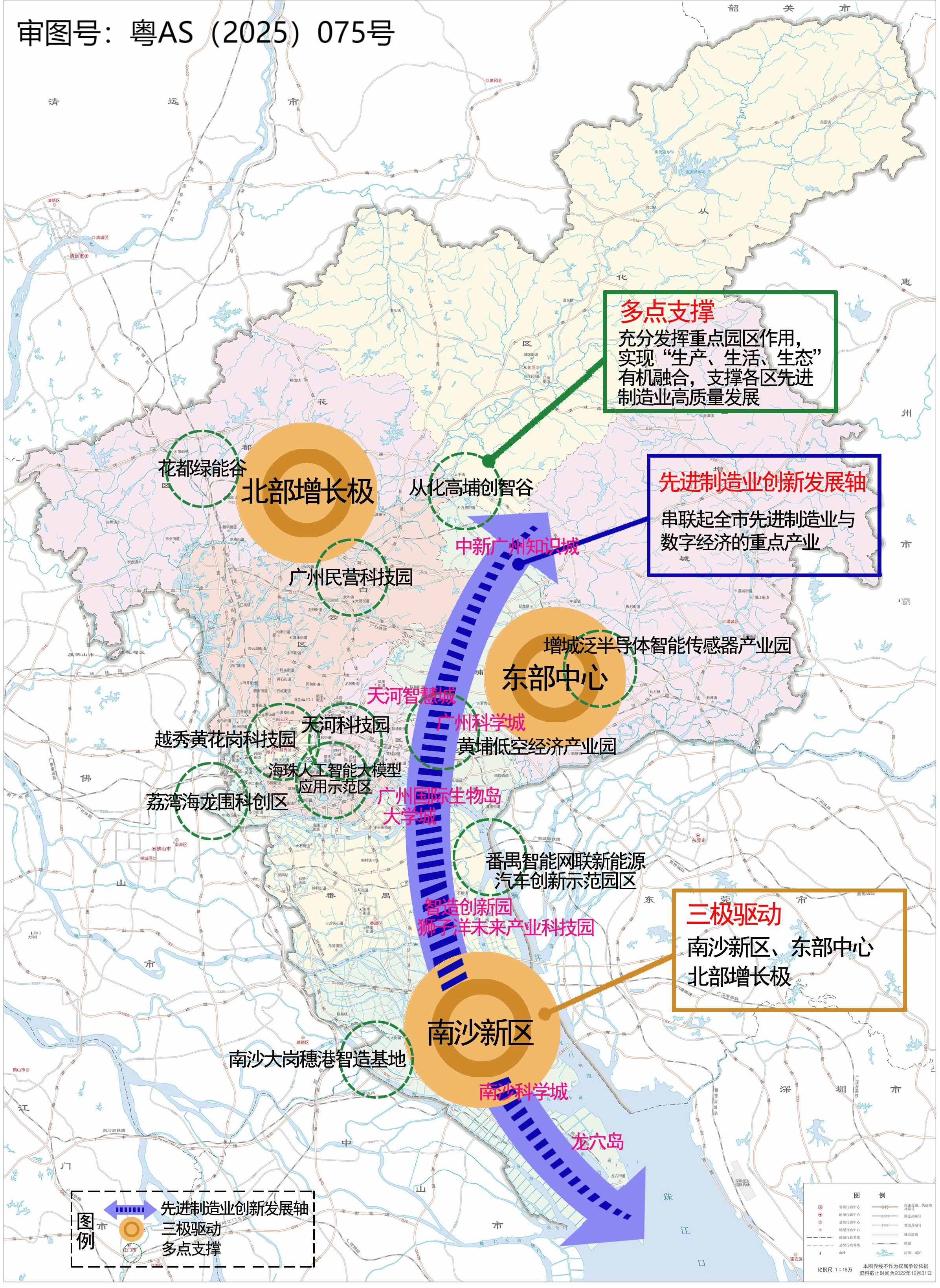
Group 1 - The core viewpoint of the news is the release of the "Guangzhou Plan for Accelerating the Construction of a Strong Advanced Manufacturing City (2024-2035)", which aims to double the industrial added value by 2035 and establish Guangzhou as a globally competitive advanced manufacturing hub [1][2] - By 2030, Guangzhou plans to build several world-class advanced manufacturing clusters and achieve significant breakthroughs in key core technologies, positioning itself at the high end of the global value chain [1][2] - The plan outlines four strategic positions for Guangzhou's advanced manufacturing development: a world-class advanced manufacturing base, a global manufacturing innovation center, a benchmark city for digital-physical integration, and a model city for new-type industrialization [1][2] Group 2 - The plan specifies development directions for emerging pillar industries, including the intelligent connected new energy vehicle sector, which aims to reach a trillion-level scale by 2035, establishing Guangzhou as a "Smart Car City" [2] - In the ultra-high-definition and new display sector, the industry scale is projected to reach 300 billion by 2035, while the intelligent equipment and robotics sector is also expected to achieve a scale of 300 billion [2] - The plan emphasizes the introduction and cultivation of leading enterprises in the semiconductor and integrated circuit fields, as well as the development of key aerospace bases in the low-altitude economy sector [2][3] Group 3 - The spatial layout of advanced manufacturing is defined by "one axis, three poles, and multiple points," with the "one axis" representing the innovation development axis that connects key national development zones [3] - The "three poles" refer to important advanced manufacturing bases in Nansha New Area, Eastern Center, and Northern Growth Pole, which will drive the transformation of manufacturing towards high-end, intelligent, and green directions [3] - The "multiple points" strategy aims to leverage key industrial platforms to create high-quality industrial clusters by linking surrounding advantageous industries [3]
投资总额近180亿元 重庆集中签约32个国企先进制造业项目
Sou Hu Cai Jing· 2026-01-09 04:44
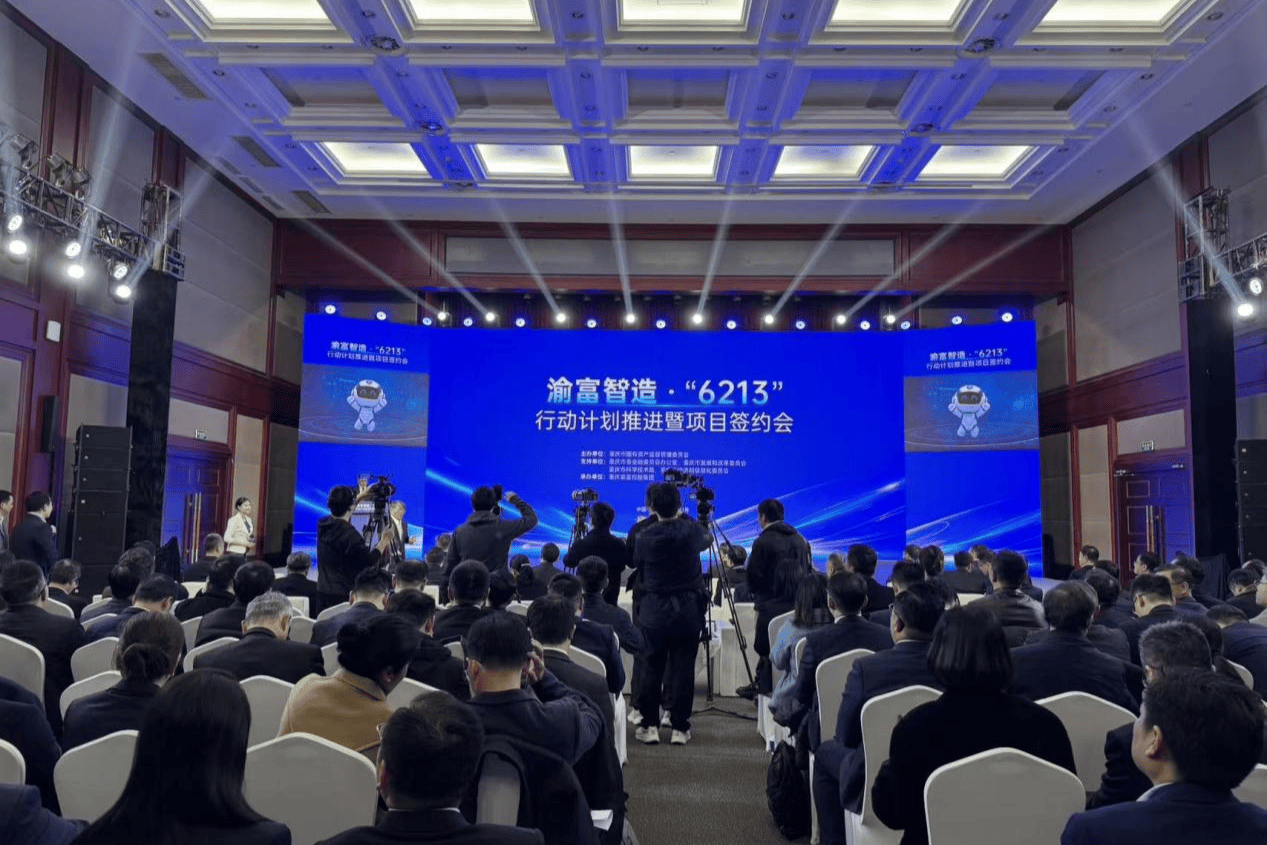
Core Insights - The "6213" action plan aims to enhance advanced manufacturing in Chongqing, with a total investment of nearly 180 billion yuan for 32 projects signed in the first quarter of 2026 [1][5] - The plan focuses on six core areas: intelligent connected new energy vehicles, next-generation electronic information manufacturing, advanced materials, emerging and future industries, intelligent equipment and manufacturing, and biomedicine [2] - The goal is to implement over 200 projects with a total investment exceeding 100 billion yuan during the 14th Five-Year Plan period, leveraging social capital to exceed 300 billion yuan in total investment in related industries [2] Investment and Projects - The Chongqing Yufu Holding Group announced an intention to invest nearly 400 billion yuan over the next five years, with 70 initial projects in the pipeline [2] - A total of 32 projects were signed during the event, covering key sectors such as automotive, electronic information, new materials, intelligent equipment manufacturing, and biomedicine [5] - The Chongqing Yufu Holding Group plans to establish a 1 billion yuan fund to focus on high-growth projects in Chongqing and Xi'an, supporting the development of the western land-sea new corridor [8] Collaborative Efforts - The event highlighted the importance of collaboration among various enterprises, research institutions, and universities to develop advanced manufacturing [8] - The Chongqing State-owned Assets Supervision and Administration Commission has introduced 77 specific reform measures to promote the development of state-owned enterprises [5] - The initiative emphasizes an open, collaborative, and win-win approach to deepen the integration of different types of enterprises and enhance the industrial ecosystem [8]

广州发布加快建设先进制造业强市规划
Zheng Quan Shi Bao· 2026-01-08 18:12
Core Viewpoint - Guangzhou aims to become a strong advanced manufacturing city by 2030, achieving significant progress in modern industrial system construction and enhancing overall industrial efficiency, forming a new pattern driven by trillions, supported by hundreds of billions, and elevated by tens of billions [1] Group 1: Key Industrial Directions - The plan emphasizes the integration of advanced manufacturing and modern services, as well as the dual transformation of industrial digitization and greening [2] - It aims to cultivate 15 strategic industrial clusters and develop six emerging pillar industries, including smart connected new energy vehicles, ultra-high-definition and new display technologies, biomedicine and health, green petrochemicals and new materials, software and the internet, and intelligent equipment and robotics [2] - The plan also focuses on five strategic leading industries such as artificial intelligence, semiconductors and integrated circuits, new energy and new energy storage, low-altitude economy and aerospace, and biomanufacturing [2] Group 2: Automotive Manufacturing Example - During the 14th Five-Year Plan period, Guangzhou produced 2.25 million smart connected new energy vehicles, highlighting the city's traditional strength in the automotive sector [3] - The plan encourages traditional car manufacturers to transition to smart connected new energy vehicles, focusing on the development of next-generation modular high-performance vehicle platforms and breakthroughs in common energy-saving technologies [3] - It aims to establish a complete industrial chain for key components such as power batteries, drive motors, and fuel cell systems, achieving leading advantages in the fields of "three electrics," sensors, and specialized chips [3] Group 3: Greater Bay Area Collaboration - The plan emphasizes the collaborative construction of a world-class manufacturing cluster in the Guangdong-Hong Kong-Macao Greater Bay Area [3] - It promotes the development of the Guangzhou-Shenzhen-Hong Kong-Macao Science and Technology Innovation Corridor and participation in high-end electronic information manufacturing and advanced equipment manufacturing industry belts [3] - The plan aims to deepen comprehensive cooperation with Hong Kong and Macao, establishing various cooperative industrial parks and enhancing the synergy between Guangzhou and Foshan [3]
广州发布 加快建设先进制造业强市规划
Zheng Quan Shi Bao· 2026-01-08 18:04
Core Viewpoint - Guangzhou aims to become a strong advanced manufacturing city by 2030, achieving significant progress in modern industrial system construction and enhancing overall industrial efficiency, with a new structure driven by trillions, supported by hundreds of billions, and elevating to billions [1] Group 1: Key Industry Directions - The plan promotes the integration of advanced manufacturing and modern services, as well as the dual transformation of industrial digitization and greening, accelerating new industrialization [2] - It aims to cultivate and strengthen 15 strategic industrial clusters, focusing on six emerging pillar industries including smart connected new energy vehicles, ultra-high-definition and new displays, biomedicine and health, green petrochemicals and new materials, software and the internet, and intelligent equipment and robotics [2] - The plan also emphasizes the development of five strategic leading industries such as artificial intelligence, semiconductors and integrated circuits, new energy and new energy storage, low-altitude economy and aerospace, and biomanufacturing [2] Group 2: Automotive Manufacturing Example - During the 14th Five-Year Plan period, Guangzhou produced 2.25 million smart connected new energy vehicles, with a focus on transforming traditional car manufacturers towards smart connected new energy [3] - The plan includes the development of a new generation of modular high-performance vehicle platforms and breakthroughs in common energy-saving technologies such as integrated design of electric vehicle chassis and lightweight structures [3] - It aims to establish a complete industrial chain for key components like power batteries, drive motors, and fuel cell systems, achieving leading advantages in the fields of "three electrics" and sensors [3] Group 3: Greater Bay Area Collaboration - The plan emphasizes the collaborative construction of world-class manufacturing clusters in the Guangdong-Hong Kong-Macao Greater Bay Area [3] - It promotes the development of the Guangzhou-Shenzhen-Hong Kong-Macao Science and Technology Innovation Corridor and deep participation in high-end electronic information manufacturing and advanced equipment manufacturing industry belts [3] - Continuous deepening of comprehensive cooperation with Hong Kong and Macao is highlighted, along with the establishment of various cooperative industrial parks [3]
广州大消息!剑指商业航天新一极
Zhong Guo Zheng Quan Bao· 2026-01-08 14:09
Core Insights - Guangzhou aims to double its industrial added value by 2035, focusing on new industrialization and developing 15 strategic industrial clusters, including six emerging pillar industries such as smart connected vehicles and biomedicine [1] - The city plans to foster five strategic leading industries, including artificial intelligence and semiconductors, while enhancing four characteristic advantageous industries like fashion consumer goods and rail transportation [1] - Guangzhou is set to explore low-altitude economy and commercial aerospace, establishing a civil unmanned aerial vehicle testing zone and developing infrastructure for drone operations [2] Group 1: Industrial Development - The plan emphasizes the cultivation of six emerging pillar industries, including smart connected vehicles and new materials, to drive industrial growth [1] - It also highlights the importance of five strategic leading industries, such as renewable energy and biomanufacturing, to support future economic development [1] - The initiative aims to create a series of demonstration applications in future industries, targeting significant growth in scale within 5 to 10 years [1] Group 2: Aerospace and Low-altitude Economy - Guangzhou will develop a civil unmanned aerial vehicle testing zone and infrastructure for drone operations, focusing on new technologies and business models in the low-altitude economy [2] - The city aims to establish a series of advanced launch vehicle industrial bases, emphasizing low-cost, high-reliability rocket technologies and satellite constellations [2] - Collaboration with new-generation information technologies like AI and 5G/6G will be promoted to enhance various industries [2] Group 3: Intelligent Transportation - The city supports the exploration of autonomous driving applications in public transportation, aiming to create world-class demonstration cases [3] - Plans include the construction of closed and open testing zones for smart connected vehicles to accelerate road testing [3] - Development of intelligent cockpit solutions and advanced driver assistance systems will be prioritized [3] Group 4: Robotics Development - Guangzhou will focus on developing prototypes of embodied robots for applications in sectors like home services and industrial manufacturing [4] - Research on intelligent models for embodied robots and the establishment of a supercomputing center for training and evaluation will be initiated [4] - The city aims to advance core components for robots, including high-precision sensors and actuators, to enhance their capabilities [4]
聚焦先进制造业 重庆国资国企打出新年“第一拳”
Zhong Guo Xin Wen Wang· 2026-01-08 12:50
Group 1 - The "6213" action plan aims to promote advanced manufacturing in Chongqing, with 32 projects signed totaling nearly 18 billion yuan in investment [1][2] - Key sectors involved in the signed projects include automotive, electronic information, new materials, intelligent equipment manufacturing, biomedicine, and funds [1] - Chongqing Yufu Holdings will establish a 1 billion yuan fund focusing on high-growth projects in Chongqing and Xi'an, supporting the development of the Western Land-Sea New Corridor [1][2] Group 2 - The Chongqing State-owned Assets Supervision and Administration Commission introduced 77 specific reform measures to enhance the development of state-owned enterprises [1][2] - The focus will be on high-end equipment, new generation information technology, new materials, biomedicine, and new energy vehicles to ensure a stable and secure industrial supply chain [2] - The "6213" action plan includes 70 initial reserve projects with an intended investment of nearly 40 billion yuan, aiming for over 200 projects and total investments exceeding 100 billion yuan during the 14th Five-Year Plan [2][3] Group 3 - Major projects were announced by companies like Qingling Group and Chongqing Machinery and Electric Group in areas such as green intelligent transformation of commercial vehicles and high-end equipment breakthroughs [3] - The Chongqing state-owned enterprises will promote an open, collaborative, and win-win development philosophy, enhancing cooperation with various ownership enterprises [3]
广州:加快建设先进制造业强市,到2035年工业增加值翻一番
Sou Hu Cai Jing· 2026-01-08 11:04
Core Viewpoint - Guangzhou aims to accelerate the construction of an advanced manufacturing city by 2035, targeting a doubling of industrial added value and focusing on the "12218" modern industrial system, integrating advanced manufacturing with modern services, and promoting digital and green transformations [2][14]. Group 1: Key Industrial Directions - The plan emphasizes the development of 15 strategic industrial clusters and six emerging pillar industries, including smart connected new energy vehicles, ultra-high-definition video and new displays, biomedicine and health, green petrochemicals and new materials, software and the internet, and intelligent equipment and robotics [2][38]. - Five strategic leading industries will be cultivated, including artificial intelligence, semiconductors and integrated circuits, new energy and new energy storage, low-altitude economy and aerospace, and biomanufacturing [3][38]. - Four characteristic advantageous industries will be strengthened, such as fashion consumer goods, rail transit, shipbuilding and marine engineering, and intelligent construction and industrialized buildings [4][38]. Group 2: Implementation Strategies - The plan outlines five major projects: industrial agglomeration, industrial innovation, intelligent manufacturing traction, integrated development, and supply chain optimization [14][34]. - Six action plans are proposed, including structural optimization, investment leap, talent attraction and cultivation, digital empowerment, spatial innovation, and element guarantee [14][34]. Group 3: Development Foundations - Guangzhou has a solid manufacturing base, being the most complete industrial city in South China, with significant advantages in technological innovation, green development, and international cooperation [19]. - The city ranks 8th globally in the "Nature Index - Research Cities" and has a robust innovation ecosystem, including numerous national and provincial manufacturing innovation centers [20][27]. Group 4: Opportunities and Challenges - The plan identifies major opportunities from national strategies, such as the manufacturing power strategy and the development of the Guangdong-Hong Kong-Macao Greater Bay Area, which enhances Guangzhou's role as a manufacturing hub [24][18]. - Challenges include the pressure from global economic downturns, the need for industrial upgrades, and competition from other metropolitan areas [28][29]. Group 5: Future Goals - By 2030, the advanced manufacturing city construction is expected to reach significant milestones, with a focus on optimizing industrial structure and enhancing quality and efficiency [36]. - By 2035, Guangzhou aims to solidify its status as an advanced manufacturing city, achieving breakthroughs in key technologies and maintaining a leading position in the global value chain [36][38].
广州发布!
Zheng Quan Shi Bao· 2026-01-08 10:39
Core Insights - Guangzhou aims to become a strong advanced manufacturing city by 2030, achieving significant progress in modern industrial system construction and enhancing overall industrial efficiency, forming a new pattern driven by trillions, supported by hundreds of billions, and elevating to hundreds of millions [1] Group 1: Key Industrial Directions - The plan emphasizes the integration of advanced manufacturing and modern services, promoting digital and green transformation, and accelerating new industrialization [2] - It aims to cultivate 15 strategic industrial clusters and develop six emerging pillar industries, including smart connected new energy vehicles, ultra-high-definition and new displays, biomedicine and health, green petrochemicals and new materials, software and the internet, and intelligent equipment and robotics [2] - The plan also focuses on five strategic leading industries such as artificial intelligence, semiconductors and integrated circuits, new energy and new energy storage, low-altitude economy and aerospace, and biomanufacturing [2] Group 2: Automotive Manufacturing Focus - During the 14th Five-Year Plan, Guangzhou produced 2.25 million smart connected new energy vehicles, with a focus on transforming traditional car manufacturers towards smart connected new energy [3] - The plan includes developing a new generation of modular high-performance vehicle platforms and advancing key technologies in electric vehicle chassis design, energy management, and safety technology [3] - It supports the establishment of innovation platforms that integrate new energy vehicles with smart energy and intelligent transportation, and aims to accelerate the development and industrialization of smart connected new energy vehicle technologies [3] Group 3: Regional Collaboration and Development - The Guangdong-Hong Kong-Macao Greater Bay Area Development Plan emphasizes innovation-driven development and aims to enhance advanced manufacturing by cultivating world-class industrial clusters [4] - The plan includes five major projects, including the collaborative construction of world-class manufacturing clusters in the Greater Bay Area and the development of high-end electronic information manufacturing and advanced equipment manufacturing industrial belts [4] - It promotes deep cooperation between Guangzhou and Hong Kong/Macao, establishing various cooperative industrial parks and enhancing regional collaboration in advanced manufacturing [4]
广州发布!
证券时报· 2026-01-08 10:35
Core Viewpoint - Guangzhou aims to become a strong advanced manufacturing city by 2030, achieving significant progress in modern industrial system construction and enhancing overall industrial efficiency, forming a new pattern driven by trillions, supported by hundreds of billions, and elevated by tens of billions [1] Group 1: Key Industrial Directions - The plan promotes the integration of advanced manufacturing and modern services, as well as the dual transformation of industrial digitization and greening, accelerating new industrialization [2] - It aims to cultivate 15 strategic industrial clusters and develop six emerging pillar industries, including smart connected new energy vehicles, ultra-high-definition and new displays, biomedicine and health, green petrochemicals and new materials, software and the internet, and intelligent equipment and robotics [2] - The plan also focuses on five strategic leading industries such as artificial intelligence, semiconductors and integrated circuits, new energy and new energy storage, low-altitude economy and aerospace, and biomanufacturing [2] Group 2: Automotive Manufacturing Example - During the 14th Five-Year Plan, Guangzhou produced a total of 2.25 million smart connected new energy vehicles, emphasizing the transition of traditional car manufacturers to smart connected new energy [3] - The plan includes developing a new generation of modular high-performance vehicle platforms and advancing key technologies in electric vehicle chassis design, energy management, and safety technology [3] - It supports the establishment of innovation platforms that integrate new energy vehicles with smart energy and intelligent transportation, aiming for breakthroughs in smart connected vehicle technology and industrialization [3] Group 3: Regional Collaboration and Development - The Guangdong-Hong Kong-Macao Greater Bay Area Development Plan emphasizes the implementation of an innovation-driven development strategy and the acceleration of advanced manufacturing [4] - The plan outlines five major projects, including the collaborative construction of world-class manufacturing clusters in the Greater Bay Area [4] - It aims to deepen cooperation between Guangzhou, Hong Kong, and Macao, establishing various cooperative industrial parks and enhancing regional industrial collaboration [5]
利好来了!
中国基金报· 2026-01-08 10:14
Core Viewpoint - Guangzhou is accelerating the construction of an advanced manufacturing city with a focus on strategic industries and innovation, aiming for significant progress by 2030 and a robust industrial system by 2035 [2][4]. Group 1: Strategic Industry Development - By 2030, Guangzhou aims to establish a modern industrial system with a new structure that includes trillion-yuan driving forces and significant improvements in quality and efficiency [4]. - The city plans to cultivate five strategic leading industries, including artificial intelligence, semiconductors, new energy, low-altitude economy, and biomanufacturing, to double industrial added value by 2035 [5][6]. - Six emerging pillar industries will be developed, such as smart connected vehicles and biomedicine, alongside four characteristic advantage industries [6]. Group 2: Technological Innovation and Infrastructure - Guangzhou will support the exploration of autonomous driving applications in public transport and the establishment of intelligent transportation demonstration zones [9]. - The city is focused on promoting the large-scale application of self-controlled automotive chips and enhancing the security of the supply chain [10]. - There will be a push for the construction of intelligent computing infrastructure and the development of a public computing center to support AI and digital transformation [11]. Group 3: Robotics and Advanced Manufacturing - The city will prioritize the development of embodied robots for various applications, including home services and industrial manufacturing [12]. - There is a strong emphasis on advancing third-generation semiconductor materials and promoting the manufacturing of high-value medical devices [13][16]. - By 2035, the robotics and intelligent equipment sector is expected to reach a scale of 300 billion [14]. Group 4: Aerospace and Satellite Development - Guangzhou aims to establish a liquid rocket assembly and testing base to support the development of reusable rocket technology [18]. - The city will encourage local universities and enterprises to participate in satellite constellation projects, fostering a complete commercial aerospace ecosystem [19]. - By 2035, Guangzhou plans to become a core area for integrated circuits and a significant player in the commercial aerospace sector [20][21]. Group 5: Superconducting Materials and Applications - The city will promote the application of high-temperature superconducting materials in various fields, including nuclear fusion and medical devices [22].