
粮食种植

Search documents
【光明时评】从“颗粒归仓”到“舌尖盈香”
Xin Lang Cai Jing· 2026-01-25 19:17
Core Viewpoint - Food security is a top priority for the nation, with a projected grain output of 14,298 billion jin by 2025, marking an increase of 168 billion jin, maintaining stability above 14 trillion jin for two consecutive years [1] Group 1: Agricultural Development and Policies - The increase in grain production is a result of the "storing grain in the ground and technology" strategy, emphasizing the importance of technology in enhancing yield and efficiency [1] - The implementation of policies such as the "Seed Industry Revitalization Action" and "Quality Grain Project" has accelerated the promotion of high-yield, quality varieties [2] - The average taste score of rice in China has improved from 74.9 to 80.3 from 2009 to 2023, indicating significant advancements in quality across multiple dimensions [2] Group 2: Transformation in Agricultural Logic - The shift in agricultural development logic is reflected in the emphasis on a "big agriculture, big food" concept, which has been reiterated in key national documents and strategies [3] - The development of "four types of agriculture" (scientific, green, quality, and brand agriculture) is crucial for achieving deep structural changes in the agricultural sector [3][4] - Technological innovations in breeding have addressed the challenges of quality, while green agriculture ensures safety through reduced chemical use [4] Group 3: Economic Implications and Consumer Impact - The enhancement of agricultural quality has created a direct economic incentive for farmers, transforming the value chain from selling raw grain to selling branded products [4] - The definition of food has evolved from merely filling stomachs to meeting high-quality lifestyle demands, reflecting a shift in consumer expectations [4] - The focus on both quantity and quality in grain production is essential for ensuring food security and supporting economic development [5]
贵州粮食再获权威认证“杉谷1号”糯小米跻身“国家队”
Xin Lang Cai Jing· 2026-01-24 22:39
转自:贵州日报 得益于品种的高抗病性,"杉谷1号"多年生产示范亩平均产量超350公斤,高产带可超400公斤,比之前 农户自种品种产量增产40%以上。 本报讯(记者 邓钺洁)1月18日,记者从省农业农村厅获悉,贵州粮食产业再传喜讯:历时10年品种选 育工作,贵州糯小米品种"杉谷1号"正式获得农业农村部非主要农作物品种(谷子)登记,这是第2个获 得国家农作物品种登记的贵州糯小米品种。"这意味着它今后可以合法、合规地推广种植,该品种的稳 定性有利于提升贵州省糯小米的品质、产量,提升糯小米的产业规模与效益,推动贵州特色杂粮产业提 质增效发展。"省农业农村厅相关负责人介绍。 伟诚农业公司董事长徐伟诚告诉记者,目前,"杉谷1号"适合在黔东南州和黔西南州海拔400至1300米的 地方种植,公司将联合科研单位继续开展"杉谷1号"品种育种和推广工作,努力让它适应于更多生长区 域,让更多地区的谷农都能种上这种口感好、产量高、抗病性强的糯小米品种。 据悉,糯小米是黔东南州黄平县、施秉县等地的传统杂粮品种,因其糯性突出、口感绵软而久负盛 名。"杉谷1号"的育种工作由贵州黔东南伟诚农业发展有限公司、黔东南州农业技术推广站、黄平县农 业 ...
守牢最大确定性,开创乡村全面振兴新局面
Ren Min Wang· 2026-01-23 08:12
Group 1 - The core viewpoint of the articles emphasizes the stability and growth of China's agricultural sector, which is crucial for the overall economic development and social stability [1][2][3] - In 2025, China's total grain production reached 71.488 million tons, an increase of 8.38 million tons or 1.2% from the previous year, with significant growth in corn (2.1%), rice (0.7%), and soybeans (1.3%) [1] - The total meat production, including pork, beef, lamb, and poultry, reached 10.072 million tons, marking a 4.2% year-on-year increase and surpassing 100 million tons for the first time [1] Group 2 - Rural residents' per capita disposable income in 2025 reached 24,456 yuan, with a real growth of 6.0% after adjusting for price factors, outpacing urban residents' income growth [2] - The rural consumer goods retail sales in 2025 amounted to 68,230 billion yuan, reflecting a year-on-year growth of 4.1%, which is higher than the average growth rate in urban areas [3] - Various policies and initiatives have been implemented to prevent large-scale poverty and ensure the stability of income for rural residents, including employment support and collaboration between different regions and sectors [2]
锐财经丨农业农村发展保持稳中向好势头
Ren Min Ri Bao Hai Wai Ban· 2026-01-23 05:26
Core Viewpoint - The Chinese government is accelerating agricultural modernization and rural revitalization, with a focus on achieving food security and enhancing the quality of life in rural areas by 2025 [1] Group 1: Agricultural Production - In 2025, China's grain production is expected to reach 14,298 billion jin, an increase of 168 billion jin, marking a historical high [2] - The increase in grain production is primarily attributed to a rise in autumn grain, which accounts for over 90% of the total increase, with a significant contribution from the northeastern provinces, Inner Mongolia, and Xinjiang [2] - Corn production has increased by 126.4 billion jin, representing 75% of the total grain production increase [2] Group 2: Poverty Alleviation and Employment - By the end of 2025, over 7 million individuals have been identified for assistance, with measures in place to prevent them from falling back into poverty [4] - The scale of employment for the formerly impoverished labor force has exceeded 32 million, indicating successful job placement initiatives [4] - The government aims to maintain stable support policies post-2025 to ensure sustainable development and prevent large-scale poverty [5] Group 3: Agricultural Technology - The contribution rate of agricultural technology progress has surpassed 64%, highlighting advancements in agricultural modernization [6] - Significant breakthroughs in basic research and agricultural bio-manufacturing have been achieved, with a focus on integrating artificial intelligence into agriculture [6] - New agricultural machinery and innovative crop varieties have been developed to address challenges in production efficiency and disease resistance [6][7] Group 4: Future Initiatives - The government plans to enhance the integration of technological and industrial innovation, focusing on high-quality agricultural technology supply [7] - There will be an emphasis on cultivating leading agricultural technology enterprises and promoting the application of new agricultural technologies [7]
粮食产量再上新台阶!大国粮仓支撑更有力、动能更强粮食产量再上新台阶!大国粮仓支撑更有力、动能更强
Xin Hua Wang· 2026-01-23 02:07
Core Insights - China's agriculture is experiencing robust growth, with significant advancements in grain production and agricultural technology, contributing to national development and modern agricultural transformation [1] Group 1: Grain Production - In 2025, grain production is expected to reach 14,298 billion jin, an increase of 168 billion jin, marking a historical high and maintaining stability above 14 trillion jin for two consecutive years [2] - Soybean production is projected at 20.91 million tons, remaining above 20 million tons for four consecutive years, indicating sustained expansion in oilseed cultivation [2] - The livestock sector is showing stable growth, with effective measures taken to adjust the breeding stock of sows and positive progress in alleviating challenges in the beef and dairy industries [2] Group 2: Agricultural Infrastructure and Technology - Over 100 million acres of high-standard farmland have been established, with 7.568 million acres planned for new construction and upgrades in 2025 [4] - The contribution rate of agricultural technology advancements exceeds 64%, with over 95% of crop breeding areas utilizing domestically developed varieties [4] - The mechanization rate for crop farming has reached 76.7%, and the number of agricultural drones has surpassed 300,000, with operational areas exceeding 460 million acres [4] Group 3: Research and Innovation - Major discoveries in basic research include the revelation of how single cells can transform into complete plants, providing new theoretical support for crop genetic improvement [7] - Breakthroughs in frontier research include advancements in agricultural bio-manufacturing and the integration of artificial intelligence in agriculture [7] - Significant achievements in industrial technology include the development of the "Yangmai 53" wheat variety, addressing issues of disease resistance, yield, and quality improvement [7]

粮食产量再上新台阶!大国粮仓支撑更有力、动能更强
Xin Lang Cai Jing· 2026-01-23 00:20
Group 1 - The core viewpoint is that China's agriculture is experiencing significant growth and transformation, with record grain production and advancements in agricultural technology contributing to national development [1][9][10] Group 2 - Grain production is projected to reach 14,298 billion jin by 2025, marking an increase of 168 billion jin and maintaining a historical high for two consecutive years [1] - The soybean production is stable at 20.91 million tons, remaining above 20 million tons for four years [1] - The livestock sector is showing steady development, with a high-level adjustment in the national breeding sow inventory and positive progress in the beef and dairy industries [1] Group 3 - Over 100 million acres of high-standard farmland have been established, with 7.568 million acres planned for new construction and upgrades by 2025 [4] - The contribution rate of agricultural technology progress exceeds 64%, with over 95% of crop breeding areas using independently developed varieties [4] - The mechanization rate for crop farming has reached 76.7%, and the number of agricultural drones has surpassed 300,000, covering over 46 million acres annually [4] Group 4 - Major breakthroughs in agricultural science include significant discoveries in basic research, such as the cloning of the first high-temperature resistant rice gene, and advancements in agricultural bio-manufacturing [7] - The development of the "Yangmai 53" wheat variety addresses issues of resistance to fusarium head blight, yield, and quality improvement [7] - The research and application of agricultural robots are accelerating, addressing challenges in hilly areas where traditional machinery is ineffective [7]
农业农村发展保持稳中向好势头(锐财经)
Ren Min Ri Bao Hai Wai Ban· 2026-01-22 22:36
Core Viewpoint - The Chinese government is accelerating agricultural modernization and rural revitalization, aiming for a stable and positive development in agriculture and rural areas by 2025, with a focus on achieving high-quality economic and social development [2]. Group 1: Grain Production - By 2025, China's grain production is expected to reach 14,298 billion jin, an increase of 168 billion jin, marking a new historical high [3]. - The increase in grain production is primarily attributed to autumn grain, which accounts for over 90% of the total increase, with a significant contribution from the northeastern provinces, Inner Mongolia, and Xinjiang [3]. - Corn production has increased by 126.4 billion jin, representing 75% of the total grain production increase [3]. Group 2: Agricultural Support Measures - The government plans to stabilize grain planting areas and implement a new round of actions to enhance grain production capacity, aiming for a significant increase in grain output [4]. - Measures include promoting high-yield crop varieties, optimizing production structures, and enhancing agricultural efficiency through technology and policy support [4]. - Disaster reduction strategies will be improved, including infrastructure development and pest control measures to minimize losses [4]. Group 3: Poverty Alleviation and Employment - By the end of 2025, over 7 million individuals will be identified for assistance, with efforts to eliminate risks of returning to poverty, and employment support for over 32 million former poverty-stricken laborers [6]. - The government emphasizes the importance of maintaining a stable support policy for poverty alleviation and integrating it into rural revitalization strategies [6][7]. - A focus on developing local industries and improving infrastructure in key poverty alleviation areas will be prioritized to enhance public services and economic growth [7]. Group 4: Agricultural Technology - The contribution rate of agricultural technology progress is expected to exceed 64% by 2025, with significant advancements in agricultural research and innovation [8]. - Breakthroughs in agricultural biotechnology and the integration of artificial intelligence in agriculture are being prioritized to enhance productivity [8][9]. - The government aims to strengthen the role of agricultural enterprises in technological innovation and improve the commercialization of research outcomes [9].
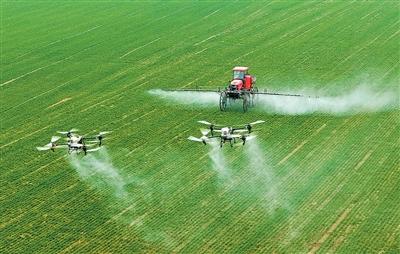
粮食产量连续两年在1.4万亿斤以上,大面积单产提升明显
Nan Fang Du Shi Bao· 2026-01-22 11:03
Core Viewpoint - China's grain production has reached a historical high, stabilizing above 1.4 trillion jin for two consecutive years, primarily driven by increased autumn grain yields and advancements in agricultural practices [1] Group 1: Grain Production Increase - The increase in grain production is mainly attributed to autumn grain, which accounts for over 90% of the total grain increase by 2025, with an additional 16.36 billion jin expected [1] - The northeastern provinces, Inner Mongolia, and Xinjiang contributed significantly, with a total increase of 11.47 billion jin, representing nearly 70% of the national increase [1] - Corn production saw a substantial rise of 12.64 billion jin, making up 75% of the overall grain increase [1] Group 2: Agricultural Practices and Technology - The stability in grain production is largely due to improvements in large-scale yield per unit area, with over 90% of the increase attributed to this factor [2] - By 2025, the area under integrated water and fertilizer management is expected to exceed 8.8 million acres, enhancing resource allocation based on crop needs [1] - The promotion of high-performance machinery and integrated technology is a key focus for increasing yields [1] Group 3: Future Considerations for Grain Production - The strategy for 2026 includes stabilizing planting areas, enhancing yield per unit area, optimizing production structures, and improving efficiency through policy support [3][4] - Emphasis will be placed on encouraging local governments to implement large-scale yield enhancement projects and utilize new agricultural management entities [3] - Disaster risk management will be prioritized, including infrastructure improvements and pest control measures to minimize losses [4]
粤味珍品·清远丝苗米,何以行天下?|三问清远丝苗米②
Nan Fang Nong Cun Bao· 2026-01-22 08:30
Core Viewpoint - The article highlights the growing popularity and market expansion of Qingyuan's Si Miao rice, emphasizing its journey from local production to national recognition through innovative marketing strategies and participation in major trade events [2][3][9]. Group 1: Market Expansion - Qingyuan Si Miao rice is actively entering major consumer markets across China, including cities like Guangzhou, Shanghai, and Shenzhen, through a series of promotional events [6][5]. - The rice has successfully participated in various exhibitions, including the 21st China International Grain and Oil Products and Equipment Technology Exhibition, where it attracted numerous buyers [8][30]. - The local government is leveraging the "12221" market system to enhance the brand's visibility and market penetration [12][10]. Group 2: Marketing Strategies - Qingyuan's marketing approach includes a multi-dimensional communication matrix that combines cultural promotion, scene penetration, and channel expansion [17][21]. - The brand has organized community engagement activities, such as "Si Miao rice into communities," to increase local awareness and consumption [23][25]. - Online marketing efforts include creating dedicated topics on platforms like Douyin, showcasing the rice's unique qualities and culinary uses through engaging content [36][37]. Group 3: Cultural and Historical Significance - The cultural heritage of Qingyuan's rice farming is being highlighted through artistic collaborations and historical narratives, adding depth to the brand [20][19]. - The rice's historical significance is emphasized by archaeological findings that connect it to ancient agricultural practices, enhancing its brand story [20][19]. Group 4: Future Prospects - The ongoing promotional activities and strategic marketing initiatives are expected to further elevate Qingyuan Si Miao rice from a regional brand to a nationally recognized product [30][46]. - The brand aims to integrate into the national market by leveraging the Greater Bay Area's economic influence and consumer base [46][45].

我国粮食产量连续两年稳定在1.4万亿斤以上
Xin Hua She· 2026-01-22 08:22
新华社音视频部制作 1月22日,国务院新闻办公室举行新闻发布会,介绍加快农业农村现代化,扎实推进乡村全面振兴有关 情况,并答记者问。农业农村部副部长张兴旺表示,我国粮食产量连续两年稳定在1.4万亿斤以上。 0:00 / 0:30 ...