
Farming

Search documents
龙江县 深耕细“治”护良田
Xin Lang Cai Jing· 2026-01-05 22:49
Core Viewpoint - Longjiang County has transformed its agricultural landscape through high-standard farmland construction, erosion control, and agricultural technology promotion, ensuring food security and enhancing grain production capacity [4][6]. Group 1: High-Standard Farmland Construction - Longjiang County has a total arable land area of 5.8513 million acres, with 4.9124 million acres designated as permanent basic farmland [4]. - The county has invested 863 million yuan in high-standard farmland construction, achieving 1.5037 million acres of high-standard farmland, which constitutes 30.61% of the basic farmland area [4]. - High-standard farmland has increased grain production capacity by over 15% compared to ordinary farmland, with an average cost reduction of over 200 yuan per acre [4]. Group 2: Soil and Erosion Management - Longjiang County has addressed soil erosion by managing 2,524 erosion gullies, protecting 252,900 acres of farmland and controlling water and soil loss over an area of 168,585 hectares [5]. - The county has implemented a systematic approach to erosion control, improving water retention capacity by 139,800 cubic meters [5]. Group 3: Agricultural Technology Promotion - The county has implemented the "Cang Grain in Land, Cang Grain in Technology" strategy, promoting advanced irrigation techniques over 652,600 acres, resulting in an average increase of 300 jin per acre [6]. - The "Zhinnong Lianchuang" project has integrated 5,000 acres of scattered land into contiguous fields, utilizing smart irrigation systems that save over 30% water and 20% fertilizer, leading to an average grain yield of 1,973.37 jin per acre [5][6].

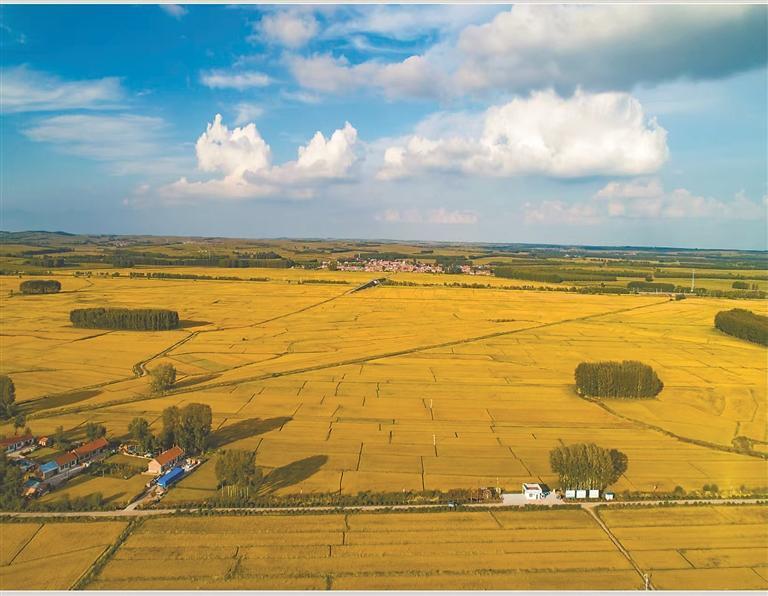
曹桥三大特色农产品 获国家级“绿色身份证”
Xin Lang Cai Jing· 2026-01-01 23:53
Group 1 - The core viewpoint of the articles highlights the successful implementation of green food certification for agricultural products in Pinghu City, specifically for asparagus and mushrooms from Longxin Family Farm and rice from Hekun Family Farm [1][2] - Longxin Family Farm utilizes an ecological circular model integrating "good seeds + facilities + recycling + technology," creating a closed-loop system that enhances production efficiency and reduces agricultural waste [1] - The farm has successfully reduced chemical fertilizer usage and agricultural pollution while improving the yield and quality of mushrooms and asparagus, thus increasing economic benefits and serving as a model for local farmers [1] Group 2 - Hekun Family Farm has developed a mechanized rice planting technique that has achieved record yields, with a maximum yield of 637.56 kg per mu in 2025, representing over a 30% increase from previous records [2] - The farm has consistently promoted high-yield rice varieties such as "Shangshida 19," which has won multiple awards for quality, including the "Good Rice" gold award in 2022 and 2023 [2] - As of 2024, the "Shangshida 19" variety has been planted over 10,000 mu in Pinghu, demonstrating significant adoption and success in the region [2]

Is There More to Tuesday's Rally in Metals Than a Simple "Turnaround"?
Yahoo Finance· 2025-12-30 10:17
Corn Market - The corn market experienced a slight decline, with March futures closing 7.75 cents lower and May down 7.5 cents, indicating light commercial pressure alongside noncommercial selling [1] - The National Corn Index was priced at $4.0375, down 7.25 cents, remaining below the previous 5-year and 10-year low weekly closes [1] - Watson has been liquidating its net-long futures position, which was last reported at 14,660 contracts [1] Metals Market - The metals market saw a rebound, with silver's Cash Index increasing by $3.02 (4.2%) and gold's Cash Index rising by $50.62 (1.2%) [2] - Copper futures also gained, with March contracts up 17.9 cents (3.2%) [2] - The market movements may be influenced by geopolitical tensions, including threats from the US president and Russia's actions regarding Ukraine [2] Soybean Market - The soybean market showed a slight increase, with March futures trading 2.0 cents higher on light volume of 12,000 contracts [3] - The National Soybean Index was at $9.8425, down 8.0 cents, indicating a firming national average basis [3] - Most selling pressure came from noncommercial traders, as the carry in the March-May futures spread remained steady [3] Wheat Market - Winter wheat markets opened fractionally higher, with March SRW up 0.5 cents and March HRW down 0.25 cents [4] - March SRW closed 6.0 cents lower due to noncommercial selling, while March HRW finished 6.25 cents in the red [4] - National Cash Indexes for wheat fell below previous 5-year end of December lows, indicating bearish fundamentals [4]
气象田间试验探寻增收密码|山东气象灾害风险减量服务助力粮食稳产增收
Qi Lu Wan Bao· 2025-12-30 06:12
Core Insights - The article highlights the successful implementation of agricultural meteorological disaster risk reduction services in Shandong Province, particularly in Zibo City, leading to significant yield increases and income growth for farmers [1][2]. Group 1: Agricultural Meteorological Services - The "full response" plots in Zibo achieved an average increase of 96.2 jin (approximately 48.1 kg) per mu and an income increase of 81.3 yuan per mu compared to "conventional response" plots [1]. - The Shandong Meteorological Bureau, in collaboration with various departments, has initiated pilot programs to enhance agricultural meteorological disaster risk reduction services [1][2]. - The integration of meteorological services into agricultural practices has been emphasized, with a focus on proactive risk management rather than reactive disaster response [2][3]. Group 2: Technological Integration - The use of drones equipped with multispectral sensors for field monitoring and the provision of real-time weather information to farmers has been a key aspect of the pilot program [2][3]. - A comprehensive monitoring network combining satellite remote sensing, field climate observation, and numerical forecasting has been established to provide precise agricultural services [4]. - The implementation of a closed-loop management system for risk control, involving government, insurance, and agricultural sectors, has been developed to enhance food security [3][4]. Group 3: Economic Impact - The "full response" plots during the winter wheat trial showed an income increase ranging from 70 to 150 yuan per mu, demonstrating the economic benefits of precise meteorological services [3]. - Farmers reported improved crop performance and reduced management costs due to timely weather alerts and tailored agricultural advice [4]. - The Shandong government's recognition of the pilot program's success indicates a potential for broader implementation across the province, reinforcing food security measures [4].
建成高标准农田6.1万亩!德城区农业农村现代化进程成效显著
Qi Lu Wan Bao· 2025-12-25 12:33
Core Insights - The article highlights the achievements of the agricultural and rural development in Decheng District during the 14th Five-Year Plan period, focusing on food security, agricultural modernization, and rural revitalization efforts. Group 1: Food Security and Agricultural Production - The district prioritizes food security, achieving a stable grain production capacity with a total of 61,000 mu of high-standard farmland built and an investment of 119 million yuan [2] - The mechanization rate for major crops reached 98.8%, supported by subsidies totaling 6.7047 million yuan for 504 agricultural machines, enhancing production capabilities [2] - A robust agricultural technology support system was established, training 541 individuals, including 48 provincial-level key personnel, to foster a skilled workforce for high-quality agricultural development [2] Group 2: Livestock and Aquaculture Development - The district reported the output of over 80,000 pigs and 130 million poultry, ensuring an annual supply of over 29,000 tons of meat, eggs, and milk to meet local market demands [3] - A comprehensive disease prevention strategy was implemented, achieving 100% vaccination coverage and maintaining a "zero major epidemic" status [3] - The aquaculture sector saw significant growth, particularly in tilapia farming, with a production area of 58,500 square meters and an annual output of over 1,740 tons, representing 35.95% of the district's total aquatic product output [3] Group 3: Rural Revitalization and Urban-Rural Integration - The district invested nearly 30 million yuan in rural infrastructure, enhancing village aesthetics and improving residents' quality of life through various construction projects [4] - The integration of agricultural industries is being promoted, with 20 agricultural industrialization leading enterprises established, including 4 at the provincial level, contributing to increased income for farmers [4] - A digital management platform for rural enterprises was developed to enhance financial oversight, while reforms in agricultural law enforcement were implemented to strengthen regulatory frameworks [4] - Continuous efforts are made to consolidate poverty alleviation achievements, with targeted support for 10 households and 28 individuals, ensuring comprehensive assistance for those in need [4] Group 4: Future Goals - The agricultural and rural development bureau aims to continue advancing agricultural modernization, deepen supply-side structural reforms, and promote urban-rural integration to enhance the overall quality of life in rural areas [5]
成县:党建“金钥匙”打开乡村发展“新大门”
Xin Lang Cai Jing· 2025-12-25 10:11
Core Viewpoint - The article highlights how high-quality party building in Cheng County has activated new vitality for rural development, transforming local agricultural practices and enhancing community engagement through collaborative efforts and effective governance [1][3]. Group 1: Agricultural Development - Cheng County has formed six cross-village industry alliances focusing on walnuts, vegetables, traditional Chinese medicine, and livestock, promoting collaboration among small farmers to integrate into larger industries [1]. - The "Party branch + cooperative + farmer" model in Suochi Village has successfully integrated resources, resulting in high-quality grape production with an income of over 8,000 yuan per acre, benefiting both the village collective and local labor [1][2]. Group 2: Community Engagement and Governance - The establishment of a "complaint platform" has improved communication between villagers and local authorities, allowing for quick resolution of issues such as labor shortages during harvests [2]. - Cheng County has implemented a structured feedback system, collecting 3,300 suggestions from the public and resolving over 3,150 issues, achieving a resolution rate of over 95% and a satisfaction rate of 96% among residents [2]. Group 3: Capacity Building and Infrastructure - An investment of 2 million yuan has been allocated for the construction and renovation of party service centers, enhancing the operational capacity of local party organizations [3]. - Training programs for party workers and rural leaders have been conducted, improving the theoretical knowledge and practical skills of 1,541 rural party members [3].
昌图气象精准护航粮食总产创新高
Xin Lang Cai Jing· 2025-12-25 01:00
Group 1 - The core point of the article highlights that Changtu County in Liaoning Province has achieved a historic grain production milestone, reaching a total output of 6.05 billion jin by 2025, with corn yield per mu reaching the target of 1,000 kg five years ahead of schedule [1] - The Changtu County Meteorological Bureau has implemented a comprehensive meteorological service to convert climate resources into production advantages, supporting corn production throughout the entire chain [1] Group 2 - During the spring sowing period, the Changtu County Meteorological Bureau initiated soil moisture monitoring from February 28, conducting dynamic monitoring every five days to provide scientific basis for spring sowing arrangements [2] - The bureau provided detailed decision-making information to government departments and agricultural producers, recommending early sowing to avoid drought risks and offering targeted advice on variety selection and fertilizer management [2] - The bureau has established a disaster weather warning mechanism to issue early warnings for severe weather events, such as heavy rainfall and frost, to facilitate agricultural production scheduling and disaster prevention [2] - The next steps for the Changtu County Meteorological Bureau include advancing meteorological technology innovation and enhancing smart meteorological services to ensure food security and support rural revitalization [2]

守护一方地 端稳一碗饭
Xin Lang Cai Jing· 2025-12-21 22:46
Core Viewpoint - Guizhou province is implementing a comprehensive strategy to protect arable land and ensure food security, focusing on innovative practices and strict enforcement of regulations to combat the challenges posed by its mountainous terrain [5][9][19]. Group 1: Responsibility and Governance - Guizhou has established a multi-tiered responsibility system for arable land protection, involving provincial, municipal, and local levels to ensure accountability [6][7]. - The province has adopted a collaborative governance model, transitioning from isolated efforts to coordinated actions among various stakeholders [6][7]. - Specific measures include regular inspections by designated personnel and the establishment of clear responsibilities at different administrative levels [6][7]. Group 2: Quality and Quantity of Arable Land - The province emphasizes both the quantity and quality of arable land, aiming to expand high-quality farmland while improving the existing land's productivity [9][10]. - Recent initiatives have led to the recovery and addition of over 5,000 acres of arable land through land rehabilitation projects [10]. - High-standard farmland construction has been a key focus, with 146,000 acres developed since 2020, significantly enhancing agricultural capacity [9][10]. Group 3: Spatial Optimization - Guizhou is actively optimizing the spatial distribution of arable land to enhance efficiency and reduce ecological risks associated with fragmented farming [11][12]. - The province's 2025 plan includes transitioning unstable farmland to more suitable areas, thereby improving agricultural conditions [11][12]. - Pilot projects in various counties have successfully increased arable land by converting unsuitable land types, such as steep slopes, into productive farmland [11][12]. Group 4: Technological Empowerment - The province is leveraging technology to enhance monitoring and enforcement of arable land protection, moving from traditional methods to a more integrated approach using drones and satellite imagery [13][14]. - Innovative monitoring systems have improved the efficiency of inspections and the accuracy of data regarding land use [14][15]. - The integration of technology into land management practices is expected to significantly reduce illegal land use and improve compliance with regulations [14][15]. Group 5: Incentives and Community Engagement - Guizhou is exploring various incentive models to align arable land protection with farmers' economic benefits, ensuring that land conservation efforts also contribute to local income [16][17]. - Successful case studies demonstrate how community involvement in land improvement projects has led to increased financial returns for farmers [16][17]. - The province is fostering a culture of shared responsibility among farmers, encouraging them to actively participate in land protection initiatives [17][18].
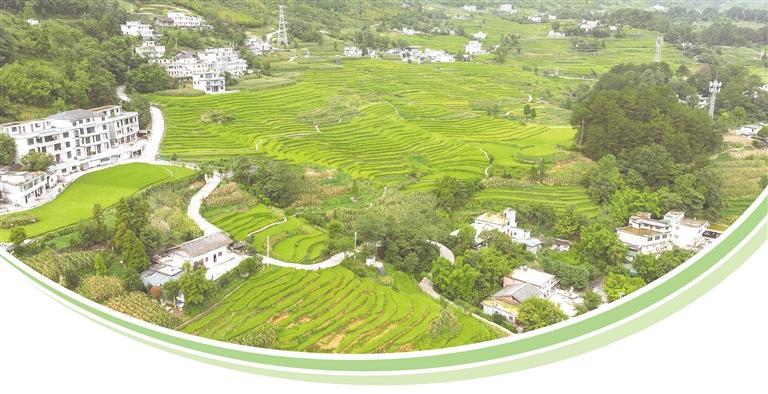
我市粮食生产实现“三增”
Xin Lang Cai Jing· 2025-12-20 17:01
Core Insights - The article highlights that in 2025, the total grain production, sowing area, and yield in Quzhou city are expected to increase, achieving record highs in the past decade [1] Group 1: Grain Production Metrics - The grain sowing area is projected to reach 1.3711 million acres, an increase of 9,700 acres year-on-year [1] - The total grain production is expected to be 574,000 tons, an increase of 4,100 tons year-on-year, marking a new high in the last decade [1] - The yield per unit area is anticipated to be 418.67 kg per acre, an increase of 0.03 kg per acre year-on-year, reaching a seven-year high [1] Group 2: Policy Support and Incentives - The city has actively sought policy support, securing nearly 40 million yuan in national and provincial project funding for grain and oil-related initiatives [1] - A special fund of 790,000 yuan has been allocated at the city level to establish high-yield competitions and quality rice rewards, promoting supportive policies across various counties [1] - The policy framework has effectively stimulated the enthusiasm of new agricultural operators and farmers in grain production [1] Group 3: Agricultural Achievements - The city has set nine new high-yield records in Zhejiang province across various crops, including early rice, double-cropping rice, and sweet corn [1] - The "Zhongzu 100" early rice planted by Xuanlin Family Farm in Jiangshan has set a new national high-yield record for a hundred-acre field [1]
X @The Economist
The Economist· 2025-12-20 12:20
Industry Overview - Turkey farms play a vital role in cherished traditions [1]