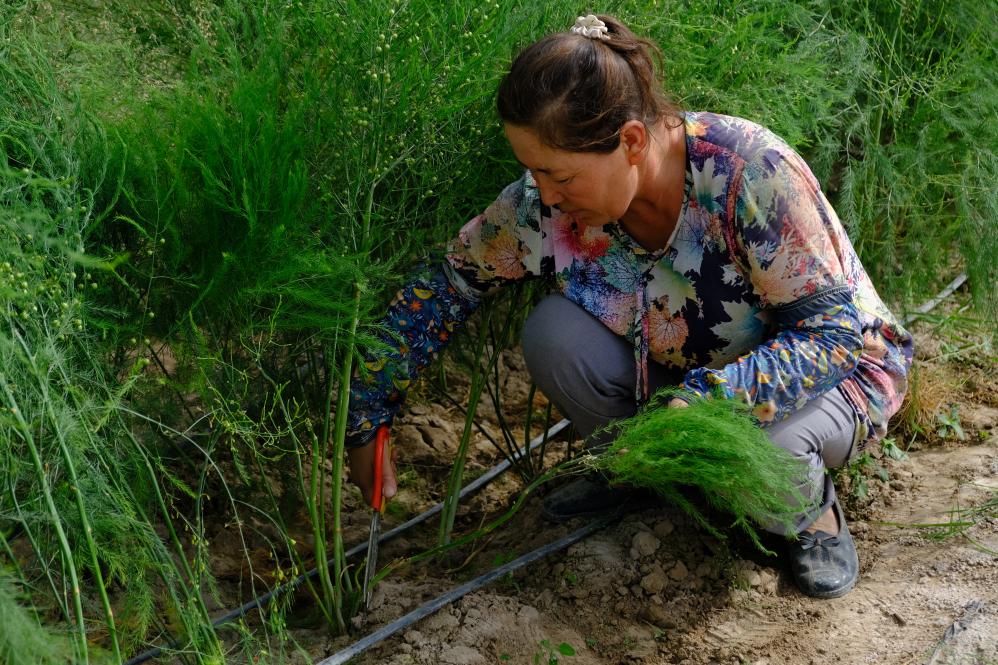
芦笋

Search documents
头茬春菜鲜嫩上市,不妨花式尝鲜
Xin Lang Cai Jing· 2026-02-10 20:04
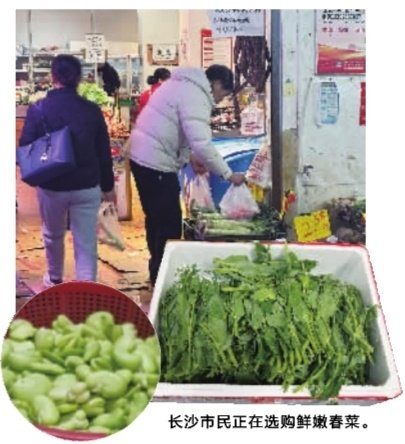
Core Viewpoint - The arrival of spring vegetables in Changsha markets marks the beginning of the spring tasting season for citizens, enhancing the variety of fresh produce available for the upcoming Chinese New Year [2]. Group 1: Spring Vegetable Availability - Fresh spring vegetables such as fava beans, pea shoots, and bamboo shoots have started to appear in local markets, with prices for fava beans at 36 yuan per kilogram and pea shoots at 30 yuan per kilogram [3]. - Local vendors are showcasing a variety of spring vegetables, including fragrant bamboo shoots and seasonal herbs, with prices for some items like Chinese toon reaching 160 yuan per kilogram [3]. - The market is seeing a diverse range of locally grown vegetables, with prices for pea sprouts at 16 yuan per kilogram, indicating a strong supply of fresh produce [3]. Group 2: Consumer Trends and Preferences - Consumers are actively seeking fresh spring vegetables for various culinary uses, with many sharing their recipes on social media platforms, highlighting the popularity of these seasonal ingredients [6]. - The unique flavors of spring vegetables, such as the slightly bitter taste of shepherd's purse, are appealing to families, particularly for dishes that are easy to prepare [6]. Group 3: Health Considerations - The Chinese Center for Disease Control and Prevention advises moderation in the consumption of certain spring vegetables due to their high oxalic acid or nitrite content, recommending blanching before consumption [5]. - Specific groups, such as young children and the elderly, are advised to consume fibrous vegetables like bamboo shoots in moderation due to potential digestive issues [5]. Group 4: Market Supply and Pricing - Overall, the supply of vegetables is sufficient to meet the demand during the Chinese New Year, with vendors indicating that they will maintain normal operations and stock levels [6]. - Some vendors anticipate a slight increase in vegetable prices during the holiday period, although the overall supply remains adequate [6].

三亚“博士村长”科技帮扶村民提产量、优品质
Hai Nan Ri Bao· 2026-01-09 02:33
Core Viewpoint - The article highlights the successful agricultural transformation in Sanya's Taicai Village, led by the "Doctor Village Chief" Yi Kexian, who utilizes technology to enhance crop yield and quality for local farmers [2][3]. Group 1: Agricultural Innovation - Yi Kexian and his team provided targeted technological support to local farmer Zhang Qiuyu, addressing issues such as high soil acidity and pest control, which previously hindered her crop production [3]. - The introduction of healthy grafted seedlings and the application of scientific farming techniques resulted in a significant increase in the yield and quality of passion fruit, with annual production exceeding 3,000 pounds per acre and stable prices between 8 to 10 yuan per pound [4]. Group 2: Economic Impact - The technological guidance not only resolved immediate agricultural challenges but also reduced labor costs and pesticide usage, leading to a more sustainable farming practice [4]. - Zhang Qiuyu expanded her farming operations by introducing seasonal vegetables like asparagus, radishes, and cabbage, resulting in an additional income of over 5,000 yuan per acre annually through diversified planting [5].
沙荒地上探索设施农业
Xin Lang Cai Jing· 2026-01-02 22:39
Core Viewpoint - The company, Tibet Green Source Modern Agricultural Technology Co., Ltd., is leveraging advanced agricultural techniques to develop organic fruit and vegetable production in the challenging high-altitude environment of Tibet, aiming to become a leading player in the global organic agricultural market [1][3]. Group 1: Company Overview - Tibet Green Source was established in 2019 and has transformed 3,500 acres of sandy wasteland in Zhanang County into an organic fruit and vegetable production base [1]. - The company has invested 200 million yuan in its Zhanang base, improving over 1,200 acres of sandy land and constructing 18 intelligent glass greenhouses and high-standard connected greenhouses [2]. Group 2: Agricultural Techniques and Products - The company employs a comprehensive "soil improvement, water conservation, pest control, and recycling" technology system to enhance soil fertility and production efficiency [1]. - Asparagus has been identified as a key product due to its deep root system and high value, with plans to cultivate 10,000 acres to create a high-altitude asparagus industry cluster [2]. Group 3: Market and Sales - The company sold approximately 750 tons of organic fruits and vegetables annually during winter, addressing the low self-sufficiency rate of fresh produce in the high-altitude region [1]. - In 2024, the organic asparagus is projected to generate over 4 million yuan in revenue, with products already reaching markets in Shanghai, Chengdu, and Changsha [2]. Group 4: Future Plans and Sustainability - The company aims to establish a modern organic agricultural industry park that integrates research, breeding, planting, processing, product testing, transportation, sales, and educational tourism [3]. - The company is committed to sustainable development and ecological safety by implementing standardized cultivation techniques and avoiding chemical pesticides [2].
曹桥三大特色农产品 获国家级“绿色身份证”
Xin Lang Cai Jing· 2026-01-01 23:53
Group 1 - The core viewpoint of the articles highlights the successful implementation of green food certification for agricultural products in Pinghu City, specifically for asparagus and mushrooms from Longxin Family Farm and rice from Hekun Family Farm [1][2] - Longxin Family Farm utilizes an ecological circular model integrating "good seeds + facilities + recycling + technology," creating a closed-loop system that enhances production efficiency and reduces agricultural waste [1] - The farm has successfully reduced chemical fertilizer usage and agricultural pollution while improving the yield and quality of mushrooms and asparagus, thus increasing economic benefits and serving as a model for local farmers [1] Group 2 - Hekun Family Farm has developed a mechanized rice planting technique that has achieved record yields, with a maximum yield of 637.56 kg per mu in 2025, representing over a 30% increase from previous records [2] - The farm has consistently promoted high-yield rice varieties such as "Shangshida 19," which has won multiple awards for quality, including the "Good Rice" gold award in 2022 and 2023 [2] - As of 2024, the "Shangshida 19" variety has been planted over 10,000 mu in Pinghu, demonstrating significant adoption and success in the region [2]

东西问丨穆罕默德·曼苏里:中国实践如何助力保障全球粮食安全?
Zhong Guo Xin Wen Wang· 2026-01-01 08:07
Core Insights - The global food security situation remains severe, with approximately 673 million people facing hunger and 2.3 billion in food insecurity, exacerbated by regional conflicts, extreme weather, and trade barriers [1] - China's practices in ensuring food security and promoting rural revitalization offer valuable insights for the world, particularly as the FAO approaches its 80th anniversary in 2025 [1] Group 1: Effective Practices in Rural Revitalization - The FAO's strategic pillars of "better production, better nutrition, better environment, and better life" align closely with China's rural practices observed during the visit [2] - China demonstrates effective production methods that balance productivity and sustainability, including diverse agricultural practices and livestock farming [2] - There is a strong emphasis on diversified food production, creating job opportunities, and enhancing quality of life through the development of fresh produce and health-related food products [2] - Environmental protection efforts include wetland conservation and the production of green and organic foods, showcasing a commitment to sustainable practices [2] Group 2: Key Characteristics of China's Rural Revitalization - Two notable characteristics of China's rural revitalization are the guiding role of local governments and the entrepreneurial spirit of rural residents [5] - Local governments provide public investment and ensure that development benefits cooperatives and farmers, while also maintaining fair pricing mechanisms [5] - The entrepreneurial drive among rural residents has led to successful local businesses that create jobs and contribute to poverty alleviation [5] Group 3: Investment in Human Capital - Investment in human capital is crucial for sustainable development, yet rural development has often focused more on physical infrastructure than on enhancing human capabilities [8] - Human capital investment includes education, training, and health, which are essential for empowering farmers and entrepreneurs [8] - The FAO has identified six key recommendations for human capital investment, emphasizing the importance of partnerships, inclusive policies, and continuous innovation [9] Group 4: China's Contributions to Global Food Security - China has made significant contributions to global food security, achieving the UN Millennium Development Goal of halving extreme poverty and hunger ahead of the 2030 target [11] - The country has ensured stable supplies of staple foods and maintained abundant availability of various agricultural products, improving national nutrition [11] - China's experience in poverty alleviation and food security serves as a model for other countries, particularly through South-South cooperation initiatives [12]

《雷波县自然伙伴计划实验区建设报告》发布,总结“造血式振兴”生态保护新路径
Xin Lang Cai Jing· 2025-12-19 12:14
Core Insights - The report highlights the innovative practices and preliminary results of the "Natural Partner Program Experimental Zone" in Leibo County, initiated in January 2025, addressing the conflict between ecological protection and development in ecologically sensitive areas [1] Group 1: Overview of the Natural Partner Program - Leibo County, located in the core area of the ecological barrier in the upper reaches of the Yangtze River, has faced a development dilemma of "rich ecology but poor residents" [1] - The "Natural Partner Program" aims to transform the relationship from "harmony between humans and nature" to "win-win between humans and nature" by creating a natural experimental zone centered around four townships [1] Group 2: Economic Impact and Mechanisms - The experimental zone has driven the development of ten flagship ecological industries, including tea, asparagus, ganoderma, and navel oranges, forming an ecological economic system covering primary, secondary, and tertiary industries [2] - As of October 2025, the total annual output value of these ten industries exceeded 180 million yuan, benefiting over 1,000 farming households with an average annual income increase of 3,000 to 5,000 yuan and creating over 300 jobs [2] Group 3: Key Mechanisms and Collaborations - The successful mechanisms of the experimental zone are summarized as "policy collaboration, regional collaboration, and social collaboration" [2] - The program leverages over 100 million yuan in funding through the Central Commission for Discipline Inspection's targeted assistance mechanism, promotes industry standardization, and integrates market resources and technology through regional cooperation [2] Group 4: Recognition and Replicability - The exploration of the experimental zone has received high praise from experts at organizations such as the United Nations Food and Agriculture Organization and the Environmental Planning Agency, being recognized as a vivid example of implementing the United Nations Sustainable Development Goals [2] - The "Leibo Model" is presented as a replicable and promotable approach, demonstrating that ecological protection and economic development can mutually promote each other, marking an effective transition from "blood transfusion-style assistance" to "blood-making-style revitalization" [2]
从一村美到全域兴,潍坊安丘以产业融合激活乡村振兴内生动力
Qi Lu Wan Bao· 2025-11-27 07:39
Core Viewpoint - Anqiu City is advancing rural revitalization through a three-pronged approach focusing on industry, regional collaboration, and party leadership, leading to increased agricultural productivity and farmer income. Group 1: Industry as the Foundation - Anqiu City prioritizes strengthening agricultural industries as the core support for rural revitalization, aiming to become the first national ecological agricultural county and transition from an agricultural city to a health food powerhouse [2][3] - The ginger industry plays a crucial role, with a stable planting area of around 200,000 acres and an annual output exceeding 1 million tons, accounting for 80% of China's ginger exports [2] - The city promotes ecological and standardized ginger cultivation, establishing a health food industrial park to enhance product value and extend the supply chain [2][3] Group 2: Regional Collaboration - Anqiu has established 15 rural revitalization zones, each with unique characteristics, to promote collective development and resource sharing among villages [6][7] - The "Wenshui Yulang Huanyu Nonggang" zone has successfully integrated agricultural, health food, and cultural resources, leading to significant increases in farmer income and productivity [6][7] - The average annual income increase for farmers in the "Wenshui Yulang Huanyu Nonggang" zone is 960 million yuan, benefiting 6,400 households [7] Group 3: Party Leadership - Party leadership is essential for rural revitalization, with initiatives like the establishment of cooperative societies and joint party organizations to enhance resource integration and industry collaboration [8][9] - The "Party Branch + Cooperative + Farmer" model has been implemented to transform small plots into productive facilities, significantly increasing farmer income [8] - The integration of party leadership with agricultural development has led to the establishment of 181 joint party organizations covering 453 administrative villages, promoting shared resources and collective growth [8][9]
方城县杨集镇:小芦笋种出致富大产业
Zhong Guo Jing Ji Wang· 2025-10-29 06:49
Core Insights - Asparagus cultivation is emerging as a new highlight for industrial revitalization in Tianzhuang Village, Fangcheng County, with significant economic benefits and employment opportunities for local residents [1] Summary by Sections Asparagus Cultivation - The asparagus planting base in Tianzhuang Village shows promising growth, with yields increasing over the years: 800 to 1,000 pounds per acre in the first year, 2,000 to 2,500 pounds in the second year, and reaching 3,500 to 4,000 pounds in the third to tenth years [1] - The asparagus is planted outdoors, with spring harvests starting in March and autumn harvests from July to mid-August, followed by root and stem maintenance [1] Economic Benefits - The asparagus market is lucrative, with prices ranging from 5 to 8 yuan per pound, generating approximately 5,000 yuan per acre in income [1] - The cooperative has signed purchase agreements with a bamboo shoot factory in Shandong, with 90% of the produce exported to South Korea and Japan [1] Employment Opportunities - The asparagus cultivation process requires significant manual labor, providing numerous job opportunities for local villagers, with workers earning around 90 yuan per day and annual incomes of 10,000 to 20,000 yuan [1] Future Development Plans - The cooperative plans to expand the cultivation area to 100 to 150 acres and implement a new model of "asparagus + cicada" farming, aiming for dual income streams from both crops [1] - In June 2024, the asparagus base will begin planting cicada eggs, further promoting local agricultural development and wealth creation [1]
“十四五”期间援疆项目资金近九成投向民生领域 推动各族群众民生福祉不断提升
Ren Min Ri Bao· 2025-10-15 02:28
Group 1 - The core viewpoint emphasizes the positive impact of aid programs in Xinjiang, particularly in enhancing local agriculture and employment opportunities [1][2] - The modern agricultural industry park in Wukusake Town has successfully integrated planting, processing, sales, and tourism, creating over 7,000 jobs in the surrounding area [1] - Aid projects have significantly improved the livelihoods of local communities, with 89.2% of funding directed towards the livelihood sector during the 14th Five-Year Plan [2] Group 2 - The introduction of new agricultural techniques, such as asparagus cultivation, has resulted in economic benefits exceeding five times that of traditional cotton farming [2] - The establishment of e-commerce technology parks has reduced the cost of agricultural product transportation by over 30% [2] - Cultural exchange programs have engaged over 200,000 youth from different regions, fostering deeper connections and understanding among ethnic groups [2][3] Group 3 - Educational initiatives have been strengthened through the introduction of experienced educators from other provinces, leading to improved teaching quality and student performance in local schools [3] - The efforts of aid workers have been well-received, with local communities expressing gratitude and support for their contributions [3] - The integration of various sectors, including education, healthcare, and employment, is crucial for the sustainable development of Xinjiang [3]
“鲜”风拂绿洲 “甜”果出天山——感受南疆特色农业新脉动
Xin Hua She· 2025-09-14 23:32
Core Insights - A significant agricultural transformation is occurring in the Pamir Plateau, with the introduction of asparagus cultivation and the expansion of fig production, enhancing local economies and livelihoods [1][4][6] Group 1: Asparagus Cultivation - The establishment of a 120-acre asparagus demonstration base in Akto County by a Jiangxi aid team has led to the successful growth of asparagus, with the first harvest yielding approximately 1,000 kilograms daily, generating a per-acre value exceeding 7,000 yuan [3][4] - The asparagus planting area in Akto County has expanded to over 3,000 acres, with plans to develop a large-scale organic asparagus industry by 2027 [3][4] - The local workforce has benefited significantly, with 220 villagers employed during the harvest season, earning an average monthly salary of nearly 3,500 yuan, compared to previous earnings of around 1,000 yuan [3][6] Group 2: Fig Production - The fig trees in Azhihan Village, some over 450 years old, have been revitalized through a 1.01 billion yuan investment from a Jiangsu aid team, improving infrastructure and establishing cold chain logistics to enhance market access [4][6] - The average annual income for villagers has increased from less than 10,000 yuan five years ago to over 18,000 yuan in 2024, reflecting the economic impact of modernized agricultural practices [6] - The village has transformed into a popular agri-tourism destination, attracting up to 800 visitors daily for fig picking, showcasing the successful integration of agriculture and tourism [6]