基金

Search documents
锋芒初露!2倍基、1倍基涌现,新生代基金经理进击A股快速出圈
Xin Lang Cai Jing· 2026-02-20 03:52
Group 1 - A new generation of fund managers is emerging, with the total number of fund managers exceeding 4,100, and those with less than three years of experience accounting for over 35% [1][7] - Many of the top-performing fund managers in the past year have less than three years of experience, with some achieving over 200% returns during their tenure [2][8] - Fund managers achieving over 50% returns are common, with notable examples including Chen Ziyang from Changcheng Fund, who has achieved a 103% return in 2.5 years [3][9] Group 2 - The success of many new fund managers is attributed to their solid research backgrounds and the support of their investment teams, rather than solely relying on market trends [4][10] - New fund managers are often more adaptable in emerging industries due to their lack of traditional investment experience, allowing them to navigate current market conditions effectively [5][11] - The fund management industry is expected to evolve into two categories: distinctive style fund managers with independent strategies and tool-oriented or team-based fund managers focusing on specific sectors [6][13]


2026公募投资展望:这些方向被看好 新一轮布局已然展开
Zhong Guo Zheng Quan Bao· 2026-02-20 03:08
Group 1 - A-shares are presenting structural opportunities at the beginning of 2026, with public funds initiating a new round of investment amidst economic recovery and accelerated industrial upgrades [1][7] - Major institutions believe that sectors such as artificial intelligence, semiconductors, and consumption have structural opportunities [1][7] Group 2 - There is an expectation of significant inflow of incremental funds into A-shares in 2026, supported by manufacturing investment and capital expenditure adjustments [2][8] - The domestic demand side, driven by fiscal policies, particularly the structural changes in special bonds, will influence A-share pricing [2][8] - The current environment is characterized by expanding liquidity and increased risk appetite, with a focus on fiscal and monetary policies [2][8] Group 3 - The AI sector is a focal point for public fund strategies, with expectations for continued strong performance in the AI industry chain in the first half of 2026 [4][10] - Significant advancements in AI models, such as Google Gemini 3 and Banana, are expected to boost market confidence and drive demand for AI computing power [4][10] - The semiconductor industry is rapidly evolving, driven by AI large models, with a focus on domestic production and R&D [5][11] Group 4 - The consumption sector is anticipated to see a resurgence in investment opportunities in 2026, driven by the release of wealth effects and an upgrade in high-end and service consumption demand [5][11] - The cyclical industry narrative is expected to undergo a transformation in 2026, influenced by policy-driven "anti-involution" and the reshaping of global supply chains [5][12]
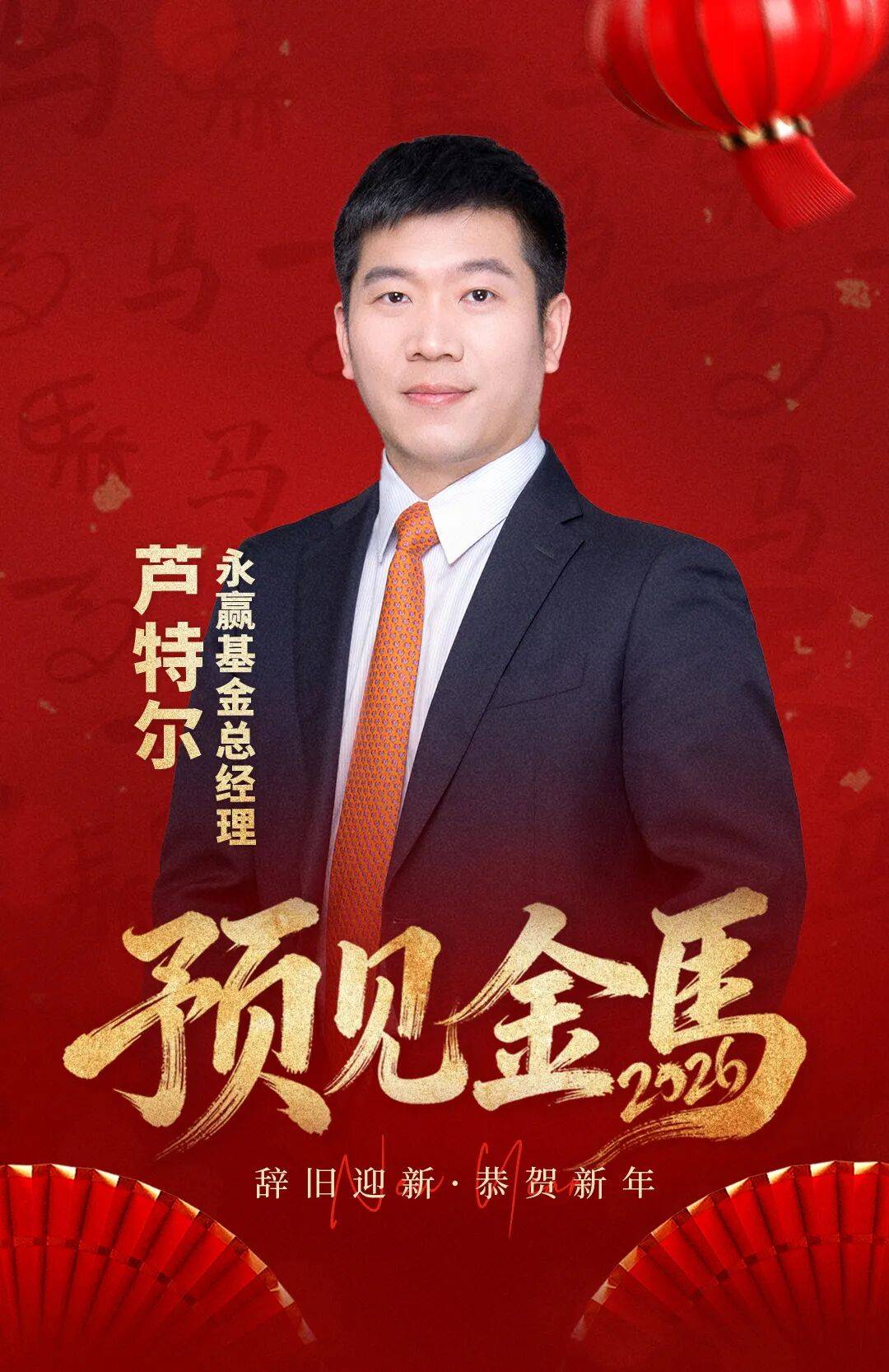
预见金马|永赢基金芦特尔:以心致诚,以行致远
Sou Hu Cai Jing· 2026-02-20 03:05
Core Viewpoint - The article emphasizes the growth and future potential of the Chinese capital market, particularly in the context of public funds, which are seen as crucial for efficient resource allocation and supporting high-quality development in the economy [5][11]. Group 1: Industry Overview - In 2025, the total scale of public funds in China exceeded 37 trillion yuan, with equity public funds surpassing 11 trillion yuan, indicating robust growth in the asset management sector [5][6]. - The capital market is expected to maintain a stable yet progressive development tone in 2026, with public funds playing a vital role in promoting efficient resource allocation and enhancing the vitality of quality enterprises [11]. Group 2: Company Strategy and Performance - The company has achieved a profit of 39.955 billion yuan for investors over the past year, with a cumulative service client base exceeding 54.39 million [8]. - The company has diversified its product offerings, launching its first QDII product and bond ETF, which aim to connect investors with global opportunities and provide innovative tools for precise bond allocation [7][10]. Group 3: Research and Development - The company has developed a comprehensive investment research framework, referred to as the "four-wheel drive" model, which focuses on creating value through a robust investment research system that can withstand market fluctuations [9]. - The company is committed to enhancing its quantitative and financial technology capabilities, having developed integrated investment management systems that have received industry recognition [10]. Group 4: Social Responsibility - The company has engaged in social responsibility initiatives, including support for local schools and disaster relief efforts, reflecting its commitment to community welfare [11].
西部利得基金董事长何方:坚守初心担使命,笃行致远启新程
Zhong Guo Ji Jin Bao· 2026-02-20 02:57
(原标题:西部利得基金董事长何方:坚守初心担使命,笃行致远启新程) 展望2026年,我国经济向好态势持续巩固,人工智能加速向深度应用与产业融合演进,为高质量发展注 入源源不断的新动能。资本市场有望在支持科技创新和新质生产力发展中发挥更为重要的作用,投融资 功能将更加协调,资金供给结构持续优化,内在稳定性显著增强,长期投资价值进一步凸显。 新的一年,西部利得基金将坚守初心使命、聚焦主责主业,以践行金融"五篇大文章"为核心抓手,切实 提升投资者获得感与服务体验,更好地服务实体经济高质量发展与居民多元化理财需求。 公司将持续锻造投研核心竞争力,强化系统思维与创新思维,持续优化迭代投研体系与决策机制,坚定 践行长期投资、价值投资、责任投资理念,在投资研究与决策中贯穿长周期视角,重视企业可持续发展 能力与社会价值创造,不断提升估值定价专业能力,更好发挥价值发现与市场引领作用,更好服务科技 创新与新质生产力发展。 公司将持续优化适配投资者需求的多样化产品与服务体系,大力发展权益类基金,持续加大产品创新研 发力度,提升服务中长期资金的专业能力;将投资者教育与服务做深、做细、做持久,积极探索大数 据、人工智能等前沿技术的场景 ...
永赢基金芦特尔:以心致诚,以行致远
Sou Hu Cai Jing· 2026-02-20 02:43
Core Viewpoint - The company expresses gratitude to its stakeholders and emphasizes its commitment to serving the real economy while adapting to the evolving capital market landscape in 2025, which is projected to see significant growth in public fund sizes and equity funds [3][6]. Group 1: Industry Overview - By 2025, the total scale of public funds in China is expected to exceed 37 trillion yuan, with equity public funds surpassing 11 trillion yuan, highlighting the industry's role in supporting the real economy and enhancing wealth allocation for residents [3]. - The public fund industry is positioned to contribute to high-quality development, aligning with national strategies and industry trends [3][9]. Group 2: Company Strategy - The company has evolved from a fixed-income focus to a diversified product line, emphasizing the importance of a multi-faceted approach to meet client needs and build trust [5]. - Recent product launches include the first QDII product and a bond ETF, aimed at providing investors with global opportunities and innovative bond allocations [5][9]. - The company aims to develop a first-class asset allocation platform, enhancing its research capabilities and expanding its product offerings, particularly in ETFs and multi-asset strategies [9]. Group 3: Performance and Achievements - In the past year, the company achieved profits of 38.955 billion yuan for investors and has served over 54.39 million clients historically, reflecting its commitment to delivering value [6][12]. - The company has received recognition for its technological advancements, including the "Jingwei Investment Trading System," which won the Financial Technology Development Award for three consecutive years [9][12].

公募基金承接存款“搬家”,大A行情有望获得新推力 | 策马点金
Sou Hu Cai Jing· 2026-02-20 02:26
Core Viewpoint - The trend of "moving" household deposits is significant this year, with approximately 50 trillion yuan in time deposits maturing and current bank deposit rates dropping to over 1%, prompting a need for new investment choices [4][6][7] Group 1: Investment Opportunities - Public funds are seen as a favorable option for reallocating this substantial amount of capital, offering a variety of products suitable for different risk appetites [4][6] - Money market funds provide good liquidity but lower returns, while bond funds cater to those seeking stable returns, and higher-risk investors may consider mixed or equity funds to capitalize on market trends [4][5] - The shift towards public funds is driven by a growing demand for returns as low interest rates persist, making these funds a key vehicle for meeting household investment needs [4][6] Group 2: Asset Allocation Strategies - Investors are advised to focus on their risk tolerance when determining asset allocation, with higher risk tolerance allowing for a greater proportion of equity products [5][6] - Traditional depositors are encouraged to start with bond funds, which offer controlled risk and higher returns than bank deposits, as a gateway to capital markets [5][6] - Key indicators for selecting public products include matching risk-return characteristics, the historical performance of fund managers, and clarity of investment strategies [6] Group 3: Long-term Market Trends - The transition of household savings to capital markets is expected to accelerate in the coming years, becoming a significant driver of a "slow bull" or "long bull" market [6][7] - This trend reflects a profound change in the structure of household wealth allocation, with a shift towards products that provide better returns in a low-interest-rate environment [6][7] - The public fund industry faces both opportunities and responsibilities in managing investor expectations and fostering trust to ensure the stability of this transition [6][7]

牛市未央,但逻辑已换
Jing Ji Guan Cha Bao· 2026-02-20 02:04
Group 1 - The core viewpoint of the articles highlights a significant shift in investment behavior among residents, moving from traditional bank deposits to diversified financial products such as bank wealth management, stocks, and gold, driven by declining deposit rates [1][2][3] - In 2025, gold emerged as a standout asset, achieving a price of over $4,300 per ounce with a 65% annual increase, while silver also performed well, rising by 129.83% due to demand in green energy sectors [5][6] - The A-share market experienced a notable recovery, with the Shanghai Composite Index rising from a low of 3,096 points to over 4,000 points by October 2025, driven by technological advancements and institutional support [6][15] Group 2 - The global economic landscape in 2025 was characterized by a slowdown in growth and geopolitical tensions, yet capital markets saw a bull run in commodities, particularly in gold and silver, while the bond market remained stable [2][3] - Institutions surveyed indicated a strong preference for equities, with 70.80% believing stocks would be the most valuable asset in 2025, a significant increase from 46.15% in 2024 [1] - The investment strategy for 2026 is expected to focus on managing uncertainty, with a continued emphasis on A-shares and gold as primary assets [2][10] Group 3 - The outlook for 2026 suggests that the bull market may continue, with expectations of a weaker dollar and ongoing demand for precious metals, particularly gold and silver, which are projected to reach prices of $6,300 to $6,600 per ounce by the end of 2026 [9][10] - The anticipated increase in the Chinese yuan's value may influence foreign investment behavior, with a gradual appreciation expected to support market liquidity [10][12] - Analysts predict that the investment landscape will shift towards a more balanced approach, focusing on corporate earnings recovery and technological advancements as key drivers for market performance in 2026 [13][14]
浅析公募基金销售费用新规的六大核心变化
Xin Lang Cai Jing· 2026-02-20 02:03
Core Viewpoint - The China Securities Regulatory Commission (CSRC) officially released the "Regulations on the Management of Sales Fees for Publicly Offered Securities Investment Funds" on the last day of 2025, marking the conclusion of the public fund fee reform [1] Group 1: Changes in Subscription Fees - The upper limit for subscription fees has been lowered for index funds and bond funds to 0.3%, while actively managed equity funds have a limit of 0.8% [2][3] - The new regulations categorize equity funds into actively managed and passively managed index funds, with specific fee structures for each category [2][3] Group 2: Redemption Fee Standards - The new regulations emphasize that redemption fees must be fully included in the fund assets, meaning sales institutions can no longer receive a share of the redemption fees [3][4] - Redemption fees are categorized based on the investor's holding period, with rates set at 1.5% for less than 7 days, 1% for 7 to 30 days, and 0.5% for 30 to 180 days [4][5] Group 3: Sales Service Fees - For fund shares held for more than one year, sales service fees cannot be charged, except for money market funds [6][7] - The upper limits for sales service fees are set at 0.4% for equity and mixed funds, 0.2% for index and bond funds, and 0.15% for money market funds [7][8] Group 4: Prohibition of Exclusive Shares - The new regulations prohibit the establishment of exclusive shares or funds at specific sales institutions for the purpose of implementing differential fee rates [9][10] - Fund managers must provide justifiable reasons if they set up exclusive shares at sales institutions, ensuring fair treatment of investors [9][10] Group 5: Interest on Sales Settlement Funds - Fund managers must pay interest generated from sales settlement funds to investors or include it in the fund assets, ensuring that these funds belong to the investors [10][11] - The regulations clarify that all interest, not just a portion, must be paid to investors, addressing previous concerns about interest allocation [11][12] Group 6: Prohibition of Indirect Payment of Sales Fees - The new regulations prohibit the indirect payment of sales fees through various means such as conference fees, training fees, and advertising fees [13][14] - Fund managers are advised to enhance internal controls to prevent any form of disguised payment of sales fees [13][14] Conclusion - The public fund fee reform has concluded, and fund managers must complete various compliance tasks within a 12-month transition period, including system upgrades and legal document modifications [14][28]

牛市进行时
Jing Ji Guan Cha Wang· 2026-02-20 01:32
Group 1 - The core viewpoint of the article highlights the significant shift in investment behavior among residents due to declining bank deposit rates, leading to increased interest in financial products, stock markets, and commodities like gold [2][6][10] - In 2025, 40% of investors reported substantial returns, with some achieving over 140% annual gains through diversified financial strategies [3][5] - The article notes that despite global economic slowdowns and geopolitical tensions, capital markets experienced a transformation driven by factors such as interest rate cuts by the Federal Reserve and deep industry changes, resulting in a bull market for commodities like gold and silver [6][8][10] Group 2 - The performance of gold was particularly notable in 2025, with prices reaching over $4,300 per ounce, marking a 65% increase, and gold ETFs doubling in size [10] - The A-share market also saw significant movements, with the Shanghai Composite Index rising from 3,096 points to over 4,000 points during the year, driven by technological advancements and demand for industrial metals [11] - Looking ahead to 2026, institutions predict continued investment in A-shares and gold, with a focus on managing uncertainty and adapting to changing market conditions [7][12][14] Group 3 - The article discusses the anticipated trends for 2026, including a potential continued bull market for gold and silver, with forecasts suggesting gold could reach $6,300 to $6,600 per ounce by the end of 2026 [13] - Analysts expect the Chinese yuan to appreciate steadily, influenced by the Federal Reserve's policies and domestic economic conditions, which may alter foreign investment behaviors [14] - The investment landscape for 2026 is expected to focus on technology and domestic demand, with a balanced market style anticipated, emphasizing the importance of corporate earnings recovery [16][17][18]

首席展望|嘉实基金方晗:马年看好AI扩散、供需改善及顺周期修复主线
Sou Hu Cai Jing· 2026-02-20 01:15
Core Viewpoint - The article emphasizes a positive outlook for China's economy in 2026, with foreign investment banks recommending increased allocations to A-shares and Hong Kong stocks, reflecting confidence in China's economic transformation and growth prospects [1]. Market Consensus - Two major consensus points for 2026 are identified: the continuation of a structural market trend and a focus on the AI technology revolution as the primary investment theme [5][6]. - The structural market trend is supported by favorable policy environments, potential for increased retail investment, and a recovery in corporate earnings [5]. - The AI technology revolution is expected to drive significant investment opportunities across various sectors, particularly in infrastructure and application breakthroughs [5][6]. Core Divergences - Three key divergences in the market are highlighted: 1. Whether valuation expansion will be limited or broken by the historical AI technology revolution [6]. 2. The impact of rising commodity prices on the Federal Reserve's interest rate path [7]. 3. The potential reallocation of household savings into stock assets due to the repricing of bank deposits [8]. Investment Themes - Three main investment themes for 2026 are proposed: 1. The diffusion of new technology, particularly AI, which is expected to create opportunities in sectors like storage, semiconductors, and energy [9]. 2. Industries experiencing stable demand and reduced supply pressures, such as lithium batteries, military, offshore wind, and dairy products [10]. 3. High-risk, cyclical assets that are likely to recover as the economy improves, including real estate, food and beverage, and discretionary consumption [10].