种植业

Search documents
玉米高产背后的中国农业变革
Zheng Quan Shi Bao· 2025-11-16 17:57
Core Insights - The significant increase in corn yield in major production areas of China reflects the modernization of agriculture, driven by technological innovation, institutional support, and market vitality [1][2][3] Group 1: Technological Innovation - Technological innovation is identified as the core driver of high corn yields, with effective transformation from laboratory research to practical application in the fields [1] - Key technologies developed by the Chinese Academy of Agricultural Sciences, such as "reasonable density increase" and "precise control," have been successfully implemented through demonstration and standardized planting processes [1] - The technology transfer chain, involving expert development, demonstration by large farmers, and participation of ordinary farmers, has effectively addressed the challenge of agricultural technology promotion [1] Group 2: Institutional Support - Institutional support has provided a stable expectation for agricultural development, with national policies integrating corn yield improvement into food security assessments [2] - Local governments are actively promoting high-standard farmland construction and providing policy subsidies, which enhance production conditions and boost farmers' confidence [2] - The establishment of high-standard farmland and demonstration fields has led to significant upgrades in irrigation facilities and improved agricultural practices [2] Group 3: New Agricultural Operators - The rise of new agricultural operators, such as Ma Zhongchen and Luo Junjie, is transforming traditional agricultural production patterns, emphasizing technical skills and market responsiveness [2] - These new operators are not just traditional farmers; they are equipped with strong technical capabilities and a mindset for large-scale operations [2] - Through mentorship and demonstration planting, these operators are driving collective development among surrounding farmers, acting as key figures in technology promotion and industry advancement [2] Group 4: Human Modernization - The modernization of agriculture is closely linked to the modernization of its workforce, with farmers transitioning from experience-based practices to technology-driven methods [3] - There is a growing willingness among agricultural workers to learn new technologies and participate in training, indicating a shift towards proactive engagement in agricultural modernization [3] - The involvement of younger generations in agriculture, as exemplified by 90s-born Luo Junjie, highlights the industry's potential to attract new talent and ensure its future sustainability [3]


埃及和苏丹筹划联合实施农业种植项目
Shang Wu Bu Wang Zhan· 2025-11-16 17:08
Core Insights - The Egyptian government plans to mobilize the private sector to collaborate with Sudan on an agricultural project aimed at enhancing food security [1] - The project will involve cultivating one million feddans of land in northern Sudan over the next three years, with the first phase potentially starting next year [1] - The initial phase will target an area of 250,000 feddans, focusing on high-value crops such as wheat, sorghum, beans, and rice [1] - The successful implementation of the project is contingent upon improved security conditions in Sudan [1]
局地气温将跌破0℃!多地筑牢农业生产“防寒线”
Sou Hu Cai Jing· 2025-11-16 08:39
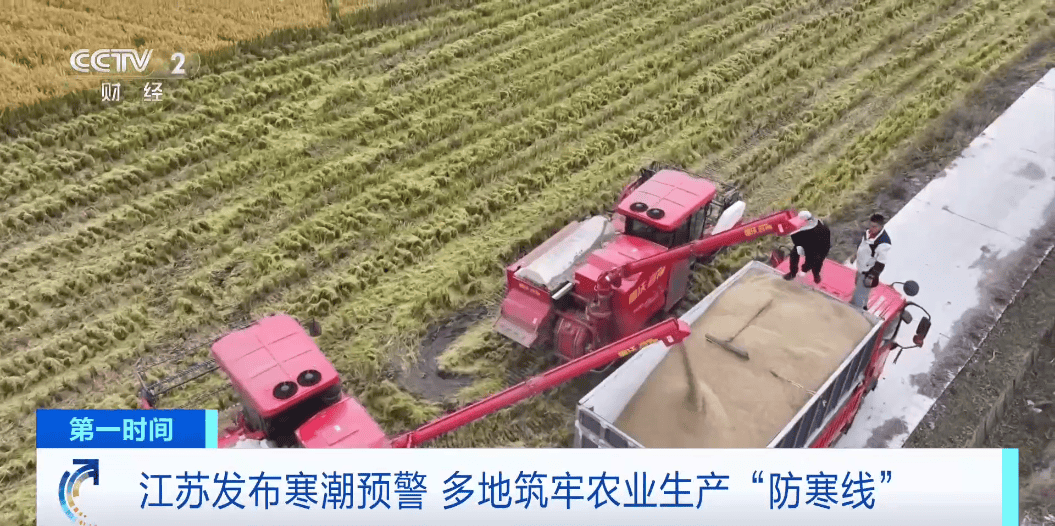
(央视财经《第一时间》)昨天(15日)下午,江苏省气象台发布了今年下半年首次寒潮预警,未来几天,江苏部分地区最低气温将降至0℃以下。面 对寒潮来袭,江苏多地农业部门和农户全力做好秋粮抢收、设施农业防寒保暖工作。 连云港市东海县水稻种植面积有98万亩,受前期降雨等因素影响,今年水稻收获期较往年有所推迟,冬小麦适期播种面临一定压力。目前,当地农业 部门组织多台收割机进行水稻收割作业,力争在11月20日前后完成大面积水稻收割和小麦播种。 在江苏淮安淮阴区的一处草莓种植园,管理人员正抓紧对大棚进行加固、加覆盖膜等作业,确保棚内温度稳定在适宜范围,为草莓顺利越冬创造良好 条件。 受强冷空气影响,预计16日至18日,南京、无锡、徐州等全省13个地市将遭遇"降温+大风"双重天气,最低气温降幅8~9℃。18至19日,沿淮和淮北地 区最低气温可达-2℃左右。 转载请注明央视财经 编辑:潘煦 ...
枸杞红、藜麦彩、牧歌悠,青海海西特色产业“链”出好“丰”景
Ren Min Wang· 2025-11-16 08:09
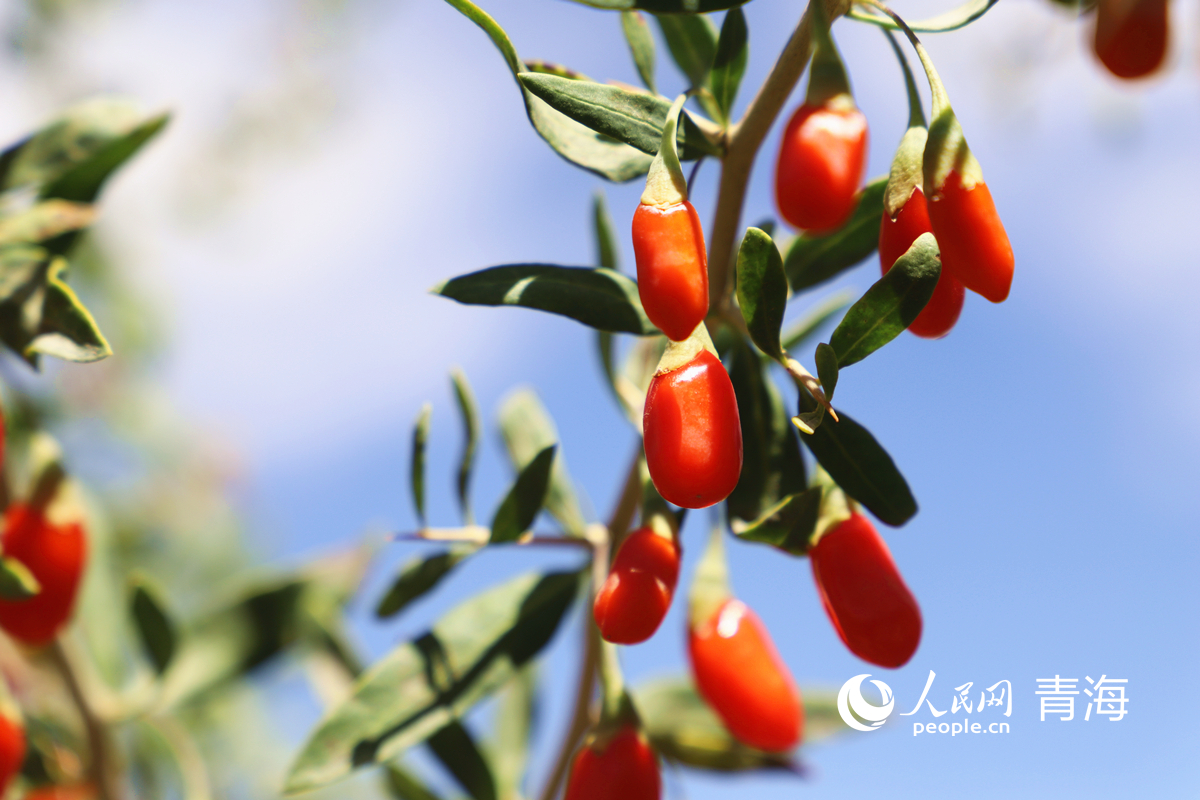
Core Viewpoint - The news highlights the agricultural and ecological richness of the Qaidam Basin in Qinghai Province, emphasizing the development of various advantageous industries and the promotion of green organic agricultural products as a key strategy for economic growth and ecological sustainability [1][8]. Industry Overview - The Qaidam Basin is recognized as a significant agricultural area, with a focus on five major advantageous industries: Tibetan sheep, yaks, goji berries, barley, and forage, alongside emerging sectors like quinoa and facility-grown vegetables [4][5]. - The region is the largest goji berry cultivation area in China, producing nearly 100,000 tons of dried fruit annually, primarily exported to Europe, America, Southeast Asia, and Hong Kong [5]. Production and Capacity - The Tibetan sheep industry is supported by the establishment of standardized breeding bases, with a target of 1.8 million sheep to be slaughtered by 2025, achieving a slaughter rate of over 60% and a total meat production of approximately 30,000 tons [5]. - The forage industry has a natural grassland area of 180 million acres, with 110 million acres available for use, and the artificial forage planting area reaching 127,700 acres, yielding 105,000 tons with a value of 162.4 million yuan [5]. Quinoa and Other Emerging Industries - The quinoa industry has expanded to over 100,000 acres, with seven processing workshops capable of processing 30,000 tons annually, producing various quinoa products [6]. - The region is also developing a diverse range of new industries, including medicinal herbs and edible fungi, contributing to the "5+5+N" advantageous industry system [4][8]. Green Development Initiatives - The local government has implemented several policies to promote the development of green organic agricultural products, including plans for a comprehensive agricultural industry chain and financial support for quality improvement [10][12]. - Environmental sustainability efforts include the utilization of crop residues and livestock waste, achieving a straw utilization rate of 90.23% and a comprehensive utilization rate of livestock waste exceeding 84% [10][11]. Brand Development and Market Expansion - The region is actively building the "Magical Qaidam" public brand, with 94 enterprises and 395 products included in the quality product library, and has established flagship stores to enhance market presence [12]. - In 2024, the region aims to export 285,800 tons of various agricultural products, generating a revenue of 5.537 billion yuan [12].
南农晨读 | 食养肇庆 南药生香
Nan Fang Nong Cun Bao· 2025-11-16 05:34
Group 1 - The training program for high-quality development of family farms in Guangdong focuses on building brands, expanding channels, and integrating e-commerce and cultural tourism [3][5][6] - The program aims to reshape the production and management mindset of family farms, providing them with the necessary skills to thrive in the market [4][6] Group 2 - The promotional event for "Wanlv Heyuan Tea Oil" in Shenzhen highlighted the launch of new deep-processing products and established partnerships for brand promotion [8][10][11] - The event signifies the beginning of a new journey for Heyuan tea oil as it seeks to penetrate the Greater Bay Area market [12] Group 3 - The fifth China Xinjiang Specialty Fruit and Nut Products Expo in Guangzhou showcased over 850 products, attracting 306 companies and promoting the "Xinjiang products southward" initiative [14][15][17] - The event aims to strengthen cooperation between Guangdong and Xinjiang, enhancing the visibility of Xinjiang's agricultural products [16][17] Group 4 - A training session on new material packaging for preserving Lianzhou vegetable heart was conducted, sharing the latest advancements in packaging technology [20][22] - The training aims to enhance the preservation efficiency of Lianzhou vegetable heart, reducing losses in the supply chain [21][22] Group 5 - The national grain and oil industry expo in Changsha featured high-quality products from Qingyuan, including specialty rice and soybeans, attracting significant interest from buyers [30][32][34] - The expo emphasizes the importance of high-quality development in the grain and oil sector, aligning with national agricultural goals [32][33] Group 6 - The promotion of "Chinese native chicken" at the 15th National Games in Yunfu showcased local agricultural products, enhancing the region's visibility and economic potential [37][39][41] - The event highlighted the integration of sports and local cuisine, promoting the "Eat in Guangdong" experience [40][41] Group 7 - The direct supply of fresh peppers from Tianyang to the Greater Bay Area demonstrates the efficiency of the supply chain and the collaboration between Guangdong and Guangxi [44][48] - This initiative aims to streamline the distribution process, ensuring fresh produce reaches consumers quickly [46][48] Group 8 - The "order class" training program in Tianyang addresses employment challenges by providing skills training that leads to immediate job placements [50][52] - This initiative reflects the efforts to enhance local employment opportunities through targeted training programs [51][52] Group 9 - A strong cold air mass is expected to impact Guangdong from November 17, leading to significant temperature drops across the region [54][56][58] - The forecast indicates a temperature decrease of 6-10 degrees Celsius, with potential rain and strong winds [56][59]

“新技术+新设备”高效赋能秋冬种 落实关键措施“组合拳”夯实粮食生产基础
Yang Shi Wang· 2025-11-16 03:50
Core Insights - The Ministry of Agriculture and Rural Affairs reports that over 80% of winter wheat has been sown nationwide, with the Huang-Huai-Hai region at approximately 85% completion [1][4] - The recent favorable weather conditions in the Huang-Huai-Hai area have accelerated the sowing process [4] Group 1: Regional Progress - In Henan, nearly 80% of winter wheat has been sown, with a focus on precise land preparation to maintain over 85 million mu of wheat [6] - Anhui has designated over 43 million mu for winter wheat, enhancing soil moisture evaporation through deep plowing [8] - Jiangsu is promoting mechanical uniform sowing technology to ensure seedling rates, with 13 expert teams providing targeted guidance [10] - Shandong is addressing late sowing issues by promoting key technologies for wet late sowing, with over 60 million mu of winter wheat sown [12] - In the Southwest wheat region, sowing is progressing steadily, with measures taken to address soil moisture and fertilizer loss [14] Group 2: Agricultural Initiatives - The Ministry has launched the "Promote Strong Seedling Agricultural Technology 100-Day Action" to ensure the implementation of key agricultural measures [16]
农技人才下沉一线,分类施策做好播前准备,四川冲刺“秋冬种”——小麦播种将在本月底前全面完成
Si Chuan Ri Bao· 2025-11-16 02:05
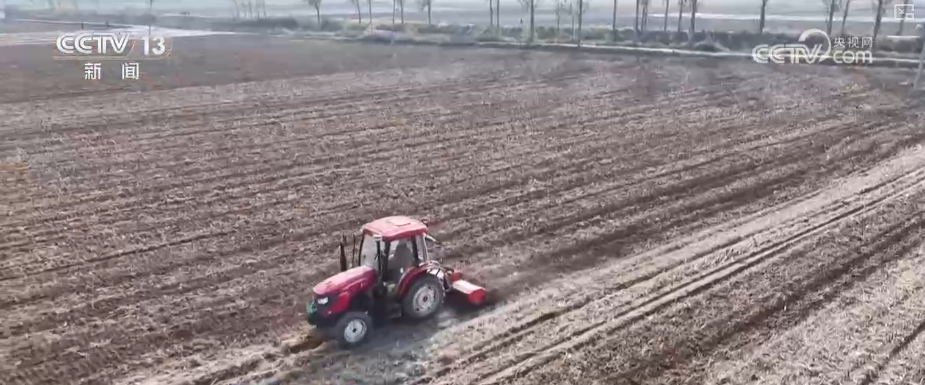
Core Insights - Sichuan's small spring grain and winter oilseed rape planting areas are expected to remain stable at over 17 million acres and 21.5 million acres respectively this year [1] Group 1: Planting Progress - The small spring planting progress is generally stable despite challenges posed by increased rainfall and soil moisture, which have made agricultural machinery operations difficult [2] - As of now, 1.9454 million acres of winter oilseed rape have been planted, accounting for 90.3% of the planned area, with completion expected around November 20 [2] - Wheat planting is also anticipated to be fully completed by the end of November, ensuring that all intended areas are sown [2] Group 2: Technical Support and Strategies - A total of 12,000 agricultural technicians are actively providing on-site support to promote appropriate planting techniques under wet conditions, such as shallower planting depths to improve seedling survival rates [2] - Different strategies are being implemented based on regional characteristics, including drainage in flat areas and no-till planting in hilly regions to ensure seeds are sown effectively [4] - The government is emphasizing the importance of timely planting to facilitate subsequent seedling monitoring and management [4] Group 3: Crop Variety Promotion - The Sichuan Agricultural Department plans to promote five major wheat varieties over 2 million acres and seven major oilseed rape varieties over 5 million acres, which will account for about one-quarter of the planned planting area [4] - The implementation process for the promotion of major crop varieties will be standardized, and funding will be expedited to ensure farmers benefit from these initiatives [4]
导航播种+长势监测 “智慧农业”助山西秋收
Zhong Guo Xin Wen Wang· 2025-11-16 01:41
Core Insights - The implementation of the "Beidou + Smart Agriculture" initiative in Datong City, Shanxi Province, has led to a significant increase in corn yield, with an average yield of 2563.52 jin per mu, which is an increase of over 400 jin compared to pre-trial levels [1] - The trial involves the use of Beidou navigation systems in tractors, enabling centimeter-level precision in planting operations, which enhances plant density and growth conditions [1] - The integration of IoT monitoring devices for pest and growth monitoring provides precise data for corn cultivation management, contributing to the overall efficiency of smart agriculture practices [1][2] Group 1 - The average corn yield in the trial area reached 2563.52 jin per mu, an increase of over 400 jin compared to before the trial [1] - The trial area achieved a planting density of 6300 plants per mu, with a survival rate of 6100 plants per mu, compared to approximately 4300 plants per mu in non-trial areas [1] - The use of smart agriculture technologies has enabled intelligent, precise, and standardized management of crop cultivation [1] Group 2 - The integration of remote sensing and artificial intelligence technologies is transforming agriculture from "experience-driven" to "data-driven," enhancing production efficiency and resource optimization [2] - This technological advancement provides essential support for food security through improved agricultural practices [2]

全国冬小麦播种过八成 各地抢抓农时推进秋冬种
Yang Shi Xin Wen· 2025-11-16 00:29
(文章来源:央视新闻) 农业农村部最新农情调度显示,目前,全国冬小麦播种已过八成。其中黄淮海近八成半。分省看,河南 近八成,安徽过八成,江苏六成半,山东、陕西近九成,山西过九成。此外,冬油菜播种基本结束。由 于前期连续阴雨导致部分主产区冬小麦播期推迟,当前,各地正抢抓农时,有力推进秋冬种。 ...
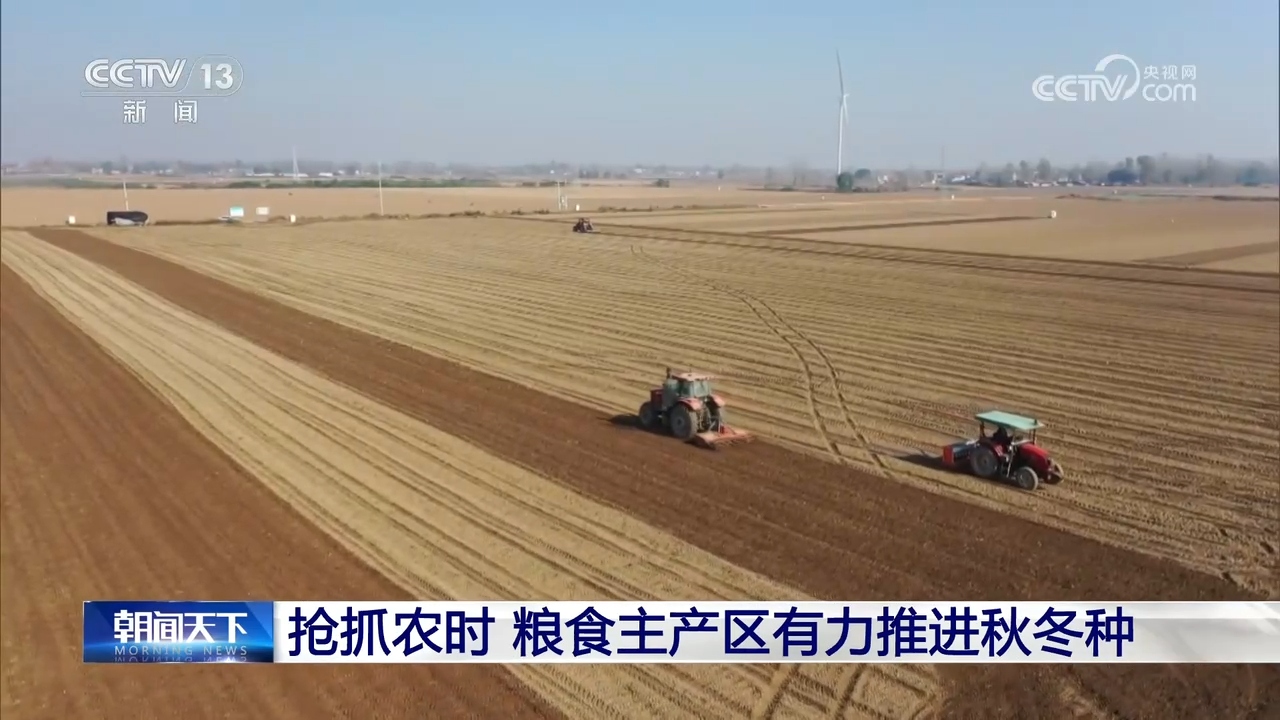
全国冬小麦播种过八成 粮食主产区有力推进秋冬种
Yang Shi Wang· 2025-11-15 23:22
Core Insights - The national winter wheat sowing has surpassed 80%, with the Huang-Huai-Hai region reaching approximately 85% completion [1][2] - The agricultural sector is actively addressing delays caused by previous rainy weather, ensuring timely autumn and winter sowing [2] Group 1: Regional Progress - In Henan, the focus is on precise land preparation and sowing, aiming to maintain over 85 million acres of wheat [3] - Anhui has designated over 43 million acres for winter wheat, enhancing soil management to expedite moisture evaporation [3] - Jiangsu is promoting mechanical sowing techniques to ensure seedling rates, with expert guidance for regional strategies [5] Group 2: Technological Advancements - Shandong is implementing key technologies for late sowing, utilizing new precision sowing machines to improve seed distribution [7] - In the Southwest wheat region, measures are being taken to address soil moisture and nutrient loss, including the use of high-yield disease-resistant varieties [9] Group 3: Government Initiatives - The Ministry of Agriculture has launched the "Promote Strong Seedling Agricultural Technology 100-Day Action" to ensure effective implementation of key agricultural measures [9]