制度保障

Search documents
民办高校管理干部队伍职业化建设研究
Xin Lang Cai Jing· 2026-01-07 22:25
Core Viewpoint - Private higher education institutions play a crucial role in the high-quality development of education, necessitating a focus on the professionalization of management teams to support strategic implementation and development goals [1] Group 1: Role of Management Teams - Management teams in private colleges are essential for both teaching and administrative functions, requiring a shift from transactional management to an educator-oriented approach [2] - The management teams should embody a people-centered educational philosophy and possess a deep understanding of higher education theories and management practices [2] Group 2: Institutional Support - Regular assessments and adjustments of management responsibilities are necessary to provide a structured framework for the growth of management teams [3] - Implementing a job rotation system can enhance service awareness and management efficiency among staff [3] Group 3: Training and Development - Private colleges should leverage their flexible hiring mechanisms to combine talent acquisition with internal training, focusing on creating a high-quality, professional management team [4] - Emphasis should be placed on enhancing digital literacy and core competencies in communication and technology application among management staff [4] Group 4: Evaluation and Incentives - Establishing a comprehensive evaluation and incentive mechanism is vital for aligning the development of private colleges with local economic needs [5] - A dynamic evaluation system should be implemented to link performance assessments with the selection and promotion of management personnel [6]
改变一个称呼,做大一个产业
Xin Lang Cai Jing· 2026-01-03 23:22
Core Viewpoint - The term "nanny" is outdated and does not accurately reflect the diverse responsibilities of home service workers, who should be referred to as "housekeepers," "household assistants," or "lifestyle managers" to better respect their professional value [1][2] Group 1: Industry Characteristics - The home service industry is experiencing significant growth, with monthly salaries for workers typically ranging from 5,000 to 8,000 yuan, and skilled individuals earning over 10,000 yuan [1] - The increasing elderly population and the trend towards home-based elderly care are driving demand for home service, indicating substantial market potential [1] Group 2: Challenges in the Industry - The industry faces deep-rooted challenges, including a large number of workers in informal employment, lack of social security, and low social recognition, which deter young people from entering the field [2] - There is a need for a shift in societal attitudes to elevate the status of home service work, particularly in elderly care, to reflect its importance and honor the tradition of caring for the elderly and children [2] Group 3: Recommendations for Development - Government attention and guidance are essential for the healthy development of the home service industry, including integrating it into overall employment and elderly care planning, providing policy support, and establishing standardized employment platforms [2] - Enhancing social recognition and institutional support is crucial to attract more young people to the industry, ensuring it becomes a respected and valued profession [2]
在基层治理中强化中华民族的共同性
Xin Lang Cai Jing· 2025-12-28 20:29
Group 1 - The core viewpoint emphasizes the importance of strengthening the awareness of the Chinese national community as a priority in governance and policy-making [1] - The concept of the Chinese national community is defined by the commonality among various ethnic groups in aspects such as historical heritage, cultural values, social life, and national identity [1] - The grassroots level is identified as crucial for implementing the awareness of the Chinese national community, requiring detailed and sustained efforts [1] Group 2 - The article suggests creating immersive cultural spaces to enhance the perception of common cultural symbols among different ethnic groups [2] - It advocates for the active transmission of intangible cultural heritage to cultivate shared cultural brands and promote cross-ethnic projects [2] - The promotion of interactive cultural activities is recommended to foster mutual understanding and deepen emotional connections among various ethnic communities [2] Group 3 - The establishment of a comprehensive evaluation mechanism is proposed to incorporate the effectiveness of strengthening the Chinese national community into grassroots performance assessments [3] - Resource allocation should be optimized to enhance foundational support for various projects related to rural revitalization and ethnic unity [3] - A conflict resolution system is suggested to maintain social harmony and stability through a structured approach to dispute resolution [3] Group 4 - The development of a digital platform is recommended to facilitate communication and interaction among ethnic groups [4] - The implementation of smart governance systems is proposed to improve public services and ensure equitable access for all communities [4] - Efforts to purify the online environment and promote positive narratives about ethnic unity are emphasized [4] Group 5 - Systematic training programs are suggested to enhance the professional capabilities of grassroots governance personnel [5] - The optimization of team structures is recommended to attract diverse talents familiar with local conditions [5] - The establishment of incentive mechanisms is proposed to motivate grassroots workers and enhance their engagement in community development [6]
立足优势进一步吸引外商投资
2 1 Shi Ji Jing Ji Bao Dao· 2025-12-27 00:54
Core Viewpoint - The National Development and Reform Commission and the Ministry of Commerce have released the "Encouragement Directory for Foreign Investment (2025 Edition)", which aims to attract more foreign investment into advanced manufacturing, modern services, high-tech, and energy-saving sectors, particularly in the central and northeastern regions of China [1] Group 1: Institutional Advantages - Institutional guarantees are a unique advantage for China in attracting foreign investment, providing a predictable business environment for foreign enterprises to establish and grow in the market [1] - The new directory emphasizes the importance of coordination among various economic departments and regional cooperation to optimize macroeconomic conditions for attracting foreign investment [1] Group 2: Market Size Advantage - China's large market, with a population of 1.4 billion and a projected per capita GDP exceeding $12,000 in 2024, positions it as an ideal investment destination for foreign enterprises [2] - The directory supports the enhancement of service consumption, including sectors like pet healthcare and internet-based medical services, providing significant business opportunities for foreign companies [2] Group 3: Complete Industrial System - China boasts the world's most complete industrial system, covering all major categories from agriculture to manufacturing and services, which facilitates stable average profits for foreign enterprises [2] - The directory includes new categories in advanced manufacturing, such as smart detection equipment and robotics, enhancing the support for high-end manufacturing and R&D opportunities for foreign firms [2] Group 4: Multi-Scenario Opportunities - The concept of "multi-scenario" refers to the innovative application of new technologies and products, offering various market opportunities for foreign enterprises [3] - The directory encourages foreign investment in productive services, highlighting the diverse regional demands and the layered nature of market needs in China, which allows foreign companies to find niche markets [3] - Continuous demand upgrades in China create additional application scenarios, providing further business expansion possibilities for foreign enterprises [3]
笔谈丨健全协同机制 凝聚工作合力
Zhong Yang Ji Wei Guo Jia Jian Wei Wang Zhan· 2025-11-27 00:24
Group 1 - The core viewpoint emphasizes the need for a coordinated and efficient approach to building a clean culture, integrating various resources through innovative mechanisms [1] - The construction of a clean culture is described as a systematic project that requires breaking down departmental barriers and forming a collaborative governance structure involving party leadership, disciplinary committees, and social participation [1] - The responsibility for promoting clean culture must be clearly defined, with regular research and deployment to ensure accountability and prevent inefficiency [1] Group 2 - There is a current challenge of resource dispersion and insufficient strength in clean culture construction, necessitating efforts to optimize resource allocation and achieve shared advantages [2] - The integration of traditional Chinese culture, revolutionary culture, and socialist advanced culture is highlighted as a means to enhance clean culture education and promote exemplary figures [2] - Collaboration between educational institutions and local governments is encouraged to leverage academic resources and practical platforms for mutual development [2] Group 3 - Strengthening the construction of a clean culture relies on a robust system of regulations, creating a clear responsibility framework and effective supervision [3] - The establishment of joint meetings, information sharing, and feedback mechanisms is essential for addressing key issues and ensuring accountability [3] - The evaluation of clean culture initiatives will be integrated into the party's accountability system, with a focus on objective assessment and timely corrective actions for underperforming units [3]
玉米高产背后的中国农业变革
Zheng Quan Shi Bao· 2025-11-16 17:57
Core Insights - The significant increase in corn yield in major production areas of China reflects the modernization of agriculture, driven by technological innovation, institutional support, and market vitality [1][2][3] Group 1: Technological Innovation - Technological innovation is identified as the core driver of high corn yields, with effective transformation from laboratory research to practical application in the fields [1] - Key technologies developed by the Chinese Academy of Agricultural Sciences, such as "reasonable density increase" and "precise control," have been successfully implemented through demonstration and standardized planting processes [1] - The technology transfer chain, involving expert development, demonstration by large farmers, and participation of ordinary farmers, has effectively addressed the challenge of agricultural technology promotion [1] Group 2: Institutional Support - Institutional support has provided a stable expectation for agricultural development, with national policies integrating corn yield improvement into food security assessments [2] - Local governments are actively promoting high-standard farmland construction and providing policy subsidies, which enhance production conditions and boost farmers' confidence [2] - The establishment of high-standard farmland and demonstration fields has led to significant upgrades in irrigation facilities and improved agricultural practices [2] Group 3: New Agricultural Operators - The rise of new agricultural operators, such as Ma Zhongchen and Luo Junjie, is transforming traditional agricultural production patterns, emphasizing technical skills and market responsiveness [2] - These new operators are not just traditional farmers; they are equipped with strong technical capabilities and a mindset for large-scale operations [2] - Through mentorship and demonstration planting, these operators are driving collective development among surrounding farmers, acting as key figures in technology promotion and industry advancement [2] Group 4: Human Modernization - The modernization of agriculture is closely linked to the modernization of its workforce, with farmers transitioning from experience-based practices to technology-driven methods [3] - There is a growing willingness among agricultural workers to learn new technologies and participate in training, indicating a shift towards proactive engagement in agricultural modernization [3] - The involvement of younger generations in agriculture, as exemplified by 90s-born Luo Junjie, highlights the industry's potential to attract new talent and ensure its future sustainability [3]


美国突破中国稀土卡脖子技术到底缺些什么?
Sou Hu Cai Jing· 2025-10-21 19:21
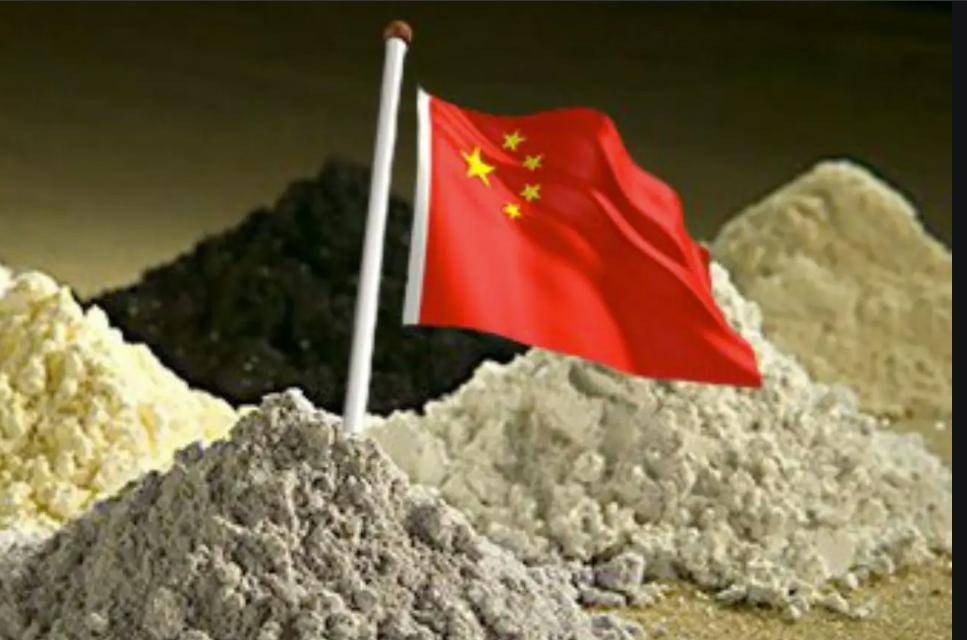
Core Viewpoint - The article discusses the challenges the United States faces in overcoming its dependency on China for rare earth elements, emphasizing that the difficulties are far greater than those encountered in the semiconductor sector [1][3]. Group 1: Historical Context - The U.S. has been attempting to reduce its reliance on China's rare earth supply chain since 2010, but progress has been minimal over the past fifteen years [3]. - The article draws a parallel between the current U.S. situation and the post-Soviet Union era, highlighting the need for a cohesive national effort to rebuild industrial capabilities [4]. Group 2: Industrial Challenges - The U.S. lacks a comprehensive industrial environment, cultural support, and institutional guarantees necessary for developing a robust rare earth industry [3][4]. - The article argues that the U.S. requires a strong industrial system similar to China's, which encompasses 41 industrial categories and 666 subcategories, to successfully rebuild its rare earth supply chain [4]. Group 3: Economic Viability - The U.S. struggles to achieve basic infrastructure needs, such as affordable electricity and internet, which are critical for re-industrialization efforts [5]. - The transition from a once-industrialized nation to a more financialized economy has eroded the foundational elements necessary for a successful rare earth industry [5].