
Robotics

Search documents
机器人“扎堆”上春晚,谁将成为下一个“顶流”?
投中网· 2026-01-28 02:40
Group 1 - The core theme of the article revolves around the integration of embodied intelligent robots into the upcoming Spring Festival Gala, showcasing advancements in technology and art [9][8]. - The Central Radio and Television Station has partnered with multiple robotics companies for the 2026 Spring Festival Gala, including Magic Atom, Galaxy General Robotics, and Yushu Technology [4][5][6]. - The Gala aims to enhance the "technology + art" experience, incorporating intelligent robotics into stage performances and creative content [8][9]. Group 2 - Yushu Technology, known for its humanoid robots, has made significant impacts on previous Spring Festivals, including a notable performance in 2022 that became a hot topic [16][11]. - The company has achieved a market valuation of HKD 71 billion as of January 27, 2023, and reported humanoid robot orders totaling nearly CNY 1.4 billion for 2025 [14][15]. - Yushu Technology has completed 10 rounds of financing, with its valuation reaching CNY 12 billion, reflecting strong investor interest [16]. Group 3 - Galaxy General Robotics, established in May 2023, focuses on multi-modal large model robots and has completed five rounds of financing, raising over USD 300 million in its latest round [23][24]. - The company’s first product, the Galbot G1, features a wheeled chassis and is designed for versatility in various applications, including industrial and retail environments [25][26]. - Galaxy General's robots are already operational in factories of major companies like CATL and Bosch, emphasizing their role in precision manufacturing [27]. Group 4 - Magic Atom, founded in January 2024, specializes in general robotics and has launched several products, including the MagicBot Z1, which is designed for complex movements and social interaction [30][31]. - The company has successfully completed two rounds of financing, with the latest round raising several hundred million yuan, aimed at advancing core technologies [36][35]. - Magic Atom's products are expected to blend seamlessly into traditional Spring Festival performances, highlighting the fusion of technology and culture [37].


国内发布规模最大人形机器人视触觉多模态数据集!机器人ETF(562500)低开下行
Xin Lang Cai Jing· 2026-01-28 02:27
Group 1 - The Robot ETF (562500) opened lower and is currently priced at 1.091 yuan, down 1.178% from the opening price, with 57 out of 66 component stocks declining, indicating a broad downtrend in holdings [1] - The ETF has a trading volume of 3.12 billion yuan and a turnover rate of 1.24%, maintaining high trading activity [1] - The "White Tiger-VTouch" multimodal dataset was released, containing over 60,000 minutes of robot interaction data, making it one of the largest open-source datasets in this category [1] Group 2 - The Robot ETF (562500) is the only robot-themed ETF in the market with a scale exceeding 20 billion yuan, covering various segments such as humanoid robots, industrial robots, and service robots [2] - The recent adjustment of component stocks has increased the humanoid robot content in the ETF to nearly 70%, successfully removing underperforming stocks and including quality ones, achieving a "retain the strong, remove the weak" strategy [2] Group 3 - According to Dongfang Securities, the humanoid robot industry will focus on efficiency, with prices expected to gradually decrease as sales increase, similar to trends observed in the automotive and home appliance industries [1] - Companies with strong manufacturing and management capabilities are likely to capture a larger market share in the humanoid robot supply chain, as evidenced by previous successes in automotive and engineering machinery sectors [1]

南京机器人 “游” 夫子庙圈粉游客
Yang Zi Wan Bao Wang· 2026-01-28 02:16
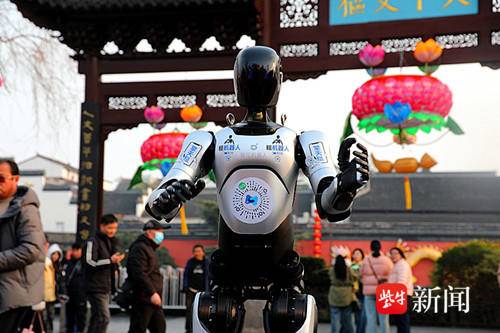
B ** 新闻 al *4新闻 36 Q国中国 · 秦淮灯会 Inning ** 新闻 扬子晚报网1月27日讯(通讯员徐福庚记者闫春旭)太酷了!一款人形机器人在夫子庙景区"游玩",瞬间 吸引了游客纷纷驻足围观。一台人形机器人在工作人员监控下进行展示表演,孩子们更是满心好奇,大 胆伸手与机器人握手,沉浸式感受科技的趣味。现场发现,这款智能机器人通过摇控,随着机械臂的灵 活摆动,不仅展现了挥手、走路、抬手等标准动作,引得现场市民游客纷纷驻足观看,用手机捕捉下这 一科技与观众亲密互动的精彩瞬间。据工作人员介绍,这款商务机器人可以声源定位、语音对话、休闲 娱乐、自然行走。 ...
This "Magnificent Seven" Stock Has a Secret Weapon for 2026: Meet Optimus
The Motley Fool· 2026-01-28 01:35
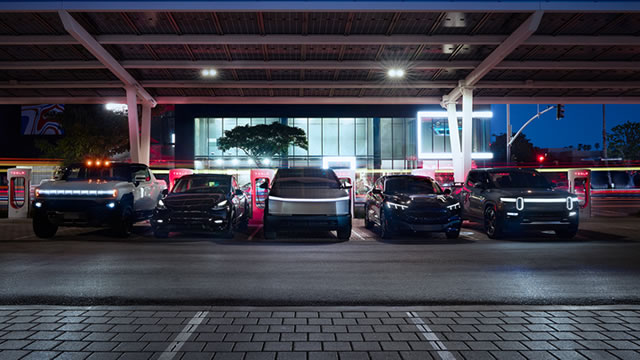
Tesla continues to make technology revolutionary.The stuff of science fiction is quickly becoming reality. Iconic electric vehicle maker Tesla (TSLA 0.99%) is now making AI-controlled humanoid robots that will be available for purchase by the public before the end of 2027. That's what Tesla CEO Elon Musk said at this year's World Economic Forum, anyway. Just bear in mind the larger-than-life founder has significantly understated developmental timelines before.On the other hand, he's also got a penchant for ...

Seagate Technology, Texas Instruments, Richtech Robotics, Corning And Lam Research: Why These 5 Stocks Are On Investors' Radars Today - Seagate Technology Hldgs (NASDAQ:STX)
Benzinga· 2026-01-28 01:24
Market Overview - Wall Street experienced renewed momentum with the S&P 500 reaching fresh highs, while major U.S. indices closed mixed. The Dow Jones Industrial Average decreased by 0.8% to 49,003.41, the S&P 500 increased by 0.41% to 6,978.60, and the Nasdaq rose by 0.9% to 23,817.09 [1] Seagate Technology Holdings Plc - Seagate's stock increased by 3.76% to close at $371.76, with an intraday high of $383.88 and a low of $361. The stock's 52-week range is between $63.21 and $383.88. In after-hours trading, the stock rose by 9.66% to $407.64 [1] - Seagate reported second-quarter earnings of $3.11 per share, surpassing estimates of $2.81, with revenue of $2.83 billion, exceeding the consensus of $2.73 billion and up from $2.33 billion a year earlier. The results were driven by strong data center demand and momentum from HAMR-based Mozaic products. For the third quarter, Seagate guided for adjusted EPS of $3.20–$3.60 and revenue of $2.8–$3.0 billion, both ahead of Wall Street expectations [2] Texas Instruments Inc. - Texas Instruments saw a marginal increase of 0.02%, closing at $196.63, with an intraday high of $198.41 and a low of $194.34. The stock's 52-week range is $139.95 to $221.69. In after-hours trading, the stock surged by 8.08% to $212.51 [3] - Texas Instruments reported fourth-quarter revenue of $4.42 billion, slightly missing estimates of $4.44 billion, while earnings were $1.27 per share, below the consensus of $1.30. The results included a six-cent per share reduction not part of its original guidance, despite a 10% year-over-year revenue increase. The company generated $7.2 billion in operating cash flow and $2.9 billion in free cash flow over the past 12 months, ending the quarter with $3.23 billion in cash. For the first quarter, the company guided revenue of $4.32–$4.68 billion and earnings of $1.22–$1.48 per share, broadly in line to slightly above expectations [4] Richtech Robotics Inc. - Richtech Robotics surged by 44.62%, closing at $5.51, with an intraday high of $5.60 and a low of $4.05. The stock's 52-week range is $1.37 to $7.43 [5] - The company announced a new partnership with Microsoft to enhance its AI capabilities, which significantly contributed to the stock's gains. The partnership focuses on integrating Azure AI vision, voice, and reasoning tools into its ADAM robot, enabling more contextual and autonomous behavior. The upgraded ADAM platform can now consider various factors such as time of day and weather, while proactively addressing potential operational issues [6] Corning Incorporated - Corning's stock jumped by 15.55% to $109.74, with an intraday high of $113.99 and a low of $100.97. The stock rose by 3.88% in extended trading to $114 [7] - A $6 billion deal with Meta Platforms to supply data center infrastructure significantly boosted Corning's shares. The agreement involves supplying Meta with optical fiber, cable, and connectivity solutions tailored for high-density AI data centers, aimed at supporting Meta's AI applications and infrastructure needs. Corning plans to expand manufacturing capacity in North Carolina, including a major expansion at its Hickory optical cable facility, where Meta will be the anchor customer [8] Lam Research - Lam Research's stock rose by 7.00%, closing at $238.46, with an intraday high of $239.5 and a low of $228.76. The stock rose by 1.07% to $241 in after-hours trading [9] - Investors are anticipating the company's upcoming earnings report, with expectations of positive guidance and performance exceeding expectations. Analysts expect Lam Research to report EPS of $1.17, with a focus on both potential earnings beats and forward guidance [10]



新华每日电讯聚焦:解锁“万亿城区”,深圳南山“为什么能”?
Xin Lang Cai Jing· 2026-01-27 23:43
Core Insights - Nanshan District in Shenzhen is set to become the first district in China to achieve a GDP exceeding 1 trillion yuan by 2025, accounting for approximately 25% of Shenzhen's total economic output [1][2] - The district has a strong focus on strategic emerging industries, with 60% of its economic output coming from these sectors, particularly in robotics and technology [1][2] Economic Development - The robotics industry in Nanshan is a significant driver of economic growth, with companies like UBTECH Robotics achieving nearly 1.4 billion yuan in orders for humanoid robots by the end of 2025 [1][2] - Nanshan's software and internet industry is projected to generate over 900 billion yuan in revenue by 2025, reinforcing its position as a hub for technological innovation [2] - The district has over 1,300 artificial intelligence enterprises and has nurtured more than 6,000 national high-tech enterprises, showcasing its robust industrial ecosystem [2] Business Environment - Continuous optimization of the business environment is a key factor in Nanshan's success, with local government initiatives providing comprehensive support for startups and established companies alike [3][4] - The number of business entities in Nanshan has grown from 530,000 in 2020 to over 600,000 by 2025, with the number of listed companies increasing from approximately 180 to 218 [4] Infrastructure and Innovation - Nanshan is enhancing its industrial infrastructure through initiatives like "industrial stacking," which aims to maximize the use of limited industrial land [6] - The district is committed to advancing smart, green, and health-oriented industries, with a focus on integrating AI into various sectors [6] Investment and Trade - Nanshan's foreign trade is thriving, with total import and export volume exceeding 900 billion yuan in 2025 [9] - The establishment of a global service center in Nanshan aims to facilitate international business operations, providing essential services for companies looking to expand globally [9]

南山将试点建设鸿蒙人工智能医院
Nan Fang Du Shi Bao· 2026-01-27 23:14
Core Insights - Nanshan District is set to become the first district in China with a GDP exceeding 1 trillion yuan by 2025, achieving an average annual growth rate of over 5.8% from 2016 to 2021 [2][3] Economic Growth - The economic scale of Nanshan has increased from 652.7 billion yuan at the end of the 13th Five-Year Plan to over 1 trillion yuan, marking a significant leap of four hundred billion yuan levels in five years [2][3] - The contribution of strategic emerging industries to the GDP has reached 60%, indicating a strong reliance on new quality-driven economic growth [3][5] Innovation and Industry - Nanshan is recognized as a key center for technological innovation and industrial manufacturing within the Guangdong-Hong Kong-Macao Greater Bay Area, with over 110 tech companies participating in the 2026 International Consumer Electronics Show [3] - The district hosts more than 20 robot manufacturing companies and over 200 upstream and downstream enterprises, showcasing a robust industrial cluster [5] - Nanshan's innovation ecosystem integrates talent, funding, and industry chains, which is crucial for high-quality development and fostering new productive forces [3][5] Social Welfare and Development - Nanshan aims to be a benchmark for social welfare, with plans to supply over 2,000 affordable housing units this year and significant improvements in education, healthcare, and elderly care services [6][7] - The district has committed to expanding educational facilities, with 20 new schools planned and a focus on digital education [6][7] - Healthcare improvements include the construction of new hospital facilities and enhanced community health services, aiming for comprehensive coverage for residents [6][7]
人形机器人企业春晚再亮相 “不差钱”的银河通用也入局
2 1 Shi Ji Jing Ji Bao Dao· 2026-01-27 23:08
或于央视春晚"露脸"的人形机器人企业再锁定一家。1月25日,央视披露,银河通用成为2026年春节联 欢晚会指定具身大模型机器人。 而在此之前,1月23日,"追觅系"机器人企业魔法原子,也成功认领成为央视春晚的机器人战略合作伙 伴之一。 21世纪经济报道记者向银河通用方面询问春晚表演和互动方式,但对方表示暂不便回复。 "京圈"机器人企业狂揽近8亿美元 自宇树科技人形机器人表演一炮而红之后,央视春晚已然成为部分具身智能企业暗自较劲的高光舞台。 而银河通用虽被认为是人形机器人"准第一梯队"企业,但在春晚之前,尚无宇树、智元、众擎等机器人 企业获得过的"破圈时刻"。 不过,相比以上知名企业,银河通用却以一级市场的海量融资与极高估值而成为资本圈关注的对象。 资料显示,银河通用成立于2023年5月,公司位于北京,聚焦通用机器人产品的研发和销售。 从履历来看,公司与北京大学、中关村方面渊源较深,公司联合创始人王鹤为斯坦福博士,北大前沿计 算研究中心助理教授,博士生导师,北大-银河通用具身智能联合实验室和北京智源人工智能研究院具 身智能研究中心主任。 另一位联合创始人姚腾洲毕业于北京航空航天大学机器人研究所。师从机器人行业泰 ...
筑牢育人“定盘星” 打造科创新平台
Xin Lang Cai Jing· 2026-01-27 22:08
先锋引领结硕果,辐射带动显担当。党员教师是科创教育的"主力军"和"排头兵",在课程研发、课题攻 坚、学生指导中冲锋在前,不仅有效破解了民办学校师资流动、课程衔接等实际难题,更带出了一支政 治过硬、业务精湛的育人队伍,成为科创育人的核心力量。近年来,党员教师带头指导学生斩获全国青 少年科技创新大赛二等奖、丘成桐全国青少年科技大赛二等奖、江苏省青少年科创大赛一等奖等各级各 类奖项50余项,拿下32项国家发明专利。学校大批毕业生凭借扎实的科研能力与开阔的国际视野被麻省 理工学院、牛津大学、剑桥大学等世界顶尖学府录取,80%的学生在申请文书中重点凸显科创经历与家 国情怀,实现了学术成长与价值塑造的双重收获。学校获评江苏省"一校一品"党建品牌、苏州市首批科 学家培养"薪火计划"摇篮基地、苏州市科学教育综合示范学校等多项荣誉。 展望未来,校党支部将继续深化"党建红"与"科技蓝"的融合实践,以党建领航育人方向,以科技创新激 发成长动能,以特色发展引领学校高质量发展。同时进一步强化辐射引领作用,为苏州乃至全省基础教 育阶段党建与科教融合贡献更多智慧与力量。 赵加军(苏州北美国际高级中学党支部书记) (来源:新华日报) 在苏州 ...
成都造机器人亮相中东展会
Xin Lang Cai Jing· 2026-01-27 18:56
展会现场,卡诺普展位前人流不息。最新一代激光焊接机器人安静地进行着毫米级精密切割演示,其针 对高温环境强化的散热与稳定性设计,吸引了众多关注重型装备与能源基建的客户。另一侧,操作简易 的协作焊接机器人则凭借"易上手、高性能"的特点,为寻求突破技能人才瓶颈的工厂提供了解决方案。 转自:成都日报锦观 与超过12家伙伴达成合作意向 成都造机器人亮相中东展会 记者1月27日获悉,在阿联酋沙迦举行的国际金属加工及焊接技术展览会(Steel Fab 2026)上,来自成 都的机器人领军企业——成都卡诺普机器人技术股份有限公司,以其先进的产品技术与深度本地化服务 策略,成为展会瞩目的焦点,与超过12家合作伙伴达成了初步合作意向,展现了"成都智造"对接全球产 业升级的强大实力。 "中东已不仅是重要的出口市场,更是我们实现技术本地化适配与产业协同的战略前沿。"卡诺普海外市 场负责人方玮华表示,参展的核心目的在于零距离理解区域市场在能源、基建等领域对自动化、智能化 的迫切需求,并将定制化解决方案更深地植入本地工业升级进程。 此次展会上,卡诺普与超过12家合作伙伴达成了初步合作意向,涉及直接采购与整体产线升级等多个层 面。海外销售 ...