
电池

Search documents
头部企业动作频频,钠电池商业化应用迎来关键节点
Xin Lang Cai Jing· 2026-01-26 23:11
Core Insights - The sodium battery industry has seen significant breakthroughs since 2026, with leading companies actively engaging in various developments [1] - Companies like CATL have launched the first mass-produced sodium battery for light commercial use, while others like Zhongna Energy and Tianneng Technology are making strides in production and technology [1] - Industry experts believe that as the supply chain matures and costs continue to decrease, sodium batteries are poised for large-scale commercial deployment [1] Industry Developments - CATL has introduced the first mass-produced sodium battery in the light commercial sector [1] - Zhongna Energy has commenced production at its large-scale sodium iron sulfate cathode material base [1] - Companies such as Zhongwei New Materials and Yiwei Lithium Energy are reporting successes in order fulfillment, capacity expansion, and technological research [1] Market Potential - Sodium batteries are expected to penetrate various applications, including energy storage, two-wheeled vehicles, and start-stop power systems, due to their advantages in low-temperature performance, safety, and cost potential [1] - The industry anticipates that sodium batteries will serve as a replacement or supplement to lead-acid batteries and some lithium batteries across multiple sectors [1] - 2026 is projected to be a critical year for the commercialization of sodium batteries [1]
新能源出口退税“退坡了”
Ren Min Ri Bao· 2026-01-26 22:55
Core Viewpoint - The recent policy changes in China regarding the cancellation of export tax rebates for photovoltaic and battery products aim to address the "involution" competition in the new energy sector, promoting healthier industry development and supporting the global green transition [1][3]. Export Tax Rebate Changes - Starting April 1, 2026, China will fully cancel the 9% export tax rebate for 249 photovoltaic-related products, marking the first complete cancellation since 2013 [2]. - The export tax rebate for battery products will be reduced from 9% to 6% until the end of 2026, after which it will be completely eliminated [2]. - The adjustments are intended to combat the adverse effects of low-price competition and to ensure that the export tax rebate does not inadvertently subsidize foreign buyers [4][10]. Industry Competition and Regulation - The photovoltaic industry has been experiencing severe "involution" competition, leading to declining export prices and profit losses for domestic companies [4]. - The Chinese Photovoltaic Industry Association has indicated that the current practices have transformed the export tax rebate into a subsidy for foreign markets, increasing the risk of international trade disputes [4]. - Recent measures include strengthening antitrust regulations and promoting self-discipline within the industry to mitigate irrational competition [5][8]. Industry Self-Regulation Initiatives - The Ministry of Industry and Information Technology has been actively promoting self-regulation in the battery sector, including organizing meetings to discuss industry competition and development [6][7]. - Regulatory bodies are focusing on enhancing market supervision, optimizing capacity management, and ensuring product quality to foster a healthier competitive environment [7][8]. Long-term Industry Outlook - The cancellation of export tax rebates is expected to lead to a rationalization of export prices and a reduction in trade friction, ultimately benefiting the industry's long-term health [10][12]. - The focus is shifting towards technological innovation and quality improvement, with an emphasis on developing high-value products such as high-efficiency photovoltaic cells and long-duration energy storage batteries [12].
新股消息 | 微电新能源递表港交所
智通财经网· 2026-01-26 22:51
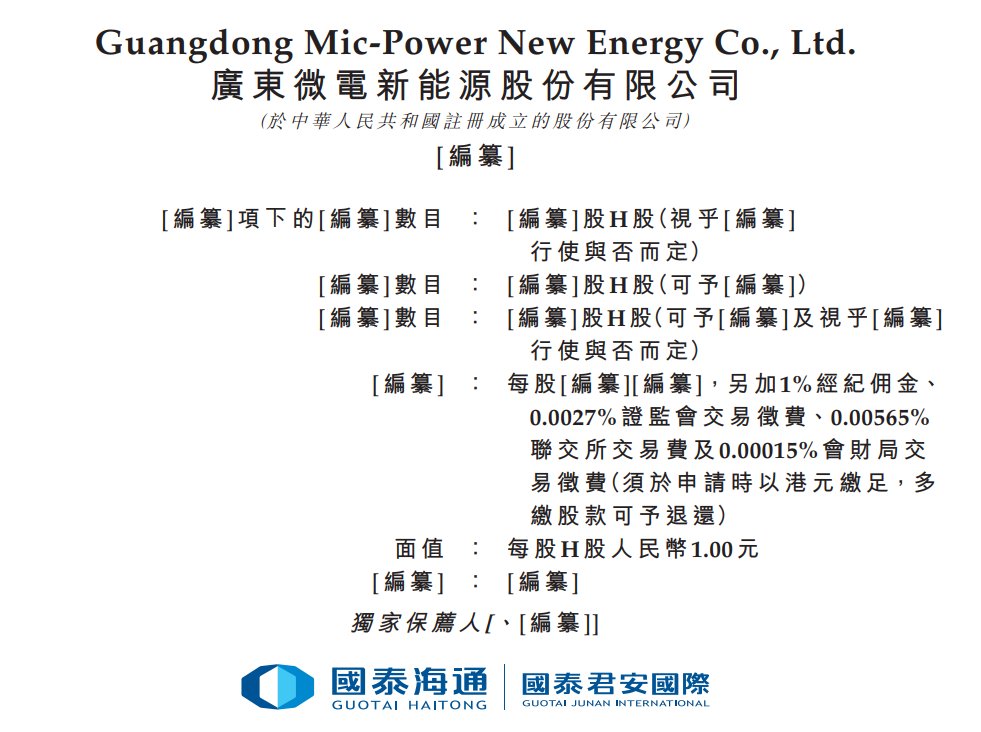
Core Viewpoint - Guangdong Micro Battery New Energy Co., Ltd. (referred to as Micro Battery New Energy) has submitted a listing application to the Hong Kong Stock Exchange, with Guotai Junan as its sole sponsor, positioning itself as a leading provider of high-performance and high-safety micro lithium-ion battery solutions [1] Group 1: Company Overview - Micro Battery New Energy is focused on addressing core challenges in micro battery materials and design, aiming to overcome the limitations of existing lithium-ion formulations and technologies [1] - The company has attracted a wide range of end customers, including world-leading and internationally recognized smart device and consumer electronics brands [1] Group 2: Market Position - According to ZhiShi Consulting, Micro Battery New Energy ranks among the top five global suppliers in several micro lithium-ion battery sectors based on shipment volume in 2024 [1] - The company shipped 103 million consumer-grade smart terminal micro lithium-ion batteries, ranking fourth globally and second among Chinese suppliers [1] - For wireless earphone micro lithium-ion batteries, the company shipped 86.9 million units, ranking second globally and first among Chinese suppliers [1]

头部企业动作频频 钠电池商业化应用迎来关键节点
Shang Hai Zheng Quan Bao· 2026-01-26 19:16
Core Insights - The sodium battery industry has seen significant breakthroughs since 2026, with leading companies making substantial advancements in production and technology [1] - Sodium batteries are expected to replace or supplement lead-acid and some lithium batteries in various applications by 2026, marking a critical point for commercialization [1] Group 1: Company Developments - CATL launched the first mass-produced sodium battery for light commercial vehicles, maintaining over 92% usable capacity at -20°C and supporting charging even at -30°C [2] - Zhongna Energy's new production base for sodium iron sulfate cathode materials in Sichuan has begun operations, marking a shift from kiloton to megaton scale, potentially reducing cathode material costs by over 50% compared to lithium iron phosphate [2] - China Wei New Materials reported securing a kiloton-level order for sodium batteries, anticipating a significant increase in shipments by 2026 due to rising lithium carbonate prices [2][3] Group 2: Market Potential and Applications - The sodium battery market is projected to reach a global scale of 580 GWh for energy storage and over 410 GWh for automotive applications by 2030 [3] - Sodium batteries are becoming ideal for extreme cold environments, making them suitable for passenger and light commercial vehicles [4] - The electric two-wheeler market is expected to see sodium batteries become mainstream due to their cost-effectiveness and performance advantages [5] - In the energy storage sector, sodium batteries are anticipated to exceed 50 GWh in shipments by 2030, serving as a complementary alternative to lithium-ion batteries [5] - The starting and stop market is projected to see a 30% penetration rate for sodium batteries by 2030, with expected shipments of 20 GWh [5]

强战新 扩投资 防风险 河南:加大“险资入豫”“基金入豫”力度
Shang Hai Zheng Quan Bao· 2026-01-26 19:16
Economic Growth Targets - The GDP of Henan is projected to reach 6.66 trillion yuan by 2025, with a growth rate of 5.6% [1] - For 2026, the expected GDP growth target is around 5%, with specific goals including a 6.5% increase in industrial added value and a 5% growth in fixed asset investment [1][2] Investment and Financing Initiatives - Henan aims to enhance "insurance capital" and "funds" inflow, strengthen venture capital, and support quality enterprises in going public and mergers [2] - The government plans to implement over 1,000 key provincial projects in 2026, with an annual investment target of 1 trillion yuan [2] Industrial Development - The province will support industries such as new electric power equipment and modern food production to enter national advanced manufacturing clusters [3] - Key projects include upgrades for Chery passenger cars, BYD new energy commercial vehicles, and the development of a global manufacturing center for robotics [3] Financial Risk Management - Henan will enhance the management of debt funds and complete the exit of local government financing platforms, while also addressing overdue enterprise payments [3] - The province aims to reduce the number of high-risk financial institutions and combat illegal financial activities [3] Agricultural and Green Development - The government plans to implement a grain production capacity enhancement project, aiming for a total grain production capacity of 1.4 trillion jin [4] - In low-carbon development, Henan will optimize existing coal power projects and promote the upgrade of traditional industries, including steel and coal [4]
电动汽车市场需求放缓 电池行业转向储能系统
Shang Wu Bu Wang Zhan· 2026-01-26 16:16
Core Viewpoint - The electric vehicle market demand is slowing down, leading battery companies in South Korea to adjust their supply contracts and shift focus towards energy storage systems (ESS) [1] Group 1: Market Trends - The ESS market is expected to grow at a compound annual growth rate (CAGR) of 19.6%, increasing from $32.6 billion in 2025 to $114.1 billion by 2032 [1] Group 2: Company Strategies - EcoPro BM and LNF are working to expand their production lines for lithium iron phosphate (LFP) materials [1] - LG Energy Solution and SK On are also focusing on the ESS market and are evaluating locations for new factories [1]
SK On开发新材料解决硅负极全固态电池难题
Shang Wu Bu Wang Zhan· 2026-01-26 16:16
Core Viewpoint - SK On has developed a new conductive polymer adhesive named "PPMA" in collaboration with Yonsei University, which optimizes silicon anodes and enhances the stability of all-solid-state batteries during repeated charge and discharge cycles [1] Group 1: Product Development - The new adhesive ensures both conductivity and adhesion, addressing structural instability issues in silicon anodes for all-solid-state batteries [1] - SK On is focused on the research and production preparation of all-solid-state batteries, indicating a strategic move towards advanced battery technology [1] Group 2: Future Plans - The company has established an all-solid-state battery pilot plant at the Daedeok Future Technology Research Institute, with plans to commercialize this technology by 2029 [1]
马克龙受到奇耻大辱后,转头对中国提出两个请求,特朗普对华摊牌
Sou Hu Cai Jing· 2026-01-26 15:10
Group 1 - The core issue revolves around the escalating trade tensions between the US and France, particularly concerning a proposed 200% tariff on French wine and champagne, which could severely impact France's exports to the US [1] - France's wine and spirits exports to the US amounted to €2.4 billion in 2024, with champagne exports representing 20% of global exports, highlighting the significance of the US market for French producers [1] - The French Agriculture Minister condemned the proposed tariffs as "unacceptable and extremely brutal," indicating the potential economic repercussions for the French agricultural sector [1] Group 2 - In response to the US pressure, French President Macron has sought closer ties with China, requesting increased Chinese investment in key sectors such as electric vehicles, batteries, renewable energy, and digital technology [3][4] - Macron's shift towards China reflects a strategic move to reduce dependence on the US and enhance France's position within the EU, as he aims to leverage cooperation with China to counterbalance US influence [4] - The French approach to China includes a demand for technology transfer alongside investments, which has drawn criticism domestically for not fostering equal partnerships [5] Group 3 - The US is aware that deepening EU-China cooperation could undermine its global influence, prompting a dual strategy of engaging China while simultaneously pressuring Europe to assume greater security responsibilities [7][9] - The UK has also shown a willingness to strengthen ties with China, as evidenced by the approval of a new Chinese embassy project, indicating a broader trend of countries seeking economic partnerships with China amid US-EU tensions [9] - The evolving geopolitical landscape suggests a shift towards multilateralism, as countries reassess their alliances and economic strategies in light of the changing global power dynamics [9]

科力远:2025年年度业绩预增公告
Zheng Quan Ri Bao· 2026-01-26 14:16
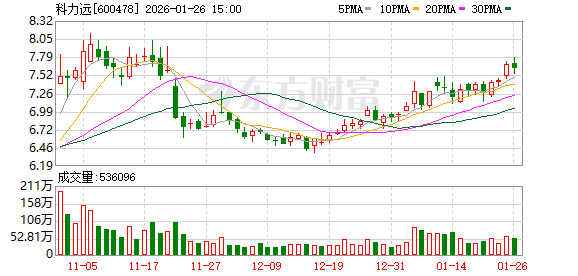
证券日报网讯 1月26日,科力远发布公告称,预计公司 2025 年年度实现归属于上市公司股东的净利润 13,500 万元到 15,800 万元,同比增长 72.76%到 102.20%。 (文章来源:证券日报) ...

储能业务成新引擎 科力远2025年归母净利润同比预增72.76%-102.20%
Zhong Zheng Wang· 2026-01-26 14:00
Core Viewpoint - Kolyuan (科力远) expects significant growth in net profit for 2025, indicating a fundamental improvement in its core business profitability and quality [1] Group 1: Financial Performance - The company anticipates a net profit attributable to shareholders of between 160 million to 183 million yuan for 2025, representing a year-on-year increase of 72.76% to 102.20% [1] - After accounting for equity incentive-related expenses, the net profit is projected to be between 135 million to 158 million yuan [1] - The net profit, excluding non-recurring gains and losses, is expected to be between 75 million to 98 million yuan, showing a substantial year-on-year growth of 1156.74% to 1542.15% [1] Group 2: Energy Storage Business - Kolyuan's energy storage business is entering a harvest period, leveraging a large energy storage ecological innovation consortium model [2] - The company plans to invest in independent energy storage stations through an energy storage industry fund, with an expected construction of approximately 4 GWh of independent energy storage stations in 2025 [2] - The Erdos Gushanliang 300MW/1200MWh independent energy storage station is expected to be operational by the end of December 2025, contributing approximately 400 million kWh of clean energy to the grid annually [2] Group 3: Strategic Initiatives - Kolyuan has reserved over 15 GWh of various energy storage projects for 2025, with around 10 GWh planned to commence construction in 2026, ensuring sufficient momentum for future performance growth [2] - The company, as a major initiator of the large energy storage ecological innovation consortium, has assisted in the selection of Baoding High-tech Industrial Development Zone as one of the first national zero-carbon parks, validating its core capabilities in technology and scenario innovation [3] - Kolyuan holds four major lithium mine resources, with a total of 400,000 tons of lithium carbonate equivalent, establishing an integrated layout from natural mines to terminal energy storage [3] Group 4: Traditional Business Stability - The traditional business segment continues to play a stabilizing role, with steady sales growth in nickel battery core customers driving increases in nickel products, power batteries, and pole piece business [4] - The consumer battery business has also shown steady growth in revenue, contributing to an increase in gross profit [4] - The company is accelerating the development of key components for solid-state batteries and promoting the application of three-dimensional porous copper-manganese alloy in solid oxide fuel cells (SOFC) [4]