Internet

Search documents
Billionaire Bill Ackman Has 56% of His Hedge Fund's $16.5 Billion Portfolio Invested in 3 Outstanding Stocks
The Motley Fool· 2026-01-19 20:08
Core Viewpoint - Bill Ackman's investment strategy through Pershing Square Capital shows strong performance in 2025, with potential for continued success in 2026, focusing on building a diversified holding company similar to Berkshire Hathaway [1][2]. Group 1: Alphabet Inc. - Ackman's investment in Alphabet represents 22.6% of his marketable equities, driven by the belief that the market undervalues its AI capabilities and overestimates competition from AI chatbots [3][4]. - Alphabet's Google Cloud revenue grew by 34% year-over-year in Q3, with expanding operating margins and strong adoption of its AI accelerators, TPUs [4][5]. - The company has made significant advancements with its Gemini AI model, leading to a 15% growth in Google Search revenue in Q3 2025, and a partnership with Apple to enhance Siri, expected to generate billions in revenue [5][6]. Group 2: Brookfield Corp. - Brookfield Corp. accounts for 17.7% of Ackman's marketable equities, primarily driven by its subsidiary Brookfield Asset Management, which constitutes about 75% of its value [7][9]. - The company reported $154 million in net carried interest in Q3, a significant increase from $61 million year-over-year, with expectations of $25 billion in net carried interest over the next decade [10][11]. - Brookfield's Wealth Solutions insurance business is projected to double its assets in five years, with a 15% return on equity, leading to strong earnings growth [11]. Group 3: Uber Technologies - Uber Technologies makes up 15.5% of Ackman's marketable equities, facing concerns about competition from autonomous vehicles but positioned as a key partner for self-driving initiatives [12][13]. - The company has seen a 17% increase in monthly active users and a 4% rise in trips per user in Q3, contributing to strong top-line growth and 33% adjusted EBITDA growth [15][16]. - Despite significant investments in future technologies, Uber's stock is valued at around 22 times its trailing adjusted EBITDA, indicating strong growth potential [16].




粤企领跑扩招涨薪潮,腾讯、比亚迪、研祥如何招才引智
Nan Fang Du Shi Bao· 2026-01-19 13:17
以上内容由AI大模型生成,仅供参考 "稳就业"关乎"稳经济"的大局。2025年12月,中央经济工作会议在部署2026年经济工作时明确要求,实 施稳岗扩容提质行动,切实稳定高校毕业生、农民工等重点群体就业。开年以来,广东作为"我国经济 第一大省",率先把稳岗扩容提质的要求落到企业用工与人才机制上,一批粤企在校招、实习、技能岗 位补充等方面持续加力,成为稳就业的重要承接端。 从用工市场信号看,扩招与涨薪正在同步出现。据不完全统计,2025年,比亚迪(002594)新发"AI infra算法工程师"岗位平均月薪上涨超过36%;大疆"工业设计师"岗位平均月薪上涨20%,腾讯"AI 产品 经理"岗位平均月薪上涨5.56%。岗位与薪酬变化背后,指向同一条主线:新技术驱动的岗位需求加速 释放,企业在关键岗位上提升吸引力,同时通过更系统的人才培养与发展通道提高留用率、提升就业质 量。 腾讯滨海总部大厦。 近日,南都湾财社记者采访了腾讯、比亚迪、研祥集团三家企业,发现"稳就业"的落点正在发生迁移: 从"多招人"转向"招对人、育好人、留住人"。腾讯作为平台企业,将扩招重点更多压在AI等新兴业务 上;比亚迪作为制造业龙头,在产业链 ...


If I Could Only Buy 1 Stock Right Now, This Would Be It
Yahoo Finance· 2026-01-19 12:30
Alphabet (GOOG) (GOOGL), the parent company of Google, didn’t just come to the spotlight because of artificial intelligence (AI). In fact, Google has been using AI and machine learning long before AI skyrocketed to mainstream prominence. Although AI has boosted Alphabet’s game, the company is built on exceptionally strong fundamentals. It achieved double-digit revenue growth due to its Search dominance, generated significant free cash flow, and maintained operating margins that surpassed most large-cap pee ...

【股评】大好机遇前 散户冷静入市很重要
Sou Hu Cai Jing· 2026-01-19 11:02
Market Overview - On January 19, the three major indices showed mixed performance, with the Shanghai Composite Index rising by 0.29% to close at 4114.00 points, while the Shenzhen Component Index increased by 0.09% to 14294.05 points. The ChiNext Index fell by 0.70% to 3337.61 points. The total trading volume was 2.71 trillion yuan, a decrease of 317.9 billion yuan compared to the previous trading day [1][3]. Sector Performance - The electric grid equipment sector experienced a significant surge, while the precious metals sector also showed strength. The tourism sector gained momentum, and there was a partial recovery in the commercial aerospace concept. Other sectors such as Hainan, military industry, chemicals, oil and gas, and robotics also performed well during the trading session [3]. - Conversely, the AI application sector declined, with the internet, cultural media, and AI healthcare sectors experiencing the largest drops. Individual stocks such as Haige Communication faced continuous trading halts, and several stocks including Sanwei Communication and Vision China also hit their daily limits [3]. Notable Stocks - Fenglong Co., Ltd. resumed trading and hit the daily limit for the 14th consecutive trading day, with a cumulative increase of 280% since December 17, 2025 [4]. Market Sentiment - The current stock market environment is described as a test of courage, with notable commentary on the volatility and unpredictability of stock performance. There is a call for caution among retail investors, especially regarding the use of AI models for stock selection, which is viewed as risky [6][17][18].

迅雷前CEO 陈磊 狗血男女总裁案 套现两亿携情妇董鳕跑路美国 在任期间神操作震碎三观!
Sou Hu Cai Jing· 2026-01-19 04:18
Core Viewpoint - The former CEO of Xunlei, Chen Lei, is facing legal action for allegedly embezzling approximately 200 million yuan through a shell company named "Xing Rong He" during his tenure, while also engaging in unethical personal relationships within the company [8][19][21]. Group 1: Embezzlement and Misconduct - Chen Lei utilized a shell company, Xing Rong He, to siphon off nearly 200 million yuan from Xunlei under the guise of service fees [13][19]. - He was reported to have transferred 20 million yuan just 72 hours before his dismissal from the company [19]. - Chen Lei's actions included hiring relatives of his mistress, Dong Xue, as key personnel in the company, including a 60-year-old farmer as a technical consultant for 2 million yuan [8][9][13]. Group 2: Personal Relationships and Company Culture - Chen Lei had an extramarital affair with Dong Xue, a former senior vice president at Xunlei, and they reportedly had a child together [9][19]. - The couple's relationship was an open secret within the company, leading to dissatisfaction among the board members [9][19]. - Chen Lei's management style was described as authoritarian, with reports of him forcing employees to sing praises at company events and creating a personal kingdom within the organization [13][19]. Group 3: Legal Proceedings and Company Recovery - Following the discovery of Chen Lei's misconduct, Xunlei's board dismissed him and initiated legal proceedings to recover the embezzled funds [19]. - Xunlei has since shown signs of recovery, with a reported revenue increase of 57.7% in Q3 of the previous year [9][19]. - The company has reiterated its commitment to combating corruption and ensuring accountability within its ranks [9][19].


天价挖来OpenAI大神,腾讯还能后来居上吗
3 6 Ke· 2026-01-19 03:41
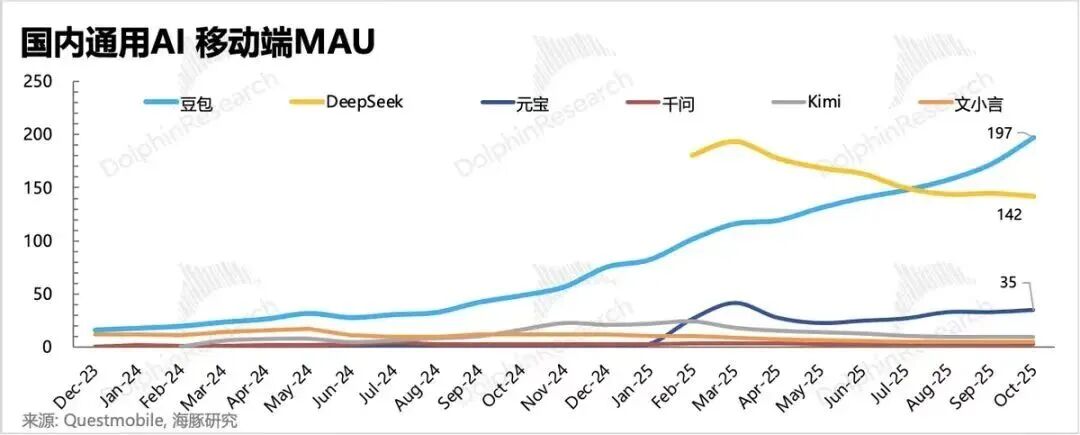
Core Insights - The article discusses Tencent's position in the AI landscape, highlighting its slower pace compared to competitors like ByteDance and Alibaba, which have made significant strides in AI applications and user engagement [1][2][4]. Group 1: Tencent's AI Strategy - Tencent's AI application "Tencent Yuanbao" has approximately 200,000 to 300,000 daily active users as of early March 2025, significantly lower than ByteDance's "Doubao," which is nearing 30 million [2]. - Historically, Tencent's AI focus has been on application-level optimization rather than foundational large models, which some view as a strategic misstep [5]. - Tencent's internal discussions reveal a cautious approach to investing heavily in large models, with a belief that current AI products have not yet disrupted its core social and content business [4][5]. Group 2: Competitive Landscape - Investment analysts note that leading U.S. companies are investing about ten times more in AI than their Chinese counterparts, making the AI opportunities for Chinese firms appear limited [4]. - The competition in AI is evolving from a focus on model parameters to a more complex battle involving capital efficiency, infrastructure, and user engagement [13]. Group 3: Talent Acquisition and Investment - Tencent has recently intensified its talent acquisition efforts, hiring top researchers from ByteDance and offering competitive salaries to attract graduates [11]. - From Q3 2024 to Q2 2025, Tencent's capital expenditure reached 102.3 billion yuan, a 178% increase year-on-year, indicating a strong commitment to AI investment [11]. Group 4: Application and User Engagement - Tencent has released over 30 new models under its "Hunyuan" model, applied across more than 900 internal business scenarios, demonstrating ongoing application development [12]. - Successful application of AI tools is linked to user scale and market foundation, with Tencent focusing on creating a "social × service × AI" ecosystem to enhance user engagement [9][12]. Group 5: Future Outlook - The article suggests that Tencent's unique ecosystem, which integrates communication, social, content, payment, and business, positions it well for future AI developments [14]. - The competition among companies like Tencent, ByteDance, and Alibaba is framed as a race to find sustainable business models in AI, with Tencent's strategy emphasizing the evolution of its existing ecosystem [9][14].
中国互联网 - 2026 展望:中国 AI 之路更光明-China Internet -2026 Outlook China's AI Path Is Brighter
2026-01-19 02:32
Summary of the Conference Call on China's Internet and AI Industry Outlook for 2026 Industry Overview - The focus is on the **China Internet** industry, particularly the **AI sector** and its growth prospects in 2026, influenced by both supply and demand factors [1][2]. Key Insights AI Growth Prospects - **Supply Improvements**: Anticipated import of Nvidia H200 chips for training and expansion of domestic chip production capacity for inferencing are expected to enhance AI capabilities [2][4]. - **Demand Surge**: A breakthrough in agentic capabilities is projected to drive a significant increase in consumer (2C) adoption. Positive signals from the latest China CIO Surveys indicate a first-time uptick in enterprise (2B) spending since the second half of 2021 [2][4]. Overseas Expansion - As the domestic market faces deflationary pressures and rising competition, overseas expansion is becoming crucial. Various segments such as gaming (Tencent, NetEase), cross-border e-commerce (PDD, Alibaba), and cloud services (Alibaba, Tencent) are highlighted as key areas for growth [3][4]. - It is estimated that overseas markets contributed over **10%** of revenue for Chinese internet companies in 2025, with expectations for further growth in the next 2-3 years [3][4]. Risks and Challenges - The macroeconomic climate, competition, regulatory changes, and geopolitical tensions are identified as significant risks. A decline in consumption since Q4 2025 is impacting industry revenue growth across e-commerce, local services, and advertising [4]. - Competition in food delivery and quick commerce remains intense, particularly following the State Council's anti-involution investigation. ByteDance's continued disruption across various sectors is also noted [4]. Investment Recommendations Overweight (OW) Recommendations - **Tencent**: Identified as a top pick due to resilient core businesses and strong 2C AI applications [5]. - **Alibaba (BABA)**: Considered the best AI enabler with cloud services as a key growth catalyst [5]. - **PDD**: Valued for its attractive pricing and potential breakeven of Temu in 2026 [5]. - **TME**: Noted for its resilient business model and potential upside from the proposed Ximalaya acquisition [5]. Underweight (UW) / Equal Weight (EW) Recommendations - **JD (UW)**: Facing operational de-leverage and high investments in new businesses [5]. - **BILI (EW)**: Low visibility in gaming and high valuations are concerns [5]. - **Kuaishou (EW)**: Core business performance is lukewarm, with current valuations reflecting this [5]. - **BIDU (EW)**: While Kunlunxin is a near-term catalyst, core business challenges persist [5]. Additional Insights - The report emphasizes the importance of prudent capital expenditure in AI applications to mitigate bubble risks, suggesting a focus on applications that yield better returns on invested capital (ROIC) [2][4]. - The overall industry view remains attractive, with a strong emphasis on the potential for growth in AI and overseas markets despite existing challenges [7]. This summary encapsulates the key points from the conference call, providing a comprehensive overview of the current state and future outlook of the China Internet and AI industry.
布局中国互联网:AI 投资关键年与核心定位防守战;围绕每股收益兑现、叙事转变与股东回报的个股精选-Navigating China Internet_ Pivotal year for AI investments & Defending core positioning; Stock picking around EPS delivery, Narrative changes & Shareholder returns
2026-01-19 02:32
Summary of Key Points from the Conference Call Industry Overview - The conference call focuses on the **China Internet** sector, particularly the competitive landscape involving major players like **ByteDance**, **Alibaba**, and **Tencent**. It highlights the strategic pivots expected in 2026 due to advancements in AI technologies and changing market dynamics. Core Insights and Arguments 1. **Strategic Pivot Year**: 2026 is anticipated to be a pivotal year for China internet mega-caps, driven by increased investments in AI technologies and efforts to defend core market positions. ByteDance's advancements in AI and eCommerce are significant factors prompting these changes [1][11][42]. 2. **ByteDance's Market Position**: ByteDance has achieved notable success, being the top in daily token consumption and having the most used consumer-facing app, Doubao, with over 100 million daily active users (DAU). Its Douyin eCommerce GMV is projected to grow over 30% in 2025, positioning it to surpass Pinduoduo in 2026 [11][43]. 3. **AI Investment Themes**: Six key AI themes for 2026 include: - Shift towards ROI-based advertising and new marketing strategies. - Breakthroughs in AI models focusing on multi-modal and cost-efficient architectures. - Proliferation of consumer-facing AI assistants. - Competition for next-generation chips impacting AI model performance. - Expansion into global markets with a mix of open and closed-source models. - Increased demand for AI inference driving cloud revenue growth [2][15]. 4. **Stock Recommendations**: - **Alibaba** and **Tencent** are viewed as strong long-term investments due to their AI capabilities. - **PDD** is highlighted as a key mega-cap idea for 2026, benefiting from a favorable risk-reward profile and strong user engagement [3][16][20]. 5. **Sub-sector Preferences**: The updated preference ranking includes: - **Cloud & Data Centers** (1) - **Games & Entertainment** (2) - **AI Models** (newly added) [21]. Additional Important Insights 1. **Regulatory Environment**: The call discusses the regulatory landscape, indicating that recent investigations into the food delivery sector are not indicative of a return to stringent regulatory measures but rather a push for healthy competition [32]. 2. **Market Valuations**: Current valuations for China internet stocks are noted, with the sector trading at a median 2026E P/E of 18X, which is competitive compared to US peers [13][26]. 3. **Food Delivery Competition**: The competitive landscape in food delivery is expected to normalize, with significant losses narrowing for Alibaba and JD as they adapt to new regulations and market conditions [30][32]. 4. **AI Model Competition**: The competition in AI models is expected to extend towards multi-modal capabilities, with Alibaba positioned as a leader in this space [22][43]. This summary encapsulates the key points discussed in the conference call, providing insights into the strategic direction of the China internet sector and the implications for major players.


阿里AI Agent落地!生态闭环引爆港股互联网估值切换
Xin Lang Cai Jing· 2026-01-19 01:09
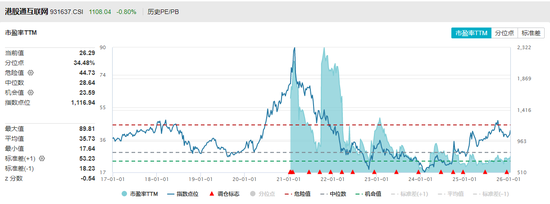
Core Viewpoint - The recent surge in A-share trading volume has led to a cooling market sentiment, transitioning into a phase of consolidation, which is viewed as a healthy adjustment. This is accompanied by a structural reallocation of liquidity from low-yield assets to equity markets, with the central bank indicating room for further monetary easing [1][16]. Group 1: Market Dynamics - The current adjustment in the A-share market is seen as a positive development, with a macro perspective indicating a shift of household savings from deposits and bonds to equity markets [1][16]. - The central bank's stance on potential interest rate cuts suggests a continued loose liquidity environment, which may drive funds towards the more attractive valuations and solid fundamentals of the Hong Kong stock market [1][16]. - A significant portion of the new capital entering the market is through ETFs, creating a positive feedback loop between capital flow and price discovery [1][16]. Group 2: Investment Opportunities in Hong Kong Stocks - The Hong Kong Internet ETF (513770) is highlighted as a noteworthy investment option, as it targets technology leaders and encompasses a robust ecosystem of businesses [1][17]. - The ETF includes major players like Alibaba and Alibaba Health, providing investors with an excellent pathway to capitalize on the current recovery in AI and internet sectors [2][17]. Group 3: Valuation and Growth Potential - The Hong Kong Internet sector shows compelling valuation metrics, with the Hong Kong Internet Index trading at a PE ratio of approximately 26 times, compared to 42 times for the Nasdaq and 43 times for the A-share ChiNext index [3][20]. - This valuation gap presents a high-risk-reward opportunity for investors seeking growth or avoiding high valuations [5][20]. Group 4: AI and Alibaba's Role - Alibaba's recent launch of the Qianwen Task Assistant 1.0 is seen as a pivotal upgrade, integrating various core services and marking a transition into the "AI Agent era" [5][26]. - The integration of AI technology into Alibaba's ecosystem is expected to enhance user experience and operational efficiency, positioning the company as a key player in the AI-driven market [5][28]. - The anticipated growth in AI applications is projected to significantly impact the digital landscape, with estimates suggesting that 60%-70% of routine tasks will be handled by AI in the next two years [5][28]. Group 5: Competitive Landscape - The competition for AI-driven market share is intensifying, with Alibaba's advancements posing challenges to Tencent and other players, prompting them to enhance their AI offerings [14][31]. - The market is expected to evolve from being driven by a single player (Alibaba) to a more diversified landscape with multiple leading companies contributing to growth [14][31]. - The Hong Kong Internet ETF provides comprehensive coverage of major players, mitigating individual stock volatility while capturing the full spectrum of industry growth [14][31].
KraneShares CSI China Internet ETF (KWEB US) - Investment Proposition
ETF Strategy· 2026-01-18 22:58
Core Viewpoint - KraneShares CSI China Internet ETF (KWEB) provides targeted exposure to China's internet and platform-based businesses, focusing on sectors such as e-commerce, online entertainment, search, fintech, and cloud services, benefiting from network effects and asset-light business models [1] Group 1: Investment Proposition - The portfolio is rules-driven, emphasizing liquid names across multiple venues, and typically reflects a growth orientation with significant sensitivity to domestic consumption, advertising cycles, and regulatory policy [1] - The fund can experience pronounced upside during risk-on phases characterized by improving sentiment, easier financial conditions, and supportive reforms [1] - Conversely, the fund may face headwinds from policy tightening, slowing demand, or US-dollar strength [1] Group 2: Use Cases and Investor Suitability - KWEB can serve as a satellite growth sleeve within China or emerging markets equity, factor completion for innovation exposure, or a thematic mandate for digital adoption [1] - Suitable investors include high-conviction allocators seeking concentrated participation in China's consumer-tech ecosystem and barbell users pairing cyclical value or commodities with platform growth [1] Group 3: Risk Factors - Key risks to monitor include regulatory and business-model uncertainty, particularly regarding evolving data, fintech, and content standards that can materially affect constituent fundamentals and valuation multiples [1]