
养老服务

Search documents
广西发布“暖心民政”三年行动计划
Ren Min Ri Bao· 2025-09-24 23:09
Core Points - The "Warm-hearted Civil Affairs" three-year action plan (2025-2027) was released in Guangxi, outlining 22 key policy measures aimed at addressing urgent social issues and improving the welfare of vulnerable groups [1][2] - The plan emphasizes seven focal areas and seven actions, including addressing population aging, enhancing social assistance systems, improving child welfare, and leveraging social forces for community support [1][2] Group 1 - The plan aims to implement the national strategy for actively addressing population aging, launching the "Eight桂Elderly Care" initiative [1][2] - It focuses on establishing a tiered social assistance system through the "'Rescue' Nearby" action [1][2] - The initiative includes enhancing child welfare with the "Hand in Hand 'Child' Action" [1][2] Group 2 - The plan aims to meet basic social service needs through the "Caring Affairs" action [1][2] - It seeks to mobilize social forces with the "Good Deeds in Eight桂" action [1][2] - The plan supports rural revitalization through the "'Famous' Memory of Hometown" action [1][2] Group 3 - The action plan incorporates artificial intelligence applications with the "Smart 'Benefit' Civil Affairs" initiative [1][2] - In 2024, Guangxi is projected to have 9.81 million residents aged 60 and above, highlighting the growing demand for elder care services [2] - The region has established over 9,400 community day care centers and 721 elderly meal service points, ensuring comprehensive coverage of elderly care services [2] Group 4 - Guangxi plans to increase the supply of inclusive elderly care services, developing over 200 community embedded elderly care facilities and 400 rural service stations [2] - By the end of this year, electronic consumption vouchers will be issued to elderly individuals with moderate to severe disabilities to alleviate their financial burdens [2] - A total of 43.15 billion yuan will be allocated from central and regional funds to support the "Warm-hearted Civil Affairs" action plan [2]
“健康护航 魅力养老” 中国老龄事业发展基金会魅力老人行动项目在江苏泰州正式启动
Sou Hu Wang· 2025-09-24 10:16
Core Viewpoint - The "Charming Elderly Action" project initiated by the China Aging Development Foundation aims to enhance the health and quality of life for the elderly, aligning with national strategies to address population aging [6][12]. Group 1: Project Overview - The project focuses on building an innovative community elderly health service system characterized by "government guidance + public operation + community collaboration" [6][10]. - The project was launched in the Zhongrun Community Health Station in Taizhou, Jiangsu Province, marking a significant step towards high-quality development in local aging services [6][10]. Group 2: Implementation and Activities - During the launch, various activities such as health experiences, traditional Chinese medicine consultations, and cultural interactions were conducted to integrate health and culture into elderly services [3]. - The project aims to transform the concept of "Charming Elderly" into tangible and experiential community services, receiving positive feedback from elderly participants [3]. Group 3: Leadership Insights - The chairman of the foundation emphasized the importance of addressing the aging population as a national strategy and highlighted the foundation's commitment to serving the elderly [6]. - Three key requirements were outlined for the project's success: activating "silver resources" through community volunteers, enhancing collaborative efforts among various stakeholders, and maintaining a focus on public welfare [6]. Group 4: Local Government Support - The president of the Taizhou Aging Association noted the significant achievements in local elderly services and emphasized the importance of collaboration with the foundation to address service gaps [8]. - Local officials were encouraged to actively supervise and support the project's implementation to ensure effective service delivery [8]. Group 5: Future Plans - The foundation plans to continuously monitor and optimize project operations to ensure sustainable development and provide elderly individuals with convenient services [12]. - The project aims to create a replicable local model that contributes to the broader aging services landscape in China [12].


聚焦养老托育,如何激活“一老一小”消费新空间?
Xin Hua She· 2025-09-24 09:20
Group 1: Silver Economy and Consumer Trends - The "silver economy" is a significant driver for improving livelihoods and transforming consumption patterns, with over 310 million people aged 60 and above in China, leading to a booming market for senior services [1] - The silver economy is projected to exceed 30 trillion yuan by 2035, indicating substantial growth potential in this sector [1] - Recent policies aim to enhance service supply for the elderly, focusing on training for caregivers and supporting the construction of facilities in culture, tourism, and elderly care [1][5] Group 2: Innovations in Elderly Services - Various regions are implementing tailored strategies to improve elderly service offerings, such as Zhejiang's encouragement of professional elderly care institutions and Henan's development of smart elderly service networks [1] - Didi Chuxing has launched an "elderly version" app and a priority ride service for seniors, providing over 200,000 priority ride requests for medical visits by August 2023 [2] Group 3: Childcare Services and Market Potential - The childcare market is also expanding, with nearly 30 million children under three years old, and initiatives are underway to enhance the inclusive childcare service system [3] - The establishment of community-based childcare services, such as the "Baby House" in Yinchuan, is part of a broader effort to provide accessible and quality childcare [3][4] Group 4: Policy Support and Future Outlook - The government is focusing on developing a comprehensive service network for both elderly and childcare services, with recent policies promoting the construction of community-based facilities [5] - The shift towards service consumption in elderly and childcare sectors is expected to play a crucial role in driving economic growth as consumer structures evolve [5]
聚焦养老托育 如何激活“一老一小”消费新空间?
Xin Hua Wang· 2025-09-24 09:18
Group 1 - The core viewpoint emphasizes the growing demand for services catering to the elderly population, which is projected to exceed 30 trillion yuan by 2035, driven by over 310 million individuals aged 60 and above in China [1][5] - The government has introduced policies aimed at enhancing service supply for the elderly, including training for caregivers and support for the construction of relevant facilities in sectors like culture, tourism, and healthcare [1][5] - Various regions are implementing tailored strategies to improve elderly care services, such as Zhejiang's encouragement of professional service institutions and Henan's development of a smart elderly care network [1][4] Group 2 - The "Didi Elderly Version" app has been launched to meet the transportation needs of older adults, featuring user-friendly options like large fonts and one-click booking [1][2] - Didi has provided over 200,000 priority ride services for elderly patients visiting hospitals, showcasing a commitment to addressing the unique challenges faced by this demographic [2] - The community-based childcare services are expanding, with over 5.7 million childcare spots created for children under three years old, reflecting a significant investment in early childhood education [3][4] Group 3 - The government is focusing on developing a comprehensive service ecosystem for both the elderly and young children, with policies aimed at enhancing community-based services and integrating childcare facilities into urban planning [4][5] - The emphasis on "one old and one young" consumption highlights the potential for service consumption to become a leading driver of economic growth, as the structure of consumer spending continues to evolve [5]
瞄准世界技能大赛,11名“北京工匠”进入国家集训队
Xin Jing Bao· 2025-09-24 07:00
Group 1 - The third National Skills Competition concluded on September 23, showcasing the talents of skilled individuals across the country, with 105 participants from Beijing, resulting in 47 awards, including 2 silver and 1 bronze [1] - Eleven award-winning participants from Beijing will enter the national training team for the 48th World Skills Competition to be held in Shanghai next year [1] Group 2 - A teacher from Beijing Information Vocational Technology College participated in the blockchain technology competition to set an example for students, emphasizing the importance of practical experience in teaching [2] - The teacher highlighted the growing relevance of blockchain and artificial intelligence in education, with new courses being introduced in recent years [2] Group 3 - A participant in the elderly care sector expressed satisfaction with choosing this growing industry, noting the increasing professional requirements and the positive changes in public perception of elderly care facilities [3] - The participant has been involved in the elderly care industry for 13 years and has witnessed significant changes in service standards and expectations [3] Group 4 - A unique partnership formed between two competitors in the gardening project, who quickly adapted to each other's working styles and successfully completed their tasks despite a shortened competition timeframe [4] - The competitors' experience highlighted the physical demands of the gardening project and the personal growth achieved through participation [4]
内地唯一!远洋椿萱茂两项目先后入选《广东院舍照顾服务计划》
Xin Lang Zheng Quan· 2025-09-24 05:05
Core Insights - Chuanxuanmou (Guangzhou Kelin Road) Elderly Home has been recognized as a service provider under the Guangdong Residential Care Service Program, marking it as the only elderly care brand in mainland China with two projects included in this program [1][2][3] - The program aims to provide financial assistance for eligible Hong Kong seniors residing in mainland China, covering accommodation, nursing services, personal care, and basic medical expenses [2][3] Company Overview - The elderly home is located in the core area of Tianhe District, offering 367 beds and a comprehensive medical and nursing service system [3][5] - It employs a three-tier diagnosis and treatment mechanism and has a team of general practitioners, nurses, and rehabilitation therapists to ensure comprehensive medical support [3] Service Features - The facility includes a dedicated area for dementia care, utilizing internationally recognized therapeutic systems to effectively delay cognitive decline through non-pharmacological interventions [3][5] - The home is strategically located within a half-hour drive of several medical institutions that accept Hong Kong medical vouchers, enhancing service accessibility for Hong Kong seniors [5] Market Position - The elderly home has received high recognition from Hong Kong and Macau seniors, with dozens already residing there under the Guangdong Residential Care Service Program [5] - As cross-border elderly care becomes a preferred choice for more seniors from Hong Kong and Macau, Chuanxuanmou is positioned to innovate and integrate high-quality elderly care services in the Greater Bay Area [5]
阳光人家亮相第八届中国养老行业陆家嘴峰会 共话跨界协同与生态共建新路径
智通财经网· 2025-09-24 03:29
Core Insights - The eighth China Elderly Care Industry Lujiazui Summit was held in Shanghai, focusing on the current state and development bottlenecks of the industry, as well as exploring new development paths in the context of global population aging and the booming silver economy in China [1] Group 1: Industry Trends - The elderly care industry is facing unprecedented opportunities and challenges due to the increasing aging trend, with a focus on cross-industry collaboration and resource integration to enhance service quality and efficiency [3] - The Sunshine Home Sheshan Health Community has established strategic partnerships with 12 institutions, including hospitals and educational organizations, to create a comprehensive elderly care service ecosystem [3] Group 2: Community Features - The Sunshine Home Sheshan Health Community is positioned as a benchmark project in high-quality elderly care, featuring a design philosophy that emphasizes natural and cultural elements, with a 45% green coverage rate and a high concentration of negative oxygen ions [4] - The community offers a "Five Enjoyments and Four Joys" service model, providing 57 basic and 110 value-added services that incorporate local cultural elements to enhance the living experience for the elderly [6] Group 3: Future Directions - The community's leadership emphasizes that elderly care is not just about services but also about rediscovering the value of life, with plans to continue deepening cross-industry collaboration and upgrading industry standards to provide more solutions for China's aging society [8]


昆明围绕群众急难愁盼 协同联动解民忧
Zhong Yang Ji Wei Guo Jia Jian Wei Wang Zhan· 2025-09-24 01:27
此前,宜良县纪委监委工作人员在下沉监督时发现该养老服务中心存在助浴间、康复室等功能区不够完 善,家庭照护床位不足等问题。该县纪委监委随即与民政等相关部门沟通对接,并采取"蹲点监督"方式 推动该养老服务中心完善功能区并新增家庭照护床位530张,解决了该中心设备不足等难题。 "我们着力构建'党政主导、纪委监委监督、部门主责'的工作体系,深化市、县、乡三级联动机制,提 升整体监督质效。"该市纪委监委相关负责同志介绍,昆明市纪委监委充分发挥监督专责作用,由对口 联系监督检查室统筹、驻市民政局纪检监察组制定印发昆明市民生保障监督检查工作清单,细化老年群 体惠民政策落实等4个方面监督重点,进一步提升监督的针对性、有效性,推动职能部门开展系统整 治。 "现在康复室功能更全,可以跟着治疗师做康复训练了,方便了很多。"近日,面对云南省昆明市宜良县 纪委监委工作人员的回访,正在南羊街道综合养老服务中心接受康复治疗的李奶奶说起了身边的变化。 为进一步巩固整治成效,该市纪委监委紧盯养老机构服务等方面工作,督促民政、人社等部门开展风险 隐患排查,以有力监督推动职能部门建立问题清单,制定整改措施并限时完成,确保问题整改到位。该 市纪委监 ...
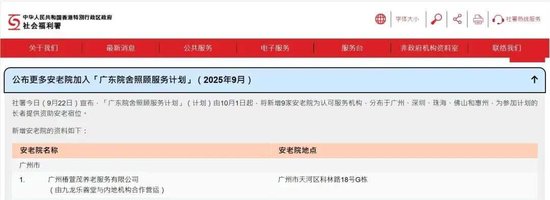
跨境养老又有新进展!广东新增9家养老机构供港人选择
Nan Fang Du Shi Bao· 2025-09-23 13:32
南都讯 记者曾俊豪 通讯员莫冠婷 邹国颐 近日,记者从广东省民政厅获悉,"广东院舍照顾服务计 划"(以下简称"计划")自2025年10月1日起,将新增9家养老机构为认可服务机构。 连同现有15家养老机构,参与该计划的养老机构总数将增至24家,分布于广州、深圳、珠海、佛山、惠 州、中山、江门、肇庆8个粤港澳大湾区内地城市,为香港长者跨境照顾服务提供更多选择。 香港特别行政区政府社会福利署公布最新加入成为"广东院舍照顾服务计划"认可服务机构名单。 记者从香港特别行政区政府社会福利署官网了解到,被纳入计划内的认可服务机构须为参加计划的香港 长者提供一套策划及协调完善的院舍照顾服务,并采用跨专业的方法,包括综合医疗、护理、营养、个 人照顾、复康服务及社会工作服务等。参与认可服务机构的长者在入住后无须再支付机构的食宿费用、 护理服务、个人照顾费用以及基本医疗费用。长者须自费项目包括消耗品,例如尿片、伤口敷料等。认 可服务机构会要求长者在入住前进行身体检查,有关费用由长者自行承担。 据悉,2023年,广东省民政厅与香港特别行政区政府劳工及福利局签订《关于共同推进粤港两地养老合 作的备忘录》《有关扩展"广东院舍照顾服务计划 ...
潍坊不断优化养老服务供给格局,以三项机制管好用好养老补贴资金
Qi Lu Wan Bao Wang· 2025-09-23 11:24
Core Insights - The city of Weifang has received a first batch of financial subsidies amounting to 49.26 million yuan from central and provincial governments to support elderly care services for moderately to severely disabled seniors [1][2] - The initiative aims to enhance care for disabled elderly individuals, stimulate consumption in elderly care services, and promote the development of the elderly care service system [1] Funding Distribution Mechanism - Weifang has established a funding sharing mechanism where municipal and county finances will jointly bear the costs of the elderly care service consumption subsidies [1] - The financial distribution plan has been developed based on the elderly population in the city, ensuring timely allocation of funds to various districts [2] Fund Management and Performance Monitoring - A comprehensive fund management mechanism has been implemented, utilizing a "pre-allocation and post-settlement" approach to ensure efficient fund distribution [2] - Performance monitoring and evaluation will be conducted to track the achievement of performance goals and budget execution, with a dual-monitoring system involving both civil affairs and finance departments [2] Departmental Coordination - Enhanced communication and information sharing between departments will be prioritized to ensure the effective implementation of the elderly care service consumption subsidy project [2] - The project will be coordinated with existing policies for vulnerable groups to prevent overlapping benefits and ensure smooth policy integration [2]