
交通运输业

Search documents
大国五年丨强国梦,从蓝图一步步走向现实
Xin Hua She· 2025-10-20 09:28
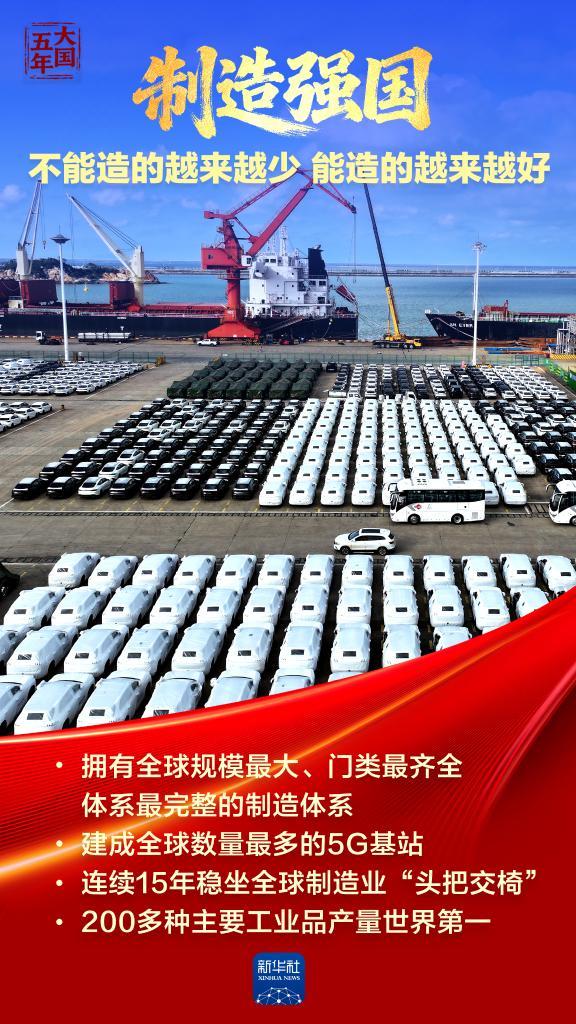
Group 1: Manufacturing Strength - China has the largest and most complete manufacturing system globally, maintaining its position as the world's leading manufacturing country for 15 consecutive years [2] - The country produces over 200 major industrial products with the highest output in the world [2] Group 2: Aerospace Achievements - The first Chinese space station "Tianhe" has been fully constructed and is operational [5] - The "Chang'e 6" mission achieved the world's first lunar sample return from the far side of the moon [5] - The "Zhurong" Mars rover successfully landed on Mars, marking multiple global firsts in manned spaceflight [5] Group 3: Transportation Infrastructure - The national comprehensive three-dimensional transportation network has a completion rate exceeding 90% [7] - China's high-speed rail operating mileage is twice that of all other countries combined [7] - The country ranks first in urban rail transit operating mileage [7] Group 4: Technological Innovation - China ranks first globally in the number of top 100 technology innovation clusters, with 26 clusters [11] - The contribution of the "new economy" to GDP has reached 18% [11] - The national comprehensive innovation capability ranking has improved to 10th place [11] Group 5: Education System - China has established the largest and highest quality education system, with a gross enrollment rate in preschool education reaching 92% [15] - The consolidation rate for compulsory education exceeds 95% [15] - The gross enrollment rate for higher education has reached 60.8% [15] Group 6: Cultural Influence - The number of registered museums in China has reached 7,046, and there are 3,248 public libraries [17] - Cultural products such as web dramas, online literature, and online games have gained significant influence overseas [17] Group 7: Maritime Economy - China's marine product output has ranked first globally for several consecutive years [19] - The national marine production value is expected to exceed 10 trillion yuan in 2024 [19] - The country accounts for approximately one-third of global shipping volume and container throughput [19] Group 8: Financial Sector - The total assets of the banking industry are nearly 470 trillion yuan, ranking first in the world [23] - China's foreign exchange reserves have maintained the world's largest scale for 20 consecutive years [23] - The stock and bond market sizes rank second globally, with advancements in green and digital finance [23]

10.17犀牛财经晚报:深圳水贝市场金饰克价突破1000元 多家银行开展长期不动户清理工作
Xi Niu Cai Jing· 2025-10-17 10:31
Group 1: Tax Revenue and Market Activity - The Ministry of Finance reported that stamp duty revenue for the first three quarters reached 314.2 billion yuan, a year-on-year increase of 34.5% [1] - Securities transaction stamp duty accounted for 144.8 billion yuan, showing a significant year-on-year growth of 103.4% [1] - In September, the number of newly opened margin trading accounts reached 205,400, marking a year-on-year increase of 288% [2] Group 2: Market Trends in Precious Metals - The gold price in Shenzhen's Shui Bei market surpassed 1,000 yuan per gram, reaching 1,006 yuan, up from approximately 796 yuan in early September [3] - Major jewelry brands, such as Chow Tai Fook, have adjusted their prices in response to rising gold prices, with their gold jewelry priced at 1,279 yuan per gram [3] - Lao Pu Gold announced a price increase for the third time this year, with many of its products currently out of stock [3] Group 3: Industry Developments in Battery Recycling - The market for battery recycling in China is expected to exceed 100 billion yuan, with a projected recovery volume of over 300,000 tons by 2024 [4] - The rapid growth of the electric vehicle industry is driving the demand for battery recycling [4] Group 4: Corporate Financial Performance - Pianzaihuang reported a 20.74% decline in net profit for the first three quarters, with revenue down 11.93% [13] - Shentong Technology experienced a remarkable 584.07% increase in net profit year-on-year, with revenue up 34.65% [14] - Ying Shi Network reported a 12.68% increase in net profit for the first three quarters, with revenue growth of 8.33% [15] - Tengjing Technology's net profit grew by 15% year-on-year, with a revenue increase of 28.11% [16] - Jinshiyao expects a net profit increase of 48.99% to 83.95% for the first three quarters [18] Group 5: Market Reactions and Stock Performance - The market saw a significant decline, with the ChiNext index dropping by 3.36% and nearly 4,800 stocks falling [19] - Defensive sectors, such as gas and banking, showed resilience, while several heavyweight stocks weakened [19]
构建交运央企ESG评价体系:聚焦绿色能源与低碳转型:——A股央企ESG评价体系白皮书系列报告之九
Shenwan Hongyuan Securities· 2025-10-17 08:40
Investment Rating - The report does not explicitly state an investment rating for the industry [4][7]. Core Insights - The report focuses on the construction of an ESG evaluation system for central enterprises in the transportation industry, emphasizing green energy and low-carbon transformation [4][11]. - The transportation industry is identified as a crucial support for sustainable development, with policies promoting green development goals during the "14th Five-Year Plan" period [8][11]. - The ESG evaluation system includes five categories of positive indicators and one negative indicator, with a total of 20 primary indicators and 54 secondary indicators [11][23]. Summary by Sections 1. ESG Policies for Transportation Central Enterprises - The report outlines the multi-dimensional ESG policy framework in the transportation sector, focusing on green low-carbon transformation and high-quality development [8][9]. - Key policies include promoting new energy vehicles and integrating transportation infrastructure with clean energy development [8][10]. 2. Construction of the ESG Evaluation System - The ESG evaluation system for transportation central enterprises adds four industry-specific indicators: "Green Transportation," "Safe Operations," "Safety Risk Management," and "Supply Chain Management" [11][19]. - The evaluation system is structured with five positive topics, including "Importance Assessment," "Environment," "Climate Change Response," "Social," and "Corporate Governance," with a total score of 100 points [11][12]. 3. Positive Indicators - The "Environmental" topic emphasizes ecological protection and circular economy, introducing the "Green Transportation" indicator with five primary and nine secondary indicators [13][14]. - The "Social" topic reflects the responsibilities of transportation enterprises, with four primary indicators and ten secondary indicators, including a new focus on "Safety Operations" [17][18]. - The "Governance" topic includes two new primary indicators: "Safety Risk Management" and "Supply Chain Management," with a total of five primary and fourteen secondary indicators [19][20]. 4. Negative Indicators - The negative indicator is related to "Illegal Violations or Penalties," with three secondary indicators assessing environmental, social, and governance aspects, deducting three points for each violation [23][24].
构建交运央企ESG评价体系:聚焦绿色能源与低碳转型
Shenwan Hongyuan Securities· 2025-10-17 07:44
Investment Rating - The report gives a positive outlook on the industry, indicating a "Look Favorably" investment rating for the transportation sector in the context of ESG evaluation [4][9]. Core Insights - The report emphasizes the importance of building an ESG evaluation system for central enterprises in the transportation sector, focusing on green energy and low-carbon transformation [4][10]. - It highlights the integration of new indicators specific to the transportation industry, including "Green Transportation," "Safe Operations," "Safety Risk Management," and "Supply Chain Management," enhancing the existing ESG evaluation framework [4][13]. - The report outlines a comprehensive evaluation system with 5 categories of positive indicators and 1 category of negative indicators, totaling 100 points for the evaluation [4][13]. Summary by Sections 1. Transportation Central Enterprises ESG Policies - The transportation sector is recognized as a crucial support for sustainable development, with policies focusing on green low-carbon transformation and high-quality development [10][11]. - The "14th Five-Year Plan for Modern Comprehensive Transportation System Development" aims to achieve carbon peak and carbon neutrality goals, emphasizing resource conservation and safety in operations [9][10]. 2. Building the ESG Evaluation System - The ESG evaluation system for transportation central enterprises includes 5 categories of positive indicators and 1 negative indicator, with a total of 20 primary indicators and 54 secondary indicators [4][13]. - The "Environmental Issues" category emphasizes ecological protection and circular economy, introducing specific indicators for "Green Transportation" [15][16]. - The "Social Issues" category reflects the responsibilities of transportation enterprises in society, with new indicators related to technology and safety [19][20]. - The "Governance Issues" category includes new indicators for "Safety Risk Management" and "Supply Chain Management," focusing on the governance structure and mechanisms [21][22]. 3. Evaluation Framework - The evaluation framework consists of various indicators across different categories, with specific scoring criteria for each indicator [28]. - The negative indicator for "Violations or Penalties" deducts points for any infractions in environmental, social, or governance aspects [25][26].
“人山人海”中呈现哪些特点
Jin Rong Shi Bao· 2025-10-15 01:25
Group 1: Travel Trends - The National Day and Mid-Autumn Festival holiday in 2025 saw a significant increase in domestic travel, with 888 million trips taken, an increase of 123 million compared to 2024 [1] - Total domestic travel expenditure reached 809 billion yuan, up 108.2 billion yuan from 2024 [1] - Self-driving trips became the primary mode of travel, accounting for 79.8% of total travel, with a 7.1% year-on-year increase in self-driving travelers [2] Group 2: Cross-Border Travel - Cross-border travel continued to rise, with 16.34 million people entering and exiting the country during the holiday, a 11.5% increase year-on-year [3] - The number of outbound trips by mainland residents reached 9.165 million, up 12.2% from the previous year [3] - The demand for long-distance and outbound travel surged, reflecting a shift in consumer preferences towards experiential travel [3] Group 3: Consumer Spending Patterns - Average spending per person during the holiday was 911 yuan, a slight decrease from 916 yuan in 2024, indicating a more rational approach to consumption [4] - Daily average spending showed a 1% increase year-on-year, while daily average per capita spending decreased by 13% [4] - Retail sales in related industries grew by 4.5% year-on-year, with goods and services consumption increasing by 3.9% and 7.6%, respectively [4] Group 4: Retail and Dining Insights - Retail sales growth varied by sector, with smart home appliances seeing a 14% increase due to trade-in subsidies, and organic food and "Guochao" fashion growing by 28% and 14%, respectively [5] - Dining and retail consumption showed moderate growth, with restaurant sales reflecting stronger trends compared to July and August [6] - Movie box office performance was relatively weak, contrasting with strong travel demand during the holiday [6]
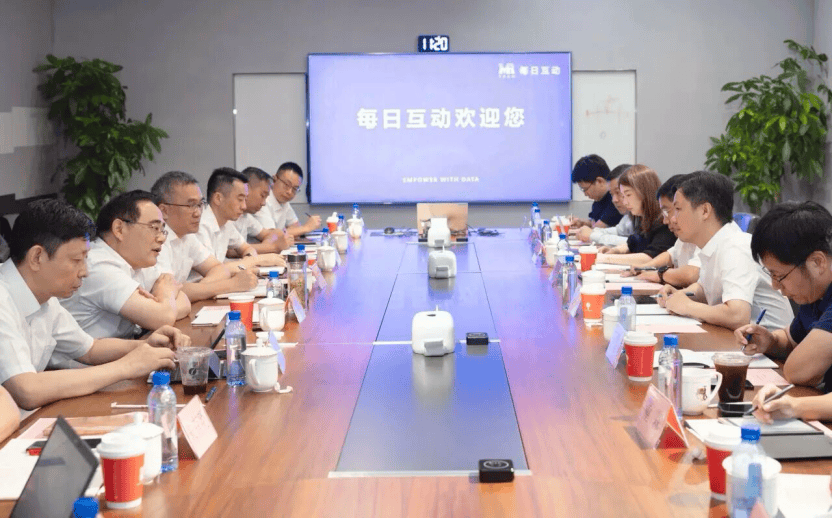
浙江省交通集团党委书记、董事长高浩孟赴每日互动考察交流
Sou Hu Cai Jing· 2025-10-13 08:49
Core Insights - Zhejiang Provincial Transportation Investment Group's leadership visited Daily Interaction to explore collaboration opportunities in data intelligence and AI applications in transportation [1][3][4] Group 1: Company Overview - Daily Interaction showcased its development history and achievements in data intelligence and AI applications during the visit [3] - The company has made significant progress in building platforms for public and industrial data value development [3] Group 2: Collaboration Achievements - The "Smart Green Wave" initiative, a collaboration between Daily Interaction and ecological partners, has successfully coordinated 1,538 kilometers of traffic, improving overall vehicle speed by over 20% and making Hangzhou the first "All-Domain Green Wave City" in China [3] - Since 2020, Daily Interaction has strategically invested in Zhejiang Gaoxin Technology Co., a subsidiary of Zhejiang Provincial Transportation Group, leading to deeper cooperation in business and research [3] Group 3: Future Directions - The Zhejiang Provincial Transportation Group aims to enhance public service quality and promote high-quality industrial development through deeper collaboration with leading AI companies [4] - Daily Interaction expresses its commitment to further explore smart transportation possibilities and drive industry development through data and innovation [4]

国证国际港股晨报-20251010
Guosen International· 2025-10-10 06:11
Group 1 - The core viewpoint of the report highlights that international gold prices have surpassed the $4000 per ounce mark, impacting various sectors positively, particularly the metals sector [2][4][6] - The Hong Kong stock market showed mixed results with the Hang Seng Index declining by 0.29%, while the Hang Seng Tech Index fell by 0.66%, indicating volatility in the market [2][3] - The report notes significant inflows from northbound funds, with a net inflow of HKD 30.43 billion into Hong Kong stocks, suggesting strong investor interest [2][3] Group 2 - The report provides insights into the software and internet industry, indicating a robust domestic tourism performance during the National Day holiday, with total tourism revenue reaching CNY 809 billion and a year-on-year increase of 15% in revenue per capita [7][8] - The report anticipates a stable growth rate of 10% for the overall tourism market in 2025, with expectations of a rebound in average spending per person in the second half of the year [7][10] - Online travel agencies (OTAs) like Ctrip and Qunar have shown strong performance, with significant increases in outbound travel orders and hotel bookings, reflecting a positive trend in consumer behavior [9][10]
国庆中秋假期国内出游总花费逾8000亿元
Qi Lu Wan Bao· 2025-10-10 02:58
Core Insights - The Ministry of Culture and Tourism reported that during the 8-day National Day and Mid-Autumn Festival holiday, there were 888 million domestic trips, an increase of 123 million trips compared to the 7-day holiday in 2024 [1] - Total domestic travel expenditure reached 809 billion yuan, which is an increase of 108.19 billion yuan compared to the 7-day holiday in 2024 [1] - The Ministry of Transport indicated that the total inter-regional mobility during the holiday period (October 1-8) was 2.433 billion trips, averaging 304 million trips per day, representing a year-on-year increase of 6.3% compared to the daily average during the 7-day holiday in 2024 [1]
外媒关注国庆中秋假期:文旅消费提振经济,文化输出辐射全球
Zhong Guo Xin Wen Wang· 2025-10-09 03:02
Core Insights - The 2025 National Day and Mid-Autumn Festival holiday has seen over 2 billion people traveling, highlighting a surge in tourism consumption and cultural exchange, with a notable rise in cross-border tourism [1][4] Group 1: Domestic Tourism Trends - Domestic tourism and consumption have shown positive growth, with county-level tourism orders increasing by 51% compared to the same period in 2024, and some areas like Jiangsu Dongtai and Zhejiang Haining seeing over 100% growth [2] - Traditional cultural activities have been widely celebrated across China, with events such as lantern riddles and traditional performances attracting significant participation [2] Group 2: Outbound Tourism Growth - Outbound tourism is also on the rise, with popular destinations including Hong Kong, Thailand, and Malaysia, indicating that Chinese tourists are contributing to both domestic and international markets [4] - The merging of the National Day and Mid-Autumn Festival into an eight-day holiday has led to increased travel bookings to 599 cities worldwide, with a full capacity of flights from China to Thailand during this peak travel period [4] Group 3: Cultural Exchange Initiatives - Cultural exchange activities have gained traction, with events celebrating the Mid-Autumn Festival being held in various countries, including Russia, the U.S., Japan, and Australia, showcasing Chinese traditions and customs [7]
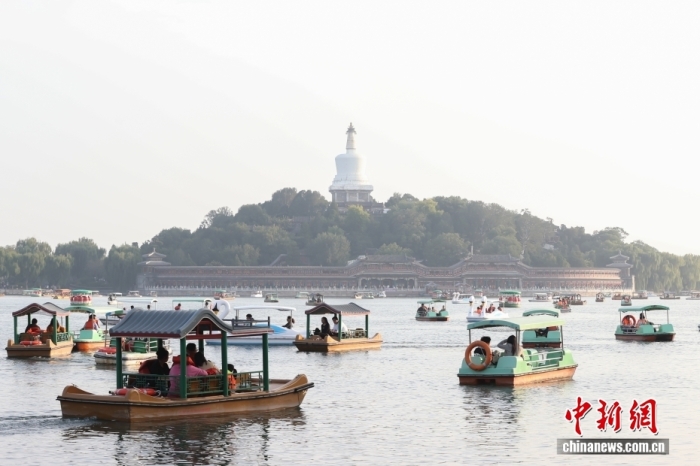
擦亮夜经济城市招牌
He Nan Ri Bao· 2025-10-08 23:27
Core Insights - The article emphasizes the importance of integrating local characteristics to create unique brand advantages in the development of night economies across different cities [1][2]. Group 1: Night Economy Development - The National Day and Mid-Autumn Festival holiday period showcased a surge in travel and consumer activity in China, highlighting the vibrant night economy [1]. - Cities like Luoyang and Zhengzhou have been recognized for their thriving night economies, as evidenced by the "Top 10 Nightlife Cities for National Day 2025" list released by Gaode [1]. - Luoyang is leveraging its rich historical and cultural heritage to develop unique night tourism experiences, such as night tours of the Longmen Grottoes and Luoyang Ancient City [1]. - Zhengzhou's nightlife features a blend of historical landmarks and modern attractions, creating a unique romantic atmosphere for visitors [1]. Group 2: Economic Implications - Night economy encompasses various sectors, including transportation, dining, tourism, and entertainment, serving as a significant driver for GDP growth [2]. - The article argues that night economy should not be limited to simple leisure activities but should reflect the broader status and prospects of the tertiary industry in cities [2]. - To enhance the night economy, cities need to move away from isolated efforts and instead focus on scientific planning and coordinated public services to create scale effects [2]. Group 3: Cultural and Creative Aspects - The article highlights the need for cities to maximize their historical and cultural resources to differentiate their night economies and enhance public life [3]. - Creative marketing and clear positioning are essential for cities to stand out and attract visitors to their night economies [3].