
数据库

Search documents
金融业分布式数据库“收敛”格局清晰 下半场比拼生态化与商业化
Zhong Guo Jing Ying Bao· 2025-07-29 15:08
Core Insights - The distributed database market in China is increasingly concentrating among leading vendors, with Ant Group's OceanBase, ZTE's Jin Zhuan Xin Ke, and Tencent Cloud accounting for 60% of the local deployment market share in 2024 [1][3] - The overall market size for distributed databases in the Chinese financial sector is projected to reach 2.037 billion RMB in 2024, with major players like Tencent Cloud, Alibaba Cloud, OceanBase, Huawei Cloud, and Jin Zhuan Xin Ke holding over 70% of the market [1][2] - IDC forecasts that by 2027, the number of active vendors in the distributed database market will drop to fewer than ten, leading to intensified competition among top players [1][3] Market Trends - The local deployment segment of the distributed database software market is expected to reach $190 million in 2024, growing by 16.2% year-on-year, while the public cloud market is projected to reach $240 million, with a year-on-year growth of 15.9% [2] - In the financial sector, local deployment accounts for 72.26% of the distributed database market, primarily serving large banks and various financial institutions [2][3] - The market is transitioning from "core replacement" to "full integration," with increasing barriers to entry accelerating market consolidation [1][3] Competitive Landscape - In the financial distributed database market, Tencent Cloud (21.3%), Alibaba Cloud (18.5%), OceanBase (18.3%), and Huawei Cloud (15.9%) are the top four players [3] - OceanBase leads the local deployment market with a 23.9% share, followed by Jin Zhuan Xin Ke (21.7%), Tencent Cloud (20.0%), and Huawei Cloud (19.2%) [3] - The competitive dynamics show that each major vendor has distinct strengths and strategies, with OceanBase focusing on large banks and expanding into foreign banks [5][6] Future Outlook - The market is expected to experience a "convergence" trend from 2025 to 2028, with increasing concentration among a few leading vendors [3][6] - The demand for unitized architecture and cross-cloud deployment capabilities is rising among large financial institutions, while smaller institutions prioritize lightweight and cost-effective solutions [6] - OceanBase is expanding its business beyond finance into sectors like telecommunications, energy, and healthcare, indicating a diversification strategy [8][9]


《数据库发展研究报告(2025年)》发布
Huan Qiu Wang Zi Xun· 2025-07-18 07:11
Core Insights - The importance of databases as a key carrier for data storage and computation is increasingly highlighted in the era of data elements, with significant advancements in new technologies, business models, and applications emerging globally [1] - The integration of artificial intelligence (AI) with databases is becoming more pronounced, transforming databases from mere data computation tools to essential foundations for AI applications [1] - The Chinese database industry is undergoing an unprecedented qualitative change, with rapid advancements in application innovation across key industries and sectors [1] Industry Overview - The "2025 Trusted Database Development Conference" featured the release of the "Database Development Research Report (2025)" and the "China Database Industry Map (2025)", which provide in-depth research on the global and Chinese database industry, technology, and application scenarios [2] - The global database market is entering a phase of high-quality development, with the Chinese database market continuing to expand in scale [1][2] - The report indicates that database technology is entering the AI-native era, with increasing depth of application in key industries and enhanced self-controllable capabilities [1] Product and Service Classification - The "China Database Industry Map (2025)" categorizes database products into mainstream providers, ecological tool providers, cutting-edge product providers, service providers, security vendors, ecological communities, and talent cultivation [2] - Transactional and analytical databases are classified according to application fields such as finance, telecommunications, government, energy, meteorology, and the internet, identifying leaders and competitors in key industries and product types [2] Forum Discussions - The conference included six sub-forums focusing on topics such as the integration of AI and databases, innovative applications in telecommunications and finance, energy sector database innovations, database ecology and internationalization, and multi-model and analytical databases & cloud-native databases [2] - These discussions presented the forefront trends in database technology, the latest industry dynamics, and practical applications across various sectors from both supply and application perspectives [2]
《数据库发展研究报告(2025年)》发布 预计到2027年中国数据库市场总规模达到837.42亿元
Zheng Quan Ri Bao Wang· 2025-07-17 13:46
Core Insights - The 2025 Trusted Database Development Conference was successfully held in Beijing, focusing on the theme of "independence, innovation, and leadership" [1] - The China Academy of Information and Communications Technology released the "Database Development Research Report (2025)", highlighting the growth and trends in the database industry [1] Market Overview - The global database market is projected to reach approximately $115.4 billion in 2024, with China's market size estimated at $8.37 billion (approximately 59.62 billion RMB), accounting for 7.3% of the global market [1] - By 2027, China's database market is expected to grow to 83.742 billion RMB, with a compound annual growth rate (CAGR) of 11.99% [1] - The public cloud database market in China is anticipated to reach 38.414 billion RMB in 2024, reflecting a growth rate of 20.0% compared to 2023 [1] Product and Technology Insights - The global database product distribution is primarily dominated by non-relational and hybrid databases, with key-value databases holding the largest market share [2] - In contrast, China's database product landscape remains predominantly relational, with non-relational databases being secondary, while vector database products are gaining increasing popularity [1][2] Industry Trends - The report identifies eight major insights into the global database industry, covering market size, competitive landscape, product types, business models, investment hotspots, key industries, academic innovations, and standard systems [2] - It also details the development of database technologies in conjunction with cloud-native, graph computing, machine learning, and generative artificial intelligence [2] - The application of databases in key sectors such as finance, telecommunications, energy, and transportation is discussed, highlighting current usage and future development prospects [2]
中国信通院报告: 2027年中国数据库市场规模预计突破800亿元
Zheng Quan Shi Bao Wang· 2025-07-17 09:45
Core Insights - The Chinese database market is projected to reach approximately 83.7 billion USD (596.16 billion RMB) in 2024, accounting for 7.3% of the global market, with an expected CAGR of 11.99% until 2027 [1][2] Market Overview - The public cloud database market is becoming a dominant force, with public cloud and on-premises deployment models accounting for 64.4% and 35.6% of the total market, respectively [2] - The public cloud market share is expected to increase to 67.1% by 2025 [2] Competitive Landscape - The global database market is characterized by intense competition, with a significant reduction in the number of database vendors, totaling around 400 globally, with the US and China leading [2][3] - As of June 2025, the number of database vendors in the US and China is 146 and 103, respectively [2] Product Trends - The domestic database market is transitioning from a phase of rapid growth to one of high-quality development, with a focus on fewer, higher-quality products [3] - The number of database products in China is expected to converge to 164 by 2025, with a notable rise in the popularity of vector databases [3] Business Model - Commercial databases dominate the market, with a slight increase in the share of commercial databases in Europe and the US, while China remains primarily commercial [3] - Multi-cloud management and "AI+" are emerging as key investment focuses in the database sector due to their high usability, compatibility, and security [3]
2025福布斯中国最佳CEO榜单公布:达梦数据冯裕才入选
Cai Fu Zai Xian· 2025-07-17 03:09
Group 1 - The 2025 Forbes China Best CEO list has recognized Feng Yucai, the founder of Dameng Data, highlighting his leadership in creating long-term value in a complex economic environment [1] - Dameng Data was successfully listed on the Shanghai Stock Exchange on June 12, 2024, becoming the first domestic database stock, and has shown steady growth with total assets of 3.787 billion yuan and revenue of 1.044 billion yuan, a year-on-year increase of 31.49% [1] - The company reported an operating profit of 382 million yuan, reflecting a year-on-year growth of 22.91%, and holds 345 patents and 402 software copyrights [1] Group 2 - Feng Yucai emphasizes the importance of mastering core technologies for both countries and enterprises, asserting that Dameng Data is committed to independent innovation and holds complete intellectual property rights in the database field [2] - Dameng Database has successfully been implemented in over 200 financial institutions, with more than 2000 business systems launched, leading the domestic market in centralized databases for the financial sector with a market share of 13.48% [2] - According to the 2024 report by CCID Consulting, Dameng Database ranks first among domestic vendors in the centralized database market for the financial industry [2] Group 3 - The company is actively pursuing a full-stack product strategy with six R&D centers located in Shanghai, Wuhan, Beijing, Suzhou, Chengdu, and Chongqing, focusing on various types of databases and integrating AI into core database functions [3] - Over 70% of the company's workforce consists of technical personnel, and it has trained over 100,000 professionals in Dameng Database, collaborating with more than 3000 enterprises and over 100 educational institutions [3] - Under Feng Yucai's leadership, Dameng Data is driving high-quality development in the domestic database industry and contributing to the transformation of the digital economy through independent innovation [3]
【钛晨报】黄仁勋链博会发言速览:AI下一波浪潮将是机器人系统,英伟达需要时间提升H20供应链产能;特斯拉六座版MODEL Y L登上工信部新车目录;又一...
Tai Mei Ti A P P· 2025-07-16 23:40
Group 1 - NVIDIA's CEO Jensen Huang highlighted that over 1.5 million developers in China are utilizing NVIDIA's platform to innovate, with significant contributions from Chinese-developed open-source AI models like DeepSeek and Baidu Ernie Bot [2][3] - Open-source AI is seen as a catalyst for global progress, providing opportunities for various countries and industries to participate in the AI revolution, while also ensuring AI safety through collaboration on technical standards and security measures [2][3] - AI is now considered a fundamental infrastructure, reshaping supply chains and transforming production and logistics methods, with China's supply chain being described as a miracle [2][3] Group 2 - Hundreds of projects in China are using NVIDIA Omniverse for digital twin simulations to design and optimize factories and warehouses, with robots being trained in virtual environments for safe collaboration with humans in the physical world [2][3] - The next wave of AI will focus on robotic systems capable of reasoning and executing tasks, with factories expected to be driven by software and AI, coordinating human-robot teams to produce AI-led smart products over the next decade [3] - NVIDIA is working to enhance the capacity of the H20 supply chain and plans to accelerate this process in the coming months, following the announcement of export licenses for H20 chips to China [3] Group 3 - The development of humanoid robots in China is positioned advantageously due to the country's strong AI technology, excellent mechatronics, and a vast manufacturing base [4] - The domestic electric vehicle market has surprised the world with its rapid advancements, with NVIDIA collaborating closely with companies like Xiaomi [3][4] - The CEO of ASML projected that revenue from the Chinese mainland market will exceed 25%, aligning with the current order situation, as AI continues to drive growth in logic and memory chip markets [9]



最牛天使投资人:如果未来10年只能投一个领域,那我投……
Xin Lang Cai Jing· 2025-07-12 23:25
Group 1 - The core viewpoint emphasizes the importance of angel investment in fostering innovation in China, highlighting the need for significant financial backing for early-stage startups [1][41][54] - Gong Hongjia, a notable angel investor, has a unique investment philosophy that combines long-term vision with a deep understanding of the industry, focusing on sectors like life sciences and foundational technologies [3][20][22] - The success of companies like Hikvision and VeriSilicon illustrates the potential for high returns in angel investments, especially when investing against the consensus [13][19][20] Group 2 - The investment landscape in China is evolving, with a growing recognition of the need for "root innovation" and the importance of supporting domestic technology development [25][27][90] - The challenges faced by companies like VeriSilicon and Dameng Data highlight the patience required in angel investing, as well as the necessity of believing in a company's future potential despite initial setbacks [23][19][26] - The cultural and systemic support for entrepreneurs is crucial for fostering an environment where innovation can thrive, as seen in the examples of successful founders like Musk and Altman [41][44][45] Group 3 - The discussion around the future of work and the role of AI suggests a shift in focus towards health and environmental sustainability as key investment areas [86][90] - Gong Hongjia's approach to supporting scientists in entrepreneurship emphasizes the need for a conducive environment that allows for creativity and innovation [35][40] - The importance of personal characteristics in entrepreneurs, such as learning ability and leadership, is highlighted as critical for success in startups [64][66][70]


“最牛天使投资人”龚虹嘉:如果未来10年只能投一个领域,那我投健康
聪明投资者· 2025-07-03 07:01
Core Viewpoint - The essence of angel investment is a battle of faith and confidence, where investors must be willing to bet on projects that others overlook, especially during times of greatest divergence and loneliness [4][20][54]. Group 1: Investment Philosophy - Angel investors like Gong Hongjia believe that true innovation in China will emerge when someone is willing to invest 1 billion yuan in early-stage ventures [40]. - Successful angel investing requires a deep understanding of human nature and a long-term commitment to the mission of the projects [5][64]. - The investment landscape is changing, with a focus on life sciences, health, and foundational technologies, reflecting a worldview that emphasizes respect for natural rhythms and the environment [4][26]. Group 2: Investment Success Stories - Gong Hongjia's investment in Hikvision in 2001 for 2.45 million yuan, which yielded over 20,000 times returns, exemplifies the potential of long-term holding strategies in the A-share market [4]. - The investment in VeriSilicon (芯原股份) highlights the importance of believing in a company's future, even when it faces significant challenges, such as failing to list on NASDAQ [12][18]. - The journey of Dameng Data (达梦数据) illustrates the patience required in investing, as it took nearly 24 years for the company to go public, despite initial skepticism about domestic database capabilities [23][24]. Group 3: Challenges and Market Dynamics - The current investment environment is marked by a need for "root innovation" and a shift towards domestic capabilities in technology, particularly in the face of geopolitical tensions [26][30]. - The challenges of investing in high-tech sectors, such as semiconductors, are compounded by the need for advanced manufacturing processes and equipment, which are currently difficult to obtain [30][31]. - The emphasis on nurturing local talent and fostering an environment conducive to innovation is critical for the future of China's tech landscape [40][93]. Group 4: Entrepreneurial Insights - Successful entrepreneurs are characterized by their ability to learn, simplify complex problems, and possess leadership qualities that inspire others [65][66]. - The importance of a shared mission among team members is crucial for overcoming challenges, as seen in past projects that failed due to a lack of commitment [67]. - The entrepreneurial journey is often unpredictable, and the ability to adapt and learn from failures is essential for long-term success [50][60].
2025全球数字经济大会今日开启
Bei Jing Qing Nian Bao· 2025-07-01 18:21
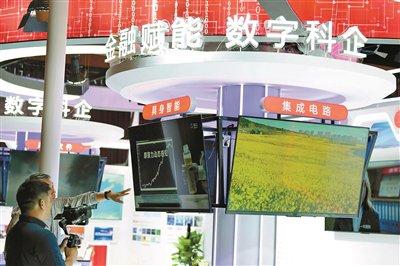
Core Insights - The 2025 Global Digital Economy Conference has commenced, showcasing Beijing's achievements in becoming a global digital economy benchmark city and establishing a "perpetual" conference model [6][7] - The conference features a "1+6+N" activity framework focusing on eight dimensions including technology, development, and citizen friendliness, with over 60 forums and activities scheduled [7] - Key themes include "digital-friendly cities" and the importance of data elements as the "core engine" of the digital economy, with a dedicated forum on accelerating data value release [7][8] Group 1: Conference Highlights - The conference aims to promote digital technology integration into urban life, creating a harmonious ecosystem between technology, people, cities, and ecology [7] - A record number of international guests, including 300+ attendees from 16 foreign delegations, will participate, enhancing global collaboration [7] - The event will introduce the "Global Digital Friendly Initiative" and the "Top Ten Benchmark Applications of Beijing's Digital Economy" [6][7] Group 2: Technological Innovations - The conference will feature a "Digital Economy Experience Center" showcasing 50 companies' technological solutions, providing immersive interactive experiences [6][8] - Innovations in various sectors such as digital finance, cybersecurity, and digital healthcare will be highlighted, with companies like Beijing Bank and OceanBase presenting their advancements [8] - The event will also focus on AI-driven security systems and the latest developments in cloud computing and database technologies [8] Group 3: International Cooperation - The conference includes an international exchange cooperation experience area, facilitating project promotion and demand matching between domestic and foreign entities [7][8] - A special focus on Southeast Asia will be part of the international cooperation forum, aiming to enhance industry interaction and project collaboration in the digital economy [7] - The conference is transitioning from an "industry exhibition" to a "global governance platform," with overseas venues promoting Beijing's digital transformation model [7]
湖北做大科创潜力股 政策活水灌溉上市后备企业
Zheng Quan Shi Bao Wang· 2025-06-30 16:22
Group 1 - The core viewpoint emphasizes the integration of technological innovation, industrial upgrading, and capital empowerment to promote the cultivation of companies for listing in Hubei [1] - Hubei has a significant number of high-tech enterprises and specialized small and medium-sized enterprises, with a total of 1,355 "gold and silver seed" companies reserved for potential listing [1] - The province has established a comprehensive cultivation system for companies, including a full-chain service mechanism for value discovery, standardized cultivation, financing connection, and listing support [1] Group 2 - Hubei's new implementation plan aims to create a "data + industry" mechanism for precise selection and dynamic management of companies for listing, with differentiated admission standards for technology-driven and specialized enterprises [2] - The province will provide a combination of "step-by-step cultivation + customized guidance" services tailored to the different stages of development, industry characteristics, and financing needs of enterprises [2] - The Hubei Provincial Enterprise Listing Development Promotion Association has made significant achievements in organizing training, research visits, and investment roadshows to enhance the quality of listed companies and promote healthy capital market development [2]