
电池回收

Search documents
通用汽车与电池回收公司Redwood Materials签署谅解备忘录,加速部署储能系统
news flash· 2025-07-17 05:15
Core Viewpoint - General Motors has signed a non-binding memorandum of understanding with battery recycling company Redwood Materials to accelerate the deployment of energy storage systems using new batteries manufactured in the U.S. and second-life battery packs from its electric vehicles [1] Group 1 - The partnership aims to enhance the use of General Motors' new battery technology [1] - More details regarding the plans are expected to be announced later this year [1]

动力电池“退役不退场”
Xin Hua Ri Bao· 2025-07-15 22:25
Core Viewpoint - The increasing retirement of electric vehicle batteries has led to significant pressure for proper waste battery disposal and resource recycling, highlighting the urgent need for effective recycling technologies [1][2]. Group 1: Industry Developments - The project "Efficient Stripping and Regeneration Technology for Retired Lithium Iron Phosphate Power Battery Cathode Materials" from Nanjing University of Information Science and Technology has been recognized as one of the top ten technological advancements in the environmental energy sector in Jiangsu Province for 2024 [1]. - The project aims to address the challenges of high energy consumption, pollution, and low efficiency in the lithium-ion battery recycling industry by focusing on the recycling of cathode materials [1]. Group 2: Technological Innovations - The proposed "Efficient Stripping and Regeneration" method involves the precise separation of core cathode materials from retired batteries, allowing for the recovery of lithium iron phosphate and its reintegration into battery manufacturing [2]. - A demonstration line and production line have been established in Jiangyan District, Taizhou City, Jiangsu Province, in collaboration with local enterprises to facilitate the transformation of this technology [2].
天舟九号船箭组合体转运至发射区,将于近日择机发射;纳米“双光子工厂”问世,中国科研团队成功研制新型量子纠缠光源丨智能制造日报
创业邦· 2025-07-13 02:02
Group 1 - The Tianzhou-9 cargo spacecraft and Long March 7 Yao-10 rocket have been transported to the launch area, with plans for a launch in the near future [1] - A new type of quantum entangled light source has been developed by a research team from Sun Yat-sen University, achieving a fidelity of 99.4% in a novel micro-nano quantum entangled light source [2] - The establishment of the Rulai Intelligent Robot R&D headquarters in Wuxi High-tech Zone marks a significant achievement in the region's intelligent manufacturing sector, with a total investment exceeding 1 billion yuan and a planned construction area of 55,000 square meters [2] Group 2 - VinFast, a Vietnamese electric vehicle manufacturer, has signed a strategic cooperation agreement with BatX Energies to develop a high-voltage battery recycling and reuse project, which is a key part of VinFast's localization supply chain strategy in India [2]

参会调研 | 晋景新能(01783.HK):掘金千亿电池回收蓝海,龙头合作生态成型
Ge Long Hui· 2025-07-07 10:24
Core Viewpoint - The rapid growth of electric vehicle ownership in China is leading to a peak in battery retirements, creating significant opportunities in the battery recycling industry, which is projected to be a trillion-yuan market [1] Group 1: Company Overview - Jin Jing New Energy, listed on the Hong Kong main board in 2018, transitioned from traditional construction to the battery recycling sector in 2022 by obtaining the first battery disposal license in Hong Kong [3] - The company is constructing the "Hong Kong Environmental Park Battery Recycling Factory," the only licensed lithium battery recycling line in Hong Kong, with an initial processing capacity of 10,000 tons per year [3] Group 2: Global Strategy and Partnerships - Jin Jing New Energy has established a global recycling network extending to 28 countries, with 77 service nodes in key markets such as the US, Europe, and Southeast Asia [4] - The company has acquired Green Jade in Singapore to enhance compliance with EU environmental standards and strengthen its global resource allocation capabilities [4] - Collaborations with leading companies like Guoxuan High-Tech and CATL have been formed to deepen exploration in battery recycling services [4] Group 3: Financial Performance - For the fiscal year 2025, Jin Jing New Energy reported a 92.3% increase in revenue to HKD 870 million, with reverse supply chain management and environmental services contributing 80% of the revenue [5] - The net loss attributable to shareholders significantly narrowed from HKD 78.9 million to HKD 15.7 million, and adjusted EBITDA turned positive, increasing from a loss of HKD 40.1 million to HKD 44.8 million [5] Group 4: Market Position and Competitive Advantage - Jin Jing New Energy holds over 90% market share in Hong Kong's battery recycling sector, benefiting from early involvement and collaboration with the government to establish a complete recycling system [7] - The company aims to expand into Southeast Asia and the US, leveraging its established recycling network and strong partnerships with industry leaders to enhance its competitive edge [8][9] - The domestic battery recycling market in China is complex, with a significant number of unregulated players, highlighting the need for regulatory reinforcement to support legitimate businesses [10]
多方合力解决好动力电池“身后事”
Zhong Guo Zhi Liang Xin Wen Wang· 2025-07-03 08:35
Core Insights - In the first five months of this year, China's new energy vehicle (NEV) sales reached 5.608 million units, marking a 44% year-on-year increase, indicating a sustained growth momentum [1] - By the end of 2024, the total number of NEVs in China is expected to reach 31.4 million, leading to a significant increase in the number of retired power batteries as they approach their warranty period [1] - The total amount of retired power batteries in China is projected to exceed 1 million tons this year, with an estimated 3.5 million tons by 2030, creating a substantial recycling market potentially worth over 100 billion yuan by 2030 [1] Battery Recycling Methods - There are three main methods for handling retired power batteries: remanufacturing, battery repurposing, and recycling [1] - Remanufacturing involves replacing damaged components and reassembling the battery for use in electric vehicles [1] - Battery repurposing entails adjusting the battery's calibration data for use in low-speed electric vehicles or other applications [1] - Recycling focuses on extracting valuable metals and materials from the batteries for resale or reintegration into battery production [1] Industry Challenges - Despite the theoretical feasibility of battery recycling, practical implementation and achieving industrial value remain challenging [2] - As of June this year, only 148 out of 195,000 battery recycling-related companies in China meet the regulatory standards set by the Ministry of Industry and Information Technology [2] - The current standardized recycling rate for power batteries in China is below 25%, with many retired batteries either remaining with owners or entering informal channels [2] Market Dynamics - The battery recycling market is profit-driven, with high technical requirements for dismantling retired batteries [3] - The significant cost of establishing automated dismantling lines makes it difficult for legitimate recycling companies to operate profitably without a sufficient volume of low-cost batteries [3] - The existence of various online battery recycling channels offering higher prices than formal channels leads to a black market for retired batteries, posing environmental risks [3] Environmental Concerns - Improper handling of retired batteries can lead to severe environmental pollution, as heavy metals like cobalt, nickel, and lithium can contaminate groundwater [3] - A ton of waste batteries can pollute up to 600,000 liters of groundwater, with the potential for long-lasting environmental damage [3] - The presence of informal recycling operations can exacerbate the situation, driving up costs for legitimate companies and perpetuating a cycle of black market expansion [3] Recommendations for Industry Development - The development of a robust battery recycling ecosystem requires collaboration across multiple sectors and improved regulatory frameworks [4] - Policies should be refined to encourage participation in battery recycling through financial incentives and the establishment of a reasonable recycling mechanism [4] - Standards for battery technology should be established to facilitate the production of standardized batteries, laying the groundwork for large-scale integration in the future [4] - Accelerating the establishment of a management standard system for battery recycling is essential to ensure effective tracking, product management, and regulatory compliance [4]
宁德时代发布“全球能源循环计划”愿景,电池回收浮现万亿级蓝海市场
Zhong Guo Qing Nian Bao· 2025-06-27 13:21
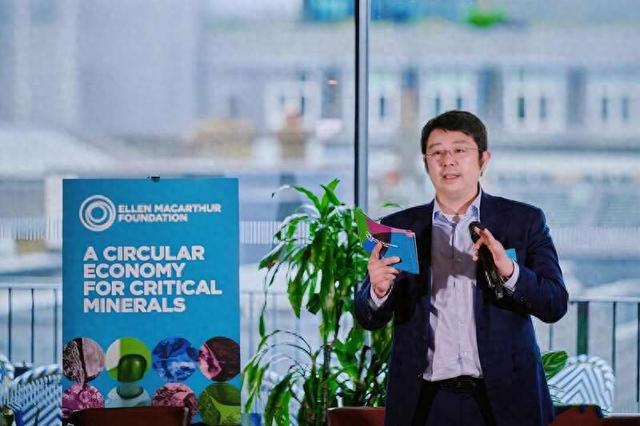
Core Viewpoint - China's new energy vehicle production and sales have ranked first globally for ten consecutive years, leading to a significant phase of "retirement" for power batteries, raising discussions on recycling and reducing reliance on raw mineral resources and carbon emissions [2] Group 1: Global Energy Circular Economy Plan - CATL and the Ellen MacArthur Foundation (EMF) have launched the "Global Energy Circular Economy Plan," aiming to promote a comprehensive battery circular economy and eliminate dependence on raw mineral resources for new battery production [2][3] - This plan is the first circular economy public welfare project initiated by a Chinese enterprise and covers the entire new energy industry chain, involving multiple stakeholders including government and academic institutions [2] - CATL's Vice President, Jiang Li, stated that within the next 20 years, 50% of new battery production globally will move away from mineral extraction, driving a systematic transition towards a more efficient, low-carbon, and sustainable energy system [2] Group 2: Battery Recycling Industry Growth - The number of battery recycling-related enterprises in China has been steadily increasing, with 14,600 registered by April 2025, marking a 13.9% increase compared to the same period in 2024 [2] - The global battery recycling market is projected to exceed 1.2 trillion yuan by 2040, creating over 10 million jobs within the battery value chain [3] Group 3: Four Action Guidelines - The "Global Energy Circular Economy Plan" includes four key action guidelines: 1. Restructuring the value chain to enable low-carbon development across the battery industry [3] 2. Integrating circular economy principles from the design stage, focusing on modular design and ease of disassembly for better recycling [3] 3. Redefining the business model from traditional product sales to a service-oriented model [3] 4. Establishing an efficient and large-scale recycling system to enhance recycling efficiency and material reuse [3] Group 4: Current Achievements and Future Directions - CATL has built the world's largest battery recycling network, recycling approximately 130,000 tons of used batteries in 2024 and producing 17,000 tons of lithium salt [3] - The company has introduced the "Times Carbon Chain" management system to integrate circular economy concepts into every aspect of the value chain, promoting systematic carbon reduction and efficient resource allocation [3] - The battery recycling industry faces challenges such as the prevalence of "bad money driving out good" and a decline in enthusiasm among some recycling enterprises due to falling upstream material prices [4] - By transforming the entire lifecycle of batteries from design to recycling, the battery circular economy is expected to open up vast market opportunities, with China's lithium-ion battery recycling capacity projected to reach 11.09 million tons per year by 2030 [5]

动力电池迎退役高峰,企查查:前五月电池回收相关企业注册涨超9%
Qi Cha Cha· 2025-06-23 03:14
Core Insights - The domestic battery recycling market is expected to experience a peak in retirements due to the increasing number of electric vehicles (EVs) reaching their eight-year warranty period and the implementation of various subsidy policies for EV replacements. It is projected that by 2030, the market size for battery recycling will exceed 100 billion yuan [1] Group 1: Registration Growth - The number of registered battery recycling companies has shown a significant increase, with a year-on-year growth of 9.32% in the first five months of the year. As of now, 20,800 companies have been registered, with 18,270 existing companies in total [2] Group 2: Geographic Distribution - Battery recycling companies are primarily concentrated in the East China region, accounting for 31.78% of the total. Other regions include South China, Central China, and Southwest China, with respective shares of 16.3%, 14.37%, and 13.17% [3] Group 3: Company Age - Over 60% of battery recycling companies have been established in the last three years, with 40.05% founded between one to three years ago and 23.56% established within the last year. Companies that have been in operation for over ten years represent the smallest share at 4.9% [4]
系统化“作战”渐成锂电循环标配,亿纬锂能(300014.SZ)发布全球锂电回收网络平台
智通财经网· 2025-06-23 01:01
Core Viewpoint - EVE Energy has launched a "Global Lithium Battery Recycling Network Platform" to reshape the lithium battery circular economy ecosystem, aiming for a recovery capacity of 120,000 tons per year by 2030 [1][2] Group 1: Company Initiatives - EVE Energy, in collaboration with companies like Greeenme and Huayou Cobalt, initiated the platform to establish a global recycling network covering four continents [1] - The "Cradle Plan" aims to create 1,000 recycling points globally, with 246 already established, including 159 in China and 87 overseas [1] - The company announced its intention to use funds from its upcoming Hong Kong IPO for global expansion, indicating a strong push towards international growth [2] Group 2: Industry Trends - The industry is facing an imminent wave of retired batteries, with projections indicating that by 2030, 300 GWh of batteries will be retired in China alone, reflecting a compound annual growth rate of 45% over the next five years [2] - Regulatory pressures, such as the EU's new battery law, are compelling battery manufacturers to accelerate the establishment of recycling networks, with specific targets for recycled materials set for 2031 and 2036 [2] Group 3: Challenges in the Recycling Industry - The lithium battery recycling industry currently faces challenges such as dispersed collection points, high logistics costs, and information asymmetry, with cross-border transport costs reaching 25% [3] - EVE Energy's platform aims to address these issues through a model of "technology sharing, resource collaboration, and global channels" [3] Group 4: Technological and Resource Collaboration - EVE Energy's subsidiary has achieved nickel and cobalt recovery rates of over 98% and lithium recovery rates of over 92%, with the goal of raising industry average recovery rates to over 95% through shared technology [3][4] - The platform will also facilitate a shared database for recycled material composition and a battery passport tracing system to streamline the recycling process [3] Group 5: Global Channel Development - Jin Jing New Energy has established a global battery recycling service system with over 70 service points across 28 countries, enhancing the platform's ability to recover retired batteries [4] - The collaboration among the companies involved is expected to create a competitive service system through the integration of their networks, technologies, and resources [4] Group 6: Industry Evolution - The establishment of the "Global Lithium Battery Recycling Network Platform" marks a significant shift from isolated competition to systematic collaboration within the recycling industry [5] - The trend towards systematic collaboration is evident as other companies in the industry also engage in partnerships to enhance their recycling capabilities and network [5]

三大电池企业布局锂电后市场
起点锂电· 2025-06-21 10:04
Core Viewpoint - The article highlights the rapid growth of the electric vehicle (EV) market in China and the impending boom in the battery recycling market as the first batch of power batteries reaches the "8-year warranty period" [2][3]. Group 1: Market Growth - In 2024, new registrations of electric vehicles in China reached 11.25 million, accounting for 41.83% of new car registrations, an increase of 3.82 million vehicles or 51.49% compared to 2023 [2]. - By the end of 2024, the total number of electric vehicles in China is expected to reach 31.4 million, representing 8.90% of the total vehicle population [3]. Group 2: Battery Recycling Market - The battery recycling market is anticipated to expand significantly due to the arrival of the "8-year warranty period" for power batteries and the implementation of various EV replacement subsidy policies [3]. - Major battery manufacturers, including CATL, EVE Energy, and LG Energy, are actively establishing battery recycling networks to prepare for the upcoming wave of battery retirements [4][8]. Group 3: CATL's Recycling Initiatives - CATL's recycling division, controlled by its subsidiary Bangpu Recycling, has invested up to 23.8 billion yuan in an integrated new materials project in Guangdong, capable of recycling 500,000 tons of used battery materials annually [6]. - As of September 2024, CATL has established over 240 battery recycling points in China and has formed partnerships with over 60 recycling companies globally, covering 26 countries and regions [10]. Group 4: EVE Energy's Global Recycling Network - EVE Energy launched a "Global Lithium Battery Recycling Network" during its 24th anniversary event, aiming to establish 1,000 recycling points worldwide, with 246 already set up [12][13]. - The company’s recycling technology has a nickel-cobalt recovery rate exceeding 98% and a lithium recovery rate of 92% [13]. Group 5: LG Energy's Collaborative Efforts - LG Energy has formed a joint venture with Toyota Tsusho in the U.S. to focus on battery recycling, planning to build a pre-treatment facility with an annual processing capacity of 13,500 tons of waste [15][16]. - The company is also collaborating with Derichebourg in France to establish a battery recycling plant, expected to begin operations in 2027 with a processing capacity of over 20,000 tons annually [18]. Group 6: Industry Trends - The global battery recycling business is expanding due to the upcoming peak in battery retirements and regulatory pressures, such as the EU's new battery law, which mandates producers to take responsibility for the entire lifecycle of batteries [19]. - The influx of battery manufacturers into the recycling sector is expected to intensify competition while promoting the standardization and sustainable development of the recycling industry [20].

晋景新能:与亿纬锂能正式启动全球锂电回收网络平台
news flash· 2025-06-19 10:48
Core Viewpoint - Jin Jing New Energy (01783.HK) has officially launched a global lithium battery recycling network platform in collaboration with EVE Energy, aiming to enhance the effective recovery and reuse of retired battery materials on an international scale [1] Group 1: Company Collaboration - The partnership between Jin Jing New Energy and EVE Energy is part of a memorandum to promote battery recycling networks and related projects [1] - The global lithium battery recycling network platform is set to officially launch on June 18, 2025 [1] Group 2: Strategic Goals - The collaboration focuses on global layout and digital traceability in the field of battery recycling [1] - The initiative aims to achieve effective recovery and reuse of retired battery materials internationally [1]