
轨道交通

Search documents
一年接着一年干,新福建建设持续取得新进展新成效
Xin Lang Cai Jing· 2026-01-27 23:08
Economic Growth and Performance - The provincial GDP is projected to reach 60,199.45 billion yuan, with a growth rate of 5% [1] - General public budget revenue is expected to be 3,723.35 billion yuan, reflecting a growth of 3% [1] - Retail sales of consumer goods are anticipated to grow by 4.4% [1] - Per capita disposable income for urban residents is expected to increase by 4.5%, while for rural residents, it is projected to grow by 5.7% [1] - The urban surveyed unemployment rate is forecasted at 4.7% [1] - Consumer prices are expected to remain stable compared to the previous year [1] Industrial Development - The pace of industrial transformation and upgrading is accelerating, with advanced manufacturing playing a key role [1] - Traditional industries are rapidly adopting digital transformation, with the proportion of fully digitalized enterprises ranking second nationally [1] - The new energy sector continues to lead, with the establishment of a green hydrogen pilot base [1] Innovation and Technology - The number of projects funded by the National Natural Science Foundation has seen a continuous increase, indicating enhanced innovation efficiency [2] - Eight new national-level enterprise technology centers have been approved [2] Investment and Infrastructure - Infrastructure investment is projected to grow by 5.6%, with significant projects like the Fuzhou Metro and Zhangzhou Nuclear Power coming online [4] - Industrial investment is expected to increase by 6.1% [4] Reform and Opening Up - The province has made significant progress in market-oriented reforms, with successful pilot programs for resource allocation [5] - There has been a notable increase in exports to Africa and Latin America, with growth rates of 20% and 7.6% respectively [6] Social Development - Urban employment has seen the addition of 545,800 jobs, with stable employment for college graduates [8] - The education system is improving, with an increase in the high school admission rate to 72% [8] - Healthcare access is expanding, with a high coverage rate for community medical services [8] Cultural and Ecological Progress - Cultural initiatives have flourished, with numerous awards for local artistic productions [9] - Environmental quality is improving, with the province recognized as a leading area for beautiful China initiatives [11] - The establishment of a national-level ecological product trading platform highlights the commitment to green transformation [12]
北京丰台全面推进青年友好生态城区建设
Xin Lang Cai Jing· 2026-01-27 22:08
(来源:千龙网) 在北京丰台的园区、街区与创新空间中——从丽泽金融商务区跳动的发展脉搏,到中关村丰台园不熄的 研发灯火; 从科技与文化共生的南中轴,到"青创村"中汇聚的创业者们——青春的身影、年轻的声音,正成为区域 发展最生动的注脚。 让拼搏与诗意共存 青年选择一座城,不仅看事业平台,更看重生活品质。王少峰认为,丰台致力于打造"高品质生活港 湾",让青年在这里"既能实现职业理想,也能安居乐业,享受美好生活"。 在居住保障上,丰台加快保障性住房建设,全年开工0.7万套、竣工1.2万套,并开展新就业群体"适居行 动",打造"建设者之家"。教育、医疗、文化等公共服务同步提质——推进教育强基工程,让青年子女 就学更安心;完善15分钟健康服务圈,实现社区卫生服务中心街镇全覆盖;积极打造丰泽人才公 园、"15分钟阅读圈"、各类演艺新空间,让青年生活"更有品质、更有温度"。 伴随着丰台区青年友好生态城区建设的持续推进,越来越多青年选择来到这里,奋斗、生活、扎根。 2026年,作为"十五五"开局之年,丰台如何持续吸引青年、赋能青年、成就青年?在北京市第十六届人 民代表大会第四次会议期间,市人大代表、丰台区委书记王少峰做客北青 ...
为友城智慧交通建设输出“南宁方案”
Xin Lang Cai Jing· 2026-01-27 21:03
此次合作以"共商、共建、共享"为原则,借鉴南宁"一码通城"智慧出行经验,助力孔敬构建高效融合的 公共交通体系;引入人工智能调度与大数据决策平台,推动孔敬交通治理向"智理"升级;拓展"出行+服 务"生态,融合文旅商贸资源,增强孔敬发展活力。这不仅是两市深厚情谊的延续,也是中国地方城市 以智慧方案参与国际协作、服务"一带一路"高质量发展的生动实践。项目通过科技输出与经验共享,为 区域智慧交通建设提供了"南宁方案"。 本报讯(记者朱新韬 通讯员滕叶子)记者昨日从市外事办获悉,南宁轨道交通投资集团与泰国孔敬市 政府近日共同签署《孔敬市MaaS数字交通生态系统合作意向备忘录》,为泰国孔敬市智慧交通建设提 供"南宁方案",标志着南宁"交通出行+综合服务"MaaS模式落户东盟市场。这也是南宁市首个在友城落 地实施的人工智能合作项目,彰显了双方在数字时代深化务实合作、共促区域智慧交通发展的新成果。 南宁与孔敬市建立国际友好城市关系已有20余年。在2025年南宁—河内经济走廊暨"一带一路"南宁友好 城市交流大会上,孔敬市市长巴实·通廷泰曾表示,该市正致力于打造泰国智慧城市典范,亟须通过 MaaS数字交通生态系统改善公共交通、缓 ...
北京地铁7号线拟向北延四站 正开展规划方案公示
Xin Lang Cai Jing· 2026-01-27 18:56
(来源:千龙网) 根据同步公司的7号线三期示意图,北延的四座车站均为换乘站,分别为军事博物馆站(可换乘1号 线)、航天桥站(北京地铁3号线的规划中车站)、花园桥站(可换乘6号线)、万寿寺站(可换乘16号 线)。 根据规划方案中披露的信息,本次规划贯彻落实《北京城市总体规划(2016年-2035年)》《北京市轨 道交通线网规划(2020年-2035年)》《关于进一步做好我市轨道交通线路一体化规划方案编制及管理 工作的意见(试行)》等相关要求,结合沿线城市和交通发展需求,重点明确线路技术标准、线站位及 车辆基地规划方案。 规划原则方面,将注重线路与沿线地区城市功能协同发展和站城融合,支撑城市空间结构优化。同时, 强化轨道与综合交通系统的衔接整合,提升地区交通服务水平,并确保工程经济合理可行。 记者了解到,本次公开征集意见采用网上公示方式,在北京市基础设施投资有限公司门户网站进行公 示。公示期为30天,自2026年1月21日起至2026年2月20日止。 1月27日,《北京轨道交通7号线三期线路一体化规划方案》在北京市基础设施投资有限公司官网公示, 同时发布了线路示意图。记者了解到,7号线三期是既有线路的北延,将从北 ...
哥伦比亚媒体称波哥大地铁二号线流标或对三号线项目产生潜在影响
Shang Wu Bu Wang Zhan· 2026-01-27 15:57
Core Viewpoint - The failure of the Bogotá Metro Line 2 bidding may have indirect implications for the Line 3 project, potentially increasing technical and financing requirements, thereby raising project costs [1] Group 1: Impact on Line 3 - Experts suggest that if the restructuring of Line 2 does not resolve the previous bidding issues, Line 3 may face higher technical and financing demands [1] - Conversely, if Bogotá Metro Company successfully transforms Line 2 into a project that is attractive both technically and financially, it could enhance market confidence in Line 3 [1] Group 2: Government Considerations - Local government must balance various tasks such as land acquisition, pipeline relocation, environmental permits, and financing to avoid bottlenecks that could hinder the progress of Line 3 [1]
开源证券晨会纪要-20260127
KAIYUAN SECURITIES· 2026-01-27 14:40
Macro Economic Overview - The transaction volume and price of second-hand houses have both increased, indicating a recovery in the real estate market [6][29] - Construction activity has shown seasonal improvement, with cement dispatch rates and grinding machine operation rates higher than the same period in 2025 [3][4] - Industrial production has shown mixed results, with strong performance in chemicals and automotive steel tires, while coking has lagged [3][4] Food and Beverage Industry - The allocation ratio for food and beverage stocks has decreased to a new low of 6.1% in Q4 2025, down from 6.4% in Q3 2025, indicating a continued reduction in holdings by active equity funds [10][12] - The white liquor sector has seen a decrease in fund allocation, with the proportion of white liquor holdings falling from 3.2% in Q3 2025 to 2.9% in Q4 2025 [11] - The food and beverage sector is expected to see a recovery in Q1 2026 due to the upcoming Spring Festival, which will drive demand for inventory replenishment [13][15] Communication Industry - The announcement by Amazon AWS to raise prices for machine learning capacity blocks by approximately 15% highlights the increasing scarcity of AI cloud infrastructure [19][22] - The investment of $2 billion by NVIDIA in CoreWeave underscores the strong demand for AI computing resources [20][22] - The release of Alibaba's Qwen3-Max-Thinking model indicates the growing capabilities of domestic AI models, which may significantly boost demand for AI cloud infrastructure [21][22] Coal Mining Industry - Coal prices have improved in Q4 2025, with thermal coal prices averaging 824.9 RMB/ton, up 8% quarter-on-quarter, and coking coal prices averaging 1725.7 RMB/ton, up 10% [23][24] - The coal industry is expected to benefit from a cyclical rebound as supply-side policies restrict production and demand increases during the heating season [25][26] Real Estate and Construction Industry - Public funds have reduced their allocation to the real estate sector to 0.43% in Q4 2025, the lowest since 2021, reflecting a cautious outlook on the sector [27][28] - Recent policy changes, including tax reductions on second-hand housing and relaxed purchase restrictions, indicate a supportive stance towards stabilizing the real estate market [30][29] Company-Specific Insights - IFBH has initiated systematic adjustments in product, management, and channel areas, leading to improved fundamentals and a maintained "buy" rating [30][31] - Ximai Foods is expected to see profit elasticity due to strong market demand during the Spring Festival and declining raw material costs, with a projected net profit increase of 31.5% in 2025 [35][38] - Jinchuang Group is positioned to benefit from the growing demand in the rail transit sector, with expected net profits of 6.02 billion RMB in 2025 [40][42]
济南地铁6号线西段年内通车
Qi Lu Wan Bao· 2026-01-27 07:53
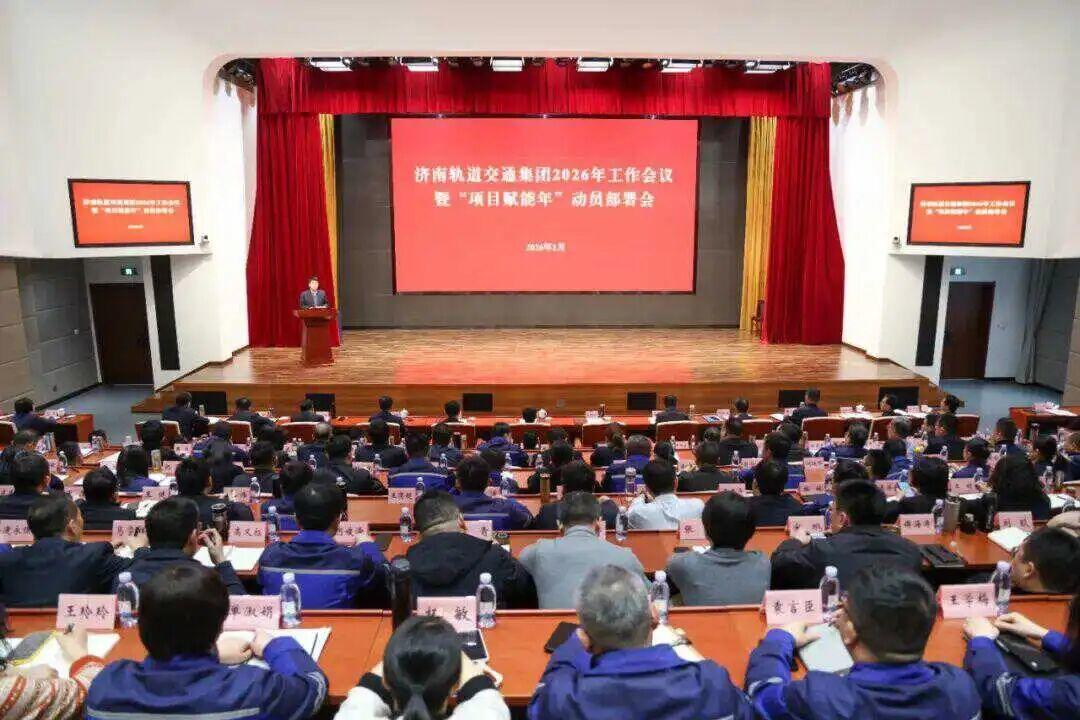
Core Viewpoint - The Jinan Rail Transit Group held a work meeting to outline its 2026 objectives, emphasizing a development philosophy centered on public welfare and operational efficiency, while focusing on six key strategic battles to ensure a strong start to the 14th Five-Year Plan [1][3] Group 1: Project Development - Accelerate project construction and orderly advance the planning of the third phase, ensuring the west section of Line 6 is completed and operational within the year, while continuously enhancing the rail transit network [3] Group 2: Financial Sustainability - Enhance financial resilience by focusing on sustainable finances, improving financial management, and continuously refining treasury system construction to boost financial work quality and risk prevention capabilities [3] Group 3: Cost Efficiency - Deepen cost reduction and efficiency enhancement by attracting and nurturing passenger flow, effectively increasing ticket revenue, managing operational costs, and revitalizing subway commercial development to improve operational efficiency [3] Group 4: Asset Management - Focus on asset revitalization through innovative methods, accelerate land transfer in specific areas, and deepen the development and operation of Transit-Oriented Development (TOD) projects to build new competitive advantages [3] Group 5: Business Philosophy Transformation - Shift business philosophy to prioritize market and efficiency, strengthen internal management, promote technological innovation and industrial collaboration, and expand into emerging fields to cultivate new productive forces [3] Group 6: Digital Intelligence Integration - Accelerate the formulation of a digital intelligence development plan, enhance application-driven scenarios, strengthen the recruitment and training of high-end talent, and promote deep integration of technology and business to create a new model of intelligent and green development [3]

邓勇:大湾区轨道交通不能只算“里程账”,更要算“创新账”
Nan Fang Du Shi Bao· 2026-01-27 01:02
1月25日下午,广东省政协十三届四次会议举行了界别联组讨论会,会上,委员们围绕"强化科技创新和 产业创新深度融合,在建设富有活力和国际竞争力的一流湾区和世界级城市群上实现更大突破"这一主 题建言献策。 会后,广东省政协人口资源环境委员会副主任、中国铁建华南总部党委书记、总经理邓勇结合工作实践 和履职经历,围绕"科技创新与产业创新""大湾区基础设施"等热点话题接受了南都N视频专访。 轨道交通,要算"创新账" 南都:1月25日下午的联组会上,您作为委员之一进行了发言,重点围绕"强化科技创新和产业创新深度 融合"这一主题建言献策。能否具体分享一下,您当时在会上主要提出了哪些针对性的意见或建议? 邓勇:我认为,轨道交通不能只算"里程账",更要算"创新账",因此我重点提了一些建议。 从轨道交通赋能高技术服务业角度来看,我认为首先是要转变发展理念,从侧重里程、客运量等量化指 标,转向重视科研人员跨城通勤等创新要素价值。 另外,是必须补齐软件短板,加快推进跨城数据互认、资质共享、标准协同等机制建设,破解高技术服 务业跨城运营壁垒。 对此,我也建议,广东要构建融合生态,依托轨道网络搭建跨城创新协作平台,在核心枢纽布局综合创 ...
奋楫踏浪挑大梁——解码山东GDP突破十万亿元背后的发展新篇
Zhong Guo Jin Rong Xin Xi Wang· 2026-01-26 13:30
"以前是在生产车间里炼钢,现在是在流水线上造卫星。"济钢集团党委副书记、总经理刘仕君介绍, 2017年关停钢铁主业产能以来,济钢瞄准新动能不断突破,完成从"靠钢吃饭"到"无钢发展"的转型,建 成了全国最大的液体火箭发动机及动力系统测试基地、山东唯一一个通过核准的卫星总装总测基地。 济钢的蝶变,是山东大力发展新质生产力的缩影。 近年来,山东深入推进科技创新与产业创新深度融合,传统产业改造提升、新兴产业培育壮大、未来产 业超前布局,新老动能相得益彰。"为加快传统产业转型升级,山东出台化解重点产业结构性矛盾促进 提质升级的实施方案,'一业一策'推动石化、钢铁、船舶等行业优布局、调结构;加大设备更新和技术 改造力度,工业技改投资保持较好增长。"山东省工信厅厅长陈飞说,山东还扎实推进19条标志性产业 链建设,突出抓好50个战略性新兴产业集群建设,发布172项"十强产业"场景创新清单,新动能持续发 展壮大。 动能蝶变,增强创新力必须走在前。构建一流科技创新生态"1+4"政策体系,实施180余项重大科技攻关 项目,优化提升泰山、齐鲁人才工程……近年来,山东心无旁骛谋创新,改革决心之大、推动力度之强 前所未有。 转自:新华每 ...
神剑股份:公司高端装备制造领域包括航空航天及轨道交通两方面业务
Zheng Quan Ri Bao Wang· 2026-01-26 11:45
证券日报网讯1月26日,神剑股份(002361)在互动平台回答投资者提问时表示,公司高端装备制造领 域包括航空航天及轨道交通两方面业务。根据公司2024年年度报告,高端装备制造业务占公司营业收入 10.92%。 ...
