
浙江e港通

Search documents
宁波舟山港2025年货物吞吐量突破14亿吨
Zhong Guo Xin Wen Wang· 2026-01-05 08:05
Core Insights - Ningbo-Zhoushan Port is projected to achieve a cargo throughput of over 1.4 billion tons by 2025, maintaining its position as the world's largest port for 17 consecutive years [1] - The annual container throughput is expected to exceed 43 million TEUs, securing the third position globally [1] - The port's comprehensive operational capabilities are set to experience significant improvements [1] Group 1: Port Operations and Connectivity - Ningbo-Zhoushan Port has optimized its shipping routes, with container shipping lines reaching 309 by the end of 2025, connecting over 700 ports in more than 200 countries and regions [1] - The port facilitates nearly 300 vessel movements daily [1] Group 2: Logistics and Transportation Innovations - The "Ningbo-Zhoushan Port-William Port" fast shipping route between China and Europe is expected to operate regularly by 2025, reducing transit time by over 10 days [1] - The world's first fast shipping route for containers from China to Europe via the Arctic was launched from Ningbo-Zhoushan Port, providing a new option to address uncertainties in traditional shipping routes [1] Group 3: Intermodal Transport Development - Ningbo-Zhoushan Port is enhancing its sea-rail intermodal transport, with over 110 routes established by the end of 2025, covering 69 cities across 16 provinces in China [1] - The port has developed 40 inland dry ports, with sea-rail intermodal business volume exceeding 200,000 TEUs in the same year [1] Group 4: Cost Efficiency Initiatives - The implementation of the "Container Shipping Timeliness Cost Reduction" plan has saved over 25,000 hours of waiting time for vessels and reduced costs for shipping companies by more than 867 million RMB [1]

内陆开门直通世界港 “浙江e港通”传递开放新脉动
Zhong Guo Xin Wen Wang· 2025-12-19 01:05
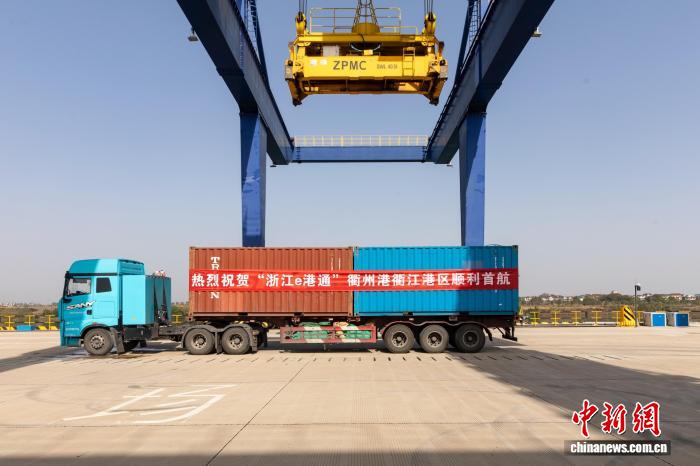
Core Viewpoint - The "Zhejiang e-Port" initiative aims to enhance the efficiency and convenience of customs clearance for import and export goods in Zhejiang, with the recent launch of the "Quzhou-Jiaxing-Zhapu Port-Ningbo Zhoushan Port" CCA (multimodal transport "through bill of lading" model) route marking a significant step in this direction [1][2]. Group 1: Operational Efficiency - The "Zhejiang e-Port" has established 25 operational stations nationwide, significantly improving the customs clearance process for inland regions, which traditionally relied heavily on maritime transport [1][4]. - The initiative integrates customs, port, and shipping services, allowing businesses to complete all export procedures locally, thus addressing issues like container return and box shortages [1][2]. - The logistics process has been streamlined, with cargo entering inland ports treated as if they are already in the Ningbo Zhoushan Port area, enabling pre-port, pre-release, and pre-loading services that reduce logistics time [2][4]. Group 2: Cost Reduction and Efficiency Gains - The "Zhejiang e-Port" model has led to a reduction in cargo transit time from 35 hours to 24 hours for specific routes, alleviating logistics pressure in regions like Hubei [4]. - Companies utilizing the "Zhejiang e-Port" have reported a 15% to 20% reduction in overall logistics costs due to the elimination of unnecessary operational steps and the implementation of automated customs processes [5][7]. - The average time for container usage and adjustment has decreased by 2 days, and the on-time shipment rate has improved from 60% to over 90% [4]. Group 3: Strategic Development and Expansion - The "Zhejiang e-Port" initiative is part of a broader strategy to enhance Zhejiang's role in the domestic and international economic landscape, with plans for nationwide replication of the model [8][9]. - The initiative supports the "Belt and Road" initiative and the development of the Yangtze River Economic Belt, contributing to Zhejiang's goal of becoming a high-level open economy [4][8]. - The provincial government has set ambitious targets for further integration into the new development framework, emphasizing the importance of high-level openness and resource allocation efficiency [9].

“十四五”浙江交通投资预计达1.8万亿元
Zhong Guo Xin Wen Wang· 2025-11-11 12:37
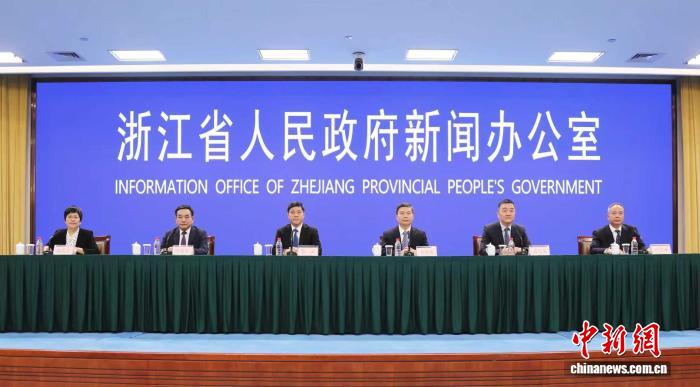
Core Insights - Zhejiang Province is expected to invest 1.8 trillion yuan in transportation during the "14th Five-Year Plan," marking a 34% increase compared to the "13th Five-Year Plan" [1] - The province has achieved a historical high in transportation investment, surpassing 400 billion yuan for the first time last year [1] Investment Highlights - The "14th Five-Year Plan" transportation investment in Zhejiang is projected to reach 1.8 trillion yuan, a significant increase from the previous plan [1] - The province's comprehensive transportation network, known as "six vertical and six horizontal" corridors, is rapidly taking shape, with 98% of the population covered by three "one-hour traffic circles" [1] Infrastructure Development - The construction of transportation infrastructure is laying a solid foundation for Zhejiang to become a high-level open province [1] - The Ningbo-Zhoushan Port has maintained its position as the world's top port in cargo and container throughput, with an international shipping center index ranking 7th globally [1] Port and Logistics Improvements - The average logistics cost for enterprises has decreased by 10% due to the "Zhejiang e-port" model, which has covered 24 domestic and international stations [3] - The "container shipping punctuality cost reduction" initiative has saved approximately 470 million yuan for enterprises this year [3] Rail Transport and Economic Integration - Daily rail traffic in the Yangtze River Delta region exceeds 2 million passengers, equivalent to the population of a city in normal flow [3] - High-speed rail services, such as the Shanghai-Hangzhou and Ningbo-Hangzhou routes, operate over 600 trains daily, with annual passenger volume exceeding 100 million [3] Future Focus Areas - Zhejiang will focus on enhancing the efficiency of its comprehensive transportation network, fostering innovative transportation productivity, and improving logistics systems [4][5] - The province aims to build a resilient transportation system while contributing to national and provincial development goals [5]
从最快“中欧航线”看宁波舟山港开放加速度
Zhong Guo Xin Wen Wang· 2025-10-14 11:19
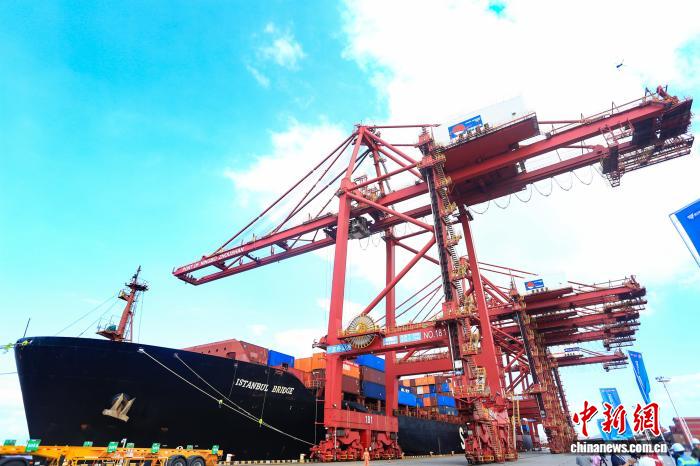
Core Points - The "China-Europe Arctic Express" is the world's first container shipping route specifically designed for cross-border e-commerce and high-value goods, successfully launched from Ningbo-Zhoushan Port [1][2] - This route significantly shortens shipping time to Europe, with a planned duration of 18 days, reducing carbon emissions by approximately 50% compared to traditional routes [2] Group 1: Route and Efficiency - The "China-Europe Arctic Express" marks a significant milestone in global shipping history, enhancing the connectivity of Ningbo-Zhoushan Port with major international shipping lanes [1][2] - The route's opening is expected to optimize global supply chains and promote economic cooperation along the route, serving as a strategic value addition [2] - The shipping time of the new route is about 20 days shorter than traditional routes, despite a slight delay due to adverse weather conditions during its inaugural journey [2] Group 2: Port Development and Connectivity - Ningbo-Zhoushan Port has expanded its international container shipping routes to over 256, including 24 fast shipping lines, covering more than 600 ports in over 200 countries [4] - The port has implemented a "sea-rail combined transport" model, allowing for direct loading of goods onto ships without the need for storage or reloading, enhancing operational efficiency [4] Group 3: Economic Impact and Service Improvement - The "Zhejiang e-Port" initiative has improved logistics efficiency, reducing transportation costs by an average of 10% and decreasing container transfer times by 2 days [6] - The port's container throughput has surpassed 30 million TEUs this year, setting a new historical record [6] - Ningbo-Zhoushan Port's ranking in the global shipping center index has improved, reflecting ongoing enhancements in the port's operational environment [8] Group 4: Future Plans and Strategic Goals - Zhejiang Province aims to create a port environment characterized by optimal service, minimal costs, and maximum efficiency, focusing on infrastructure, international route development, and logistics network expansion [9]
浙江加快陆海协同发展 倡议共建关边海港铁地企机制
Zhong Guo Xin Wen Wang· 2025-09-04 09:36
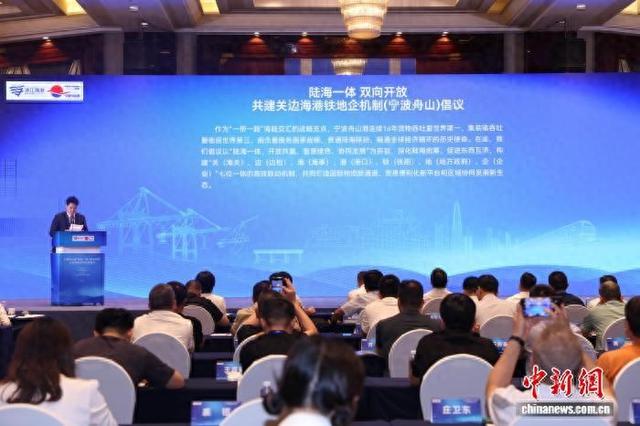
Core Viewpoint - The "Land-Sea Integration and Two-Way Opening" initiative aims to enhance the competitiveness of the Ningbo-Zhoushan Port through coordinated development of land and sea logistics, facilitating smoother trade and logistics services across regions [1][3]. Group 1: Initiative Overview - The initiative was launched at a seminar organized by the Zhejiang Provincial Department of Marine Economic Development, focusing on the integration of logistics services and the establishment of a seamless operational environment [1][3]. - It emphasizes the importance of multi-modal transport, connecting Ningbo-Zhoushan Port with 69 cities across 16 provinces in China [1]. Group 2: Key Dimensions of the Initiative - The initiative outlines five key dimensions: 1. Building a large logistics corridor for land-sea transport 2. Promoting new models for facilitating import and export 3. Discussing new measures for land-sea coordinated development 4. Sharing high-level outcomes of opening up 5. Creating a blueprint for regional high-quality development [3][4]. Group 3: Specific Measures - In promoting new models for import and export facilitation, the initiative aims to integrate Ningbo-Zhoushan Port with inland ports, replicating the "Zhejiang e-port" model in inland areas [4]. - It seeks to enhance the efficiency of logistics through the development of comprehensive logistics solutions, including "door-to-port" and "door-to-door" services [4]. Group 4: Collaborative Framework - The initiative calls for the establishment of an open platform and regular high-level meetings to coordinate major issues, creating a logistics community that operates as seamlessly as a maritime port [5]. - It also emphasizes institutional innovation and the creation of a trial area for facilitation reforms, aiming to cultivate a trillion-yuan level land-sea integrated industrial corridor [5].
郑州内陆港加速变身出海始发港 铁海联运走天下
He Nan Ri Bao· 2025-07-04 23:49
Core Viewpoint - The establishment of the "Zhengzhou-Lianyungang" rail-sea intermodal transport route marks a significant step in enhancing Zhengzhou's logistics capabilities and integrating it into the national and international trade networks [1][2]. Group 1: Rail-Sea Intermodal Transport Development - A dedicated rail-sea intermodal train carrying 40 containers departed from Zhengzhou and reached Lianyungang in 15 hours, officially integrating the route into the national railway schedule [1]. - This route is the second rail-sea intermodal service established by Zhengzhou in 2023, following the "Zhengzhou-Qingdao" route [1]. - The "Zhejiang e-port" initiative has been launched in Zhengzhou, enhancing the logistics framework by connecting inland ports with coastal ports, thereby improving the efficiency of logistics operations [1][2]. Group 2: Growth in Cargo Volume - From January to May 2023, the volume of rail-sea intermodal transport between Zhengzhou and Ningbo Zhoushan Port reached 8,094 standard containers, representing a year-on-year increase of 139.6% [2]. - Zhengzhou has dispatched over 250 rail-sea intermodal trains this year, transporting nearly 25,000 standard containers, indicating a significant growth in business volume [2]. Group 3: Strategic Importance and Future Plans - The development of rail-sea intermodal transport is aligned with the provincial strategy to integrate into the national unified market, facilitating domestic and international trade cycles [3]. - The company plans to enhance cooperation with ports, shipping companies, and customs to streamline logistics for local industries, ensuring efficient transport from Zhengzhou to ports [3]. - The innovative logistics model aims to create a "maritime era" for Henan, transforming the perception of the sea from a distant landscape to a vital transportation route [3].