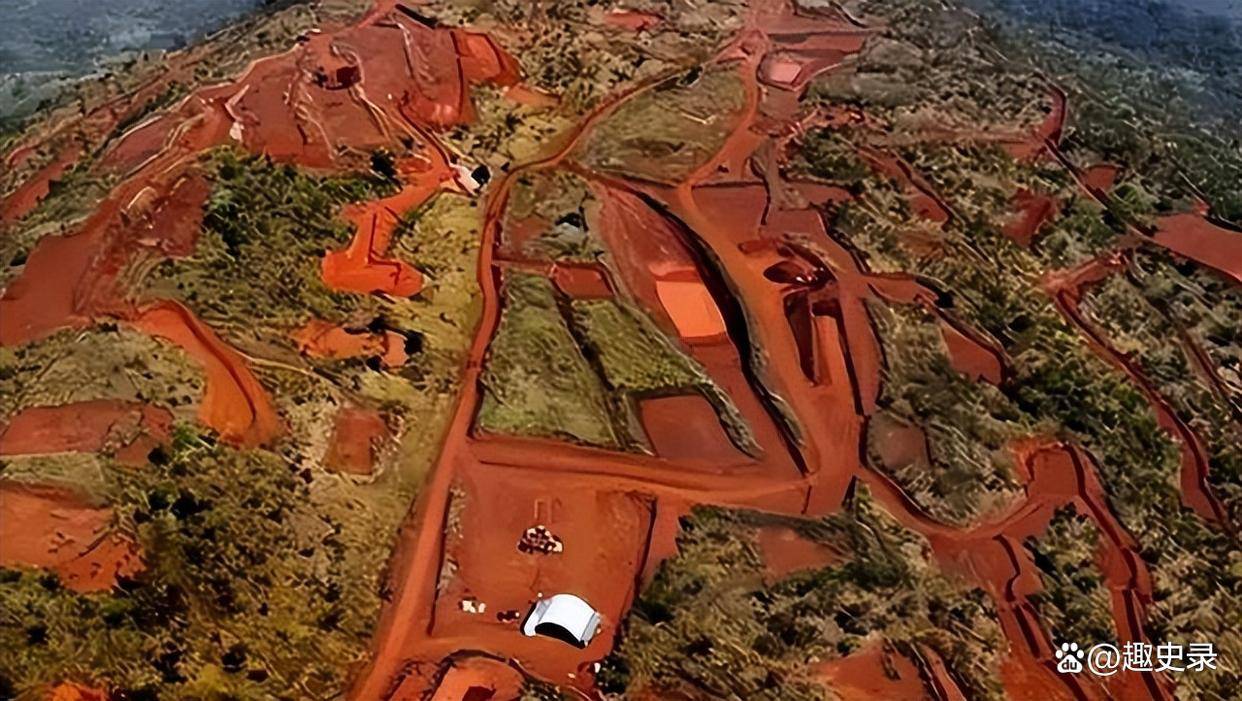
铁矿石开采

Search documents
铁矿石暗战升级!
Sou Hu Cai Jing· 2025-11-24 02:12
Core Insights - The rise of China's steel industry in the global iron ore market represents a significant shift in power dynamics, moving from a passive role to an active one in price negotiations [1][15] Group 1: Historical Context - In 2003, China became the world's largest iron ore importer, surpassing Japan with imports of 148 million tons [3] - From 2003 to 2008, iron ore prices experienced extreme volatility, with annual increases of up to 71.5%, leading to additional costs for China amounting to 700 billion RMB [3] - The number of companies with import licenses peaked at 523, leading to market chaos and price manipulation by agents [3][4] Group 2: Market Regulation and Price Negotiation - In 2005, the China Iron and Steel Association (CISA) reduced the number of licensed importers to 118, yet high prices persisted due to ongoing speculation [4] - The 2008 financial crisis caused a dramatic drop in demand, resulting in losses for many companies due to long-term contracts priced above spot market rates [4][6] - A significant bribery scandal involving a representative from Rio Tinto revealed the complexities of price negotiations and led to a shift in contracts towards more favorable terms for China [6][8] Group 3: Shift in Pricing Mechanism - Post-2010, China began using the Platts index for iron ore pricing, although this method faced criticism for not accurately reflecting the Chinese market [8] - By 2024, the Platts index was still high at $130/ton, while China's import costs were significantly inflated compared to mining costs in Australia [8][10] Group 4: Development of Equity Mines - China aims to increase its share of equity mines from 8% to over 20% by 2025, with significant projects like the Simandou iron ore project in Guinea [10][11] - The Simandou project is expected to produce 30 million tons annually by the end of 2026, contributing to a total of 300 million tons of equity mines, which will reduce reliance on traditional suppliers [11][12] Group 5: Currency and Trade Dynamics - In 2024, negotiations with BHP broke down over currency settlement, leading to a shift towards RMB settlements for iron ore trade, impacting 70% of global transactions [12][14] - Australia's iron ore export share to China decreased from 60% to 45%, with predictions of a $110 billion drop in export revenue by 2025 [14][15] Group 6: Future Outlook - The completion of the Simandou project and stable steel demand in China will pose challenges for Australian iron ore sales, potentially leading to lower prices [15] - The ongoing transformation in the iron ore market indicates a shift in power, with China gaining significant leverage in negotiations and pricing [15]




铁矿石周度观点-20251123
Guo Tai Jun An Qi Huo· 2025-11-23 11:23
铁矿石周度观点 国泰君安期货研究所 张广硕(分析师) 投资咨询从业资格号:Z0020198 日期:2025年11月23日 Guotai Junan Futures all rights reserved, please do not reprint 铁矿观点:需求与宏观风偏双重压制,高估值压力较大 | | 最近一周切片数据 | | | | | YTD累计发运数据 | | | | | --- | --- | --- | --- | --- | --- | --- | --- | --- | --- | | | 条目 全球发货量 | 当周值 3516.4 | 环比 447.4 | 同比 505.5 | 全球发货 | 46W2025 143203.7 | 46W2024 140376.7 | 累计同比 2827.0 | 累计同比% 2.0% | | | 澳发货量 | 1985.7 | 268.1 | 263.1 | 澳发货 | 82127.6 | 82326.5 | -198.9 | -0.2% | | | 巴发货量 | 847.9 | 122.2 | 11.7 | 巴发货 | 34940.7 | 34586.3 ...
海南矿业:股东海钢集团拟减持不超过0.75%
Di Yi Cai Jing· 2025-11-20 10:12
海南矿业晚间公告,持股24.88%的股东海南海钢集团有限公司拟自公告披露之日起满15个交易日后的3 个月内(2025年12月12日~2026年3月11日),通过集中竞价减持公司股份不超过1500万股,占公司总 股本0.75%;若期间公司发生送红股、转增股本、增发新股或配股等除权事项,拟减持比例将进行相应 调整。目前海钢集团持股4.97亿股,均来源于IPO前取得。 ...

大中矿业录得6天4板
Zheng Quan Shi Bao Wang· 2025-11-20 02:27
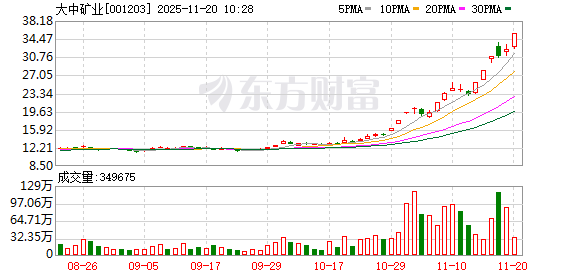
Core Viewpoint - The stock of Dazhong Mining has experienced significant volatility, achieving four trading limit increases within six trading days, resulting in a cumulative increase of 53.04% and a turnover rate of 28.67% [2] Trading Performance - As of 9:38 AM, the stock recorded a trading volume of 23.18 million shares and a transaction amount of 791 million yuan, with a turnover rate of 1.80% [2] - The stock has been listed on the Dragon and Tiger list due to a cumulative deviation in the increase of 20% over three consecutive trading days, with institutional net selling amounting to 55.17 million yuan and a cumulative net selling of 48.68 million yuan from the Shenzhen Stock Connect [2] Financial Performance - According to the company's third-quarter report, the total operating revenue for the first three quarters reached 3.025 billion yuan, reflecting a year-on-year growth of 1.60%, while net profit was 594 million yuan, showing a year-on-year decline of 10.28% [2] - The basic earnings per share stood at 0.3900 yuan, with a weighted average return on equity of 9.08% [2] Recent Stock Movements - The stock's daily performance over the past few days includes: - November 19: +4.77% with a turnover rate of 6.92% and a net outflow of 139.90 million yuan - November 18: -0.23% with a turnover rate of 9.12% and a net outflow of 447.90 million yuan - November 17: +10.01% with a turnover rate of 5.42% and a net inflow of 169.88 million yuan - November 14: +9.99% with a turnover rate of 2.39% and a net inflow of 214.43 million yuan - November 13: +10.00% with a turnover rate of 3.02% and a net inflow of 140.92 million yuan [2]
新矿资源(01231)预计2025年度净亏损约220万美元
智通财经网· 2025-11-19 12:56
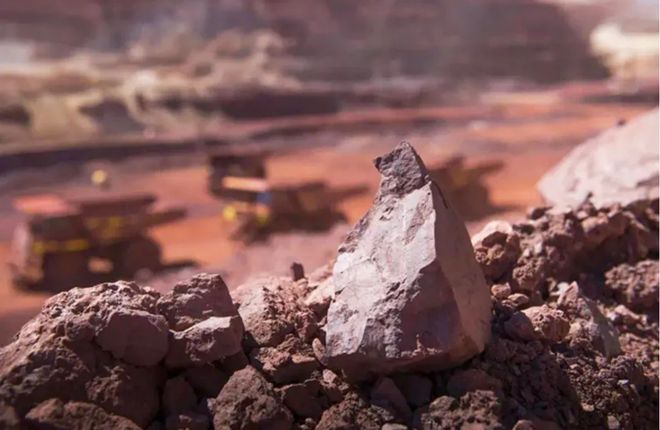
Group 1 - The company expects to report a net loss of approximately $2.2 million for the year ending December 31, 2025, compared to a net loss of about $300,000 for the year ending December 31, 2024 [1] - The decline in annual performance is primarily due to a decrease in iron ore supply from major suppliers, leading to a drop in sales and gross profit [1] - The company anticipates a significant reduction in unit gross profit for iron ore due to weak demand [1] Group 2 - A major rockfall incident occurred at the Koolan Island operation, resulting in the suspension of mining activities, although low-grade iron ore with iron content below 55% can still be shipped [2] - The company is in discussions with Koolan regarding future iron ore supply and potential remedial work, with ongoing negotiations as of the announcement date [2] - The company holds a contract with Koolan valued at approximately $4.5 million, and any necessary adjustments to this value could further increase the expected net loss for the year [2] Group 3 - The company will continue to seek and explore new supply channels for iron ore and other commodities to diversify its product offerings [3] - The company is also looking into mergers, investments, or other collaborative opportunities to achieve sustainable development [3]
铜盛铁衰,铁矿石巨头们纷纷加码铜矿!
Xin Lang Cai Jing· 2025-11-19 04:45
Group 1: Core Insights - Rio Tinto's iron ore profit margin is projected to decline from 81% in 2023 to 48% in 2026, indicating a significant shift in revenue sources as global steel demand decreases [1] - The copper business of Rio Tinto has shown substantial growth, with EBITDA reaching $3.105 billion in the first half of 2025, a 69% increase year-on-year, and now accounting for over 20% of the group's EBITDA [3] - BHP's copper production reached a record 2.017 million tons in the 2025 fiscal year, marking a 28% increase from the previous year, with copper contributing 45% to the group's EBITDA [3][5] Group 2: Company Strategies and Investments - BHP plans to invest between $7.3 billion and $9.8 billion for technological upgrades and new concentrator plants, aiming to stabilize copper production at around 1.4 million tons annually by 2031 [5] - Rio Tinto's key copper assets include the Oyu Tolgoi mine in Mongolia and the Escondida mine in Chile, with plans to expand copper resources significantly through various projects [6] - Vale's copper production is expected to grow, with a target of reaching 700,000 tons annually by 2030, reflecting the increasing focus on copper as a strategic asset [7] Group 3: Market Trends and Demand - The demand for copper is surging due to its applications in renewable energy, electric vehicles, and AI data centers, prompting mining companies to invest heavily in copper assets [9] - Despite a stable demand for iron ore, the supply is slightly increasing, indicating a potential shift in market dynamics as companies explore copper resources in various regions [9]
金岭矿业股价跌5.01%,华夏基金旗下1只基金位居十大流通股东,持有332.61万股浮亏损失172.96万元
Xin Lang Cai Jing· 2025-11-18 03:27
Core Points - Jinling Mining experienced a decline of 5.01% on November 18, with a stock price of 9.86 CNY per share and a trading volume of 1.04 billion CNY, resulting in a total market capitalization of 58.70 billion CNY [1] - The company, established on September 28, 1996, and listed on November 28, 1996, primarily engages in iron ore mining and the production and sale of iron concentrate, copper concentrate, cobalt concentrate, and pellet ore [1] - The revenue composition of Jinling Mining includes iron concentrate at 76.99%, pellets at 9.03%, other (supplementary) at 8.46%, copper concentrate at 5.10%, and mechanical processing at 0.41% [1] Shareholder Insights - Among the top circulating shareholders of Jinling Mining, one fund under Huaxia Fund, Huaxia Excellent Growth Mixed A (024928), entered the top ten in the third quarter, holding 3.3261 million shares, which accounts for 0.56% of the circulating shares [2] - The estimated floating loss for this fund today is approximately 1.7296 million CNY [2] Fund Performance - Huaxia Excellent Growth Mixed A (024928) was established on August 12, 2025, with a current size of 9.56 billion CNY and a cumulative return of 11.89% since inception [3] - The fund manager, Zhong Shuai, has been in position for 5 years and 115 days, managing assets totaling 13.26 billion CNY, with the best fund return during his tenure being 172.61% and the worst being -4.15% [4]

西芒杜顺利投产,矿石供应迎变局
Bao Cheng Qi Huo· 2025-11-17 03:45
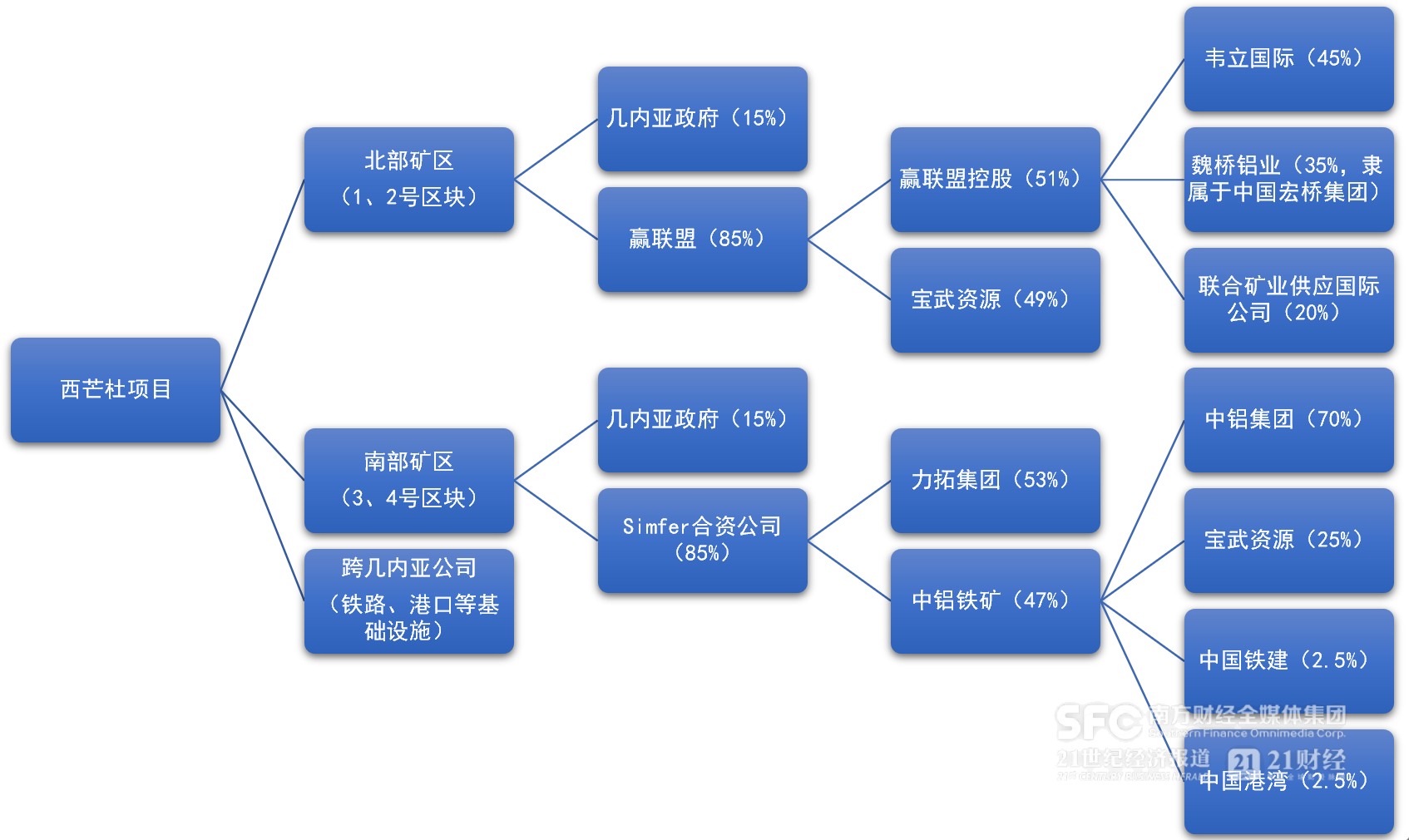
1. Report Industry Investment Rating No relevant content provided. 2. Core Viewpoints of the Report - On November 11, 2025, the Simandou project held a grand commissioning ceremony. The first shipment of iron ore by the Weltrade fleet marked the full completion and official operation of the world - class Simandou mining and infrastructure integration project [6][11][49]. - Guinea is rich in mineral resources, especially bauxite and iron ore. The Simandou iron ore is the world's largest undeveloped high - grade iron ore with great potential. Its proven resources are about 5 billion tons, and the total resource is estimated to reach 10 billion tons [6][12][49]. - The commissioning of the Simandou project, led by domestic funds, will impact the global iron ore supply pattern. In the early stage of production ramp - up, the incremental contribution is limited. The combined output of the north and south blocks is expected to reach 20 million tons in 2026, and approach 80 million tons in 2028. The north and south blocks are conservatively estimated to reach full production in 2029 and 2030 respectively. The new capacity release may lead to lower prices, and the project is unlikely to impact the four major miners but may squeeze the share of non - mainstream miners with medium - high costs [7][36][50]. 3. Summary by Directory 3.1 Guinea's Rich Mineral Resources - Guinea, located in western Africa, is known as a "geological miracle" with rich minerals. In 2024, its GDP was $25.76 billion, with a 6% year - on - year increase. The mining industry accounted for 25% [12]. - Guinea is the world's second - largest bauxite exporter. In 2024, its bauxite reserves reached 7.4 billion tons, about 1/4 of the global total. In 2023, its bauxite production was 122.9918 million tons (up 19% year - on - year), and exports were 126.5877 million tons (up 24% year - on - year). Many international mining companies have invested in Guinea [13]. - Guinea also has abundant iron ore resources, with proven reserves of 19.9 billion tons in 2018 and an iron grade of 56% - 65%. Well - known iron ore projects include Simandou, Zogota, and Monts Nimba [14]. - China - Guinea economic and trade cooperation has deepened. China is Guinea's largest export destination and import source. By June 2025, there were 114 Chinese - funded enterprises in Guinea, mainly in the mining industry. In the first half of 2025, Chinese - funded enterprises contributed 96.2% of the incremental bauxite shipments. Chinese enterprises are also involved in engineering construction and infrastructure operation in Guinea [20][21][22]. 3.2 Basic Information of the Simandou Iron Ore Project - The Simandou mountain range in Guinea is rich in iron ore. The Simandou Iron Ore Project consists of the north block (mining areas 1&2) and the south block (mining areas 3&4), with a total resource of over 4.6 billion tons [23][25][26]. - The north block is jointly developed by the Winning Consortium (WCS) and Baowu Resources Group, with iron ore reserves of over 1.8 billion tons and an iron grade of about 65.5%. The south block is led by Simfer, with participation from Rio Tinto and China Aluminum Iron Ore Holdings, and has reserves of about 2.8 billion tons and an iron grade of 65.5% [26][27]. - The Simandou project's infrastructure includes a railway system over 600 kilometers long and a dual - hub port system. By September 2025, the SimFer port was in the final equipment commissioning stage, with an annual shipping capacity of 65 million tons [30][31]. - The Simandou ore is mainly hematite, with high grade and low impurities. The average iron grade is 65.5%, and the average aluminum and silicon contents are below 3% and 2% respectively. However, as the mining depth increases, the main mineral components will change, which may affect costs in the long term [34][35]. 3.3 Analysis of the Impact of Simandou's Commissioning on Iron Ore Supply - Although the Simandou project was successfully commissioned in November 2025, its current impact is more symbolic, and the incremental supply may not exceed 1 million tons. It is expected to gradually release production capacity during the 14th Five - Year Plan period. The combined output of the north and south blocks is expected to reach 20 million tons in 2026 and approach 80 million tons in 2028 [36]. - The Simandou project is expected to break the current pattern dominated by Australia and Brazil and form a new supply pattern of "Australia - Brazil - Africa". It also helps improve domestic resource supply security [41]. - New capacity release may lead to price decline. Referring to FMG's history, the new capacity of Simandou is unlikely to impact the four major miners but may squeeze the share of non - mainstream miners with medium - high costs, making the overall ore supply more abundant and testing the cost support of non - mainstream miners [41][42]. 3.4 Conclusion - The Simandou project was officially put into operation on November 11, 2025. Guinea is rich in mineral resources, and the Simandou iron ore has great advantages [49]. - The commissioning of the Simandou project will affect the global iron ore supply pattern. The output will gradually increase in the future, and the new capacity may lead to price decline and squeeze the share of non - mainstream miners [50].
铁矿周报:铁水产量反弹,铁矿震荡运行-20251117
Tong Guan Jin Yuan Qi Huo· 2025-11-17 01:48
1. Report Industry Investment Rating No relevant content provided. 2. Core Views of the Report - The iron ore futures fluctuated and rebounded last week, with the molten iron output rebounding, market sentiment improving, and spot prices rising. It is expected that the iron ore will show a fluctuating trend [1][4][6]. - On the demand side, some steel mills resumed production last week due to a long shutdown, and the molten iron output increased compared with the previous week. It is currently slightly higher than the same period last year and is expected to fluctuate within a narrow range in the future [1][4][6]. - On the supply side, although the overseas shipment volume and arrival volume decreased last week, they remained at relatively high levels in recent years. The port inventory continued to increase, and the supply pressure remained high [1][4][6]. 3. Summary by Relevant Catalogs 3.1 Transaction Data | Contract | Closing Price | Change | Change Rate (%) | Total Trading Volume (Lots) | Total Open Interest (Lots) | Price Unit | | --- | --- | --- | --- | --- | --- | --- | | SHFE Rebar | 3053 | 19 | 0.63 | 4907951 | 2731199 | Yuan/ton | | SHFE Hot - Rolled Coil | 3256 | 11 | 0.34 | 1702672 | 1302507 | Yuan/ton | | DCE Iron Ore | 772.5 | 12.0 | 1.58 | 1423894 | 494127 | Yuan/ton | | DCE Coking Coal | 1192.0 | - 78.0 | - 6.14 | 5024636 | 941024 | Yuan/ton | | DCE Coke | 1669.5 | - 87.0 | - 4.95 | 107554 | 48736 | Yuan/ton | [2] 3.2 Market Review - **Demand Side**: Last week, some steel mills resumed production due to a long shutdown. The molten iron output increased compared with the previous week, currently slightly higher than the same period last year, and is expected to fluctuate within a narrow range in the future. The blast furnace operating rate of 247 steel mills was 82.81%, a decrease of 0.32 percentage points from the previous week and an increase of 0.73 percentage points compared to the same period last year. The blast furnace iron - making capacity utilization rate was 88.8%, an increase of 0.99 percentage points from the previous week and an increase of 0.22 percentage points compared to the same period last year. The steel mill profitability rate was 38.96%, a decrease of 0.87 percentage points from the previous week and a decrease of 18.62 percentage points compared to the same period last year. The average daily molten iron output was 236.88 tons, an increase of 2.66 tons from the previous week and an increase of 0.94 tons compared to the same period last year [4]. - **Supply Side**: Last week, the overseas shipment volume and arrival volume decreased but remained at relatively high levels in recent years. The port inventory continued to increase, and the supply pressure remained high. The total global iron ore shipment was 3069.0 tons, a decrease of 144.8 tons from the previous week. The total shipment volume of iron ore from Australia and Brazil was 2548.6 tons, a decrease of 210.6 tons from the previous week. The inventory of imported iron ore at 47 ports across the country was 15812.84 tons, an increase of 188.71 tons from the previous week, and the average daily port clearance volume was 340.28 tons, an increase of 4.73 tons [5]. 3.3 Industry News - On November 11, the commissioning ceremony of the Simandou project was held in the Port of Mariabaya, Guinea [10]. - Brazil's CSN announced its Q3 2025 results, with the iron ore segment performing strongly, setting a record high in production and sales. In Q3, the company's iron ore production reached 1192.8 tons, a 2.8% increase from the previous quarter and a 4.3% increase year - on - year [10]. - From January to October, the national real estate development investment was 73563 billion yuan, a 14.7% year - on - year decrease. The housing construction area of real estate development enterprises was 652939 million square meters, a 9.4% year - on - year decrease [10]. 3.4 Related Charts The report includes multiple charts showing the trends of futures and spot prices of rebar, hot - rolled coil, iron ore, etc., as well as data on steel production, inventory, and iron ore shipment and arrival volume [9][11][13].
28年风雨初歇 西芒杜重构全球铁矿石格局
2 1 Shi Ji Jing Ji Bao Dao· 2025-11-16 02:19
Core Insights - The West African country of Guinea is set to officially launch the world's largest and highest-quality iron ore project, the Simandou project, on November 11, 2025, marking a significant milestone in the global mining industry [1][2] - The project, with a total investment exceeding $20 billion, includes the construction of over 600 kilometers of new multi-purpose railway and supporting port facilities, with an expected annual export capacity of up to 120 million tons of iron ore [1][2] Project Development History - The development of the Simandou project can be divided into four stages, starting from 1997 when Rio Tinto acquired exploration rights, followed by a series of ownership changes and political challenges that delayed progress [4][5][6] - In 2010, Chinese companies began to enter the project, forming a joint venture with Rio Tinto, which marked the beginning of a new phase in the project's development [5] - The project saw a significant turning point in 2019 when BSG Resources relinquished its mining rights, leading to the formation of the winning alliance, which included several Chinese companies, and a successful bid of $14 billion [6][10] Strategic Implications - The successful launch of the Simandou project is expected to shift the global iron ore supply landscape from resource monopolization to diversified competition, providing China with low-cost resources and supply chain leverage [1][11] - The project is projected to supply 5% of the global iron ore market, with potential implications for China's iron ore import structure, which is currently heavily reliant on Australia [11][14] - The project represents a significant achievement for Chinese enterprises in global resource development, showcasing their ability to collaborate and compete on an international scale [14][15]